Malek Maktabi’s Story of Zainab & Her Sri Lankan Mother Deepa Is A Disgrace To The Lebanese State

I am angry. Nay, angry is an understatement, I am livid. Anger wasn’t the only thing I felt yesterday. I was also deeply ashamed to be a citizen of a country where the story that Malek Maktabi’s show, in a rare instance of journalistic integrity, portrayed not only could happen, but is probably part of a bigger array of stories just waiting to be told.

The story, summarized, is as follows:

In 1991, Deepa Darmasiri was a Sri Lankan working as a housekeeper at a Lebanese household in the South. The husband in the household she was working in, whose name was always bleeped out and never mentioned, one day raped Deepa at knife-point, leading her to become pregnant.

Deepa did not want to get an abortion because she “never could imagine not meeting her child.” So she carried the baby to term. To make his rape legal and to be able to register the baby, that scumbag of a man exercised his religiously given right to polygamy and married Deepa.

Once Deepa gave birth, he took the baby girl whom he named Zainab – Deepa wanted to name her Huda – and got the mother deported back to her country, never to see or hear from her daughter ever again.

The story of a Lebanese daughter searching for her Sri Lankan mother is a heartbreaking reminder of how horrifying Lebanese patriarchy is. What’s worse is that Zainab is not a lone example of the disgusting state that our demented patriarchal laws have led us to.

Deepa is a victim on so many levels. She’s a victim for being a woman living in a country (and a world in the bigger sense) that sees her gender as inferior, both actually and legally. She’s a victim of Lebanese personal status law, placing her as inferior to her husband in all regards, even in the matter of him being able to divorce her as easily as he did, leading her to getting deported. She’s the victim of being from a nationality that we, as a country, deem as lesser. Because, you know, we as Lebanese are the creme de la creme and everyone else be damned.

Side note: Sri Lanka has better infrastructure than this dismal country currently has and will probably have for years to come. They have faster internet, 24/7 electricity, better water coverage and their women are more equal to men. But please, tell me more about how we think they’re inferior because they come work here in jobs we would never partake in, or because they’re black, or maybe because they’re not originally Phoenicians, or because any nationality that is not White and Western is one that we look down to thinking we are so much better.

News flash: we are not. Not even close. Deepa’s story shows how rotten to the core this country is.

Get this: we live in a country where a man was able to rape, impregnate, have the woman carry the child to term, take her baby away, have her deported NEVER to be able to come back again and still roam free.

Why? Because this is Lebanese patriarchy. This is how it works. Men are always superior. Lebanese are superior to non-Lebanese especially if those non-Lebanese don’t have a strong country to be able to defend them, and it’s just disgraceful. How is this man considered a human being, I wouldn’t know. He’s an abomination, pure and simple. Not only is that man still roaming free, never seeing a jail cell in his life for all the disgusting things he’s done, but he’s also probably protected by some politician down South that makes him impenetrable.

The disgraceful thing is that what he did was not illegal according to Lebanese law. He was perfectly within his rights as a man to do what he did to Deepa and to her daughter Zainab.

How horrifying is it that this man overpowered a helpless migrant worker, raped her, violated ALL her rights, her only fault being coming to this country to seek a better future for herself?

How horrifying is it that this man didn’t care in the least about his daughter, about the fact he brought her into this world as a result of raping a helpless woman after holding a knife to her throat?

How horrifying is it that Deepa had no one to run to, no one to help her, that our ministries of social affairs and labor wouldn’t have cared about her plight, about the fact she was violated that way?

Zainab and Deepa’s story is precisely why our laws need to be changed and I hope it provides the much needed catalyst for NGOs dealing with migrant workers to have a louder platform from which to proclaim their very rightful demands.

We cannot and should not be allowed to have an upper hand over workers who come from any country in the world just because they are coming to work here. We cannot and should not be allowed to have our men hold an upper hand over our women or any women wherever they come from, just because they happened to be born with a set of XY chromosomes.

We cannot and should not allow anyone to do what that scumbag did and still be allowed to roam free, unchecked and unpunished. As long as our laws allow them too, some men will do what this creature did, and others have probably done so plenty of times already. How many more Zainbas are out there because our state has enabled the perpetuation of this, because of our patriarchy and our sense that we are better than other “lesser” nationalities? It’s just disgraceful, and shameful.

What’s even more shameful are those who were bothered by this topic being discussed, under the pretext that it’s not New Year’s Eve material. Wake the hell up. This is a reality that is part of this wretched country every single day. You getting sad for a few seconds is upsetting you? You realizing this country’s laws are messed up to say the least is distressing you and ruining your party spirit? Deepa and her daughter Zainab never had any New Year Eves together because of the apathy of people like you.

42 days after she met her daughter, Deepa passed away probably from cancer. She couldn’t be flown to Lebanon to spend the remainder of her days with her daughter because getting a Lebanese visa to a Sri Lankan is near-impossible. This goes back again to our country thinking it’s better than others while our own citizens beg at the door of embassies for visas for other countries to seek out better futures.

I commend Malek Maktabi on his work with Zainab and Deepa’s story, and I sincerely hope this doesn’t stop at it being a NYE special to get viewers worked up. This should be as daily a conversation as possible, to hopefully reach a place where Lebanon’s state doesn’t perpetuate the existence of more Zainabs and more Deepas.

Deepa Darmasiri, rest in peace you beautiful gorgeous human being.

No Netanyahu, Israel Isn’t The Only Middle Eastern Place Where Christians Can Celebrate Christmas

In his increasingly childish bitchfit against the international political establishment that saw his country’s transgressions through settlements on Palestinian land finally made illegal with a UN resolution banning Israel – yeah, right – from building more of them, the Israeli PM is lashing out at his country’s closest ally and the reason Israel has been off the hook in everything it’s done for years, the United States.

As part of a rant aimed at US Secretary of State John Kerry whose tone was very moderate towards the Israeli-Palestinian crisis, with him recognizing the plight of Palestinians and their refugees, the land grab they’ve been victim of, among other things, Netanyahu figured it best to remind Kerry, and by extension of his buzz words that you know will circle Fox News for months to come, other Americans and Westerners who see Israel as the only worthy beacon of civilization in the Middle East that – and I quote:

“Israel is the only place in the Middle East where Christians can celebrate Christmas.”

In the grand scheme of things, such statements are utterly meaningless, mostly because they’re pure bullshit. But as we’ve seen bullshit can actually get equal bullshit elected. The danger in letting such statements go by unchallenged is that they play right into the rhetoric that Israel and its allies want to put forward: It is the only country in the Middle East that’s, for all matters and purposes, worth anything, everyone else be damned.

It’s precisely not challenging such statements in the past that has turned Israel from the apartheid state existing on occupied territory, turning a blind eye towards all rules of war, ignoring many of the UN resolutions in which it is part, among other things, to this “liberal,” “religiously free” beacon of “hope” in the Middle East that is only “defending” itself against those “Arabs” who just don’t get it. All of this to the backdrop of Christian-centric, Israel-loving, everything and everyone else-hating Trump coming in 3 weeks.

So Netanyahu, and those that seem to believe him, how about you come sit on last year’s Byblos tree? I’m pretty sure it will bring your lot quite the pleasure.

jbeil-byblos-christmas-tree-2015

This year’s tree can work fine too:

byblos-jbeil-christmas-tree-2016

Or how about you come see this year’s tree in Tripoli? In case you didn’t know, that’s *whispers* Muslim territory.

tripoli-christmas-village-1

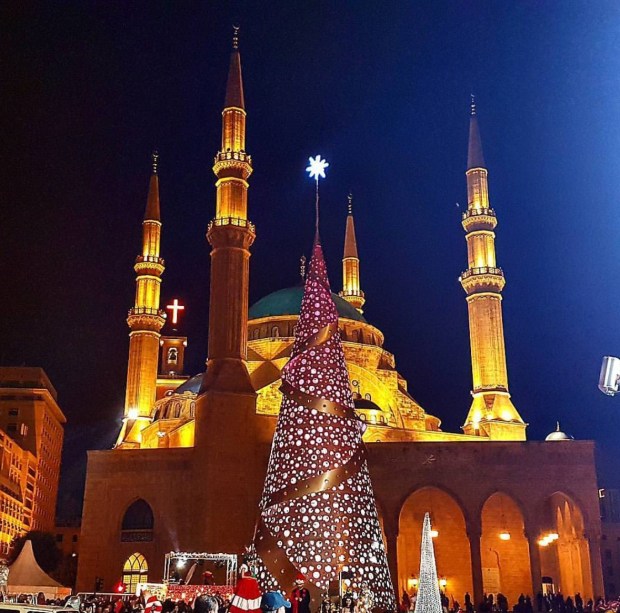
How about checking out the tree in Downtown Beirut?

beirut-downtown-tree-2016

Pic via @livelovebeirut.

Or the many other ways through which Beirut celebrated Christmas? (Pictures via LiveLoveBeirut).


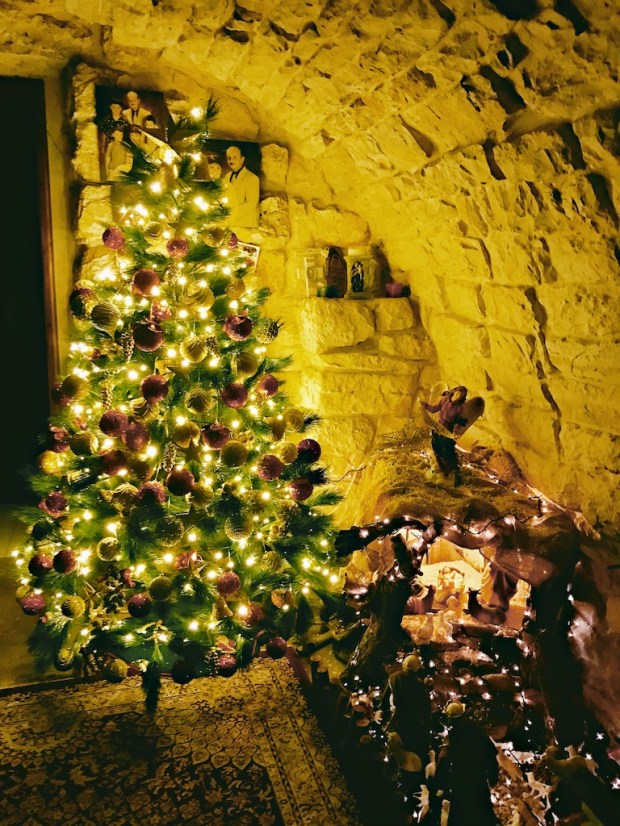
Or how about the tree in my own house where my family gathered for Christmas Eve dinner and Christmas lunch, opened presents and then had some of its members go to midnight mass?

lebanon-christmas-decoration-2016-2

Or those pesky Christmas decorations in all our malls?

I also don’t see Israel on that Huffington Post list of notable Christmas trees from around the world but Lebanon has TWO entries there, as does the West Bank. Weird, huh?

I find it odd that the country that sells itself as being the world’s only Jewish state and gets away with it because anyone who tries to challenge that notion is deemed anti-Semitic has the audacity to claim it’s a defender of Christian rights when Christians in Israel are, similarly to Muslims, inherently second class citizens due to the fact they’re not, you know, Jewish. Just an FYI to Netanyahu and his friends, the president in Lebanon is Christian and I, a Lebanese who happens to be Christian (on paper), have the absolute freedom to practice my religion if I want to without worrying about checkpoints, armies oppressing me, a state that deems my religion second-rate, among other things.

And if you thought that Lebanon was a special case, let me remind you that it was less than a week ago that Israeli rabbis had a problem with Christmas decorations at a local mall. Or does that not affect the way Christians celebrate Christmas?

Conversely, when that “scandal” was going down, I was visiting the Jordanian city Aqaba, from which I could see Eilat. The city was Christmas ready with decorations at its hotels and streets, even though its Christian population is minor.

aqaba-christmas-decoration

The fact of the matter is that the best Christmas in the Middle East isn’t in Lebanon or in Jordan, but where it all began: Bethlehem. And even that isn’t in Israel either.

Tea, meet kettle.

13 Lebanese That Made It Big In 2016

As 2016 draws to a close, and you are overwhelmed by end-of-year lists, the only list that I wanted to make, as I also did last year, was one commemorating Lebanese faces that I believe did something in 2016 that made them stand out. Whether them standing out is positive or negative, especially those whose work was of a more political nature, is up to you.

Consider it as one of my rare non-nagging posts of the year, fitting to end 2016 on a more positive note despite it being the year that it was, hashtag #GoAway2016. The names I’m about to mention are in no particular order, and are chosen without wasta so please spare me the “you didn’t choose X so you must be biased for Y” comments.

1 – Rouba Mhaissen:

rouba-mhaissen

I had the pleasure of meeting Rouba way back in 2007 when we were classmates in an English course at AUB. Since then, she’s gone on to conquer the world – almost literally – after founding the NGO SAWA For Development And Aid, which has been at the forefront of dealing with the Syrian crisis, notably with the refugees. From being one of AUB’s youngest alumni to be honored by the university this year, to addressing UN assemblies, the UN security general, Prince Charles and other politicians from all around the world, the world is a slightly better place for having Dr. Mhaissen in it.

2 – Jamil Haddad:

jamil-haddad-colonel-beer

At a more local level, Jamil Haddad has helped put Batroun back on the Lebanese map, and in a big way, with Colonel Beer making it big onto the Lebanese scale in 2016. With it quickly becoming one of Lebanon’s top selling and best beers available, Mr. Haddad managed to maintain a niche for himself and his beer’s brand with a local brewery in Batroun that has hosted countless events over the years and has been a pilgrimage place for Lebanese mainstream and hipster individuals alike.

3 – Huda Zoghbi:

huda-zoghbi

Huda Y. Zoghbi is a Lebanese-born physician and medical researcher. She is a professor in the departments of Pediatrics, Molecular and Human Genetics, and Neurology and Neuroscience at Baylor College in Texas. This year, apart from receiving the Shaw Prize in May, for her work in research leading to discovery of genes and proteins involved in Rett syndrome, she was also awarded the Breakthrough Prize, which amounts to $3 million, for her neuroscience research that has laid the groundwork for promising therapeutic candidates for Alzheimer’s Disease and autism.

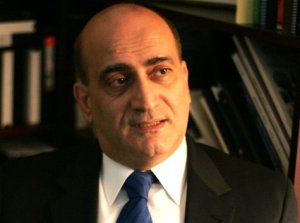
4 – Walid Phares:

walid-phares

I may not agree with almost any of his politics and find his choice of presidential candidates in the US presidential race to be abhorrent, as well as the way he writes his last name (why?), but Walid Phares, one of Trump’s top advisors managed to get his candidate elected president of the leading country in the world. That has to amount to something, right?

5 – Jeanine Fares Pirro:

jeanine-pirro

No, I’m not biased to people with my family name. Jeanine Fares Pirro is a Lebanese-American judge who has had an active political career with the Republican Party consisting of Senate and District Attorney runs during which she was the candidate of her party in New York state. In 2016, Jeanine Fares Pirro became one of the top influencers in the American Election through her Fox News TV show during which she was a vocal supporter of Donald Trump, leading her to become a household name across the United States.

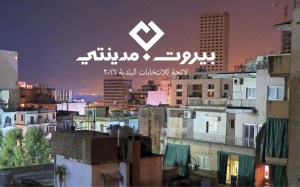
6 – Beirut Madinati:

Beirut Madinati

Leading up to Lebanon’s municipal elections in May, there was probably no other political movement that got anyone as excited about it as Beirut Madinati. They were a bunch of educated people from all sectors, running to change the Beiruti status quo. Their great campaign was, sadly, unsuccessful in breaking Lebanon’s very decaying electoral system but their 40% vote share was a triumph in itself. Here’s hoping the change they put into motion can translate into results in 2017’s Parliamentary elections.

7 – Adeela:

adeela

There’s not been another social media figure this past year that has been as polarizing and omnipresent as the often-hilarious Arab satire on Adele. Adeela is inescapable. It’s become so influential in the art scene that its critiques and jokes have become material that newspapers and tabloids write about.

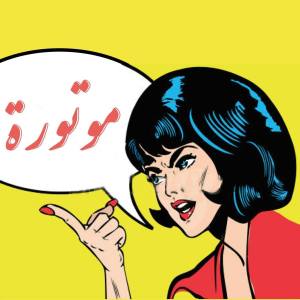
8 – Mawtoura:

mawtoura

The founders of Mawtoura and Adeela are not the same person, but they’re best friends in real life – and both are quite nice people once you meet them. With Adeela being the police of Lebanon and the Arab world’s music scene mainly, Mawtoura provides as funny and poignant assessments of the Lebanese social scene and, occasionally, political life.

9 – Nadia El Cheikh:

nadia-el-cheikh

In 2016, Dr. Nadia el Cheikh became AUB’s first woman dean of the university’s biggest and founding faculty, the Faculty of Arts and Sciences. A historian of the Abbasid Caliphate and Byzantium, she’s the holder of a Ph.D. degree in History and Middle Eastern Studies from Harvard University. Dr. El Cheikh’s research interests focus on women and gender.

10 – Jimmy Keyrouz:

jimmy-keyrouz

Mr. Keyrouz is a young filmmaker whose movie “Nocturne in Black” was nominated and then won “Best Narrative Film” at the Student Academy Awards in 2016, organized by the same entity behind the Oscars. “Nocturne In Black” tells the story of a musician struggling to rebuild his piano in a war-ravaged Middle Eastern neighborhood. Keyrouz’s movie has already won Jury Selects at the Columbia University Film Festival, a National Board of Review Student Grant, the Caucus Foundation production grant, the Marion Carter Green Award and the IFP Audience Award. He was one of 17 winners out of a nearly 1800 movie selection.

11 – Charbel Habib:

charbel-habib

A vintage car enthusiast, Charbel Habib owns over 40 classic cars. With Walid Samaha as his co-driver, the duo took on the epic Peking-Paris Rally that saw them race from Beijing to Paris, or around 14,000km in a 1964 Porsche 365C. I daresay the biggest hurdle was probably their need for visas going across that territory, but they made it to Paris in one piece and were winners of a Gold medal, ranking second in their class, and being the first drivers to get a Porsche 365C to do that route.

12 – Fayha Choir:

Fayha Choir ChoirFest Middle East

They started off the year with their situation being as precarious as it gets. They were in financial trouble and fighting tooth and nail to try and keep their choir, Lebanon’s best afloat. Lucky for us, they were not only successful but Tripoli’s Fayha Choir went on to win Best Middle Eastern choir at the Choir Fest in the United Arab Emirates. I bet 2017 will be a great year for them too.

13 – Michel Aoun:

michel-aoun-president

After much debate, I figured the list can’t but be concluded by the man who, after more than a 2 year long presidential vacuum, managed to fulfill his life’s dream of becoming the Lebanese president. Sure, his election ceremony by parliament was as childish as it could get, but by taking up the highest governmental level in the Lebanese Republic, we can say that in 2016 Michel Aoun made it. He’s been in office for nearly 60 days and not much has happened (apart from a ministry for women’s affairs to which a man was appointed) but we’re still giving our president the benefit of the doubt to steer the country through next year’s parliamentary elections under a fair electoral law that could see those at #6 cause a dent.

Until 2017, everyone.

Wadi Rum: One of Arabia’s Most Gorgeous Places, And A Must Visit For Lebanese Who Like Adventure

As far as other Arabs are concerned, Lebanon is considered to be the greenest of the region’s countries, and despite rampant deforestation and grossly non-environmentally friendly governmental policies, this is actually the case for our little country. Our biggest asset in bringing people to visit us from the region isn’t, therefore, only our “joie de vivre,” nightlife and awesome food, but the fact that we offer them eco-tourism that their countries can’t match. Alas, Lebanon tends to take its tourism for granted.

I was recently in Jordan for a few days during which I had the chance to see some of the country’s main touristic attractions, including their 7 wonders of the world site Petra, and the place that stuck in my head to this very day and the place that I would want to visit again as soon as I can and recommend that everyone do so: Wadi Rum.

Wadi Rum is not unfamiliar with many of you. You’ve actually seen it plenty of times before but didn’t know it was the case. It’s featured heavily in the latest Star Wars movie “Rogue One.” It was the filming site of Best Picture nominee “The Martian.” It was also where parts of the second Transformers movie, Indiana Jones and Lawrence of Arabia were filmed.

Simply put, Hollywood and Westerners know Wadi Rum exists and flock to it in droves. For other Arabs and Lebanese, however, the place remains near-fictive. When I mentioned that I’d love to visit the place a few months ago, the reply I got was: “what’s there to see in the desert?”

The answer is: quite a lot.

The reputation that we, as Lebanese, have when it comes to our tourism style is that we’re not adventurous. We want good food, nightlife and shopping. To me, that reputation is horrific. I asked many travel agencies about that reputation and all of them corroborated it: this is what they sell. I guess this doesn’t apply to a newer generation of Lebanese, and many of this blog’s readers, but I daresay it’s high time to change that.
  • How To Get To Wadi Rum:

A new travel path between Beirut and Jordan was launched last week, offering direct flights between Beirut and Aqaba for $212 round trip. This path is better than Beirut – Amman because Aqaba is much closer to Wadi Rum than Amman (70km versus 300km).

Once you get to Aqaba, it’s quite easy to rent a car. Your Lebanese driver’s license actually works, or you can have an international driver’s license done to be on the safe side. Oil prices in Jordan are much cheaper than their counterpart back home and car rental prices are super cheap too.

  • What To Do In Wadi Rum:

The Wadi Rum reserve is huge. It’s around 700km2. I daresay there’s no way that anyone can do the whole thing in one stay unless they stay there for a couple of weeks, and that’s not ideal because it’s a physically demanding visit.

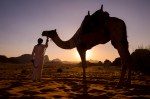
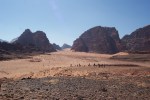
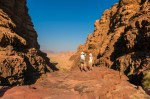
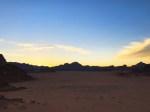
Gorgeous scenery: While we, as Lebanese, completely disregard the jewels we have interspersed in our country and don’t bother in their upkeep, the Jordanians have done the total opposite with Wadi Rum: it is a natural reserve that is so clean, so neatly kept and so beautiful. Wadi Rum is the total opposite of the kind of eco-tourism that we can offer in Lebanon: it’s a desert, filled with gorgeous sand dunes, high limestone mountains, sitting on one of Arabia’s biggest aquifers, and is as authentic as a desert experience can be. Your instagram posts will be ace, trust me.

Safari rides: Forget safaris in Dubai. I went on a 4×4 truck ride across the area and this is the real deal. You sit in the back of the pickup truck, and a skilled driver takes you around gorgeous scenery that will leave you dumbfounded. Refer to pictures below.

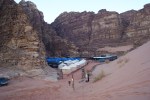
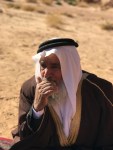
Bedouin life: Wadi Rum is also home to many Bedouin tribes that still live there. Those tribes will open their arms to you and host you for lunch or dinner. Their cooking style is very interesting in that, to save up on wood, they bury their cooking pots in the sand with the burning embers and let the meat and vegetables slowly cook. I had the pleasure to sit with a Bedouin tribal chief who told us stories of life in the desert, played a little on his rababa and invited us to share a meal with him.

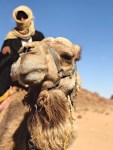
Camel Riding: Western countries also stereotype our countries as the places were camels are the go-to mode of transportation. They’d be disappointed, I suppose, to find out that the first time I’ve ever ridden a camel was in Wadi Rum.

Hiking: I didn’t have the chance to do a lot of hiking at Wadi Rum but there are trails all around the place that vary based on difficulty that those who like hiking will find to be exquisite. My fair share of rock climbing and hiking that I did there was unforgettable, although my legs would probably ask for a break before I do that again.

Sunsets: There’s something to say about the beauty of sunsets and desert sunsets have their own taste that I’m super glad I got to experience. I was able to sit atop one a high rock with a view, look over at a huge landscape in front of me as it turned into hues of gold and orange.

Star Gazing: After the sun set, I was treated to one of the most beautiful starry skies I’ve ever seen. Entire constellations spread in front of you. Just lie there, and enjoy the gorgeous view.

  • Where To Stay:

You don’t need to go back to the city in order to enjoy Wadi Rum for more than a day. The place has many camping sites interspersed here and there, with prices for the night being around $20.

Why It’s a Must Visit:

I can’t begin to tell you how amazing the place is. I spent an entire day there – from 8AM till around 10PM – and left feeling disheartened because I wanted to spend more time and see more places. Apart from it being historic with it being one of the places that Lawrence of Arabia spent a lot of time and its rocks having many ancient inscriptions on them, Wadi Rum offers you quite an experience that Lebanon doesn’t have and I daresay other Arab countries of the region can’t match. It’s unfortunate that this jewel in the Middle East is discovered and used quite often by Hollywood and Europeans but not by the locals or those from neighboring countries like us. It’s cheap, quite accessible with no visa requirements for entry for Lebanese, and you’ll go back to Lebanon with many a chance to tell wonderful stories of your desert excursions. Go there!

Flügen Rides: Kunhadi Trying To Save The Lives & Mentalities of Lebanese Youth Who Drink And Drive

KunhadiLogo.2010

The numbers are staggering.
In 2015, Lebanon had 4300 car accidents leading to more than 500 casualties, most of which (around 34%) were in the 15 – 29 age bracket. Most of those car accidents were not because of malfunctions but because those driving did not respect the rules.

A recent report on French TV M6 showed the extent to which Lebanese drivers just couldn’t care. It’s a sign of “strength” to disregard traffic laws (or any law for that matter), build cars that are a safety hazard for anyone involved, flex driving muscles with with utter disregard to any other person around you or even with you in the car. As they note, the rate of deaths from car accidents in the country if extrapolated to France’s population would be around 15,500 deaths per year.

I noticed this firsthand when I drove extensively in the United States recently. It may come as a surprise to many, but we actually have a lot of the same regulations as they do: yielding on certain exits or when entering roundabouts, stop signs, lanes meant to turn left only or go straight only, etc… The difference is in the United States you’d get into so much trouble if you don’t respect those laws while Lebanon empowers your law breaking capacities.

One of the bigger driving problems, further exacerbated by the fact laws are not applied and our driving mentalities are as rotten as they come, is drunk driving. Alcohol driving limits are never enforced. Driving under the influence is never taken seriously. Assigning a designated driver to your parties is seen as a sign of weakness. In summary, it’s the norm to drink beyond the point of getting wasted and then (attempt to) drive home.
Over the past few years, Kunhadi has been doing what the Lebanese government isn’t and that is try, to the best of their capacities, to enforce some form of traffic law in the country. This is why they are among my favorite NGOs in this country and I tend to support them as often as I can. The number of lives they’ve saved over the past decade by making sure the youth they encounter become aware of their driving shortcomings are astounding.

To that effect, with the holidays coming up, Kunhadi is launching another step in trying to prevent Lebanese youth from drinking and driving and that is through an app they’re calling Flügen Rides. The app is not an uber-like service, but rather an aggregate of different taxi companies and drivers who were trained by Kunhadi.


For 3 weekends starting December 16, Flügen cabs will be parked inside Jounieh pubs street, and will be available for free there. To those who came using their own cars but choose to go back home with Flügen so as not to risk their lives with driving under the influence of alcohol or fatigue, Kunhadi will offer a free ride back to pick up cars the next day.

Flügen Rides will also offer special wheelchair-equipped vehicles and is the first service in Lebanon to do so. The drivers and companies offering services in the app will also be periodically monitored by Kunhadi to make sure they’re up to the required qualifications.

Kudos to Kunhadi for being so proactive in trying to fix as much as they can fix in a system that is becoming, daily, broken beyond repair. It’s just heartbreaking, to be honest, than an NGO has to revert to such extraordinary measures to try and get Lebanese youth to actually care about their lives, and the repercussions those have on their loved ones, in the first place. I wonder, what does that say about us and the culture we perpetuate by not caring about any rules and about ourselves to begin with?

Download the app on iOS and Android.