Beirut Goes To Storybrooke

20130320-092042.jpg

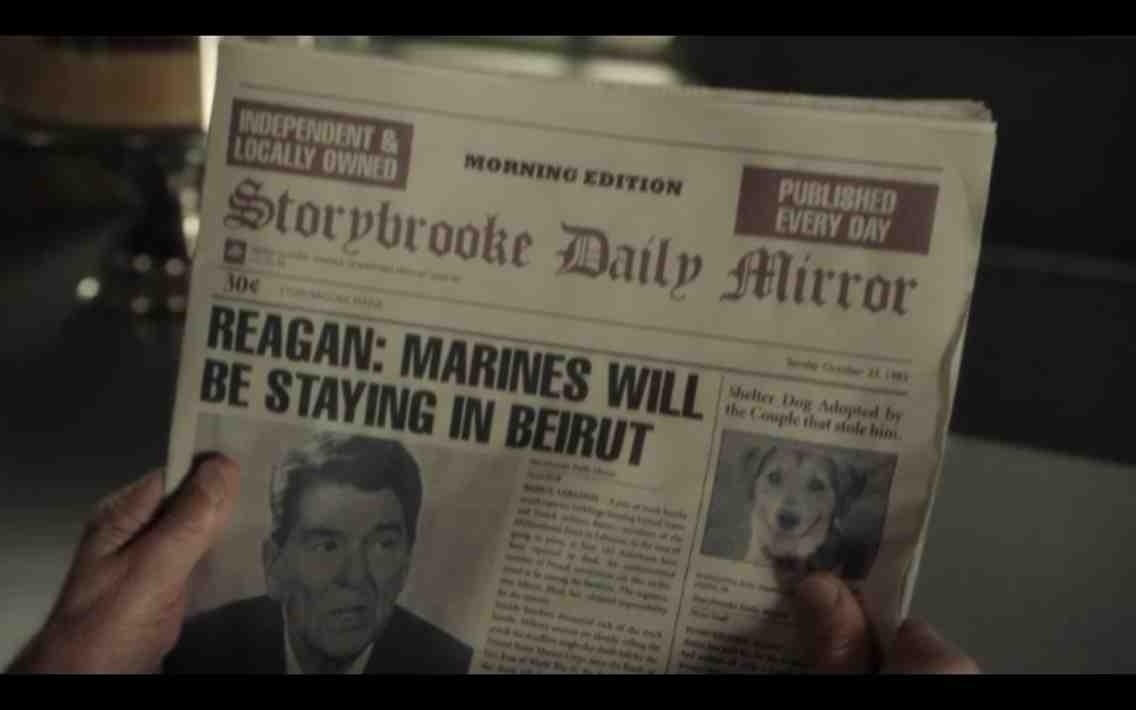
While watching the newest episode of American TV Show “Once Upon a Time,” which flashbacks to the earlier days of Storybrooke, one of the characters was reading a newspaper in which former US-president Reagan is declaring something regarding the Marines in Beirut.

For those who don’t know, Once Upon a Time is a very creative and interesting show by the creators of LOST, which is one of my favorite TV shows of all time (despite the lackluster finale). It’s about every single fairytale character you could think of and how their stories intertwine as they are taken out of their world and into ours where they live in the town of Storybrooke, without any recollection of their previous lives.

Of course, the plot has definitely thickened and gone much darker since the show’s early days but it’s always interesting how they manage to weave together stories you never thought would have any relation to each other: Snow White and Hook, Little Red Riding Hood and Snow White, Jack (the one with of the beans) with Hook, Rumplestilskin and everyone else, etc….

It also offers a whole new “perspective” to the stories we grew up reading – can you imagine for a second that Snow White may have been the reason her stepmother went bad?

If you’re not watching Once Upon a Time, I highly recommend you start doing so – not because of their irrelevant mention of Beirut which lasts less than 1 second but because the show’s premise is very different from everything else out there.

Lebanon’s VIP Cinemas & Empire Premiere

20130319-123443.jpg

Before we begin, I must insist that you all go watch the movie Amour (my review), whose poster is shown at the side of the above picture, when it’s released in Lebanese cinemas next week. It doesn’t matter which cinema you go to in order to do so as long as you watch that brilliance.

I had never been to a VIP cinema before. The idea of paying more than $10 for any movie given what our screens are is not only absur, it’s basically financially not feasible for someone like me who spends a lot of time at cinemas. Yes, I watch more movies than I actually review.

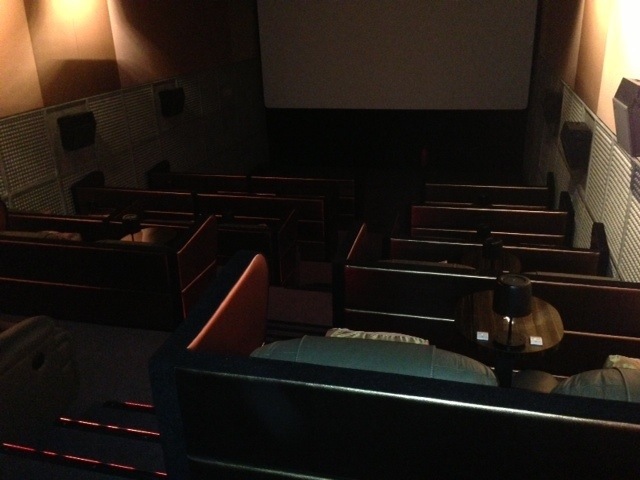
When Circuit Empire invited me to attend the grand opening of Empire Premiere, the renovated Empire Sodeco, I felt like it would be a nice opportunity to see what the fuss was all about. Before I discuss, here are some details you might be interested in:

  • The theatre involves 6 theaters, all of which are VIP-like theaters.
  • Each theatre contains about 30 seats.
  • The ticket price is $20 which includes ONLY your theatre seat. Drinks and pop corn and food are not included and must be purchased separately.
  • The food that will be available for purchase there is sushi from Achrafieh’s Le Sushi Bar. Portions will be smaller than the ones available at the restaurant itself and the price will be the same.
  • Pop Corn is supposed to be gourmet pop corn with different flavors every week of which someone mentioned zaatar.

20130319-123615.jpg

20130319-123823.jpg

20130319-124058.jpg

The most interesting aspect about Empire Premiere, to me, is their 18+ policy which means if you want to watch a movie without all those preteen fangirls, you might have a chance to.

It’s not all that peachy, however. While the project is, as you can see from the pictures, quite ambitious, I couldn’t not express my disappointment to whoever asked that such money was spent into something that, as far as I’m concerned, already exists with slight variations elsewhere, when it could have been done in investing in an IMAX movie complex which truly means a “refined movie experience,” which the new theatre’s tagline is.

After all, at least to me, a refined movie experience is less about very comfortable reclining seats and blankets and more about an engrossing screen that satisfies the craving that movies should satisfy.

The replies I got to the aforementioned points were the following:

  • An IMAX screen doesn’t fit anywhere in Beirut so the project cannot happen there. It has to happen outside of Beirut which isn’t feasible at the moment.
  • Empire Premiere differs from other VIP cinemas in it offering the lounge in question. And in the fact that the ticket is only $20 for the movie whole it is more than that in other VIP cinemas.
  • Empire Premiere isn’t only for movies but will serve as a space for conferences in the long run. It will also allow people to book entire theatre rooms for approximately $500 to watch a football game or a movie of their choice.

Why can’t an IMAX cinema happen outside Beirut? Because everything in Beirut is the answer I got: malls, cinemas, etc. Everything is centralized, which I wrote about here. So until a viable alternative location which people would go to exists, an IMAX cinema is out of the question because it requires its own multiplex and cannot be part of a mall.

I pitched in the idea of building one at ABC Verdun. Apparently their rent rates are too high for such a project.

If you think the whole concept is not really for you, you thought right. As to why cinemas keep doing the same thing over and over again (VIP, premiere), they said that market research has indicated that the category of “refined Beiruti people” aged 45-65 are barely going to the movies anymore and this is targeted more to them.

The place isn’t meant for us.

Moreover, I know for a fact that a couple of friends paid $12 for VIP tickets at CinemaCity to watch The Hobbit, which means that the $20 entry price isn’t the lowest in Lebanon.

The bottom line is: I found the experience to be super comfortable. But do I want to pay $20 for a movie that I can watch elsewhere for at least half that amount? Well, the answer goes both ways: if you have enough money and believe it’s a must for you, then go ahead. If not, then the answer is staring you straight in the face.
As far as I’m concerned, the old-fashioned cinema experience is part of every movie’s charm. But that’s just me.

Same Trailer Different Park (Album Review) – Kacey Musgraves

20130319-110147.jpg

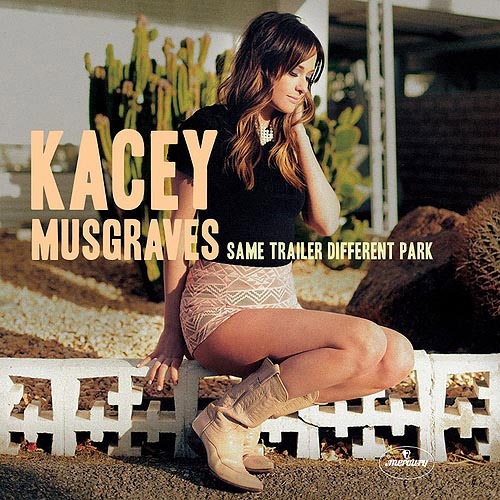
Kacey Musgraves arrives in a music scene that’s focusing more on shock factors in order to get somewhere and growingly dumbed down lyrics to appeal to the masses. The louder music gets, the sillier the things it says, the more successful an artist becomes. There’s almost a linear relation there.

Same Trailer Different Park is Kacey Musgraves’ first album though she has offered country music many songs as a songwriter, many of which turned out to be big hits.

The musical style on her first album is understated, smooth, folk-like and breathy, even the stompy songs such as “Stupid.” Musgraves’ style is detached from what you’d normally expect, even among country artists.

Her vocal delivery is simple as well as effortless. She doesn’t belt out notes like fellow country female singers such as Carrie Underwood. Her style aims solely at delivering the music she wrote in the best way possible. She creates a niche for herself with a very distinctive voiceless delivery.

The strongest suit of this 12-songs collection, however, isn’t the music. It’s Musgraves’ lyrics which challenge the basic foundation of her conservative country audience. “Make lots of noise, kiss lots of boys or kiss lots of girls of that’s what you’re into,” she sings on the brilliant Follow Your Arrow. You can already see heads turning if that line ever comes on their radio.

She doesn’t glamorize rural life which country music usually loves to love. On the album’s first single and standout offering “Merry Go Round,” she sings, in non-autobiographical fashion, about all those people who settle down like dust on a broken merry go round, who think their first time is good enough so they stick with their high school love and end up like the parents, happy in their shoes while their “mama’s hooked on Mary Kay, brother’s hooked on Mary Jane and daddy’s hooked on Mary two doors down.”

She sings about one night stands “but I ain’t got no one to sleep in with me, and you ain’t got nowhere that you need to be. Maybe I love you, maybe I’m just kind of bored. It is what it is till it ain’t anymore.”

Even the more optimistic songs on Same Trailer Different Park, such as the opening song Silver Lining that’s about trying to look at the brighter side, are rooted in a sense of realism that makes their overall effect quite haunting.

On songs like “Keep It To Yourself,” Musgraves talks to an old lover who’s still asking about her with the simplest yet eloquently-woven lyrics: “You turn on the light then you turn it back off cause sleeping alone, it ain’t what you thought. It’s the drip of the sink, it’s the click of the clock and you’re wondering if I’m sleeping. You heard from your friends that I’m doing okay and you’re thinking maybe you made a mistake and you want me to know but I don’t wanna know how you’re feeling… when you’re drunk and it’s late and you’re sad and you hate going home alone cause you’re missing me like hell, keep it to yourself.”

The young Musgraves also sings about the small things you think you’d change but it’s all simply “Blowin’ Smoke” or simply telling someone to “Step Off” with all their negativity from your life and off the throne they build for themselves by stepping on other people or about having “My House” on four wheels that you can take wherever the wind blows.

Same Trailer Different Park is an A-class music album that offers a beyond credible alternative to the music we’ve grown accustomed to by an artist who might be the best thing to happen to country music, and music in general, in a long time. Whether she’s singing about a long-gone love or about how life is in the heart of Bible-belt America, Kacey Musgraves takes you on a ride on a perfectly fine merry go round. And you can’t wait to know what comes next.

A
Download: Merry Go Round, Keep It To Yourself, Follow Your Arrow.

Joe Kodeih’s Le Jocon – Review

Le Jocon Joe Kodeih

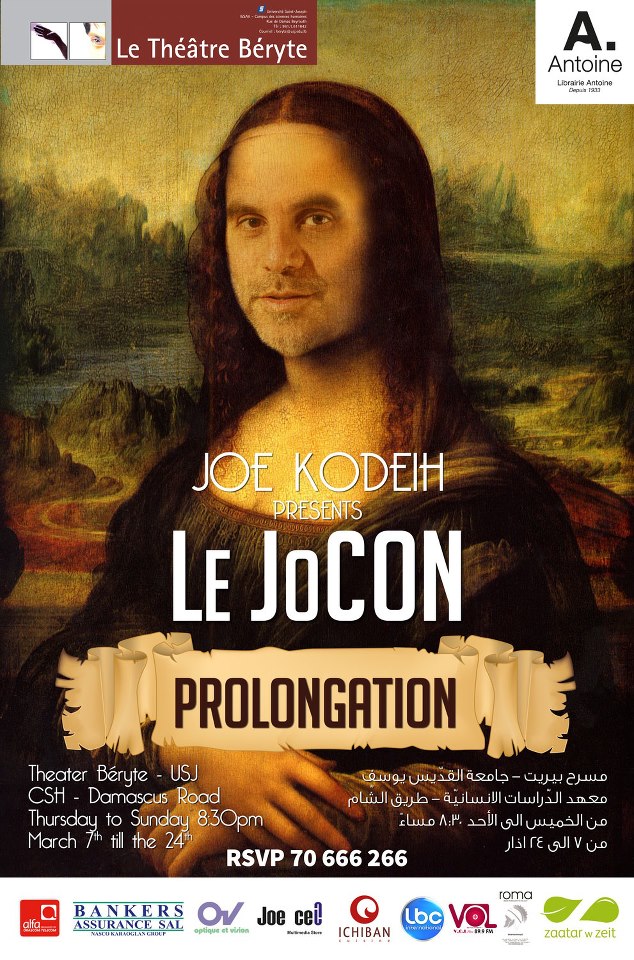
Lebanese comedian Joe Kodeih’s latest offering is Le Jocon, a play whose title is a play off the french name of DaVinci’s Mona Lisa.

Le Jocon starts with Kodeih visiting a psychatrist who immediately subjects him to hypnosis and asks him about his mother. Running for approximately 60 minutes, Le Jocon is a more or less autobiographical portrayal of some key moments in Kodeih’s life – all of which are given a comedic twist, obviously: from his moment of conception to his first days of school to growing up and going to Paris for a few days of vacation.

Those events are all done to the backdrop of a Lebanese life in Achrafieh, which makes the play very concentric. If you haven’t spent time in that part of Beirut or are not familiar with the many stereotypes associated with the people of Achrafieh, there are many jokes that you will miss.

Moreover, one of the key moments in the play which takes the biggest fraction is Kodeih’s visit to Paris which is told in three parts stretching over the three days of his visit. I personally found it hilarious because I had been to Paris but for someone who doesn’t know what Châtelet-Les Halles is (a subway station the size of Beirut’s airport) or what happens on the many different streets of Paris that he mentions, the jokes will come off flat or how difficult it is to take that infamous schengen visa picture: don’t smile, head at a 90 degrees angle, let the sadness erupt from your depth. Hilarious. Unless, of course, you were never submitted to a schengen visa picture.

My main problem with Le Jocon, however, is – and I understand this is overly analytical from my part – the stereotyping of the psychiatry experiment which Kodeih uses as a vessel to tell his story especially that it only serves to reinforce the misconceptions that many people have about the field, one which is more or less a taboo in Lebanon still. Of course there will be hypnosis. Of course the psychiatrist will ask about his mother. Of course he will turn out to have issues with his mother. I don’t feel we are at a point where that field should be an open field for comedy yet.

In general, though, Le Jocon is an entertaining short play. Tickets are for 20,000 and 30,000LL. Only two shows remain next weekend. It will make you laugh. So why not?

3.5/5


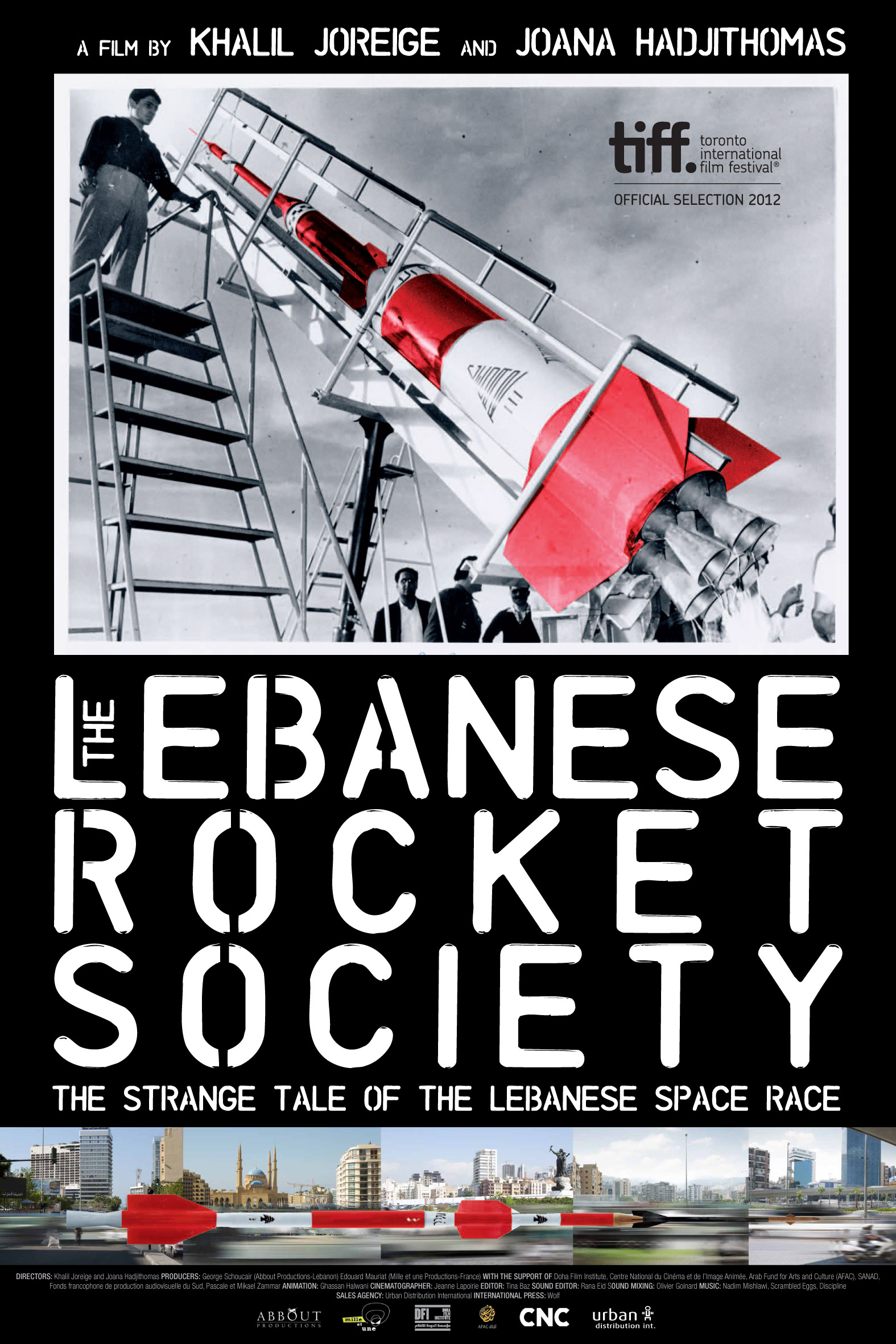
The Lebanese Rocket Society (Documentary) – Review

The Lebanese Rocket Society

Brought to us by Joana Hadjithomas and Khalil Joreige, The Lebanese Rocket Society is a documentary about a phase of Lebanese history that exists between both of our civil wars, from 1960 to approximately 1966, in which a group of Lebanese students at Haigazian University launched rockets as part of a series of scientific experiments.

The above is not science fiction, as I had thought on many occasions when many blogs and newspapers wrote about the society over the past few months, despite it being quite difficult to believe given where we are technologically in Lebanon today.

The Lebanese Rocket Society‘s premise is bittersweet. For its main purpose, it makes you proud that these students not only decided to build a rocket, but also chemically made the fuel the rocket is supposed to use because only superpowers possessed it and were not going to dispense quantities of it to Lebanon. The students even built the radar sensors that they equipped the rockets with after a brief miscalculation which sparked a UN-debaccle with our neighboring Cyprus. Yes, we haven’t been nice neighbors all the time apparently. The Lebanese Army eventually helped them in their scientific experiments for the students were heading into financial difficulties with their ambition growing bigger.

The mere fact that the Cedar-named rockets were all built from scratch is a testament to the ingenuity and the creativity of these young Lebanese students. Too bad such advances are purely science fiction not because such brains are lacking but because of our country’s circumstances.

The most interesting parts in the documentary were, without a doubt, the sections where real-life footage from the many launches that took place were incorporated. The archive is unimaginably great and seeing it is worth the price of admission alone. It’s always interesting to dig up 20th-century material about Lebanon that is not of tanks bombing buildings and of a torn-out Holiday Inn hotel.

The documentary seeks out Manoug Manougian, the student who started it all, currently a math professor at a university in Florida. Manougian shares the archive he kept of what he calls one his life’s proudest moments. You can check out his personal page here.

The directors also find Harry Koundakjian, the photographer who documented the Lebanese Rocket Society’s experiments, as well as former Haigazian president John Markarian. However, even though the other participants in the society’s experiments are mentioned, nothing is said about them nor are they mentioned again beyond the movie’s opening scene, which I thought did their work a disservice.

Moreover, The Lebanese Rocket Society goes off-topic often, notably with an entire sequence about the importance of the Arab Spring, as well as many other political subtle messages passed on notably about the importance of the Arab unity under Abdel Nasser. I still have no idea how the entire documentary’s premise fits in the mood of revolutions and freedom and whatnot spreading across Egypt, Libya, Tunisia and Syria but the notion is present.

I also felt it was very misleading that – despite their army source telling them the army had a panel discussing the possibility of turning the rockets into weapons by having one floor of the rocket filled with bombs – the directors were adamant that these rockets were a scientific experiment and build the entire documentary on that premise. It was quite clear that the rockets couldn’t have been possibly done if the army hadn’t helped and if the army wanted to make weapons out of them, they would have been turned into weapons.

The Lebanese Rocket Society ends with a 10 minute or so animated sequence which asks the question: what if Lebanon hadn’t stopped the rocket experiment?

To answer the question, the directors believe we would have a metro network running under Beirut, oil rigs off our shores, an entire space program rivaling that of the U.S.A. (down to basically ripping off Nasa’s logo), etc.

The sequence, in my opinion, did the movie a grave injustice and it shouldn’t have been included at all. It was already established that the rocket experiment was stopped because Lebanon was asked to by higher authorities in countries North, South, West and East. One of the documentary’s strongest scenes was one where a drafting compass drew a circle from Lebanon to where our rocket would have reached. Sinai was accessible. It was already established as well that the rockets were not, eventually, a mere scientific experiment as the students involved kept repeating. Those students didn’t know any better, obviously, but the army did. How does that set up for a future as bright as the one they tried to portray?

Nothing is better than some Lebanese future pick-me-up every once in a while, but at least don’t have it that separate from all the facts the documentary had presented over the course of the previous 80 minutes, especially that the presentation of those scientific facts was very systematic and documented.

I personally recommend people watch The Lebanese Rocket Society when it’s released in cinemas on April 11th despite its shortcomings because it is a documentary that showcases a different side of the Lebanon that we thought we knew, one that has been erased from the collective memory of the country as a whole – all supported by some old footage that will leave you baffled.

3.5/5