The Girl Who Kicked The Hornet’s Nest (Book Review) – Stieg Larsson

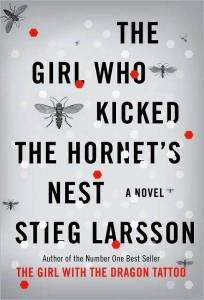
The Girl Who Kicked the Hornet’s Nest is the third and final installment in the Millennium trilogy, currently the best selling books worldwide.

The final installment picks up where the second one left off: Lisbeth Salander has been shot, Zala is wounded and Niedermann is tied to a sign post. And so both Salander and Zala are taken to the hospital to fix up their wounds, with Lisbeth barely making it through. However, the revelations that started with the second installment, about Lisbeth’s deep involvement with a section of the Swedish secret police, continue to work in the third book. Never before has the Zalachenko club in Sapo (the Secret Police) been revealed to this extent and they must do their best to clean up.

Little do they know, however, is that this time around Lisbeth Salander has decided to fight back – and similarly to them, her fight will not be clean. Unlike them, however, she will always be one step ahead, even when Sapo believe they’ve got it all in the bag.

Lisbeth Salander has to seek the help of Mikael Blomkvit, who’s now under strict Sapo surveillance. And he’s willing to help. He will harness the power of his magazine and investigative journalism to bring justice to Salander, a woman who has had her most basic of rights violated.

Erika Berger has a stalker as well. Someone who wants her to fail at her new job, as editor in chief. But the collective effort of all people who are involved, in one way or another, with Millenium – as well as Milton Security, Lisbeth’s former employer, is needed to bring the Zalachenko group of the Secret Police down.

The Girl Who Kicked The Hornet’s Nest is a very riveting book, especially when it comes down to the trial during which Lisbeth speaks up and surprises everyone. The cross-examination of Dr. Teleborian, the psychiatrist who decided Lisbeth needed to be locked up when she was twelve, is probably one of the most exciting passages to read in the whole series.

However, unlike the previous two books in the trilogy, there isn’t a mystery in this one. There isn’t a killer to be identified like in The Girl With The Dragon Tattoo or The Girl Who Played With Fire. All the cards are laid out on the table for you to see. You know what each side is capable of and you know the material they both have.

In books like this, it is up to the author’s talent and expertise to deliver a book that is captivating and still wholly engrossing for you to read. And Stieg Larsson delivers. The author’s approach towards this book is not different from the previous ones but there’s an undeniable sense of urgency in the way he laid his words on paper. The monologue italic thoughts are still scattered out throughout and they serve as a strong catalyst for the advancement of the plot.

There are moments however where Larsson abandons his novelist self and goes into a pamphlet-like writer, giving you what I believe is pages and pages of credible history about the workings and logistics of the Swedish Secret Police. The fact that I skimmed through those pages and still understood the whole book is testimony to how useless they are. Perhaps he wanted to use his books for some sort of activism, but it just doesn’t work. Or it could be that I have nothing to do with Sweden.

However, at the end of the day, even though the ending of The Girl Who Kicked The Hornet’s Nest is quite expected, it still brings you a sense of relief to see Lisbeth walk out free. The girl with the dragon tattoo who played with fire all her life dared to kick the hornet’s nest and live to tell the tale. And it is a great tale.

Pottermore Registration

[EDIT] I have successfully registered in Pottermore. 

For an early look into Pottermore, click here.

I have yet to gain access to the Pottermore registration interface (blame it on Sunday oversleeping) but I figured I’d post about the process to facilitate it for those who, like me, will attempt to gain access in the next six days.

When you access the Pottermore website, you will find a riddle for you to answer. Today’s riddle (or clue as it was named) was: How many breeds of owl are featured on the Eeylops Owl Emporium sign? Multiply this number by 49.

Once you get the answer, which in this case was 245, you have to use it to access a new webpage that will give you access to the magic quill.

To access this new webpage, you need to write down your answer at its end, meaning: http://quill.pottermore.com/245 (tomorrow’s answer will be different, so the addition naturally changes as well).

Once the new page loads, you’ll have to locate the Magic Quill, which for those of you who don’t know, is sort of a book where the names of every wizard and witch is written so they can be invited to Hogwarts once they turn eleven.

Once you locate the Magic Quill, you will be invited to start your journey – literally.

Once you “start your journey,” you go through a series of registration steps where you have to fill out your name, email, age, country of residence, etc…

If the person wanting to register is below 13 years of age, they only need to provide a first name and their guardian/parent’s email address.

Once the data input is done, you are presented with a list of famous magical people, including your name.

Then you’ll get to choose a username, which is not a free process apparently: they give you a selection of five usernames to choose from. Hopefully you’ll get to change that later on, but I doubt it.

Then, after selecting your username, a confirmation email is sent to you in order to activate your registration.

When done, you will be prompted with a new page telling you that you will receive the email telling you that you can test Pottermore in the coming few weeks.

Good luck everyone.

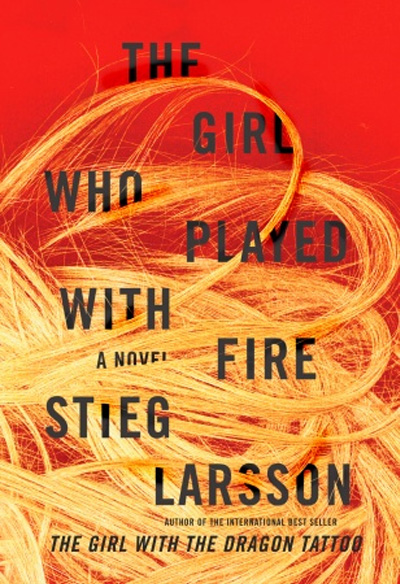
The Girl Who Played With Fire (Book Review) – Stieg Larsson

Continuing where The Girl With The Dragon Tattoo left off, The Girl Who Played With Fire has Lisbeth Salander enjoying a lengthy vacation globetrotting. She has the money and, well, anything to escape the reality of her life in Sweden.
And back in Sweden, Mikael Blomkvist is working on another huge expose, about the violations to the sex law by high-placing officials: sex trafficking, hiring of underage prostitutes, etc…

But when Dag Svensson, the journalist writing this expose, is murdered along with his girlfriend, Mia Johansson, in their apartment and a third victim, Nils Burjman (Salander’s guardian), is found naked, killed execution style, Salander becomes the main suspect in all three murders: a psychotic, mentally disturbed girl with her fingerprints on the murder weapon… a fast case, right?
But the case turns out to be anything but fast when Salander cannot be located and when the story takes too many twists and starts to signal a huge government cover-up that’s been taking place for decades.

The Girl Who Played With Fire is as equally captivating as The Girl With The Dragon Tattoo. As all books in The Millennium Trilogy, it opens up with a prologue. In this book, however, the prologue is chilling. It depicts a man raping a girl. And as he violates her, the girl starts fantasizing about killing him, lighting fire to him using gasoline. The prologue concludes: “She smiled a hard smile and steeled herself. It was her thirteenth birthday.”

The Girl Who Played With Fire follows the same narrative style as its predecessor: introspective ideas from its characters interspersed among the text to advance the plot. The build-up, however, is far better and more adrenaline-rush inducing. The book feels slower at times, especially when the police are searching for Salander and she’s nowhere to be found both by the police and by you, as the reader. But when she shows up again, the book accelerates at a very rapid pace.

This is a book about the personal life of Lisbeth Salander and “the great evil” that caused her to be admitted to a mental hospital when she was twelve, as much as it is about sex trafficking. The two are so interlinked that it eventually turns out to be quite logical. You might guess how it will all turn out (I did) but even with guessing it, you will still feel a sense of rush as you read the text.
Less detective this time, Salander is forced to limit herself with everything she does. It’s up to Mikael Blomkvist to prove her innocence and present an adamant police squad with an alternate hypothesis.

While The Girl Who Played With Fire is about sex trafficking mainly, it lacks the sexual tension that was in the first book, mainly because Salander and Blomkvist have very little shared scenes. It does, however, have an intricate puzzle, similar to the first book, that is also helped by uncovering Salander’s cunning mathematical skills.

The Girl Who Played With Fire, however, relies a lot on coincidence. In his last conversation with Blomkvist, Dag had told him he uncovered a lead in his research revolving around a mysterious man by the name is Zala, whom he wanted to track down.
Salander, being the hacker that she is, goes into Blomkvist’s email and uncovers the correspondence. Zala. She pays a visit for the couple moments before they are killed. And it so happens that she touched Burjman’s gun, which also happens to be the murder weapon, a few days prior. And it so happens that all of this happened when she returned to Stockholm and decided to check Blomkvist’s email.

But the way the books is written and the near cinematic transitions between scenes builds an undying suspense with a terrifying ending. Yes, this book’s ending will leave you at the edge of whatever furniture you’re sitting on while reading. The ending gives the book its title. It tells you why the girl played with fire and what this fire brought to her life. And at the end of the day, cracking through her strong woman facade, is a sense of vulnerability in Salander that you barely glimpse as the book ends.

Trust me, though, you do not want to mess with the girl who played with fire.

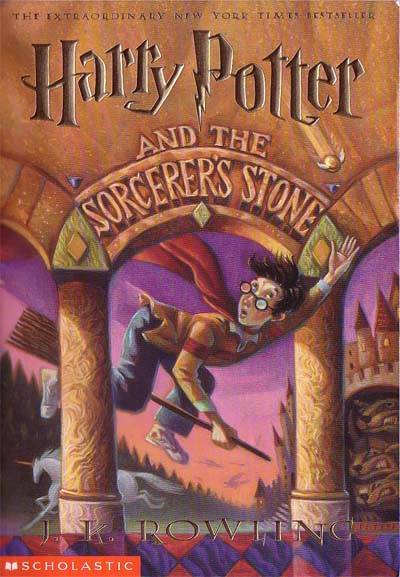
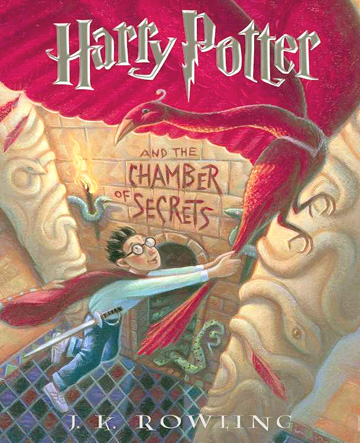
13 Reasons To Love Harry Potter

With less than six days to the release of the last Harry Potter movie, I figured it’d be nice to write a list of reasons of why millions and millions around the globe love the books that made J.K. Rowling a billionaire and the Harry Potter movies the most successful movie series in history, as well as the fastest selling books ever.

1 – We all grew up with Harry. Most readers of the book jumped on the bandwagon long before the last book was released. We all waited impatiently for each installment to be released and we’ve all let our imaginations run wild with the possibilities that Harry Potter presented.

2 – Harry Potter is not your typical hero. Unlike action movies where the hero would be inundated with gunfire and never get shot, Harry is vulnerable. He is weak. He is flawed. He is human. You can relate to him. And if Harry Potter rubs you the wrong way, you have the ginger Ron Weasley or the bookworm Hermione Granger to keep you company. Or the everwise Albus Dumbledore. The books present you with a plethora of characters with whom you can relate – at least a part of you does.

3 – They might be fiction and fantasy but the books are gut-wrenchingly real. How many of us were teased because we got high grades in school? *raises hand* How many of us were ridiculed for not going with the flow? How many of us had our voices muted but refused to remain quiet? The basis of the Harry Potter books might be a fantasy. But the crux of them is a story about love, compassion, humility, family and courage.

4 – Once you start reading the books, you cannot put them down. There’s something about J.K. Rowling’s style that just captivates you. It’s eloquent, verbose and at the same time succinct. It captures the moment perfectly and immerses you in the lines on the page you’re reading.

5 – Harry Potter is a world by itself. How many times have you craved butterbeer or Bertie Bott’s Every Flavor Beans, as long as that flavor is not anything wax-related? How many times have you wondered if there’s really something as platform 9 and 3/4 in Kings Cross Station? How many times did you even wonder if there’s something named Diagon Alley? No, I’m not being delusional. When you read the books, the world in which the story is set captivates you. For the time you’re reading, you’re taken away from dismal realities to a place where, even when it’s at war, is a better alternative.

6 – Harry Potter makes you appreciate your mom. Harry’s mom died for him. Ron’s mother would do anything to keep her family together. And even to some extent, Narcissa Malfoy can be added to that list. And in a world where the value of family is dying down, such mothers serve as a role model to everyone and they let you know the value of the person you call mom. It could be the pain that J.K. Rowling felt when her mother passed away but every mother figure in the books is made perfect.

7 – The books are genius. How many times did you wonder while reading them how J.K. Rowling came up with the idea behind them? It all started with a train running late. At least that’s how the story of the books’ creation goes. But really, the sheer amount of creativity behind the books is almost unmatched.

8 – When you immerse yourself in the Harry Potter books, you become part of a kick ass fanbase known as Potterheads. They are relentless. They defend the books they love and can take hits without flinching. Some of them are border maniacs but the norm is an awesome crowd. They also make lots of fun of the Twilight books and let’s admit it, compared to this, those books are useless.

9 – Reading (as in the act itself) the Harry Potter books instilled the joy of doing so in millions. Who would have thought buying an 800 pages book would be the only thing a teenager would think about day and night until they set hands on the book? The books instilled in everyone the pleasure of reading by offering complexity, relateability and mystery.

10 – The books do not shy away from showing the hard faces of life. Racism is present. Hate is also widely expressed. Some parts are violent and other parts are just chilling. The world of Harry Potter is not just some world where everything is happy. It’s a place where things can go wrong and when they do, it’s on a massive scale. The conflicts are not easily solved. Sure, it’s fiction but at least not everything works out for the best all the time. You lose some of the people you love. You get betrayed. But you can always recover.

11 – J.K. Rowling maintained the folklore aspect of the fantasy elements in the novels. She did not change how a werewolf transforms (or when it does so), how a unicorn looks like or what a centaur is. Which gives the Harry Potter series a sense of authenticity in the genre it belongs to.

12 – Some people think loving Harry is a vice. Well, we tell them it’s a virtue. If there’s anything redeeming about a person, it would be them reading this series. You cannot read such books and be a bad person in life. And when one day they stand at the Pearly Gates and St. Peter calls their names, it would be because reading Harry Potter was one of the most redeeming quality of their lives. Yes, I’m exaggerating but there you go.

13 – A seventh of the dedication of the last book was made to you. How could you not love that?

For the sake of continuity (although I do not agree with his loathing of The Order of the Phoenix), check out this post by my friend Gino Raidy: As The Harry Potter Era Ends, So Does My Childhood.

The Girl With The Dragon Tattoo (Book Review) – Stieg Larsson

The Girl With The Dragon Tattoo is the first book in The Millenium Trilogy by late Swedish author Stieg Larson.

Mikael Blomkvist is a man of many things but liar isn’t one of them. He wasn’t exactly being framed. His predicament was totally his fault but he should have known better. Sitting in court, receiving a three month sentence for libel against a Swedish business giant, he thought he had hit rock-bottom both financially and career-wise.

Soon after, Mikael receives the strangest job offer from the head of one of Sweden’s leading businesses, albeit being on its way down. Henrik Vagner, aged 82, wants Mikael to spend a year writing the history of the Vagner family in an attempt to solve the mystery of the disappearance of his niece: Harriet Vagner, some 40 years prior.

As they say, you can’t get a colder case than this. Harriet disappeared on Children’s day on the fictional Swedish island of Hedestad and even though an extensive search was made following her disappearance, a body was never found. So Vagner asks Mikael to attempt to find answers, as a way of closure for a man whose days are nearing their end.

But soon enough, Mikael needs help as he starts uncovering chilling new evidence that were overlooked in the original investigation. And that help comes in the form of Lisbeth Salander.

Lisbeth Salander is a 26 year old woman who has been under the auspices of the Swedish state since she was thirteen after being deemed unfit to look after herself. She’s 4’11”, flat-chested, has more piercings than places to put them and more tattoos than real skin. One of those tattoos is a dragon on her left shoulder blade.

Lisbeth also happens to be a world class computer hacker, able to go into any program or computer known to man and make it look as easy as counting from one to ten. She’s also excellent at investigating people and coming up with extensive reports detailing things they never told anyone.

Together, Lisbeth and Mikael start unearthing detail after detail about a chilling series of murders with a biblical element, all taking place in scattered parts around Sweden, in relation with the Vagner corporation. Who could the killer be? And how does Harriet fit in all of this? these are some of the questions they will try to answer in the book, even if their lives depend on it.

The Girl With The Dragon Tattoo is a top-notch thriller. It doesn’t have any dull moments and it engages you with the complexity of its characters. You get immersed in the detail that Stieg Larson provides in his description of the inner workings of Salander’s mind, who happens to have some form of asperger syndrome, or Blomkvist’s sense of guilt after his sentence, which nearly got his magazine “Millenium” to go under.

The author writes down many of the main characters’ thoughts, in italics, throughout the book. These thoughts, along with the impeccable dialogue in which they are immersed, serve as a backdrop that enriches the story and breathes new life into it. Sure, many authors have used thoughts in italics in their texts before but those thoughts have never been as important to the development of the story as they were in “The Girl With The Dragon Tattoo.”

Larson doesn’t shy away from being explicit in the book as well. There are scenes which are depicted with exquisite detail that they will shake you. The book’s original Swedish title was, after all, Män som hatar kvinnor (Men Who Hate Women), which means the book has many physical, mental and sexual abuse scenes. They are depicted to the letter.

The Girl With The Dragon Tattoo is a must read to anyone who enjoys an immersing novel to entertain their days (and nights). It is a book that you won’t be able to let down. It is a serious page turner that is more a character study of Lisbeth Salander and Mikael Blomkvist than a cynical approach by the author to his country, Sweden. It is a book where little is at is seems. But one thing is most definitely clear: you do not want to mess with the girl with the dragon tattoo.