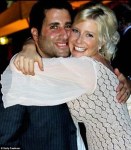

How Australia’s 60 Minutes Turned The Lives of Ali Elamine & Sally Faulkner’s Children Into A Circus

Currently playing in a Beiruti jail and between the Lebanese and Australian governments is a story that, to say the least, is probably going to end up as a big Hollywood production soon. We can only hope whichever studio takes it doesn’t give the leading role to Nicholas Cage, or Carlos Azar for that matter.

Almost twelve months ago, Ali Elamine, in pure Lebanese patriarchal macho fashion, tricked his ex-wife Sally Faulkner into allowing him to take their two children, Noah and Lahela, on a supposedly temporary trip to Lebanon. Clearly, the trip turned out to be anything but temporary as Ali refused to return the children to their mother who hasn’t been able to see them since.

Obviously, such a situation is abhorrent. Ali Elamine is, to put it bluntly, horrible. Not only is he the embodiment of the stereotypes that Lebanese Australians have to endure, but is also such a disgusting creature for doing what he has done. He has no excuses. He is revolting. No one with any ounce of humanity and reasoning can be on his side. He is a disgrace and another entity to the growing list of things to make us ashamed of sharing a nationality with them.

To do what he did, Ali Elamine is using demented Lebanese laws that rely on the religious background of the parents, in this case the Shia Muslim court, which gives the father the upper hand in a custody battle. Add to that the fact that he is essentially legally untouchable in Lebanon, and you have a pretty much sealed case.

As a cry for help, Sally Faulkner, the mother, has been trying to rally media behind her cause for the past six months. On the Lebanese side of the world, nobody cared. Such cases are common enough with asshole Lebanese fathers ever present for her case to register on the Lebanese let-me-see-if-I-should-care scale. In Australia, however, the producers of 60 Minutes saw in Sally Faulkner a story. And this is when they started to turn the lives of her children into a circus show.

Up until now, the custody battle between Sally and Ali was only as such, a battle between two parents. It was unfortunate that the laws in Lebanon are retarded and that Ali is a revolting existence, but that’s how things are. Perhaps with enough media pressure in Australia, Lebanese media would have picked up on the issue and sided – as they should – with the mother, leading to enough attention over here for a safe and sane resolution of the issue.

Except that didn’t happen, because what took place was the following:

The crew of 60 Minutes, which airs on Channel 9 in Australia, paid around $120,000 for an international child recovery agency, with a spotty track record and multiple botched attempts reportedly, and flew with them and the children’s mother to Lebanon in order to recover them.

The recovery attempt occurred as follows: while the children were with their grandmother at a bus stop in Beirut, the crew of that agency, masked and all, rushed out of a van, grabbed the children, pushed their paternal grandmother aside, and rode away with them, reuniting them briefly with their mother.

The whole Hollywood-esque sequence was caught on surveillance cameras, prompting Lebanese authorities to stop the van, arresting everyone inside: the crew of 60 Minutes (including Tara Brown), the mother and the crew of the recovery agency, and – obviously – bringing back the children to their father who clearly knew he had the upper hand on home territory.

Ali Elamine’s path now is clear: play up the fact that his children are Lebanese and are governed by Lebanese sectarian law, and portray their mother as unfit, attacking her reputation, which in Lebanon is akin to a death sentence. 

But the equally horrifying part in this whole story isn’t only Ali Elamine’s character, but rather how Australia’s 60 Minutes crew handled the entire affair.

For starters, what kind of reputable TV show pays over $120,000 for a children kidnapping agency, which is basically what that agency does, to kidnap children?

What kind of reputable TV show does what was mentioned previously not only to reunite the kids with their mother, but to get movie-esque kickass shots to boost their show’s ratings?

What kind of reputable TV show does so in the middle of Beirut, out of all places, without being aware of the laws governing the city, the relationship between the country where that city is located and their own home country?

What kind of reputable TV show is apparently seemingly unaware of what could possibly go wrong in basically kidnapping two children who are nationals of the country they’re kidnapping them from, taking them away from their father and trying to take them back to Australia? Do they not know that Lebanese children are NOT allowed to leave the country without the written and documented consent of their father?

What kind of reputable TV show puts the priority of a dramatic story over the well-being of the children involved, whose lives will be affected in more ways than anyone will ever imagine?

By doing what they did in Beirut, the producers of Australia’s 60 Minutes did more damage to Sally Faulkner’s case to have her children, to the lives of those children and to their reliability as a supposedly top notch investigative journalism show. In a perfect world, you can’t go back from such massive unprofessionalism, except they probably will. The only entities who will be permanently damaged are Noah and Lahela, whose chances of being with their mother have become next to zero, and whose lives have been turned into a real life circus, soon to be a Hollywood movie, or maybe even a book. In custody battles, one of the parents wins, but the children always lose. Now make that loss on an international, Hollywood-esque scale.

 

Attacking Alsharq Al-Awsat’s Offices Is More Insulting to Lebanon Than Their Caricature

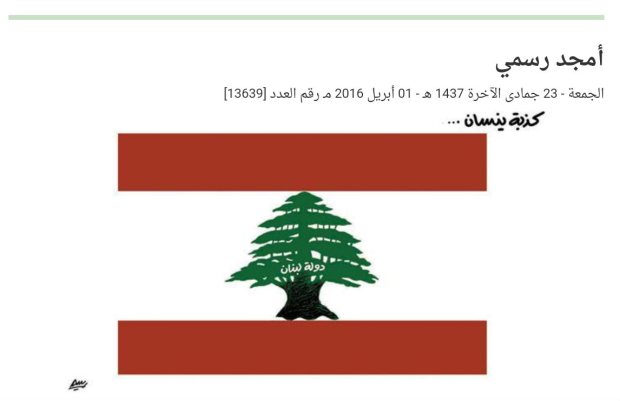
Earlier today, Saudi newspaper Alsharq Al-Awsat, which most of us had not heard of until this point, decided to contribute to April Fools with their joke, the pun being Lebanon.

Alsharq Al-awsat Newspaper April Fools Lebanon

The caricature translates to: April Fools… the State of Lebanon.

Of course, Lebanon was in an uproar, but none more so than self-proclaimed comedian and frequent let-me-run-for-parliament-as-a-joke Pierre Hachach who decided to pay the Lebanese offices of Alsharq Al-Awsat a visit and, obviously, vandalize them.

He was so proud of what he and his friends did that he posted the video on Facebook, in two parts:

Is it just me, or is it immensely ironic that Pierre Hachach and his friends saw that the best way to respond to someone saying the Lebanese state was a joke was by showing how barbaric the Lebanese people can be and how absent the Lebanese state actually is in preventing such a ruckus from taking place to begin with?

The caricature in question can be interpreted in many ways. I personally found it lame, and not even worth a second glance. It was first and foremost political, coming at a time when Lebanon and Saudi Arabia were at political odds, regardless of what Saad Hariri thinks of this. Any other consideration, be it about its artistic, comical, any other value or lack thereof, is besides the point. As such, the reply to such a caricature should be political and in the same manner that it was made: write about it, tweet about it, insult it, make another caricature replying to its content, or any other civilized manner that befits us as a people and this country whose name we’re so keen to uphold.

We live in a region where freedom of speech is not absolute, where press is almost always afraid to say what it thinks, where dictators own airwaves and where the masses are led to figurative slaughter houses like sheep without knowing so. What happened today is attacking any ounce of freedom of speech this region has left, even if that freedom of speech was expressed in a way that we as Lebanese find insulting.

Lebanon is a regional pioneer when it comes to freedom of speech. In many ways, it’s the most important piece of dignity we have left. I am writing this because laws in my country allow me. You are reading this on your computer in Beirut or Tripoli or wherever because internet in this country hasn’t banned you from doing so. You are able to say whatever you want because we do not live in a security state. Things are not perfect, but things are not Saudi Arabia either.

Pierre Hachach and his friends attacking the offices of Alsharq Al-Awsat is an attack to that last piece of dignity that we as Lebanese have, giving us an image of barbarics who can’t take differing opinions, who think fists are the proper response to speech, who think that chaos is more appropriate than order, and who think that our dignity is restored with violence, not with honor.

How different would that make Pierre Hachach and his friends from those who attacked the Danish Embassy a few years ago because of a Danish newspaper’s caricatures about the Prophet Mohammad? How ironic is it that those same people probably were all about #JeSuisCharlie when the Charlie Hebdo HQ in Paris was attacked in January 2015 by people who were as offended about the dignity of their religion as they are about their country’s?

The answer is not so much.

Pierre Hachach, you would have done better by posting another meaningless Facebook video in which you replied to the caricature than by going down to the newspaper’s offices. I would have probably disagreed with you, but I sure as well wouldn’t be appalled and horrified at how insulting that video’s reflection is of this country you’re supposedly defending.

To that caricature I say: وإذا أتَتْكَ مَذَمّتي من نَاقِصٍ فَهيَ الشّهادَةُ لي بأنّي كامِلُ.


Lebanese Are Forbidden From Accessing Nejmeh Square in Downtown Beirut, But Foreigners Can

Nejmeh Square No lebanese

Picture this.

Downtown Beirut, home of the city’s flashiest and most expensive, the place housing essentially all forms of worthwhile Lebanese governance, which also happens to be the heart of the Lebanese capital, is a Lebanese non-grata region: we are not allowed entry to the area’s most important area, Nejmeh Square.

Even prior to the YouStink protests, the area had been a nuisance to enter: you had to be interrogated by army personnel, get your IDs checked out and sometimes even searched before they let you through the barricades. And people wonder sometimes why some parts of Downtown Beirut are empty.

Soon enough, entering Nejmeh Square was no longer a procedure, but an impossibility. The clocked-square housing our country’s parliament became off limits when the people giving that same parliament every ounce of legitimacy it has, or doesn’t, were forbidden from entering. Why? Because we posed a threat to a building that is, for the better part of any given week, month or year, without any official or parliament member not doing their job in its halls.

And yet, the security concern does not apply to everyone it seems because foreigners, regardless of their nationality, only need to flash their better-than-ours passports to enter and enjoy the sight of heartless emptiness behind the barricades, in the heart of Beirut.

Earlier today, a Facebook post circulated, by a man from Tripoli called Rashed Merhabi who was visiting Downtown Beirut when he decided to try his luck and enter Nejmeh Square.

I spoke to Rashed extensively to get the whole story, and here’s how it went down:

Rashed approached the security personnel manning the barricades on the main entrance to Nejmeh Square and he was denied entry, being told that “a decision had been taken to make the public square non-public.” When Rashed insisted that it was his right as a Lebanese to enter the place especially given that there was no parliament meeting taking place, he was rebuffed once more.

So he carefully made his way to the other side of the square where he was told that entry is only possible at the main entrance, which is basically the place he had just come from. So he returned there where that same security officer told him: “What part of you are not allowed entry don’t you get?”

It was then that same security officer allowed two foreigners entry while a family of four from the UAE were leaving. When Rashed asked for an explanation to what he had just seen, the security officer replied: “Yes, foreigners are allowed entry but you’re not. Now get the hell out of here.”

Rashed then tried to reason with the security officer who decided to use the following glowing argument: “Do I have the right to enter your house whenever I please?” Upon being told that his argument didn’t make sense and that they wanted to go to the Starbucks beyond the barricade, they were told: “Those running this particular Starbucks told us not to allow anyone except the ten Starbucks employees entry.”

Seeing that Rashed and his friend weren’t going away easily, another security officer in civilian clothes joins in and says: “we are Parliament security and we’ve taken over this Square. Only foreigners are allowed, now leave.”

The following day, Rashed tried to call Beirut’s Municipality which told him he had to take up his issue with Parliament which then transferred him to the ISF, which ended up being a dead end.

So yes my fellow Lebanese, not only is our nationality detrimental to our potential in any place around the world, but it’s also a hurdle coming in our way in the middle of the place we are forced to call home. Live love Lebanon indeed.

This saga isn’t exclusive to Nejmeh Square. Almost every single orifice in Downtown Beirut that might lead in one way or another to a governmental building, big or small, is blocked off from every single Lebanese that might wander there.

Remember the Roman Baths we used to take tourists to once upon a time? Blocked. Remember the Wadi Bou Jamil area where Beirut and Lebanon’s only synagogue is present? Blocked.

Every single one of us is a subclass citizens in our own country, at the mercy of politicians who think of us as nothing more than bugs infesting “their” spaces, encroaching on the things they hold dear, as we face their henchmen who marvel in the power they are bestowed by the fact that they wear a uniform.

I wonder what kind of government has the audacity to forbid its own people from accessing their own city. It’s the kind of government that is too terrified for its own existence that it becomes paranoid from the reason it should exist in the first place. And they call themselves as servants of the people.
#ThisIsLebanon: Showing The Beauty Of The Country We Come From & Trying To Keep It


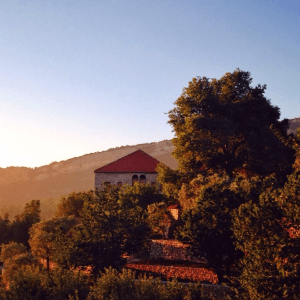
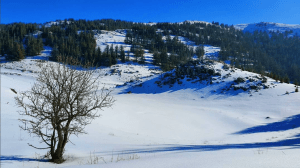
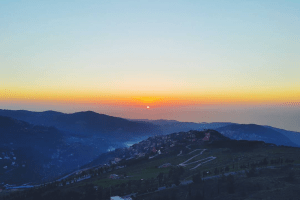
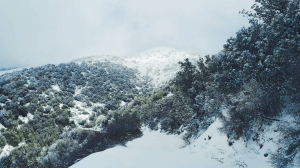
Lebanon is a gorgeous country. It takes an effort – at least for me – to try and see that in absolute value sometimes, but I can’t deny that there are instances where I can’t but marvel at the beauty of the country we call home.
To drive this point home and to encourage us to keep this country as such, or even make it better, Rani Nasr and Samah el Kadi, two aspiring Lebanese filmmakers, decided to do what they love best and make weekly videos highlighting beautiful landscapes in the country.
They just released the first video in the series, filmed in the Chouf mountains:

The next videos are filmed in various other locations in the country such as Tannourine, Ehden, Chahtoul, The Cedars, etc. As mentioned previously, they will be released in a weekly manner on this Facebook page (link).

Making the videos, however, was not as easy as just holding a camera and roaming around a beautiful forest or mountain. Due to Lebanese people being as they are, Rani Nasr informed me that he had to personally pick up garbage from entire landscapes just to be able to show how beautiful the place was and take a decent shot of it.

Not only is the nature we have left endangered by rabid urbanization, but also by people who can’t appreciate how beautiful it is and think that throwing their garbage wherever they may be is the way to go. You see, we are not victims of living in garbage. It is our choice. We chose for years to be a populace that litters all around, damaging the environment, helpless animals and ultimately ourselves. We also chose not to go back to what we know, our politicians, instead of what we need, a new system, when Beirut was drowning in garbage. We also chose to turn a blind eye to where the garbage filling Beirut’s streets is now being thrown.

He also told me about hunters roaming those areas just to kill deer and wildcats, either for BBQ purposes or to collect trophies on their walls. I had no idea Lebanon’s forests actually had deer, but it seems they do.

The biggest threat to our nature is us. How about we change that? Two things you can do that would help immensely are the following:

  1. Don’t throw your garbage anywhere and everywhere,
  2. Don’t kill harmless animals just because you’re bored.

I asked Rani if they intend to turn the #ThisIsLebanon movement into a #LiveLoveBeirut or #LiveLoveLebanon-esque entity, and he said no: it was just them doing what they loved, movies, to show what they loved, Lebanon’s nature. As such, they will not be monetizing off of it.

What they hope to accomplish is for their films to inspire people to want to see more of their country, to want to preserve the beauty and take positive steps in that direction: visit Lebanon’s natural reserves and help to preserve the forests by supporting them, not litter everywhere you go, marvel in the beauty of the country you live in and share it with whoever wants to see.

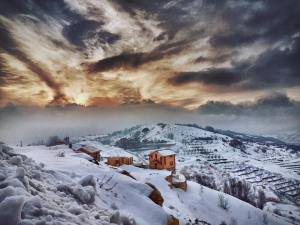
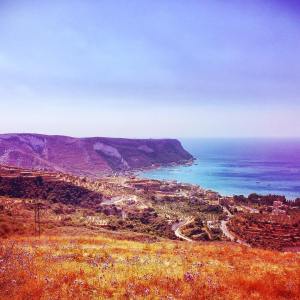
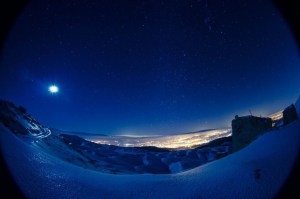
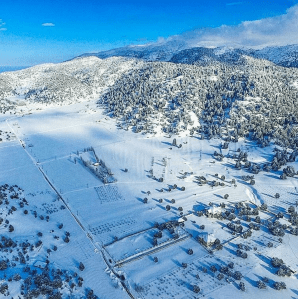
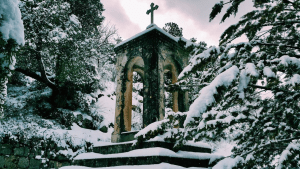
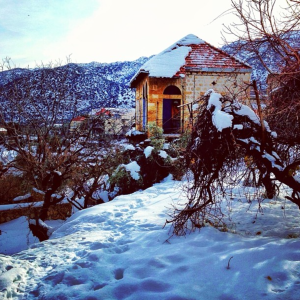
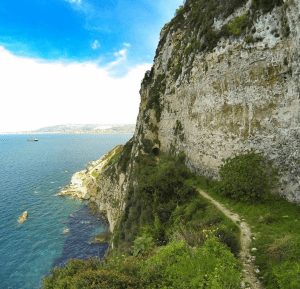
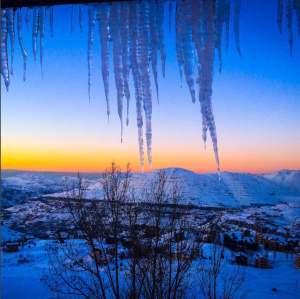
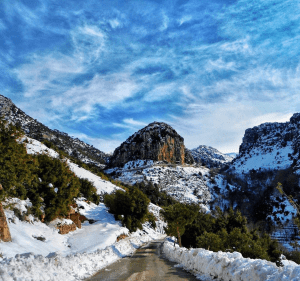
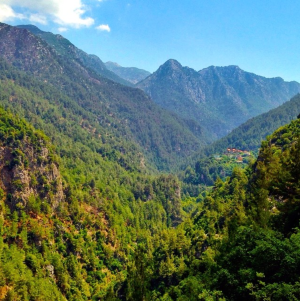
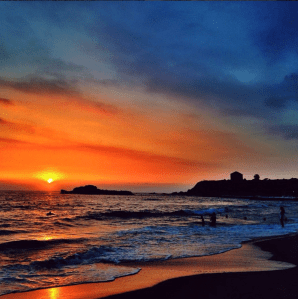
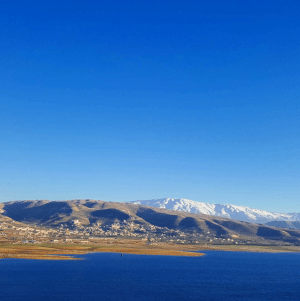
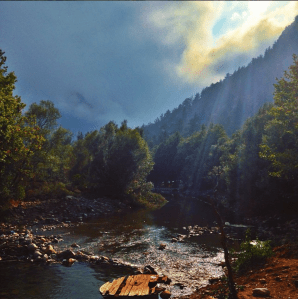
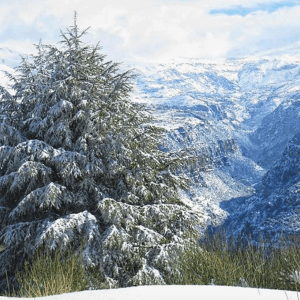
To end this on a more positive note, I figured I’d share a few pictures of the beauty of this country, with or without the hashtag #ThisIsLebanon, to drive the point home. The instagram accounts of the corresponding pictures will be mentioned in their caption, as well as their respective location.

You can follow the accounts here:

There’s a lot of beauty in the country beyond the confines of everyone’s Beiruti comfort zones. Go explore, return with beautiful pictures and change yourself and the country one beautiful landscape at a time. #ThisIsLebanon, and it’s worth discovering.


The Stunning History Behind Ras Beirut’s Endangered “Red House”

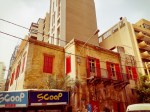
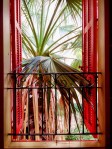
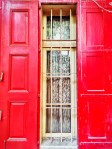
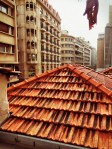
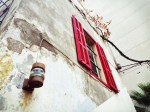
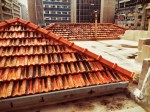
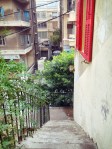
Nestled in the heart of Hamra, on Abdel Aziz street leading to Bliss Street, is a house most of us passed by without noticing until very recently. Its red window tiles always caught my eye in the days when I used to frequent that area, but their history was never evident. Isn’t that the story everywhere in Beirut though? You pass by these gloriously beautiful old houses, sigh at their dismal prospects in a city that cares less about its history and more about its bottom line and just continue about without giving a second thought at the times and stories those walls inhabit.

Let me take you on a journey across Hamra’s Red House.

One Of The Oldest Houses in Ras Beirut:

The Red House is comprised of two stories, the first of which was built in the late 1700s, along with a small kitchen above it to consitute the first part of the second story which was later continued in the 1800s by the Rebeiz family, which was back then one of the main Orthodox families of Ras Beirut and a prime owner of much of the land upon which Hamra today is built.

The story of the Rebeiz family dates back to as far as the house they lived in: they came to Hamra around 400 years ago and slowly made their way up the echelons of society, buying land from the well-renowned Druze Talhouk family. Together with the other prominent Bekhazi family, they became forces to be reckoned with in their area. Their names became synonymous with Ras Beirut, and vice versa.

The Red House has housed many generations of the Rebeiz family, but its most prominent were two women: Samira and Marie Abdo Rebeiz, both of whom were widows who lived in the house in the early 20th century, and it is them that made the house the beacon of Ras Beiruti elite life.

Pioneering Matriarchs Of Ras Beirut’s Political Ring:

Marie ABdo Rbeiz

Marie Abdo Rebeiz was unfortunate enough to find herself a widow with two sons: Michel and Georges, at a very young age. Her plight was also shared by her cousin Samira Rebeiz who lost her husband at the tender age of 25, and was left with four children to take care of.

Marie Abdo then invited her cousin, whose inherited property had been taken by the rest of the Rebeiz family for fear of her remarrying out of the family, to live with her in Hamra’s Red House, along with her four children, in the “newer” upper story part of the house.

The two women co-existed quite well and their children grew up around each other. Michel, Marie Abdo’s son, still lives in the bottom floor of the house to this very day. Georges later became a prominent cardiologist in the area and has 3 children who currently inherited the house after their father’s passing a few months ago.

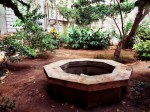
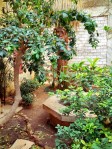
Marie Abdo and Samira, however, were extremely powerful women. They were so powerful in fact that they  had a major role to play in the dynamics of Beirut’s political life around that time: it is the Red House that became a reference for many of Ras Beirut’s elite politicians, of differing sects, in order to truly have a shot at whatever position they coveted: Marie Abdo and Samira were important electoral keys to the women of the area, the extended Rebeiz family and its 3000+ votes at the time. They kept a garden next to the house, cooked for their neighborhood and hosted many gatherings for the women of the region.

Among the politicians whose careers were majorly influenced by this house are Habib Abi Chahla, one of country’s independence heroes, Bahije Takieddine, Saeb Salam – father of current PM Tamam Salam, Sami el Solh and Fawzi el Hoss, all of whom became MPs or PMs at a later point in their careers. Their descendants tell tales, even today, at how important that house was to their fathers.

Louis Armstrong Visited Too:

Louis Armstrong

During his visit to Lebanon in the 1960s, Louis Armstrong, one of they key figures in Jazz music, visited the Red House. He was brought to Lebanon by one of Samira Rebeiz’s sons, Georges Rebeiz, who founded Caviar House and Prunier. That son wanted to introduce Armstrong to the house that built him.

It Survived The Civil War:

The house also made it relatively unscathed through the Lebanese civil war. Its tenants refused to vacate the house for the many militias that demanded it, and through a stroke of luck was left militia-free.

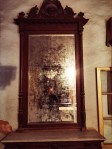
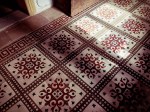
After the end of the civil war, its main tenant Samir Rebeiz, a well known conservationist and restorative architect with an impressive portfolio, who is currently vacating as per a court order, made sure to restore the part in which he lived to the best of his capacities. You can see from many of the pictures at the beginning of this post how relatively well-preserved the house is.

The current tenants even made it a yearly affair to repaint the windows with their characteristic red color, as I was told by Paola Rebeiz, a well-known Beiruti socialite and fashion consultant.

A Rebeiz Family Feud:

Over the past few days, the imminent threat to Hamra’s “Red House” got activists and Beirut’s heritage preservation groups to try and save the house. In their attempt to do so, a potential family feud between the Rebeiz family was unearthed: one between the descendants of Samira and Marie Abdo.

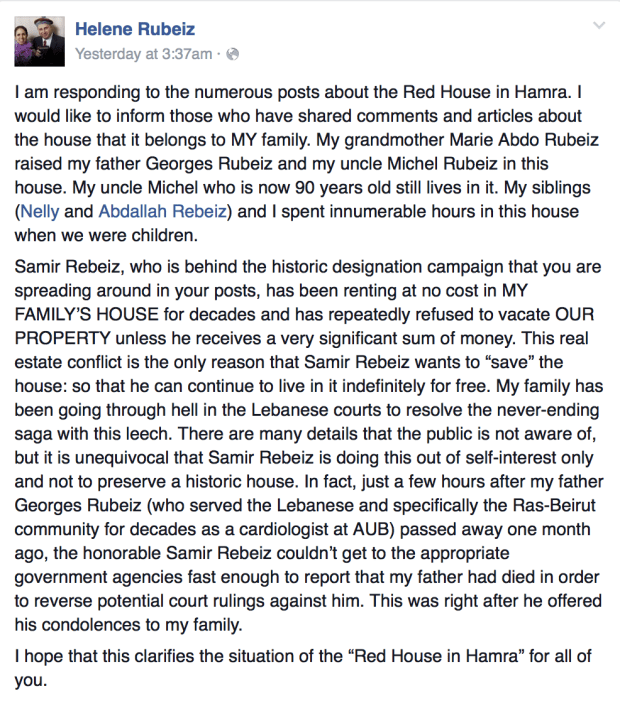
Helene Rebeiz, one of the three people who recently inherited the house after the passing of Marie Abdo’s son Georges, had the following statement:

Helene Rbeiz Red House Beirut Hamra

Samir Rebeiz, who has been living in the house for years, was doing so under Lebanon’s ancient and outdated renting laws, which effectively mean that tenants pay minimal amounts to their landlords and evicting them is near impossible.

When asked about this, Samir Rebeiz refused to make a statement and simply said: “I am leaving this house. I’ve done everything I can to maintain it, and my conscience is clear.”

When I visited, the house was being vacated. Everything Samir owned was being tucked away in boxes, leaving empty rooms and hallways.

The court order requiring Samir Rbeiz to vacate the premises mentioned that the owners wanted to demolish. It is unknown, however, which real estate mogul is interested in the property.

Heritage Trumps Money:

The fate of the house will be decided tomorrow in Lebanon’s Ministry of Culture which will determine whether the house fits the criteria to be considered a national heritage site, protecting it in theory from demolition.

In my opinion, the relevance of a family feud over this house’s fate is not important. We are not interfering in Rbeiz family matters when we give an opinion on the subjective worth of a property at the heart of their feud.

What is constant, regardless of all the other variables, is that this house is a jewel at the heart of Beirut that should be preserved regardless.

It is one of the last remnants of true Lebanese architecture of the area.

It is so preserved that Lebanon’s archeological committee warned against its demolition.

It is a representative of the history of its region and of its country.

It would be such a shame to let all of this go and replace it with yet another concrete block that can bring people millions, but rob them of their identity and heritage.

Beirut is a city that is being maimed every day by the construction robbing it of its flair, of its character, and turning it into yet another one of those plots of lands made up of concrete jungles. This house stands defiant to the progressive and purposeful de-Beirutification of Beirut. Let’s not ruin that too.