Let’s Talk About Lebanon’s 2013 Elections: The Orthodox Gathering Law

One can argue that the French mandate was the root of Lebanon’s sectarian system. Its goal was to make a country that serves as a safe-haven for Maronites, with an edge in parliament seats and in governing powers. The sectarian divide in power reflected upon the people over the years. Blame the French? Blame everyone I guess.

Growing sectarianism and a feeling of injustice among sections of Lebanon’s population led to the Lebanese Civil war which culminated in the Taef agreement. The agreement took away most of the president’s powers, rendering him a near-puppet in a growingly tense political scene, and equalized between Christian and Muslim representation in parliament, despite the case not being so demographically.

Subsequently, a Syrian-led Lebanese regime managed to fragment Christian communities even more. The demographics, due to constant persecution, low birth rates and high immigration rates of Christians, continued to become even more lopsided. As it stands, Lebanon’s population is 60% Muslim and 40% Christian. That’s on a good day of statistics.

The problem with a skewed demographic, however, with an equally split parliament is that many of the minority’s seats cannot be chosen by said minority, regardless of what that minority is. This wouldn’t be a problem in a place where majorities and minorities didn’t view themselves as such: I have the power of numbers, therefore I rule over you.

That’s how the idea for an Orthodox Gathering Law came to be: the power that Christians lost over the years “must” be recuperated. And that should be done despite Christians not having the power of numbers anymore.

Here’s what’s given about the Lebanese situation today:

  • There’s no such thing as a Lebanese social fabric.
  • There’s no such thing as national unity – it only exists in the wildest fictive ideas of those who live in their own Lebanon-utopia
  • There’s no hope to achieve a state of national unity under current circumstances.
  • The biggest obstacle towards national unity isn’t regional (i.e. coming from different cazas across the country) but sectarian.
  • Sects always feel threatened by different sects in the country.
  • Sects are already more or less isolated and with rising bouts of extremism.

Apart from a minority in the Lebanese population, people identify with their sects first and foremost. They are more inclined to feel sympathy towards another person’s strife if that person is from their corresponding sect. It’s sickening, definitely. It’s horrible, you bet. But it’s the way things are. To fix this, you need to fix sectarianism.

You can’t fix sectarianism by forcing secularism upon people. You can’t tell a country with many who associate the current political system with being “religious” that the country is now secular which they will undoubtedly believe is also correlated with atheism. Off with their heads! No, the change towards secularism has to be gradual just as Lebanese gradually but surely became a sectarian state. People need to leave behind their sect-survival instincts in order to adopt a more global approach towards how they vote, towards how they act regarding others who are different from them, towards how they perceive those who are different.

For instance, here’s a little experience that I observed firsthand recently.

As news of Hay el Sellom in Beirut being flooded broke out, I saw two drastically different reactions in front of me. In my own little piece of the Lebanese Bible belt, people asked: Are those Shia? If they are, then ma3le (it’s okay). On the other hand, as Lebanese journalist commented on those people of Hay el Sellom’s grave violation of the law in where they built their houses, half of Twitter’s Shias, who tend to be on the more liberal side, were up in a fit.

Sectarianism is there – even among those who claim not to be sectarian.

As it stands, Lebanese people vote in a “to be or not to be” mantra. This needs to change. They are voting as such because:

  • Christians are made to fear wilayat al Fakih and those bearded Islamists.
  • Sunnis are made to fear the Shia weapons.
  • Shia are made to fear everyone being after their weapons.
  • Druze are made to fear anyone trying to breach their tightly-knit community.
  • Minorities are made to fear everyone else.

As this article is heading, you might believe this is in defense of the Orthodox Gathering law. If you had asked me a few days ago where I stood regarding that law, I would have told you this: Based on the current way that Lebanon is run, given the country’s state and fabric, the Orthodox Gathering Law makes sense. The way I see it, it doesn’t increase sectarianism and it might help, if sects stop feeling threatened, to get people to vote based on accountability which is very needed in this country. On the long run, if sectarian parties can no longer fuel people in a sectarian way then maybe – just maybe – that would help with things.

But that was a few days ago.

The MPs going on and on about how the Orthodox Gathering Law is unconstitutional and how it’ll increase sectarianism and whatnot are full of it. The only reason they are panicking isn’t because they want to keep the idea of Lebanon being an example of non-existent co-existence intact. They want to have their own behinds saved from the chopping block of a law that most probably wouldn’t vote them in again. Our MPs – all of them – are only seeking out a law that ensures they return to power. It’s as simple as that. The discussion isn’t about the country’s sake, it’s about their own personal interests.

Today, when I think about the Orthodox Gathering Law, I am not on the fence, I am against it. It’s not because I don’t believe it’s a must to tackle the growing “injustice” towards Lebanese Christians, whatever that may be. It’s not because it is demographically incorrect as it gives Christians more weight than they’re supposed to have. It’s not even because it’s sectarian in principle. It’s not because it makes it harder for centrists to break in. It’s not because it drowns out a secular minority that can’t identify with it.

I am against the Orthodox Gathering Law today for very simple reasons:

Why should I, as a Lebanese Christian, have the prerogative of having a law tailor-made for my sect and have it applied to all other sects as well? Don’t other Lebanese sects have woes as well? Don’t they have “minorities” whose voices are also drowned out by a Christian majority somewhere?

Why should I, as a Lebanese Christian, consider myself to be the only sect in this country who has rights eaten away and who needs some “justice” restored?

Why should I, as a Lebanese Christian, have to vote only for people who correspond to my sect without knowing if those people share my worries or if they’re even aware of the issues that I want to vote for? Does a person from a certain sect running for office automatically mean that person is knowledgeable of the issues that their sect faces? No.

My problem with the Orthodox Law today is simply that it tells me that I, Elie E. Fares, a Maronite Christian (on paper) from the mountains of North Lebanon, should have a problem in having a Sunni or a Shia or a Druze or a Catholic or an Orthodox or a Jew or a Alawite or an Ismailite or a Syriac or an Evangelical or an Armenian or whatever sect a person belonged to have a say in a parliament member that represents them all, not just me.

I believe that what the Orthodox Law is telling me is unacceptable. But I’m a Christian minority in thinking so. Most Maronites and Christians, especially some of our politician who double as Christian saviors-wannabes, want you to believe that what I believe is wrong. They are telling you that their way is the only way for you to get your rights. They want you to believe that if Christians don’t elect every single Christian-designated MP, then they’re being persecuted.

The Orthodox Law isn’t the way we get back our “rights.” We get back our rights by voting to people who can fight for those rights without turning it into a media propaganda as they kickstart their 2013 election prospects. We get back our rights by actually knowing what our rights are. And let me tell you, those rights aren’t Lebanon’s Christians selecting half of its parliament all by themselves.

So as our politicians play a game of chess with each other, you know what your rights are according to some of them? You only have the right to be afraid of everyone else all the time. You only have the right to believe you are persecuted all the time – that those big bad Sunnis and Shia and Muslims are after you all the time. Welcome to the state of mass paranoia. And we just can’t live like that – not as Christians, not as Muslims, not as Lebanese and we can’t allow laws that are based on our paranoia as Christians rule the entire country.

The Date of Lebanon’s 2013 Elections

The minister of interior affairs Marwan Charbel has just announced the date of Lebanon’s 2013 parliamentary elections.

We will be heading to the polls in order to perpetuate the current status quo on June 9th. The entire country will be voting on that day and the ministry is apparently done with election preps according to the 1960 law, which was employed in 2009: the law that everyone is against but no one is willing to change.

According to the 1960 law, each caza in Lebanon is its own electoral district.

However, the minister said that if Lebanon’s political parties agree on another electoral law, the date might be postponed by a few weeks. So for all matters and purposes, June 9th it is.

Political parties will start booking those plane tickets for our expats in 3…2….

Who Won the AUB Elections?

Picture via @WMNader

Back when I was an AUB student, I used to get carried away with the politics of it all. Voting for this party or that will help change things on a bigger scale – I was convinced with that. And I always sought to win, at least during my first two years there. March 14th called themselves Students At Work and they’ve been that way since. March 8th change their name every year. The independents are not really independent and they’ve also become divided. You should also never count out the Jordanians and Palestinians and their sectarian voting.

During my third and last year of undergrad there, I realized that voting for this party over the other – at least in university elections – was ridiculous. My goal as a student was not to take political stances that absolutely no one would care about post the regular 24 hours news cycle. I should be voting for someone who would really try to help me as a student in my university woes. So that last year at AUB, I voted for a mixed list that included a candidate from Amal, a candidate from the LF, a candidate from the PSP and an independent candidate. I had even left an empty spot for lack of “qualified” candidates.

One thing that can be said about my AUB years is that you could always tell who won. As they separated students in front of West Hall with two huge screens and about one hundred security men, you only needed to count the chants, exclude the political ones, to know who won which seat and then follow the winning group to Main Gate and Bliss Street.

But it has stopped being this simple. Every year since, everyone seems to have won AUB. For instance, yesterday’s headlines read:

LF: A tie at AUB with a win in the “fortress” of the FPM.

FPM: A win at AUB. 

And I asked myself the question: who won AUB?

Both sides will extrapolate the AUB elections onto parliamentary elections they both hope they’ll win. The FPM will read into this as them being a majority nationally. The LF will read into this as them being a majority on the Christian field. Both assertions are absolutely unfounded and ridiculous – but they will be made anyway. The students of both sides have already begun celebrating with Facebook statuses and celebratory tweets. We won, we won. All is well. Yay.

With rising tuition fees and a growing disconnect between students and administration, I can say without a doubt that who won AUB yesterday was not the students. Sure, it was a manifestation of free opinion, of democracy, of whatever rhetorical uselessness that gets you to sleep at night. And those students are entitled to their opinion, of course. Let them vote whichever way they want.

The problem is all of these students voting because of their political opinion don’t know exactly exactly how low the attendance in student representative council (SRC) meetings will be once those students they elected start “working” and how little they’ll actually do towards getting them that coveted unlimited printing or whatever promise they gave. And I knew this first hand back in my days: students win and eventually forget they did, until it’s time to mention it on their CVs. Some, from both sides of the political spectrum, rarely skip a meeting. And they try to change things. But they are always faced with an administration that counts on those who absolutely couldn’t care less outside winning and flexing their popularity muscles around.

As AUB students cast their vote against the weapons of Hezbollah or for the weapons of Hezbollah in that university ballot, they were all forgetting one key thing: how will their parents keep paying their rising tuition fees, along with all those university rising costs that are correlated with them? How do they feel about a lack of transparency with their professors and with their administration? How do they feel about AUB remaining the way it is for years and years without change?

Then next year will roll around. And all of these students will still be nagging about the same old things: where’s our unlimited printing? And then they’ll vote the same way again because a vote in AUB is one Hezbollah weapon removed or a firm message for the resistance.

You want to know who won AUB? It’s the status quo that both political camps in the country can erroneously analyze into a vote of trust from the youth that will most definitely be voting for them next year. But hey, it’s not like the “independent” alternative is much better either, with their hypocrisy, their under the table dealings with these political groups they’re challenging and lack of drive to work as well.

I guess we can really say it’s hopeless. The point is: voting for a political party is not a wrong thing to do… if you’re doing so for university reasons, not because some cosmic entity out there is out to get you. It is that courage of voting for someone who differs from you politically, simply because they are better qualified, that everyone seems to lack – and it’s easiest to vote as such in university elections, where your vote really doesn’t matter.

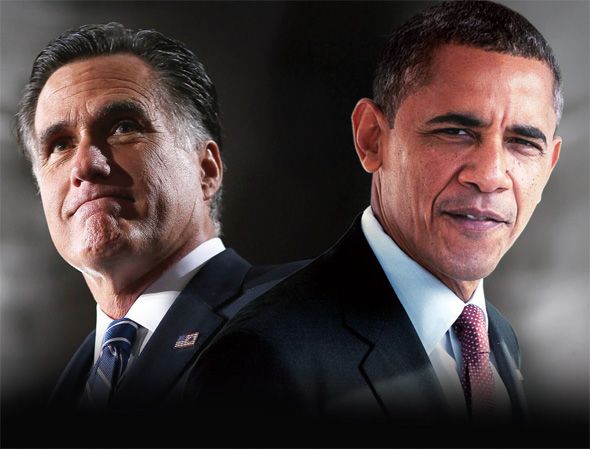
Lebanese Observations of the 2012 United States Presidential Election


Many may find this hard to believe but I was much more enthusiastic about the US presidential elections in 2008 than I was about the same event in 2012. It was to the extent that an American friend of mine from Kansas sent me McCain bumper stickers which I still have on the car until today. I saw nothing but McCain/Palin back then. It was the only thing that made sense and certainly not Obama. And I lost.

In 2012, I decided to be more cautious. I didn’t like Romney and I didn’t like Obama either. The former had moments of sheer stupidity (“it’s their culture”) while the latter didn’t make sense to me at all. But I decided to back a candidate based on my convictions and I went reluctantly with Romney, fully knowing that any of the candidates winning won’t have a major effect on our situation as Lebanese and of the Middle East as a whole. Both of them will adopt the same color by number American foreign policy: If you’re not Israeli, you don’t matter.

So as I stayed up all night to follow the results of what had promised to be a close election, I had more than a few observations to make.

Who’s running again?

The amount of Americans that panicked when state results started rolling is too high. It seems few understand the electoral college board system and few had actually looked at the polls in different states to know that the early lead Romney got was absolutely meaningless. This conforms with a report that many Americans had absolutely no idea who was running for elections with google searches peaking a few days prior to election day with queries of “who’s running for US president elections?” and “am I registered to vote.” I wonder how they were able to escape the deafening ad campaigns. Personally, I think it’s sad that I understand the American electoral system better than a lot of Americans. How could you expect people who are that disassociated from their country to know how to choose?

All those Godless places! 

Once the results started forming a concrete picture of an Obama advantage, the polarization started. Half of my American Twitter followers and Facebook friends were in absolute outrage whilst the other half was in orgasmic bliss. Some were in hell, others were on cloud nine. And it is then that the level of the discussion started sinking so low it reminded me of our elections of which we’re sure to get a taste in a few months. Many Americans believe Obama is the second coming of Christ, a savior who will ride in to change everything. Others literally think he’s Muslim who was sworn in back in 2008 over the Qoran, not the bible – and they don’t want that to govern them. But be careful, they’re “not being disrespectful to Muslims.” It’s just how can “a Muslim govern God’s country”? When a discussion ensued because of those tweets, those Americans made it known that they believe the US is the only “country of God” in the world. Every other country is a Godless place. Good to know.

Your opinion is invalid

Some of the issues that were voted upon in some states were assisted suicide, such as in the state of Massachusetts. One of the people whose vote had been against such a legislation (it ended up passing) was busy throwing a fit about how “selfish” it was for patients to ask for it. So I personally replied that “it’s not that simple.” The answer I got, which was one of many that night, is: you’re not a US citizen so your opinion is invalid. It seems that assisted suicide and abortion and other humanitarian debates are US-only issues. Because physicians abroad do not face these decisions. Not one bit. My medical education also makes my opinion even more invalid.

Let’s get high! 

Let’s talk about legalizing marijuana. Honestly, I have no idea why this is even an issue. Marijuana should not be legalized. Whether hippie liberals believe it’s of benefit or not is out of the question. Marijuana is a known hallucinogen and it has been associated with other medical conditions as well (check this). The fact that it’s even a question on the ballot is, in my opinion, absolutely silly. And many Americans seem to agree with me on this. Conversely, many seem to disagree. Nothing should come between them and their pot – not even common sense. So now when marijuana-caused adverse incidents increase, who’s to blame?

Hope or lack thereof 

Once the results of the elections were almost certainly pointing to an Obama victory, the rhetoric changed into people who decided that their country is now a hub of communism with Obama being the world’s new version of Hitler. They were no longer proud to be Americans. Their country is such a disgrace. On the other side of the spectrum, you have those whose pride and hope in the US has just been re-established. And I sat wondering: if these citizens of the world’s biggest economy, toughest superpower and leading nation are this weak-minded, what does this say about all of us living in absolute hell-holes? I then realized that Americans need to toughen up. Their convictions regarding their country should not be this weak. They should not waver because of an election, regardless of results – especially not when their country has so much to offer to them. When your country is envied by many, you are not allowed to be this weak towards it and this goes to those who gained back hope and those who lost it.

Hollywood

The absolute majority of Hollywood actors and actresses, even some who hadn’t made their opinion known before, came out in support for Obama as the results were unveiled, which was very much expected. Some, such as Whoopi Goldberg, subtly accused all those who were dissatisfied with Obama’s victory with racism and invited them to get the “crap outta here.” Very smooth.

Trump’s Wig

Donald Trump was absolutely freaking out. He even called for a revolution and was immediately turned into an immediate mashable article. I guess he doesn’t know that revolutions never work for men with wigs. Never, ever.

Canada

The Americans that were dissatisfied with the Obama victory suddenly wanted to move to Canada. I found it odd that they wanted to move to a country which employs many of the policy’s they’re hating on: welfare, same gender marriage, etc… regardless of what I personally think of these policies. Canadians commented that this reflects the lack of knowledge they have of their neighbor to the north.  A level-headed discussion with these Canadians, who preferred Obama, showcased the absolute necessity for Americans to learn more about the world in their education system. After all, for many Lebanon is but a city in Ohio and Canada is that very cold place no one wants to visit. Of course, this does not apply to all Americans because many know more about Lebanon and Canada than many of us but, again, these are just observations.

The Lebanese

The Lebanese people who were observing the elections were many. Once an Obama victory became certain, those with Romney immediately disappeared in typical Lebanese fashion. Those with Obama, however, made it known that they were happy. Some were even more enthusiastic about it than the most enthusiastic of Americans with rhetoric that slipped down, again in typical Lebanese fashion, to lower than the lowest tone employed by pissed off Republicans. It seems that the GOP is a bunch of anti-gay, anti-women, pro-rape, anti-science, anti-environment, anti-common sense, anti-all that is good, pro-religion, pro-everything that is bad. Delusional much? You betcha, à la Palin. But you can’t discuss that with them because they’re Lebanese and one does not have a decent discussion with a Lebanese. I bet they’d be interested to know that the pro-rape senate candidates lost their seats with a lot of Republicans not voting for them.

The Bottom Line

For the rest of the world, nothing will change upon Obama getting re-elected, especially not for us with both of them having similar effective foreign policies. Even when it comes to the internal workings of the United States, very few things will change between now and 2014 with the country being as divided as it is today: the House controlled by the Republicans and the Senate controlled by the Democrats. Obama will have to use his executive function, more than his legislative branch, in order to be able to do anything. And what he’ll be able to do is very limited. Which means that those whose candidate lost have no reason to fear their country would turn into Cuba. And those who won shouldn’t be this comfortable regarding the future because it may not be this bright. A few questions though: Obama’s failure, as perceived by his drastically declining numbers compared to 2008, was attributed to Bush. If nothing changes by 2016, will his failure be attributed to Bush as well?

Will the Republicans see the need for a restructuring of their party away from the radicalization of the Tea Party, one which doesn’t represent the core values of the Republican party, and move towards moderates in order to be able to contain the growing disparity between their views and those of mainstream Americans especially with changes in American demographics which may turn them, if not tackled, into a party that isn’t able to win nationally?

Good luck to president Obama and congrats to those who voted for him. Hard luck to Mitt Romney who gave a phenomenal underdog race to give one of the tightest popular vote results in recent history and hard luck to those who voted for him. However, the winner after the American elections was the whole world for being able to observe democracy being applied at its finest and that is something that all Americans should be proud of.

In other news, I really need a crystal ball to choose winners to back next time. This losing streak of mine has been going on for far too long.

The White Guilt of American Elections

Subtle racism has found its way to the American political scene in the final days before Americans head to the ballots to vote on who should run their country for the next four years. The issues both candidates stand for are known. Conservative versus liberal, right wing vs left wing, grosso modo. However, with elections being less than 48 hours away, the talk isn’t centered around the core issues anymore.

The American elections are now all about demographics: who’s voting for who. Because demographic talk is important to see how the country might vote on November 6th.

Pro-Obama analysts underplay the shift in numbers from 2008 to 2012 as something that can be compensated for on election day. Pro-Romney analysts extrapolate the shift in numbers to claim a premature victory they desperately seek. But what is the demographic talk they speak of?

It is that of Catholic and Protestant voters. It is that of independent voters. It is that of women. And do you know what’s the common thing among all those demographics that are up for grabs still?

They’re all white. Or caucasian, whichever term is more politically correct.

In the dying minutes before Americans choose, the tactic is to bring out the colonial white guilt that hasn’t died down since America’s old days. Bringing out the guilt happens even in subtle comedy that, when not read into, is another funny gimmick to make people laugh. However, after a careful minute of reflection, a seemingly harmless skit holds a deeper meaning than it presumably intends to.

For struggling campaigns, the play on the emotional cords of voters is essential to rally them up come election time. The emotional cord for white American voters is the issue of racism. If you don’t vote for this candidate, then you are subtly racist. The fear from the label pushes some people to vote against their convictions in order not to fall into the stereotype.

And this is the inherent hypocrisy of the American system.

More than 90% of African American voters are voting for Obama come election day. Are they accused of racism? No. How many of those voters are more inclined to vote for Obama because of the color of his skin? How many are voting for him based on their convictions and political stance? Both questions are quite irrelevant because they don’t apply here. They apply to “others.”

On the other hand, caucasian Americans do not have the prerogative to vote for their convictions guilt-free. It’s because they weren’t the segment of American society that was marginalized for years and years. But does the fact that African Americans had a very tough phase in their history warrant the rhetoric that has sunk to the level it’s at today?

And we’re not even going into the baggage that voting for one candidate over the other carries: xenophobe, homophobe, female-phobe, anything-phobe.

The bottom line is: it’s not racism and you’re not a racist when you’re voting for someone not because of the color of his skin but because of what he stands for. It’s not racism and you’re not  a racist if you haven’t really thought about a candidate’s skin color until now. Come election day, everyone – regardless of their skin color – should vote to who they believe can get their country in the right direction. The “white result” of 2008 has shown that the majority of Americans don’t care about a candidate’s skin color. So for those who voted to one candidate in order to prove they weren’t racist in 2008, mission accomplished, no need to feel guilty if you cast an opposite ballot this time around. One thing to be said though is shame on media that would revert to such cheap tactics in order to get their preferred candidate a boost.