Because driving in Lebanon has to be a 1st world wonder – even preceding the Pyramids of Giza. Even David Letterman thinks so.

Because driving in Lebanon has to be a 1st world wonder – even preceding the Pyramids of Giza. Even David Letterman thinks so.

It’s only fitting… and she had it coming (no pun intended).

Remember, you can always send me your own and I’ll make sure to post them.


Lebanese cinematic talent has not been given much room to grow. In a country where art is the least concern, cinema has found it especially hard to take off. However, a stream of Lebanese movies has been finding its way to our theaters. Some like Nadine Labaki’s previous movie, Caramel, were a huge hit with viewers. Others were not as lucky.
But the fact remains that the Lebanese audience is hungry for movies that describe its society, its problems, its worries and woes.
And then comes Nadine Labaki’s new movie: Where Do We Go Now, with its Lebanese title: W Halla2 La wein (also in French: Et Maintenant, On Va Ou?)
The premise of the movie is quite simple – and for many Lebanese, worry-inducing for fear of overuse of cliches. The overall basis of the plot is the coexistence of Lebanese Muslims and Christians in one community, sometimes peacefully and other times not. Many, like yours truly, felt the issue was overdone. Maybe not in cinema but in everyday life. Most of us are sick of being bombarded with commentary about the struggles that face our very diverse community. But this is not the case in Where Do We Go Now.
An unnamed village during the later part of the 20th century has its only connection with the outside world in the form of a very rudimentary bridge, around which landmines had been planted and never removed. Even TV reception is very poor to the village and the movie begins with a few youngsters searching for a broadcast signal to set up a TV night for the town-folks. This village is also a religiously divided community where the Church and the Mosque are only a house apart. And more often than not, the people live together happily.
But as it is, and despite barely having any access to news from the outside world, the men of this village start to confront each other in violent ways. Little things that would pass unnoticed cause them to explode, signaling the anger they’ve been bottling in. And it is then that the few women of the village start to devise plots to keep the men busy, entertained and get their minds off being violent. These plans will vary from fake miracles to putting hashish in cakes. But these women will go to every measure possible and break every limit imposed on them by society to keep their town together. And it is for these women, representing a vast majority of our Lebanese mothers, that this movie is so aptly dedicated.
Nadine Labaki, director of the movie and starring as Amal, is astonishing as always. You, really, cannot see her eyes on screen and not be mesmerized. She’s simply entrancing, even when she doesn’t speak. Then how about when she delivers a tour de force performance as one of those women, who happens to be in love with a man from the town’s other religion. But to be perfectly honest, the accolades one ought to give Labaki are not for her acting but for her directing. Never have I imagined a Lebanese movie can turn out this good and she makes it seem effortless. Her camera shots, her focus on details, her keen eye… all of this combine to give you a cinematic experience that will entrance you.
This movie, like Caramel, features mostly unknown faces and all of them deliver as well. It is hard to believe – and yet in retrospect so evident – that such acting can come out of common people that we all meet on the street. Where Do We Go Now is a movie of such epic proportions that these “unknown” actors and actresses (mostly actresses) deliver performances that are so subtly nuanced, so exquisitely flavored and so astonishingly well-done that they would put the best actresses and actors of Hollywood to shame. Yes, I have said it.
The score of the movie is chilling and haunting and wonderfully executed by Nadine’s husband Khaled Mouzanar. The movie also features a few highly intelligent songs, written by Tania Saleh.
And let’s talk about the script. What an ingenious way to tackle the subject at hand. Not only did Nadine Labaki not fall to any cliche known to us as a Lebanese community, but she managed to introduce them in a subtle comical way that would make us laugh at ourselves for uttering or doing them in the first place. The script is so strong it will turn you bipolar. Yes, lithium is advised to be taken at the door while going in. Why? Never have I laughed so hysterically one moment and just wanted to cry the other. And then after being utterly devastated, it brings you back to laughter. The movie plays with you like a ping pong ball. And you cannot but love every moment of it.
I was talking to my friend Elia the day before we went to watch Where Do We Go Now, which happened to be the day it won the People’s Choice Award at the Toronto Film Festival, and she said: “Elie, I’m very cautiously optimistic about this. I’m not letting my expectations overreach because I don’t want to be disappointed.” Well, I’m pretty sure Elia agrees with me on this: Where Do We Go Now brings out things in you that you didn’t even know you had. It brings out the best in you, as a Lebanese, sitting in that cinema chair for ninety minutes. And you need the best of the best to do that. Nadine Labaki, you deserve more than the few minutes of applause the people in the movie theater gave you. You deserve a full blown standing ovation. You have done the impossible. Again. Lebanese cinema has no excuse but to overreach for excellence now. And this movie deserves an Oscar win. Cheers to our mothers.

We left Toledo on the morning of Tuesday August 16th to go to the Spanish capital, Madrid. The drive was about an hour and the bus dropped us off in the Southern part of the city: Calle de Anoeta at Instituto Theodoros Angeles.
We were greeted by enthusiastic Lebanese who, at first, made it seem as if the location actually had beds and separate showers. Needless to say, I was very disappointed when they took us to a gym, already filled up with a huge group of Lebanese from Jounieh, but with enough space for us to put our stuff. The ultimate shock? The place only had one electrical outlet to recharge our cameras and phones. And no extensions were allowed.
We left our bags in the gym and went to take the subway to the city center. For many, including me, it was our first subway ride – ever.
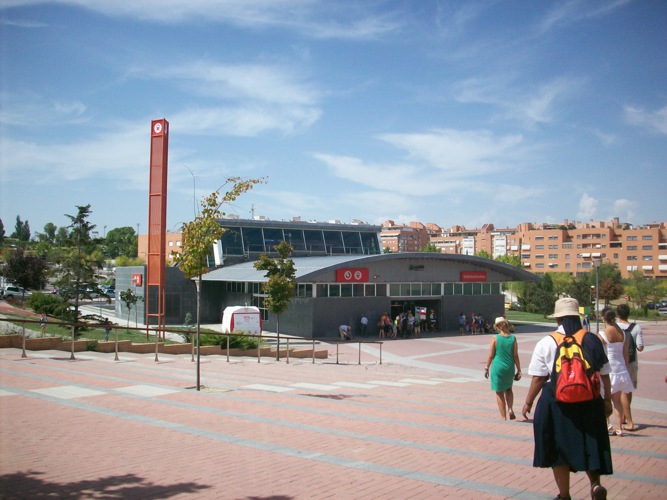
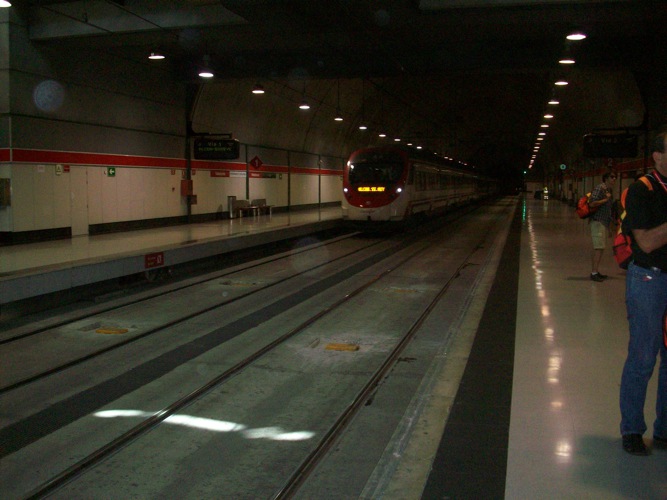
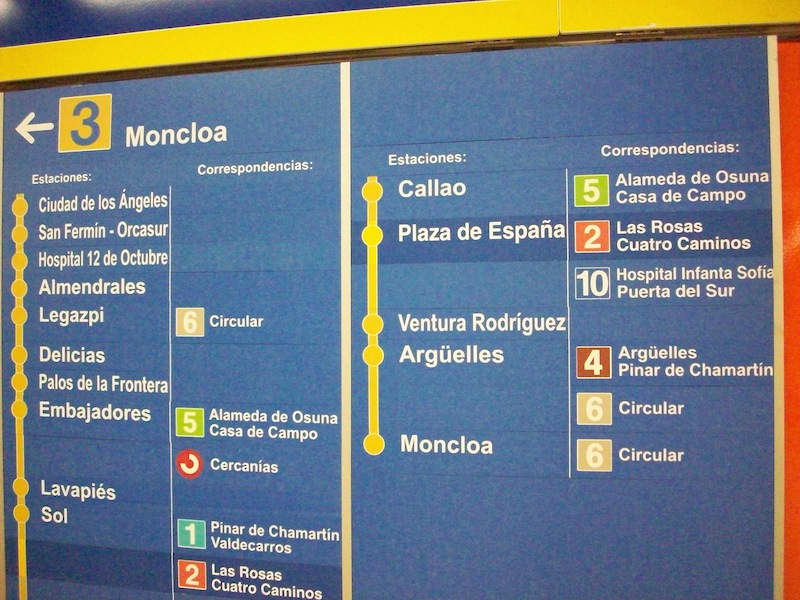
The subway station had a glass cube entrance. Pretty cool. We went down electric stairs and we were lucky enough to find the subway train we were supposed to take immediately on the first level. Villaverde Bajo-Cruce. Remember the name. Subway line 3 to Plaza del Sol, Madrid’s center. The subway was exactly as I had expected it to be, based on the many movies and TV shows I had watched. Not too big and, lucky for us, it wasn’t too crowded as well.
There, we were given about thirty minutes after lunch to go and shop. I personally had no intention to buy anything so I just ventured into shops that looked familiar, the first of which was Springfield. There, I was hit with such low prices that my non-shopping-loving-self fell in love. Four shirts and some cool shoes for 39 euros, I say that’s a bargain. If I were to buy the same stuff in Lebanon, my total would have been multiplied easily by five.
From Sol, we kept walking in Madrid’s center to where the World Youth Day opening Mass was supposed to be held. It was too crowded and also too hot. So before attending Mass, outside, and get sunburnt, we decided to visit a interesting-looking Cathedral nearby. Needless to say, the moment we got out and sat in the shadow cast by the Cathedral, no one of us wanted to move. I literally made the Springfield bag, with my newly purchased clothes in it, a pillow and slept throughout Mass and was woken up by some clumsy German girl who mistook my feet for the ground some two hours later.
Soon after the Mass we were supposed to attend but slept through, we went to have dinner. Our mistake? Not going too far away from Madrid’s center when over one million people visited the same restaurants we wanted to eat at. What did we end up eating? Some horrible kebab, which even hunger barely got down my throat. When? Three hours after Mass was over, at 12:30 AM.
Then, running like maniacs, we caught the last subway back to the region we were supposed to sleep in. We got out of the subway station and started walking. The area wasn’t familiar to me. After all, I have a pretty good photographic memory and, despite barely walking through the region a few hours ago, I had a pretty decent mental image of the region. And this was not it. I tried communicating this to the group but they refused to listen. It wasn’t until we reached a Mosque that the group decided to split into smaller groups in order to find Calle de Anoeta. What did I do? I sought my iPhone’s help. And what a blessing it was. Soon enough, the other groups figured I was on the right track and joined me. This was my iPhone’s way of telling everyone who kept telling me I was too obsessed with it to suck it.
Day two in Madrid was much more fun. Our group split in two: one that went to an amusement park and my group which went to sightsee. I figured I’d rather go to an amusement park in a country known for them and sightsee in Madrid, since I might not get the chance to do so. We went and saw Cathedrals, Museums, had lunch in Madrid’s center, visited Parks, saw the Royal Palace…
Day three, however, was so similar to day 2 that I figured I made the wrong decision the day prior. We became one group again and those who went to the amusement park were taken to see the same landmarks we had seen the day before, with the addition of a few extra places. At one of those extra places, there was a queue line to see a golden edifice in some Church. And naturally, some of the Lebanese started to cut through the line. I was furious but couldn’t say anything. A few minutes later, a Brazilian tells me that: “You, Lebanese, are an impolite people” because my “friends” had apparently cut him in. And he was right. The sad thing is? the same people that cut the line were telling me yesterday how great life was in Spain because of all the rules. If you like rules, why don’t you apply them if they exist, right?
Also, day three was when we had direct contact with the anti-World Youth Day protests taking place in Madrid. While walking to Domino’s Pizza to have dinner, we were met with three people dressed in black, wrapped up in chains, with a black and white picture of the Pope and reciting some weird sentences. On our way back, some people started to throw bricks on World Youth Day participants and on cars.
The day wasn’t all too bad, though. I was hugged by an Italian girl in the streets of Madrid and she gave me her country’s flag and signed it. Luisa, where are you?
The following day, we went to visit our French friends in the northern part of the city. And once again, the northern part of a city is much tidier than the southern part we were staying in. I’m beginning to think it’s a common characteristic that applies everywhere. Our friend’s school was located on a street that made my nerdy self really happy: Calle de Ramon Y Cajal 1. For those who don’t know, Ramon Y Cajal is a very important Nobel-prize winning Neuroscientist. And once again, my iPhone came to the rescue and got us there. That’s a second “suck it” to those who thought I was wasting my time being connected. Soon after meeting our French friends, we took the train for the first time. And it was very similar to the subway, except bigger and more comfortable. Also, you kind of appreciate being able to see the scenery as you travel.
As day four drew to a close, we began preparing to the two most tiring days of our whole trip: the last two days of World Youth Day. Location: the airport of Cuatro Vientos. And if you’re interested enough, tomorrow’s post will be about those two days.
In the meantime, here are some pictures I have left from Madrid. Lost almost all of the pictures that were on my phone:
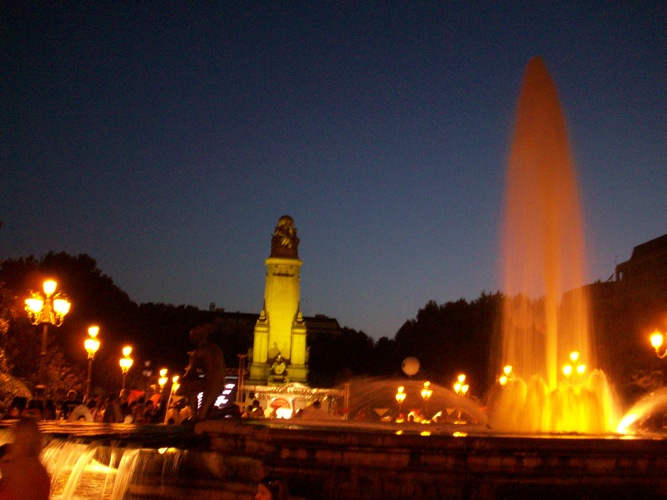
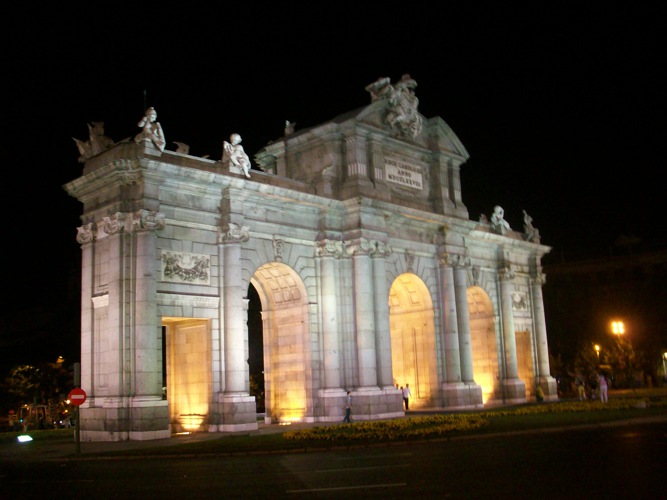
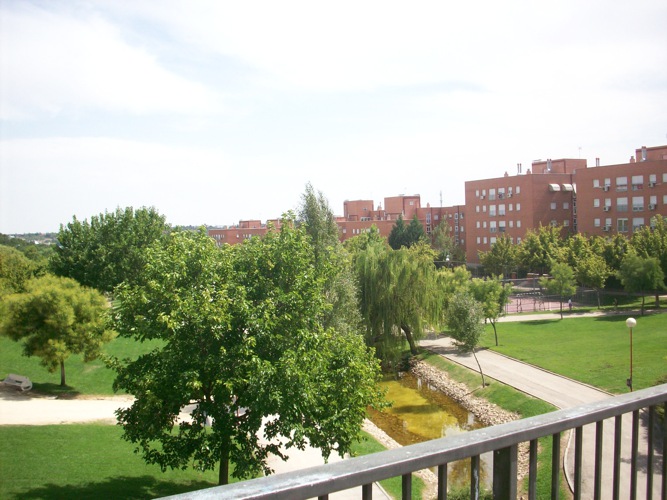
The awkward moment when this makes perfect sense 😀

Let me tell you this… French weather is something.
You know it´s bad when you land in Lyon and, confident of the shorts and T-shirt you´re wearing, venture out of the facility only to find your face hit by ten degrees celsius.
Did I mention it was August 7th?
Let alone the fact that a typical Lebanese would never admit they´re cold when taken by surprise (we have this in Lebanon is the sentence we all say), I was freezing.
We met up with a French group who was more than welcoming. Imagine people you don´t know hugging you and innundating you with too many names, which at the time you thought would be impossible to remember.
We were then taken to the city of Lyon. We were supposed to vist the shrine of Notre Dame de Fourviere, which translates as Our Lady of Fourviere.
Located on a hilltop, it has the exact same statue of the Virgin Mary we have in Harissa in Lebanon, except it´s covered in a thin layer of gold, overlooking the city which it protects.
The church itself is huge. Have you ever been to a place where, despite being tired beyond measure, simply takes your breath away? That´s the church of Fourviere right there.
Pillars after pillars of marble, paintings and mosaics… the decoration inside is of epic proportions that our guide told us: “It´s very easy to get lost in the grandeur of the decor… but it´s the architecture that matters.”
Interestingly, there´s a small shrine for Harissa inside Fourviere – dedicated to Notre Dame du Liban. And based on what a good French friend of mine told me, the day the shrine was opened, the church had hundreds and hundreds of visitors attending the ceremony, something which is rare to be seen.
And then it was time for mass… now imagine the scenario: you haven´t slept in over 24 hours, you´re too tired to even open your eyes and you have to be attentive in mass because you, as a Lebanese group, are so important that you were placed in the first two rows of an overbooked cathedral.
Now imagine poor me trying every single way to sleep and make it look like I´m praying. Needless to say that I was unsuccessful. But you know what, that was one the best services I ever attended. Even though almost everything was different, I was mesmerized by how grand everything was. You had too many priests, too many readings and yet they all fit in so little time. The order of events in mass, which we´re used to as Maronites, is out of order in a Roman Catholic mass.
And then there´s the singing… there was a full-blown band called Malak performing the chants in church. And I got goosebumps when Claire sang a chant that I had never heard before: Couronnees D´etoiles.
And since we were V.I.P during mass, we were asked to chant something in Lebanese as part of the mass. So when I was leaving church, a woman stops me and asks: “Vous etes des Libanais?”
I nodded. She proceeded to say that her mother, who passed away nine years ago, was also Lebanese. And when we chanted in Lebanese, she imagined her mother standing between us and chanting with us. She hugged me in thanks and left.
I guess my first few hours in France were a success…

 A Separate State of Mind | A Blog by Elie Fares