Why Lebanon’s Health Sector Is Messed Up

Abdul Ra’ouf was a 4 months old baby boy and he is another Lebanese tragedy. He was refused admission to hospitals in Akkar and has passed away. I suspect Abou Faour will hold a press conference soon.

In late February, a scandal hit Hotel Dieu as the Ministry of Health, led by Abou Faour, froze its contract with that hospital over them not admitting a patient who had no other form of coverage.

Heartbreaking stories of children dying make headlines, but they don’t tell you the truth of the health sector in Lebanon. That truth is in the numbers:
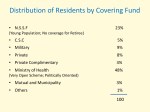
Before going into what thosee numbers mean, let’s take the hypothetical scenario of a hospital with 100 beds. The beds in that hospital are divided according to coverage: those covered by insurance have the biggest chunk allocated to them (let’s say 70), while those covered by NSSF have 20 beds and those covered by the Ministry of Health have the remaining 10.

Hold that thought for a second and let’s talk about the numbers.

Half of the Lebanese population (48%) is covered by the Ministry of Health (MOH), while 23% are covered by the NSSF (daman) and only 8% are covered by private insurance. This means that about 2 million Lebanese have the MOH as their ONLY way to afford hospital care in the country.

Having half of your people covered by the ministry doesn’t seem too bad right? The truth of the matter is far less utopian.

Having half the country covered by the MOH means those 48% are entirely dependent on the MOH’s budget. The disaster is when you find out that out of all the ministries running this country, the budget allocated for the MOH to cover the needs for HALF of the country is 3%.

How The Ministry of Health’s Budget Is Divided:

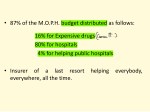
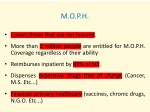
16% that budget goes towards expensive drugs notably cancer treatment. Patients not covered by the NSSF have to resort to the ministry for their medication (if they can’t afford it, which is the case of  99.7% of Lebanese).

Getting the medication out of the MOH isn’t easy. Sometimes they run out of the medication and you end up having to wait until they bring it back into the country. Other times, as has happened with a friend of mine who needed a $12,000 treatment over the course of a couple of months, other people come in and take the medication that was allocated to you, sign for you and leave.

The system is rigged with wastas, bureaucracy and corruption.

80% goes to hospital care, which is where most of the people need the MOH: operations, hospital admission, etc.

So imagine ONLY having 80% of the country’s 3% budget used to essentially treat 50% of the Lebanese population. This is why the MOH has the least number of beds at the country’s major hospitals: the MOH often doesn’t pay, and when it pays, it does so extremely late.

So when you hear that a patient couldn’t find a bed at a particular hospital, it doesn’t always mean that every single bed in the hospital is full, it means that the beds for that patient’s coverage are fully occupied, and that is very easy to occur when 48% of the country gets a minimal amount of beds in the country’s major hospitals.

Does that sound harsh? Of course it does. All Lebanese are entitled to excellent care and that level of care is, sadly, rarely available outside of Beirut and its major hospitals. Why so? Because excellent care is not cheap. Those imaging equipment with fancy names you hear being thrown around on shows like House, MD and Grey’s Anatomy cost in the millions. Every time a hospital buys something to advance its level of care, they pay figures in the seven digits. Even the research that goes into advancing care is expensive.

The level of care being expensive is a big problem. The bigger problem is not having hospitals that are close to the level of those inside Beirut outside of the capital. Most of the people in the country cannot afford places like AUBMC, SGH or HDF, but they can go to public hospitals where the level of care has the potential to be excellent but is handicapped by how little funding those hospitals get.

4% of the MOH’s budget goes to help public hospitals. What you need to know is that public hospitals are not exactly under the jurisdiction of the MOH, which means that the Ministry isn’t responsible for their finances and how they run: they have a separate board of directors that is required to run them and keep them within profit margins. However, as is the case with almost all public hospitals in the country, very few (if not none) are success stories because of the lack of governmental support that goes toward them.

I rotated at one of those public hospitals not too long ago. It wasn’t an eye opening experience because I do come from a non-privileged area of the country, but it was a heartbreaking one. The hospital was in a state of near-decay. Some of the equipment didn’t work.  And all the patients were one sad story after the next.

The latest high profile example is Beirut’s Governmental Hospital which has been in the news for months now because of the lack of payment to employees. Imagine not getting your salary for months. Does it make it okay just because you’re a doctor or a nurse?

What Happens When The MOH Freezes Its Contract With A Hospital:

As a response to HDF not admitting the patient (who wasn’t a case of emergency in which case the hospital is required by law to take care of a patient), Abou Faour decided to put his ministry’s contract with the hospital on hold. I suppose he thought that was punishing the hospital enough, and you thought he was defending your rights in doing so.

What freezing that contract means is that those 10 beds in that hypothetical hospital are no longer allocated to patients covered by the MOH. Freezing a contract with a hospital affects the patients, not on the hospital.

Hospitals And Doctors Can Also Be Greedy:

There are a lot of hospitals and doctors in the country that are greedy, and the system permits the perpetuation of that greed.

The most relevant story to that regard is of someone I knew who required a major surgery. That person’s community tried to intervene by raising the funds. Eventually a high profile charity heard of that person’s problem and donated. In doing so, they forced the hospital in question to lower their required fees by a decent amount, because that charity needed the invoices to be audited abroad.

A lot of this goes on behind closed doors. The lack of regulations means that you don’t know which part of the money is going where.

The Media Doesn’t Help:

Out of all sectors in the country, medicine and healthcare are the juiciest to be spoken about in the media, and the way the media talks about hospitals and about patients dying is ignorant.

A couple of weeks ago, Marcel Ghanem shared a story on his show about a woman who died at a hospital in Jbeil because they didn’t give her some covers from the cold. People were outraged. Were those nurses seriously watching Yasmina and not giving the woman a blanket? What an atrocity!

The truth is very different.

That patient was a cancer patient. As a result of her chemotherapy (which she was able to afford!), her immunity was immensely suppressed, rendering her unable to defend against infection. The patient presented to the ER of that hospital with what we call “neutropenic fever,” which is fever in the background of immensely suppressed immunity. Why did the patient die? Because she ended up in septic shock, a condition with extremely high mortality.

But that doesn’t sound too media-appropriate. The problem with Lebanese media isn’t that they talk about stuff that go wrong in hospitals. They should, and they should do it more. It’s that the angle they often use is useless, leads to zero changes and doesn’t highlight the real problems here: inequality, lack of funding, lack of coverage, etc.

My Own Sensational Story:

She was such an adorable 4 year old when she walked into the doctor’s clinic in Beirut, coming all the way from Tripoli. What’s your name, we asked. Farah, she answered in a barely audible singsong voice.

Farah was there for further reparative surgeries for a congenital defect she had. A tube was sticking out of her neck to allow her to breathe. The doctor offered to do the operation pro-bono, but the hospital had no beds available for her.

I saw her father weep. I have already lost two daughters, he said, by settling to hospitals in the North because I couldn’t afford Beirut. I don’t want to lose her too. And in a corner of the room, I saw my colleague tear up.

Farah is 48% of the Lebanese population.

My colleague then approached me and said: this is something you need to write about, and so I did.


Christians Are Disappearing From Lebanon

The infamous Lebanese Christian civil war slogan goes: “نحن هنا وهنا سنبقى.” If you google those words that translate to “we are here and this is where we’re staying,” you get plenty of Lebanese-centric references that can, even over 24 years after the theoretical end of the Civil War, get those same Christians riled up. As it stands, however, Harvard did some studies on behalf of the region, and the whole “نحن هنا وهنا سنبقى” slogan is not entirely correct.

Religion Demographics specialists Todd Johnson and Gina Zurlo have recently published a study (link) in the Harvard Journal of Middle Eastern Politics and Policies that examines the situation of Christians in the Middle East in general and in some of its countries in specific.

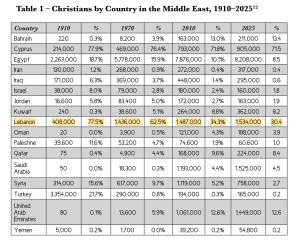
In general, they noted that the overall Christian population of the Middle East stood at 13.6% in 1910. That 13.6% decreased to a measly 4.2% in 2010. The projections for 2025 put the population at only 3.6%.

They attribute the shift to multiple reasons, including emigration due to wars, instability, the rise of Islamic extremism, etc…. But Lebanon is a focal point of the study due to the different nature of the country compared to the region, especially that they find the drop in the Christian population of Lebanon to be substantial. 

These are their findings:


In 1910, prior to the founding of the state of Greater Lebanon (catch up on your history book), Christians constituted about 77.5% of the population of what was the Mutasarrifate of Mount Lebanon. Before the Lebanese civil war, the portion of Lebanese Christians relative to the general population was approximated to 62.5%. 

Following the end of the civil war and in estimated numbers for 2010, Christians constituted 34% of the Lebanese population. This percentage is expected to drop even further come 2025 to about 30%. 

The reason for the decrease is explained as follows:

  1. The Lebanese civil war and the emigration of Christians to Western countries,
  2. Lower birth rate in the Lebanese Christian population due to their generally higher economic status,
  3. Increasingly decreasing role and influence at a national level.

It’s eye-opening to see in numbers what we know in theory.

Decreasing percentages don’t mean that Christians are going to be wiped off from the country quite yet. The decrease has less to do with the propaganda of ISIS’ threat to existence through fear instilled by fear-mongering politicians, but more to do with how things are in the country as things stand today in 2015.

The purpose of this post is not to elicit sectarian talk. This isn’t about Christians as a religious establishment as much as a demographical agglomeration. The role of Christians in the building of Lebanon is historically established, so losing them is a disaster to the country. Their role in the advancement of the country cannot be denied: all the country’s major universities and schools were formed by missionaries; even our hospitals emanated from Christian religious establishment.

Changing demographics is a natural process in any country’s lifespan. Populations age, their characteristics change, their constitution gets altered over the years. So the solution isn’t to panic about the changes, but to see what they mean.

The Lebanese problem isn’t only that its Christians are becoming less and less of its population, but that those same Christians cannot 1) agree on a future for the country and 2) see that their future lies in stopping to look at themselves as Christians but as Lebanese first and foremost who have a country they need to build, especially given that Lebanon is probably the only country in the region where they can be safe and hope for a country. God, country, family – not in that order.

What Lebanon in general and its Christians in particular need at this point is to finally realize that the only hope, regardless of how demographical percentages change, is the establishment of a secular state in Lebanon where people are not defined by the religion they are born into, but as citizens with rights and duties that are not adjusted to their prayer building.

Certainly, the notion is beyond delusional at this point as it requires a massive leap of forward thinking from the entire Lebanese population. But if Lebanese Christians can’t see the danger of clinging to the status quo where the status quo is as moving as quicksand, then they have more things to worry about than decreasing percentages over a bunch of decades.

Less slogans, more plans. Less chants to civil-war-leaders, more criticism and accountability. Less religious marriages, more civil marriages. Less this faculty’s dean has to be Christian, more this faculty’s dean has to be competent. Less let’s massively panic about Khaled el Daher, more let’s ignore and try to take the higher road.
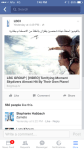
The “نحن هنا وهنا سنبقى” slogan is easy to say, but it’s tough to implement with no president, political deadlock, rising poverty, no prospect for jobs, and the urge to get visas stamped on your passport the moment you receive your college degree. I guess it all doesn’t matter in the face of fiery existential chants. If only, though, the numbers lied. Build a country in which you’d want to stay, not just shout about staying.
0.3% of Lebanese Own 50% of Lebanon

Lebanon isn’t a country where population studies are omnipresent. However, given the data that the country has, Credit Suisse, in their yearly report on Global Wealth, has managed to paint a picture on how things in this country actually are.

The report dates back to October 2014, and frankly I am surprised that these numbers did not cause a stir and were not discussed. The report, at 160 pages, can be found here. Perhaps no one noticed the info, so here they are:

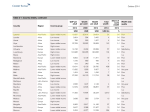
At an estimated population of 4.37 million, Lebanon’s wealth is estimated at $91 billion. That actually constitutes 0% of global wealth. How anticlimactic.

When it comes to the Middle East, and despite the reputation we get of being oil-rich, things are similar: Saudi Arabia has an estimated wealth of $653 billion, which ends up as roughly 0.2% of global wealth. Qatar, and all our shoukrans, has $200 billion, which is 0.1% of global wealth. The UAE is at $461 billion, and 0.2%. Meanwhile, Israel has an estimated wealth of $843 billion, translating to 0.3% of global wealth.

All of these numbers look flimsy compared to the United States’ $83708 billion, constituting 31.6% of world wealth.

Keep in mind that – with the exception of Israel and the United States – Credit Suisse considers the data for Lebanon and other Middle Eastern countries to be poor in quality. However, I highly doubt that any estimations are overly erroneous in any way or that the margin of error they are admitting to will change the findings considerably.

But this isn’t the story. We all know the country has money. Recent leaks out of Switzerland placed the country at #11 in total customers at their banks and #12 in total deposits within the few months whose data was actually leaked. We’re 10452 km2. That’s a lot (link).

The story is in how that money is actually divided on the 4.3 million Lebanese living here.

Out of all those $91 billion, 0.3% or approximately 8000 people of the estimated workforce according the study own about half (48% to be exact), which is approximately $44.6 billion. Meanwhile, 99.7% of Lebanese own slightly more than half at $46.4 billion.

To put those numbers in perspective, Credit Suisse employed a criteria called the Gini score. The score, according to Wikipedia, is essentially a “measure of statistical dispersion intended to represent the income distribution of a nation’s residents, and is the most commonly used measure of inequality.”

Lebanon’s Gini score is 85.6. a score of 85.6 places Lebanon 6th worldwide in terms of wealth inequality behind Ukraine, Denmark, Kazakhstan, Seychelles and Russia.

The story doesn’t end here. Even among those 0.3%, there are disparities. That 0.3% basically any Lebanese who has an estimated wealth above $1million. But who actually owns most of the country? The answer is two families: The Hariri and the Miqatis.

Forbes Lebanese Billionaires Miqati Hariri

According to the Forbes latest list of billionaires, there are 6 Lebanese on the list whose ranking ranges from 530 worldwide to 1478. Two of those 6 are the Miqati brothers. The other 4 are the Hariri brothers, including former PM Saad Hariri. Their cumulative wealth is estimated, according to Forbes, at $12.6 billion. This is 30% of the total wealth owned by those 0.3% of Lebanese – except it’s owned by just 6 men.

This isn’t to say that the Hariris and Miqatis do not deserve their wealth. The Miqatis started and ran a telecom empire. The Hariris started and ran a major contracting company in Saudi Arabia. Good for them.

The problem with these numbers is the other side that they portray. About two thirds of the Lebanese population (64.6%) have an estimated wealth of less than $10,000. Such numbers indicate massive poverty in the country, and yet I was unable to find substantial studies apart from one that was recently done by the UN about Tripoli.

In numbers, (link) the UN found that 57% of Tripoli’s families struggle to reach an acceptable standard of living, while 26% are considered extremely deprived. It wouldn’t be a stretch to assume that things are similar in other regions beyond Beirut.

To the background of this massive poverty is the 0.3% who owns 50% of the country’s wealth, and those 0.3% happen to include most (if not all) of our politicians. Aoun is in it. Geagea is in it. Our MPs and ministers are probably part of those 8000 people too. There are no estimates of the wealths of Lebanese politicians if their last name isn’t Hariri or Miqati, but one assumes they are not middle class folk who are going by paycheck to paycheck.

Of course, it only makes sense that money brings influence, and then influence brings power. A politician’s job in Lebanon isn’t only to legislate but to “provide” for the voters. This is how democracy works here.

The problem with those 0.3% (not all of them obviously) being those running the country is that the country’s policies over the years have not served to close the gap or make those 64.6% with little to no wealth slightly better off. The Gini coefficient clearly shows as much. The country’s policies have not aimed at improving education, providing economic opportunities (for instance, a 1 million m2 zone in Tripoli to bring in international technology has been on hold over sectarian causes for the past 6 years) or making living standards better. Those 0.3% do not get how things are for the 64.6%, the people they’re in contact with once every 4 years for that pre-electoral paycheck. And honestly, there’s no reason for them to get it. And yet our MPs and ministers wanted to increase their salaries?

Meanwhile, the Lebanese population who happens to be of the third that has wealth above $10,000 is pre-occupied with selfies, porn stars, bananas and Kardashian-like reality TV shows because those are what matters.

Lebanon To Have Its Very Own High-Tech “Silicon Valley” Soon?

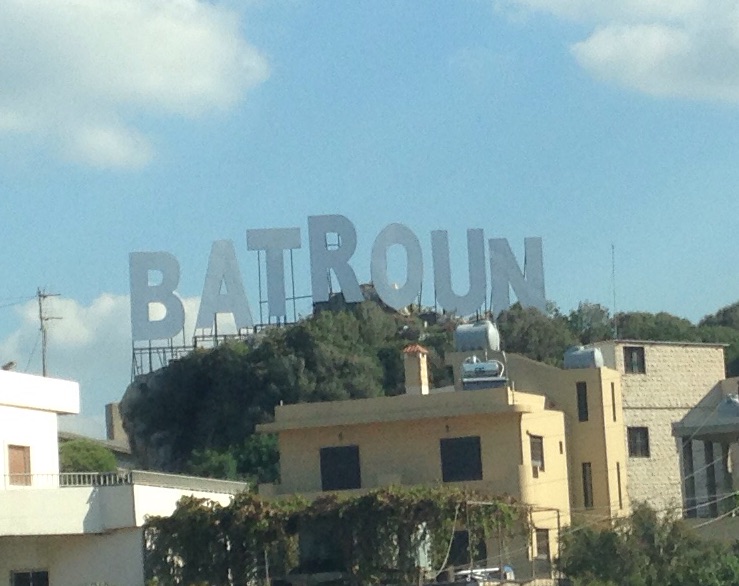
Batroun hollywood sign

Back in 2012, I wrote about an economical boom coming my home district Batroun’s way (link). It promised great things for the caza and North Lebanon. Now, more than 2 years later, that project is going through the bureaucratic motions of Lebanese governance on its (hopeful) way for fulfillment.

A parliamentary committee consisting of MPs Ibrahim Kanaan (Metn), Nadim el Jesr (Tripoli), Hekmat Dib (Baabda), Jean Ogassapian (Beirut), Neamtalah Abi Nasr (Keserwan), along with a representative of the Minister of Economy Alain Hakim, is studying the law required in order to make the zone a reality.

The zone will be spread over an area of 200,000 m², donated by the Maronite Church in Batroun. The project was championed mainly two years ago by the Maronite League (الرابطة المارونية).

The purpose of the Maronite League behind the project is to improve the economy of that region in order to prevent its people from moving to Beirut and its youth from emigrating. Certainly, even if unknowingly by the League, such a project’s benefits will not be exclusive to the people of Batroun or Maronites for that matter. Let’s hope they don’t mind.

The feasibility study of Batroun’s economic zone indicates that there’s a possibility to generate over 5000 jobs. The companies that will operate in said area won’t be those of heavy industries akin to the ones present in nearby Shekka or Selaata; they will be high-tech industries similar to the ones operating in California’s Silicon Valley, which is where many Lebanese youth today are heading as career choices.

In order to bring in such high-caliber investors, the law that is being studied by parliament will give investors and their companies many advantages:

  1. The zone will not be run by the Lebanese government, but by a separate appointed committee whose members are, in theory, not chosen based on sectarian distribution but on qualifications,
  2. They will have their products exempt from custom fees, which would make their prices competitive,
  3. They will have their mode of business not constricted by Lebanese bureaucracy, which means they won’t have to face months of legal paperwork to finish anything that’s remotely crucial for business,
  4. Permits will be issued by the committee in charge of the zone and would therefore be more easily obtained,
  5. Taxes will be reduced on companies to make their business more profitable.

As is always the case in Lebanon, there’s big fat “HOWEVER” lurking in the background. It is not all awesome news. Is it ever?

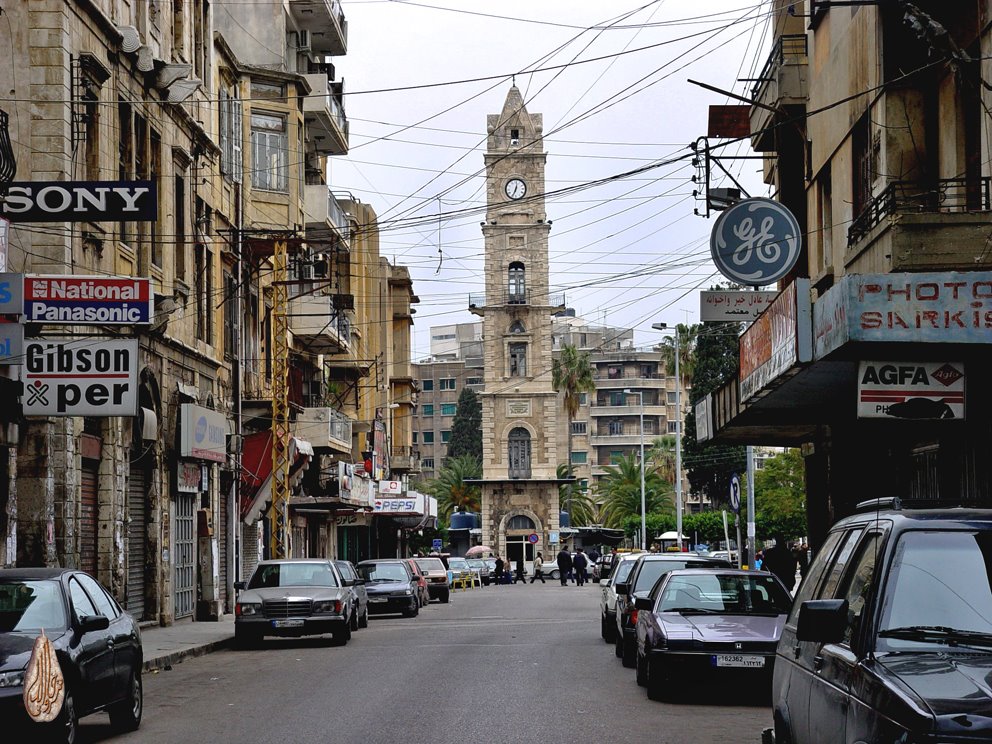
Tripoli's "Tall" Area

Tripoli’s “Tall” Area

Batroun’s Silicon Valley-like area isn’t Lebanon’s first to be suggested. Back in 2004, late PM Rafic Hariri came up with an idea for a similar zone in Tripoli, and in August 2008 Lebanese parliament actually passed the law required to set such a zone in action. This is a copy of the law (link) if you’re interested.

For the first time in years, Tripoli – and North Lebanon – were to have major development coming their way. Keep in mind that in 2008, Tripoli was not the war-torn city you all love to criticize today. It was, at the very least, much stabler than Beirut.

In numbers, Tripoli’s zone was more impressive than Batroun’s. Its area was to be spread on 1,000,000 m² of reclaimed land facing the city’s port, of which 350,000 m² has already been done.

At poverty rates ranging between 57 and 63%, Tripoli would have witnessed a tangible and drastic improvement in its economical state as well as the living standards of its people. The study of the area indicated the possibility of generating more than 6000 jobs.

Couple that with Batroun’s numbers and North Lebanon, the country’s poorest and most forgotten mouhafazats, gets more than 11,000 new jobs for its market.When has it ever had such development take place? Never.

Soon enough, the situation in Tripoli decompensated miserably into what things are today. The situation in the country as well wasn’t better. Tripoli was Lebanon’s battleground for the subsequent years. However, those two broad headlines weren’t the only reasons why Tripoli’s zone came to a standstill. Our government couldn’t appoint the committee that would oversee the project. As such, that massive economical development has been sitting on shelves for the past 7 years.

Why wasn’t our government able to appoint the required committee? Because they haven’t found the appropriately backed people of appropriate sectarian backgrounds. Even getting decent jobs to the poor and unemployed in this country is a matter of religious calculations.

Today, here’s what’s at stake. The country can remain as it is, with our youth leaving the country and ending up on best end-of-year lists (link) for doing things abroad that they could have done here. The status quo can remain. Excuses such as “Tripoli is too unstable” and “Batroun is too far” can be used to kill such projects in order to keep all the money flowing to Beirut and Mount Lebanon because only those matter. Tripoli can be kept poor, Batroun can be kept underdeveloped and North Lebanon can also easily be kept needy. The people can be kept jobless and uneducated. Let them stay hungry, let them stay foolish, let them forever remain prone to political manipulation.

Or, infrastructure-issues notwithstanding, we can realize that such projects are a solution, not a symptom, and that it’s high time to realize that Lebanon is 10452 km², not only confined to Beirut, and that sectarian balances are second-rate when it comes to being part of a 20 trillion dollars economy (this is the number in zeros for magnitude: 20,000,000,000,000). Let’s hope those in charge realize the latter, and don’t succumb to the former.


Why MTV’s “Banana Song” To Increase Culture In Lebanon Is A Big Failure

The only banana picture worth sharing

The only banana picture worth sharing

I was asked last week why I didn’t address the “banana song” that everyone was talking about. My answer was simple: it was something I didn’t feel should be propagated. Any kind of publicity is publicity, and I wasn’t going to be yet another blog exposing it to more people, not that it needed my help in doing so. Blog clicks and views be damned.

Yesterday, MTV announced that the whole thing was a marketing ploy orchestrated in collaboration with Impact BBDO to highlight how easily Lebanese fall for such flashy headlines and brainless news content instead of pursuing “culture.”

Certainly, the cause behind the mortifying song is noble, and kudos to those behind it for managing something that got almost everyone talking, even if it were to bash or criticize or to share it among friends for finding it hilarious.

But having everyone talk about it doesn’t mean the purpose of the campaign was successful. The campaign’s goal, to boost culture among the Lebanese populace, feels empty and hollow. I mean, isn’t MTV one of the leading Lebanese TV stations promoting lack of culture and decadence?

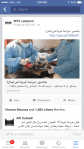
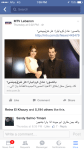
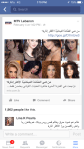
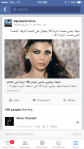
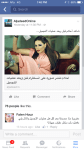
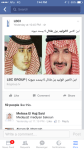
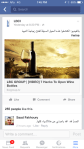
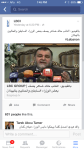
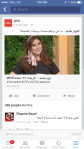
They say a picture is worth a thousand words. How about 14 pictures about the content that MTV has been advertising on its channels for the past 4 days?

I don’t know about you but news about selfies and skin products don’t qualify as propagating culture in my book.

MTV’s lack of “culture propagation” also extends to their shows: when has Adel Karam hosted an artist on his show that promotes culture? His most successful episode was with Haifa Wehbe.

What was MTV’s attempt at keeping you glued to your TV sets on a Saturday night? Maya Diab in barely-there clothing singing karaoke.

How did MTV try to sell Dancing With The Stars in its first season? By using May Hariri.

Of course, MTV isn’t alone in this practice of culture-lacking Lebanese media approach. Here are some screenshots thanks to LBCI, OTV and Al-Jadeed:

Isn’t it ironic that the same TV station wanting to fight decadence has been actively promoting it for months and years based on the rule that “الجمهور عايز كده?”

Do they even know that people massively clicking on a link isn’t indicative of its quality and that people tuning into a TV show doesn’t mean that said TV show is of decent quality?

Does MTV also think that the people who shared the video and who are targeted by the campaign would suddenly wake up and find themselves needing to pursue some Picasso instead of a Miss Lebanon selfie and some Beethoven instead of Haifa, especially that there’s absolutely no Lebanese TV stations that serves such a level of “culture” to begin with, in a country where such a thing isn’t remotely primed in the first place?

The Lebanese population is being actively dumbed down by TV stations who then come sweeping in with a marketing ploy to show us that we easily fall prey to gimmicks, while doing absolutely nothing about the problem in the first place. Don’t ridicule people with a silly “music” video when your TV station makes absolutely no effort at advocating for the campaign you’re supposedly championing.

If you want to fight decadence and promote culture, then do it, don’t preach it. Offer some culture to your viewers that isn’t gimmicky. Educate them. Give them news articles that would stimulate their minds, that don’t start with a  “بالصور ” or ” بالفيديو ” headline.

Don’t expose the music of the highest bidder when there’s so much better pieces floating around the Lebanese scene but without the needed money to give them airtime. Don’t give acting roles to models when there are countless theatre students in the country who can’t make a living.

If you want to promote culture, don’t shy away from investigative journalism that could highlight and maybe change a lot of what’s happening in this country just because a politician owns shares in your establishment. How many issues has MTV and other Lebanese TV stations forcefully ignored because they’re not “catchy” enough, because they deem aren’t newsworthy enough, because they want to kill them upon arrival for a reason or another? How can you promote culture if you’re deciding what is cultural and what isn’t?

The simplest analogy to this whole issue that I can think of is the following: MTV promoting culture is akin to Al Manar promoting secularism or Tele Lumiere promoting atheism. In other words, it’s bullshit. In a week or so, when people get over bananas, MTV will go back to what it does best and it will all be “بالصور ” or ” بالفيديو .”