Lebanese Priorities: Censoring The Film Out of Beirut’s Film Festival

L'inconnu du Lac movie poster

L’inconnu du Lac movie poster

When I was walking around the streets of Paris a few months ago, a movie poster at one of their newspaper kiosks caught my attention. It was a colorful painting of two men kissing, with stamps of some impact the movie had at the most recent Cannes Festival. It was called “L’Inconnu du Lac.”

I jokingly said to my friend back then that such a movie would never be released in Lebanon because, you know, there’s someone out there whose main concern is my moral well-being. Who needs art? Who needs some degree of taboo breaking? Who needs any form of mental challenges when you have a bureau whose job is to make sure you don’t get the least mentally stimulated?

A year ago, a friend of mine expressed pride in her cousin, a filmmaker named Farah Chaer, who had produced a short movie called “I Offered You Pleasure,” on the widely known but not-spoken-of topic of “Met’a” marriage among Lebanon’s Shiite sect. An interview conducted with the filmmaker back then asked her about the possibility of having her movie censored. I was sure she’d have trouble.

I was right about both movies.

Our bureau of censorship, which censored a play about censorship about a month ago, decided that both movies couldn’t be part of the Beirut Film Festival, which was opened by Alfonso Cuaron’s “Gravity” yesterday, an excellent movie if I may say so.

Our bureau of censorship decided for every single Lebanese that a movie talking about the “met’a” marriage was not to be seen by the Lebanese people. It decided that such an issue is not to be allowed to discussed on screen. It decided that they want to preserve our well-being by banning us from being exposed to that facet of our society that not all of us are aware of.

Our bureau of censorship decided that a movie about a homosexual relationship which had a torrent of praise bestowed on it in Cannes is not suitable for viewers here. It decided that we all have the mental span of a two year old and as such couldn’t withstand having such forms of art approach us without damaging our souls, our precious whole Lebanese souls which should never be maimed by such indecencies. I wonder, what will happen to the movie “Blue Is The Warmest Color,” which won the top award at Cannes and which also has unsimulated lesbian sex scenes? Will we also not be allowed to watch that movie as well because they don’t see it fit?

As Lebanese, we truly don’t have the extent of freedom that we think we do. We can’t discuss religions freely. We can’t discuss politics freely. We can’t discuss politicians freely. We can’t even criticize our president freely. And lately, there’s been a growing phenomenon of censorship that’s been greatly limiting what we get to be exposed to in order to maintain public order.

As a Lebanese today, with such bans I am stopped from having discussions that would otherwise not be possible in my society. I am stopped from being able to get exposed to the culture that exists beyond this country of mine. I am stopped from being able to enjoy this art that is cinema due to the prongs of a bureau that cannot appreciate the art in it. I am forced to remove the film out of the Beirut Film Festival because there’s really no point in having a movie festival where every single scene is not an expression of freedom, but a mere manifestation of some scissors that decided that scene was allowed.

As a Lebanese today, I am very thankful my country has its priorities in order: my morals, ethics and whatnot top that list. As if we can’t download both movies really soon. Wlek tfeh.

AUB Returns to Lebanon

A couple of days ago, I blogged about a mistake on an American research symposium that listed the Lebanese university AUB as located in Israel.

Following the publication of that post, it got picked up by various news outlets, such as L’Orient Le Jour, Annahar, Kataeb and New TV who shed light on the matter as well.

Today, I checked the program of the symposium and it seems the mistake has been corrected: AUB is listed as in Lebanon.

AUB, Lebanon

I was told that such mistakes aren’t always a bad thing as they help shed light on the research they are part in. I personally believe, however, that research should be able to stand on its own merits and not employ such gimmicks in order to turn ears.

We’ll never know the details of how such a mistake remained in the program till a week before the symposium started. But I guess what matters is the bottom line: getting it fixed. Good luck to those who are presenting the research and I hope they do a good job.

The World’s Worst Passports: Leish Fi A7la Men Lebnen?

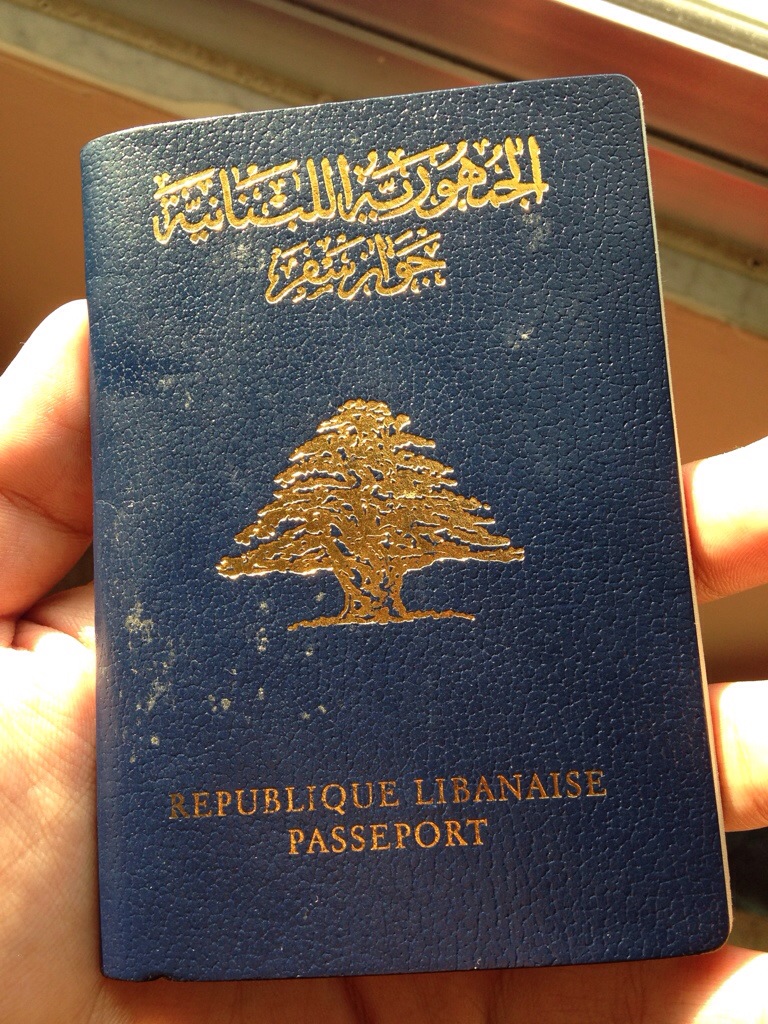
Lebanese passport

The passport of yours truly

As a Lebanese, you certainly do not need to travel. You have everything you need in the confines of our infinitely beautiful country.

I mean, why would anyone want to go do anything outside of Lebanon? We have the world’s best beaches, the prettiest women, the best nightlife, the best nature sceneries, the best food, the best wine, the best everything this world has to offer.

And in case you got bored, don’t worry. There’s almost always something happening somewhere. Who would want to have the boring routine life of those pesky Europeans and Americans who think they’re better than us, with all their rules and regulations. Seriously, why would anyone want to be limited like that?

As such, ladies and gentlemen, we are in good company on a worst passports of the world list. Not that it should matter, right? The list (link) ranking the world’s worst passports has us with all those places that we love to bash, always thinking we’re better than them, always thinking their people are so much lesser than us.

Who’s on that list? Countries such as Afghanistan, Iraq, Somalia, Eritrea, Kosovo, Pakistan, Palestine, Nepal, Sudan, Sri Lanka. Even while typing those countries, my head was listing every single joke that we, as Lebanese, have made about the people who come from those places. I guess the joke’s on us now. Those women will be livid they’re on the same list as their maids, no?

Certainly, many will now say that I’m being overly negative, that I’m being overly melodramatic when it pertains to the situation in our country, especially when it comes to the matter at hand. There will be those who have absolutely no problem with this situation because having it the other way around would mean Lebanon being in bed with all those imperialistic nations that are ruling the world and forgetting the struggles of the region we’re in. There will be those who have absolutely no problem with all the paperwork required to have countries possibly consider granting you access, maybe, to their countries and who find that addressing the issue is not important because, seriously, ma fi a7la men lebnen.

Perhaps such rankings make sense. We are in a place that can push even the most resilient and positive of people to their breaking point. Some of them even decide to leave. And I know I’ve talked about such a thing before – it’s basically why I was hesitant to write about the issue again. But is the ranking making sense reason enough to be content? What is the solution?

Talking about the state of the Lebanese passport isn’t because we like to have paperwork-free vacations in France, which I personally would love to have. It’s because our passport situation is a clear reflection of the situation that our citizenship and country bestow upon us, one that many love to turn a blind eye to because it doesn’t go hand in hand with the good image we want to portray of Lebanon and the joie de vivre we are all known for. Or maybe some of us are.

Getting our passport up to par has a pre-requisite, which is getting our citizenship up to par. It means pushing every Lebanese not to want to seek out a better life elsewhere. It means having a state that can provide for us the basic necessities in the best form possible, and then some. It means having decent roads, electricity, water, internet, equality, security, accountability, democracy. It means not having our passport system be so corrupt that we have to pay $200, effectively making our passport the most expensive in the world, for something that is this worthless.

Some of those elements are a struggle, sure. But they surely won’t happen with politicians who are content to have a diplomatic passport that can take them anywhere, who renew their mandate whenever they feel like it and who, whether we like it or not, would get re-elected anyway. The hell with us, it seems. And such an issue, in my opinion, will never be redundant. But nevermind me because seriously, fi a7la men lebnen?

Lebanon, Now RefugeeStan: Enough With The Humanity Talk?

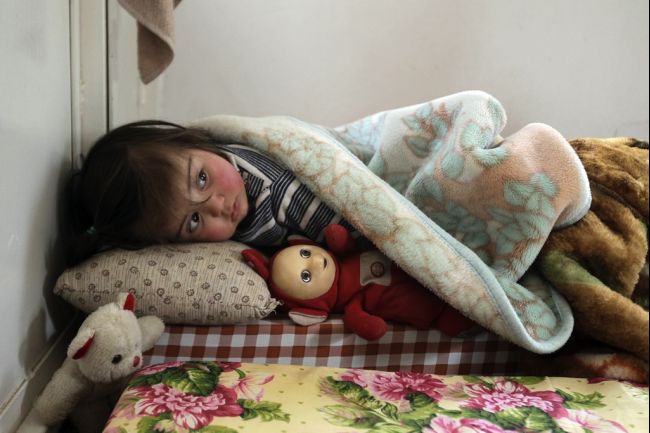
Joseph Eid/AFP/Getty Images

Joseph Eid/AFP/Getty Images

I was going from my hometown to Batroun a while back when I saw two hitchhikers asking for a ride. I’m not the type to worry about such things – transportation between my hometown and Batroun, if you don’t have a car, happens through that method. So I picked them up and off to Batroun we went.

They were both men. The one sitting in the back was very quiet. The one sitting in front was pretty chatty. We were talking in Lebanese. I would have never thought there was anything odd about his dialect until I asked him where he was from and he replied: Homs.

He was worried about his reply so I tried to defuse the tension by saying that I visited his city back when it actually existed and it’s a nice place. The Syrian man, however, felt it was adamant to tell me that they were both Christians who want nothing to do with the war in Syria and who think everyone is at fault.

As I dropped them both off and went about to finish my errands, I started thinking: how bad must it have been for that Syrian for him to decide that telling random people that he was Christian whilst giving them the most diplomatic version of any person’s stance over what’s going in Syria is what everyone wanted to hear? I figured he must have gone to hell and back with him being Syrian in Lebanon lately. And I felt terribly sorry for him back then.

I’ve spoken about the issue of Lebanon’s Syrian refugees before. They’ve become so many that they turned into a source of jokes, though those have also become extremely redundant as well.  However, the issue of those refugees has never really been tackled. Municipalities and some Lebanese ministers spew racist speech that only works to boost their popular basis. The government is as comatose as it has ever been. I guess they’re more worried about the potential ramifications of Ania Lisewska’s sexual escapades. Moreover, the entire rhetoric has been about how we simply couldn’t humanely stop those refugees from seeking help here while acknowledging that the problem was slipping out of control.

The question today is the following: is it the time to draw the humanitarian line on the issue of Lebanon’s refugees as our country quickly but surely turns into some form of refugeeland for the troubled people of the region?

Recent economic studies have revealed the following data about the Syrian refugee situation in the country:

  • Our GDP will decrease by 2.85% per year between 2012 and 2014,
  • Our debt will increase by $2.6 billion,
  • Unemployment will double,
  • By 2014, the number of Syrian refugees in the country would equal about 40% of the country’s pre-Syrian war population,
  • Lebanon’s cumulative loss because of the refugee crisis will be approximately $7.5 billion,
  • More than half of students enrolling at our public schools will be Syrian refugees,
  • More than 40% of primary healthcare visits are of Syrian refugees,
  • Another 170,000 Lebanese will be pushed into poverty because of the immediate ramifications of the refugee crisis. By definition, that is living under $4 per day.

Our refugee problems are not only Syrian. We keep forgetting about Palestinians because their problem is more universally acknowledged, but they have their share of woes that they are bringing on our communities:

  • The number of Palestinian refugees in the country has increased by 16% lately, according to UNRWA,
  • Lebanon already has over 400,000 Palestinian refugees residing in it,
  • Most of those refugees live in refugee camps,
  • Those camps are outside state control and have a self-security system going on,
  • Their self-security system has caused security trouble with Lebanese for a long time, the most recent of which is the altercation with Hezbollah.

Lebanon, the smallest of Syria’s neighbors, is taking the biggest load because:

  1. Many of us believe that the problems of those refugees are not as severe as the numbers say they are,
  2. Many Lebanese refuse to address the issue of the refugees due to political reasons or because they see no problem in those refugees being here,
  3. Some Lebanese parties had decided once upon a time that there was nothing happening in Syria and that those people are here for tourism, while parties on the other side of the spectrum stood by as they waited for ways to use those “tourists” politically,
  4. Our country is simply not capable, neither financially nor logistically nor influentially, of handling such a load – but is the solution simply letting the load pile up while we stand idly looking around?

Most Lebanese were more worried about the situation of the refugees with the most recent rainstorm to hit the country than of other Lebanese who are living in similar, if not worse, conditions. During a recent session with Medecins Sans Frontières, I asked: how does the living situation of people in Bab el Tebbaneh, Jabal Mohsen or Akkar compare to what you’ve seen of Syrian refugees? The spokesperson answered: it’s worse.

But their effect on our lives, even though many refuse to see it, is not only related to the way they live.

For the Lebanese who don’t need to seek out an apartment for rent, the housing market is the same it has always been. But renting fees have risen sharply over the past year or so. Even shabby apartments in my hometown, which many would say are not that well-equipped, are going for rates that might rival Beirut due to the extremely high demand imposed by the refugees. If one can’t pay, they get kicked out and the other refugee on the waiting list takes his place. Lebanese people, living off our country’s dismal salaries, have to abide with landlord demands that come out of the blue and blindside them into eviction. A friend of mine will soon leave her Achrafieh apartment because her landlord decided, just as the new school year was starting, to ask for a rent increase. Lebanese are anything but lousy traders.

Another friend of mine lost his job recently. He never figured he’d still be out of a job almost 5 months later  – he worked in architecture. How rare could those jobs be in the country? It turns out the job market has also drastically changed since he last tried his luck in it. His former job was taken by a well-qualified Syrian who’s getting paid half his salary. Can that Syrian complain? Of course not. Employers now prefer to hire Syrians over Lebanese because they’ll do a similar job for much, much less salaries. How are we supposed to compete with that? Is it plausible for a Lebanese with an engineering degree to accept a $900 per month salary in order to say they’re not unemployed?

You’d think that with this influx of people into the country, business would somehow either stay the same or improve. Well, guess again. Even though goods prices have not drastically increased lately, as they somehow find their way to do whenever something happens in Lebanon, the growingly terrible security situation in Lebanon is deterring people from doing what Lebanese do best: joie de vivre and all. A well known Lebanese restaurant has witnessed a 20% decrease of business per year, over the past two years with this number reaching 40% at some of its branches. Weekend walks around some of Lebanon’s bar streets reveal a drastically different scene from the one that was present a while back: how many times have you seen Gemmayzé near-empty on a Friday night? Many food chains around the country are closing due to the recent instability: Hard Rock, Krispy Kreme, etc…. And I’m sure common sense dictates that smaller businesses are taking it harder. At one point, I’d have said the refugees had nothing to do with this. But the aforementioned World Bank study seems to indicate that they are playing a major role in the stagnation this country has reached, harsh as that realization might be.

What To Do With All Those Refugees?

I’m not turning into a Gebran Bassil-esque character who bashes the refugees one day, calls to get them kicked out of the country, but would have no problem bringing in the people from Maaloula just because they’re Christian and can be milked politically over here. I don’t think what municipalities are doing is acceptable in the context with which it’s being carried out but they are legally free to do whatever they want. What I can do regarding those regulations is not vote for the people who enforced them come next election time, which in my hometown should be soon. But what we also cannot do – and Angelina Jolie would certainly not approve – is stand by while the country is over-run.

How are we supposed to deal with the refugees? Well, for starters regulations that ban any Lebanese employer from hiring them in select jobs where our country has a surplus of people who are willing to work but can’t find the opportunity to should be enforced. Instead of municipalities settling for curfews on the foreigners they don’t like, they should start up regulations that lead to the organization of the refugees in their jurisdiction instead of limiting their liberties. Instead of panicking about an increasing number of refugees in the country, we should enforce regulations on how many refugees we can accept through border regulation. Instead of letting the refugees roam around the country, sleeping under bridges and whatnot, we should set up refugee camps in the Bekaa that can agglomerate them somewhere where their basic necessities can be addressed.

The humanitarian thing to do is not to make it harder for our parents to get by, it’s not to leave ourselves without jobs and it’s not to get our businesses out of business. The humanitarian thing to do is not to call for humanity just because it pleases our conscience while the country burns and we sit by blindly, not seeing the effect of our humanitarian action-less actions. It’s difficult sure. They don’t want to be here, definitely. But it’s time we think about the country that we want to have for ourselves because, by the looks of it, nobody cares about us.


 

Lebanese Xriss Jor Wins At Dubai Music Week, Signs Recording Contract With Quincy Jones

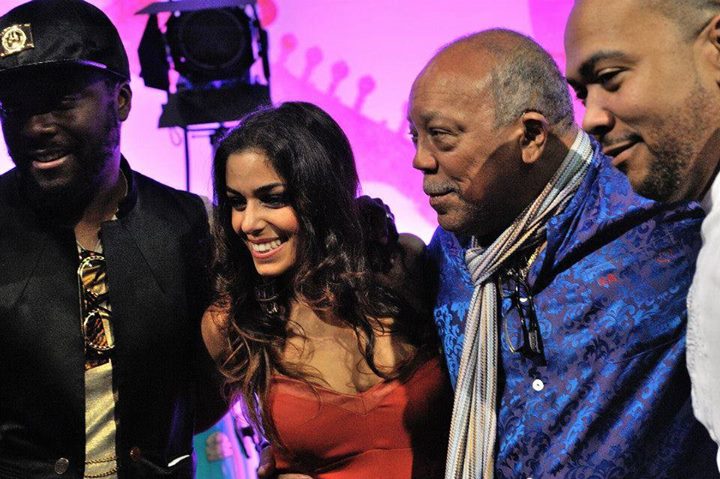
Xriss Jor Dubai Music Week

A jury that consisted of Timbaland and Will.i.Am chose Lebanese Xriss Jor as the winner of the talent part at the Dubai Music Festival, following her performance of Listen by Beyonce. As a result, Jor will sign a record deal contract with Sony Music and producer Quincy Jones, who has worked previously with Michael Jackson and Frank Sinatra. She will get a single and a music video out of this.

Xriss was competing with Emirati singer Hamdan Al Abri, Dubai-based Lebanese band Jay Wud, Lebanese singer DD Fox and Sudanese R&B singer Nile.

I figured her name was familiar so I looked into her some more and it transpired that she was a contestant on The Voice and managed to reach the later stages of the show before being disqualified in the 1/4 finals. Those talent show contestants keep going at it until they hit the jackpot apparently. Another batch will find its way to the spotlight tonight with the relaunching of Star Academy.

This seems to be Xriss Jor’s most popular performance on The Voice:

And this is the version of Listen that I was able to find:

Dubai is all about music these days. Another Lebanese band is participating in another music event taking place there. So make sure you head to Pepsi Band Slam and support Adonis.