How Rain Will Make Lebanon’s Garbage Crisis Much, Much Worse

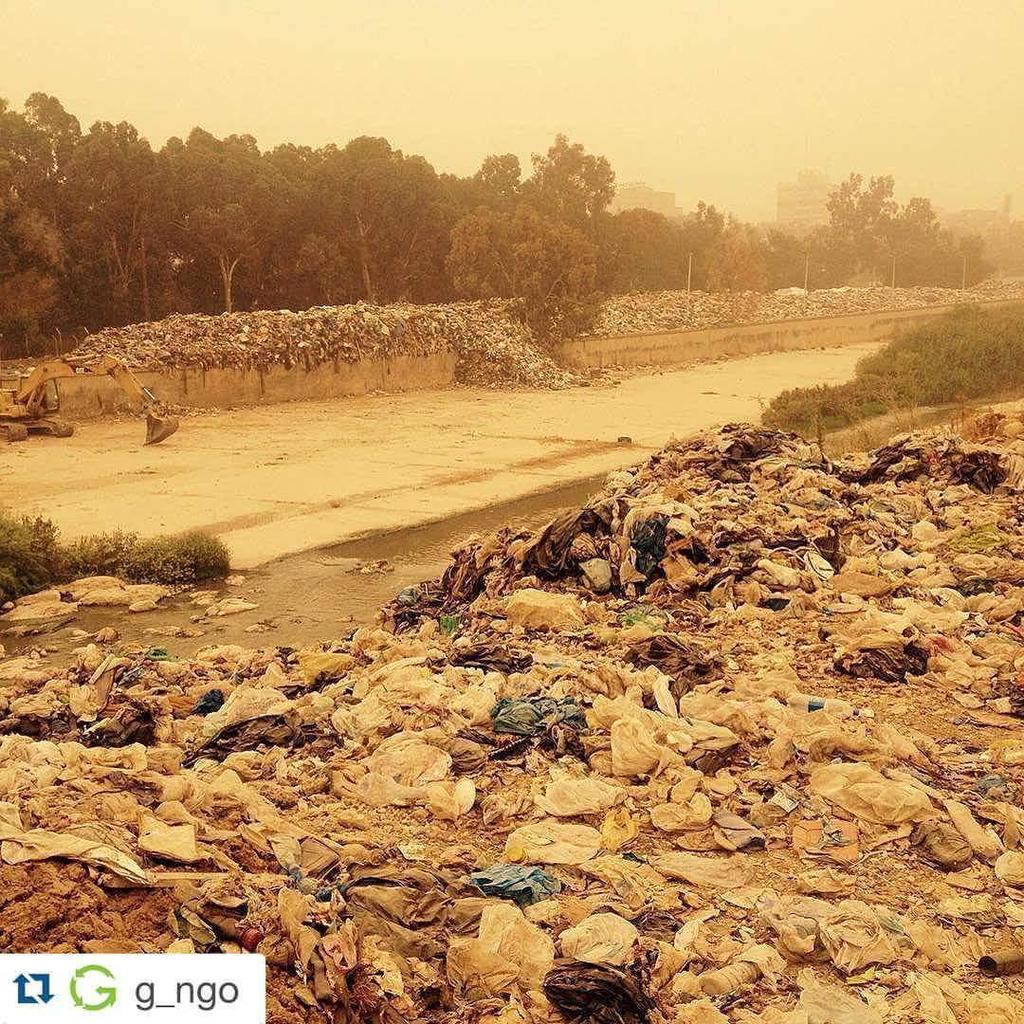
Beirut River

The political aspect of Lebanon’s Garbage Crisis has been discussed extensively. The protests around the issue and their underwritten goals have also been discussed extensively. What hasn’t been talked about in the media, however, is how this garbage crisis in Greater Beirut is affecting our health and how the first bouts of rain, set to come within the next few weeks if we go by Lebanon’s standards, will exacerbate this crisis into a full blown health crisis as well.

To be honest, this isn’t something I learned in medical school. We don’t have courses about garbage-crisis-related-health-issues. This is very short-sighted, I know.

So with a little help from my Infectious Diseases specialist-to-be friend Tala Ballouz, a little research was done and we’ve come up with the following.

So the Greater Beirut area today is essentially a very urban area that has its garbage being deposited basically everywhere. With rainfall that runs on this garbage, many of the extracts in our garbage will become dissolved and suspended in the rain, forming a liquid called leachate.

So what is leachate made of? Let’s list them.

  1. Aerobic and anaerobic bacteria (where is Abou Faour when you need him?),
  2. High concentrations of total dissolved solids, ammonia, nitrate, phosphate, chloride, calcium, potassium, sulfate, and iron,
  3. Numerous heavy metals such as zinc, mercury, cadmium, lead, nickel,
  4. Organic trace constituents: byproducts of decomposing solvents, pesticides, and polychlorinated biphenyls, a highly toxic environmental pollutant.
  5. High numbers of fecal bacteria.

Leachate occurs over landfills, dumps and essentially wherever garbage exists. In developed countries, their high level waste management systems prevent this substance from being anything worthwhile. Developing countries, however, don’t have it as easy.

How about if that developing country was a country like ours in our own garbage situation that consists of: 1) garbage being present on streets, next to rivers, next to the sea and on land where it shouldn’t be, 2) that same garbage being unmanaged and untreated for over 57 days now which means its level of decomposition is in the stratosphere and 3) when even our rivers are blocked by it?

With the formation of leachate with Lebanon’s upcoming rain season, the toxic water will do the following:

  1. Infiltrate into the underground water reserves that we have. This will lead to highly toxic water for us to use in various industries, be it in agriculture or even personal use.
  2. The rain, coupled with the fumes of the garbage along with leachate, will form acid rain. This will affect aquatic life, Lebanon’s already-fragile infrastructure and whatever plants we have left.
  3. The consumption of products that are this polluted (indirectly) with this many toxins (check the list above) serves as a massive hub for carcinogens, substances that increase the risk of cancer.
  4. The Beirut River will have unnaturally high toxic levels (remember when it was red? this will be worse), that’s if it doesn’t overflow, sending waste and toxins into the homes of those living around it.
  5. Illnesses that are not endemic to Lebanon will start surfacing, notably cholera, a bacteria that thrives on infected water.

Other infectious problems we might have are the following:

  • Amoebiasis –> causes fever, abdominal discomfort, bloating, fever, weight loss.
  • Infections with various tapeworms –> cause a wide array of intestinal disturbance and could even have neurologic sequelae.
  • Echinococcosis –> causes liver cysts, and can cause anaphylactic shocks.
  • Various bacteria that are not only cholera (C. jejuni, E. Coli, Salmonella, Shigella, Legionella) –> cause symptoms ranging from intestinal to pulmonary to neurologic symptoms.

As a country, we are not ready to handle many things, as is testament by the fact that our garbage has been on the streets for about two months. A health crisis due to this garbage crisis is also something that the country cannot remotely handle. The epidemics we can get are not fiction, but they are right around the corner.

What can you do?

Pressure your politicians to get the garbage off the streets… yesterday. And if not? Well, don’t drink the water.

The Ella Tannous Case: When Every Lebanese Suddenly Becomes A Doctor

Ella Tannous

I just wasted 7 years of my life in medical school.

Naturally, when you live in the country with the likes of professor Marcel Ghanem, Dr. Joe Maalouf, Tony Khalifeh and their friends, is there a point for you to remotely try to get an education? They will tell you what you need to know, give you medicine crash courses and guide public opinion on the matter.

Clearly, they’re the ones who know everything and those doctors are just backward-minded folks who only care about money.

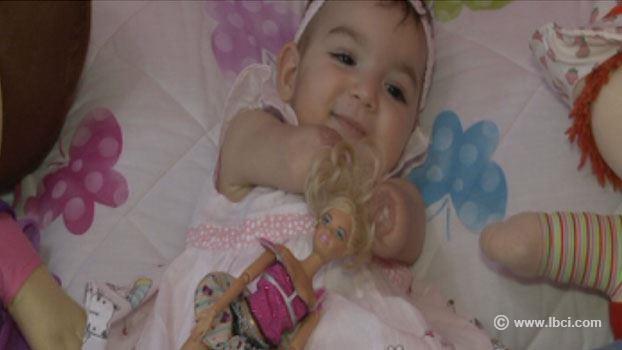
Ella Tannous is a young 9 months old whose pediatrician is now in jail. Why is he in jail? Because we live in a corrupt country where security forces get carried away by the sensational reporting of Kalam Ennas and other similar shows to ruin the life of a man simply because of the science of Marcel Ghanem’s report and that dramatic Lord of the Rings music in the background and the tears of the child’s mother as she whispers: why can’t my little girl play with barbies?

Again, what would I know. I’m sure that policeman in between his Malek el Tawou2 sandwiches was busy reading medical textbooks. Give me the differential of a crying baby, kind sir. Oh, you have cramps from all the garlic consumption? Excuse me.

According to her parents, Ella had a high grade fever for which they contacted her pediatrician, Dr. Issam Maalouf, who ran some tests that revealed Ella most likely had a viral illness and prescribed medications to lower her fever.

However, Ella’s fever did not subside and upon contacting the doctor again, he told them not to worry and to use cold towels to try and drop her temperature.

When the parents saw that their child’s situation did not improve they took her to the hospital. It was a Sunday. The pediatrician did not see Ella that day and instead saw her the following day when she had already deteriorated.

He got her transferred to AUBMC where further treatment was done. Ella, however, was in shock and in a state called DIC (Disseminated Intravascular Coagulation) and had gangrene in her limbs, which had to be amputated to save her life.

This is what happened with Ella Tannous according to her parents:

*cue in dramatic music.*

What happened to their child is surely devastating to them and Ella’s parents have every right to be sad and heartbroken over what happened to their daughter.

But just because someone’s daughter had complications does not make that person a doctor who can go on air and pretend they know what makes sense scientifically and what doesn’t. It also does not give Marcel Ghanem or any Lebanese media, who were quick to jump on this very delicious scoop, the right to become full blown medical professionals who spent their times doing night duties in pediatrics.

So let’s go with what we know one by one:

1) Ella’s blood tests revealed a viral illness. Viruses are not treated with antibiotics as Ella’s father was alluding should have happened. In fact, the side effects of those antibiotics and possible increasing resistance to them make their use in viral illness not recommended. How do you treat a viral illness, scientifically? You provide symptomatic relief. A patient has fever? You give anti fever medication. A patient has a sore throat? You provide pain relief, etc.

2) Ella’s fever persisted. Viral illnesses can have fevers that persist. You still give anti-fever medications and monitor. This is what you do, unless LBC or Annahar have new guidelines that we need to be aware of, in which case enlight us please.

3) Ella deteriorated and they contacted her physician as they took her to the hospital. He didn’t recognize them at first. Well, bring the guillotines. A pediatrician could not recognize over the phone a patient out of the hundreds that he has. He must be incompetent. Issam Maalouf’s mistake? He did not go see Ella that day at the hospital. However, that hospital is a university hospital and they should have been reporting back to him every single that happened with Ella as she would’ve been admitted under his care.

4) Ella’s fever continues and she starts experiencing decreasing urine output and becomes lethargic. These are signs of dehydration and deterioration. Dehydration can lead to kidney damage because blood flow to the kidney is decreased which causes something that is called acute kidney injury. This is not what probably happened to Ella, however.

5) Because of her decreasing immunity fighting the virus, Ella contracted another bacteria called Group A Strep (GAS). This bacteria is virulent and has been known to cause a wide array of complications when not recognized and treated early. To recognize and treat it early, you need to maintain a very high level of suspicion which in the setting of a clear viral illness, such as Ella’s case, was not the case.

Due to her low immunity, Ella had a dissemination of GAS. This led her to go into septic shock and full blown DIC. Septic shock is an extremely lethal condition whereby the body cannot adequately find the overwhelming infection. DIC is a complication of septic shock that leads to the depletion of the body’s ability to coagulate the blood through the formation of little clots that block blood vessels across many organs and vessels. The condition is extremely lethal.

In fact, the combination of septic shock and DIC is usually unescapable. Ella is lucky to be alive. Do you know why she’s lucky to be alive? Because her pediatrician saw the signs early enough to transfer her to a hospital that can manage her well.


Bring The Pitchforks, Why Don’t You:

After all that they’ve done, I can’t believe the Lebanese populace still trusts Lebanese media blindly when it comes to medical issues just because they’re sensationalized enough for their liking.

This is the same media that wanted to convince you we had a Guillain-Barré virus.

This is the same media that, a few years ago, ruined an OBGYN’s life by pretending they know medicine and accused him of killing one of his patients who was giving birth. That patient had an amniotic fluid embolism that is a lethal and extremely rare complication of giving birth. That doctor’s future was ruined anyway. He was also thrown in jail for something out of his hands before the courts realized that he was thrown in jail simply because of Tony Khalifeh’s report at the time.

Issam Maalouf joins the growing list of doctors whose entire career rests upon the whims of a reporter who understands nothing and who goes by what the parents or family of a patient are saying as if they know what’s happening, as if they know the medicine behind diseases. A devastated parent is not a doctor.

This is the same media that now has you convinced a competent doctor is now where he belongs, behind bars, and has you changing your display pictures to “Justice for Ella” snapshots.

When faced with a report from the Lebanese Order of Physicians about what actually happened, that same media downplays the report as inaccurate. Because clearly, the Order of Physicians does not know the medicine behind what’s going on. Those physicians did not go to med school for years and then did residency and fellowship programs for more years only to be ridiculed on air for being imbeciles.

Complications in medical scenarios happen. Not every single complication, despite how deliciously journalistic it looks, is a headline story.

With all due respect to a patient’s family, the esteemed reporters across the Lebanese republic and the people holding the pitchforks in Ella’s defense: You really have no freaking clue what you’re saying. Stop suggesting treatment modalities. Stop suggesting scientific explanations. Stop ruining people’s lives just because it makes for fancy headlines.

And then you get the Ministry of Health pretending they suddenly understand medicine to bring their pitchforks too. You know, that same ministry who turned Lebanon’s food safety issue into a Star Academy-like nominee-every-week report fashion.

There is a reason we go to medical school for endless years. There is a reason we do residency for another batch of endless years. Only doctors can know when medical errors occur. Only doctors can judge another doctor who does a medical error. Only doctors know how to treat patients and diagnose them. Only doctors know how to manage complications.

This is not elitism. This is common sense. This extends to other professions as well. I can’t judge the work of an architect, but an architect can. I can’t judge the work of an electrical engineer, but another electrical engineer can, etc.

The bottom line is: I just wasted 7 years of my life in medical school, that much is clear. Because clearly, Marcel Ghanem and his friends know better than me and all my colleagues.

Why Lebanon’s Health Sector Is Messed Up

Abdul Ra’ouf was a 4 months old baby boy and he is another Lebanese tragedy. He was refused admission to hospitals in Akkar and has passed away. I suspect Abou Faour will hold a press conference soon.

In late February, a scandal hit Hotel Dieu as the Ministry of Health, led by Abou Faour, froze its contract with that hospital over them not admitting a patient who had no other form of coverage.

Heartbreaking stories of children dying make headlines, but they don’t tell you the truth of the health sector in Lebanon. That truth is in the numbers:

Before going into what thosee numbers mean, let’s take the hypothetical scenario of a hospital with 100 beds. The beds in that hospital are divided according to coverage: those covered by insurance have the biggest chunk allocated to them (let’s say 70), while those covered by NSSF have 20 beds and those covered by the Ministry of Health have the remaining 10.

Hold that thought for a second and let’s talk about the numbers.

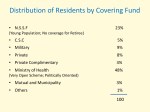
Half of the Lebanese population (48%) is covered by the Ministry of Health (MOH), while 23% are covered by the NSSF (daman) and only 8% are covered by private insurance. This means that about 2 million Lebanese have the MOH as their ONLY way to afford hospital care in the country.

Having half of your people covered by the ministry doesn’t seem too bad right? The truth of the matter is far less utopian.

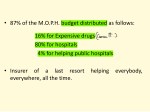
Having half the country covered by the MOH means those 48% are entirely dependent on the MOH’s budget. The disaster is when you find out that out of all the ministries running this country, the budget allocated for the MOH to cover the needs for HALF of the country is 3%.

How The Ministry of Health’s Budget Is Divided:

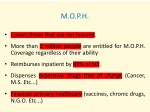
16% that budget goes towards expensive drugs notably cancer treatment. Patients not covered by the NSSF have to resort to the ministry for their medication (if they can’t afford it, which is the case of  99.7% of Lebanese).

Getting the medication out of the MOH isn’t easy. Sometimes they run out of the medication and you end up having to wait until they bring it back into the country. Other times, as has happened with a friend of mine who needed a $12,000 treatment over the course of a couple of months, other people come in and take the medication that was allocated to you, sign for you and leave.

The system is rigged with wastas, bureaucracy and corruption.

80% goes to hospital care, which is where most of the people need the MOH: operations, hospital admission, etc.

So imagine ONLY having 80% of the country’s 3% budget used to essentially treat 50% of the Lebanese population. This is why the MOH has the least number of beds at the country’s major hospitals: the MOH often doesn’t pay, and when it pays, it does so extremely late.

So when you hear that a patient couldn’t find a bed at a particular hospital, it doesn’t always mean that every single bed in the hospital is full, it means that the beds for that patient’s coverage are fully occupied, and that is very easy to occur when 48% of the country gets a minimal amount of beds in the country’s major hospitals.

Does that sound harsh? Of course it does. All Lebanese are entitled to excellent care and that level of care is, sadly, rarely available outside of Beirut and its major hospitals. Why so? Because excellent care is not cheap. Those imaging equipment with fancy names you hear being thrown around on shows like House, MD and Grey’s Anatomy cost in the millions. Every time a hospital buys something to advance its level of care, they pay figures in the seven digits. Even the research that goes into advancing care is expensive.

The level of care being expensive is a big problem. The bigger problem is not having hospitals that are close to the level of those inside Beirut outside of the capital. Most of the people in the country cannot afford places like AUBMC, SGH or HDF, but they can go to public hospitals where the level of care has the potential to be excellent but is handicapped by how little funding those hospitals get.

4% of the MOH’s budget goes to help public hospitals. What you need to know is that public hospitals are not exactly under the jurisdiction of the MOH, which means that the Ministry isn’t responsible for their finances and how they run: they have a separate board of directors that is required to run them and keep them within profit margins. However, as is the case with almost all public hospitals in the country, very few (if not none) are success stories because of the lack of governmental support that goes toward them.

I rotated at one of those public hospitals not too long ago. It wasn’t an eye opening experience because I do come from a non-privileged area of the country, but it was a heartbreaking one. The hospital was in a state of near-decay. Some of the equipment didn’t work.  And all the patients were one sad story after the next.

The latest high profile example is Beirut’s Governmental Hospital which has been in the news for months now because of the lack of payment to employees. Imagine not getting your salary for months. Does it make it okay just because you’re a doctor or a nurse?

What Happens When The MOH Freezes Its Contract With A Hospital:

As a response to HDF not admitting the patient (who wasn’t a case of emergency in which case the hospital is required by law to take care of a patient), Abou Faour decided to put his ministry’s contract with the hospital on hold. I suppose he thought that was punishing the hospital enough, and you thought he was defending your rights in doing so.

What freezing that contract means is that those 10 beds in that hypothetical hospital are no longer allocated to patients covered by the MOH. Freezing a contract with a hospital affects the patients, not on the hospital.

Hospitals And Doctors Can Also Be Greedy:

There are a lot of hospitals and doctors in the country that are greedy, and the system permits the perpetuation of that greed.

The most relevant story to that regard is of someone I knew who required a major surgery. That person’s community tried to intervene by raising the funds. Eventually a high profile charity heard of that person’s problem and donated. In doing so, they forced the hospital in question to lower their required fees by a decent amount, because that charity needed the invoices to be audited abroad.

A lot of this goes on behind closed doors. The lack of regulations means that you don’t know which part of the money is going where.

The Media Doesn’t Help:

Out of all sectors in the country, medicine and healthcare are the juiciest to be spoken about in the media, and the way the media talks about hospitals and about patients dying is ignorant.

A couple of weeks ago, Marcel Ghanem shared a story on his show about a woman who died at a hospital in Jbeil because they didn’t give her some covers from the cold. People were outraged. Were those nurses seriously watching Yasmina and not giving the woman a blanket? What an atrocity!

The truth is very different.

That patient was a cancer patient. As a result of her chemotherapy (which she was able to afford!), her immunity was immensely suppressed, rendering her unable to defend against infection. The patient presented to the ER of that hospital with what we call “neutropenic fever,” which is fever in the background of immensely suppressed immunity. Why did the patient die? Because she ended up in septic shock, a condition with extremely high mortality.

But that doesn’t sound too media-appropriate. The problem with Lebanese media isn’t that they talk about stuff that go wrong in hospitals. They should, and they should do it more. It’s that the angle they often use is useless, leads to zero changes and doesn’t highlight the real problems here: inequality, lack of funding, lack of coverage, etc.

My Own Sensational Story:

She was such an adorable 4 year old when she walked into the doctor’s clinic in Beirut, coming all the way from Tripoli. What’s your name, we asked. Farah, she answered in a barely audible singsong voice.

Farah was there for further reparative surgeries for a congenital defect she had. A tube was sticking out of her neck to allow her to breathe. The doctor offered to do the operation pro-bono, but the hospital had no beds available for her.

I saw her father weep. I have already lost two daughters, he said, by settling to hospitals in the North because I couldn’t afford Beirut. I don’t want to lose her too. And in a corner of the room, I saw my colleague tear up.

Farah is 48% of the Lebanese population.

My colleague then approached me and said: this is something you need to write about, and so I did.


How Lebanon Is Bracing Itself For Ebola

Earlier today, my phone buzzed with a breaking news notification about a patient being investigated for Ebola at a, as of now, unnamed Beirut hospital. An hour or so later, as I had figured, the patient turned out to have malaria. But that didn’t stop people from freaking out about the disease’s possibility of invading Lebanese territory. I mean, it’s only a matter of time anyway as Ebola is the only thing, possibly, that hasn’t strutted across our borders yet.

At an almost 30% chance of having Ebola spread to it, Lebanon is not at bay. 30% is a lot in medical terms. However, that isn’t to say that nothing is being done regarding the issue or that it’s being ignored as we’ve ignored almost every other pertinent matter that could potentially affect this country. I guess when it comes to health, people pay more attention.

In a matter of weeks, Ebola has become something that we, as medical professionals (or soon to be medical professionals), had to keep at the forefront of our minds as we saw patients in ERs or in any other setting for that matter for patients who have fever or a constellation of indicative symptoms.

Back in the old days, we’d start by asking about associated symptoms to try and draw a picture of a syndrome, a viral illness or any possible etiologies that made sense give the season, the condition of the patient, etc. Nowadays, we start by asking: have you had any recent travel history, sir?

Our cut-off to rule out Ebola in someone who presented from an endemic area, few as those people are, is about 3 weeks. I’ve seen people panic that they’ve encountered someone who visited Lebanon from Nigeria 3 months ago and are currently presenting with fever. No, it doesn’t work that way.

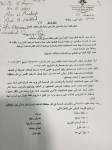
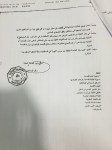
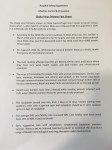
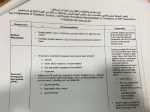
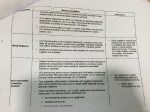
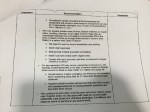
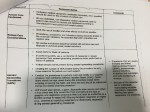
The Ministry of Health, in its capacities, has circulated memos to Lebanon’s hospital to educate employees, nurses and doctors about Ebola and about the proper ways to handle patients suspected with the disease. I have taken pictures of the memo in question, which you can find as follows:

When it comes to our airports, however, the story is entirely different. Sure, there’s probably not a massive influx of Lebanese coming from West Africa, but even with the global worry regarding the virus, there’s been basically zero measures at our airport to screen passengers or attempt to keep ebola in the back of their minds, just in case, especially in passengers from Sierra Leone, Guinea and Liberia. I guess there are more important airport-related issues at hand, such as fixing that A/C.

The media, on another hand, isn’t doing a terrific job either at spreading awareness regarding the virus or educating people on it in order to decrease mass hysteria and help catch suspected cases earlier, in case they happen to be there as unlikely as that is.

In a way, Lebanon is better prepared for Ebola than it is for any of our average crisis. Our hospitals are well equipped and can handle such cases extremely well. We have excellent equipment and doctors and, believe it or not, excellent medical management – at least at Beirut’s major hospitals that is.

The status of Ebola and Lebanon can be summarized as follows: there are more people in Lebanon that have been attacked by MP Nicolas Fattouch than have had Ebola.

Vaccinate Your Children Against Polio Starting Tomorrow

The Lebanese ministry of Public Health is starting a massive polio vaccination campaign tomorrow. As I’m currently rotating in pediatrics, I’ve seen a lot of parents who are unaware of the vaccine, who are having second thoughts about giving it to their children and who have not given the vaccine much thought to begin with.

Why You Should Care:

With the increasing influx of Syrian refugees, Lebanon is at an increased risk of a resurgence of diseases that we thought had long died off in the country, second to successful campaigns, such as polio.
Because the Syrian refugees in the country are uncontrolled, we cannot ascertain the disease load they’re bringing with them as as such we have to be extra careful with our children’s well being.

Poliomyelitis is a viral infection that can leave your kid paralyzed. Why take the risk?

Why You Should Spread The Word:

Polio vaccines are in two forms: an oral form and an inactivated injectable form. Both have 100% efficiency. The latter has no side effects while the former has a side effect that happens at about 1 in 2.4 million. The form that will most probably be employed in the campaign is the oral form and this provides the country with something that is called herd immunity and is actually able to help the children that have not be vaccinated.

How?

Herd immunity is basically the following: when people in a setting are all incapable of catching a disease and therefore spreading it, those who are not vaccinated will be protected by default. In case of the oral polio vaccine, the vaccine gets excreted by the child and can be transferred to other children. Therefore, the more you spread the word and the more children get vaccinated, the more the country will be protected.

Consult Your Pediatrician:

Your doctors are there to help you. Many of you have most probably had their children take the polio vaccine already but if you have any doubt on the matter, consult your pediatrician and ask them what to do. They will be more than helpful given that they are active components of the campaign set forth by the ministry of health.

I know this isn’t the regular stuff you’d expect from this blog but I find this matter of utmost importance and I hope you find that is the case as well.