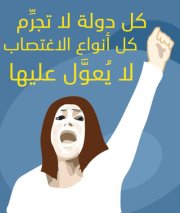
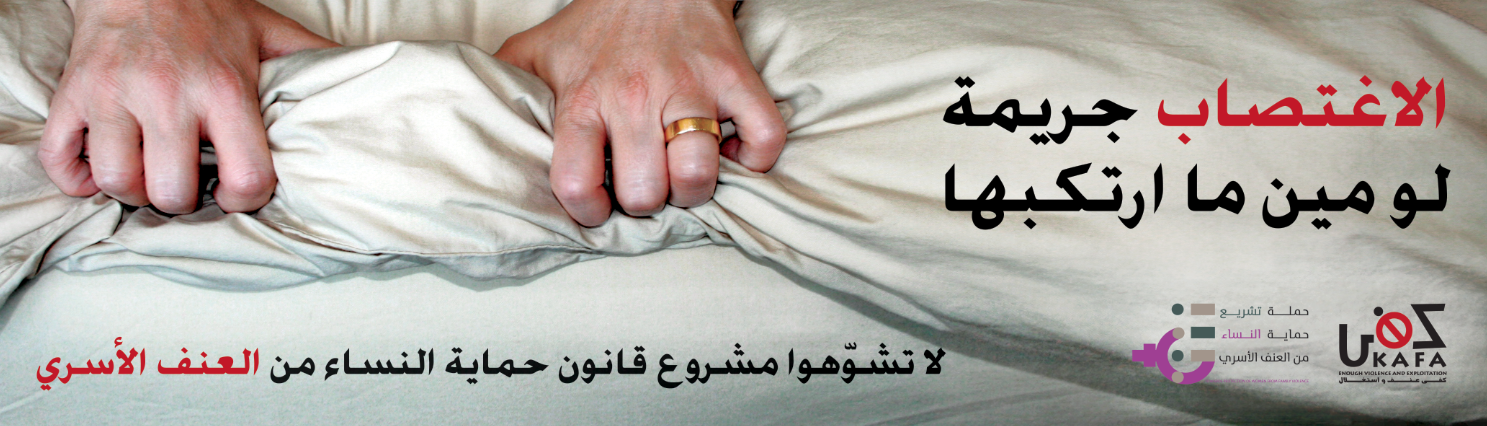
 The women and men of Lebanon are taking it to the streets of Beirut on January 14 in their struggle to get our legislators to recognize rape as a criminal activity even among spouses, marital rape. As it is, Lebanese law only recognizes rape as such when it’s done by non-married individuals. And when the act of rape has been verified, the perpetrator has the right to offer marriage to the victim and his act would be absolved.
An interesting post by Beirut Spring regarding this matter exemplifies the distinction between marital rape and rape as the former being part of domestic laws, where men of religion rule supreme, and the latter being part of criminal laws, governed by parliament. And as you know in Lebanon, men of religion always win – especially when outdated scripture is their only reference for logic, not the needs of a 21st century society.
If that doesn’t sicken you enough, there’s even a section in our law that goes into the specifics of how torn a woman’s hymen has to be for her to be considered raped. I posted about it before, which you can
check here.
But what’s worse is that most men, and many women, are very oblivious to how pejorative these laws are to them all. Sexual assault is not only exclusive to physical acts. Its scope also includes sexual harassment which Lebanese law doesn’t cover as well. Sure, these laws are giving the men of Lebanon an “upper hand” in society. But it’s not really an upper hand when this hand is raised over the other crucial component of Lebanese society: its women. A society where women are not given full rights is a dysfunctional society at its heart and core.
Men are also affected by the unfairness of the laws, although obviously not as much as women. I’m certain no father, husband, brother would accept his sister or wife or any female member of his family and close circle be violated in any way – and to have no law for her to lean on and defend her.
The January 14 protest is needed for Lebanese society. It’s the first time I’ve seen an anti-rape march getting this much propagation around the social networks. This is a sign as to how much the youth in our community want to change thing. But I have a simple question that doesn’t attempt in any way whatsoever to lessen the importance of the protest at hand.

Rape is a crime, regardless of who does it.
What do the protesters truly hope to achieve? I’m only asking this out of concern for the cause. The objective of the protest is surely righteous. But I can’t shake the feeling that this movement is stillborn for many reasons.
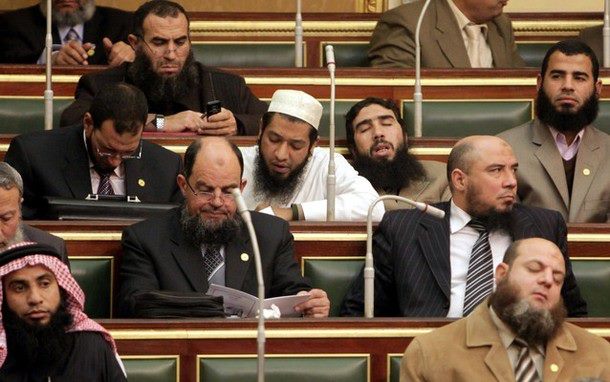
In my opinion, a parliament full of men taken straight of the dark ages will never ratify a law that brings the women of Lebanon into the 21st century. Like it or not, the men of our parliament (not all of them obviously but a decent chunk of them) are fine with the status quo. It doesn’t help that women have less than 10 MPs out of 128 to represent them (and not properly may I add). Perhaps the fight should be to ensure that women can actually get to office and fight for their rights from there. Perhaps the women of Lebanon should protest to get the elite of them, who can actually voice their concerns during parliamentary sessions, to be their parliament representatives. And there are many elite women in Lebanese society, who surpass at least half the men of our current parliament in qualifications.
It is here that the need for an upheaval of our laws is in need – and such changes cannot happen in the drastic way that they are needed without active female participation in making the decisions. You might think the “female quota” is limiting. Well ponder on this: is the situation without the quota any better? And can it get any better without a quota?
This post is not to lessen of the importance of the protest nor is it to belittle of the demands, as I made obvious in the first part of this post. This is simply to say that in the current political atmosphere of the country, the only way for women to have their full rights given is to assert political power. And women asserting political power cannot happen except through an electoral law that suits their needs . We’d be fools if we thought Lebanese officials actually cared about rape at the moment. The women (and the men of Lebanon who support them) would be fools to believe the men of our parliament actually care enough, deep down, to change things on the ground. All they care about is doing whatever they can to get re-elected next year. Many believe the ultimate solution is a civil state. Sure, a civil state is needed. But a Lebanese civil state will take a long time to happen in Lebanon and this matter is very urgent – more urgent than the oil law that has been debated for months now.
There is something, however, that is happening much sooner than a Lebanese civil state. Parliamentary elections are in a year. The law to run these elections is being discussed now. In a few months, the preparations for the elections will go underway and the voices of these women will be diluted and tuned out – unless they get their voices heard now and get themselves a secured proportion of representation in the parliament that will arise from the 2013 elections.
So Saturday’s protest becomes, as I see it and as Beirut Spring eloquently put in a follow-up post, “a watershed demonstration against denial and stigma in our society.” Perhaps it will get more people to be aware of the horrors our women have to face. Will it bring about change? I doubt the stubbornness of those in charge will let any change happen. So on Saturday the women and men of Lebanon march for a righteous cause. And I truly hope the slogans they will chant up until their vocal cords rip won’t fall onto ears as dead as the laws they want to change.





 A Separate State of Mind | A Blog by Elie Fares