The Week I Lost Hope in Lebanon

It is a sad moment when you find out that even though you belong in your country, you simply don’t fit there. This past week had this revelation thrust upon me. I belong in Lebanon. But I do not fit.

It started with me blogging about the Batroun cocaine scandal and my parents getting inundated with phone calls for me to pull the article offline. Some of those calls had been from a high-ranking priest. Others had threatened to pull their political strings. My parents got so worried about my well-being that they couldn’t sleep that night. I had to abide. It seems that there’s a limit to what you are allowed to say even when it comes to littlest things such as writing a harmless, nameless post about an issue that’s affecting my generation. But it doesn’t stop with drugs.

Everywhere I look, I am faced with the reality of people so untouchable that the mere idea of mentioning them would make me lose sleep. I am not a coward. But it’s just the way things are. In fact, I think I am automatically limited in Lebanon to the confines of what is allowed to me simply because my father is not one of those untouchables, he doesn’t know one of them and he’s not a millionaire who can buy his way into becoming one.

As I sat pondering over this in my Achrafieh apartment, I was melting in the July heat. There was no electricity. I wasn’t put off by the fact that the three hour cycle I had gotten used to by now was being messed up. It would only be a matter of minutes. But when those minutes turned to hours and those hours started doubling, I knew something was wrong. It just couldn’t be.

The situation persisted for a day. And two. And then three. So much so that after the only 50 minutes of electricity I had gotten on one of those days, I met up with some friends for a walk around Beirut. As we wandered through Gemmayzé and then Downtown, I felt happy to see so many people happy. Perhaps alcohol-induced ignorance is really bliss.

But as we got to Downtown, a Lebanese-looking girl came up to me and said with a khaliji accent that I later realized was fake: “I want you to fuck me.” My first reflex, after the few seconds it took me to understand whatever she had said, was to reply with my Lebanese accent. She immediately lost interest. It seemed that this girl and her friend had been hunting down foreigners and khalijis in Downtown Beirut, using an improvised accent to hook them. If you’re Lebanese then odds are your coffers are empty and they wouldn’t be interested in you.

As I walked through Downtown and some very annoying people came flooding over me with their pleading for me to sit in one of their restaurants, I looked at the menus they were offering. And behold: the main dish every day for the entirety of summer is…. KABSE! Our national dish is no longer tabboule or fattoush, but Saudi Kabse. Even l’entrecote de Paris in Downtown Beirut had hookahs being offered. Would you like some apple-flavored nicotine with your French steak, sir?

Scattered around the area were ancient ruins as well, some of which had been demolished already in favor of the newer structures. Others stood defiant among restaurants, churches and mosques. I remembered the Phoenician port that was demolished and how some people thought that decision was wise. What use would the port be for tourists? Would the Khalijis like to visit the port?

Because the entirety of the country now rests upon what the khalijis may or may not like. So we give them what we expect would bring them pleasure and say screw everything that is Lebanese.

Our identity crisis didn’t stop there. Our need to please foreigners with what we think they would like doesn’t stop at the mere elements of food or ancient monuments. Our walk took us to Saifi village, a very beautiful place in Downtown Beirut. One of the shops there was selling khaliji clothes and nothing more. Because, you know, there’s nothing better-looking than for me, as a Lebanese, to wander around in one of those white robes with that thing strapped around my head.

So I left the security zone known as Downtown Beirut and went back home. And there was no electricity still. I showered with whatever water I had left using a fluorescent light that I had left charging with whatever grid-coverage my house had gotten throughout the day. And then when the lights flickered, I decided to watch the news. Somehow, a very creepy looking bearded man riding a horse (or a donkey) and making fiery statements in Saida had made national news. That man was sheikh Ahmad el Assir, an extreme Muslim cleric who has apparently decided to restore Sunni pride and honor by blocking roads and making speeches, despite the former being clearly against Islamic shari’a.

Ahmad el Assir was followed by another bipolar segment about the Maronite Patriach and another statement of his that contradicted something he had said a day or two before. Then came on his Holiness Hassan Nasrallah (because using any other prefix would get you shot) to bestow upon us his eternal wisdom. As I listened to these three men talk, each of them representing one of the country’s three main sects, I realized exactly how deep their influence runs. When Nasrallah speaks, the Shiites rise. When Ahmad el Assir shouts, the Sunnis boil and when Beshara el Raï does anything worth mentioning, the Maronites go into a frenzy.

It’s the way things are. It’s the way things have always been and will always be.

It is then that I decided to check the situation of my visa application at the French embassy for my trip during the month of August. The same notification popped up. “Wait 10 business days on average for the application to be processed.” Fine. So I decided to see if there was a possibility for the visa to be done before the 10 business days. They did say “on average.” My google searches led me to a page that listed which countries were required to have a 10 day wait for their schengen application to be processed. Lebanon is one of them, obviously. What are the other countries that Lebanon was grouped with? Let me name a few: Niger, Afghanistan, Pakistan, Congo, Rwanda, etc…. The total is 39 countries. How many of us thought we were better than those countries? I’m sure most of us did. Not for the folks in the Eurozone. The rest of the world either doesn’t need one or can have it issued in less than a day.

I don’t really care about needing a visa, although ideally I would prefer not to. But it seems my passport is so low-grade that even my visa has to go through countless bureaucratic steps. My mind then wandered to my family in the US, how they are all US citizens, with the exception of my father, and how for the simple fact that they hold that navy-blue American passport, they have much more opportunities – the simplest of which is when it comes to traveling. But I shrugged the idea off.

The following day, my friends were trying to come up with plans that involved going to the beach in Sour (Tyr). I had my reservations on the matter. For the past few months, the only thing I had heard of Sour was about restaurants serving alcohol getting bombed and liquor shops getting forcibly closed. I had started to wonder if that part of the Lebanese South was slowly getting turned into New-Tehran. And even though I had never been past Saida, my interest in visiting Tyr had gotten very minimal. My friends told me my worry was unfounded. But when the minimal concept of people being free to drink whatever they want is lost upon some individuals, what would they think of me?

“You don’t really need to drink beer on the beach in Sour.” But the question is: what if I want to?

Amid all of this, the citizens of Jal el Dib were busy throwing a tantrum. Their bridge had been demolished because it was a safety hazard and their commute time had increased by a few minutes. Totally unacceptable. What way of protest did they decide was the most suitable? Block the highway in both directions. That would teach the Lebanese something, sure. And they, of course, got what they wanted: $20 million from our tax money for them to have a bridge (or a tunnel) whose construction will create way more traffic for everyone in the year or two (or even more) it will take to finish. It’s not like this form of protest is illegal but our security forces are too cowardly to crack down upon them and open the highway. It’s apparently not my right to go to class or work but it’s their right to stop me.

And we’re also not allowed to talk about the army, the ISF or any form of people who are “protecting” the country because they are doing all of us a service. It seems that the concept of a person doing his or her job has escaped people in the country. People have forgotten that they’re paying the army, the ISF. But I digress.

“Thank you minister Sehanoui for fixing the internet!”

It’s his freaking job to fix the internet. I shouldn’t thank him for it. It’s his duty to fix whatever went wrong because he is in charge of it.

“Thank you minister Bassil for providing the $1.2 million needed for the water project in Ebrine.” That was a banner at the entrance of my hometown.

No, I don’t want to thank Bassil for using money that I had paid to fund a project that has been in the works for a few decades.

No, I don’t want to be eternally grateful to ministers and MPs who are spinning doing their job into a 2013 elections campaign.

So as I sat in one of my med school’s tutoring classes, as a practicing physician told me how I’d be lucky to get paid $400 in Lebanon after 7 years of medical school, I looked around me and saw one of my colleagues who thinks Ahmad el Assir is the best thing to come to Lebanon in a long time and then another who thinks Muslims should be eradicated from the country because they are the root of all evil and a third one who believes that Hassan Nasrallah is the undeclared return of Imam el Mehdi.

And I realized that these three people represent their societies, their families. Their convictions run way deeper than what they’ve declared. And as the realization that I do not really fit among my friends dawned on me, I remembered that girl from downtown, my electricity situation at home, my crappy cellular coverage, my lack of water availability at home, the deafening traffic, the people who can move mountains, figuratively, with a flick of their finger; the people who can block roads and not face any resistance; the people who honk until your ears bleed because you stopped at a red light; the people who cannot stand to grab their kleenex for a few minutes so they throw it outside their cars without caring; the people who couldn’t give a rat’s ass about our national heritage… And the list goes on and on.

I realized I have pitiful job prospects in a country of no national pride, no national unity, no electricity, no water, no internet, no security and – for the first time – no hope whatsoever.

Can we nag? Sure. Would that lead anywhere? No. Can we talk about it? Sure. Would that get us anywhere? No. Can we do something about it? Perhaps. Would that change things? No.

We’re in a ditch that we cannot escape, change or alter. And they wonder why we look West in envy. What 2012 has shown over and over again is that the situation is hopeless. We thought we had learned from May 7th, 2008. And then many mini-May 7th took place in the space of a few weeks. We thought we had learned not to get swept by enticing political rhetoric. It only takes a leader a sentence to get his followers on or off the streets.

I know I had said before not to take Lebanon lightly. But I believe that we get the country that we think we deserve. The sad reality is that the collective of the Lebanese population thinks they deserve shit. And shit is what they’re getting.

Bab el Tebbaneh vs Jabal Mohsen: The Dichotomy Representing Lebanon?

Ask any Lebanese today and they try to distance themselves from Bab el Tebbaneh and Jabal Mohsen as much as they can.

That’s simply not us, they’d tell you. They’re just not us, we’d all rationalize.

But the simple truth is Bab el Tebbaneh and Jabal Mohsen are the perfect representation of the Lebanese id, Lebanon without limits, Lebanese without boundaries, Lebanon let loose.

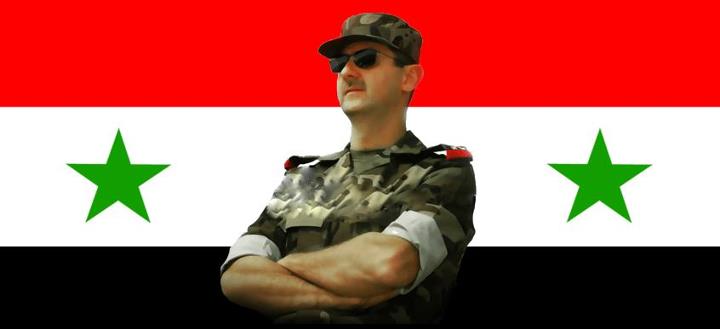
On one hand, you have Jabal Mohsen. The only thing Lebanese about Jabal Mohsen is its location. Even the people who are from there would rather be Syrians. Their leader had even asked for the return of the Syrian army to Lebanon not very long ago. In fact, this is their official Facebook’s cover picture, just to show exactly where their allegiance lies:

On the other hand, you have Bab el Tabbaneh: the poorest region in Lebanon, where people follow politicians not because they are convinced by them but because they are a source of food and living. It’s a place where many families live in what used to be prisons with no basic facilities and with each elections coming up, politicians come and throw a lot of promises around to get these poor people’s votes. And then they go into the realms of forgetfulness again.

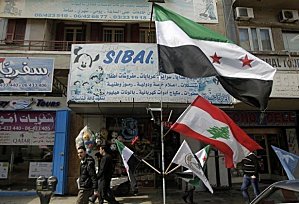
You’d never see such an array of flags in Jabal Mohsen

Both neighborhoods are heavily armed, as is the entirety of Lebanon, whether we like to admit it or not. Jabal Mohsen’s weapons are provided by Syria or its allies in Lebanon. Who’s providing the weapons in Bab el Tabbaneh? Your guess would be as good as mine. Or as good as Mustapha who wrote about it here (interesting read, by the way, so check it out).

Why are they fighting?

The struggles between Bab el Tabbaneh and Jabal Mohsen are very old. They are making news more than usual these days because they’ve become more recurrent than before, because they are being linked to the crisis Syria is going through next door and because of the different kinds of weapons used.

My friends from Tripoli have been telling me about how they’re spending their nights, cowered away in one corner of their house with their family – where the bullets wouldn’t reach them. The fights had never been this heavy. The weapons had never been this strong.

The fights between Bal el Tebbaneh and Jabal Mohsen have been recurrent since 1986 with the Bab el Tebbaneh massacre. The wounds run too deep for the healing.

You have the poor Sunnis on one side and the empowered Alawites on another. The fights are sectarian.

You have the staunch pro-Assad group on one side and the staunch anti-Assad people on another. The fights are political.

Both regions are marginalized, forgotten, and impoverished. The combination of their living conditions make them much easier to be manipulated. Both regions are puppets in the hands of those who are stronger than their people. The fights are a mere expression of other powers wanting to meddle in Lebanese affairs.

Everything aside, Bab el Tebbaneh and Jabal Mohsen are us. They are sectarian Lebanon. They are politically divided Lebanon. They are poor Lebanon. They are controlled Lebanon. They are armed Lebanon. The only difference with the rest of Lebanon? Their self-restraint regarding violence is much weaker.

It is here that I stop and give a biology analogy. A neuron, which the most important cell that makes your nervous system, responds based on an all-or-none law. That is, if the stimulus given to the neuron is above a certain threshold, the neuron will give a maximum response no matter how much you increase the stimulus.

Beirut is not much different from Jabal Mohsen or Bab el Tebbaneh. It just needs a higher threshold of stimulus because of its apparent “civility” in order to fire. And we’ve already crossed that threshold a few times.

In a way, Jabal Mohsen and Bab el Tebbaneh are a compas of some sorts to the Lebanese situation. Whenever they explode, know that there are worse things going on behind closed doors and that the crisis that our country (the Syrian affair, Sunni vs Shiite, etc…) has always found itself in is in one of its upward, rather than downward curve, of the alternative current that is Lebanese politics.


The Aoun Paradox

Michel Aoun

You should know by now that I’m as close to a supporter of FPM leader Michel Aoun as there is hope to explain the Holy Trinity.

Even though I’m not closely following Lebanese politics lately, I was surprised when Mr. Aoun came out of his parliament bloc’s meeting, attacking the Lebanese president left and right.

I remembered how almost two years ago, he was defending this president, saying that we need to give him more rights to fortify the role he – the representative of Maronites – has.

I’m all for increasing the administrative powers of the Lebanese president. If you ask me, the Taef agreement took too much away for the president to be of any essential need to the country. The president is more than a referee and more powers would allow him to assert his role more.

This change in stance got me thinking once again.

The most obvious paradox Mr. Aoun has had was his Syria stance. Back in 2005 and before, he openly declared his opposition to the Syrian regime, accusing it of even killing Prime Minister Hariri. Fast-forward a few months and this totally changes… a year later, he is visiting the Syrian president as a guest of honor. What’s even worse, I remember how a guy by the name “Jamil El Sayyed” used to creep everyone out. The ruthless man to whom the disappearance of many activists against the Syrian regime was staunchly opposed by Mr. Aoun. Up until very recently, of course, where they have become allies.

Mr. Aoun tries to defend his shift in opinion by saying we were “too harsh” to Syria in the first place. Personally, I don’t have anything against Syria as a country and people. However, I know way too many people who died trying to defend the country against the Syrian regime, which was trying to get Lebanon to become an unofficial Syrian province. Too many people who support Aoun as well gave everything they had to protect Lebanon against the Syrian regime. Is Aoun’s opinion shift justified by the argument he gave? Not even close. The main reason he switched sides? Hariri did not agree to allocate to him the Christian seats he was asking in the 2005 parliamentary elections.

What I believe Mr. Aoun is trying to achieve by this change in stance is a sort of coalition of regional minorities, believing that this is the best way to protect Lebanese Christians – and regardless of what he might say, Aoun is a sectarian person. By uniting a portion of Christians, the vast majority of the Shiites and now a big portion of the Druze population in Lebanon with the ruling Alawites in Syria, he believes that this would create the best front to fight the almighty regional devil: The growing Sunni influence.
What Mr. Aoun does not remember, however, is that Mr. Assad, the Syrian president, while being “kind” to his own people, will not offer anything close to that to the Lebanese Christians, as history has already taught us. Moreover, to think that someone like Hassan Nasrallah has had a serious paradigm shift since the days of him thinking Christians were “invadors to Muslim areas”, then Mr. Aoun becomes seriously delusional.

Which brings me back to the point I first mentioned: presidency. It has become Aoun’s lifetime dream to become the Lebanese president. When he saw this dream will not happen in his previous alliances, he simply switched it. Anything for the cause, right?

Aoun also believes in “change and reform”. He believes it is the way forward for the country. And it most definitely is. However, almost nothing he has done so far really signals “change and reform” and yet he preaches about it wherever he goes. It’s like a prostitute claiming virginity. Charbel Nahhas, current minister of telecommunications, even tried to ban Skype!
Part of his “change and reform” ideology is to eradicate the idea of feudalism from Lebanese politics: No more to the son inheriting his dad’s legacy and going forward with it, etc.
Aoun has no sons. He has, however, son in laws to whom he is passing down the mantle. His nephew is a parliament member in his bloc, his other son in law is head of his TV station and his daughter is head of his political bureau. I believe with all of this, it seems that the concept of feudalism has escaped Mr. Aoun.

So this is our paradox. This is a man who believes he is allowed of cursing whoever he wants, take his followers wherever he pleases and still believe he is correct in everything he does.
I blame Mr. Aoun’s followers… they seem to have forgotten why they became supporters of him in the first place. They seem to have forgotten the shared values they have with the movements they are cursing today. And for that reason, they are demoted from the a supporter to a follower. I have many friends who are FPM supporters. Some of them still are, others have seen a change in the man they once supported – one they do not approve anymore. Many of those supporters have been imprisoned, tortured, beaten down just because they had the courage to speak up. To those supporters, we can only be grateful. Supporters are critical.Followers simply follow.

Mr. Aoun switched sides in 2005, ruining everything his supporters and other free men of the country had tried to achieve for 15 years: true independence. The historical March 14, 2005 protest set the bar high for freedom fighters in the region. More than half of the Lebanese population had gone down to the streets to reclaim their country. And just because this man’s greed saw it fit, he decided that the spilled blood, the ruined prides, the oppressed freedoms were not enough to continue this movement to the end. I can only imagine where we would have been right now had Aoun remained somewhat sane in 2005. We would have brought Lahoud down, elected a president that represented us all – maybe Mr. Aoun even – and worked for the past six years of letting this country become one that we all deserve.
Apparently not. And why’s that? Because one man’s delusion is another country’s dark ages.

A Middle Eastern Revolution Overdose?

Tunisia, Egypt, Libya, Yemen, Bahrain, Algeria… and now people wanting to overthrow the system in Lebanon. I find myself wondering if it’s getting way out hand – if people are suddenly beginning to take advantage of this surge in regional adrenaline.

Do we really need to march down and demonstrate to overthrow the system in Lebanon? Is it really the best option we’ve got?

We are the only country in the region that actually has a democracy that functions – regardless of whether you think it functions properly or not, we can still vote, get our voices heard and be able to do marches like the one planned today. Sure, we have many shortcomings but I believe they dwarf in comparison to what the people of Egypt, Tunisia had to go through to get where we were in the 1940s, let alone what the people of Libya are going through as we speak.

To change the system in Lebanon, I don’t believe you need a revolution. I think you need common sense, one that is easily blinded when excitement surges among the people. Look at it this way: say the planned “revolution” succeeds and a secular state is enforced, do you honestly think that will happen without changing the basic foundation upon which the state is built? And by that I mean democracy. Do you really think shoving down secularism down people’s throats would get you further?

The people of Lebanon are not secular people because that is not how they were brought up. To move towards a secular state, you need to have a secular mind – one that is only present in a handful of people currently. And I don’t think the current political atmosphere in the country warrants further upheaval.

The best way, in my opinion, to have a peaceful and logical transition into a secular state is via a major overhaul of the education system. You cannot keep on teaching the same things being taught dealing with the way the country is run and still believe a secular state is plausible. People need to be taught on embracing the different other in a more hands-on approach, people need to be exposed more to the other’s religion and we need to at least have a version of our history that does not stop when the French Army vacated its barracks in 1946. By having an education system that invites people to become more aware of the different other, perhaps we can start moving our minds towards becoming truly secular and understanding that if I, a Maronite, do not have the presidency written for my sect, that’s okay. Or if you, a Shiite, don’t necessarily get the speaker of parliament, that’s okay as well. Same thing applies for the Sunnis and all the other sects.

Moving towards a secular Lebanon is a very hard thing to accomplish. The movement towards that should be transitory and not blunt. It should be accepted and not forced. Therefore, uniting Lebanon starts by letting the people of Lebanon share their ideas and come to common grounds with those ideas. Uniting Lebanon does not come by having one idea forced upon everyone. That would be basically a dictatorship.

On a final note, I invite people not to fall into the misconception that atheism is synonymic to secularism. It has become a common belief among many in Lebanon that the two are inherently related. That is far from the case. I also hope that we appreciate what we’ve got in our country and not take it for granted. We are still the only democracy in the region and it’ll take the countries that have had recent revolutions years to get to where we are today – regardless of what you might think lacks in our democracy. Is a revolution an answer? I don’t think so. Do we need to move towards a secular state? I believe it’s a necessity. How? Let’s just say, don’t get carried away by political excitement.

Stillborn Nation?

You’re Lebanese. You wake up every day and, wherever you are, your mind revolves around the same thing: what’s happening in your country. If things are going well, you worry they’d go bad. If they’re bad, you worry they go even worse. We always worry. We always try to imagine we can get things to change. We try to make things change. We have tried. We felt we succeeded at one point. And then everything came crumbling apart.

Life in Lebanon is like a chess game. Those who stick it out till the end mentally are those who triumph. I’d like to think this is not the end. I’d like to think that everything all the thousands of martyrs died for is not going down the drain. I’d like to think the people we looked up to did not lose their lives for a country that was always stillborn.

I mean, who are we kidding? Have we ever been truly a nation? We, Christians, ruled for a while. We did not rule fairly. So the civil war erupted. You can believe the cause of the civil war to be whatever you like. But what is definitely sure is that conflict is rooted in injustice. People who feel they are equal do not need to revolt. Then began the Sunni rule of the country. And soon enough, other people “felt” they were subject to injustice, issuing a cascade of events leading to what’s happening today. Have we ever been truly united? Ever since I can remember, I’ve never heard of my country other than being a division of camps. You remember those movies about rival summer camps across the river competing for a certain prize? that’s how things have always been. That’s how things will always be.

I’d like to imagine that a radical change in the “operating system” of this nation is enough to kick it into high-gear. But then we can’t even agree on what type of alternate nation we want.

I know many people who feel sad today. They feel sad because they see their country crumbling and they can’t do anything about it. I am one of those people. You put up a face through the mess. But deep down, you don’t remotely feel well. You feel as if your vote has been taken away. You feel as if all your work in the past five years is suddenly worthless. And because of what? because a certain group felt “as subject to injustice”?

You – we – are now the Opposition again. I believe we always were the Opposition. We excel at being the Opposition. There is nothing we do better than being the Opposition that inspires people’s need to change, instilling in them the will to fight for their country, for their rights, for their every being.

And honestly, even though the previous opposition called itself that way, I believe it did not even deserve the title. An opposition is basically in power when it was the power to crumble a government, which it did.  An opposition does not use the street in an abusive manner via a fully conscious decision, which they did. An opposition does not cry wolf every time it thinks something might possibly happen if a certain scenario were to unfold, possibly damaging its status – and with crying wolf we mean making everyone freak out. An opposition does not really get to choose who runs what in the country. But they did. An opposition should not get a choice in who takes on certain legislative positions, but they were given a choice and their choice was acted upon because, as I’ve said many times before, March 14 felt that certain rights of certain parties need to be respected – like deciding who gets to represent them.

So for all matters and purposes, Hezbollah and Co were not an opposition. They were as much in power as the March 14 movement was. Following Newton’s third law of motion, they were the action and March 14 were the reaction. March 14 couldn’t act because anything they did meant an implicit threat using an arsenal of weapons that’s all too frightening – even for a military power, such as our neighboring state. Hezbollah and Co were not oppressed. They were actually enjoying a stay in power since the early 1990s, even calling for a demonstration on March 8, 2005, to thank Syria for its work in the country – a work that left at least a major sect of the country, Maronites, in ruins after years of political persecution. Hezbollah and Co even lost a general election, even after being shown as frontrunners in many polls.  This means the majority of the Lebanese people didn’t want them to rule. And that was not respected as well.

So for those who are pissed, let me say this… I understand you. And I feel you. But don’t be. We, as people and movement, will be triumphant. Because at the end of the day, what is right and correct will be triumphant. And we are the only ones who, in time, can bring out this country from its everlasting stillbirth.