Instagramming A Suicide Bomber

#Instabomb.

I’ve been wondering if our media salivates like Pavlov’s dog when they get wind of yet another explosion takes place in this country. Their coverage sure always sounds like a kid who was given a new shiny toy on Christmas morning: relentless, excited, carefree, all over the place and – more importantly – chaotic.

I, for one, live in lala land. As a consequence, I’m becoming more or less ignorant as to what’s taking place around me politically. I’d like to think of it as a blessing in disguise. It feels good not to know sometimes. What’s constant throughout my enforced ignorance, however, is people always telling me about the horrors they’ve been seeing on television as if the explosions we all have to withstand were not enough: we are also being forced to get desensitized to the charred remains of human beings.

Social media has done wonders to Lebanese media. It has given them more ways to communicate, made them more approachable and has gotten them to become slowly but surely in competition with lesser known forms of media that could be faster at getting news out there. But when is taking social media while reporting news way too far?

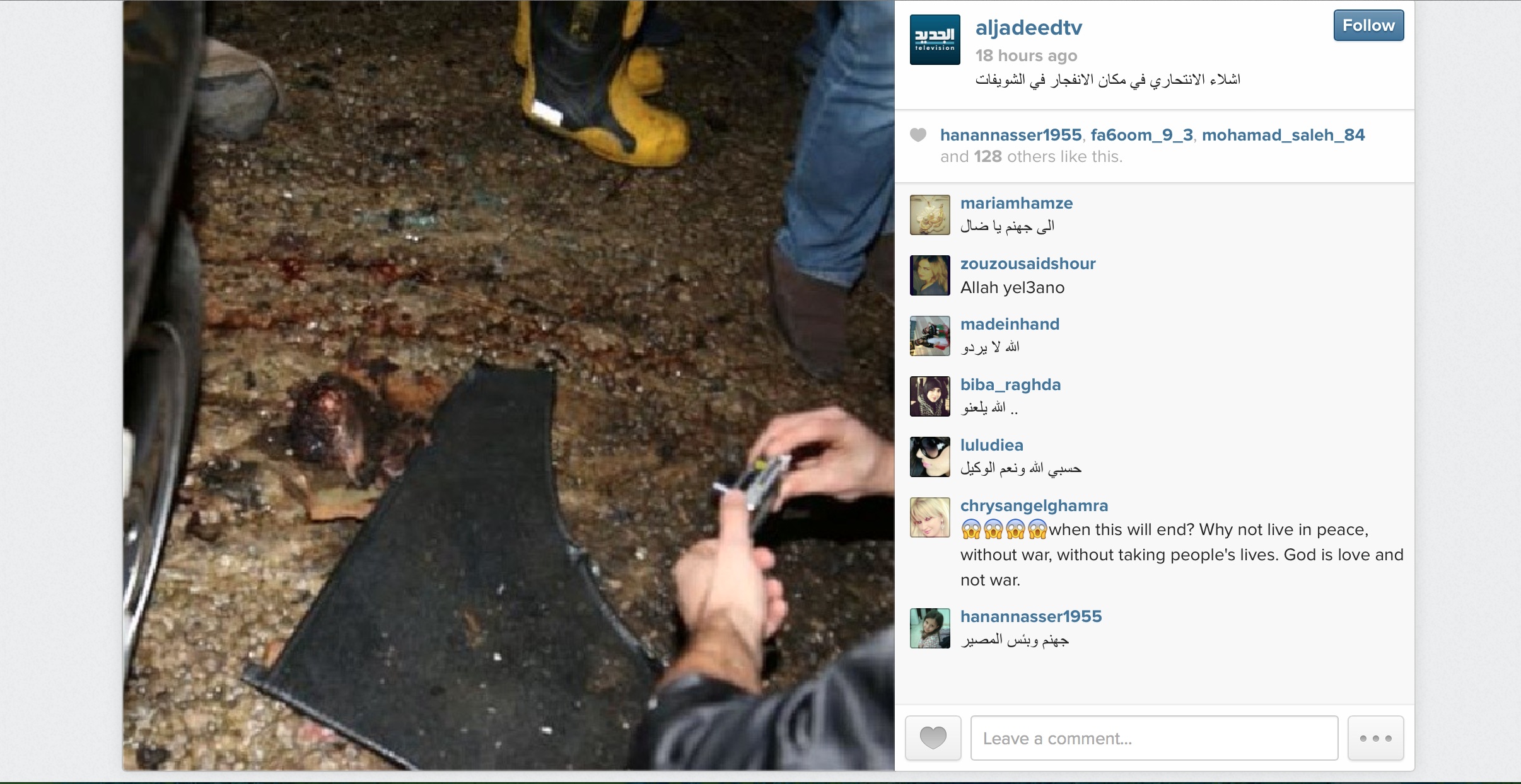
Say you want to Instagram a suicide bomber’s remains, what filter would you use?

Yes, that question may be completely absurd but a Lebanese TV station basically did just that a couple of days ago when they posted on their Instagram account the remains of the suicide bomber who detonated himself in Choueifat. I’m not an Instagram expert but is that filter “valencia?”

You can check out a screenshot of the image here.

I thought I’ve seen all that the media in this country could do. I was wrong. Explosions are horrible but diffusing such material is barbaric in its own right as well. What’s even sadder is that as a culture and country, we are becoming increasingly habituated to seeing such things that a well known TV station figured it was a good idea to snap an Instagram picture and broadcast it for people to “like” and comment in.

What is there to “like” about some terrorist’s unknown body part? What is there to comment on? What form of discussion are we trying to have by constantly exposing whoever has eyes to see to such things?

Like Pavlov’s dog, let them salivate over the next body part they want to Instagram. It’s only a matter of time now till the next “it” thing becomes a selfie with a suicide bomber’s body part. I think the “Hudson” filter would work excellently with that.

Aline Lahoud On The Voice France

It seems I was the last to know that a Lebanese would be competing again on France’s The Voice, but I daresay the Lebanese candidate this year is probably the best so far with Salwa el Katrib’s daughter, Aline Lahoud.

I was on hospital duty last night so I couldn’t watch her blind audition as it happened but Twitter was abuzz with her performance. Lebanese people were surprised that she sang a song they all knew, in her mother tongue. French people were bewitched by her good looks and charisma. The judges were all fighting to get ahold of her. She ended up choosing Florent Pagny, contrary to what everyone expected her to do by going with Mika, who’s of Lebanese origins.

Aline Lahoud sang her mother’s most famous song “Khedni Maak” and she did a great job at it, as you can see from the following video:

I guess it was a big risk for her to sing a style that none of the judges was familiar with, in a language that they didn’t understand, but it paid off big time with her as Aline Lahoud’s audition quickly became the most discussed The Voice audition this year with about 5000 tweets/minute.

It’s sad that a talent like Aline Lahoud has to leave Lebanon in order to find a proper place for her talent. I guess she’s not the only talent the country is losing with its current downward spiral. Either way, she made me proud yesterday and I hope you felt the same way about her representation. I can’t wait to see what she brings next.

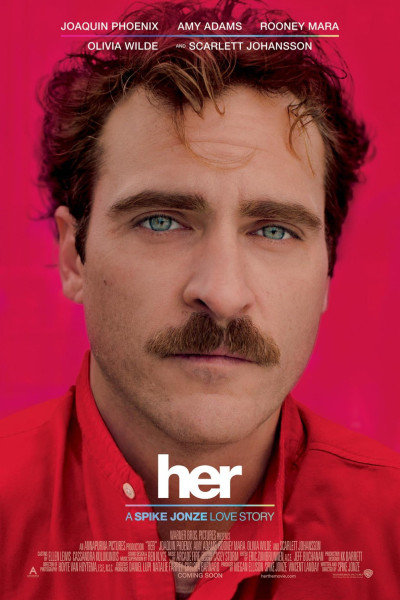
Her (2013) – Movie Review

Her Movie poster

Talk about hitting the ball out of the park. I am in awe.

Spike Jonze’s new movie, Her, features Joaquin Phoenix as Theodore Twombly who, in the not-so-distant future, is depressed as he goes about his life post a break-up with his wife. He is your typical lonely guy, living alone in a spacious apartment, working from his cubicle until he clocks in his required hours then going home to play his 3D video game. On the surface, Theodore doesn’t look like someone who minds where he was: in limbo between the memory of the relationship he had with his wife Catherine (Rooney Mara) and trying to move on with his life. He then finds himself purchasing a new operating system, meant to be the world’s first artificial intelligence OS, after seeing its ad while on his way to work. His OS is named Samantha and voiced by the amazing Scarlett Johansson.

Soon enough, Theodore finds his entire life and existence being organized by Samantha, not just his schedule and email. Through an earpiece and a phone, Theodore shows Samantha his world while she exposes him to different facets of the things he thought he knew. He’d close his eyes and let her guide him around a carnival. She’d ask him how he’d touch her. He’d feel comfortable with her. She’d help him break out of the break-up that was breaking him. But would a soothing voice be enough for him?

Her may be science fiction but it also feels like a cross examination of a culture that is becoming very dependent on technology. It’s not far-fetched to imagine the events of this movie happening in the not-distant future. The idea is perhaps not new but it has probably never been handled this way and while the premise of a love affair with an OS may be off-putting for some, Spike Jonze handles it brilliantly, giving a movie in which you get absorbed, sinking in every single second of screen time you watch.

There are characters which spring on screen here and there, such as Amy Adams – a friend of Theodore’s, but Her is Joaquin Phoenix leading a one man show. He commands the many extended scenes in which he is almost always alone. His interaction with Samantha, who is never physically present, gives way to one of the most heart-warming relationships you’ll see in a movie this year. The biggest drawback of Theodore Twombly, however, is that his character feels to be stuck in some emotional development limbo post his break-up. Joaquin Phoenix works through that, anyway. It’s the work of an acting master, one who has been going unappreciated for way too long.

Scarlett Johansson’s voice as Samantha is so vital to what Her is. She is getting an entire movie to ride on her vocal appeal, who is building an entire relationship with her sighs, nuances, sultriness and, occasionally, songs. She is so good at what she does that you eventually stop noticing that Theodore is not actually having a relationship with a living person but with a voice that talks to him through an earpiece. It’s slightly unnerving but also excellently well-done.

Her is a delight to the ears as ear as well with its backdrop being an exquisite score by Arcade Fire. The music is excellent. It feels futuristic while still managing to be current, perfectly embodying the movie it serves.

Her is magic on screen. It’s science fiction without the blitz. It’s unlike most of the movie’s you’ve seen recently. It asks questions that as a culture we may be heading to without coming off as greeting-card cheesy or preachy. And it’s easy, I guess, to think of it as gimmicky or as another been-there-done-that movie. But it’s not. I may have found its premise odd at first and dismissed it way too easily. But I’m so glad I gave this movie a chance because it has turned out to be one the year’s absolute best. I really hope it wins some golden statuettes. It deserves every single one of them. Go watch it. Now.

4.5/5

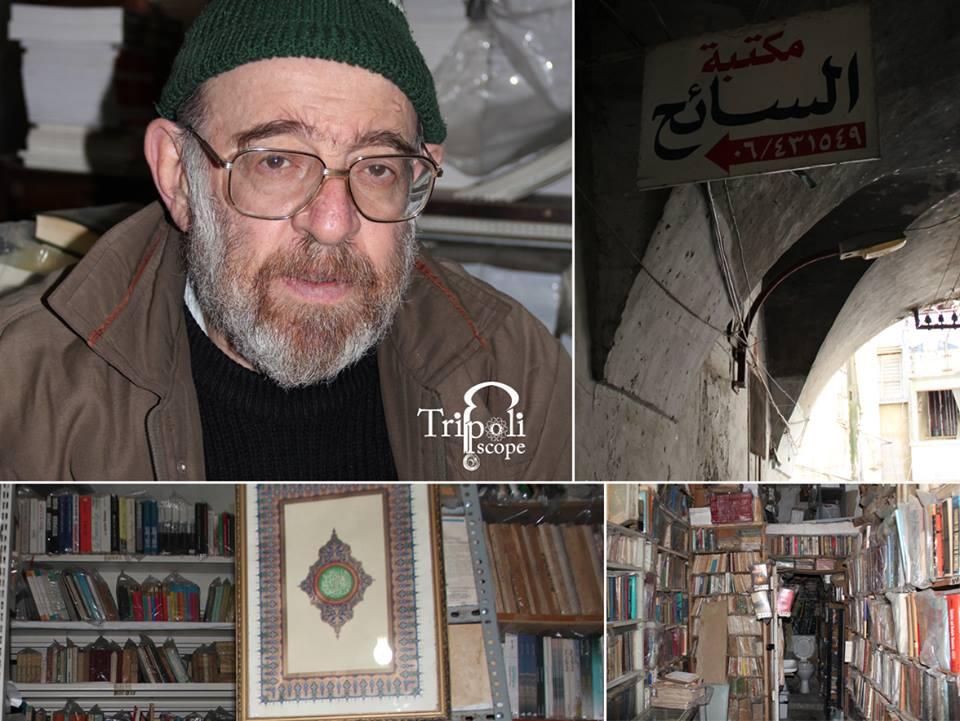
Rebuilding & Restocking Tripoli’s “Al Sa’eh” Library: The Full Story

Al Sa'eh Library Tripoli

It takes a lot to get the whole country to gather behind a national tragedy lately. They tend to be more in the political eye of the beholder as we feel compassion with the people we can relate with more. It’s sad that we’ve become a nation where we can somehow, in some twisted logic, fathom the death of people as political collateral damage in a game that’s ripping our country apart.

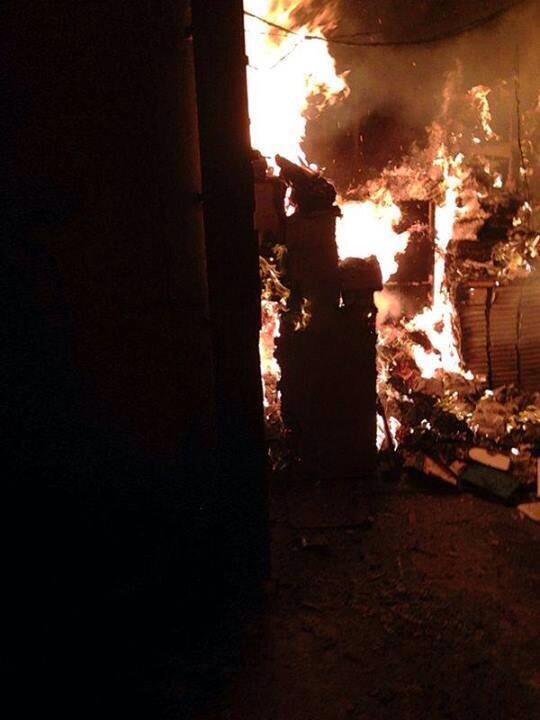
The books that resided in that forgotten library, nestled in Tripoli’s Al Nouri area, ran by Father Ibrahim Sarrouj, managed to shake the country and some aspects of the international community. Terrorism wasn’t just targeted at innocent people. It was also targeted at books whose only fault was to exist on shelves, gathering dust in an age where less and less people liked to read, burned by people who didn’t know how to do so.

The burning of “Al Sa’eh” library was heavily discussed. Some people ran with the theory of it being the work of Islamists. Others ran with the theory of it being the work of the contractors who wanted to evict Father Sarrouj and his books from the historic building in which they resided in order to dismantle it and ruin the city with another high rise. Information that I have gathered, however, from sources close to the priest and the group that is renovating the library indicated that certain mosques, known for their extremist sermons in Tripoli, preached against Father Sarrouj that Friday. Many of the perpetrators have also been identified and they fit with the former theory, not the latter. Although there’s probably nothing that money cannot bring together in Lebanon.

The initiative aimed to better “Al Sa’eh” started before the library’s burning on Friday, when Father Sarrouj started receiving threats, but it caught up like wildfire immediately afterwards. The activists who were working for the library’s sake wanted to organize a protest in support of Father Sarrouj when he started receiving the threats in question but Tripoli’s officials reassured them that the situation had settled.

They were mistaken.

At around 10 pm that night, those in charge received a phone call to notify them that the place they had been working diligently to protect was up in flames. It was a work of terrorism. The situation had not settled as they were promised and their knee jerk reaction was to get to work.

Their first plan was to set up a large protest for the library and Father Sarrouj. While working out the details of the protest, the organizers decided to become even more proactive and take it upon themselves to see what they can do with “Al Sa’eh.” So they started working in order to save the books that hadn’t been burnt yet, move them to a safe location where they’d be catalogued and preserved, while working to save what could be saved from the partially burned books.

They stayed there till 4AM that day working against the flames, working with local officials and sheikhs to secure the area in question for them to get safe access. The following morning, after forensics had taken the evidence they needed, work started.

In total, the library contained north of 85,000 books. Two thirds of those books were saved by the people of Tripoli. The remaining third contained many rare books, many of which had been first edition pieces. That third, unfortunately, was not as lucky.

The protest they organized was among the biggest in Tripoli. More than 500 people showed up. None of those people came in with political motives. Politician who had showed up were asked to leave. Those people continued cleaning after the protest, saving the books that were intact or partially burned. Those people were from different ages and sects. Some were veiled, others weren’t. Some were bearded, others were clean shaven. It was a mini representation of the community of Tripoli under the vaults of that ancient library, working to save a relic that had become synonymous with the city they held dear.

The organizers have met up with people from USEK and USJ regarding the books in question. Those experts are being enlisted to help the library save the books. The books that can be restored will be restored. The books that should be digitized will be digitized and the books that are available and could be ordered will be ordered. Moreover, the entire library’s location will be renovated, as well as clean and paint the small street at which the library could be found.

The funds for such an endeavor were via donations from sympathizers who wanted to save the library and its books. The organizers have also contacted well-known crowd-funding website Zoomal. Any help from politicians was refused and will be refused.

The plan for now is to move all the books to a safer location where they can be preserved and catalogued while the library gets renovated and its burns washed away. This is where we come in to help. If you can donate money or books, contact the people running the following Facebook event (link). Other concerned people are also running book drives to gather as much donations for the city as possible (link). Others are organizing their own book donation campaigns for the library’s sake.


BdXrOr0IAAAZgwn.jpg-large

Al Saeh Book Drive

So if you’ve got any books to donate or any means with which you can help, drop those people a line either on Facebook or with any other contact methods they have provided. We can all help rebuild and reshelf “Al Sa’eh.”

Update: Zoomal has set up a crowd funding to rebuild “Al Sa’eh.” (Link)

The following are images taken by Natheer Halawani (his blog) and other people of them saving the library and its books:

Cheers to those people living in a forcibly forgotten city, in a place where their dreams are forcibly killed and who can still find the will to fight for what they believe in and work to save their community. I salute you all, however simple and useless of me that might be.

Lebanon Loses 78000 Books To Terrorism: Tripoli’s “Al Sa’eh” Library Burned

BdFaC09IAAATz1l.jpg-large

2014 is off to a horrible start in Lebanon. The explosion that took place in Beirut yesterday, in the year’s first few days, has been paralleled by another act of terrorism in Lebanon’s northern capital, where extremist gunmen torched the city’s biggest library, Lebanon’s second, burning it to the ground.

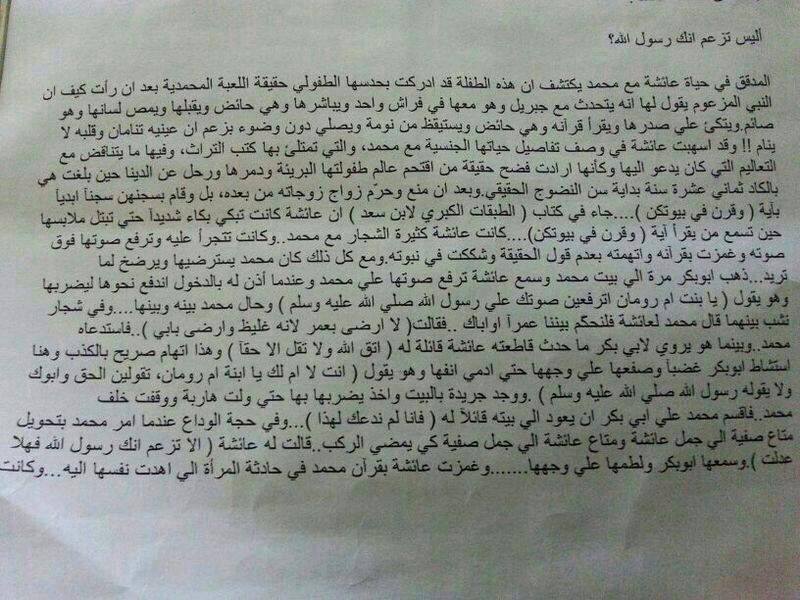
They accused the priest running the library, a man who has been fighting to keep that place alive against contractors who worked to dismantle the building in which it resided, of publishing an article that offends Islam. I guess offenses are in the eye of the beholder. In this case, the eyes are for illiterate people who can’t read and who don’t know the value of a book.

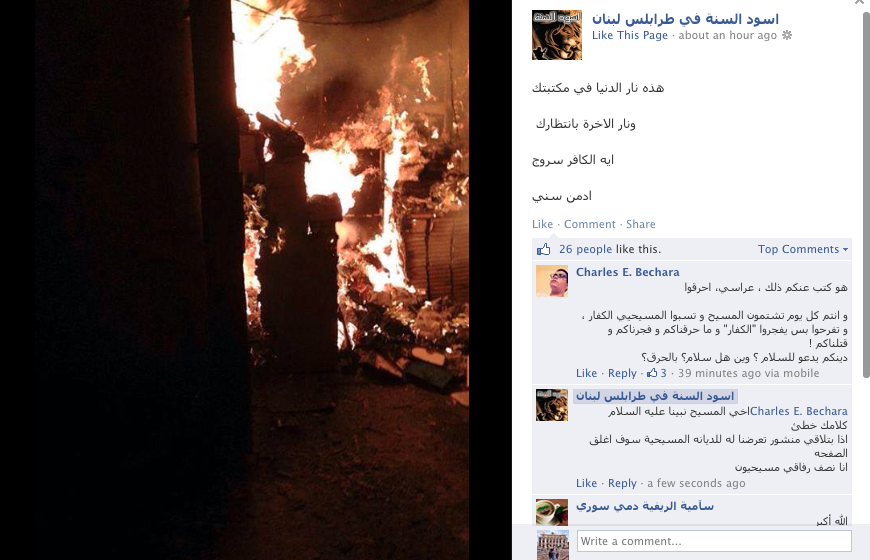
This is the supposed article in question:

Srour article

The country is burning, let’s not worry about a library. A lot of people might say that. But the library in question was a true national treasure, containing 78000 books, many of which exist in very few copies and many of which are, ironically, books about Islam. I’m also sure the library contained Qurans. Father Ibrahim Sarrouj, the library’s curator, has lived in Tripoli all his life and is known to being an encompassing person of the city’s diversity.

BdFY0ztCAAEYiXa.jpg-large

Tripoli cannot sit out the ongoing tragedies blowing through Lebanon lately. We just lost 78,000 books. We have lost many innocent lives as well over the past few days. And for the sake of what? Wars that we have nothing to do with, being fought over our territory, by people who have gone through a few cycles of brain washing in order to get them to believe that killing innocent people whose lives are well ahead of them or burning down a library will bring them favors with their own version of god and prophet.

Screen Shot 2014-01-04 at 12.39.57 AM

Then you have those who believe that the actions of those gunmen reflect what the people of Tripoli believe in and who proclaim things as such to the ears that would listen. The fact of the matter is, however, is that the people of Tripoli are more afraid of those gunmen than we are. They are more afraid of the havoc they are bringing to their city than we are. They are more worried about the repercussions of their actions on the fabrics of their society than we give them credit for. They are wary of how their city has changed in such few days. They are terrified of the cultural demise that their home city is witnessing. They care about these books, the library and the priest who ran it. They are people who are worthy of having such a library to their name. They are the people whose city just lost its biggest library and who are gathering around its remnants crying their eyes out at how things turned out for the place they call home: a pile of rubble of a place that was once great.

I’m not Muslim but I’m more Muslim than the lunatics who torched that library and so are most of the people of Tripoli that many Lebanese love to dismiss so easily.

Tonight, I have been robbed of being able to visit such a place again and again by men who know no religion, no god and no alphabet. Tonight, the entire country was robbed of a wealth of knowledge that we had probably taken for granted. Who ever thought a library would be targeted in a terrorist attack?

Tonight, I’m livid and you should be. It’s not just about books. It’s about living in a place where two explosions taking place within a week, followed by such an act, are now considered normal. It’s about living in a place where you’re expected to move on from everything like it was nothing because that’s the only way forward. It’s about living in a place where you’re forced to forget about the lives lost, the books burned and the cities ruined just because it’s what we do.

Tonight, my thoughts go to Tripoli, the city that I miss and to its people that I hold dear. May they rebuild the library, restock its shelves with what they can and get rid of their streets of the infestation springing out and about. I try to be optimistic because that’s the only thing I can try to do. Tonight has been a sad night indeed.