Alfonso Cuarón’s “Gravity” Is A Masterpiece

20130928-153524.jpg

Beirut’s Film Festival is peaking early this year, on its opening night to be precise, when Gravity lands onto its screens.

Going with high expectations into a movie is almost always a recipe for disaster. More often than not, movies fail to satisfy that craving you had thought they would, leaving you feeling cheated. I had high expectations for Gravity, it blew them all out of the park with its opening scene alone.

Sandra Bullock is Dr. Ryan Stone, a medical engineer on her first space trip with veteran astronaut Matt Kowalsky (George Clooney). A seemingly simple mission immediately goes awry, as is expected, when Russians destroy a satellite that was orbiting Earth, sending debris flying at bullet-speed towards the astronauts. As their space shuttle is destroyed, Stone and Kowalsky are left to drift in space as they try to find a way to go back home.

Gravity may seem like a typical science fiction movie at first sight but it’s nowhere near that. It’s a gut-wrenching tale of fear, despair, loneliness, friendship and survival. Gravity is spell-binding. Every minute of its 90 minute running time is irrevocably captivating. Everything its characters do is believable, adding to the overall effect of the movie. We had gotten so used to Hollywood blockbusters overwhelming us with special effects in order to turn their movie into a hit that I thought I reached a point where no movie could impress me from a technical viewpoint: hadn’t we seen them all?

What we hadn’t seen was Gravity. The use of special effects and 3D in this movie is not gimmicky, it helps to tell a story. The techniques employed to film the movie are masterful. There are shots there which are so brilliant I have no idea how they were filmed.There’s a reason why James Cameron said this was the best space movie ever made. There’ s also plenty of good reasons why Darren Aronofsky said this is the type of show movie-makers will learn from for years to come. They were both not lying.

Alfonso Cuaron is a visionary. After Gravity, there’s no reason he shouldn’t be on every movie fan’s favorite directors list. His movie makes you feel like you are one with the astronauts as they drift afloat, at the mercy of the gravity-less space they are in. His camera runs ever so smoothly, fluidly, giving the impression that the entire movie is one unbroken shot. His command over his work is so evident that the effect is near-hallucinatory: it draws you in, makes you believe you are one with Bullock as she strives to stay alive, as she fights for every breath she could take.

Bullock is terrific. This could very well be her best acting performance to date. I can definitely see a best actress nomination for her at this year’s Academy Awards, effectively telling her naysayers that her win for The Blind Side a few years ago was not a fluke. Bolstered by great work from Clooney and, at the beginning of the movie, Ed Harris’ voice guiding them all the way from Houston, Bullock takes in every fiber of her character and gives it back to the audience tenfolds. You can see every emotion on her face as it unravels. You can see her tears as they drift off her face (literally). You can feel her elation at times. You can feel her despair at other times. She helps the movie be as great as it is.

If there’s ever a movie that requires you to check in your movie genre stereotypes at the door, it’s this. I am blown away. Gravity is astonishing. It may pull on your heartstrings sometimes, but it’s never sappy. It’s a towering achievement in technique while also being a cinematic experience that is sure to trouble your senses, especially with its epic musical score. If the Oscar race is off to this start, other movies are at a terrible disadvantage. I am in awe.

5/5

Why The People of Akkar Risked Their Lives on An Indonesian Boat

Akkar Boat

53% isn’t a number that should mean much for people. Children with basic math knowledge would tell you it represents a majority, the bigger portion in a division. In Lebanese terms, this number represents the portion of people who live in poverty in North Lebanon according to a 2006 study carried out by various outlets, including the UNDP. Common sense would say that this number hasn’t improved since then.

18% may look like a more appealing number than the aforementioned one but in reality it represents the proportion of people in the North who live in extreme poverty, that is with less than $4 per day. In other words, the money you use every morning to buy your morning Starbucks kick-me-up is more than some entire families use for a day. Don’t worry, though, I’m not asking you to alter your caffeine routines or to change into an altruistic being who brands socialism and equality wherever he goes.

The good news, if there’s any, is that North Lebanon is where most poverty in the country lies. The numbers are minimal in Beirut and increase as you go towards the periphery. When it comes to the North, the majority of people who live in poverty reside in the infamous Bab el Tebbane neighborhood in Tripoli as well as the Akkar district. Poverty rates in Akkar are at 63% with 23% in extreme poverty.

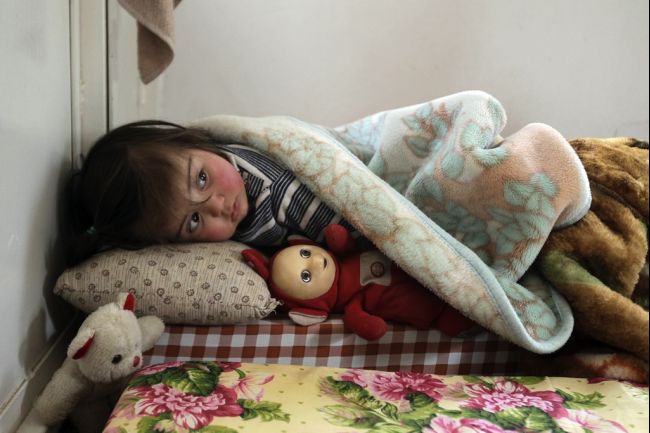
Akkar is in the news today as the district from which 70 Lebanese are missing, with 27 reportedly dead, due to the sinking of a boat for illegal immigrants in Indonesian waters as it headed to Australia. All of those victims are from the town of Baqaa’it, from which 270 people have left in the past year in similar ways. But can you really blame them for wanting to leave? Can you really blame them for preferring to risk their lives and the lives of their children in the hopes of a better life rather than to stay over here ?

The Lebanese state exists only in Akkar in the form of the taxes those people pay whenever they can while expecting absolutely no development from the state. The area is forgotten by both government and private sector alike. This is the current policy that runs the country: any region that isn’t Beirut or some parts of Mount Lebanon doesn’t get a second glance. Akkar is among the parts of Lebanon that have it worst. Towns in a region in Akkar called Jerd el Qaryeh received electricity for the first time ever last week. You did not misread that sentence. They celebrated with fireworks as that mysterious bulb in their ceiling lit up for the first time in their lives. This is 2013. The situation is worse for roads, schools, hospitals, sewers, etc.

The main form of sustenance that those people have is agriculture. As you know, agriculture in Lebanon is as fragile as our security apparatus. Any change in weather that’s out of season is enough to spoil crops and cause immense losses to the farmers. The state couldn’t care less: it doesn’t support the farmers to begin with, let alone provide means to counter such losses. But another entity has been plaguing the life of Akkar’s farmers and the many workers there whose main source of bread was the land which they worked tirelessly. Syrian refugees who are flocking into the country through their region are taking away their jobs at much lower prices and can be made to work in conditions that a Lebanese worker would never accept.

As such, unemployment rates in Akkar – which were already higher than the national average  – have been skyrocketing lately, mirroring the growing trend in the country as a whole. Those people, being massively under-educated compared to their Lebanese counterparts outside their region, have no other options available to them for work. They can’t compete with other Lebanese, and lately Syrians as well, for better paying jobs outside of Akkar. The Lebanese University, for instance, has no functional branch in Akkar. The branch that actually exists is extremely small and located in a high school building in Halba. Many villages lack schools. The schools that do exist are not up to par. Trying to leave Akkar in order to get an education in Tripoli or Beirut is not feasible for many due to it being costly, even if the education part was to be free.

Leaving itself is becoming much harder for the people in Akkar lately. With the war raging in Syria next door, the people there spent many sleepless nights listening in to the fights taking place next door. When Tripoli decides to have its share of fun, they would listen in as well. Either way, they were stuck in their towns and homes, unable to move to get their necessities, feeling unsafe all the time especially as the security situation in the district itself was also deteriorating in recent times.

It is said that we elect MPs in order for them to represent our woes and make our life easier, innocent as that sounds given Lebanon’s political context. This requirement becomes an absolute necessity in regions that are as needy as Akkar. The region’s MPs, however, who are now on their 5th year of term after they renewed for themselves, have done next to nothing to help their region. Khaled el Daher was obviously busier in calling for revolts against the army, while issuing defamatory statements against anyone who doesn’t support his rebels. Hady Hobeich was busier in his hometown’s municipal elections. The MPs win because their respective political party works on keeping people needy for years then feeds them just before they go cast their ballot. The status quo is perpetuated. The local “zou’amas” are kept. You can’t blame the people for not breaking the hand that feeds them. They remain poor. It’s similar to what takes place in Tripoli at every election cycle.

On my first visit to Akkar, during which I was admittedly just passing by, I was pleasantly surprised by the wide agricultural plains, the beautiful scenery and the immensely long laundry lines that stretched from one dismal-looking concrete house to the next as people I would have never thought shared my country roamed the fields in which they lived. While our officials try to break traveling records, the people they are supposed to serve are dying on boats in foreign waters while seeking a better life, one that my country cannot and will not provide for them because it’s not on our government’s agenda. The discussion currently taking place is about the tragedy that those people’s death is, and tragic it is. But the real tragedy is with all the reasons that have forced those people to leave and those reasons will never be discussed. I would personally take the first boat out of there if I had been in their shoes. Would you?

Lebanon, Now RefugeeStan: Enough With The Humanity Talk?

Joseph Eid/AFP/Getty Images

Joseph Eid/AFP/Getty Images

I was going from my hometown to Batroun a while back when I saw two hitchhikers asking for a ride. I’m not the type to worry about such things – transportation between my hometown and Batroun, if you don’t have a car, happens through that method. So I picked them up and off to Batroun we went.

They were both men. The one sitting in the back was very quiet. The one sitting in front was pretty chatty. We were talking in Lebanese. I would have never thought there was anything odd about his dialect until I asked him where he was from and he replied: Homs.

He was worried about his reply so I tried to defuse the tension by saying that I visited his city back when it actually existed and it’s a nice place. The Syrian man, however, felt it was adamant to tell me that they were both Christians who want nothing to do with the war in Syria and who think everyone is at fault.

As I dropped them both off and went about to finish my errands, I started thinking: how bad must it have been for that Syrian for him to decide that telling random people that he was Christian whilst giving them the most diplomatic version of any person’s stance over what’s going in Syria is what everyone wanted to hear? I figured he must have gone to hell and back with him being Syrian in Lebanon lately. And I felt terribly sorry for him back then.

I’ve spoken about the issue of Lebanon’s Syrian refugees before. They’ve become so many that they turned into a source of jokes, though those have also become extremely redundant as well.  However, the issue of those refugees has never really been tackled. Municipalities and some Lebanese ministers spew racist speech that only works to boost their popular basis. The government is as comatose as it has ever been. I guess they’re more worried about the potential ramifications of Ania Lisewska’s sexual escapades. Moreover, the entire rhetoric has been about how we simply couldn’t humanely stop those refugees from seeking help here while acknowledging that the problem was slipping out of control.

The question today is the following: is it the time to draw the humanitarian line on the issue of Lebanon’s refugees as our country quickly but surely turns into some form of refugeeland for the troubled people of the region?

Recent economic studies have revealed the following data about the Syrian refugee situation in the country:

  • Our GDP will decrease by 2.85% per year between 2012 and 2014,
  • Our debt will increase by $2.6 billion,
  • Unemployment will double,
  • By 2014, the number of Syrian refugees in the country would equal about 40% of the country’s pre-Syrian war population,
  • Lebanon’s cumulative loss because of the refugee crisis will be approximately $7.5 billion,
  • More than half of students enrolling at our public schools will be Syrian refugees,
  • More than 40% of primary healthcare visits are of Syrian refugees,
  • Another 170,000 Lebanese will be pushed into poverty because of the immediate ramifications of the refugee crisis. By definition, that is living under $4 per day.

Our refugee problems are not only Syrian. We keep forgetting about Palestinians because their problem is more universally acknowledged, but they have their share of woes that they are bringing on our communities:

  • The number of Palestinian refugees in the country has increased by 16% lately, according to UNRWA,
  • Lebanon already has over 400,000 Palestinian refugees residing in it,
  • Most of those refugees live in refugee camps,
  • Those camps are outside state control and have a self-security system going on,
  • Their self-security system has caused security trouble with Lebanese for a long time, the most recent of which is the altercation with Hezbollah.

Lebanon, the smallest of Syria’s neighbors, is taking the biggest load because:

  1. Many of us believe that the problems of those refugees are not as severe as the numbers say they are,
  2. Many Lebanese refuse to address the issue of the refugees due to political reasons or because they see no problem in those refugees being here,
  3. Some Lebanese parties had decided once upon a time that there was nothing happening in Syria and that those people are here for tourism, while parties on the other side of the spectrum stood by as they waited for ways to use those “tourists” politically,
  4. Our country is simply not capable, neither financially nor logistically nor influentially, of handling such a load – but is the solution simply letting the load pile up while we stand idly looking around?

Most Lebanese were more worried about the situation of the refugees with the most recent rainstorm to hit the country than of other Lebanese who are living in similar, if not worse, conditions. During a recent session with Medecins Sans Frontières, I asked: how does the living situation of people in Bab el Tebbaneh, Jabal Mohsen or Akkar compare to what you’ve seen of Syrian refugees? The spokesperson answered: it’s worse.

But their effect on our lives, even though many refuse to see it, is not only related to the way they live.

For the Lebanese who don’t need to seek out an apartment for rent, the housing market is the same it has always been. But renting fees have risen sharply over the past year or so. Even shabby apartments in my hometown, which many would say are not that well-equipped, are going for rates that might rival Beirut due to the extremely high demand imposed by the refugees. If one can’t pay, they get kicked out and the other refugee on the waiting list takes his place. Lebanese people, living off our country’s dismal salaries, have to abide with landlord demands that come out of the blue and blindside them into eviction. A friend of mine will soon leave her Achrafieh apartment because her landlord decided, just as the new school year was starting, to ask for a rent increase. Lebanese are anything but lousy traders.

Another friend of mine lost his job recently. He never figured he’d still be out of a job almost 5 months later  – he worked in architecture. How rare could those jobs be in the country? It turns out the job market has also drastically changed since he last tried his luck in it. His former job was taken by a well-qualified Syrian who’s getting paid half his salary. Can that Syrian complain? Of course not. Employers now prefer to hire Syrians over Lebanese because they’ll do a similar job for much, much less salaries. How are we supposed to compete with that? Is it plausible for a Lebanese with an engineering degree to accept a $900 per month salary in order to say they’re not unemployed?

You’d think that with this influx of people into the country, business would somehow either stay the same or improve. Well, guess again. Even though goods prices have not drastically increased lately, as they somehow find their way to do whenever something happens in Lebanon, the growingly terrible security situation in Lebanon is deterring people from doing what Lebanese do best: joie de vivre and all. A well known Lebanese restaurant has witnessed a 20% decrease of business per year, over the past two years with this number reaching 40% at some of its branches. Weekend walks around some of Lebanon’s bar streets reveal a drastically different scene from the one that was present a while back: how many times have you seen Gemmayzé near-empty on a Friday night? Many food chains around the country are closing due to the recent instability: Hard Rock, Krispy Kreme, etc…. And I’m sure common sense dictates that smaller businesses are taking it harder. At one point, I’d have said the refugees had nothing to do with this. But the aforementioned World Bank study seems to indicate that they are playing a major role in the stagnation this country has reached, harsh as that realization might be.

What To Do With All Those Refugees?

I’m not turning into a Gebran Bassil-esque character who bashes the refugees one day, calls to get them kicked out of the country, but would have no problem bringing in the people from Maaloula just because they’re Christian and can be milked politically over here. I don’t think what municipalities are doing is acceptable in the context with which it’s being carried out but they are legally free to do whatever they want. What I can do regarding those regulations is not vote for the people who enforced them come next election time, which in my hometown should be soon. But what we also cannot do – and Angelina Jolie would certainly not approve – is stand by while the country is over-run.

How are we supposed to deal with the refugees? Well, for starters regulations that ban any Lebanese employer from hiring them in select jobs where our country has a surplus of people who are willing to work but can’t find the opportunity to should be enforced. Instead of municipalities settling for curfews on the foreigners they don’t like, they should start up regulations that lead to the organization of the refugees in their jurisdiction instead of limiting their liberties. Instead of panicking about an increasing number of refugees in the country, we should enforce regulations on how many refugees we can accept through border regulation. Instead of letting the refugees roam around the country, sleeping under bridges and whatnot, we should set up refugee camps in the Bekaa that can agglomerate them somewhere where their basic necessities can be addressed.

The humanitarian thing to do is not to make it harder for our parents to get by, it’s not to leave ourselves without jobs and it’s not to get our businesses out of business. The humanitarian thing to do is not to call for humanity just because it pleases our conscience while the country burns and we sit by blindly, not seeing the effect of our humanitarian action-less actions. It’s difficult sure. They don’t want to be here, definitely. But it’s time we think about the country that we want to have for ourselves because, by the looks of it, nobody cares about us.


 

Lebanese Xriss Jor Wins At Dubai Music Week, Signs Recording Contract With Quincy Jones

Xriss Jor Dubai Music Week

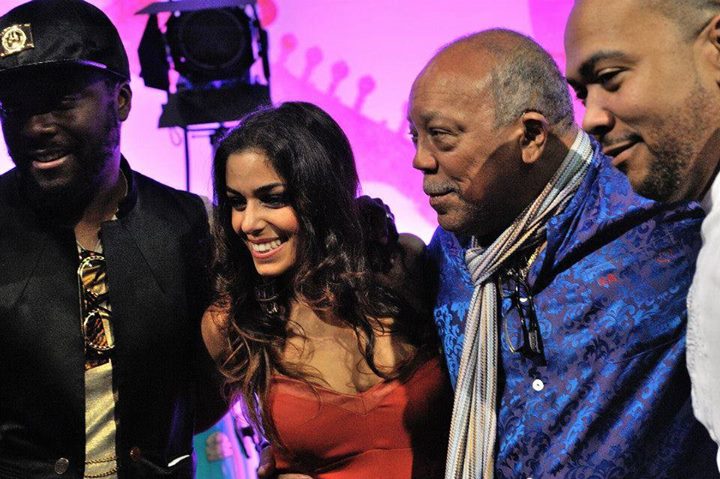
A jury that consisted of Timbaland and Will.i.Am chose Lebanese Xriss Jor as the winner of the talent part at the Dubai Music Festival, following her performance of Listen by Beyonce. As a result, Jor will sign a record deal contract with Sony Music and producer Quincy Jones, who has worked previously with Michael Jackson and Frank Sinatra. She will get a single and a music video out of this.

Xriss was competing with Emirati singer Hamdan Al Abri, Dubai-based Lebanese band Jay Wud, Lebanese singer DD Fox and Sudanese R&B singer Nile.

I figured her name was familiar so I looked into her some more and it transpired that she was a contestant on The Voice and managed to reach the later stages of the show before being disqualified in the 1/4 finals. Those talent show contestants keep going at it until they hit the jackpot apparently. Another batch will find its way to the spotlight tonight with the relaunching of Star Academy.

This seems to be Xriss Jor’s most popular performance on The Voice:

And this is the version of Listen that I was able to find:

Dubai is all about music these days. Another Lebanese band is participating in another music event taking place there. So make sure you head to Pepsi Band Slam and support Adonis.

Lebanon To Get Its First HD TV Channel Tonight With LBC

LBC HD Logo


I was recently invited to a meeting with LBC officials who discussed with us their future plans for Lebanon’s leading TV station. One of those plans was an ambitious undertaking that involved flipping the switch on one aspect of Lebanese TV that is, as of now, completely obscure to almost all of us: HD TV.

Even though most of our TV sets are now equipped with the ability to handle such standards, none of our TV stations offered them. This will change tonight with LBC offering an HD TV channel for its viewers, which will be accessible through the following frequencies via LBC Blogs:

Digitek HD & SD formats: Frequency 12420 – Symbol rate 28175 – Polarization = vertical.

Econet HD & SD formats: Frequency 12480 – Symbol rate 31250 – Polarization = horizontal.

Perhaps it’s a shame that we’re just getting around to this technology in 2013 when it’s been around for a long time in most countries we look up to. However, I still maintain that when it comes to media, Lebanon is a pioneer in the region. And we have set the bar for our media pretty high so anything less than optimal reporting gets immediately bashed (link). Despite some gaffs here and there, I still believe what many of our outlets have to offer regional offerings in quality, though that’s not saying much since standards around here are pretty low. Hopefully other TV stations – or just the ones I watch when I have time – follow suit soon.

I’d have liked to have such a channel launch happen in a week where LBC didn’t mess up with their most recent Kalam Ennas episode (link) but I can’t be too picky. The channel will launch tonight following the start of Star Academy’s new season. Blast from the past anyone?