Giving Lebanon’s Indie Bands a Chance

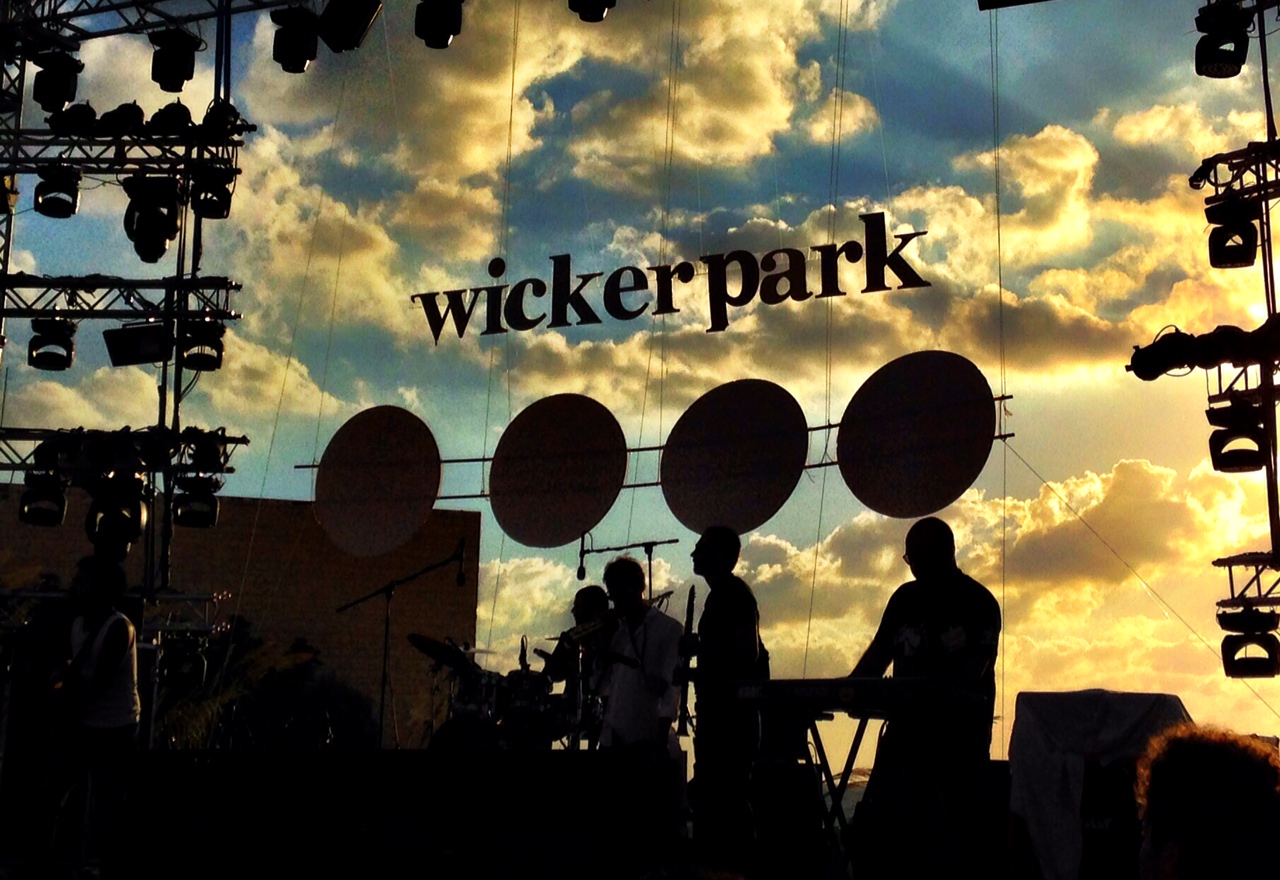
Wickerpark - Batroun

I was talked into going to Wickerpark yesterday. Sure, it was almost literally taking place next door. Sure, it was only $20 for an entire music festival of sorts. Sure, it was for a good cause. But it was a place for music that I had come to brush off. And I refused to be sucked in.

Wickerpark yesterday introduced me to several bands, three – technically two bands and one performer – of which I can’t seem to shake off. I went to Wickerpark yesterday and got exposed to some great music. I guess it’s a good thing I went.

Postcards:

I absolutely loved these people. Of course, they’re  right up my musical alley of folk music. But their songs are really well-written. They perform those songs extremely well. I never thought I’d use such a word to describe anything but if there was anything to be described as “organic,” it’s them singing by the sea a song called “Lakehouse.” Granted, the Mediterranean isn’t a lake but as they belted “come home” to the echo of the waves crashing behind them, I was simply mesmerized.

Postcards covered a song by Fleet Foxes as well. Yes, I know who those are. And their cover was impeccable. Their EP was released less than two weeks ago and I couldn’t wait to buy it off iTunes. I’d love to see them cover songs by “The Civil Wars,” so in case they read this: make it happen!

You can buy their EP here and check their Facebook page here.

Charlie Rayne:

How cool was this guy? He was apparently globe-trotting around Europe before heading to Wickerpark, performing gigs all across Paris, Prague, Berlin, etc…. His music is folky, akin to Postcards. I especially liked the one about a girl’s “velvet garden.” Don’t fret, there’s nothing overtly raunchy about the material. Rayne is an excellent guitar player. He was the only act to command the stage solo. If you like Philip Philipps’ songs, Rayne is your Lebanese version.

Check out Charlie Rayne’s Facebook page here.

The Wanton Bishops:

I have to admit, this band was intriguing me the most about Wickerpark. I had never listened to their music before but wrote about them having their visa to the UK refused. Thank you Lebanese passport! After yesterday, I have to say that music festival in the UK they couldn’t go to definitely missed out.

They reminded me of the few songs I knew by The Black Keys. Their music isn’t my cup of tea though I’m warming up to such music lately. What drew me to them, however, was the sheer energy with which they performed. That energy is something to behold. They played with a multitude of instruments on stage seamlessly, never missed a note and their lead singer could play that harmonica forever despite him being such a smoker he couldn’t not do his set without a cigarette.

Check out their Facebook page here.

Why the hell aren’t they more popular? 

Yes, I know asking that question puts me on all the Lebanese hipster watchlists. But I can’t not ask it: why aren’t Postcards, Charlie Rayne and Wanton Bishops as known, if not more, than other Lebanese bands, some of which are are dubbed “revolutionary of arab pop” with horrible enunciation to boot?

It’s not like Lebanon doesn’t have the platforms to truly launch their careers. We have four english-music radio stations. They all play the same music. On weekends, three of them play the exact same house music endlessly until your ears start bleeding – unless, of course, you’re a house music fan. None of those radio stations, however, give a shot for these local acts who are truly doing an enormous job given whatever limited resources they have. How many bands have you heard of get their visas for musical festivals rejected?

You’d think though that Lebanese radio would try to put Lebanese acts in the spotlight more often. I guess not. Perhaps they think we like to listen to Applause in a loop 24/7.

It may not matter much, but Lebanon’s indie scene gained an extra fan in me yesterday.

The #1 Rule To Get a Job in Lebanon: Have a Religiously-Appropriate Name

Hassan is the name. Let’s play a game of guess his religion in front of an imaginary crowd. I’m not psychotic I swear, although I guess that’s what a psychotic person would say as well.

100% of my fictive crowd say he’s Muslim. Is he Shiite or Sunni? Let’s say our lovely crowd goes 70-30 for Shiite. All are educated guesses, all are well-reasoned choices. I wouldn’t call such thought process sectarian – after all, they were primed to answer. Our imaginary crowd is 100% wrong.

Hassan is not Muslim. Hassan goes to Church every sunday. He is as religious as they go. He is not eccentric enough to have had a name change. You can say he was born that way.

And yet Hassan is sitting around at home, nearing his 30s, unable to find a job just because of the name his parents decided to give him.

The areas he’s searching in, close to home and familiar, are all Christian. But they don’t believe him when they ask about his religion during job interviews, a question that is getting increasingly popular lately. Companies would definitely not admit to this, obviously.

The #1 rule to get a job in Lebanon is, therefore, to have a name that is appropriate religiously to the region you’re applying to. If you’re a Hassan in Jounieh, odds are you will have a terrible time in getting to the point of receiving a paycheck. Of course, other areas in the country are not exactly better.

It wasn’t enough that most of the jobs in the market today are being taken by highly trained and much less salary demanding Syrian incomers.  Lebanese people are having another hurdle develop in front of them lately, apart from all the wastas. Instead of having Lebanese judged by their capacities and qualifications, they are being increasingly judged by the way they pray and, lately, by where they live. And to think I was doubting my friends from Tripoli who were getting increasingly wary of putting up their city of residence on their CVs.

Bass fi a7la men lebnen? 


I Don’t Get What’s Special About Jesus

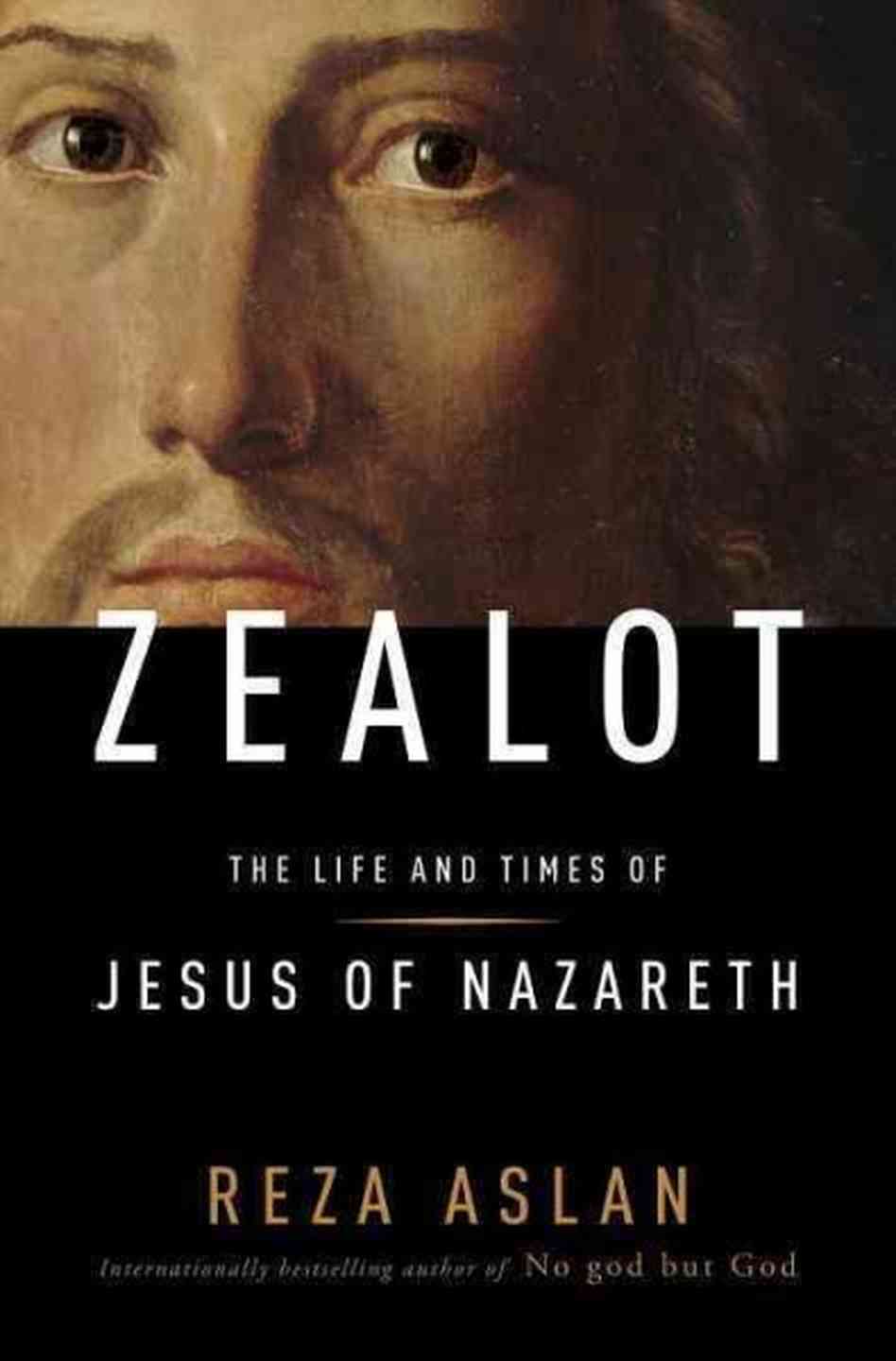
Zealot life and times of Jesus of Nazareth

I always thought Jesus of Nazareth was the same as Jesus Christ. It was how I was brought up. That figure was the man I was taught over and over again never to question, to always take whole, never to tackle in a way that could tarnish his divine image.

But, as it seems, Jesus of Nazareth is entirely different from Jesus the Christ. One is the simple historical version of a man who existed the same way you and I did. The other is the embellished version that the Church has worked years to build. The man from Nazareth was someone who was born in Palestine and who was crucified. Whether his birth was of immaculate conception and whether he got resurrected after his death are matters of pure faith that fall under the domain of Jesus the Christ. If you believe in those two entities, then Jesus of Nazareth doesn’t really matter because your faith is unshakeable. But if you’re like me, full of doubts and constantly questioning, Jesus of Nazareth may hold a few surprises up his sleeve.

I recently read a book about the historical Jesus – the man that Jesus truly was. The book was titled: Zealot: The Life and Times of Jesus of Nazareth. Yes, it’s the book that caused a ruckus across the United States because its author was Muslim. Yes, I read it more out of interest in what the fuss was about than about the entity on whom the book revolved. Yes, it was an interesting read. Yes, I was left with more questions than when I first set reading the book’s pages. Yes, I think the book is impeccably researched. No, I don’t think the author is biased. No, I don’t think the author’s religion impinges on his judgment – if anything, he’s also discrediting his religion by saying Jesus actually died on the Cross as opposed to what Islam preaches on the issue. No, I don’t think the book is perfect. No, I’m not silly enough to believe what he’s saying is scripture but I believe it’s important enough to strike a conversation about.

The entity of the historical Jesus doesn’t really challenge Christian faith whose foundations are built upon three main elements: the Holy Trinity, Jesus’ birth and Jesus’ resurrection. The concept of the historical Jesus is what happened to Jesus’ life between his birth and death. If you believe Jesus died and resurrected for your sins, then whatever happened when he was alive holds little importance.

For starters, the Gospels were not really written by the saints to whom they are associated. It seems that was common practice back then, as a form or respect, to write what a man would have written and associate it with them. They were never meant to be a historical documentation of Jesus’ life and yet we are taught that they are.

Jesus was not born in Betlehem. The census that the Gospels speak about apparently happened after Jesus’ supposed birth and the type of census wouldn’t have required Joseph and Mary to relocate all the way to Betlehem. Why was this altered? Because the Gospels were trying to give Jesus the characteristics of the Jewish Messiah who had to be born in David’s town.

Jesus apparently had brothers and sisters and this is has been historically proven. The Church has tried to cover the fact that the man to whom Jesus gave the mantle of the Church was his brother James because this poses a problem to the doctrine of the perpetual virginity of Mary. To me, however, Jesus becomes much more interesting if he actually had siblings and if those siblings had tried to keep his message alive.

Jesus was a man of profound contradictions which we apparently don’t notice. At one point, Matthew 15:24, he says: “I was sent solely to the lost sheep of Israel.” At another point, Matthew 28:19, he calls to “go and make disciples of all nations.” Sometimes he calls for peace: “Blessed are the peacemakers for they shall be called the sons of God”; Matthew 5:9, and at other points he calls for violence: “If you do not have a sword, go sell your cloak and buy one”; Luke 22:36. These verses have been proven to have a higher accuracy chance than others because they happen to exist across the four Gospels that are believed to be the most accurate. It’s worth noting that if Jesus had his way, we may not have turned Christian at all: “Go nowhere near the gentiles and do not enter the city of the Samaritans,” Matthew 10:5-6.

Some infamous statements that Jesus made, such as “love your enemies” and “turn the other cheek” were also removed out of the Jewish context in which they were said because early Christians wanted to make his character more universal and disassociated from Jewish zealous nationalism.

Jesus was also not an anomaly in the times that he lived. There were plenty of “self-proclaimed” Messiahs that came before him and many more after him. His preaching time, which lasted three years, started soon after he met John the Baptist. Historical proof seems to indicate that Jesus was a disciple of John the Baptist but Gospel-writers tweaked the story later on to make it sound like John the Baptist was the subordinate during Jesus’ baptism. His miracles, however, have apparently happened. There’s no scientific proof, obviously, that they were truly miracles, but there is proof and enough documentation about a man called Jesus who trotted around Galilee, healing people. However, even in this Jesus was not alone. His advantage? He didn’t charge any fees.

The story of Jesus’ death, the way he was dragged from one court to the next, seems to have been embellished as well. Pilates’ washing his hands from any guilt regarding Jesus’ crucification while pinning it all on the jews is but the attempt of early Christians to make their preaching more accessible and acceptable to the Romans who soon became their main focus. Pilates, it seemed, was a ruthless man who crucified any one he met. Jesus may have had an audience with him but it wouldn’t have been more than a reading of the charges and a quick sentencing. But Jesus has been crucified and crucification was reserved by the Roman authorities to people whom they viewed disrupted order.

Current Christian theology stems from the teachings of St. Paul which are apparently drastically different from what early Christians believed Christianity should be: a variant of Judaism that is based on Jewish laws with the acknowledgement that Jesus of Nazareth was the long awaited messiah. This “fight” between James the Just and Paul illustrates the difference between Jesus of Nazareth and Jesus Christ: What Jesus was versus what it is believed he meant. It is the resiliency of Paul’s teachings that have done the most work at obscuring who Jesus of Nazareth was.

I was told that the historical Jesus was someone worth worshipping. After reading the book, I felt that wasn’t the case. I had no idea with what stroke of luck he managed to found the world’s biggest religion. I had no idea why he, out of everyone like him who came before and after, stood out. Two decades of rigorous research made Reza Aslan, the author of the book in question, a more devout follower of Jesus of Nazareth than he ever was of Jesus the Christ. Two days of reading his book have left me in the cold. What I thought was special about Jesus Christ turned out to be but a variation instilled in Jesus of Nazareth by the Church I was taught to follow. What I thought made the entity I worshipped special turned out to be but mere additions here and there to make his story fit ancient prophecies. As it stands, I really have no clue what’s special about Jesus of Nazareth.

I hope that changes soon.

Once Upon a Time in Maaloula

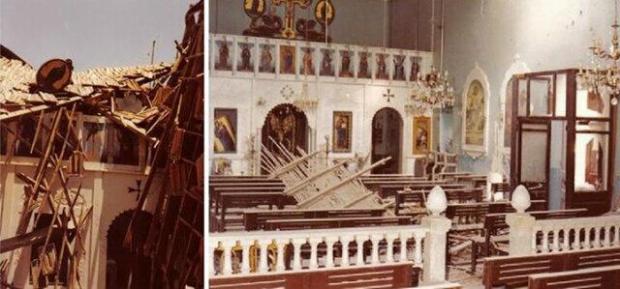
It was December 2010, slightly after Christmas, that I went to Maaloula as part of a two day stay in pre-war Syria.

The village was nestled up the mountains some 30 minutes away from Damascus. I had no idea what to expect there, other than some difference from the  souks and mosques that their country’s capital had to offer. I should have known that Maaloula would be drastically different – the driver had been talking a language I wasn’t understanding all the way. It was Aramaic.

Once upon a time, the Maaloula I visited was a calm village, part of a calmer and oppressed country. The people there seemed poor. They also seemed especially devout, asking us to take off our shoes as we visited Christian shrines for saints that Christians in Lebanon worshipped. The town’s houses were tightly packed together, haphazardly built, in a way that climbed up the mountain that overlooked the village. A statue of the Virgin Mary could be seen atop those mountains. I’m sure they figured she’d be protecting their homes.

I walked around the hills next to the village, patches of snow from a storm a few days prior still visible. The townspeople looked at us warily: just another batch of tourists who are coming and going, expecting some funky eccentricities. A few children were busy playing football on the tarmac across the street. They asked us to play but we didn’t have the luxury of living where they did. So we kept looking around.

The monastery we visited, Deir Mar Takla, where the relics of a renowned Saint reportedly lay, was not very different from several ones I had seen in Lebanon. But I guess it’s always more interesting just because it represents a minority, something different in the vast sea of sameness you had come to associate with the Syria I was visiting back then. I never thought that desolate town, huddled in those cold Syrian mountains, would become the focal point of Lebanese politics almost three years later.

I never gave Maaloula a second thought until today when I was told that the Syrian civil war had reached it and I was told that I should care about the lives of its people, just because they are Christians, more than the lives of all the Syrian civilians who have died since whatever’s taking place in Syria started back in 2011. There are varying levels to the value of a human life.

Maaloula became the centerpiece of a long-used argument revolving around the core foundation of Christian victimhood, because the presence of Christians in this region cannot be guaranteed but by dictators and oppressors. Let’s always choose the lesser evil.

I was also invited to #ActForMaaloula today, an admirable effort and all. But I have to wonder: aren’t Muslim villages worthy of me acting for them? Who am I supposed to act for in Maaloula exactly fully knowing that 90% of its people have apparently left their town? Am I supposed to act for the Churches that have not been touched according to all news services? Am I supposed to act just for the sake of acting so I can tell the entire world that I care about the likes of those who happened to be born into my religion just because they worship Jesus and don’t fast Ramadan?

Christians in this region are and apparently will always be dhimmis, precisely because of this rhetoric, whether they like it or not. They’re dhimmis because they’re always forced to ask for protection. They’re dhimmis because they’re always treated differently than the countries of which they are part. They’re dhimmis because they relish in the rhetoric that they are different, that their lives are more precious, that one needs to act for their sake but not the sake of others just because they have carried a Cross.

Being against the regime next door doesn’t mean we sympathize with the Islamists. It doesn’t mean some Lebanese politicians, who remember the never-ending Christian victimhood argument listed above whenever they’re bored, get to patronize us about not doing enough for our “Christian brethren.” I refuse to be blinded to the fact that this talk about extremists and Islamists and Nusra and Al Qaeda did not exist in 2011. I refuse to be forced to forget that the talk about a ruthless regime, which can send the cold, penis-less corpse of a thirteen year old to his mother’s doorstep, has existed since the 1980s. I refuse to be forced to fall to that ridiculous notion that Christians are special and must be protected because Israel considers them competition.

I used to think the fear for Christians in the region is overrated. I don’t think that way anymore. But I also think that the entire way the issue is being dealt with will only lead to further decimation of those Christians and further increase of the fear they are forced to live in. You want to protect the Christians of Syria because you love them so? You fight for a political solution that involves stopping the regime that has killed hundreds of thousands of its people and with it those Islamists we all fear whose existence stems from that precise regime.

One more thing before I bring you full circle.

The Syrian regime protects Christians, sure. The rebels are creatures who want to behead Christians and only do that, sure. The following is not in Maaloula.

Lebanon, courtesy of the Syrian army.

Lebanon, courtesy of the Syrian army.

Whose protection am I supposed to ask for now?

On Lebanese Priorities: Creamfields Isn’t One

I had no idea what Creamfields was a few hours ago. I honestly would have loved for it to stay that way. But the cancellation of that party/festival/whatever has seemingly unleashed the most rage I’ve seen from Lebanese in a long time. I guess those party animals – all of them by the looks of it – and their parties are not to be messed with or the real shit that this country has been going through will hit the fan: an event cancellation that is.

Another “cancellation” took place today. Hard Rock Cafe, a place where many of us have had a lot of memories and ate great burgers, announced it will be closing in three days. A restaurant closing is, in itself, not that big of a deal. But for an international chain such as Hard Rock Cafe to pick up its baggage and leave is indicative of the situation that the country is going through, a situation which forced this institution that has been here for 18 years to call it quits, which will now leave all its employees jobless until they see another paycheck again. But Creamfields is the worst thing that happened today.

And today marks the 5th month that my best friend hasn’t seen a paycheck, while constantly searching for that company that would hire him. It also marks the one year mark for when my other best friend started searching for a job in her domain. Both of them have Masters degrees. Both of them are great at what they do. Both of them are super qualified. And yet both of them are now only numbers in a growing statistics that is, reportedly, 43% of the Lebanese population. That is slightly less than half of this country is unemployed. Banks and CEOs went on strike a couple of days ago to protest the situation, the lack of work, lack of money, lack of opportunities. But Creamfields is the worst thing that happened today.

Today is also a Friday. And as of now, no explosions have happened. But the day is not over yet so you never know. But two Fridays ago, we had an explosion in Tripoli. And it killed more than 50 people. A week before the Tripoli explosion, another part of the country was also torn apart and 40 people died. More than a thousand people got injured in both explosions. And yet people did not get into the state of emotional upheaval back then as Creamfields has put them in today. Perhaps today’s casualty is Creamfields. But yes, that is the worst thing that has happened today.

Today is another day when thousands of Syrian refugees flock into the country. I’m not really sure which statistic we’re observing lately but last time I checked, 25% of this country was refugees. In other words, when 3 of my friends and I hang out, odds are one of them is a refugee. Our municipalities and politicians spew racist words that resonate for a while and then die off but most of us have no grasp on the possible repercussions that these refugees have on the already-fragile and ever-so-distengrating fabric of our society. Those of us who work in the medical field have been put on high alert for all the possible new diseases that these refugees are bringing with them and which Lebanon hasn’t seen in a long time. There are no regulations whatsoever to handle those refugees. The laissez-faire attitude of everyday life that we have extends to them as well.

Today is another day of us being government-less. I remember the days when our current PM designate spoke about forming a cabinet in the soonest delay possible. I should have known not to be foolish enough not to take those 3 words in the Lebanese sense: “soonest” and “delay” and “possible.” Our economy is breaking down, our nonexistent borders are disintegrating, our security is now extinct. But that isn’t the worst thing to take place today.

Today is another day in ticking down till the time when it’s been 3 months since we were supposed to vote. It’s been almost 3 months that our democratic rights were taken away from us, that are our parliament decided it had done a decent enough job since 2009 to warrant a few extra years for its mandate, that there are enough pertinent reasons for them to come up with whatever logic they used in order to do what they did. It’s a big mess sure. But there are other things that are far worse which have taken place today.

Today is another day of us waiting for that possible American strike over Syria, the strike that doesn’t know when to start – if ever. It’s another day of us living through the repercussions of the war raging on next door as some of our men bring it home because they miss fights, having been without them for several years now. It’s another day of being part of this regional chess-game that knows no ends. But Creamfields is the worst thing that happened today.

Today is another day of us wasting time until we start drilling for oil because signing laws to ratify the regulations required have proved to be way too tedious. Today is another day as all our neighboring countries beat us in the race towards economical richness as we stand by watching. But don’t be fooled, our oil is not the worst thing to take place today.

Today is another day of Lebanese people not receiving medical care just because they can’t afford it, of some hospitals turning them down just because. It’s another day of us ticking down the clock to a possible war with our Southern neighbor. But we’re ready – or so they say. Except since the last time we had a war with that neighbor, we have failed to build shelters, warning systems or any other protection entity for our people down there. But their lives don’t matter because that’s nowhere near the worst thing that could take place.

I’d have loved to maybe attend Creamfields with you. I’d have liked a Hard Rock burger with that as well. But if I were a DJ who was lined up to play during that festival, I wouldn’t come here. And I would tell my friends not to come as well. Lebanese people love life, of course they do. There are even slogans about that precise issue. But the simple fact that we’re now “used” to all those bombs doesn’t mean others should be as well. Just because we’ve gotten numb to the absolute hell we’re living in doesn’t mean those tourists we all want to bring here are numb as well and are absolutely careless about their safety as we are. Ask yourself this: would you come to Lebanon, unless you absolutely had to, in times like these?

I’d have loved to also be on the front-lines of being angry about Creamfields being cancelled with you. But the sheer amount of hormones that have raged due to that event being cancelled has shown many of us, I hope, how disassociated many seem to be from the country in which that festival was supposed to take place, a disassociation that borders on the lines of pathological. But don’t mind me, I suppose, because the cancellation of Creamfields is definitely among the Lebanese priorities that ought to make people believe this country whose passport we proudly hold is a failure.

Let’s hope nothing happens to that rumored Coldplay concert.