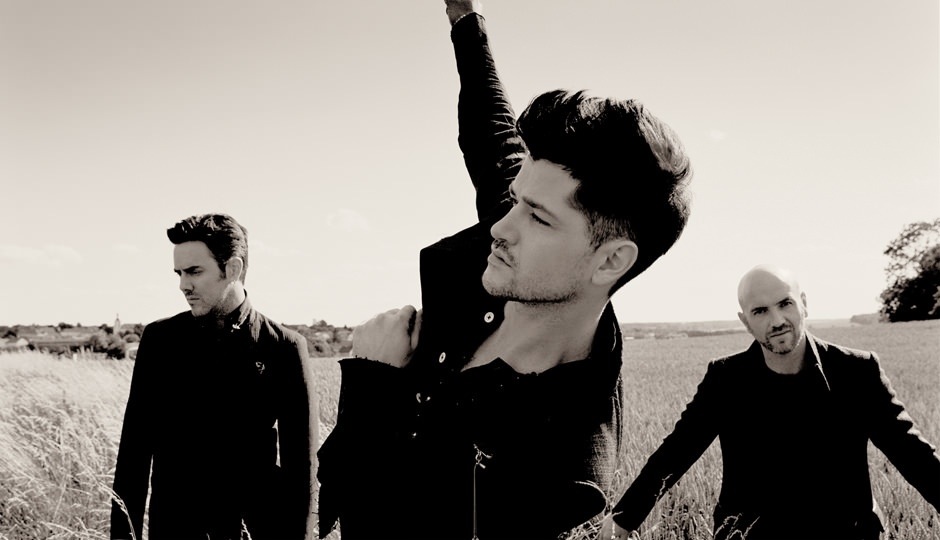
“The Script” Lebanese fans on twitter have been busy trending #TheScriptToLebanon for the past few hours. Soon enough, Twitter will show it trending as part of Lebanon’s regional “worldwide” trend and they’ll be satisfied.
But there’s actually more to it than a Twitter trend out of nowhere.
A trusted source has recently informed me that a local productions agency – I won’t reveal its name, just in case – is in talks to bring Irish band The Script for a summer concert in Lebanon.
Things are definitely not set in stone yet but the prospects are serious enough for some tidbits to actually leak: The Script are heavily considered to be this summer’s “it” band performing in the country.
Of course, given how things go around here, plans could fall through at any given moment given how preliminary they are at this point.
But Lebanese Script fans, rejoice, your favorite band may be meeting you soon enough.
It may have been received with mixed reviews but we won’t get the chance to judge Spring Breakers ourselves, as per a Grand Cinemas tweet – one of Lebanon’s main cinema chains.
The movie is known to have nudity, drug use and heavy language. It is rated R in the United States. The official synopsis is the following:
Brit (Ashley Benson), Candy (Vanessa Hudgens), Cotty (Rachel Korine) and Faith (Selena Gomez) have been best friends since grade school. They live together in a boring college dorm and are hungry for adventure. All they have to do is save enough money for spring break to get their shot at having some real fun. A serendipitous encounter with rapper “Alien” (James Franco) promises to provide the girls with all the thrill and excitement they could hope for. With the encouragement of their new friend, it soon becomes unclear how far the girls are willing to go to experience a spring break they will never forget.
But are those criteria enough to qualify as the “circumstances” that are not allowing Spring Breakers from having a Lebanese release? I hardly think so. After all, many R-rated movies end up being released here and some Lebanese productions such as Ossit Sawani feature sex scenes as well as drug use – by underage people no less.
Grand Cinemas didn’t reply to tweets asking what those “circumstances” are. It is known, though, that circumstances leading to movies not released here are either political or religious. I doubt though that Spring Breakers violates any of Lebanon’s many sanctities in those two domains.
I guess we’ll never know why Lebanon’s censorship bureau decided this movie shouldn’t be screened here. But when will they know that there’s no such thing as a “ban” in the time and age of digital media? And when will they know that people are aware enough to judge anything’s merit away from their chopping paws?
Spring Breakers will be soon available for download everywhere. Good luck censoring that.
Update:
The SKeyes Center for Media and Cultural Freedom followed up on this issue with both the Censorship Bureau and Grand Cinemas.
There has not been yet any official request by the Cinema circuit submitted to the General Security’s bureau to receive an approval for screening the movie. Hence, there was no decision whatsoever, neither positive nor negative, regarding Spring Breakers.
As for Grand Cinemas, they said they still do not know when or if they will want to screen that movie.
So there is no case of censorship for this movie.
No idea why Grand Cinema was referring to “circumstances” in their reply if they haven’t even looked at the movie yet.
This Woody Allen-inspired short movie is one of the best ones I’ve seen lately. It’s directed by Alba student Marie-Louise Elia and produced by Marie-Noel Bou Haila (A lot of Maries in one sentence). You can find the former on Twitter here.
It’s a candid, honest, funny, sarcastic and extremely witty portrayal of Beirut – characteristics you rarely find this authentically in Lebanese productions. Many aspire to incorporate such elements in their movies but end up coming off as over-pretentious instead. Not this one.
The director, Marie-Louise Elia, is currently searching for actors for her upcoming movie. So if you’re interested, talk to her on Twitter. If her upcoming work is anything as good as this, it’ll look good on your resumé.
Originally written for Narnia’s The Voyage of the Dawn Treader, See You Again is the 4th single off Carrie Underwood’s platinum-selling album “Blown Away.”
After the dark tale of a wife and a mistress killing off the man who betrayed them both in “Two Black Cadillacs,” which followed the story of a girl letting her father die as a tornado blows through her town in “Blown Away,” “See You Again,” cowritten with Hillary Lindsey and David Hodges, comes as a nice change of theme for Carrie Underwood. Although the body count is still rising.
Long gone are the stories of death, although this song is still somehow about death, “See You Again” isn’t as specific as its predecessors. It doesn’t tell a story with a set point and finish – it’s ambiguous, serving to express a sentiment. For some, its ambiguity can be held negatively but one of See You Again‘s strong point is its ability to feel relatable regardless of what it was truly intended for.
A song about faith, “See You Again” is about reuniting with a loved one long after death has taken them to a place where “the water meets the sky.” But it doesn’t necessarily have to be about reuniting post-death. It can simply be about seeing someone again after a long period of travels or a period of being apart from each other.
It is probably one of Underwood’s best recorded vocal performances, ranging from belting out choruses to head voices on the bridge where she whispers: “sometimes I feel my heart is breaking but I stay strong and I hold on cause I know I will see you again, this is not where it ends. I will carry you with me till I see you again.”
What “See You Again” does not possess, however, is a distinctive country sound and instrumentation. See You Again has the sound of 90’s pop: from the Coldplay-esque productions which is apparent the most in the set of sing-along “oh oh oh’s” in male voices that the song opens up with, to the backdrop of a piano-driven melody, to the tempo and rhythm.
See You Again will be another hit for Underwood who keeps releasing crossover-ready songs when she doesn’t want airplay that extends beyond country radio. Seeing as that’s the case, more country and possibly better offerings would have served as better follow-ups to her previous moderately-country sounding singles. Underwood may have reached a point in her career where she is courageous enough to release whatever she likes and it’s obvious she relates to this song well. However, while that is commendable, it’s a shame that the release of See You Again means better songs off Blown Away will never see the light of day.
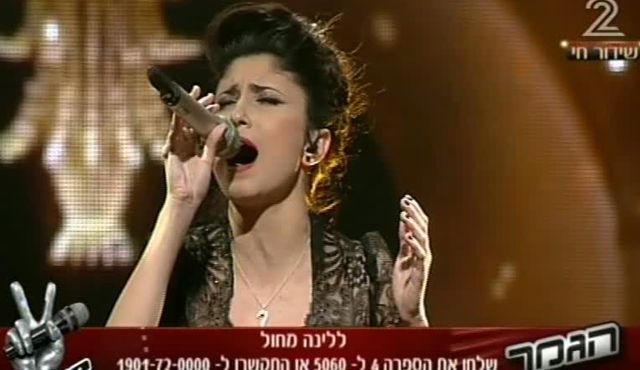
The myth goes that Lina Makhoul is a 19 year old Israeli-Palestinian Christian from Acre.
She participated in the second season of Israel’s version of The Voice. I had blogged about her before (here) when she performed one of Fairuz’s songs and gained the judges’ approval.
The reality, at least according to several readers who messaged me privately regarding the matter, some of whom are are related to her, is that Lina Makhoul is not Palestinian. She is Lebanese from one of South Lebanon’s many Christian towns.
Well, Lina Makhoul – a Lebanese (or at least of Lebanese origins) – has won the Israeli version of The Voice after beating out two other contestants in the finale.
As her last performance of the night, Makhoul sang Leonard Cohen’s “Hallelujah.”
She said that she was the victim of racism on the show. I’m not sure where that racism came from – be it from other Lebanese or Arab Israelis who may not have wanted her to participate in such things or from Israelis who are not too keen on her heritage or from the show’s producers and staff. But at least she managed to win.
Either way, now we know at least one person who isn’t included in the current debate in Lebanon, which has obviously taken a backseat now, about the possibility of return of the Lebanese who flew to Israel around the time of the South’s liberation.
Lebanon is not allowed to access The Voice Israel’s Youtube page so I have yet to find a version of her performance of “Hallelujah” but I have found this dating back to 2011:
You can watch Makhoul’s initial audition here in which she also sings a Fairuz song. The Israeli judges refer to Fairuz as the queen and one of them had apparently worked with her before many years earlier:
Update: I’m getting reports that she may be Palestinian as her mother is apparently as such from the town of Al Bokay’a.
Update: check out her winning performance of Hallelujah:




 A Separate State of Mind | A Blog by Elie Fares