Beirut’s Airport Is Not Safe For Air Travel Anymore; A Disaster Could Happen At Any Moment

beirut-airport

Add the current situation of Beirut’s airport to the growing (and endless) list of complete failures that Lebanon’s governments can add to their achievements: the airport is not only unsafe for air travel anymore, it’s become so dangerous that an air disaster not happening already is nothing short of a miracle.

To fix the trash crisis that their ineptitude caused, Lebanon’s government saw it fit to build a landfill which almost literally borders the airport wall, south of Beirut, calling it the Costa Brava landfill. As physics and common sense have it, establishing a landfill that close to the airport (or any airport for that matter) doesn’t come without repercussions.

Apart from the toxic fumes that could damage airplane engines and our lungs, as well as the hotter air that emanates from the landfill which could disrupt aviation, the birds attracted to the landfill could literally cause airplanes to crash. The government is aware of this problem so they installed ultrasonic bird repellers, which obviously don’t work.

This almost happened yesterday with an MEA plane, as reported by LBC, that was faced with a flock of seagulls as it was landing, leading the western runway the plane used to be closed until the birds were dealt with. How did the government respond? By increasing the numbers of ultrasonic bird repellers that, as established, don’t work.

I guess the only way they’ll do something is by a plane crashing and hundreds of people dying. You know, that’ll be the best way for them to proclaim they’re doing something and go to the victims’ funerals, shake the hands of their families and have their coffins draped in our flag.

You see, while the movie “Sully” in which Tom Hanks, playing the true story of airlines pilot Chelsey Sullenberg whose plane got hit by birds as it took off form New York, causing both engines to fail and leading him to land the plane in the Hudson river, was a riveting Hollywood story, things almost never play out that way. Are we counting on countless miracles to keep our airport running?

An anonymous source inside Beirut’s airport confirmed this saying that: “If the International Air Transport Association (IATA) were to show up at Beirut’s airport unannounced, the place would be closed down in a matter of hours. This is how unsafe things have become.”

It doesn’t stop there. He says that aviation has become so hazardous that “it’s a miracle how a crash has not occurred already. We literally hold our breaths every time a plane departs or lands.” Why hasn’t this made the media rounds yet? Because “airport officials are trying to hide it.”

I guess our safety and our lives are not worth anyone getting a headache over a media scandal. A plane crash is much easier to brush by, isn’t it?

Beirut’s airport is not only unsafe to use, it’s going to get us killed if we keep using it. The troubling part is that this is our only airport. The horrifying part is while our government is aware of this, they choose not to act out on it because, as we do things in Lebanon, we cross our fingers and hope for the best. Well, not this time.

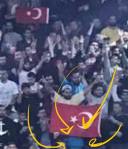
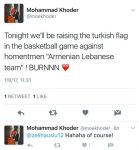
Dear Riyadi, The Turkish Flag Raised To Tease Homentmen Wasn’t Photoshopped, And Yes It’s Despicable

It says a lot when the knee-jerk reaction to something as disgusting as this is to cry foul and call photoshop instead of calling out those who did that.

It says even more that the men who were holding the Turkish flags weren’t even holding them right: they were just there to tease the Armenian team the team they’re supporting was playing.

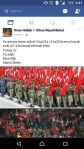
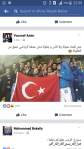
I posted the above pictures on my blog’s Facebook page and was immediately inundated by replies that it was photoshopped. No, it wasn’t. Not only was it shared by one of Al Riyadi’s top Facebook fan pages, but a little zooming in and you can see the person holding the flag. Some even tried to defend it. Anything to save face? No, just no.

Perhaps it’s a good thing to have a “it’s photoshopped” reflex in order not to raise tensions, but when faced with evidence that it’s not, the right route is to own up to it and apologize to the team you were playing whose entire history you insulted, to those who support that team whose ancestral struggles you’ve insulted and to your fellow citizens whose fight is a daily, yearly thing to have their genocide recognized. And all for what? Teasing?

There’s a whole other level of disgraceful when you have to sink to such low levels and then try to justify it. Turkey is a good friend to Lebanon? Yes, but that’s not the place to celebrate that. People wanted to commemorate the memory of our victims at Istanbul’s Reina attacks? Really now, against an Armenian team, during a basketball game that followed a period during which organizers for both teams wanted to deviate tensions?

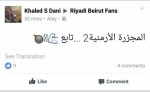
The fact of the matter is that Turkish flag was intentional, and that picture was authentic and the act was despicable. It was even preceded by fans making that “joke” on social media over and over again:

But it’s not a joke. It’s not funny. What it is is disgusting, disgraceful, hurtful and despicable.

To set an example, Al-Riyadi should identify whoever those fans were and ban them from attending future games of the team in order to set an example. It’s easy to dismiss such acts as goofy play, but we’ve experienced them way too often and fans of multiple teams have been banned from courts so repeatedly for things to remain as is. Sometimes, such as this time, you have to call out things as they are so people know that doing them isn’t worth the laughs they got with the bros or that surge of pride they felt when they pulled that flag out of their pocket mid-game.

This is about the mentality that would push a supporter of a particular team, in this case Al Riyadi Beirut, to figure it’s a good idea to insult Armenians in the worst way possible by bringing a Turkish flag to a game and not even hold it properly, or the mentality of a Sagesse supporter chanting Islamophobic slogans just because they can. The examples are endless, and they’ve been thoroughly documented.

I’m 100% certain that this is not what all Al-Riyadi supporters are like as many of my friends are supporters of that particular team and they would never be in such poor taste as to pull a similar stunt. I’m also positive that such stunts do not paint the picture of the entirety of Lebanon’s basketball fans. However, with sectarian and political slogans becoming as part of the game as the ball, isn’t it high time for the entirety of the game to be re-assessed?

#سكر_خطك: Why I’m Closing My Alfa & Touch Lines Today


sakker-khattak

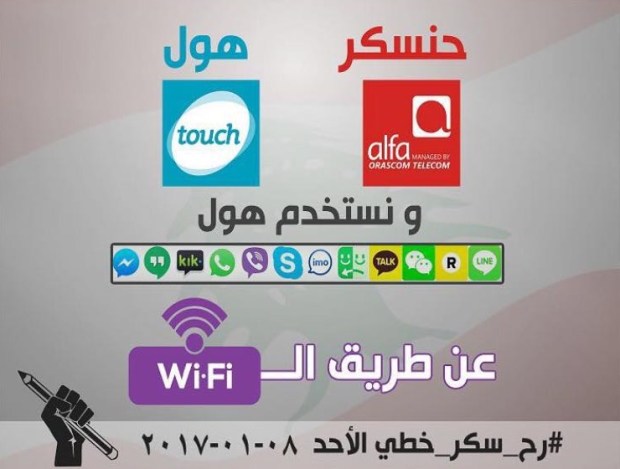
Over the past few days, we’ve all seen the above screen-grab in one way or another asking Lebanese citizens to stop using Alfa and Touch’s mobile services on Sunday January 8th, in an attempt to raise awareness and fight the horrifying corruption infesting our telecommunication sector.

Lebanon has one of the highest telecommunication prices in the region and the world. For comparison, the average prepaid monthly recharge in Lebanon is around $25 while it’s around $7 in other Arab countries. The services we get with our recharges are also abysmal: a minute is 25 cents, a text is 5 cents and mobile internet is recharged separately at rates that are exorbitant: $23 for 5GB on Alfa and $29 for 6GB on Touch  with extra-use rates of around 7 cents/MB that run up your bill into the stratosphere. And to think those rates were more expensive….

A lot has been said about the aforementioned campaign, and many are saying there’s no point because, for a lot of Lebanese, they’ve already paid Alfa and Touch by recharging their prepaid line or renewing their internet bundle. But that’s not true, because a one day boycott will cost Alfa and Touch a lot of money.

Food for thought: If those affected by this boycott weren’t worried, they wouldn’t be launching the campaign that they are currently undertaking against it. Also, your personal rights are way more important than any political undertone that has been painted over this campaign.

Please note that with both companies simply enforcing prices set by the government, this boycott affects the government first and foremost. Telecommunication is the second largest revenue source for the government after taxes, which means that reducing that revenue effectively cuts off a major revenue source for the government, which could force it to look into better pricing and services.

In numbers: The 2015 estimated revenues from mobile telecommunication to the Lebanese government were around $1.28 billion, which translates to about $3.5 million daily, encompassing texts and calls as well as internet and other services. That’s a lot of money they’re making for the horrendous services we get. A one day boycott will stop both companies from making approximately that much, without adjusting for further increase in their revenue that they’ve made in 2016.

Those of us whose lines are prepaid will only benefit Touch and Alfa if we use the credit that we already have. Those of us whose lines are postpaid and who decide not to use their phones will directly cost Alfa and Touch money by not providing them with a revenue. If we both put our lines off the grid, those of us who don’t won’t be able to reach us by calling or texting which further degrades the quality of their mobile experience.

With a wide enough boycott, Alfa and Touch will also suffer losses from the fact they have to invest in keeping their networks running without those networks being used: they are supposed to keep their networks at maximum capacity to accommodate the usual influx. With no influx taking place, they will run up the losses.

Perhaps a boycott isn’t the ideal way to bring about the change we want. But the point is not to remain apathetic anymore to the fact we, as a country, are being ripped off without anything to be done about it simply because this is our status quo and we’re forced to deal with it.

Call it slacktivisim, short-sighted, or whatever you feel like. But putting my phone in airplane mode for the day won’t affect me much, but it could get both companies, and therefore our government, to realize that their current rates and policies are unacceptable. Morocco did it when their government banned VoIP. KSA did it when their ISPs raised internet prices. It works.

To put it in perspective, the price of around 250 minutes and 300MB in Lebanon is $84, while the regional average is $32. The price of 500MB and 500 minutes in Lebanon is $136 while the regional average is $57. The price of a 1000minutes and 1000MB bundle in Lebanon is near $270 while the regional average is $111. This is not okay.

As an ending note: if you go France, you can get a phone line from a company called Free for around €20 a month. This includes: unlimited calls inside France to all lines, unlimited calls from France to mobile phones internationally to many countries around the world, Lebanon excluded, unlimited SMS and MMS, unlimited mobile internet, and free wifi when you connect to Free’s Wifi Hotspots on streets. That is all.

MTV Has The Audacity To Claim They’re The Reason Lebanon Had Compassion For Istanbul’s Victims

I take pride in the fact that as individuals on Social Media, we got one of Lebanon’s most watched TV stations to worry so much about its reputation that it tried to discredit us at least three times since Monday.

The first round was during Monday’s episode of Menna w Jerr, when Dolly Ghanem said:

“Social media is what makes a big deal out of nothing. I’m from the war generation and covered worse things than this. but we’ve never been under this much scrutiny. Those criticizing the media as chasing scoops and ratings, yes that guy, isn’t he waiting and seeing how many have shared his words? Isn’t he also running behind scoops and shares?”

I guess Mrs. Ghanem’s annoyance that her lot is being scrutinized by social media is enough proof for us that we’re on the right track. If this scrutiny is going to force them to do their job better, puts them in their place, forces them to try to attack our reputation to preserve theirs, and fail in doing so, then we’re triumphant.

Watch the video here:

The second round of replies came yesterday when they said they chose their right to remain silent against such attacks, but still posted an entire article about the matter (link).

In that article, they compared the campaign they’ve been victims of as nothing more than an orchestrated effort by those who hate their freedom. They also reminded us of the fact that, once upon a time, they were closed down by Syrian-Lebanese authorities because they were very free. Yes, because that has anything to do with the criticism hurled at them, and all other TV stations today, from almost everyone.

You’d think they have the decency, as a supposedly respected institution, to take a moment of self-reflection and see what went wrong, but no that’s not even close to being the case. Instead of listening to the massive outrage at the way they’re handling things, they keep digging a hole for themselves.

And they’re not even done digging that hole yet.

A few minutes ago, MTV posted their second article since deciding to remain silent about the criticism they’ve received. In that article, accompanied by a picture of someone in Elias’ family member weeping, they decry that:

“Those messing around on social media have relaxed by now and stopped preaching…. If it weren’t for us, the media they’re criticizing, Lebanese people wouldn’t have felt this compassion to the victims of Istanbul’s attacks.”

Yes, they had the audacity to say they’re the reason we felt sorry and horrified that other Lebanese had been brutally killed, in cold blood, at the hand of a terrorist, away from home, on a night that should have been one of the best nights of their lives.

There’s despicable, and then there’s this whole other level of deplorable. No, MTV. You are not the reason we felt compassion to Elias, Rita and Haykal. We did because we are human, because we, too, have lost people and know the weight of such losses. We did because death touches us all. We did because they’re our friends, our family members. We did, in spite of you turning their death into a reality TV show.

It doesn’t end there. They try to justify the coverage they did at Elias Wardini’s house by saying that the reporter had forgotten she was a journalist at the family’s home and felt like she was a family member sharing in their grief, and that the quality of live broadcast goes back to the decisions of the station’s administration.

This kind of emotional, sensational rhetoric about a reporter suddenly becoming a family member and forgetting all her professionalism is senseless and the epitome of unprofessionalism. That’s like me saying to the family of a patient I just lost: oh, sorry I couldn’t do the best job that I could. I suddenly forgot I’m a doctor and decided to become a part of your family instead.

It doesn’t end there. They say that: “We were all affected by the tragedy that we wanted the people to mourn with the family, so we could all grieve together. It’s okay if the viewer is touched and cries for the death of his fellow citizens.”

Well, at least they admit it now. So let’s put it bluntly: NO. It’s not okay for you to use the family’s mourning to get the viewer to cry. NO, it’s not okay for you to assume you have to show me their tears for me to need to grieve. NO, it’s not okay for you to assume the role of a stage manager in my emotions and in my life ordering me to cry or laugh.

Moreover, your station’s administration deciding to show Elias’ sister receiving the news of his death, or Rita’s father weeping for his child, or even filming live from the plane carrying the victims home, filming them being taken to hospitals and their homes is the core of the problem.

But things are more rotten than this.

A couple of days ago, I was asked by a very respectable journalist who was not aware I had criticized MTV to give a statement for a news report about Razmi el Kadi. So I did. In about 15 seconds I said: “I’m not aware of whether there’s any legal basis to arrest Mr. El Kadi or not, but his words are not acceptable. There’s a sanctity to death, especially that of your countrymen, to be respected. The location of their death has no bearing on this issue when they’re this innocent.”

Soon after the report aired, a couple of MTV producers decided to subtweet me, calling me a hypocrite, to which I naturally replied that when you do a bad job, you will be called out on it. Someone, however, was way too offended by the fact I was, in 15 seconds, on MTV’s airspace, that they raised the issue with that administration.

Soon enough, the report in question was pulled off YouTube. A few hours later, it was aired on their midnight use re-edited to remove my parts from it. Keep in mind that the issue in question had nothing to do with their coverage, but was of a totally different matter altogether.

I don’t care in the least that my part was removed. But it’s a whole other level of unprofessional when some individuals who work in TV cannot take criticism and when a TV station refuses to host those who’ve criticized it. I mean, just delete yourself.

How childish can you get not only to be upset that you hosted someone who criticized you, but to make the effort – double the work – to re-edit the report and silence them from it? But it’s okay. I must have expected better ideals from a media that wants to advertise itself, in its own words, as “a victim of it being too free.”

But I digress.

MTV, when our Minister of Information Melhem Riachi questions, live on your air, when he questioned the point of you live covering an injured being taken to a hospital, of your coverage from the airplane carrying the victims, of your coverage at the victims’ houses, how can you even try to defend yourself?

MTV, it’s time for you to re-assess yourself. Take a deep look in whatever mirror you have and admit that you’re messing up majorly. Stop digging that hole. It’s too embarrassing.

Why Those Who Insult Istanbul’s Victims Should Always Be Challenged, Not Ignored

I never thought that we, as a country first and foremost and as a region in the grander scheme of things, would so grossly disagree about our characterization of the victims of the Istanbul attacks. I’m not talking about whether they are martyrs or victims, but about people who are so full of hate that not only do they not mourn but believe others should not mourn too.

Those people have forsaken every ounce of humanity and turned the barbaric deaths of innocents as yet another event to correlate with their religious, sectarian or even political discourse.

Ramzi El Kadi & Huffington Post Arabi:

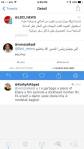
Earlier yesterday, I posted screengrabs from a Twitter account by someone named Ramzi Al Kadi on my blog’s Facebook page. Soon enough, the story was picked up by news outlets and it went viral.

Within minutes, Al Kadi was being called all kinds of names as if he were the only entity in this country and region regurgitating that horrifying word-vomit. Some were attacking the way he looked, digging through his entire online history and bringing it back to haunt him.

El Kadi had said he did not want to mourn the victims. He thought what happened to them was well-deserved given that they were at a night club, which is in his opinion is a disgrace of a place. To him, the victims – Rita, Elias and Haykal – were nothing more than sinners who had it coming for wanting to have fun at a “whore house.”

Unfortunately, Al-Kadi isn’t a lone example. You only need to head to Huffington Post Arabi’s Facebook page to see the exact same rhetoric being spewed by Arabs in the comments section. In an article posted by the page about Lebanese victim Rita El Chami, the comments ranged from those who were sympathetic to her sacrifice, calling her a hero, to those – like Al Kadi – who saw her as nothing more than – again, I quote – “a whore” for partying the end of the year away, wishing that she’d “go to hell.”

The debate in Saudi Arabia about the Istanbul attacks isn’t about their dead, but about whether they were at a nightclub or a restaurant, because that makes a difference in how their death is perceived. Palestinian victim Leanne Nasser is suffering from the same discourse back home: whether it was appropriate of her to go party the night away. It was her first trip abroad.

To note, Ramzi Al Kadi is saying his Twitter account was hacked. I don’t see why given there’s no value in hacking an account with 200 followers, but it’s a statement to be conveyed. Ramzi has since been arrested in order for his tweets to be investigated, which – regardless of how disgusting what his tweets were – is not something we should accept. Being an asshole is not a crime.

Hassan Hamzeh & Politics:


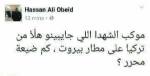
Al Manar reporter Hassan Hamzeh decided to insult the victims of Istanbul’s terrorist attacks from a different perspective. To him, this was pure politics. Being a Hezbollah supporter, he saw the attacks on Istanbul as nothing more than a chance for him to gloat in revenge and spite.

“Istanbul is paying the price it should pay” he tweeted. He then followed it up with: “Istanbul should pay more,” before concluding with: “Erdogan, you reap what you sow.”

To Hassan Hamzeh, the victims from all backgrounds are nothing more than pawns in his party’s political game, their entire lives and families and loved ones be damned as long as he can be satisfied that a city and a country he despises are being broken like this.

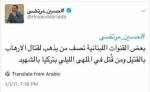
Other politically-charged social media users were annoyed at how the victims of Istanbul’s attacks were being called martyrs compared to others who “didn’t sacrifice their lives at a nightclub,” as if the location of where you are brutally killed has some bearing over the worth of your life and death.

While the Lebanese government flexed its muscles with helpless people like Al-Kadi, Hassan Hamzeh – with his political backbone – is still at large, free to roam and tweet more hateful things because he’s untouchable.

Why We Should Speak Up:

Regardless of where people die because of such vicious attacks – whether at a club, a brothel, church or Mosque – the sanctity of death should be respected. You have to be at a whole other level of deplorable to disrespect the passing of people whose only fault was being at the wrong place at the wrong time because you don’t like where they were or what they were doing.

When I first posted Ramzi Al-Kadi’s screenshots, people said that giving people like him such exposure makes them feel important and gives them power, that their negativity had no place in times of mourning. I disagree.

The best way for hate and bigotry to prosper is for them to run unchecked for a lifetime. The more we stay silent, the more we let such horrors fester in the minds and souls of those who are most susceptible, and the more Ramzis and Hassans we will have to deal with later on.

Our bubble as millennials or liberals has gotten us to think that the majority of people share our views and as such most will find the words of Ramzi or Hassan as abhorrent as we do, and that might be the case with many, but today’s world is far from being one where we can remain silent to people who insult victims just because they can.

Staying silent to people like all of those who insulted the victims of the Istanbul attacks in LaReina has a lot to do with why we are dealing with entities like Trump, Le Pen, Brexit and a rising trend in right wing extremism all around the world, why we are reeling from the effects of living in a post-truth existence where facts have become matters of opinion for many.

There remains a huge populace that lives among us that believes in what Ramzi Al-Kadi said, without them proclaiming it. We live in a conservative Arab world where it’s very easy to forget, as the only people we talk to are those who think like us, that there are those beyond our walls who believe that nightclubs are abominations, that those who frequent them are sinners and that those who die there should not be mourned.

Those people you want us to ignore are voters, influencers, mothers and fathers. We can’t repress them into a basket to be tucked away just because we feel like the higher road is the better road. To drive our society forward, those people’s ideas – not the way they look as many have criticized Ramzi – should always be challenged. We can’t shy away from the ideological debate taking place wherever we roam for fear of the challenge, or of upsetting others and ourselves.

Ramzi Al-Kadi and those who think like him think their ideas and beliefs are as valid, and should be applied on a more grander scale than just tweets or Facebook comments. To better our societies, we can’t just dismiss those ideas outright just because they’re horrifying. We have to listen, criticize, challenge the core of their thoughts.

The cycle of us versus them will never end if we stay silent and let the cycle perpetuate without breaking it. It’s easier to imagine “them” as enemies who hate the way we live no matter what. But “they” are victims of ideas that have been entrenched in their minds for years, and those ideas can be beaten if we take up the mantle of the fight.