Some Lebanese Just Don’t Get It: Two Reactions on Lebanon’s Passport Ranking

It’s all about our passport lately, isn’t it? And isn’t it quite odd that our passport is being discussed so fervently by almost everyone given that the news that is seemingly new is actually anything but? I remember writing about it way back in July 2012 and nothing has changed since, as is expected obviously (link).

Well, there are two interesting reactions to observe regarding the latest non-original news about the Lebanese passport. The first is by some Lebanese regarding the ranking of our passport, a reaction that you can observe via the comments on the list that had us ranked in the ten worst passport list, which I’ve screenshot in the following gallery:

Lebanese people sometimes miss the bigger picture. Well, in the case of the aforementioned comments, the big picture was missed alright for the sake of a picture. Our passport sucks? Well, I guess that’s okay some Lebanese would say as long as the you show our girls rocking Skybar and our men holding their favorite alcoholic drinks and flashing their million dollar smiles to Beiruting cameras. It’s also the case with all those Lebanese feel-good short movies that give everyone a happiness boost to get them through a day. Denial can go a long way.

Of course, denial is what the second reaction to our passport ranking is all about as well but it’s at a higher level as Lebanon’s General Security apparatus had an official statement on the matter that went almost as follows: Nope, nope they got it all wrong. This is what happens when things get lost in translation. Our passport is actually one of the best!

I’m not kidding. The official text, as translated by yours truly, goes as follows:

“Some news platforms have incorrectly translated a report labeling Lebanon’s among the top ten worst passports in the world, which affected Lebanon’s image. In fact, the Lebanese passport is among the best in the world and will soon adopt biometric standards which provides its holders with more benefits, making the Lebanese passport similar with international standards.”

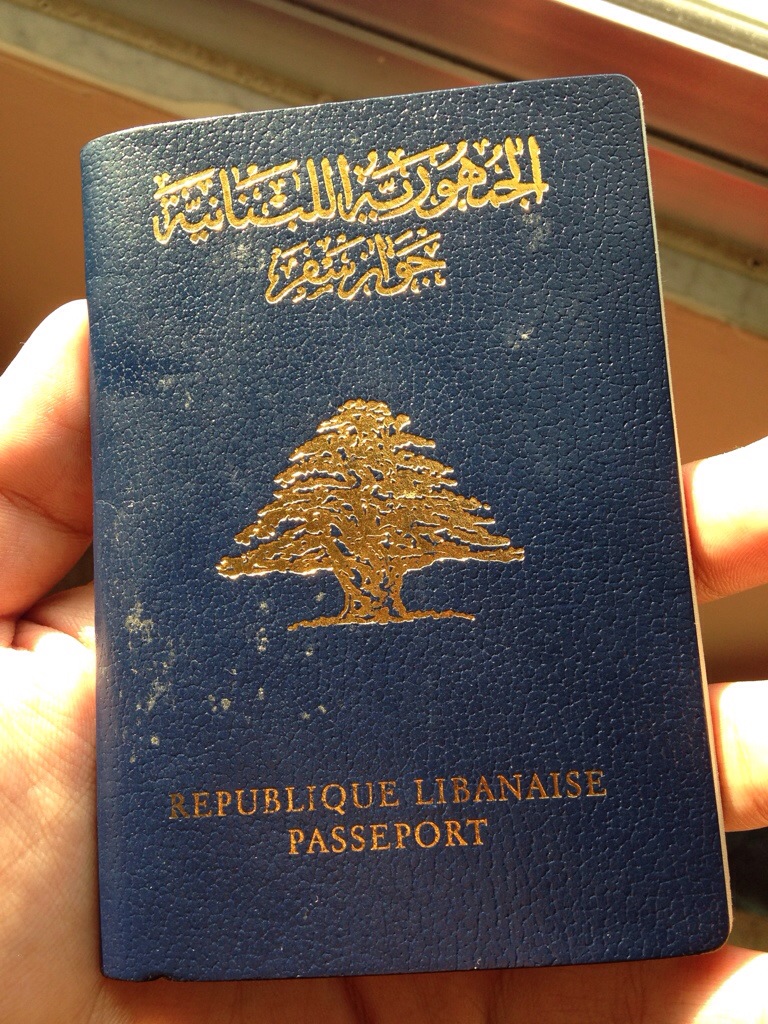
I didn’t know the merits of a passport were contingent upon the way it is. To tell you the truth, I have no idea what General Security mean by whatever they wanted to say. Is our passport awesome because of its navy blue color? Remind me to consult with some fashion expert and see if navy blue is in.

Is our passport awesome because it has a golden cedar on it? But I thought those cedars were being uprooted in Bcharre for the wedding of a former MP’s son. Is our passport superior because it’s expensive? Lebanese logic seems to dictate as such.

Is our passport grand because its first page tells its holder that losing this document is punishable whereas most other countries inform their passport’s holder that they would go to the ends of the Earth to defend them? Our security apparatus would definitely think that is great.

Is our passport the best because it will soon have a biometric imprint that has been available for years and years now in the passports of all those countries that can access much more countries than we can, including some countries that we like to laugh about? I’m sure General Security thinks improvement renders us the best. Will that make our passport even more expensive? That’d make General Security happier too.

Except, of course, a passport’s merits aren’t in the way it looks, its size or the feeling it has in your hand or how efficiently it gets scanned at border controls. But don’t tell people that because we can twist any simple data we have into whatever gets us to sleep better at night. Let’s call it a way of life. Let’s call it perpetuating the status quo. Do Lebanese really want to improve their passport? By the looks of it, many of them probably couldn’t care less.


Lebanese Priorities: Censoring The Film Out of Beirut’s Film Festival

L'inconnu du Lac movie poster

L’inconnu du Lac movie poster

When I was walking around the streets of Paris a few months ago, a movie poster at one of their newspaper kiosks caught my attention. It was a colorful painting of two men kissing, with stamps of some impact the movie had at the most recent Cannes Festival. It was called “L’Inconnu du Lac.”

I jokingly said to my friend back then that such a movie would never be released in Lebanon because, you know, there’s someone out there whose main concern is my moral well-being. Who needs art? Who needs some degree of taboo breaking? Who needs any form of mental challenges when you have a bureau whose job is to make sure you don’t get the least mentally stimulated?

A year ago, a friend of mine expressed pride in her cousin, a filmmaker named Farah Chaer, who had produced a short movie called “I Offered You Pleasure,” on the widely known but not-spoken-of topic of “Met’a” marriage among Lebanon’s Shiite sect. An interview conducted with the filmmaker back then asked her about the possibility of having her movie censored. I was sure she’d have trouble.

I was right about both movies.

Our bureau of censorship, which censored a play about censorship about a month ago, decided that both movies couldn’t be part of the Beirut Film Festival, which was opened by Alfonso Cuaron’s “Gravity” yesterday, an excellent movie if I may say so.

Our bureau of censorship decided for every single Lebanese that a movie talking about the “met’a” marriage was not to be seen by the Lebanese people. It decided that such an issue is not to be allowed to discussed on screen. It decided that they want to preserve our well-being by banning us from being exposed to that facet of our society that not all of us are aware of.

Our bureau of censorship decided that a movie about a homosexual relationship which had a torrent of praise bestowed on it in Cannes is not suitable for viewers here. It decided that we all have the mental span of a two year old and as such couldn’t withstand having such forms of art approach us without damaging our souls, our precious whole Lebanese souls which should never be maimed by such indecencies. I wonder, what will happen to the movie “Blue Is The Warmest Color,” which won the top award at Cannes and which also has unsimulated lesbian sex scenes? Will we also not be allowed to watch that movie as well because they don’t see it fit?

As Lebanese, we truly don’t have the extent of freedom that we think we do. We can’t discuss religions freely. We can’t discuss politics freely. We can’t discuss politicians freely. We can’t even criticize our president freely. And lately, there’s been a growing phenomenon of censorship that’s been greatly limiting what we get to be exposed to in order to maintain public order.

As a Lebanese today, with such bans I am stopped from having discussions that would otherwise not be possible in my society. I am stopped from being able to get exposed to the culture that exists beyond this country of mine. I am stopped from being able to enjoy this art that is cinema due to the prongs of a bureau that cannot appreciate the art in it. I am forced to remove the film out of the Beirut Film Festival because there’s really no point in having a movie festival where every single scene is not an expression of freedom, but a mere manifestation of some scissors that decided that scene was allowed.

As a Lebanese today, I am very thankful my country has its priorities in order: my morals, ethics and whatnot top that list. As if we can’t download both movies really soon. Wlek tfeh.

AUB Returns to Lebanon

A couple of days ago, I blogged about a mistake on an American research symposium that listed the Lebanese university AUB as located in Israel.

Following the publication of that post, it got picked up by various news outlets, such as L’Orient Le Jour, Annahar, Kataeb and New TV who shed light on the matter as well.

Today, I checked the program of the symposium and it seems the mistake has been corrected: AUB is listed as in Lebanon.

AUB, Lebanon

I was told that such mistakes aren’t always a bad thing as they help shed light on the research they are part in. I personally believe, however, that research should be able to stand on its own merits and not employ such gimmicks in order to turn ears.

We’ll never know the details of how such a mistake remained in the program till a week before the symposium started. But I guess what matters is the bottom line: getting it fixed. Good luck to those who are presenting the research and I hope they do a good job.

The World’s Worst Passports: Leish Fi A7la Men Lebnen?

Lebanese passport

The passport of yours truly

As a Lebanese, you certainly do not need to travel. You have everything you need in the confines of our infinitely beautiful country.

I mean, why would anyone want to go do anything outside of Lebanon? We have the world’s best beaches, the prettiest women, the best nightlife, the best nature sceneries, the best food, the best wine, the best everything this world has to offer.

And in case you got bored, don’t worry. There’s almost always something happening somewhere. Who would want to have the boring routine life of those pesky Europeans and Americans who think they’re better than us, with all their rules and regulations. Seriously, why would anyone want to be limited like that?

As such, ladies and gentlemen, we are in good company on a worst passports of the world list. Not that it should matter, right? The list (link) ranking the world’s worst passports has us with all those places that we love to bash, always thinking we’re better than them, always thinking their people are so much lesser than us.

Who’s on that list? Countries such as Afghanistan, Iraq, Somalia, Eritrea, Kosovo, Pakistan, Palestine, Nepal, Sudan, Sri Lanka. Even while typing those countries, my head was listing every single joke that we, as Lebanese, have made about the people who come from those places. I guess the joke’s on us now. Those women will be livid they’re on the same list as their maids, no?

Certainly, many will now say that I’m being overly negative, that I’m being overly melodramatic when it pertains to the situation in our country, especially when it comes to the matter at hand. There will be those who have absolutely no problem with this situation because having it the other way around would mean Lebanon being in bed with all those imperialistic nations that are ruling the world and forgetting the struggles of the region we’re in. There will be those who have absolutely no problem with all the paperwork required to have countries possibly consider granting you access, maybe, to their countries and who find that addressing the issue is not important because, seriously, ma fi a7la men lebnen.

Perhaps such rankings make sense. We are in a place that can push even the most resilient and positive of people to their breaking point. Some of them even decide to leave. And I know I’ve talked about such a thing before – it’s basically why I was hesitant to write about the issue again. But is the ranking making sense reason enough to be content? What is the solution?

Talking about the state of the Lebanese passport isn’t because we like to have paperwork-free vacations in France, which I personally would love to have. It’s because our passport situation is a clear reflection of the situation that our citizenship and country bestow upon us, one that many love to turn a blind eye to because it doesn’t go hand in hand with the good image we want to portray of Lebanon and the joie de vivre we are all known for. Or maybe some of us are.

Getting our passport up to par has a pre-requisite, which is getting our citizenship up to par. It means pushing every Lebanese not to want to seek out a better life elsewhere. It means having a state that can provide for us the basic necessities in the best form possible, and then some. It means having decent roads, electricity, water, internet, equality, security, accountability, democracy. It means not having our passport system be so corrupt that we have to pay $200, effectively making our passport the most expensive in the world, for something that is this worthless.

Some of those elements are a struggle, sure. But they surely won’t happen with politicians who are content to have a diplomatic passport that can take them anywhere, who renew their mandate whenever they feel like it and who, whether we like it or not, would get re-elected anyway. The hell with us, it seems. And such an issue, in my opinion, will never be redundant. But nevermind me because seriously, fi a7la men lebnen?

Why The People of Akkar Risked Their Lives on An Indonesian Boat

Akkar Boat

53% isn’t a number that should mean much for people. Children with basic math knowledge would tell you it represents a majority, the bigger portion in a division. In Lebanese terms, this number represents the portion of people who live in poverty in North Lebanon according to a 2006 study carried out by various outlets, including the UNDP. Common sense would say that this number hasn’t improved since then.

18% may look like a more appealing number than the aforementioned one but in reality it represents the proportion of people in the North who live in extreme poverty, that is with less than $4 per day. In other words, the money you use every morning to buy your morning Starbucks kick-me-up is more than some entire families use for a day. Don’t worry, though, I’m not asking you to alter your caffeine routines or to change into an altruistic being who brands socialism and equality wherever he goes.

The good news, if there’s any, is that North Lebanon is where most poverty in the country lies. The numbers are minimal in Beirut and increase as you go towards the periphery. When it comes to the North, the majority of people who live in poverty reside in the infamous Bab el Tebbane neighborhood in Tripoli as well as the Akkar district. Poverty rates in Akkar are at 63% with 23% in extreme poverty.

Akkar is in the news today as the district from which 70 Lebanese are missing, with 27 reportedly dead, due to the sinking of a boat for illegal immigrants in Indonesian waters as it headed to Australia. All of those victims are from the town of Baqaa’it, from which 270 people have left in the past year in similar ways. But can you really blame them for wanting to leave? Can you really blame them for preferring to risk their lives and the lives of their children in the hopes of a better life rather than to stay over here ?

The Lebanese state exists only in Akkar in the form of the taxes those people pay whenever they can while expecting absolutely no development from the state. The area is forgotten by both government and private sector alike. This is the current policy that runs the country: any region that isn’t Beirut or some parts of Mount Lebanon doesn’t get a second glance. Akkar is among the parts of Lebanon that have it worst. Towns in a region in Akkar called Jerd el Qaryeh received electricity for the first time ever last week. You did not misread that sentence. They celebrated with fireworks as that mysterious bulb in their ceiling lit up for the first time in their lives. This is 2013. The situation is worse for roads, schools, hospitals, sewers, etc.

The main form of sustenance that those people have is agriculture. As you know, agriculture in Lebanon is as fragile as our security apparatus. Any change in weather that’s out of season is enough to spoil crops and cause immense losses to the farmers. The state couldn’t care less: it doesn’t support the farmers to begin with, let alone provide means to counter such losses. But another entity has been plaguing the life of Akkar’s farmers and the many workers there whose main source of bread was the land which they worked tirelessly. Syrian refugees who are flocking into the country through their region are taking away their jobs at much lower prices and can be made to work in conditions that a Lebanese worker would never accept.

As such, unemployment rates in Akkar – which were already higher than the national average  – have been skyrocketing lately, mirroring the growing trend in the country as a whole. Those people, being massively under-educated compared to their Lebanese counterparts outside their region, have no other options available to them for work. They can’t compete with other Lebanese, and lately Syrians as well, for better paying jobs outside of Akkar. The Lebanese University, for instance, has no functional branch in Akkar. The branch that actually exists is extremely small and located in a high school building in Halba. Many villages lack schools. The schools that do exist are not up to par. Trying to leave Akkar in order to get an education in Tripoli or Beirut is not feasible for many due to it being costly, even if the education part was to be free.

Leaving itself is becoming much harder for the people in Akkar lately. With the war raging in Syria next door, the people there spent many sleepless nights listening in to the fights taking place next door. When Tripoli decides to have its share of fun, they would listen in as well. Either way, they were stuck in their towns and homes, unable to move to get their necessities, feeling unsafe all the time especially as the security situation in the district itself was also deteriorating in recent times.

It is said that we elect MPs in order for them to represent our woes and make our life easier, innocent as that sounds given Lebanon’s political context. This requirement becomes an absolute necessity in regions that are as needy as Akkar. The region’s MPs, however, who are now on their 5th year of term after they renewed for themselves, have done next to nothing to help their region. Khaled el Daher was obviously busier in calling for revolts against the army, while issuing defamatory statements against anyone who doesn’t support his rebels. Hady Hobeich was busier in his hometown’s municipal elections. The MPs win because their respective political party works on keeping people needy for years then feeds them just before they go cast their ballot. The status quo is perpetuated. The local “zou’amas” are kept. You can’t blame the people for not breaking the hand that feeds them. They remain poor. It’s similar to what takes place in Tripoli at every election cycle.

On my first visit to Akkar, during which I was admittedly just passing by, I was pleasantly surprised by the wide agricultural plains, the beautiful scenery and the immensely long laundry lines that stretched from one dismal-looking concrete house to the next as people I would have never thought shared my country roamed the fields in which they lived. While our officials try to break traveling records, the people they are supposed to serve are dying on boats in foreign waters while seeking a better life, one that my country cannot and will not provide for them because it’s not on our government’s agenda. The discussion currently taking place is about the tragedy that those people’s death is, and tragic it is. But the real tragedy is with all the reasons that have forced those people to leave and those reasons will never be discussed. I would personally take the first boat out of there if I had been in their shoes. Would you?