Apple to Lebanon: You Are Irrelevant

Even though 4G has launched in Lebanon back in May, Lebanon must get a stamp of approval from Apple in order for users to be able to use 4G on their iPhone 5.

With very few phones available in the market able to use 4G, the need to get the iPhone on board seems like a pressing matter to get the service to truly take off with customers. For instance, the Galaxy S4 doesn’t support 4G even though it was released recently.

Several months after the launch of 4G, where is Lebanon from getting its networks approved by Apple?

Well, according to an interview with Alfa CEO Marwan Hayek in the latest issue of Cloud961, our ministry of telecommunication and our telecom operators tried to get in touch with Apple who were less than responsive, telling Lebanon’s concerned sides that Lebanon “doesn’t exist on [their] map.”
Apple Lebanon 4G

As for Apple, and in order for the 4G LTE service to run on their devices, they have to certify you as a mobile operator and acknowledge Lebanon as a mobile market on their map. We had been in contact with them for that purpose and even the Ministry of Telecom did contact them, but they were very slow to reply to us. We have recently signed an NDA with them which should enable the ball to start rolling.

Until only few weeks ago, they didn’t see Lebanon as a serious market and they tell us “you don’t exist on our map”. 

How better would life be if some Lebanese can grasp the concept that Apple introduced regarding our telecom market and extrapolate it, rightfully so, over the many other facets in our country? Maybe then we’d be able to get out of this constant mess we’re in. 

Lebanon Censors a Play About Censorship

Some officials in this country don’t seem to live in the same place as people who are worried about going by everyday, about explosions and impeding wars.

Instead, they are more worried about how their reputation plays out through a play that doesn’t even target them in a documentary way. A play about censorship was censored by Lebanon’s bureau of censorship. Why?

1) Because the bureau couldn’t grasp the fact that this is satire.
2) Because the man in question doesn’t require his subordinates to stomp their foot in salutation and was offended the play suggested he does.
3) Because our censorship bureau got offended that a play is making fun of them.
4) Because the play in question was, according to the bureau, “not a work of art but a work of shame.”
5) Because even though there’s no law to dictate we can’t criticize the censorship bureau, they can – according to this article – “forbid whatever [they] want and [they] will forbid it.”

A play is not something that our censorship bureau can cut into little pieces for the audience to watch. They either take it whole or not take it at all. Our bureau has decided not to take any parts of it.
A play is also not something that we can get access to through modern technological means. It’s not the art that has gone digital to become accessible. Instead, our censorship bureau has decided that its sense of moral well-being is best served by stopping every single Lebanese from getting access.

In this act of censorship, this bureau in question has made a bigger fool out of themselves than this play would ever do. They showed us that what we get exposed to is dictated by something that can’t even take a joke.

I’m not one to usually follow the rhetoric of “there are worse things happening to care about this,” but when the country is on the brink of war, this is what is decided to be censored: a play meant to make people smile in these troubling times, instead of all the crap of sectarianism and violence instigation that we are bombarded with everyday by our media. I guess that’s what our bureau likes. Such a shame.

This is the play’s trailer:

Screw Lebanese Media

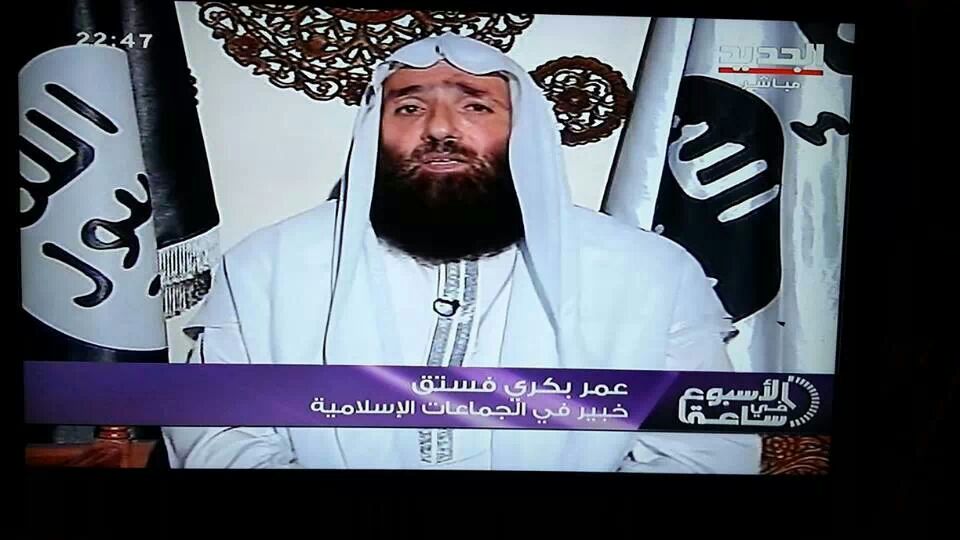
Tripoli Sheikh


The above sheikh was hosted on NewTV earlier tonight to talk on behalf of the people of Tripoli. I guess that city ran out of spokespeople over the past few days so the TV station in question figured digging this creature up from the depth of whatever abyss he was in was a good idea. Ratings are proportional to beards.

Note that this sheikh is said not to even be from Tripoli and has not been residing there all his life to get to talk on the city’s behalf.

This man spoke about the need for self-security for himself and his fellow Sunnis of Tripoli. Did the TV station in question even bother to target this rhetoric? Of course they didn’t. This is the rhetoric they want being spewed around their airwaves lately. This is what gets people talking. This is what gets people to tune in. Of course, this is precisely the rhetoric that also gets people killed and further explosions taking place and extremism rising. But who cares about that, right?

In the process of his TV moment of fame, this creature also asked for the help and support of Al Qaeda in protecting the people of Tripoli. I’ll leave that notion hanging.

There’s a responsibility for Lebanese media to kill off such eccentrics in times when such extremism is not only unhealthy but detrimental to the well-being of everything around us. Does hate exist? Sure it does. Do people who mean harm for others just because they think differently exist? Sure they do. But it doesn’t mean we should give them air time to poison minds. You only needed to tune into FutureTV on Saturday with Paula Yaacoubian or MTV hosting Khaled el Daher as well, for the nth time, yesterday for your prime examples.

Our TV stations are still searching for the next big scoop instead of being mature and responsible in handling what seems to be an impeding civil war.

PS: If you think my blog titles have a lot of “screw” lately, it’s because we’re in a general state of screwing.

A Phone Call with Lebanon’s Police

I keep hearing about security plans for this country, especially for the places where security has been non-existent. My idea of a security plan, despite me not being an expert whatsoever, involves – at the very least – a sense of involvement from the police seeing as we are asked nowadays to report any suspicious behavior because you never know if that behavior might lead to us getting blown up.

For instance, one of the two bombers in Tripoli apparently parked double parked the car in broad daylight and simply walked away. People called after him and I’m sure someone might have tried to call 112. What would 112 have done in that setting?

I present to you a transcript of a phone call of a man from Tripoli, the city that was victim of two explosions on Friday, with the police in his city. I’m not sure if this is funny or harrowing.

Police: Alo, police.

Man: Alo, I want to report a person who set up a checkpoint while carrying a weapon.

Police: Where?

Man: Next to the Ayyoubi store for paint products.

Police: Where? Bab el Ramel?

Man: At Muharram, yeah. He’s standing there, asking people where they’re coming and going.

Police: There are 5000 armed men in Tripoli, okay, habibi.

Man: But he’s setting up a checkpoint!

Police: There are 5000 armed men in Tripoli doing like him.

Man: Do I shoot him then?

Police: I don’t know. You can do whatever you want.

Man: Seriously? Are you the state or not?

Police: It’s fine, may God give you strength.

(hangs up).

I especially liked the fact that the policeman told the civilian to do whatever he wants when the latter suggested to shoot the gunmen. Is this what they’re expecting of people nowadays? Self-security because our police are too nonchalant and passive?

What’s next if every region or sect sects up its own brand of self-security? What’s the point then of having a state from which we need protection?

Check out the video here.

Day One: Rebuilding Tripoli

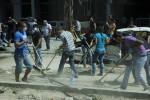
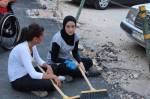
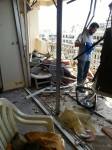
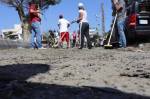
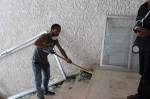
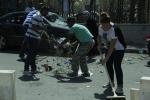
Day one post two blasts that killed 45 of its sons and daughters, this is Tripoli.

This morning, these young men and women are not pointing fingers and expressing blame. They are not sinking to the sectarian rhetoric that many people believe will change how this country is going. They are mourning their city in the way they know best: by cleaning up the rubble and the destruction so they can at least have part of the place they call home back.

For many Lebanese, Tripoli is a city that exists way up there, beyond that army checkpoint, that we don’t need to visit. For many Lebanese, Tripoli exists only as a city that is ravaged by Islamists and militants and violence and destruction. But this city, which currently sits in a near-comatose situation, is – thanks to the efforts of those young men and women – trying to get its spirit back, fully knowing that it may not be for long in a country that has become nothing more than the playground of the struggles of others.

Today, I will not bore you with political extrapolations about what might have been and what could be. I won’t state of the obvious and remind everyone how bad the situation is, something all of us know and live. Today, I salute those young men and women of Tripoli who, in that simple act of sweeping the rubble off the streets of their city or visiting the wounded of yesterday’s acts of cowardice, are trying their best to achieve some form of normalcy. And isn’t normalcy what we all long for nowadays?

The above pictures have been obtained through this Facebook page.