13 Middle Eastern Immigrants Who Made America & The World Great

With Middle Easterners becoming the boogeymen of the world, it’s worth remembering that, despite all the mayhem ravaging their countries and the extremist movements that kill them on daily basis, many of them have used their talents for the greater good and contributed to the betterment of humanity and made America great in their own way.

1. Gebran Khalil Gebran:

Gebran Khalil, who has a monument commemorating him in the heart of Boston, is one of the most celebrated writers in the United States. One of the most influential and top-selling books in the world, The Prophet was written by the Lebanese immigrant from Bcharre. It has been translated to 40 languages, has never been out of print, and has been the center of multiple adaptations the last of which was an animated movie by Salma Hayek.

 2. Tony Fadell:

The name may not be a household item for many, but what Tony Fadell has created has not only revolutionized the way we look at music, it also changed our relationship with our own homes. The iPod, that device with the click-wheel that, only a decade go, changed the entire music landscape was his creation. He later on founded Nest Labs, which created the Nest Thermostat. He’s Lebanese.

3. Michael DeBakey:

Dr. Michael DeBakey, who passed away a few years ago, was a true medical pioneer for the entire world. As medical students, we memorize his classification of aortic aneurysms and use it as a standard. He created a multiple of medical devices that have become essential in cardiothoracic surgery. He was also one of the first physicians ever to do carotid artery bypass grafts, a surgery which was revolutionary at the time and is still cutting-edge today. He was also Lebanese.

4. Donna Shalala:

Mrs. Shalala was United States Secretary of Health and Human Services under President Bill Clinton from 1993 to 2001. She was the president of the University of Miami, a private university in Coral Gables, Florida, from 2001 through 2015. She is, until now, the longest running secretary of health and the first Arab American to be as such.

5. Shakira:

One of the most successful female singers around the world, and arguably the most successful latino singer is Shakira whose hits “Whenever Wherever” and “Hips Don’t Lie” have made her a household item is originally Lebanese. Her father is from Zahle and her maternal grandmother from Tannourine. Hashtag Batroun pride.

6. Edward Said:

The late Edward Said was a professor of literature at Columbia University, a public intellectual, and a founder of the academic field of postcolonial studies. A Palestinian-American, his father was a U.S. army veteran. Known for the book Orientalism, a critique of how the Western world perceives The Orient, he transformed the academic discourse in Middle Eastern studies and in the studies of cultures.

7. Reem Acra:

Reem Acra is one of the most important fashion designers around the globe today. Based in New York, she has become one of the most awaited on any red carpet. She lately made headlines by dressing up First Lady Melania Trump for her pre-inauguration dinner with her husband, U.S. president Donald Trump.

8. Zaha Hadid:

The late Zaha Hadid was an Iraqi architect whose works have spanned the entire globe. From football stadiums to parliaments to university faculties, she is as controversial as she is iconic. Zaha Hadid was one of the top architects in the world and the leading female architect at that.

9. Charles Elachi:

Mr. Elachi is a Lebanese professor of electrical engineering and planetary science at the California Institute of Technology. From 2001 to 2016, he was director of the Jet Propulsion Laboratory and vice president of Caltech as well. He was one of the key figures in NASA’s space explorations from the 1990s onwards and has been inundated with more awards than one could count.

10. Ilhan Omar:

On the day Donald Trump was voted president, Ilhan Omar became the first Somali-American person (and woman) to win a legislature seat. She was born in Mogadishu, but her family fled after dictator Siad Barre was toppled in 1991 and Somalia collapsed into violence, famine and religious fanaticism. She fled to a Kenyan refugee camp, from which she was resettled in the U.S. four years later. Soon enough, she moved to Minneapolis, Minnesota, where she now serves in the state legislature.

Twelve-year-old Omar knew little English and grew frustrated that teachers continuously overlooked her in class. She once showed pluck when a maths teacher ignored her raised hand when asking pupils to solve a number puzzle.

11. Helen Thomas:

The child of immigrants from Tripoli, Lebanon, Helen Thomas was an American author and news service reporter, member of the White House press corps and opinion columnist. She was a columnist for Hearst Newspapers from 2000 to 2010, writing on national affairs and the White House. She covered the administrations of eleven U.S. presidents — from the final years of the Eisenhower administration to the second year of the Obama administration.

12. Whoever Created Hummus:

Yes, seriously. We gave you hummus. Have some respect. You may have ruined it with celery (don’t do that), but you still got it from us no matter what the Israelis do or say.

13. Steve Jobs:

A little bit of a stretch, but Steve Jobs is technically the son of a Syrian (Muslim) immigrant who, under Trump, wouldn’t have been born given that his father wouldn’t have been allowed into the country. Lucky for the world, that did not happen back then. Steve Jobs went on to found one of the leading tech companies in the world, which gave us the Macintosh, the iPhone, iPad, and a slew of other devices that have become the benchmark of technology today. Period.

Bonus – Jesus:

Jesus was a Middle Eastern man, whose mother was veiled, and who probably wouldn’t have been allowed entry to the countries banning people on their place of origin. It is through him that Christianity was given to the world. As such, Christianity is a Middle Eastern export. You are welcome.

Food for thought:

Great people come from all places. Where you come from has no bearing on the kind of person you will end up becoming if you are given an equal chance at making it. Let’s not put people in boxes based on where they come from, ban them from fulfilling their true potential out of fear and cower away in bubbles because we’re too comfortable there. The next big thing could be in the mind of those we hide away.

Arabs Should Look In The Mirror Before Criticizing Trump’s Travel Ban


16142335_1410209662345584_4560198537124330448_n

Over the past few days, I watched Americans old and young protest against their president’s travel ban. It was a sight to behold – those people who were taught all their lives to fear Arabs, Muslims and to have all kinds of negative connotations with them were standing up for human decency.

The protests haven’t been exclusive to the United States. London and other European cities have had their own share, culminating in an fiery discussion between British PMs about Trump and his policies.

Meanwhile in the Arab world, crickets.

Not a single Arab country had anything to say about the ban. They couldn’t even muster the guts to stand up with their own. I guess that whole “Arabism” theme is only nice when used from Arab Idol and The Voice podiums.

What some countries did was the exact opposite: Kuwait fortified travel bans against 5 Muslim countries, including Syria. The top Emirati diplomat came out in support of the travel ban. And these moves are not without context.

The two Arab countries that have taken the most refugees are Jordan and Lebanon with 1 million and 1.5 million officially registered refugees, respectively. Gulf counties, all of which are not affected by Trump’s ban despite them being the biggest exporters of Islamic terrorism, have taken in a total of zero.

As a side note, that is also the exact same number of Americans that have been killed by terrorist attacks from the countries Trump has banned, while the number is 2500+ from the Gulf countries that he has not banned and who haven’t taken in any refugees.

In fact, Gulf countries have made their visa requirements for other Arabs so disgusting that no one dares speak up against it. I personally have no intention to ever work or live there, so I suppose I can speak up.

KSA has increased its visa price to $1200 for Lebanese nationals in an attempt to curb the number of Lebanese coming in for work, and as a political retaliation at the country not giving it the blowjobs it always needs.

The UAE has made it near impossible to obtain work visas for it as well, and depending on the Emirate you’re applying to work in, you could be rejected entirely despite having proper paperwork. Moreover, the UAE has made it near impossible for Syrians whose families are in the country to get visas to visit; case in point: a Syrian friend of mine who was born and raised there couldn’t go see her family since moving to Lebanon for university studies, but was able to get a 2 year US visa (prior to the ban).

The UAE’s situation doesn’t stop there. They’ve been systematically targeting people for deportation based on their religious affiliation. If the Lebanese state had any decency, they’d publish the list of Shiite nationals who were deported just for being Shiites.

As mentioned above, Kuwait has enforced a visa ban on 5 Muslim countries, including Syria. But this isn’t new for Kuwait. In fact, the country is known for its derision of foreigners coming in, however they are, except if they are Westerners of course.

As a Lebanese, I need a visa to enter every single Arab country even if for a visit except Jordan and Syria. The rest of those countries don’t have a straightforward process either and for some of them, I have to provide the same papers demanded by the US or Schengen visas. And my country isn’t better either. Yes, we have 1.5 million to 2 million refugees, which is probably more than what the country can handle granted, but few are those who are happy with having the refugees here and see them as anything more than a burden in the best of cases or treat them with all the xenophobia they could muster on average.

In fact, it might be hard to believe but Lebanon has strict visa requirements toward certain countries as well. For starters, the criteria we’ve enforced towards accepting Syrians in are hell. Many are turned away at our borders because they can’t tick off the checklist from hell we’ve started to enforce a few years ago. We also enforce inhumane visa requirements on countries we deem as “lesser.” Refer to how Deepa Dermasiri, Malek Maktabi’s New Year Eve gut-wrenching story, couldn’t get a visa to come see her daughter in Lebanon and passed away before she was able to.

What’s worse, the story doesn’t just stop with visas. While Americans protested against a ban that doesn’t even affect most of them, has there been any protests in the places we come from? In the grander scheme of things, has there been protests against the horrendous visa requirements we have for each other to begin with?

Do Lebanese dare to speak up against the rules the Emirati government humiliated them with? Or Saudi visas? Or any Arab visa?

Do we even stand up for minorities in our countries? When was the last time we had protests for some parts of our societies that were oppressed? When did Muslims have mass protests for the persecuted Christians in some Arab countries? When did we have mass protests for women rights? LGBT rights? KSA has Muslim only roads. Just saying.

Yes, those of us who stand up are courageous because it’s so difficult to do so in the first place, but the rest are complacent and satisfied. With what? Religion, money, lack of education… you name it.

Yes, Trump’s ban is all kinds of messed up. But then again, aren’t we all kinds of messed up too? Let’s take a hard look in the mirror at how we treat each other before panicking about how others are treating us, because the fact of the matter is: we treat other Arabs worse than Trump could ever do.

So thanks to the Americans protesting for us. You’re greater than even I thought you were.

To The Americans Fighting The #MuslimBan, A Middle Eastern Thank You


Dear Americans standing up for human decency,

Thank you.

As I saw the thousands of you gather around airports in the country, chanting against a ban that sees only hate, I couldn’t help but be amazed at how wonderful you are as people who care about others who are being targeted for things out of their control, for standing up to those of us who are weakened across the world.

To the protestors who stormed city squares and airports in a completely spontaneous manner because they couldn’t sit by and be complacent to such injustice, thank you.

To the translators offering their tongues and time to people whose voices have been taken away from them, thank you.

To the lawyers and the ACLU offering everything that they can give to those who have nothing to offer back, thank you.

To the army veterans, whose chests are adorned with Purple Hearts, standing at airports because this isn’t what they fought for, thank you.

To those who have defied their parents, friends and comfort zones to stand up for what’s right, thank you.

To the employers making sure their employees know their workplace is a place of inclusion, not exclusion, thank you.

To the hospital program directors who are making sure to reassure residency applicants, that are needed by America so, that their programs don’t look at country or race or visa status, thank you.

To the celebrities whose views have been chastised for so long, who have painted their bodies and advocated from the most watched podiums for those whose entire lives have been uprooted because of a signature, thank you.

To the taxis of New York, who risked their livelihoods for humanity, thank you.

To those applauding at airports as detainees were let free, for bringing tears to our eyes for your solidarity, thank you.

To the American companies, like Starbucks and Lyft, who want to hire refugees and are standing against oppression, thank you.

To the conservatives who voted for the man causing this, and who are now shell-shocked about what is taking place and refusing to stand by it, thank you.

To the Republicans who are not represented by this man and who refuse to partake in this, thank you.

To the Christians in America who know their religion is about love and acceptance, who know that Jesus wants them to turn the other cheek and not cower away in fear, thank you.

To the wonderful Americans who are spending their days and nights and all their free time shouting to whoever could listen that there are values in this world that are more important than politics, thank you.

To the ones who see us as people, not as baggage with frightening connotations in societies they don’t understand, people who should be given the same chance at a better life that their ancestors got, thank you.

Over the last few days, you have shown us an America that is, truly, a beacon of hope for the world, and hope is the weapon that scares those who feed on hate the most: to know that despite everything that they do, there will still be people who will not stay silent or complacent or succumb to fear.

I’m typing this today on a New York subway, in awe of what you are accomplishing and humbled by the outflow of compassion you are showing people you’ve ever met, that you’ve been taught all your life to fear and believe they only want what is bad for you. 

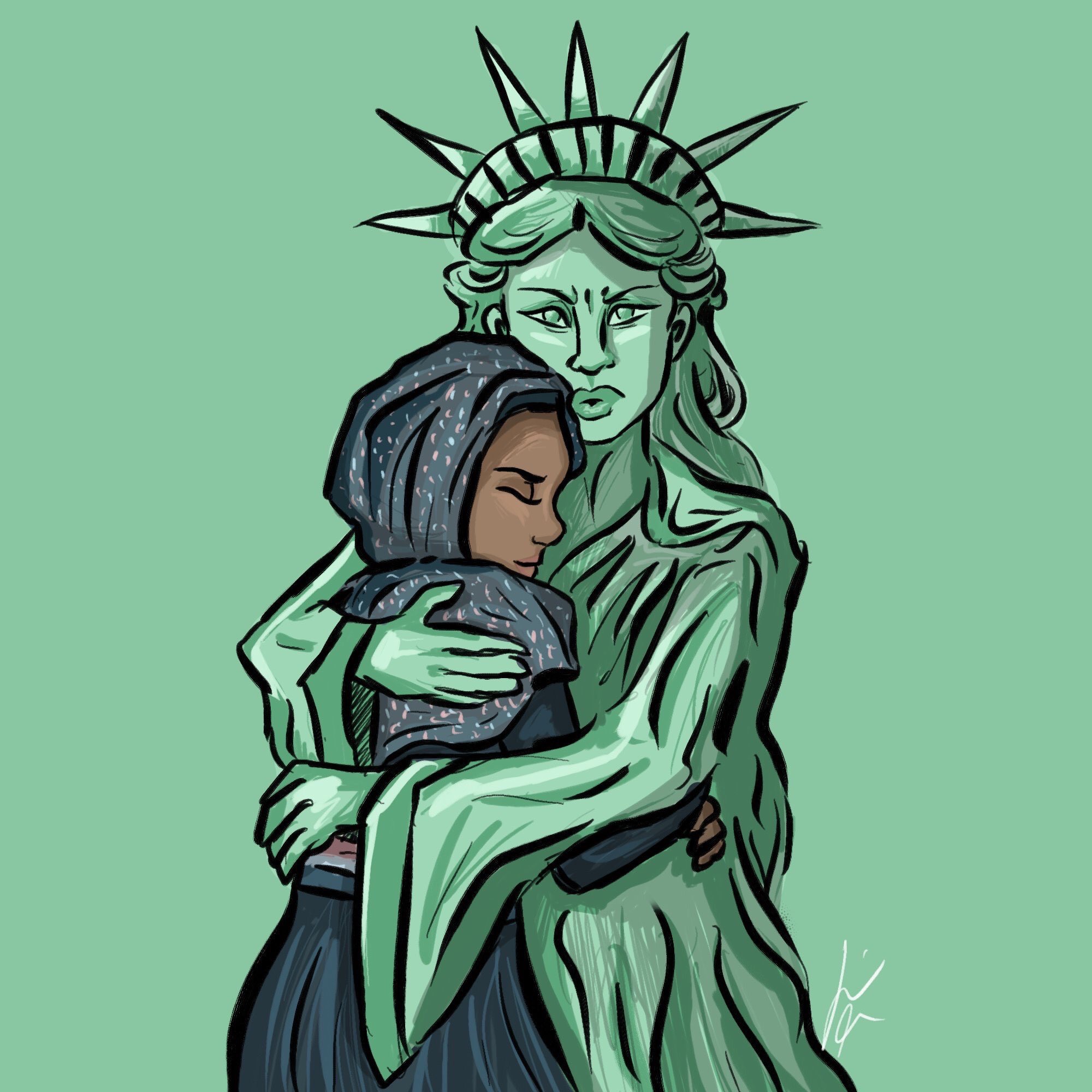
The freedom which you are exercising is the embodiment of the foundations your great country was built upon, that which entrances anyone who sees it, that which welcomes in all the weary, the tired, the poor, and the huddled masses waiting to breathe in that same freedom.

You are showing us every day that, in a world overtaken by darkness, that ideals can overturn tyranny and that it is okay to still hope in the face of such atrocities.
To paraphrase J.K. Rowling: “[hope] can be found in the darkest of times, if only one remembers to turn on the light.” Thank you for shining bright. 


No, In 2017, Being Gay Is Still Not Legal In Lebanon… But We’re Getting There

lgbt_lebanon-metn-ruling

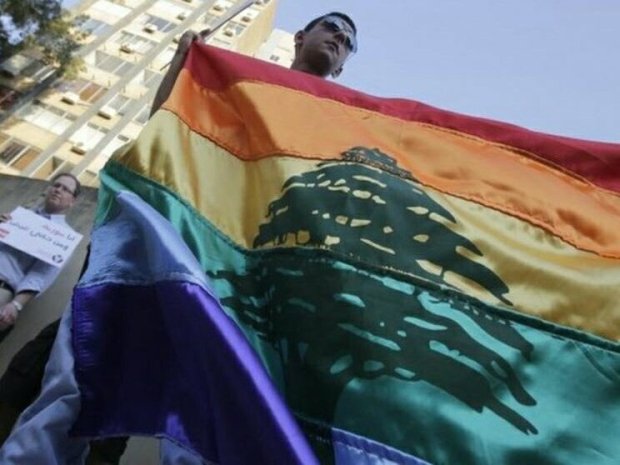
Lebanon, rejoice. A judge in the Metn area has issued, according to the legal agenda, what most Lebanese would consider one of the more liberal decisions to happen in the country in a long time by declaring that “homosexuality is a personal choice, and not a punishable offense.”

Of course, people were quick to start the celebrations. The ruling, which was championed by LGBT-rights advocate NGO Helem, is a step forward without a debt. But it remains, more or less, symbolic in a country where the actual constitution still stipulates that consensual sexual relations between two consenting adults who happen to be of the same gender unnatural is still there. This judge’s decision is limited to the jurisdiction of his court and could be overruled by Lebanon’s supreme court if they please because of the presence of the aforementioned article 534 in Lebanon’s penal code.

This is also not the first time that a Lebanese judge issues a decision regarding homosexuality as not being “unnatural.” The first time – and the actual pioneering step in this aspect – was through a judge in Batroun (home state pride!) in 2009. The second time was also in the Metn area, back in January 2014. The third time was in January 2016 when a judge allowed trans-people to legally change their genders. 

Another milestone was a 2013 decision by the Lebanese Syndicate of Psychiatry to remove homosexuality off the list of mental health disorders, which has been the case in scientific literature since the 1970s. 40 years late, perhaps, but the move was still the first in the entire Middle East and Northern Africa region.

The common denominator for all previous three rulings is that they remain limited to what the judge in question decreed, because the penal code is unchanged and, thus, homosexuality is still a “crime” in 2017, in the Middle East’s most liberal country.

The ramification of that is that, despite how excellent and pioneering those rulings are, the state and its backwards policemen can still target LGBT people using article 534 and subject them to all kinds of human rights abuses.

And while the ruling is to be commended, the language it uses further perpetuates the commonly-held stereotype, even among LGBT-friendly individuals, that homosexuality, or any non-heterosexual behavior, is a “personal choice.” It’s not a choice. It’s how someone is built. One does not choose their sexual orientation the same way one doesn’t choose the country they’re born in. It’s really that simple.

One of the main problems facing further changes in mentalities towards the LGBT community today in the country and the region is the fact that education about the topic is severely lacking, many people believe the religion they were born into is enough reference about the particular topic and politicians that we vote for couldn’t care less about the issue to begin with.

Exhibits from Facebook comments on the latest posts about the Metn judge’s ruling:

Moving forward, we have to enable more LGBT-friendly parliament members to get to power by showing them that Lebanese progressives are as active voters as the conservatives they wish to court every single elections. And we cannot be content with important but essentially trivial rulings that can be overruled at any moment when our constitution still thinks being gay is an abomination. The core is rotten, and that’s what needs to be fixed still.

The Humiliation of Entering The United States As Arab

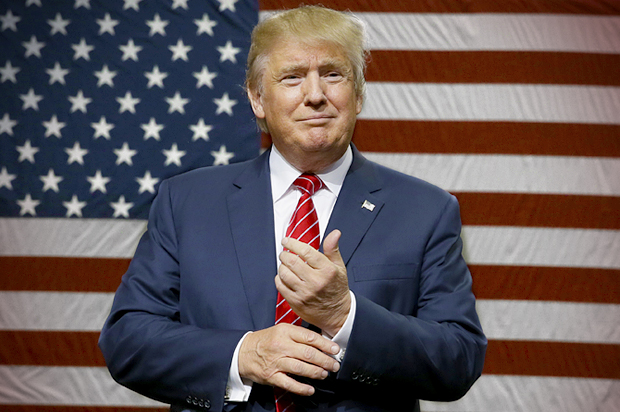
Republican presidential candidate Donald Trump speaks to supporters as he takes the stage for a campaign event in Dallas, Monday, Sept. 14, 2015. (AP Photo/LM Otero)

Republican presidential candidate Donald Trump speaks to supporters as he takes the stage for a campaign event in Dallas, Monday, Sept. 14, 2015. (AP Photo/LM Otero)

I was rejected the US visa for the first time when I was fifteen. I remember standing there, in front of the Embassy Consulate, unsure as to why I was being shut away, as just a young boy, from spending a summer abroad with his family. I was told I didn’t have an “extended enough travel history,” because as you know most 15 year olds have probably been around the world.

Ten years later, after months of back and forth with the Embassy and papers flowing in and out, I was finally given a visitor’s visa for 5 years on my third try, routine for Lebanese citizens who were granted the document as far as I know. A few months later, I visited the United States of America for the first time ever.

On my second visit, the border control officer said his system “couldn’t process” me, so I was taken into another room where, an hour and another interrogation later, I was permitted entry to come into the US to do my medical residency interviews. This happened again on my third entry, with longer waiting times. Entering the US has been the most invasive thing to my being, and I’ve survived medical school.

It’s also what has been happening to many of my colleagues and friends: doctors, scientists, researchers, humans. Just because they were unfortunate enough to be born in countries that are not worthy of enough of having their citizens treated with the minimum of human decency. I can tell you stories about physicians who were kept in those rooms for four hours, waiting for who knows what. It’s never easy to sit there and not know what’s going to happen to you, just because you dared seek entry of a foreign country that you’ve already been thoroughly vetted to be given a visa to.

This process that we go through every time we want to come here, that we know we have to willingly subject ourselves to in order for us to visit New York or some monument or even see some extended family is, apparently, not “rigorous” enough.

Today, on my third visit, with the news of president Donald Trump stopping visas and entries from countries he doesn’t like and even though my country isn’t on the list, I’m the most scared and the most unwelcome I’ve felt in a country whose history celebrates its diversity and its enabling of people from all kinds by giving them a chance at making it.

Not if your kind is Arab.

You’ll read plenty about illegal immigrants, but the fact of the matter is the United States scares me too much for me not to abide by its laws. It’s not about how it cracks down on illegals or how it’s managed to change the course of my region for centuries to come. It’s about how humiliated I’ve felt every single time I’ve applied for that visa.

Many of you wouldn’t think twice about the notion of a “tourist visa.” To most of you, the term is as foreign as that of the person demanding it, but every single time we apply for one – be it for the United States or any other country – we have to subject ourselves to the most rigorous of checks, be ready to provide every form of documentation imaginable. Just for a visit.

And this isn’t rigorous enough.

For a refugee to be granted entry to the United States, they must first apply through the UNHCR, which conducts its own interviews and documentation collection process. Those selected for re-settlement in the United States have their files referred to the State Department which puts the refugee through screening by the National Counterterrorism Center, the FBI and DHS. More anti-fraud agencies come into play later as well as the U.S. Citizenship and Immigration services (USCIS), which interviews the refugees, fingerprints them, and runs those fingerprints through the FBI, DHS and Department of Defense.

If a refugee passes through all of that, they are given health screenings to make sure they’re not bringing in any diseases to the US, while being enrolled in cultural orientation classes as they wait, while their information is checked constantly against terrorist databases. On September 15th, 2016, the US House of Representatives also voted to add further screening steps that require the FBI director to sign off on every single refugee.

Over the past 15 years, the United States, also the world’s third largest country in size and population, has re-settled only around 780,000 refugees.

And this isn’t rigorous enough either.

The fact that my friends have to be told by their employers not to go home for fear of their visas not getting renewed, and have their families not be able to visit them because someone out there is so afraid of them existing is 2017’s reality for many. But we can’t say anything about it, because it’s their country and we’re just parasites in it.

Growing up, America was always a place of hope for me. It was from where, as a kid, my relatives visited with gifts. It was the place from which, growing up, my favorite musicians, series and movies emanated. It is the place, today, that I’m working diligently as a graduated physician to come train in. Today, that place gives me anxiety, just for coming from a certain country in a region whose entirety is on a blacklist, knowing that the most illegal thing I’ve done in my life was break speeding limits.

If history has taught us anything, it’s that selective targeting is never a good thing nor does it build better societies nor does it contribute to the betterment of countries. After all, isn’t one of the most shameful events in American history were the Japanese internment camps around World War II?

With every passing day of Trump’s presidency, and at this rate it is daily, America’s image is getting distorted. Perhaps that is what those who voted for him want: for it not to remain a country of inclusiveness, and become a walled – literally? – state. But it’s also my belief that no country can ever truly be great through hate, fear, the refusal of anything that is different and the denigration of a people. A few decades ago, Anne Frank and her family were denied American visas. How many Anne Franks will be refused away because of fear today?