Eyes Open (Single Review & Lyrics) – Taylor Swift [The Hunger Games Soundtrack]

Taylor Swift’s second submission to The Hunger Games‘ soundtrack album has just been released, ahead of the movie’s release in theaters next week.

Where Safe & Sound was a reassuring song in the face of distress and fear, Eyes Open is the opposite in theme. Where the former tells a story of safety, the latter, with its prominent guitar, is almost the total opposite. And for a movie & book like The Hunger Games (my review of the book), Eyes Open is way more fitting. It has the energy, thrill and rush of the story all wrapped up in 4 minutes.

The song starts with Taylor reminiscing about the days when things were safe, when the characters were children, playing with wooden swords. But their carefree days have now been replaced with a cruel world – one where they have to keep their eyes open in order to survive: “Playing soldiers, just pretending… In backyards, winning battles with our wooden swords. But now we’ve stepped into a cruel world...”

Meanwhile, everyone’s waiting for them to fail, to breakdown and watch the fallout. So she urges them to keep their eyes open even when they’re asleep: “Everybody’s waiting for you to breakdown. Everybody’s watching to see the fallout. Even when you’re sleeping, sleeping, keep your eyes open

I can imagine the song being played in the movie just before the tributes are taken into the arena because every single lyric uttered by Taylor fits that moment perfectly. “But turn around, they’ve surrounded you. It’s a showdown, and nobody comes to save you now.” According to Taylor, the song is a symbolization of Katniss’ rebellion against the Capitol. The song shows that as well.

The lyrics are so on point, in fact, that you can’t but think of Katniss and the other tributes preparing to run as the countdown to The Hunger Games dies down when you hear Taylor sing: “Keep your feet ready, heartbeat steady. Keep your eyes open. Keep your aim locked. The night goes dark, keep your eyes open.”

The melody is very catchy. It builds up, all to the backdrop of a strong guitar sound, before the song culminates in repetitions of “keep your eyes open” for further emphasis and eventually stops, as it should, right on top. There’s no outro cue. The song stops the way it starts, suddenly, because when the character’s lives are at stake, the only way a song describing the situation would work is by it being sudden and urgent.

When it comes to Taylor Swift’s songs, she might be the only person able to sing them convincingly. Her vocal performance is always not perfect but the little flaws help to add to the song’s overall feel. When it comes to Eyes Open, the cracks here and there in Taylor’s voice contribute to the song’s overall mood of absolute urgency.

Overall, Eyes Open is a great addition to Taylor’s repertoire. She shows her great songwriting abilities by the way she turns phrases and creates scenes in simple words, making it seem effortless in the process. I can’t wait to hear it in the movie.

8/10

The Lyrics:

Everybody’s waiting
Everybody’s watching
Even when you’re sleeping
So keep your eyes open

The tricky thing is yesterday we were just children
Playing soldiers, just pretending
Dreaming dreams with happy endings
In backyards, winning battles with our wooden swords
But now we’ve stepped into a cruel world
Where everybody stands to keep score

Keep your eyes open

Everybody’s waiting for you to breakdown
Everybody’s watching to see the fallout
Even when you’re sleeping, sleeping
Keep your eyes open
Keep your eyes open
Keep your eyes open

So here you are, two steps ahead and staying on guard
Every lesson forms a new scar
They never thought you’d make it this far
But turn around, they’ve surrounded you
It’s a showdown, and nobody comes to save you now
But you’ve got something they don’t
Yeah you’ve got something they don’t
You’ve just gotta keep your eyes open

Everybody’s waiting for you to breakdown
Everybody’s watching to see the fallout
Even when you’re sleeping, sleeping
Keep your eyes open
Keep your eyes open
Keep your eyes open

Keep your feet ready
Heartbeat steady
Keep your eyes open
Keep your aim locked
The night goes dark
Keep your eyes open

Everybody’s waiting for you to breakdown
Everybody’s watching to see the fallout
Even when you’re sleeping, sleeping

Keep your eyes open
Keep your eyes open
Keep your eyes open
Keep your eyes open

You can listen to Eyes Open here. I’ll post a YouTube link the moment Taylor’s label tones down the video-removing frenzy.

The Lebanese Help: The Abused Ethiopian Woman Commits Suicide

Ali Mahfouz. Know the name. That is the name of a man who drove a woman to her death.

After publicly beating her up, right at the doors of her embassy, Mahfouz dragged his Ethiopian maid into his car and out of sight. The government had noticed the event and is now working to bring the man to court. But what good is it for that woman and her family back in her home country?

Mr. Mahfouz and his family created such an unstable work environment for the Ethiopian maid, whose name we still don’t know, that she drank detergent in an attempt to kill herself. That attempt was thwarted, leading to him beating up her in front of the embassy and somehow, in an interview conducted with LBC, he put the blame on the maid, denying he had even beaten her up. As if videos actually lie.

This Ethiopian maid’s death will, unfortunately, go in vain simply because there are a lot of people in Lebanon who share the same mentality as Ali Mahfouz, who see these Ethiopian (and other nationalities) maids as their “slaves,” who see nothing wrong in abusing them, be it by overworking them, beating them up, verbally abusing them, banning them from contacting their families…. Many simply don’t see them as human being. They don’t see them as people who, like us, have their own story in life, who have a voice and who need people to hear that voice.

Do you want to help me make the voices of maids heard? Then get aboard The Lebanese Help. If we manage to stop one family from being this abusive to their maid, then we can deem the plan a success.

Change starts with a whisper.


Jhony Maalouf: A Lebanese Contestant on French Singing Show: The Voice (La Plus Belle Voix)

Johny Maalouf is a Lebanese contestant who recently made it to the second round of the newly launched French version of the American TV Show The Voice, La Plus Belle Voix, airing on TF1. Leave it to the French to make a two letter title a whole phrase.

The premise of the show consists of three phases: a blind audition where the contestant sings with the judges having their chairs turned away from him (this is the phase Jhony got past). The second phase is called the battle phase where contestants face off in duets and the third phase is the live performances show, which is judged according to audience voting.

Jhony still has a long way to go and it’s our duty as Lebanese to support him. He’s actually quite good, although he seemed very nervous (and justifiably so).

Good luck to Mr. Maalouf on his future progression on “La Plus Belle Voix.”

On The Maronite Patriarch, Samir Geagea & Michel Aoun

Left: Michel Aoun, center: Patriarch Raï, right: Samir Geagea

When it comes to the Maronite Patriarch, Bechara Al Raï, I feel I have to be extra careful. The line between criticizing the individual and his stances is very thin and it is one I do not want to cross because he is, first and foremost, the head of a Church I feel proud to be part of for various reasons.

The leading Maronite politicians in Lebanon have found themselves at opposite sides of the aforementioned line. Being very kind-hearted, I’ll assume the line is very blurry for proper discrimination. But don’t be fooled, there’s a very important distinction between the stances Samir Geagea took regarding the current Patriarch and those adopted by Michel Aoun towards the former one.

The year is 2005.

Michel Aoun is preparing a parliamentary bid with an almost exclusively Christian coalition of political forces. At the end of May 2005, Aoun has gotten a sizable portion of the Christian votes – 70% in some areas. The patriarch at the time, Nasrallah Sfeir, had openly endorsed Aoun for trying to bring Christians together under a political idea that was, at the time, opposite to the alliance that included Hezbollah.

The year is 2006.

Michel Aoun signed an agreement with Hezbollah as the latter slowly drifted away from the electoral alliance it had forged a few months earlier. The agreement served to create a “Christian cover” for Hezbollah’s arms. It backfired. Aoun’s popularity began to slip, whether his followers like to admit it or not. The patriarch, following the political doctrine Bkerke has always been known for, began to criticize Aoun’s drastic shift in political positions. Subsequently, Aoun began to attack the patriarch both on personal and political levels. The attacks ended in 2011 when Sfeir resigned and Bechara Al Raï took over.

The year is 2012.

Samir Geagea is being interviewed on a political talk show, Bi Mawdou3iye, on MTV. He declares that the recent pro-Syrian stances of the Maronite Patriarch do not represent the historical path Bkerke had drawn for itself. He also asserted that the position of Bkerke as a leader in Lebanese society has dramatically decreased as a result of the erroneous stances taken by the patriarch.

Moreover, commenting on recent declarations by a mufti in KSA that the Arabian peninsula should not have any church standing in the near future, he replied that the stances coming out from the Azhar are the ones to be considered as legitimate and that the xenophobic declarations of Saudi Arabia’s mufti are very similar in crude nature to what the Patriarch had said about him being afraid for the Christians of the East because of the Islamists rising around us.

The time is now.

I am faced with a torrent of people sharing certain articles about how Samir Geagea is a hypocrite in criticizing the patriarch. And it is here that I bring back the initial point I mentioned in this post: there’s a thin line between criticizing a person, which Michel Aoun flagrantly did for years, and criticizing a person’s stances, which Samir Geagea has been doing for the past year.

It is a very thin line but it exists. And you cannot compare both men with regards to how they behaved towards the Maronite Patriarch without taking that into consideration. The fact of the matter remains that when Samir Geagea’s pardon went through and he was released out of prison in July 2005, the months when Patriarch Sfeir and his party had been at odds were not marred by discordance.

The fact of the matter remains that even when Samir Geagea is in grave disagreement with the current patriarch, his critiques cannot but be considered respectful. Or need I remind people of “the patriarch must have gotten horny” comment by one of Michel Aoun’s allies, a statement which was not condemned by Aoun’s party, or when the patriarch was called senile by Michel Aoun’s close entourage, a statement that the General did not, also, condemn.

The fact of the matter remains that the patriarch, with his current stances, is not helping to elevate the position of the Church he was appointed in charge of. Many bishops have even expressed discomfort in the way he is handling things. Patriarch Raï might be taking the power his congregation vested in him for granted. You cannot simply support the regime of a man who has been killing your people for years and years and expect then not to react negatively. You cannot expect your congregation to fathom supporting one of the main reasons their role in Lebanese society has degraded this substantially and pretend as if the years of Syrian occupation had never happened.

The difference between Michel Aoun and Samir Geagea goes back to principles. One has principles, the other simply lacks them. One expected Bkerke to change the way he saw fit and was disappointed when it didn’t. The other was disappointed as Bkerke strayed from the principles it built for hundreds of years and used to cement itself as a champion for the rights of Maronites in particular and Lebanese in general.

After all, how can we forget when Aoun’s supporters stormed Bkerke in a riot years ago? And they have the audacity to criticize Geagea for speaking up.

Yet again, people tend to jump the boat of hype without looking at the underlying current. But every now and then, a slight nudge of their memories is in order.

Can we move on now?

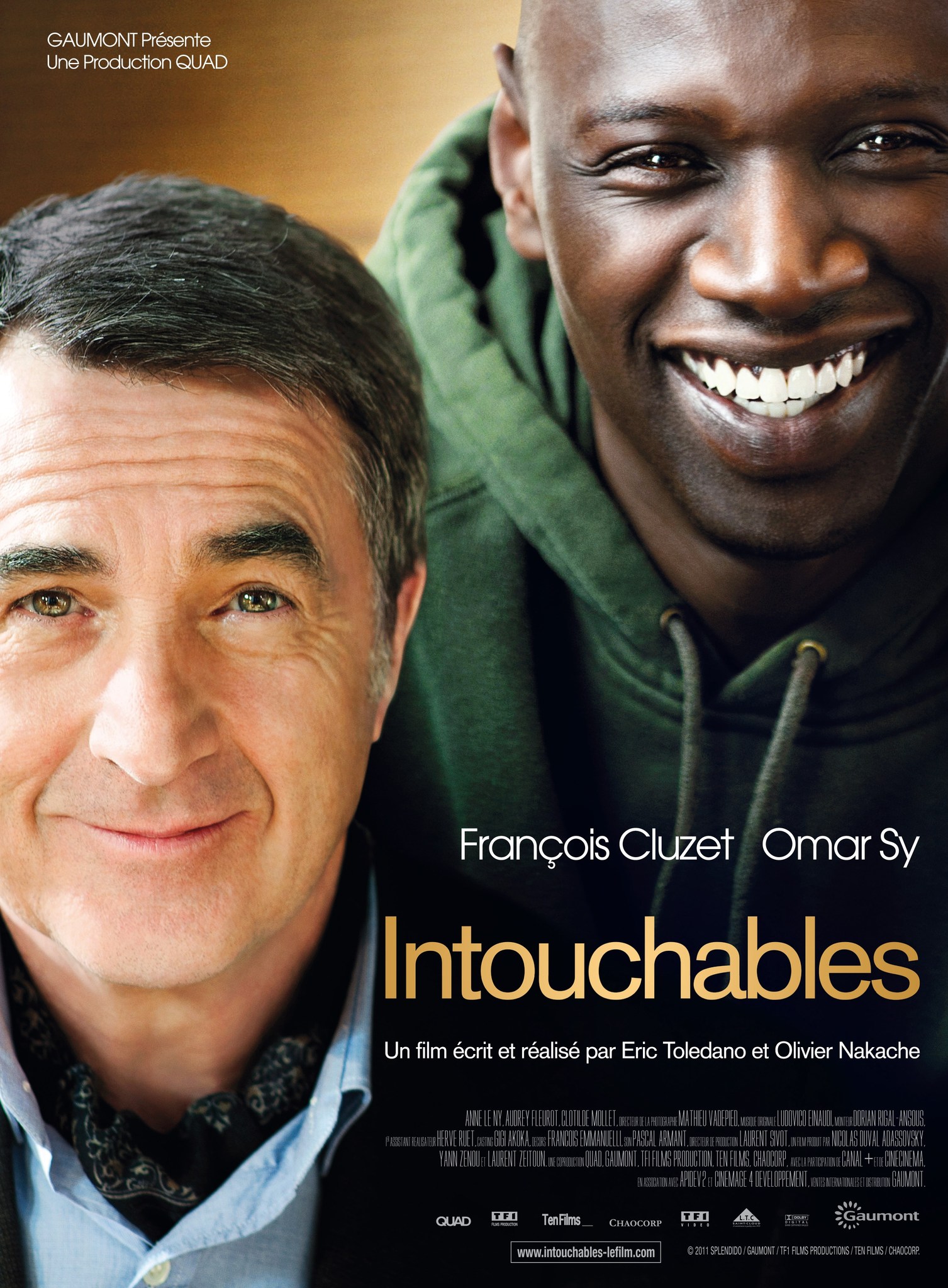
Intouchables – Movie Review

Based on a true story, Intouchables is the movie that took French cinema by storm last year with it breaking admission records and setting itself as one of the biggest movies in French history.

Philippe (Francois Cluzet) is a very wealthy French aristocrat who is also paraplegic and in need of a caretaker. It is then that Driss (Omar Sy) presents to his place in order to get a paper signed for social service, after serving a stint in prison for robbery. Instead of signing the paper and letting Driss go, Philippe takes a chance on the African man and hires him as his caretaker because he figured someone with Driss’s background won’t feel bad for his condition, not knowing that the relationship these two men will spring up, against all odds, social stigma, boundaries and hardships, will change the course of both their lives forever.

This French comedy transcends its genre to become a truly heartfelt story that will tug at your heartstrings as it makes you laugh and smile and get invested in the friendship between Philippe and Driss. Hollywood journalists have been criticizing it for its tendency to get racist at times and that is categorically incorrect. Simply put, those reviewers have not really understood the movie and the jokes may not have translated well to them. How can you convince an American that the joke of Driss looking like Barack Obama in a tuxedo is actually funny and not a pejorative measure of their president? In reality, Driss is not even black. He’s Arab, as the movie shows in real-life segments before the credit rolls. In reality as well, the movie is nowhere near racist – unless by racism you mean showing a typical white man the life of a youth, who happens to be black. Intouchables is also socially accurate – people do judge you differently based on your ethnicity, whether we like to admit it or not. The movie, however, doesn’t judge its characters. It just lets them be. So for those who keep an open mind, there’s no way Intouchables won’t touch you in a way or another as it flips through its scenes, all to the backdrop of either gorgeous Parisian scenery or beautiful French countryside.

When it comes to the acting, Omar Sy and Francois Cluzet’s performances are a crucial central pillar to the movie. In fact, both actors jump off each very smoothly with charming chemistry that can only lead to help the movie’s comedy subject matter to get passed on to the viewer. It shouldn’t come as surprising that Omar Sy actually beat Jean Dujardin for the Best Actor Cesar this year. His performance is nuanced, very sharp and absolutely spot on. On the other hand, Cluzet balances him out quite well and, despite his character’s seriousness and it being grounded. The overall mix of the two is a duo that will entertain you for every second the movie is playing.

Never have I been surprised by a French movie since Amelie Poulain. And while Intouchables doesn’t quite dethrone that movie, it sure comes fairly close. It is a feel good movie that succeeds at what it’s supposed to do. It boasts great leads, a terrific supporting cast, some chilling music composed by Italian composer Ludovico Einaudi. It is a movie about the “choc des classes,” which will leave you shocked as to exactly how much it works.

9/10