The Iron Lady – Movie Review

Behold Meryl Streep who might as well have caused the movie’s producers to change the title from “The Iron Lady” to “The Iron Ladies.”

In a tour de force performance, Streep portrays former British Prime Minister Margaret Thatcher through the rise and fall of her career. Opening in 2005, soon after the London subway bombings, the movie portrays an Alzheimer-inflicted Thatcher as she struggles to cope with life. She imagines herself at times still being a prime minister. Her husband Henry (Jim Broadbent), dead for years now, is also a constant figure in her life through hallucinations.

And as Thatcher sits alone in her house, she remembers as she rose to power, as she defied the stereotypes enforced on her by British society to become the first ever female prime minister of the country and remain in that position for more than eleven years, the longest ever for prime minister in the 20th century.

To speak about The Iron Lady would be to speak about Meryl Streep for one is the other: a whole that cannot be divided into the sum of its parts. In a performance for the ages, Streep sweeps through every second she is on screen, cementing her status as a truly magnificent force and constant fixture to be reckoned with. You can never really go overboard with complementing Meryl Streep on her acting. In fact, I predict future generations to ask us why we haven’t really complemented her more. She pulls off the most difficult of roles and makes it seem like an afternoon walk in the park. When it comes to Thatcher, she nails the tone, the posture, the mannerisms down to the way she tilts her head when making a speech. That is the mark of a great actress – the greatest actress to ever come on our screens. Watching her incarnate Thatcher is a joy to the eye, ear and to the soul.

The heights that Meryl Streep takes The Iron Lady to are marred by what could have been a stronger script. I personally found the movie very engaging, albeit slightly disconnected as it kept going back and forth in time without a strong foothold in either. However, the overall mixture, in my opinion, works. Nevertheless, as possibly the only biopic to be made of Thatcher’s life, I would have liked the approach to be less of a senile woman remembering the days where she ran the country and more of what that woman did when she actually was in charge. Despite the movie being engaging, it is still unfocused. Imagine a movie being made about Ronald Reagen, often mentioned in the movie, focusing more on his years while struggling with Alzheimer’s and not of his two-term presidency. This is the case with The Iron Lady.

Despite some left-wing squeamishness in dealing with the right-wing nature of the character of the movie, The Iron Lady cannot but be considered a great movie solely for the reason of the great lead it boasts. Look at it this way: it is an average script, touched by the hands of a genius who turns in into cinematic gold. It may not be for all tastes but no one can deny the absolute brilliance of Meryl Streep. And for those with whom the movie works, like me, you will be entranced as you watch the life of this woman unravel before your eyes.

8.5/10

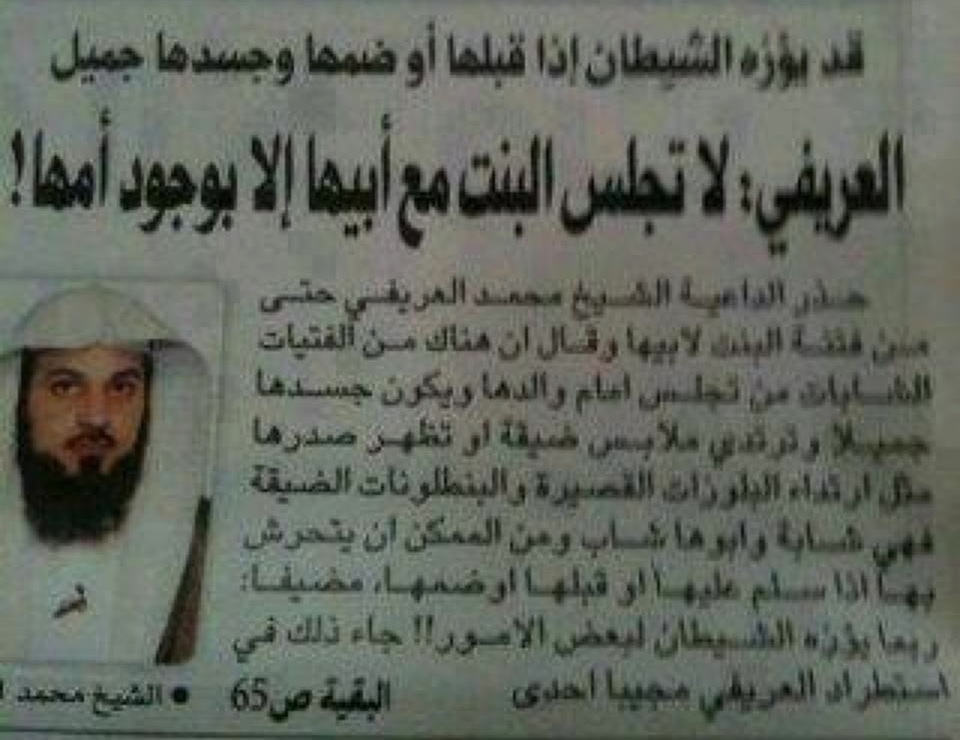
A New “Fatwa”: Girls Cannot Sit With Their Fathers Unless Their Mothers Are Present

This is a picture of a newspaper article in Arabic that I saw circulating today.

The article translates to: “Muslim sheikh Mohammad Al Aarifi warned girls saying that some young girls sit in front of their fathers with a nice body, wearing tight outfits, showing cleavage such as when short blouses and tight pants are worn. She is young, her father is young and he might, therefore, hit on her if he saluted her or kissed her or hugged her…”

Simply put… What did I just read?

Some people need to be neutered. Or perhaps some regulation as to how can actually analyze any form of religious scripture needs to be enforced.

And I thought the “banana fatwa” was stupid enough. In case you didn’t know, another “sheikh” decided that girls shouldn’t consume bananas or cucumbers because of their sexually provocative nature as vegetables and fruits. Where do these people come from again?

The Batroun – Tannourine Highway

Back in 2000, I used to go on trips to Tannourine with a friend and complain about the constant works taking place on the roads leading there.

“It’s for a good thing,” the man always told me. I never knew what he meant until very recently. I only realized the importance of the full scope of the project at hand yesterday when it took me ten minutes to get from my hometown to Tannourine, using the newly opened section of the Batroun-Tannourine Highway, the part extending from the town of Bejdarfel to Assia.

Easier commute, easier ambulance trips, easier impromptu road trips…. You name it.

We, as Lebanese, always nag about the dismal state of our infrastructure. So it’s nice to highlight something good for a change. And this is definitely on the advanced side. Instead of working on already existing roads, they’ve created new ones in valleys and mountains to cut distances short. And the effort put in the highway shows.

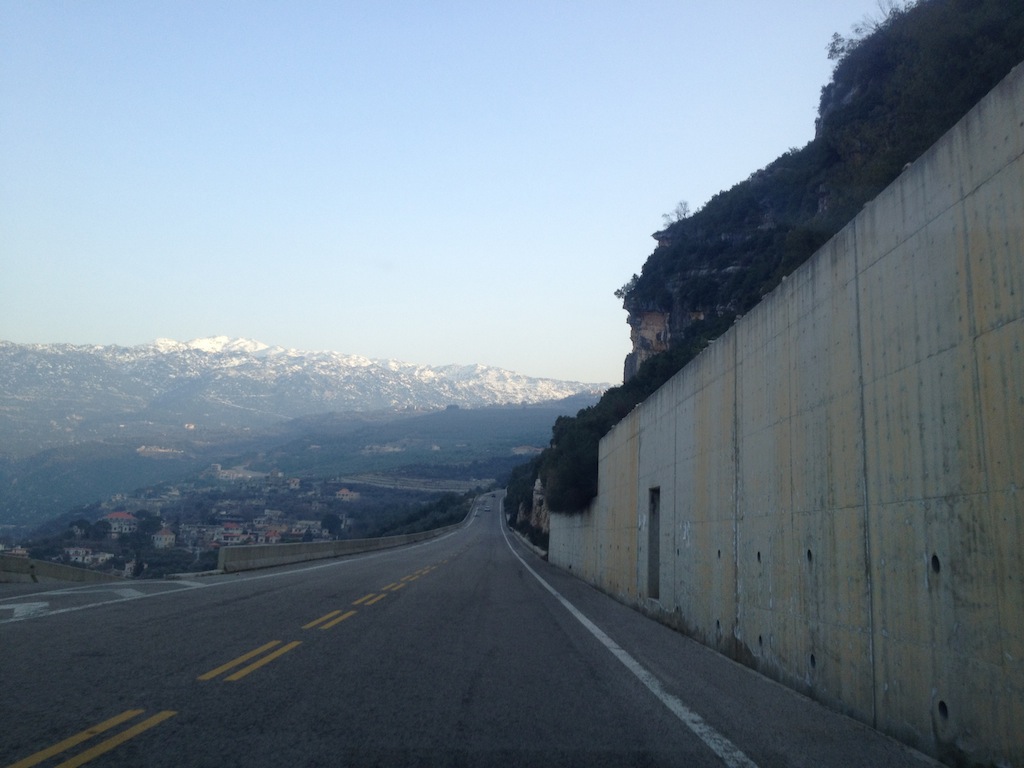
There’s still a little more work that needs to be done on some of the newly finished sections: put up lanes and fix some asphalt-related issues, but overall, it is a great drive. At some points, with the towering mountains around you all full of snow, you feel like you’ve been taken out of the stereotype image you have of Lebanon and to some section of the Italian alps. It is absolutely breathtaking.

Batroun’s MPs have been working hard to get the highway plans underway and hopefully their enthusiasm and the highway will be properly maintained. The final stretch of the project extending from my hometown, Ebrine, to Batroun will start soon.

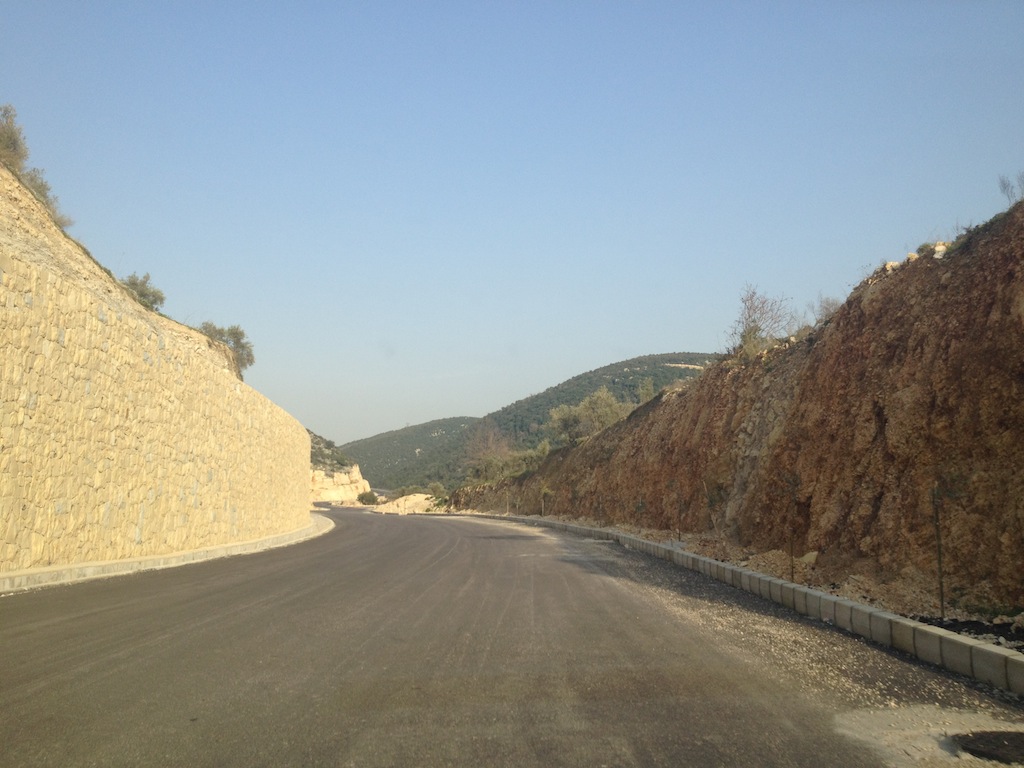
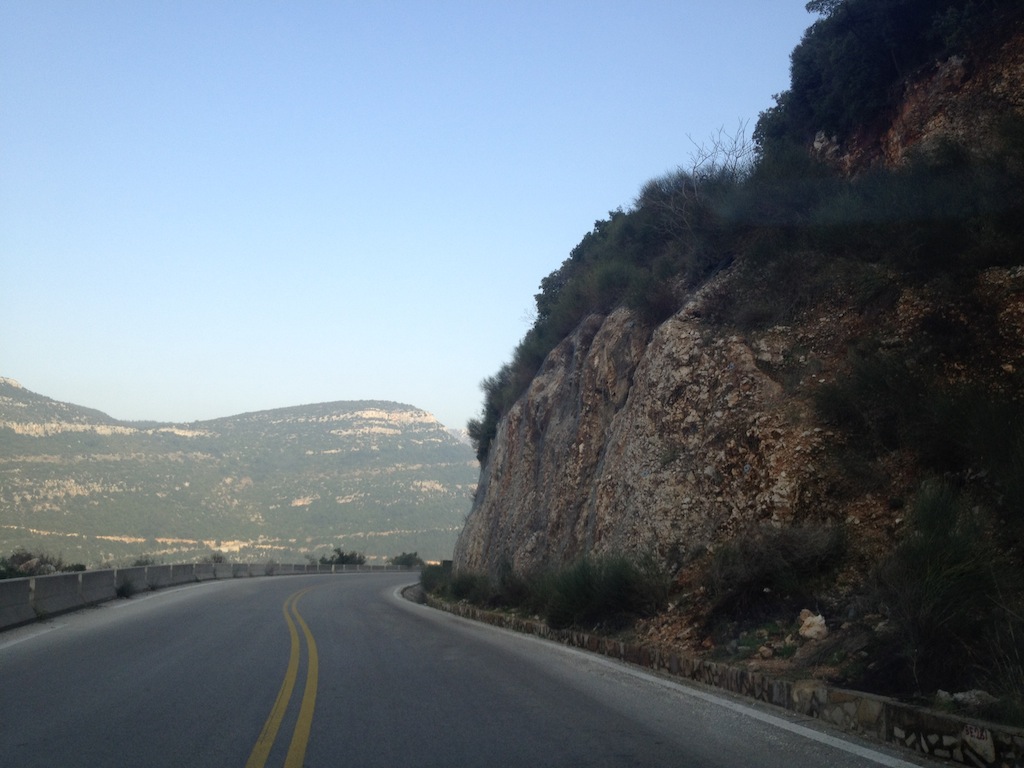
The newly finished part, just outside the town of Bejdarfel

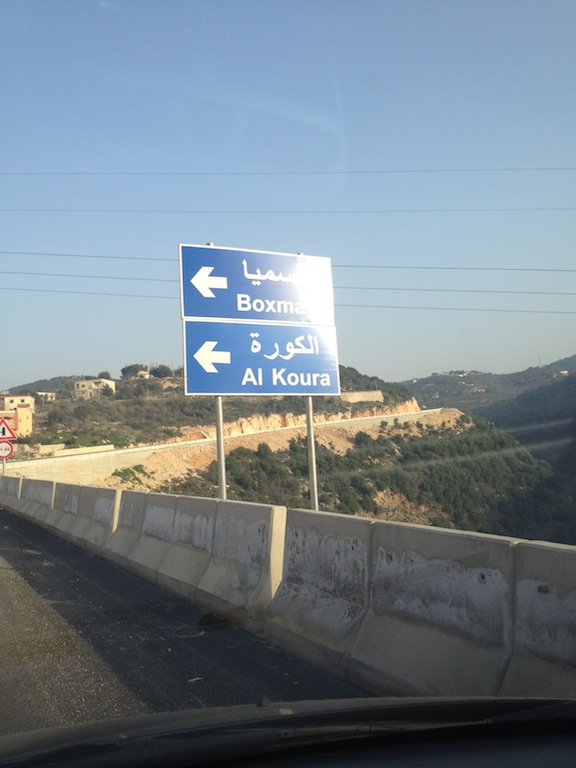
Just outside my best friend's hometown: Boxmaya. Apparently you can go to Al Koura from here as well. I had no idea.

The older part of the highway

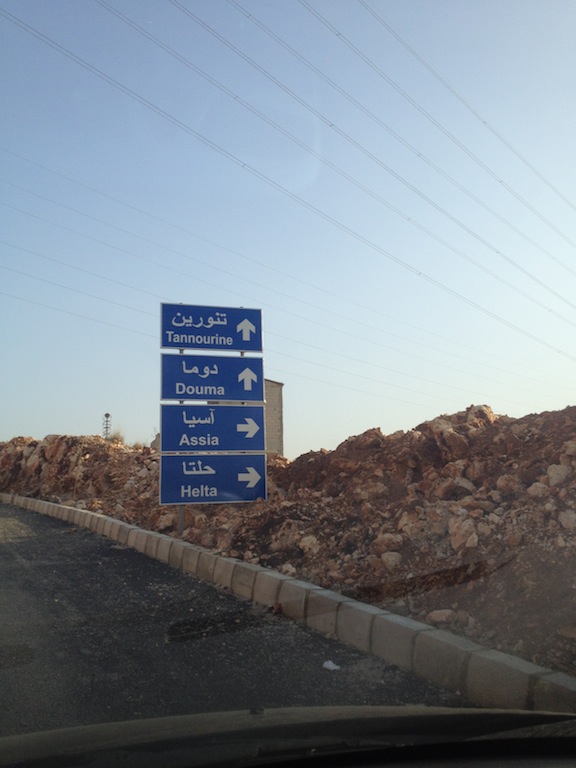
I bet Fairuz would be happy that her trip from Hamlaya to Tannourine is rendered much shorter now.

Kataeb and Ahrar “History Book” Protest Turns Bloody – Reminiscent of Syrian Occupation Days

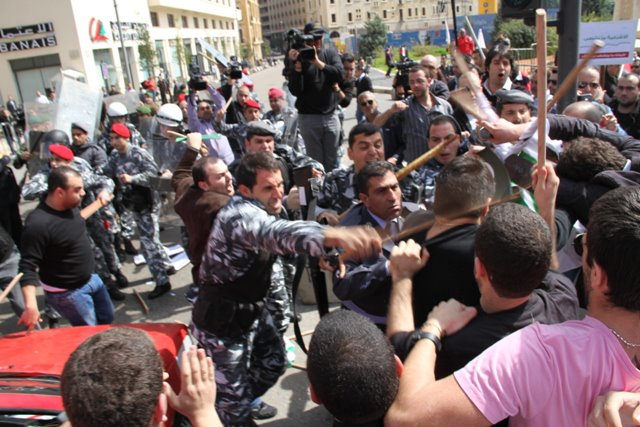
No, the above picture is not from the long gone anti-Syrian protests. No, the above picture is not out of a history book, which might never be written.

The above is a picture from a few hours ago, in Downtown Beirut, of Kataeb and Ahrar supporters getting beaten up by Lebanese armed forces, during a protest against the proposed history book, drafted by Lebanon’s unicolor government.

The differences between then and now are striking. The ultimate scene, however, is quite the same: Lebanese protesting flagrant violations of their rights and armed personnel beating them up for speaking up. The difference? The order to beat up the protesters was Syrian back then. This time, however, it’s Lebanese – or as “Lebanese” as it can get.

The Lebanese army was present. It did not interfere. After all, what’s the Lebanese army doing these days except sitting on the sidelines setting up checkpoints in irrelevant places, doing nothing to protect the people it should be working hard to keep safe?

The students were stopped by the armed forces on their way to the Grand Serail. As a result, 14 of the students were injured and transferred to nearby hospitals.

In a country with no victors, how could the current government expect people to forget about their history, their struggles, their own revolutions and be subdued to its version of a history which glorifies events that shouldn’t be glorified and forgets about other incidents that should never be forgotten?

In a country with no victors, how could the Lebanese armed forces take a side against the protesters in such a way, when if the other “team” protested, the only thing they’d be doing is cower away in their barracks eating tawouk? For our armed forces, a bunch of university students protesting a book is far more dangerous than hundreds of men dressed in black shirts roaming the streets of Beirut in obvious display of tactical power. Where were the armed forces then? Or do they only know to stand against those that are “weak” in Lebanese society?

In a country with no victors, what warrants a select group of unqualified people to write a book where they highlight the struggles of people from “down under,” while neglecting the struggles of every single other portion of Lebanese society?

I am sick and tired of being treated as subclass citizen by the state of Lebanon because:

1) I did not live under Israeli occupation.

2) I do not support a political party which flaunts its weapons.

3) I am not of a certain sect, which is protected by some “un”holy parties.

I am sick and tired of not being able to trust any of Lebanon’s armed forces and them not doing anything in any way whatsoever to bridge the gap of bias they have created across Lebanon.

I am sick and tired of loving a country so much when with each passing moment they make me feel like I have no place here – even when it comes to talking about a history book.

But I’m sorry to break it to them – students and real activists who were not deterred by the brutality of the Syrian regime will not fear a government whose only reason of existing is the “un”holy backbone it has. And a history book, which is as biased as the one currently written, will never pass.

After all, if a history book was irrelevant, why were those students beaten up?

Kony 2012: Hype? Activism? Scam? – An Opinion

I took my time to watch the Kony 2012 video that went viral, partly because I didn’t want to jump on the bandwagon of the movement’s supporters immediately without an educated decision, partly because of the polarizing views I had read of the video. And lastly because of the bandwidth, which I don’t have, that I’ll be investing in watching the movie.

Now, a few hours after watching the 30 minutes long video, I think I am in a position to judge it. And for that purpose, I will categorize my response to four main parts.

1 – The Non-Supporters:

Those who didn’t support the movement portrayed by the movie used arguments such as “what now?” and “what’s the point?” or “we don’t see a credible plan of movement.” And they have every right to their questioning. But allow me to ask the following. A few days ago, how many of you had heard of Joseph Kony (or Uganda for that matter)? How many of you had known on Monday what the Lord’s Resistance Army (LRA) was doing and how many children it had abducted for its plans?

So for all matters and purposes, the Kony 2012 video’s main purpose is education. It is to let as many people know about the injustice going on in that part of the world. It definitely comes off as preachy. It’s very difficult to come off as neutral in such circumstances. Sure there are worse “bad guys” out there that need to be highlighted. But having worse bad rulers or military men out there does not render what this video has done irrelevant. You can complain about the rulers of other countries. It doesn’t mean you need to bash this movie to do so. Sure this is definitely helped by the celebrity momentum it’s been getting. But when the frenzy subsides, you’re still left with millions of people who know what Joseph Kony has done and is doing. And that’s the plan: get as many people involved in order to get somewhere. In the age of the internet, that’s a credible plan.

2 – The Supporters:

On the other hand, you have the absolute majority of people who basically threw their support behind the Kony 2012 movement by sharing the video, buying the advertised kit and helping in spreading the word. Over 60 million people have watched the video, a testament to how strong the momentum behind the movie has become. However, when it comes to these supporters, many believe the movement stops at that: sharing the video and posting a Facebook status. How many of those 60 million people will actually rush to the streets of their cities on April 20th to hang the Kony 2012 posters? How many of those 60 million people consider themselves now “activists” in a cause they may not really fully understand?

The internet has made it way easier for many people to be involved in such movements. But on the other hand, the internet has also made the supporters of such movements sedentary in their support: merely a form of passive spoon-feeding of information, which is passively passed on with near minimal understanding or tangible involvement of the cause at hand.

What the supporters also need to know is that the compassion they are feeling for the children of Uganda needs to be passed on as well to places where even worse injustice is taking place. If more people are aware of the killings in Syria, Myanmar or any other country in the world, then Kony 2012 has achieved yet another milestone: to increase the scope of awareness of people.

I thought this was supposed to be an international campaign.

3 – The Conspiracy Theorists:

Many people are widely skeptical about Kony 2012 not because of its meaning and message but because of what it’s advocating: an American military involvement in Uganda. Why so? Because Uganda recently became an oil producer. However, what the movie is advocating is not really direct US military involvement in Uganda – it’s asking for more US political awareness for the children in that country and, possibly, more involvement in the political processes taking place there in hope for the capture of Joseph Kony.

The Obama administration has also not authorized direct military involvement of the personnel it sent to Uganda. And at this point of the presidential campaign, I highly doubt Obama would ruin the economical improvements he has been working for more than three years on just to please a movement that will, eventually, tone down to regular non-frenzy levels.

4 – The Reality:

When it comes to Kony 2012, you cannot but care about the matter at hand. If you don’t, then you simply lack compassion. However, the whole affair is not exactly very peachy. The organization responsible for the movie, Invisible Children, doesn’t allow its finances to be audited. Therefore, you cannot know where your donations are actually going. However, approximations have it that only 31% of the donations Invisible Children receives actually go into helping out the children of Uganda. The rest goes into movie making, the travel expenses of its personnel and whatnot.

Moreover, when it comes to Uganda, the LRA has been rendered inactive since 2006 and the Ugandan army has been slowly taking over in parts of the country where the LRA was in control. However, that doesn’t mean the Ugandan army is much better. In fact, reports have shown that the army has been using rape as a weapon in its fights. Besides, Yoweri Museveni, the current Ugandan president, has abolished limits on presidential terms. He has been serving as Ugandan president since 1986. He’s accused of democracy oppression. Invisible Children supports his regime.

Finally, one interesting thing to note is that the LRA is to Christianity as Al Qaeda is to Islam – both are extremist religious groups, led by men who have no understanding of the scripture they follow. The difference between LRA and Al Qaeda is that the latter is seen as international terrorism and the former is seen as a Ugandan affair. What they have in common, on the other hand, is that the killing of Joseph Kony will do as much harm to the LRA as the death of Osama Bin Laden did to Al Qaeda.

But regardless, oppressors need to be stopped on the hope that maybe tomorrow the world for the visible children of Uganda and the world becomes safer.

Watch the Kony 2012 video here: