The Achrafieh Building Collapse: An Observation

Meet Nasra. Named after her grandmother, Nasra is my grandfather’s niece. Coming from a Lebanese village in the North, your grandfather’s niece might as well be your aunt proper. Families are that close. Nasra also lived on the 7th floor in an Achrafieh building up until recently. The building in question is the one turned into rubbles in the following picture, taken a few hours ago:

(source)

Nasra had decided to leave her Achrafieh home because the building became filled with foreign nationalities that she wasn’t too keen on frequenting. However, recently, Nasra was faced with the news that her landlord has sold this Achrafieh building.

I am personally not a conspiracy theorist. But one can look at the building collapse in Achrafieh in one of two ways, both returning to the same conclusion which will be presented subsequently in this post.

1) The landlord didn’t want to pay his tenants in damages. So he managed to have the building collapse. After all, cracks couldn’t possibly have this building fall in the way pictures are describing it. Twitter user Layal, an architect, finds the whole collapse a bit fishy. As a medical student, concrete is nowhere near my specialty. So I cannot judge the physics of it all. But the idea cannot but cross your mind when you see the footage of the 7 story building having fallen like a cake taken out of the oven early, especially after news surfaced that the landlord had asked his tenants not to spend the night in the building. But where else would his tenants go? It’s not like everyone has a spare house in Beirut somewhere they can visit whenever in need.

2) The building was simply too old to function properly. The cracks were affecting the pillars or poles of the building, as engineer-to-be Twitter user Weam pointed out. According to Weam, cement ages. The fact that a building stands doesn’t mean an impeding failure is not inevitable. And this might have been the case here. The recent storm that overtook Lebanon for the past 7 days, bringing torrential amounts of rain, didn’t help the shaggy building either. A side-note here but if the recent storm helped a building collapse, then what can we expect from a serious earthquake that would hit the Lebanese capital? The answer is: a true catastrophe.

As a result of either 1 or 2, the building fell and families are now homeless, stranded. Injured people are being transferred to nearby hospitals. More than 20 people have died, including a 15 year old girl and 3 siblings who were trying to carry their sick father out of their apartment. 10 apartments were destroyed. It is truly a tragedy in the streets of Geitawi, the Achrafieh neighborhood where this is taking place as we speak/type/read.

Meanwhile, as people die under the rubble, you have a formidable amount of nosey Lebanese individuals wanting to appear on national TV. So they impede the work of medics and security individuals by their foolish, stupid faces, holding a phone to their ear and waving their hand so their equally silly families at home can see them on TV. Every time something of the sort happens, reasonable people start to call for those less reasonable to clear the scene. This is not the time to be sadistically intrusive. This is the time to take your uselessness back home and watch the proceedings on TV.

But I digress. 1 and 2 can be pointed back to one reason which caused them both: Lebanon’s old renting laws.

My name, as you know, is Elie and my grandparents have an apartment in Achrafieh, fairly close to where the building fell. My grandparents have been calling their apartment home for the past forty years. But as my grandparents pay a very insignificant amount of rent per year, the fact that the building they live in is literally falling apart or the fact that the ceiling of their apartment isn’t exactly in top shape suddenly become of second-rate importance. This house is not theirs. There will come a time where the family which owns the building they live in decides to sell it to some wealthy Lebanese or Arab businessman who decides to tear it down and replace it with a high-rise.

Meanwhile, the owners of my grandparents’ buildings are even more unlucky. Perhaps when their tenants first started renting, the amount they were paying per month was incredible. But as the years progressed and the Lebanese currency lost much of its value during the civil war, this amount became more and more insignificant. It reached a point where this person, who considers this building in Achrafieh, or any other part of Beirut and Lebanon for that matter, an investment, cannot make any significant amount of money from this investment. Why should he care about the state the building is in?

So in simple terms: the rental law in Lebanon is hurtful for both the tenant and the landlord. The former cannot really call the apartment his own and as such cannot really make it suitable for a 21st century lifestyle. With old electrical circuits and rusty plumbing, the buildings desperately need an overhaul. The landlord, having no room to make money from his building, simply lets it fall into disrepair and, sooner or later, the building will crumble like the one in Achrafieh did today.

If anything, this building collapse should be a wake up call to our politicians that the lives of the many Lebanese who live in these old, dying buildings are more important than the seats they wish to keep as elections cycle. Forty years later, Lebanon desperately needs a drastic overhaul of its landlord-tenant renting laws. Our dear politicians, however, vehemently stay away from discussing this law because no one wants the public opinion to say the law changed on their term. There’s no way the solution involves an immediate change between the old and new renting laws. No one would be able to afford rent in Achrafieh anymore. But a solution needs to be found as soon as possible.

You might say it wouldn’t be “fair” for the tenants, fair being not wanting them to pay higher. But let me tell you this. My Achrafieh home holds so many memories under its roof. I’d much rather pay extra for these memories to remain where they are, as they are, than to have the roof under which these memories were made fall on the heads on those included in the memories. I’d pay extra if it meant having a safe roof on top of my grandparents’ head. And after today, I think everyone would pay extra to have their loved ones kept safe.

Until then, my thoughts and prayers go the families of those affected in today’s building collapse.

The Story of a Syrian Boy

This may be fake. His story may not check out. But you know something like this has definitely happened to people at the hands of the tyrant Syrian regime.

Bashar Assad and his father have done similar things to families in Lebanon. Bashar Assad is known to be a tyrant. He’s known to kill defenseless children, such as Hamza el Khatib and many others. So for all matters and purposes, regardless of whether this particular person may be fabricating this story, this is happening to many people like him around Syria, today.

Ours (Single Review) – Taylor Swift

Taylor Swift’s follow up to her #1 country hit, Sparks Fly (check my review) is a song off the deluxe version of her album, Speak Now, titled Ours.

“Elevator buttons and morning air,” she sings sweetly as the song opens up. “Strangers’ silence makes me wanna take the stairs. If you were here, we’d laugh about their vacant stares but right now, my time is theirs. Seems like there’s always someone who disapproves. They’ll judge it like they know about me and you. And the verdict comes from those with nothing else to do. The jury’s out but my choice is you.”

Then she breaks into the chorus, the background of which is a happy melody that goes well in hand with the lyrics she’s painting: “So don’t you worry your pretty little mind, people throw rocks at things that shine and life makes love look hard. The stakes are high, the water’s rough but this love is ours.”

 Ours‘ highlight comes in the form of the song’s bridge, which is sort of typical for Taylor’s songs – she leaves her best songwriting skills to that part of the song: “And it’s not theirs to speculate if it’s wrong and your hands are tough but they are where mine belong and I’ll fight their doubt and give you faith with this song for you. Cause I love the gap between your teeth and I love the riddles that you speak. And any snide remarks from my father about your tattoos will be ignored, cause my heart is yours.”

Ours has an infectious happy melody that, like many of Taylor’s uptempo songs and whether you like them or not, you’ll find stuck in your head. You may not like the song and you may switch the channel if it comes on the radio but after random repeated plays, you’ll find that you actually know the melody to it. It’s a simple tune, it’s a happy tune. It’s a tune very easy to memorize.

Many have spoken highly of Taylor’s songwriting skills on Ours. And well, Taylor Swift is a great songwriter in her own merit. She manages to turn a subject, which most other songwriters would turn into a cliche-ridden song, into something fun, breezy and happy. Even her vocal delivery, which many people say is subpar, works for this song because it’s the type of songs that actually sounds better not sung perfectly. The little mistakes here and there, the laughs spread throughout help Ours have soul. In fact, Ours mostly works because Taylor’s singing it. Had any other artist taken on this song, it would have sounded like a big mess of sappy lyrics and forcibly uptempo melody. Ours is as it is because of Swift’s delivery.

So for all matters and purposes, Ours is a fine song. It’s definitely not the best Taylor has written and it’s definitely not the best choice for a single off an album that has songs like “Enchanted” still left on its track list. Ours lacks the freshness that was in Mean and it lacks the immediate hit that was Sparks Fly. But it’s Taylor Swift so of course it won’t fizzle away and die on country radio like the songs of almost every other female country artist (with the exception of Carrie Underwood).

Perhaps after having a good radio streak, Taylor Swift should have went for broke and released the best song on “Speak Now,” this little song titled Enchanted which no one cannot like. I find it weird that they had to revert to a bonus track on the deluxe edition of the album, which until recently wasn’t even available everywhere in the US. And the sad thing is, Ours isn’t even the best bonus track.

6.5/10

Listen to Ours:

David Letterman on Driving in Beirut

Don’t mind his guest, Justin Bieber.

“If you can drive in New York City, it’s like driving in Beirut. You’ll be just fine.”

And of course you have the torrential Lebanese commentators who are proud of driving like baboons in Lebanon.


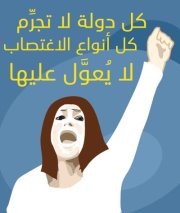
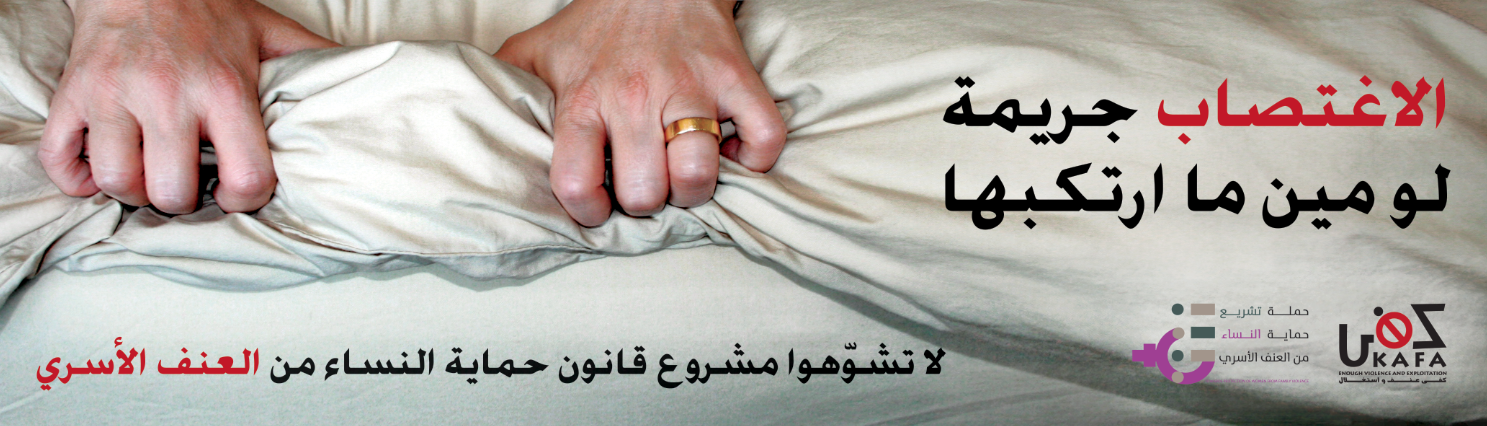
Fight Rape in Lebanon: The January 14th Protest

The women and men of Lebanon are taking it to the streets of Beirut on January 14 in their struggle to get our legislators to recognize rape as a criminal activity even among spouses, marital rape. As it is, Lebanese law only recognizes rape as such when it’s done by non-married individuals. And when the act of rape has been verified, the perpetrator has the right to offer marriage to the victim and his act would be absolved.

An interesting post by Beirut Spring regarding this matter exemplifies the distinction between marital rape and rape as the former being part of domestic laws, where men of religion rule supreme, and the latter being part of criminal laws, governed by parliament. And as you know in Lebanon, men of religion always win – especially when outdated scripture is their only reference for logic, not the needs of a 21st century society.

If that doesn’t sicken you enough, there’s even a section in our law that goes into the specifics of how torn a woman’s hymen has to be for her to be considered raped. I posted about it before, which you can check here.

But what’s worse is that most men, and many women, are very oblivious to how pejorative these laws are to them all. Sexual assault is not only exclusive to physical acts. Its scope also includes sexual harassment which Lebanese law doesn’t cover as well. Sure, these laws are giving the men of Lebanon an “upper hand” in society. But it’s not really an upper hand when this hand is raised over the other crucial component of Lebanese society: its women. A society where women are not given full rights is a dysfunctional society at its heart and core.

Men are also affected by the unfairness of the laws, although obviously not as much as women. I’m certain no father, husband, brother would accept his sister or wife or any female member of his family and close circle be violated in any way – and to have no law for her to lean on and defend her.

The January 14 protest is needed for Lebanese society. It’s the first time I’ve seen an anti-rape march getting this much propagation around the social networks. This is a sign as to how much the youth in our community want to change thing. But I have a simple question that doesn’t attempt in any way whatsoever to lessen the importance of the protest at hand.

Rape is a crime, regardless of who does it.

What do the protesters truly hope to achieve? I’m only asking this out of concern for the cause. The objective of the protest is surely righteous. But I can’t shake the feeling that this movement is stillborn for many reasons.

In my opinion, a parliament full of men taken straight of the dark ages will never ratify a law that brings the women of Lebanon into the 21st century. Like it or not, the men of our parliament (not all of them obviously but a decent chunk of them) are fine with the status quo. It doesn’t help that women have less than 10 MPs out of 128 to represent them (and not properly may I add). Perhaps the fight should be to ensure that women can actually get to office and fight for their rights from there. Perhaps the women of Lebanon should protest to get the elite of them, who can actually voice their concerns during parliamentary sessions, to be their parliament representatives. And there are many elite women in Lebanese society, who surpass at least half the men of our current parliament in qualifications.

It is here that the need for an upheaval of our laws is in need – and such changes cannot happen in the drastic way that they are needed without active female participation in making the decisions. You might think the “female quota” is limiting. Well ponder on this: is the situation without the quota any better? And can it get any better without a quota?

This post is not to lessen of the importance of the protest nor is it to belittle of the demands, as I made obvious in the first part of this post. This is simply to say that in the current political atmosphere of the country, the only way for women to have their full rights given is to assert political power. And women asserting political power cannot happen except through an electoral law that suits their needs . We’d be fools if we thought Lebanese officials actually cared about rape at the moment. The women (and the men of Lebanon who support them) would be fools to believe the men of our parliament actually care enough, deep down, to change things on the ground. All they care about is doing whatever they can to get re-elected next year. Many believe the ultimate solution is a civil state. Sure, a civil state is needed. But a Lebanese civil state will take a long time to happen in Lebanon and this matter is very urgent – more urgent than the oil law that has been debated for months now.

There is something, however, that is happening much sooner than a Lebanese civil state. Parliamentary elections are in a year. The law to run these elections is being discussed now. In a few months, the preparations for the elections will go underway and the voices of these women will be diluted and tuned out – unless they get their voices heard now and get themselves a secured proportion of representation in the parliament that will arise from the 2013 elections.

So Saturday’s protest becomes, as I see it and as Beirut Spring eloquently put in a follow-up post, “a watershed demonstration against denial and stigma in our society.” Perhaps it will get more people to be aware of the horrors our women have to face. Will it bring about change? I doubt the stubbornness of those in charge will let any change happen. So on Saturday the women and men of Lebanon march for a righteous cause. And I truly hope the slogans they will chant up until their vocal cords rip won’t fall onto ears as dead as the laws they want to change.