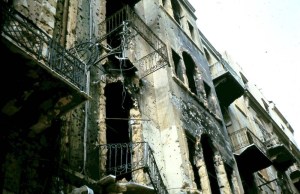
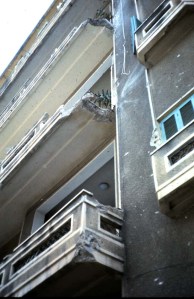
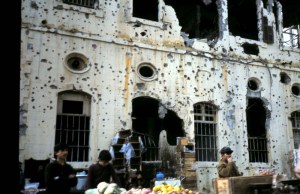
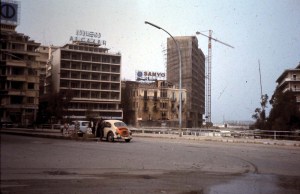
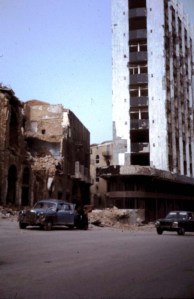
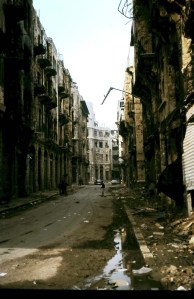
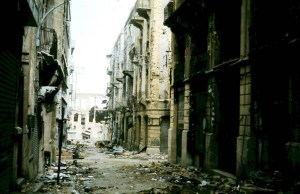
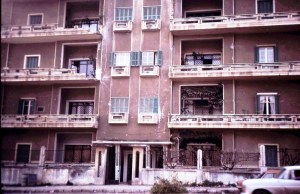
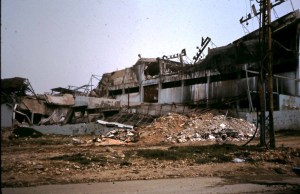
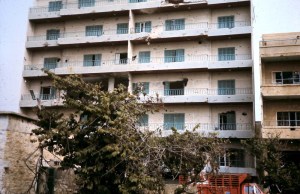
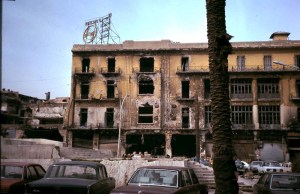
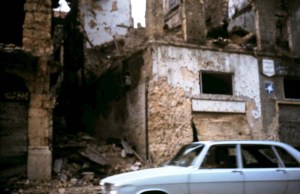
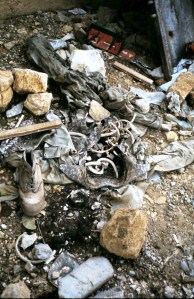
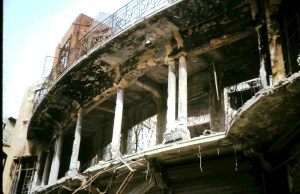
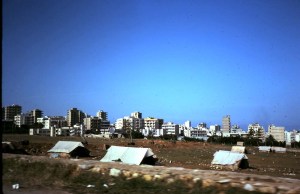
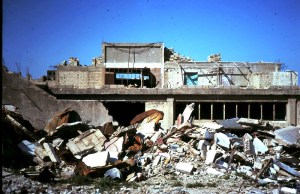
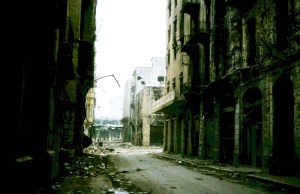
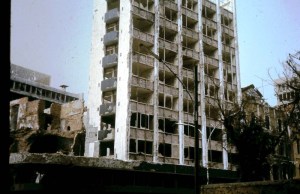
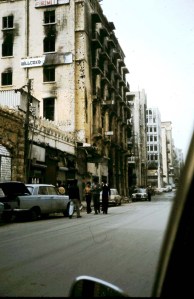
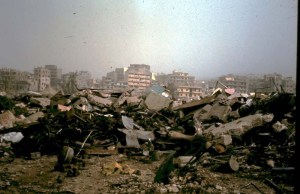
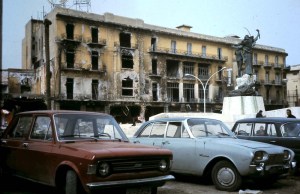
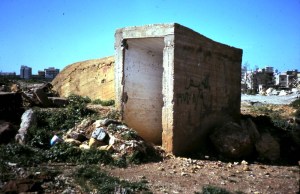
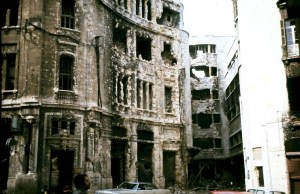
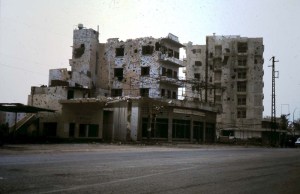
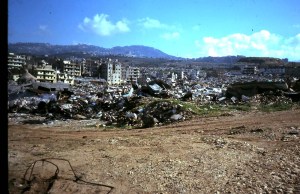
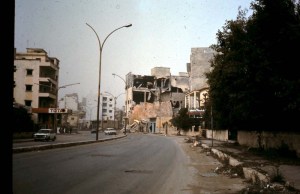
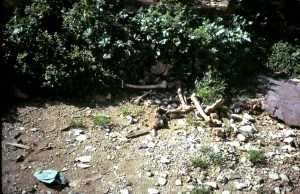
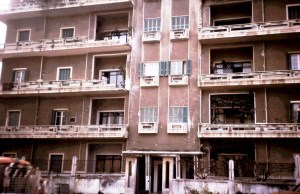
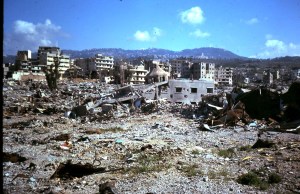
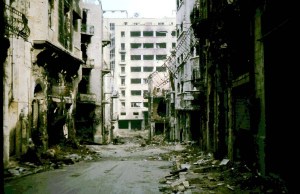
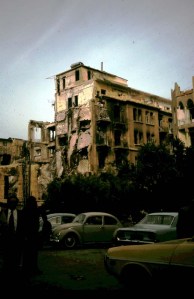
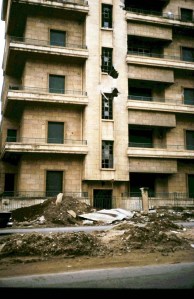
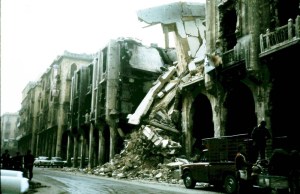
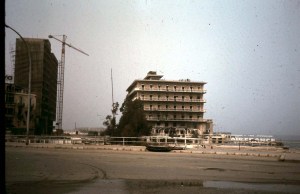
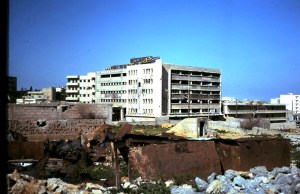
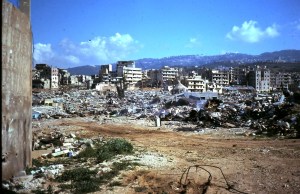
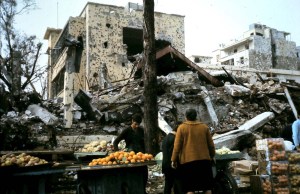
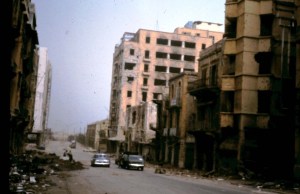
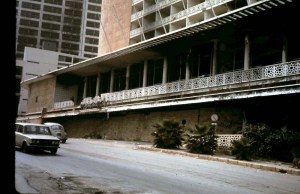
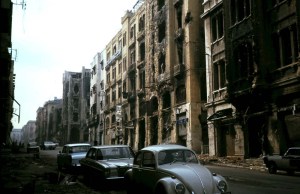
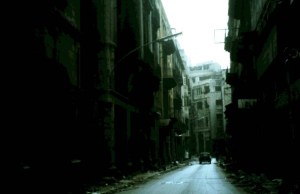
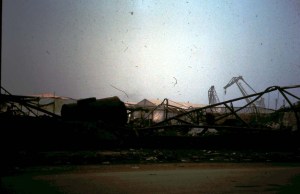
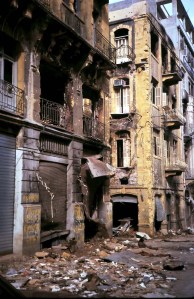
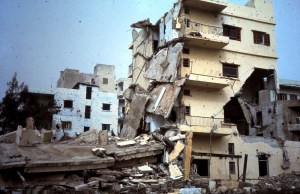
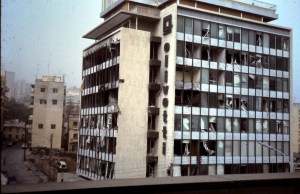
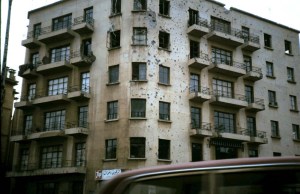
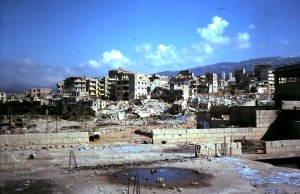
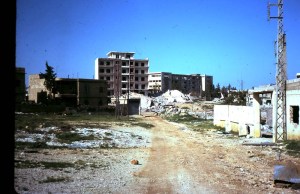
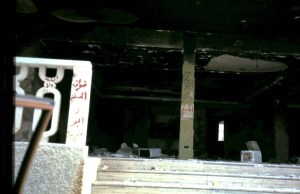
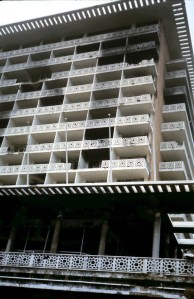
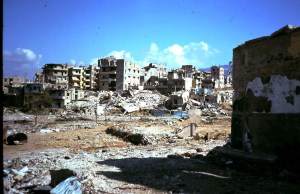
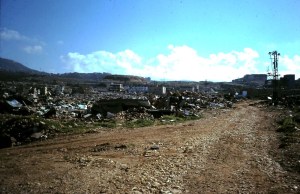
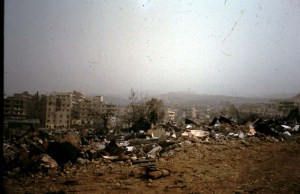
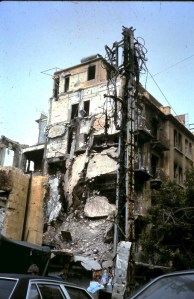
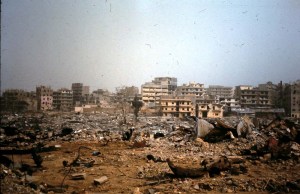
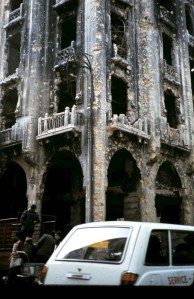
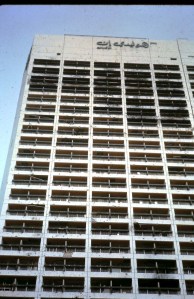
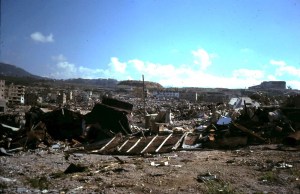
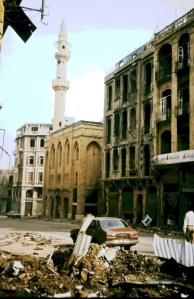
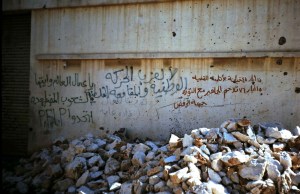
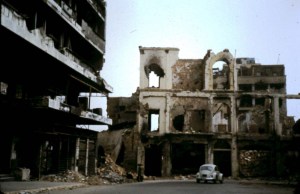
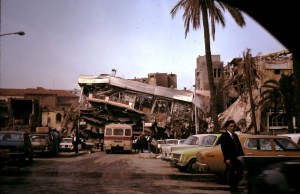
Incredible Pictures of Lebanon From 1976, At The Start Of The Civil War

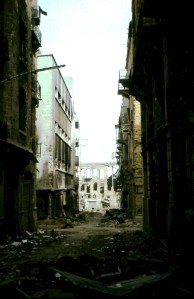
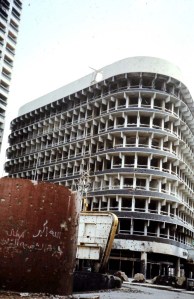
We’ve all seen those pictures of the Syrian war: devastation in Homs, irreparable damage to the souks of Aleppo, blood-soaked streets in Douma…. And even though Syria is a stone’s throw away, those pictures always remained an element with which we interacted with shock, grief and sadness, but they were still pictures of a distant country, as if Lebanon hadn’t produced similar footage for years and years.

It’s been 40 years since the Lebanese civil war started and those who were part of it are beginning to forget how it was.

It’s been 40 years and the same politicians who fought the war are still around, still unable to govern, still contributing to instability and still fighting among each other without weapons, but with weapons sometimes.

It’s also been 20 years since the war ended, and the newer generations that haven’t lived any phase of the war “remember” how it was. How old were you when that battle happened, you’d ask in clear sarcasm at their staunch bravado. They reply: it doesn’t matter, I was told of how things were.

Because we don’t have a history book, because footage of the Lebanese civil war is yet another taboo in the country, and because our only path to information is through stories that are more often than not subjective, devoid of facts and relying entirely on the perspective of the person telling them.

I have colleagues in medical school who have told me how much they’re “itching” to fight, to hold weapons and go to war. I have acquaintances who have expressed desire to hold arms again. I have people in my hometown who, at one point last year, actually held up arms to defend the town against the non-existent dangers of those veiled strangers.

20 years later, the country is without stability, without a president, without any form of democracy. And what’s more dangerous than all of that is that the collective memory of the nation towards that dark, dark phase of our history is weakening by the day.

You don’t need April 13th to remember “to remember and not repeat.”

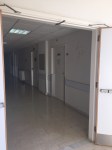
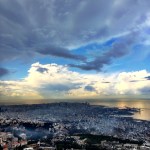
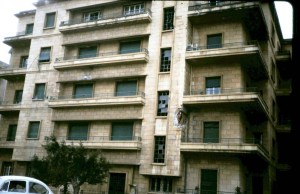
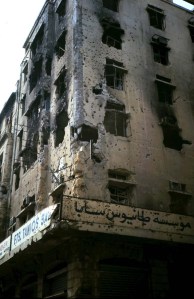
I stumbled on a gorgeous gallery of pictures uploaded to Reddit by user u/dob3rman. At almost 100 upvotes on Lebanon’s subreddit (link), it’s one of the most popular threads there. That user is now yet another expat whose father left the country way back when to seek a better life. Lately, he stumbled upon the pictures that his father took in 1976 and decided to share them with all of us to see.

Because these pictures are important, and because they should be engrained in our memory as a country I have decided that spreading them is vital, that being aware of of the devastation of 1975-1990 is crucial.

In the years since, Lebanon has been greatly rebuilt. We now have Solidere, Zaitunay Bays and endless projects taking place mostly in Beirut (link). Let these pictures serve as a reminder of how easy it is to destroy, and how difficult it is to rebuild and regain normality after war, a normality we haven’t seen yet 20 years later.


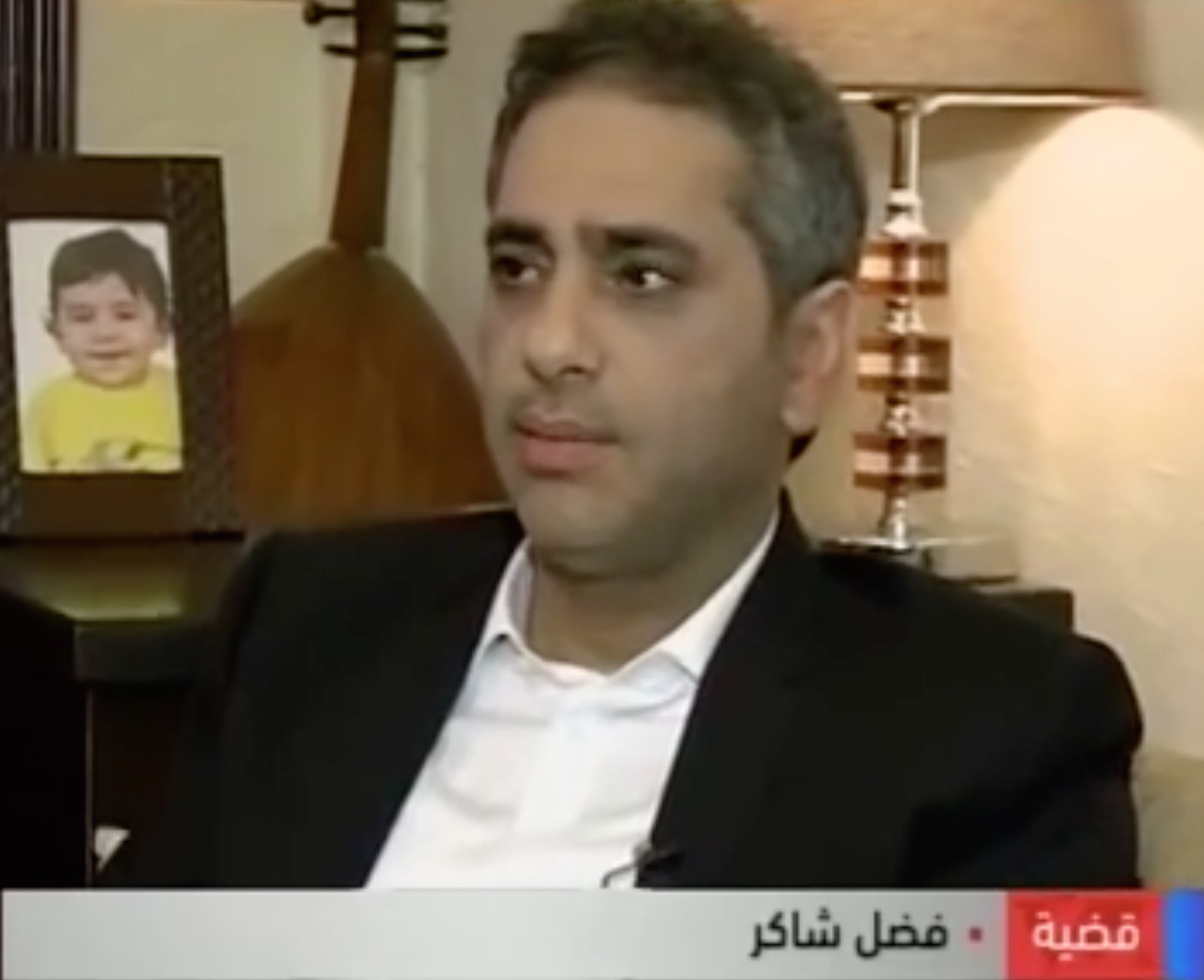
Shame On LBCI and Lebanese Authorities For Cleaning Fadel Shaker’s Image

I don't usually use the acronym "LOL" but I feel it's entirely appropriate to the use of the word "قضية."

I don’t usually use the acronym “LOL” but I feel it’s entirely appropriate to the use of the word “قضية.”

Fadel Shaker is the Islamist who cried wolf.

It’s difficult to imagine Shaker as anything other than the bearded Islamist who did a 180 degrees flip from a blasphemous man living in the sin of his songs to one who suddenly saw the light and only wanted to sing to Allah, the one imprinted in our collective memory as Lebanon, who’s been present for only 3 years.

History goes back to 2012 when Shaker popped up in Downtown Beirut at a rally for Assir’s Islamists, harmless and fluffy as they were at the time. I remember how outraged people were at the time: what had he done? Why was he doing that to himself? I even did a meme (link).

Kiss Ahmad el Assir on the forehead he did, bringing Assir into the forefront of the Lebanese news cycle in the process. The rest is history. Flashforward 3 years later and Fadel Shaker is reborn. Do you think his middle name is now Jesus (Or Issa as he’d rather be known I’m sure)?

The beard is gone. The clothes have been replaced with a suit. The shabby looking man of 2012-2014 has suddenly reverted back to his state of pre-2012. How do we know all of this? Because Lebanon’s prime TV station, LBCI, secured a super exclusive interview with Fadel Shaker in which he tried to do the following:

  1. Claim his innocence,
  2. Claim his involvement with Al Assir was simple “sympathy,”
  3. Claim that his relationship with Assir was strained,
  4. Claim that it wasn’t him who killed Lebanese army soldiers,
  5. Essentially kiss Bahia Hariri’s behind, calling her their “big sister” and commanding her efforts into preventing further decompensation of the situation.

Rumors about him trying to secure a deal to get out of the Palestinian camp of Ain el Helwe have been swirling for months through negotiations via intermediaries with the Lebanese authorities to secure his safe passage in return of him leaving his Islamist present behind.

In July 2014, he gave an interview to Lebanon24 (link) in which he essentially said almost verbatim what he told the LBC reporter who strung a report that turned Fadel Shaker from the Islamist to a pop star ready to take the microphone and sing next to Yara (if that’s not haram, I wouldn’t know).

The details of Fadel Shaker’s deal, according to Al Akhbar (link), are as follows:

  • He’s been trying to sort his situation ever since he ended up in Ain El Helwe in 2013,
  • His situation became increasingly difficult as he ran out of cash and his wife controlled his assets,
  • His “difficult situation” forced him into compromises,
  • Through a concert contractor called Imad Qanso, Fadel Shaker got into contact with Walid Ben Talal as well as Layal Al Solh who became his intermediaries with the government,
  • Layla Al Solh managed to get Shaker a deal with the Lebanese army that requires him to 1) return to his basic form and stop the fiery speeches against the army, 2) hire a lawyer to help him in his upcoming “trial” and 3) publicly cut all ties with Al Assir,
  • He got a lawyer called May Alkhansa, close to Hezbollah, after promising her “he hadn’t spilled one drop of blood,”
  • LBC was agreed upon to be the TV station to handle his rebirth, through a pre-prepared interview.

And despite all of this, I don’t blame Fadel Shaker for saying what he did. I don’t even blame Layla Al Solh and Walid Ben Talal for trying to get him off the hook. The latter is Saudi, so what did you expect? And his aunt is nothing more than his voice box, sadly.
The entities to blame here are 1) LBCI who, in typical Lebanese fashion, put the exclusivity of a news scoop ahead of what that scoop means, although in LBCI’s defense no Lebanese TV station would have said no, and 2) Lebanese authorities who are actually going through with such a deal.

By doing that report, LBCI – with all its influence – became nothing more than a mailbox to months long negotiations taking place behind closed doors between Shaker and Lebanese authorities in order to seal the deal and make sure Fadel Shaker turns out unscathed.

That report, being a rehash of a 2014 interview and with Fadel Shaker being prepped for the questions for weeks now, shows that there’s no substance to the content and no attempt at confronting Shaker regarding the terrible things that he did. LBCI shouldn’t have let him use their station to pass his agenda unchallenged, and contemplate the potential of him filling stadiums with fans again.
On the other hand, Fadel Shaker possibly facing trial means nothing. How long did Bilal Deqmaq stay in prison? How long did any of the Islamists caught up with Al Assir stay in prison? Will a few days in prison be enough? No.

By going into these negotiations with a terrorist just because “he saw the light,” our army and whichever authorities involved are saying that the blood of our army members is useless, that calling them pigs is okay and that all can be forgiven if you’re important enough to get away with it. Typical Lebanon.

Shame on Lebanese authorities who are ready to ignore everything just to come about to some deal.

How dim-witted do they think we are not to remember what he has done?

This is him calling the Lebanese army pigs and bragging that his gang killed two and wounded four:

This is him declaring jihad in Syria:

This is what he said of Ahmad el Assir:

“But then there was the assassination of former prime minister Rafik Hariri in 2005, with four Hezbollah militants accused by the international prosecutors. In May 2008 Hezbollah militias attacked Sunni Muslims in Beirut. To crown it all, they support [Syria’s president] Bashar al-Assad. Sunnis feel frustrated and they have no one to protect them. The sheikh [Assir] speaks the truth.” (link).
This is what he said of Lebanon (and the world’s) Shiites:

“In Syria they kill our Sunni brothers and destroy our mosques. They are prepared to kill all the Sunnis, all the way to the Gulf. They’re infidels, not Muslims. It’s not true the Qur’an is their book. They’re liars, they say one thing and do another.” (link).

This is what he said of his 2012-2015 path:

“That wasn’t my true calling. Thanks to the almighty, I now lead a religious life. I’m at peace. But I have no regrets about the past. It’s my duty to combat oppression and defend people who share my faith.” (link).

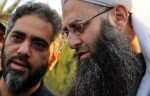
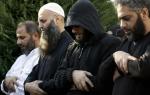
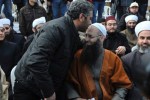
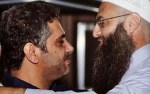
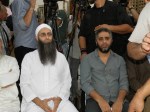
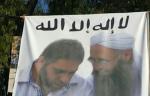
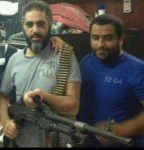
This is him in various loving positions with Ahmad el Assir and other terrorists:

Fadel Shaker is a 46 year old man without any disabilities who took decisions of which he was whole-heartedly convinced. If this had been a non-famous person, he would’ve been convicted and thrown in jail. He may have not killed (no one can know) but that doesn’t make him any less of a criminal.
The king of romance is planning a comeback. It’s no longer his “duty to combat oppression and defend people who share his faith,” everyone else be damned. And Lebanon’s very own LBCI is spear-heading that comeback. Perhaps they are dying for another Elissa duet?

The fact of the matter is the only romance he should be singing is to his cell mates in Roumieh, bending over, calling them allah. But that’s not what LBCI or the Lebanese authorities want. In Lebanon, justice is served only to those who are weak enough not to challenge it.

Hiba Tawaji Wins Her Battle on France’s The Voice

Hiba Tawaji The Voice

Is it me or are Lebanese women on a roll these couple of days? Rima Karaki is now making headlines around the world for shutting up an Islamist (link), and Hiba Tawaji just presented another side of Lebanese women and artists during her battle on France’s The Voice.

On Françoise Hardy’s classic “Mon Ami La Rose” (YouTube link), Hiba battled 41 year old year Nög in an oriental remix of the very-subdued song, allowing her to show a different side of her voice. Nög, Hiba’s challenger, gave her a run for her money. He was absolutely excellent. The level of competition between him and Hiba has showed that there’s no such thing as someone “professional” competing against “amateurs.” They are all professionals who know what they’re doing, and at 41 Nög probably has a lot of experience under his belt that helped him almost beat the Lebanese contestant.

Ultimately, Mika chose Hiba and Nög was taken by Zazie, another coach.

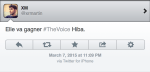
French audiences were also quite receptive to Hiba’s performance:

This is a video of the performance:

Let me know if the video is removed and I’ll find another version. You can also check the video on LBC’s news page (link).

The Point Behind Following Hiba On France’s The Voice:

I saw a lot of people wonder what’s the point behind the interest in Hiba’s path on France’s The Voice and how it reflects on Lebanon or us as people. It’s a certain thing that Tawaji on The Voice ultimately boosts her career as a priority and reflects little on us. But there’s more to it than that, even if it’s a little gullible to think so.

By being “la Libanaise,” she is giving the French a face of the country that they don’t usually see. It’s not much for sure, and it may be part of our collective hopeless thinking of improving our reputation bit by bit at all means possible. Either way, as a country we’ve gotten interested in so many useless things that I honestly don’t get the point in going up in a fit about this just because people are getting excited about a Lebanese being on it.

Good luck to Hiba on the rest of the show. She’s not in the finals just yet, but next time she’s live she will be up for people voting.

Why Rima Karaki Shutting Up The Islamist Hani Al Siba’i Is Super Important To Middle Eastern Women Rights

The video of Rima Karaki shutting up Hani Al-Siba’i couldn’t come at a more appropriate time for the region. Its rise in popularity happens to take place one day before International Women’s Day.

He is an Egyptian Islamist who is now residing in London after fleeing Egypt where he faces charges for the support of Islamists. He is BFF’s with Al Zarqawi and thinks Bin Laden is to be respected. He’s a pile or hypocrisy: someone who wants to implement the sharia’h… but lives in London. He’s a defense lawyer… but can’t handle an argument.

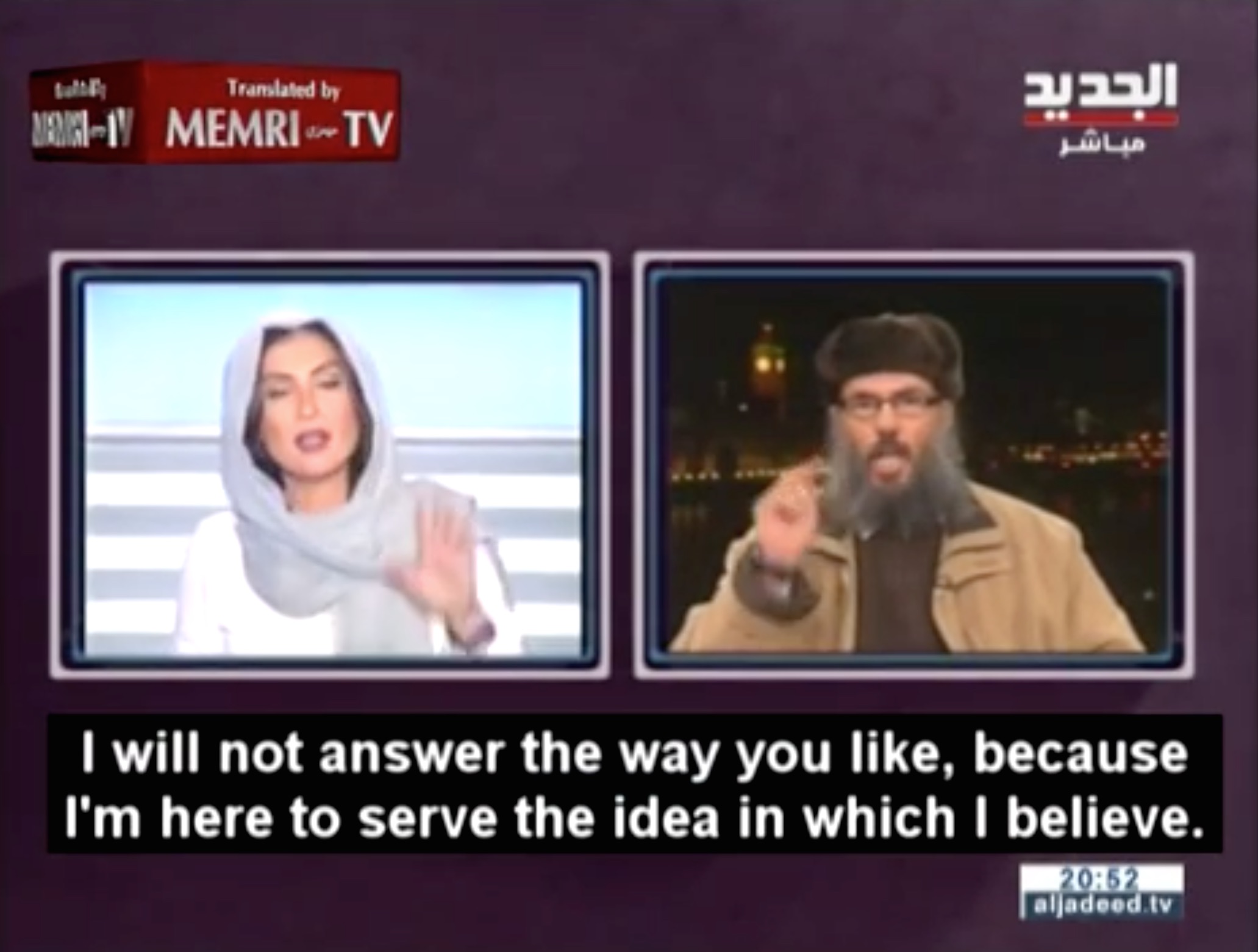
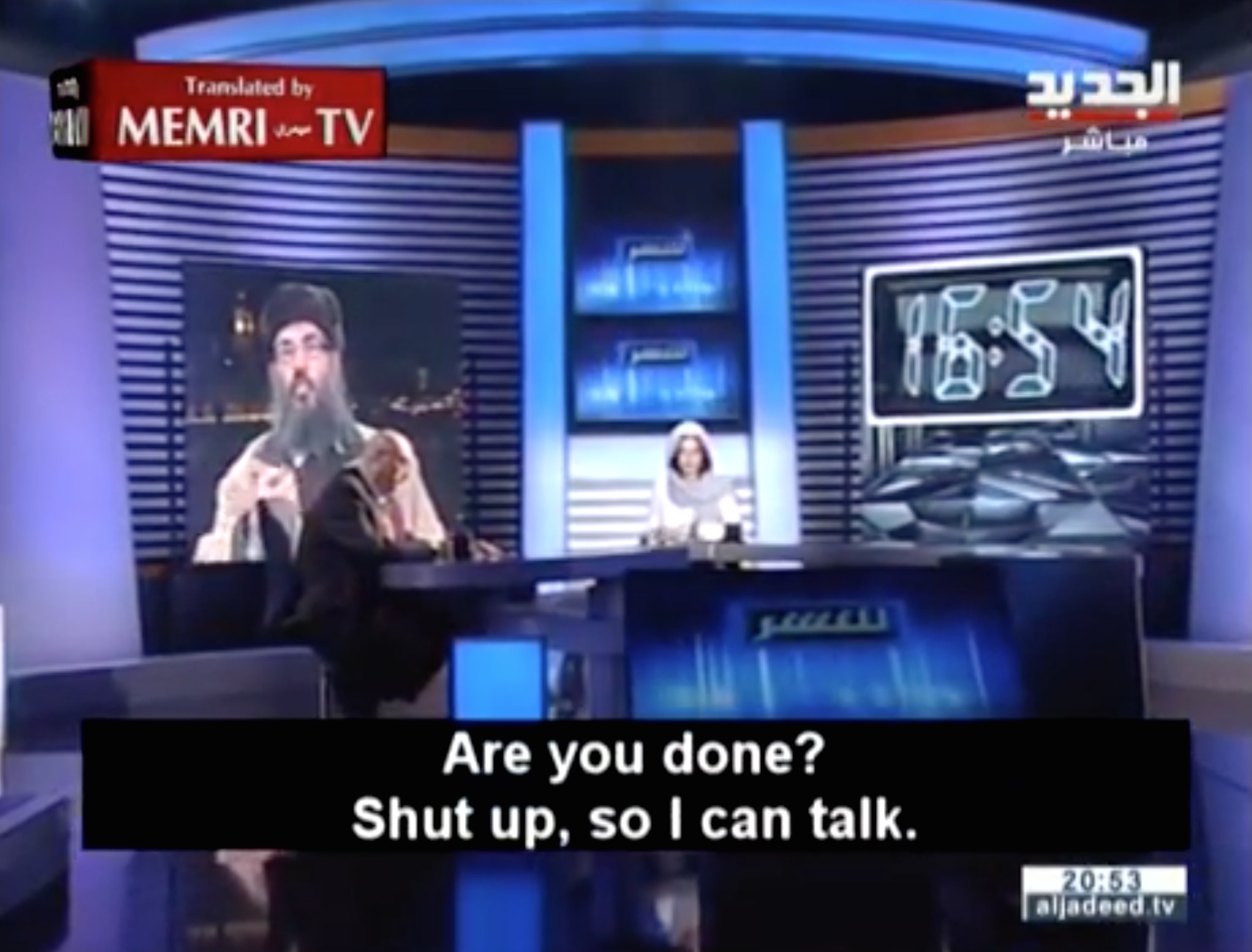
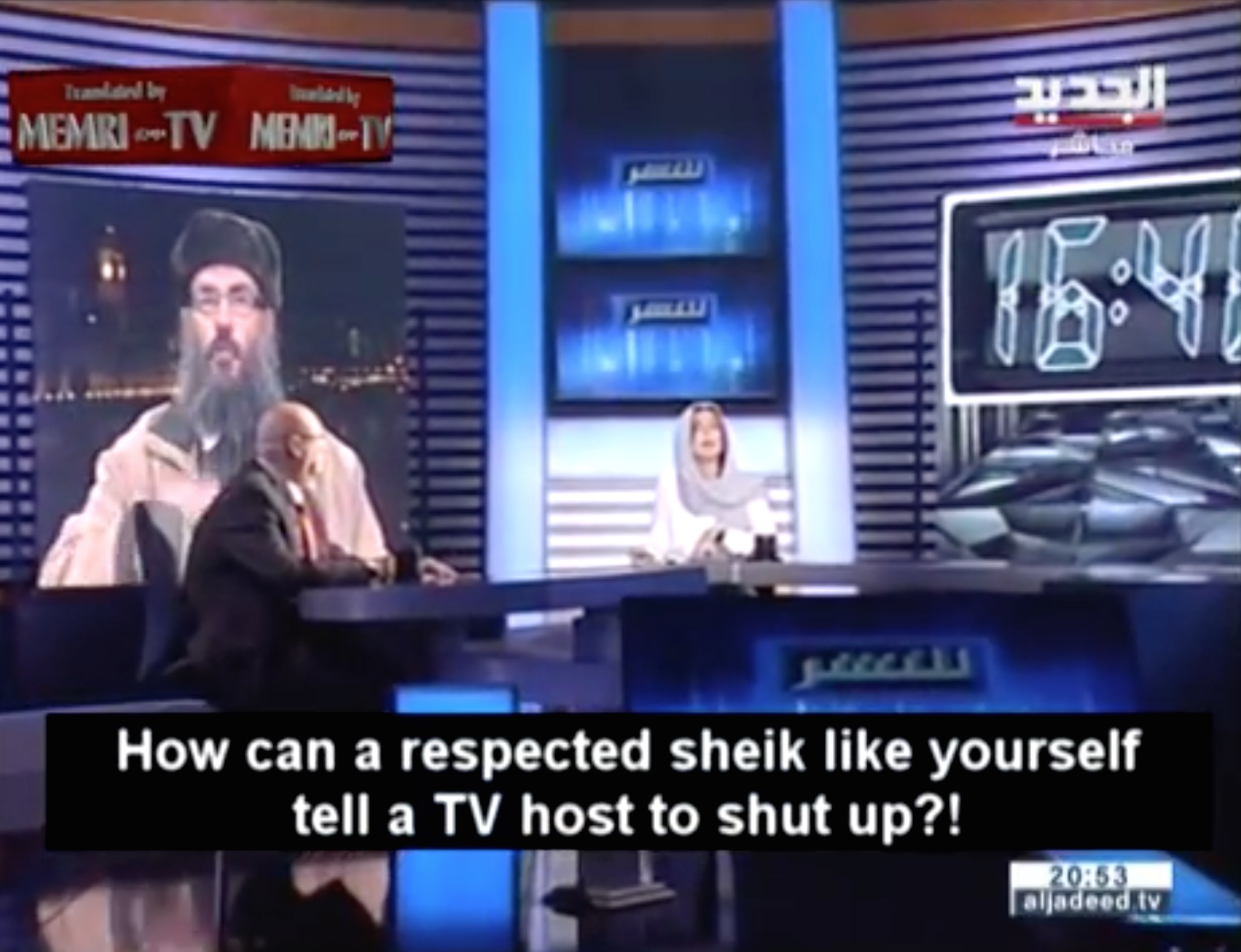
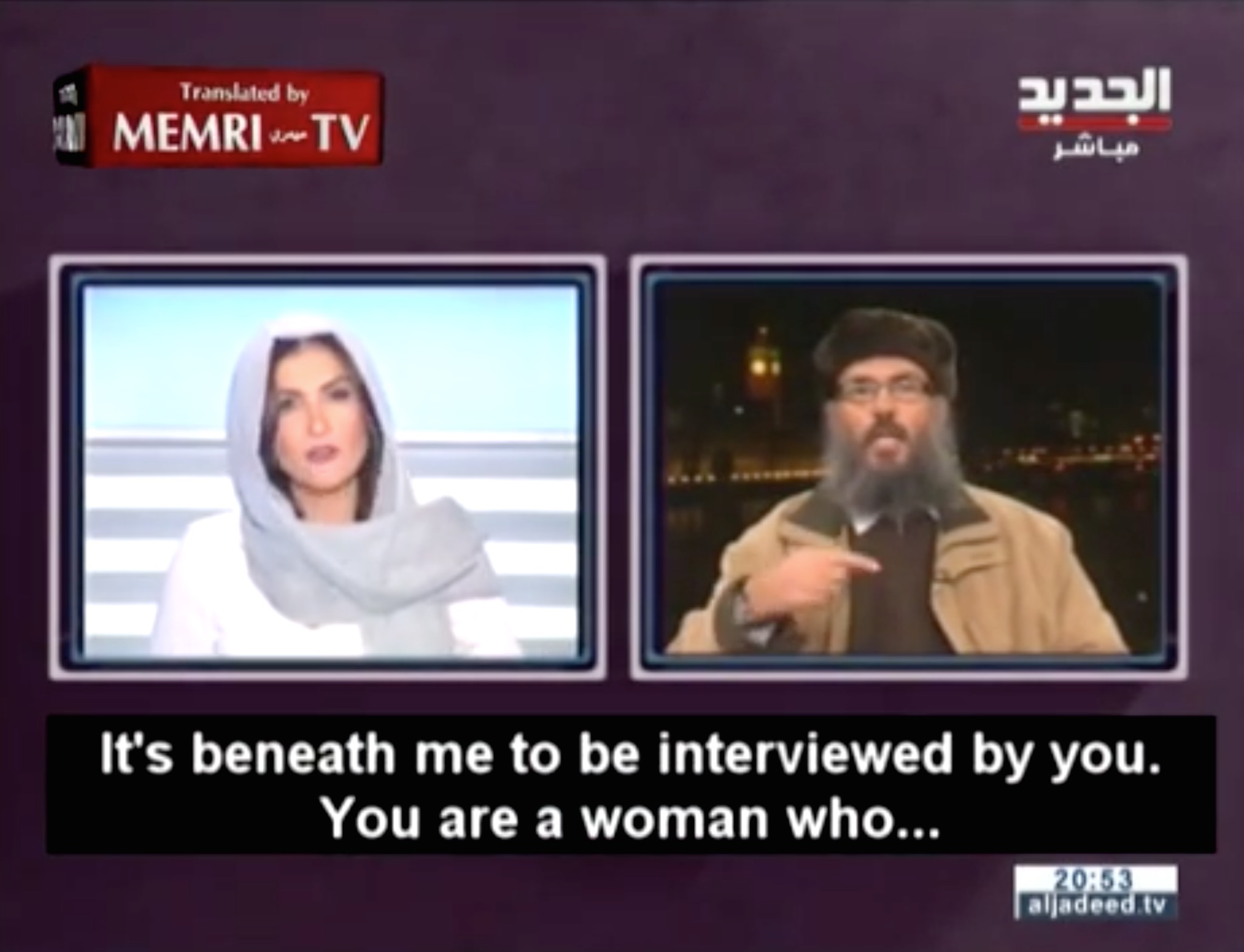
Out of all people that interviewed him over the times, Lebanese TV presenter Rima Karaki drew the thickest line. She wore a veil out of respect to his presence (even if through satellite from London), and he ended up demanding she shut up for trying to direct the conversation in a manner suitable for her TV show.

She did the opposite and cut him off right there on air, stopping him from spewing even more hate and disrespect to her and, indirectly, to Middle Eastern and Arab women everywhere.

Hani Al Siba’i is a representation of the sheikhs roaming our lands who think everyone should abide by the rules they have in mind, who think they have the right to shut up a woman just because she dared speak up and who have the audacity to not only request it, but shout it on platforms that always give them a megaphone.

In those 2 minutes, Rima Karaki did something that many women in the region are too afraid to do: stand up to a bully who happens to be protected by religious establishments and fear that allow him to thrive.

Rima Karaki - 1

When Al Siba’i tried to intimidate her, she stood her ground and still tried to take the harness of the interview away from his monologue.

Rima Karaki - 2

Instead, she told Al Siba’i something that probably no other woman he ever encountered has ever told him: she would be the one taking the decision.

Rima Karaki - 3

So because this was all too weird and foreign to him, Al Siba’i reverted to what he knows best and told Rima to shut up.

Rima Karaki - 6

So while trying to be respectful, Rima Karaki answered back. I’m sure he wasn’t used to getting that thrown in his face… ever.

Rima Karaki - 5

So naturally, he reverted to full blown sexism and disrespect to bring Rima down. She didn’t budge. She cut his mic off and then his feed.

In those 2 minutes, Rima Karaki did what every single person, let alone women, should do to people like Al Siba’i: cut them off. I couldn’t not find myself rooting for her. There’s nothing sweeter and more beautiful seeing a woman standing up to someone like him in that manner, someone who hates women and contributes every single day to their detriment.

If I were her, I would have thrown away the veil too, just as the Egyptian anchor did a couple of years ago (link).

Ironically, in those 2 minutes NewTV produced the best TV in their history. This is the full video:

On March 8th, 2015 this is the view across the Middle East and Arab world:

  • Women in Lebanon are not allowed to pass on their citizenship to their children. They are not protected by a decent law against domestic abuse.
  • Women in Saudi Arabia are not allowed to have authority over their own self; their male relatives do. They cannot go anywhere without male chaperones. They are not allowed to run for any government body that is allowed to legislate. They are not allowed to drive. They aren’t allowed to go out without wearing appropriate religious attire.
  • Women in Jordan are still the victims of rampant domestic violence and honor killings.
  • Women in the U.A.E. can face jail time if they are ever caught engaging in pre-marital sex, or drinking.
  • Women in Egypt are still the victims of female circumcision, a barbaric practice whose sole purpose is to decrease their sexual drive.
  • Women in Kuwait and Qatar cannot pass their citizenships to their children. They’ve also only recently, and very limitedly, started to try and become more engaged in the political life of their country.
  • Women in Iraq are being forced, in some parts of the country, to wear head scarves and traditional abayas to cover up. Their political presence only stems from the quota required to be filled by women according to law there.

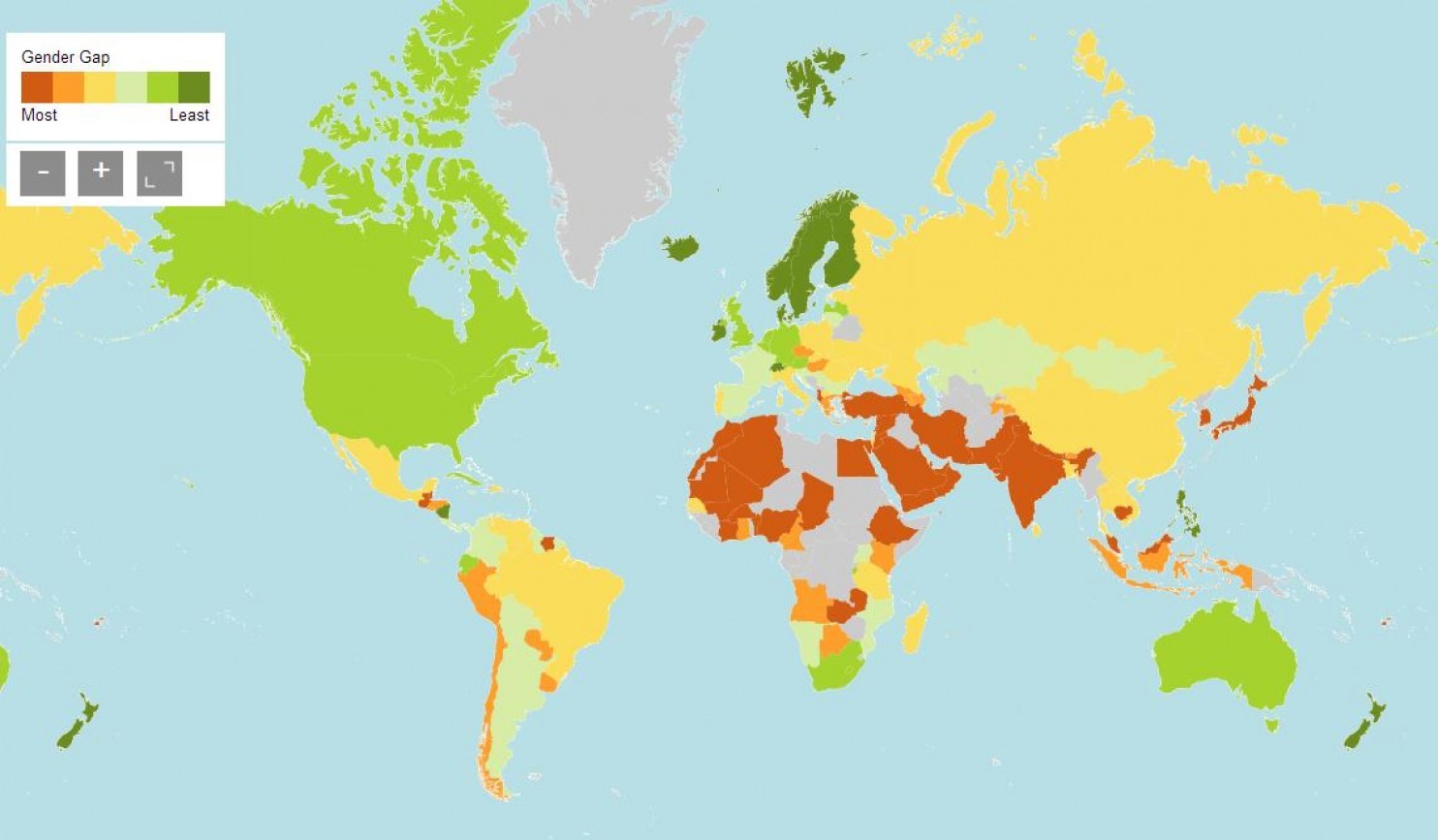
We live in the region with the world’s highest gender gap.

Gender Gap World

And what is common between all those countries is that the value of women is always contingent upon the integrity of their hymen, their worth relative to the purity of their bodies, their purpose in life is to breed and procreate, but rarely produce, and never, ever, stand up to religious authority without facing repercussions.

Until today.

If there’s anything to empower Arab and Middle Eastern women this year around, it’s this. It’s standing up to those who contribute to those women not having rights, who bring them down every time they try to stand up to themselves, who think that “woman” is an insult, who think women should shut up when a man is speaking and who are given a religious cloak to make all their poison holy.


Why Lebanon’s Health Sector Is Messed Up

Abdul Ra’ouf was a 4 months old baby boy and he is another Lebanese tragedy. He was refused admission to hospitals in Akkar and has passed away. I suspect Abou Faour will hold a press conference soon.

In late February, a scandal hit Hotel Dieu as the Ministry of Health, led by Abou Faour, froze its contract with that hospital over them not admitting a patient who had no other form of coverage.

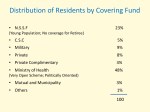
Heartbreaking stories of children dying make headlines, but they don’t tell you the truth of the health sector in Lebanon. That truth is in the numbers:

Before going into what thosee numbers mean, let’s take the hypothetical scenario of a hospital with 100 beds. The beds in that hospital are divided according to coverage: those covered by insurance have the biggest chunk allocated to them (let’s say 70), while those covered by NSSF have 20 beds and those covered by the Ministry of Health have the remaining 10.

Hold that thought for a second and let’s talk about the numbers.

Half of the Lebanese population (48%) is covered by the Ministry of Health (MOH), while 23% are covered by the NSSF (daman) and only 8% are covered by private insurance. This means that about 2 million Lebanese have the MOH as their ONLY way to afford hospital care in the country.

Having half of your people covered by the ministry doesn’t seem too bad right? The truth of the matter is far less utopian.

Having half the country covered by the MOH means those 48% are entirely dependent on the MOH’s budget. The disaster is when you find out that out of all the ministries running this country, the budget allocated for the MOH to cover the needs for HALF of the country is 3%.

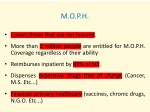
How The Ministry of Health’s Budget Is Divided:

16% that budget goes towards expensive drugs notably cancer treatment. Patients not covered by the NSSF have to resort to the ministry for their medication (if they can’t afford it, which is the case of  99.7% of Lebanese).

Getting the medication out of the MOH isn’t easy. Sometimes they run out of the medication and you end up having to wait until they bring it back into the country. Other times, as has happened with a friend of mine who needed a $12,000 treatment over the course of a couple of months, other people come in and take the medication that was allocated to you, sign for you and leave.

The system is rigged with wastas, bureaucracy and corruption.

80% goes to hospital care, which is where most of the people need the MOH: operations, hospital admission, etc.

So imagine ONLY having 80% of the country’s 3% budget used to essentially treat 50% of the Lebanese population. This is why the MOH has the least number of beds at the country’s major hospitals: the MOH often doesn’t pay, and when it pays, it does so extremely late.

So when you hear that a patient couldn’t find a bed at a particular hospital, it doesn’t always mean that every single bed in the hospital is full, it means that the beds for that patient’s coverage are fully occupied, and that is very easy to occur when 48% of the country gets a minimal amount of beds in the country’s major hospitals.

Does that sound harsh? Of course it does. All Lebanese are entitled to excellent care and that level of care is, sadly, rarely available outside of Beirut and its major hospitals. Why so? Because excellent care is not cheap. Those imaging equipment with fancy names you hear being thrown around on shows like House, MD and Grey’s Anatomy cost in the millions. Every time a hospital buys something to advance its level of care, they pay figures in the seven digits. Even the research that goes into advancing care is expensive.

The level of care being expensive is a big problem. The bigger problem is not having hospitals that are close to the level of those inside Beirut outside of the capital. Most of the people in the country cannot afford places like AUBMC, SGH or HDF, but they can go to public hospitals where the level of care has the potential to be excellent but is handicapped by how little funding those hospitals get.

4% of the MOH’s budget goes to help public hospitals. What you need to know is that public hospitals are not exactly under the jurisdiction of the MOH, which means that the Ministry isn’t responsible for their finances and how they run: they have a separate board of directors that is required to run them and keep them within profit margins. However, as is the case with almost all public hospitals in the country, very few (if not none) are success stories because of the lack of governmental support that goes toward them.

I rotated at one of those public hospitals not too long ago. It wasn’t an eye opening experience because I do come from a non-privileged area of the country, but it was a heartbreaking one. The hospital was in a state of near-decay. Some of the equipment didn’t work.  And all the patients were one sad story after the next.

The latest high profile example is Beirut’s Governmental Hospital which has been in the news for months now because of the lack of payment to employees. Imagine not getting your salary for months. Does it make it okay just because you’re a doctor or a nurse?

What Happens When The MOH Freezes Its Contract With A Hospital:

As a response to HDF not admitting the patient (who wasn’t a case of emergency in which case the hospital is required by law to take care of a patient), Abou Faour decided to put his ministry’s contract with the hospital on hold. I suppose he thought that was punishing the hospital enough, and you thought he was defending your rights in doing so.

What freezing that contract means is that those 10 beds in that hypothetical hospital are no longer allocated to patients covered by the MOH. Freezing a contract with a hospital affects the patients, not on the hospital.

Hospitals And Doctors Can Also Be Greedy:

There are a lot of hospitals and doctors in the country that are greedy, and the system permits the perpetuation of that greed.

The most relevant story to that regard is of someone I knew who required a major surgery. That person’s community tried to intervene by raising the funds. Eventually a high profile charity heard of that person’s problem and donated. In doing so, they forced the hospital in question to lower their required fees by a decent amount, because that charity needed the invoices to be audited abroad.

A lot of this goes on behind closed doors. The lack of regulations means that you don’t know which part of the money is going where.

The Media Doesn’t Help:

Out of all sectors in the country, medicine and healthcare are the juiciest to be spoken about in the media, and the way the media talks about hospitals and about patients dying is ignorant.

A couple of weeks ago, Marcel Ghanem shared a story on his show about a woman who died at a hospital in Jbeil because they didn’t give her some covers from the cold. People were outraged. Were those nurses seriously watching Yasmina and not giving the woman a blanket? What an atrocity!

The truth is very different.

That patient was a cancer patient. As a result of her chemotherapy (which she was able to afford!), her immunity was immensely suppressed, rendering her unable to defend against infection. The patient presented to the ER of that hospital with what we call “neutropenic fever,” which is fever in the background of immensely suppressed immunity. Why did the patient die? Because she ended up in septic shock, a condition with extremely high mortality.

But that doesn’t sound too media-appropriate. The problem with Lebanese media isn’t that they talk about stuff that go wrong in hospitals. They should, and they should do it more. It’s that the angle they often use is useless, leads to zero changes and doesn’t highlight the real problems here: inequality, lack of funding, lack of coverage, etc.

My Own Sensational Story:

She was such an adorable 4 year old when she walked into the doctor’s clinic in Beirut, coming all the way from Tripoli. What’s your name, we asked. Farah, she answered in a barely audible singsong voice.

Farah was there for further reparative surgeries for a congenital defect she had. A tube was sticking out of her neck to allow her to breathe. The doctor offered to do the operation pro-bono, but the hospital had no beds available for her.

I saw her father weep. I have already lost two daughters, he said, by settling to hospitals in the North because I couldn’t afford Beirut. I don’t want to lose her too. And in a corner of the room, I saw my colleague tear up.

Farah is 48% of the Lebanese population.

My colleague then approached me and said: this is something you need to write about, and so I did.