Two Lebanese Stand-Up Comedians Detained For Public Lewd Behavior: Showing Underwear

When did this take place? In 2009.

What happened? Comedian Edmon Haddad, who appears in the New TV show Chi.N.N, and Rawiya al-Shab were detained for a comedy show they did in Gemmayzé.

Why? Haddad apparently showed his underwear in the comedy show, as the above picture shows, and they auctioned off some of the men in the audience as a joke.

As a result of all of the above, a media outlet present at the event decided that this was a breach for public morality and reported the event in an article that was picked up by a judge who ordered the comedians to be detained based on the information in that article alone.

So dear judge, whose name is apparently forbidden from being circulated, let me ask you a few things:

1) How reliable and law-conformant is a judgement in which your only proof is something you read? How about we start using Al-Jaras as a reliable witness in Lebanon from now on?

2) What exactly is breaching public moral that we’re talking about? My public moral was not breached by a comedian showing a part of his underwear. I’m pretty sure the only one whose moral was violated at that event was the reporter. So if one person feeling violated is enough, this brings me back to…

3) How about you issue warrants against a dozen parliament members who breached my public moral by calling each other lewd words on national TV during three consecutive days?

4) How about you issue warrants for the MP and the head of a certain political party who threw chairs at each other on national TV and basically used every Lebanese curse word known to us?

At this rate, everyone whose underwear shows above their jeans’ line walking down the streets should be very careful. Some media outlet might write an article about how they feel offended by you and you might be detained. This makes the naked Ain el Mrayse guy’s act much more courageous than insane, don’t you think?

The comedian in question, Edmond Haddad, had the following to say on his YouTube channel:

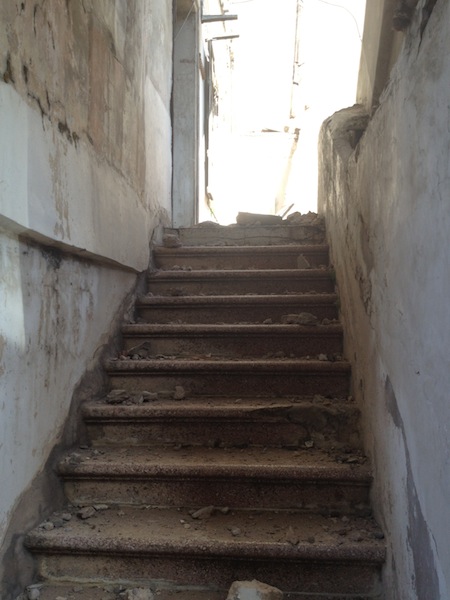
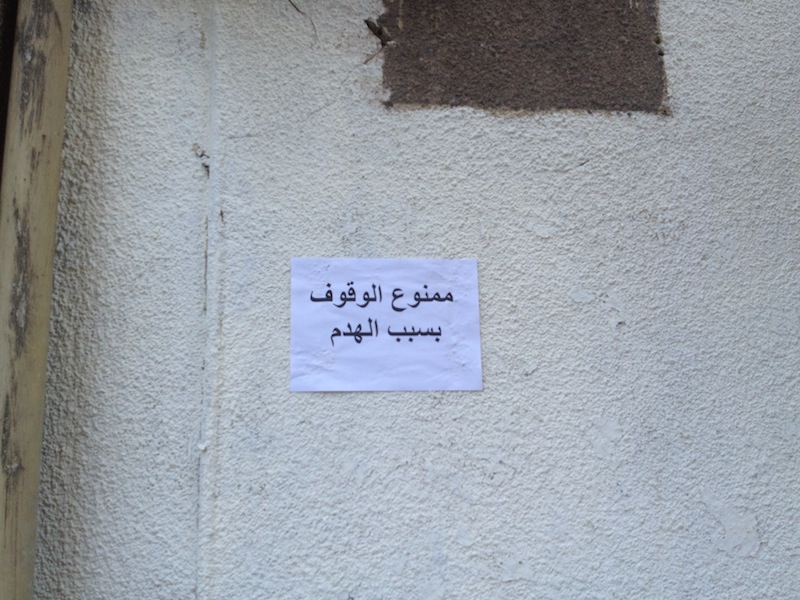
Old Achrafieh (Geitawi) House To Be Demolished

A few seconds’ walk away from my house is a small building that I never took much notice of. That small building, however, is counting the days until it exists no more to give way for a new high rise.

As I walked next to it this past weekend and was taken aback by the metal frames to keep people out, I looked at the facade of the two-story building and couldn’t but notice how beautiful it could be. It’s a shame really that the mentality of renovating instead of demolishing isn’t taking hold in Beirut, especially Achrafieh.

Former minister of culture Salim Warde had a law proposition involving forcing contractors to have the new building they intend to erect be of the same number of stories as the one they demolished. His proposition went into a bureaucratic drawer and will probably never get out of it.

Achrafieh desperately needs such regulations. It’s fast becoming a concrete jungle of buildings that all look alike and feel imported, without a Lebanese flavor to them apart from the people that live in them. It’s a shame really.

And what’s even worse, the parking situation in my apartment’s street is about to get worse. People were allowed to park next to the building set to be demolished. The new building will obviously not allow that.

Zaitunay Bay Observations

I visited Zaitunay Bay this past Saturday, several months after my first visit, so I was able to see the place with all its newfound hype.
The last time I visited, the place was very new. We were among the few people there. This time, however, was different.
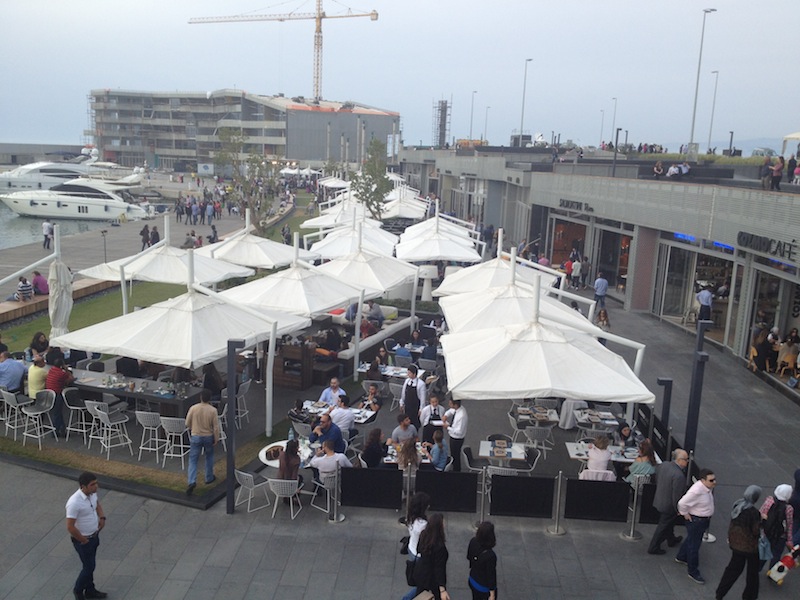
To say Zaitunay Bay is crowded would be stating the obvious. It would also be a gross understatement. That’s not necessarily a bad thing. After all, it’s the new “it” place in Beirut. People will get over it eventually.

Until then, here are some things I observed.

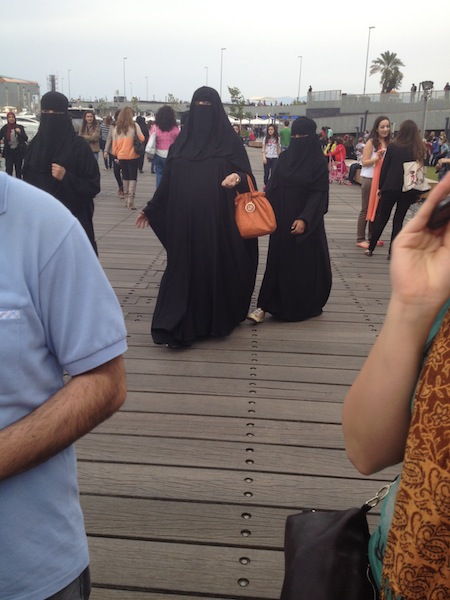
1 – Lots of Arab tourists. Taking poses on the boardwalk, taking pictures with yachts. Buses dropping them off and then picking them up when they’re done. The khalijis have apparently left their previous favorite Beiruti destination ABC and are not hitting the Bay.


Syrian men posing

Khaliji women walking


2 – Lebanese girls: you know those New York Times articles that talk about Lebanese girls walking on Zaitunay bay’s boardwalk in heels? They are actually true. My friends and I were sporting your regular everyday clothes. To say we were underdressed would be laughable. We were almost beggars compared to the girls with full makeup and designer clothes, coming to strut on the boardwalk. This isn’t a catwalk. This is a marina. You’re supposed to come here to have fun and not trip 23 times/meter while walking. But they gave us a pretty good laugh.

Guys, get your eyes off from the top portion of the picture.
They tripped so many times, it was as if we were watching the two stooges.

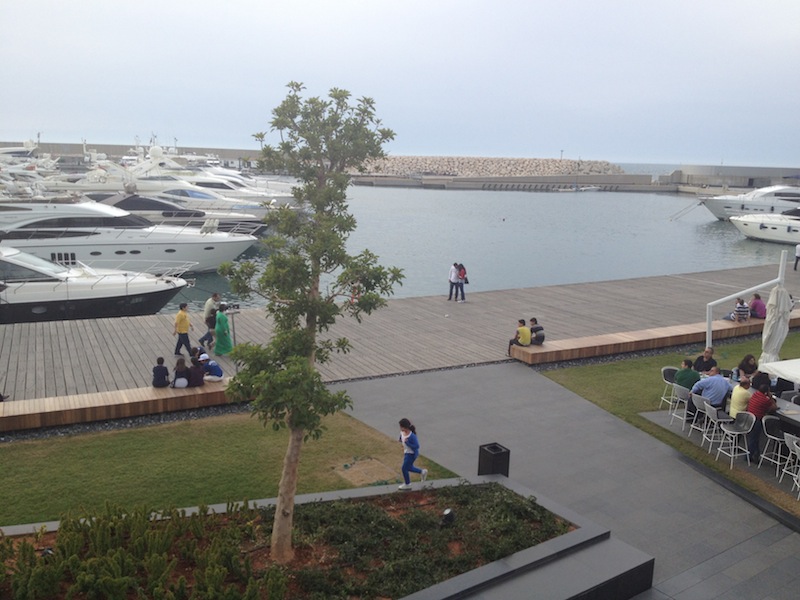
3 – Sturdiness: The place is very well-built and has many nice views of Beirut’s waterfront, as well as the Lebanese mountains. Do I think it’s enough for publications to gush about it? Absolutely not. It’s not a ground breaking project. If anything, it’s highlighting the shallow part of Beirut that I don’t particularly like. But for an hour or so, taking a walk around it is nice.

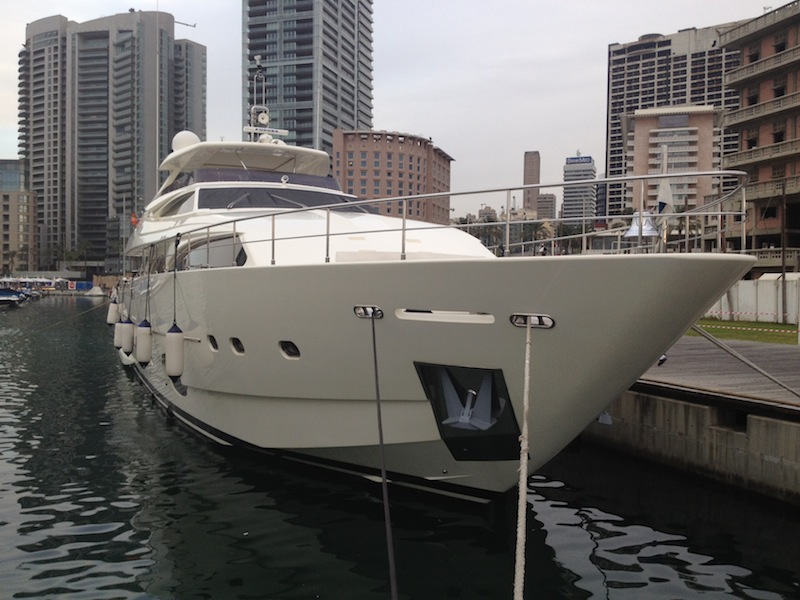
I invite you all for Sunday lunch on my yacht

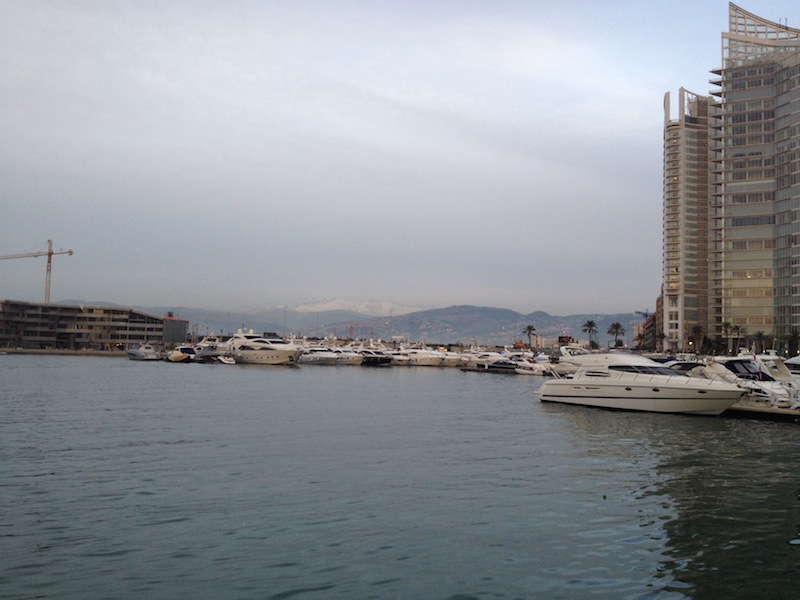
The bay, edited with the iPhone app Camera+

You can see the Lebanese mountain Sannine in the background, the snow still visible

The New York Times & Beirut Love Affair – A New Article: Beirut, the Resurgent Haven for Arabs

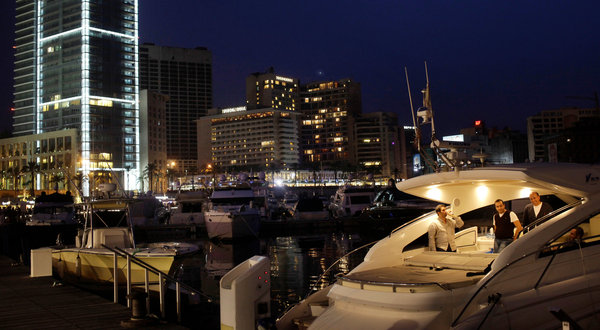
The picture used by the NY Times

If you felt that the NY Times is writing way too many articles about Beirut lately, you’re not mistaken.

A new article which appeared online yesterday talks about a resurgent Beirut, becoming a haven for the whole region. The point of the article is to show Beirut as a safety zone for the Arabs of the region, escaping the woes of their own country.

Of course, the backdrop of this safety zone is a cosmopolitan city that’s reborn where women strut on yachts in heels and Louis Vitton bags – I’m not kidding, this is how the article starts.

Sure, Beirut is among the safest cities in the Middle East today. But does talking about the safety of Beirut necessitate briefly taking about the fragile political status quo of the country and focusing more on the importance of Zaitunay Bay and Cafe Younes in harboring those seeking shelter?

In a way, I think the article is too superficial, making the city look, from the perspective of Arabs this time, as a place where they can escape the torment of their regimes and the situation of their countries by sunbathing and going shopping and laughing about the situation where they’re form.

Call me critical but I think a Syrian spending her time in Zaitunay Bay and an Egyptian taking a break from the political suspense of her country are not representative of the people in their corresponding countries, most of whom cannot afford to call Beirut a haven. Perhaps if the NY Times had bothered extending its scope from the few rich Syrians enjoying la dolce vita in Beirut, ignoring whatever’s happening in their country, they’d look at the thousands in refugee camps in the North, afraid to go back to their country and not exactly sunbathing on a boardwalk?

I love that Beirut is a safe city. I love that we’ve been in a state of peace for more than 4 years now, with very minor hiccups along the way. But this very narrow journalism and drawing conclusions based on very limited observations isn’t the best way to showcase Beirut.

I guess it’s what people like. Either way, we are sure proud of our little safe haven here.

IDM Unlimited Nights: Fail!

I had a DSL subscription with IDM for the whole year last year. I had to stop it during December because I moved out of my Achrafieh house and my grandparents didn’t need it.

I had unlimited hours from 11 pm to 7 am that I used extensively and it was great. However, I recently called IDM to install a subscription because the need for internet in the Achrafieh household arose. While discussing the details, I asked if I get unlimited nights and they said yes. So naturally, I subscribed to one of the smaller packages offered because I wouldn’t need a big quota if I can get unlimited quota at night.

5GB per month it was.

I activated the DSL this past Sunday and behold, I don’t get unlimited quota. IDM was closed on Monday so I called on Tuesday and apparently they hadn’t discussed unlimited nights with me. I was making stuff up. And if I had asked them, they would have told me they couldn’t offer it because the “central” didn’t have enough open ports anymore.

So now to get unlimited internet at night, I either have to wait two or three weeks until the governmental decree goes into effect. And if that doesn’t happen, which you know is very likely in Lebanon, I’ll have to cancel my subscription and re-apply again, hoping I’d get a port. It’s a matter of luck apparently.

The saga doesn’t end with me. Twitter user Rabih faced the same thing with IDM while installing DSL at his house in Bsalim. He filed in all the paperwork and went to make sure he got unlimited nights. They said no. So he told them he didn’t want a subscription anymore. They replied that they’d see what they can do.

A week later, IDM contacted Rabih telling him that they have secured a port for him and that he will be getting unlimited nights. However, once his DSL got installed, he didn’t get unlimited quota. The reason? They didn’t activate his port because everyone would be getting unlimited nights in a month.

No, we’re not nagging for the sake of nagging. When an area supposedly has the option to have unlimited night hours, you don’t expect some people to get such a thing and others not to, depending on how lucky they are. Either everyone gets unlimited night traffic in a certain area or no one does.

How much sense does it make that my neighbor in Achrafieh, who lives less than 20 meters away and who shares the same central has unlimited night hours and I don’t? How could they actually tell you: Oh we’ve run out of ports for you. Sorry. You pay the same amount as everyone else in your area except you don’t get to use the internet as much as they do?

Lebanese companies taking their customers lightly and treading on them needs to stop. What’s worse? They actually had the audacity to tell me that I haven’t really paid much so I shouldn’t nag. So dear IDM, if I had paid $1 to get a service you advertised, I expect to get that service. As a company that respects itself, you need to get a grip.