
It is that time of the year when something Lebanese gets nominated – again – for this competition that doesn’t know when to end. The first version of it was an interesting idea. The New7Wonders of Nature, in which our own Jeita Grotto competed, was fine.
But with New7Wonders Cities, they’re taking it way too far. The city representing Lebanon in the competition is Beirut and just today, the New7Wonders Facebook page promoted voting for Beirut in the following manner:
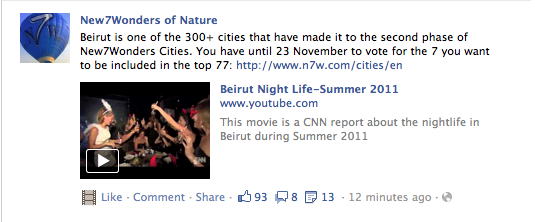
Yes, they are marketing Beirut solely for its night life. The video they linked was a revelation to me and I have a few things to note.
1) Do we have nothing else to brag about in Beirut apart from Skybar and other clubbing places? If that’s the case, then we either don’t know Beirut or we simply disregard the parts of the city that are not hyped enough. Have you ever taken a walk around from Sioufi to Sodeco in Achrafieh, for instance, on a Saturday night after dinner using those streets that cannot fit cars?
2) The former (or is he still around?) minister of Tourism Fadi Abboud specifically says about the night life scene: “this is the reality of Beirut.” The question asks itself: is he serious? But he doesn’t let it go there. He proceeds: “la joie de vivre is our brand.” Sure, we are a lively people. Sure, we have faced many adversities in life and came out triumphant. But what kind of “joie de vivre” is he talking about when the only “joie” being discussing is drinking your mind away? Don’t get me wrong. I appreciate a drink every now and then. But I sure don’t want my happiness in life to revolve around how many clubs I go to on a given Saturday night and how many drinks I can take in before my body says enough.
3) The SkyBar owner Chafik el Khazen is sure “this is what makes Lebanon very special. There’s no planning so we try to [cut in with picture of hot girl dancing] have as much pleasure and fun as possible as if there’s no tomorrow.” I beg to differ with Mr. el Khazen but not planning and pretending as if there’s no tomorrow is not what makes Lebanon “very special.” What makes Lebanon special is not the copycat nightclubs their owners try to advertise as pioneering.
4) We need to stop acting as if “tomorrow” is such an uncertainty in Lebanon. It will happen, whether we like it or not, and more often than not, nothing out of the ordinary happens “tomorrow.” We need to stop using the civil war as an excuse for the “joie de vivre” portrayed in the video. We are not the war generation. Most of us have never even seen a bomb explode, let alone seen a person die because of such a traumatic experience. We do not get to use our parents’ daily struggle as children to justify our own lifestyle. Pretending as if there’s no tomorrow doesn’t make our society special. It’s a major reason as to why we’re barely advancing as a country.
5) Pier 7’s owner considers Beirut’s nightlife scene as its way of comeback to its former glory of “Paris of the Middle East” [not Switzerland]. Exactly how night clubs benefit a city when it comes to the things that truly matter, I have no idea. Achrafieh has barely any parking spaces. Old buildings are being torn down on daily basis for ugly looking new high-rises. Our public transportation sector is despicable. Beirut still gets power outages and they are increasing. We don’t have urban planning. But yes, building Pier 7 just outside Beirut is affirming Beirut’s position as the Paris of the Middle East because having a nightclub is what makes or breaks a city.
I fail to see the correlation between the history of Beirut and how its turbulent past led to the “hedonism” of the present. I actually fail to see how promoting Beirut and Lebanon as the party capital of the Middle East will achieve anything. If non-Arab tourists wanted to party, they’d be doing it in their own backyards, in their own pubs and nightclubs, which may well be better than ours. This is why the New7Wonders marketing of Beirut is such a failure – if this is what they believe Beirut is all about, then we should be ashamed.
Lebanon and Beirut have much more to offer than Monday at Skybar, Tuesday at White, Wednesday at Pier 7, Thursday at Gemmayze, Friday at Hamra, Saturday at Monot and then Sunday for sleep. Beirut is a city that embraces its chaotic side – it is what makes it alive. We may not like the randomness of life and the lack of law-abiding citizens but it is actually what gives Beirut its feel.
What makes Beirut special is the fact that it was destroyed and rebuilt seven times. Beneath every layer of the current Beirut is an ancient city waiting to be unraveled. But we’re so afraid of Beirut’s heritage that we are tearing it away at any opportunity we get.
What makes Beirut special is the fact that when walking around the new Downtown, there are Roman columns still standing erect around the renovated buildings.
What makes Beirut special is that St. George’s Cathedral in Downtown has ruins below it that few people know exit. Those ruins tell the story of a city that been around for thousands of years – that has survived countless civilizations, wars and destruction. I doubt our forefathers would be happy the city they worked so much to build has become known as a haven for “hedonism.” And if anyone’s proud of the image some agencies are trying to propagate just to increase their business, then they don’t deserve Beirut.
I may have come off harsh towards Beirut in previous posts. But it is only because I love this city so much that I hate to see it misrepresented in such a way. Tourists who come to Beirut don’t want to experience the nightlife only – they want to see what we’ve been taking for granted all along. They want to see the things their own cities lack. And that is why I love Beirut.
As for the N7W competition, I’d hate for my capital to be subjected to what Jeita went through and as such, on top of their nonsensical promotion, I will be abstaining from voting.
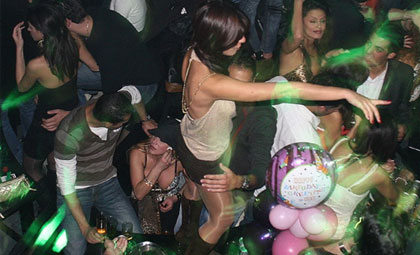
Simply put, this is not Beirut:
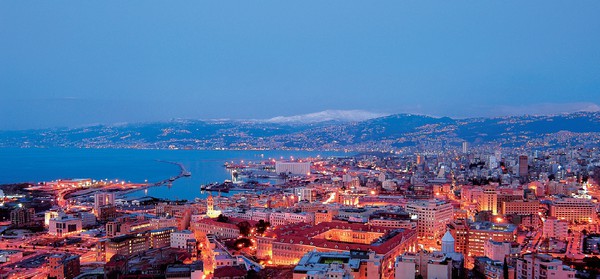
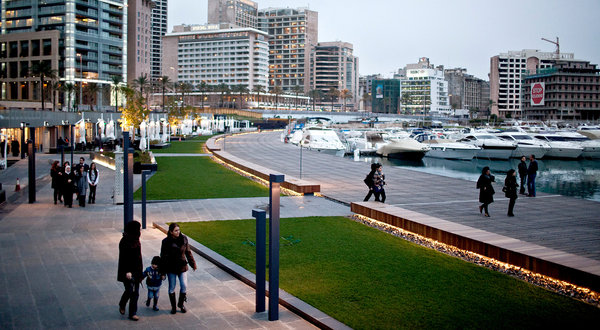
But this is Beirut, nightlife and all:





 A Separate State of Mind | A Blog by Elie Fares