The Man Who Burned Down New TV (Al-Jadeed)

Because accepting a differing opinion with a free spirit is not the norm, we’ve reached a level where we attack TV stations that broadcast anything we disagree with – despite that TV station breathing “our” air, for the most time.

NewTV, which is pro-March 8 in Lebanon, was attacked yesterday by one of March 8’s supporters. His name is Wissam Alaeddine. He is one of an armed gang that committed the act.

Why did Wissam attack New TV?

Because a day earlier they had the audacity to host extremist Sunni cleric Ahmad el Assir who trashed Hezbollah and Amal, the former of which Mr. Alaeddine supports.

How did I know this? Well, everyone has Facebook. Even Wissam. And he supports the cause of “Sayyed Hassan” whatever that may be. (link).

Soon after hosting Al Assir yesterday, and after the uproar that followed, New TV basically disowned Al Assir and anything he had said using their platform. They had gotten their ratings. Their political scoop was made.

But someone saw it differently. How dare New TV stray from the path it always followed? How dare they not continue their 24/7 brainwashing – like other Lebanese TV stations – that is needed for the ignorant masses? How dare they broadcast anything that uses “Sayyed Hassan’s” name in vain?

Shame on them, shame on them. Let’s burn them down. Burn them all down.

And that’s what they tried to do.

Here’s how it is Lebanese media, now that the sarcastic bit is over: you are not allowed to diversify your scope. Some people won’t be happy with that and if they have the resources they will act upon it. Wissam Alaeddine was caught. But he’s part of a dangerous and growing ideology that those who speak differently from what “we” think need to be terminated and silenced.

Good luck Al-Jadeed with the Ahmad el Assir aftermath.

An Update on the Land Sold in Dlebta, Keserwan to the Saudi Prince

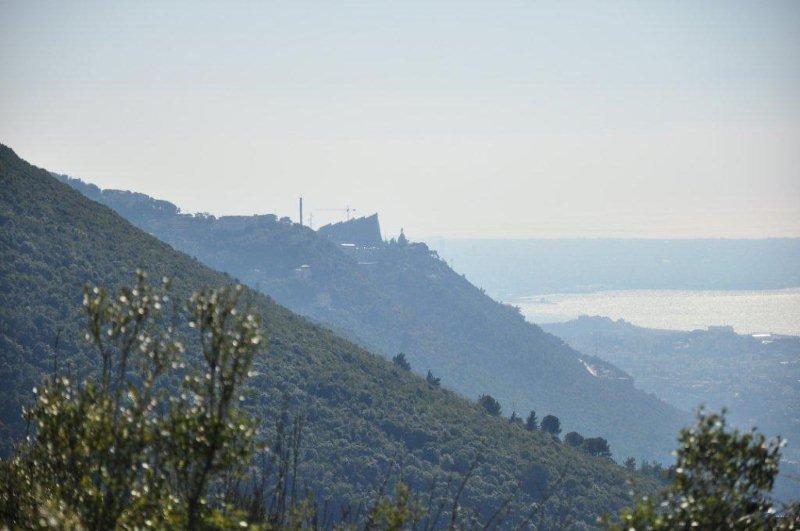
The view from the land sold

Following up with my post from Tuesday about the land in Dlebta that was sold to a Saudi prince, Pierre Daher, the person who had shared the original picture which went viral on Facebook, had the following to say in order correct the information I had shared in my post about the sale:

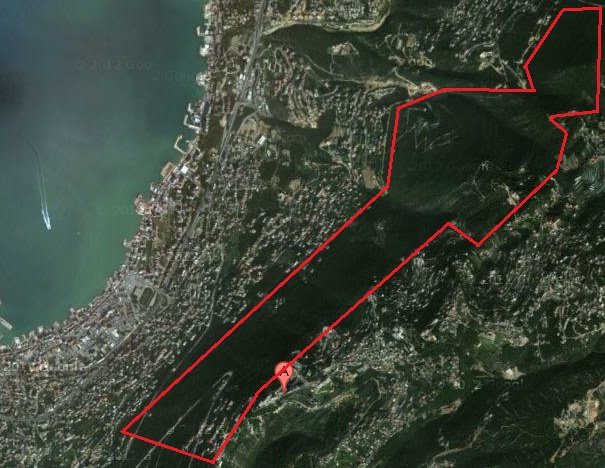
This picture is not representing the Dlebta valley Sold. This is the very nearby area of Harissa Valley! The red line represents the Harissa valley and has NOT been sold. Dlebta is just in the top right corner of the picture outside the red frame.

For reference, you can check out the post in question here and the picture here. In the meantime, these are the facts regarding the land sale, according to this article by Annahar and other sources:

  • The decree to authorize the sale of the land to the Saudi Prince was passed in the Official Gazette on April 26th, 2012 – almost a month ago. The land that was sold is not as huge as originally thought. It consists of 4 properties, numbered 76 – 157 – 160 – 1152 in the Dlebta region, a town that hadn’t seen lots of real estate movements similarly to the surroundings towns. The sale was brokered by a Lebanese man who’s not from Dlebta.
  • The total area of the land which the Saudi prince purchased is 7700 squared meters. It is part of Tallet el Salib, which neighbors another hill called Tallet Mohammad. Talks are already underway to purchase a part of that hill as well.
  • The presidential decree that was signed and passed in the gazette allowed the Saudi Prince to purchase the 7700 sqm land even though the limit for non-Lebanese is 3000 sqm.
  • The authorization to approve the sale was signed by President Michel Sleiman, prime minister Najib Mikati and minister of Finance Mohammad al Safadi.
  • None of the Christian ministers in the ministry spoke against the sale despite their previous stances against such transactions in Christian areas.
  • The owners of the land are a rich Maronite family in the region who had previously sworn not to sell any land to anyone from outside the region. I guess the Saudi Prince is not “ghrib” anymore to the Keserwanis.
  • The municipality of Dlebta was not consulted in the matter of this transaction.

A few things, however, still need to be said:

  1. The fact that the land is not as huge as originally perceived doesn’t mean selling it should be permitted. I am firmly against selling Lebanese land to foreign nationals especially those coming from countries where the people of the aforementioned areas have very limited rights.
  2. The sale of this land, especially allowing it, sets a dangerous precedence for the entirety of the Harissa Valley, which is highlighted in red in this picture. If they allow this land to be sold, then what would stop the selling of bigger properties in the valley some other time?
  3. The fauna and flora argument is irrelevant to many Lebanese – but the area in question is one of the few areas in the region that has been kept relatively untouched. In fact, half of the area highlighted in red in the above picture has been made into a reserve by the Maronite Church to prohibit commercial activities in it.
  4. The Dlebta sale is not the first and won’t be the last. In fact, much worse sales have already taken place and received much less attention. Why so? It could be because they’re not situated in an area Lebanese Maronites consider sacred. For instance, 740 acres were purchased by Hezbollah from a Christian man in the Chouf for a total cost of $240 million – one of the richest land deals in Lebanese history.
  5. According to this report, here’s how the sales of land breaks down in select areas: the towns of Ajaltoun, Rayfoun, Mayrouba & Kfardebien in Keserwein have 80% of their lands sold to non-Lebanese, as well as 85% of the town of Alma in Zgharta. The story is similar in the Chouf, Baabda, Batroun and other regions as well. This is a reality, not paranoia.

Let me tell you the story of a very good friend of mine from a very small, almost irrelevant, village in the caza of Aley. There was once a man who needed money so he decided to sell the only land he owned and he knew it won’t go for much. Why so? Because the village barely had an access road to begin with and his land was nowhere near it. It was also almost unusable for agriculture. Why would anyone need a land like that?

And yet, an offer from a nearby village came in. It was much higher than what the seller had thought possible. But why would the buyer want to buy this land? Why would anyone buy this land? The town’s people rallied together and pitched in to keep the purchase from passing forward.

True, the example I gave is a matter between Lebanese but when foreigners start to desire and work on getting Lebanese land as well, then we must get very worried especially that many Lebanese can’t afford the prices of land in their current state but those foreigners can. If we keep letting foreigners, regardless of country of origin and supposed limits that they can obviously work around, buy land without any form of regulation, which is the current case, then we won’t have a country to return to.

The people of Dlebta are organizing an event to support their cause this Saturday. You can check it out on Facebook here.

Happy Liberation Day, Lebanon?

I remember May 25th 2000, 12 years ago, when I came back home all giddy with them letting us off from school early. We had heard whispers at school: “The Israelis have left…. the South is ours again.”

I felt happy. I felt proud of my country. Even though I had never been to the South, I felt liberated.

So today, I salute all the readers of my blog who come from South Lebanon, however few they may be. Blame it on my political stance that drastically differs from theirs. I salute all those who fought for Lebanon’s freedom from Israel before that fight started being used for political gains here and there. I salute all the martyrs that died in the process of trying to take back every inch of Lebanese land.

But today, 12 years later, I can honestly say Liberation Day has lost some of its flavor to me. Not because of current political reasons, not because I utterly hate the political party which led to that day but because it reminds me that my own occupation is nowhere near to be acknowledged.

April 26th…. That day I saw the Syrian army trucks leaving my land, hopefully to no return. That day I saw my mom shed a tear as she drew a sigh of relief – the horror has gone. That day I saw my grandfather smile like a child as he breathed for the first time in his Syrian army-free hometown.

When will Lebanon truly admit that Israel and the South weren’t the only entities in the country occupied for years? When will we admit that Northerners and people from Mount Lebanon struggled almost as much as people in the South?

When will we admit that your “brother” becoming your enemy is much more dangerous than a stranger enemy with whom you barely have anything in common?

Today, May 25th is another day that reminds me of Lebanese hypocrisy, of how the deaths of those that fought to get the Syrian army off my land, prior to the Rafic Hariri assassination era, are all looked down upon: a bunch of traitors who aren’t worthy of being acknowledged.

And it makes me sad, really, that on a day where I should be happy for my country’s sake I can’t but feel sadness for the memory of those who fought for liberation and don’t have a day to remember their struggles.

You can’t understand liberation unless you’ve been under occupation.

May 25th, I’d salute you when you salute April 26th.

The Shadi Mawlawi Lesson for Lebanon

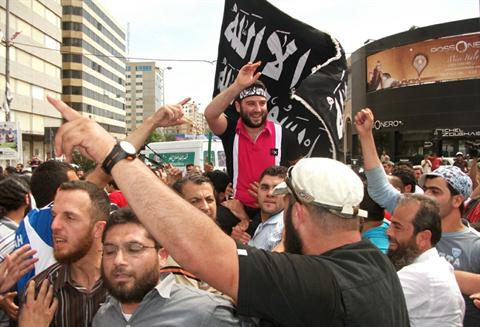
For all matters and purposes, Mawlawi is irrelevant. In a few weeks, he will only be remembered as the man who was important some time ago. But for his followers, Mawlawi represented a cause, a reason to fight and stand up to a state they hardly consider their own.

Arrested last week, the salafists got into fights that led to destruction and chaos amounting to millions of dollars. Mawlawi got bailed out yesterday for $300. His release was celebrated in the streets of Tripoli: the return of the savior, the hero, the “messiah” of the salafists, the one who represents their struggle.

Mawlawi’s release has showed the salafists what they can do. It showed everyone what can be done to get what you want. Induce chaos. Start havoc. Block the streets. Burn tires. Kill people. Bomb buildings.

The government? It will cave.

The army? Too weak to retaliate.

The ISF? Too involved to be relevant.

Political leaders? Their influence is waning.

Shadi Mawlawi’s release has showed an inherent flaw in the design of Lebanon. There is no state. This is a farm of “people” grouped together. The toughest “person” who can get the others to cower the most for a specific period of time rules.

One of the many diseases in Lebanon is the “Shadi Mawlawi” disease. It exists in many sects and political parties: people who rise from zero to hero in the matter of seconds, who manage to rally the masses behind a “cause,” who get the masses to die for that “cause” and who end up burning the country for a matter that is irrelevant.

There are too many Mawlawis  in Lebanon to count, too many people above any consideration, above any law, above any form of government, above any form of civility. Shadi Mawlawi, Samir el Kentar, the airport officer who led to the May 2008 events, the Islamists of Nahr el Bered…

And then there are those who are taken by the Mawlawis of Lebanon and who believe burning tires is the best solution to get your voice across. The sad thing is they are getting results. It is here that I reiterate the question I asked yesterday: in a country of savagery, is civility the best option for  self-preservation?

“Hay balad? hay mesh balad… hay shellet 3alam. Majmou3in? La2. Madroubin? La2. Ma2soumin? La2. Matrou7in? La2. Oum fout nam w sir 7lam enno baladna saret balad.” – Ziad el Rahbani.

The Different Classes of Lebanese Prisoners in Syria

First Class:

13 pilgrims were kidnapped in the Syrian city of Aleppo today. These pilgrims are all Shiite and were taken by rebels as their bus passed through the city on their way back from Iran.

As a result, Hezbollah-supporters are now burning tires and closing the roads. Hassan Nasrallah is now having a speech to calm his people down. It’s obviously working. His level of control is unparalleled. Talks are already underway to release the 13 men.

Prediction: they will be out in a few days, max.

The Less-Than-Dogs Class:

Every other Lebanese prisoner present in Syrian prisons or still missing because of the Syrian occupation of Lebanon. Their parents have been protesting for the past 5 years non-stop, asking for any news about their sons and daughters. They’ve been hearing nothing. The parents of these men and women don’t want their children to return alive anymore; they just want any news about their children for the sake of a thirty-years stretched out closure. Even that is too much to ask for.

What’s the “fault” of these men and women? They are Christian or not part of the pro-Syrian assembly of the other sects.

The conclusion:

It is here that I have to ask: is burning tires, closing roads and threatening civil war the only way to get to something you want in Lebanon? Is turning the country into a more savage jungle the only path towards forcing others to meet your demands?

After the past few days, I’m beginning to think so.

It is here that I ask Christians in the country: In a country of savagery, is our civility the best option for self-preservation and to make our voices heard?

How much more double-facing can the other sects in Lebanon take until they crack as well?