Telecom, Mobile TV and LTE 4G in Lebanon

I was recently invited to an event held by the Ministry of Telecommunications in Beirut to discuss the accomplishments of this ministry throughout the past year.

Many numbers were unveiled to show improvements from year to year. For instance, the number of data subscribers in Lebanon has tripled in the past year, due mostly to the introduction of the 3G data bundles. The country had about 200,000 subscribers in September 2011 and more than 900,000 in September 2012. The speed has increased 18 fold, from 70Kbps to 1.8Mbps, on average. Although I believe the comparison is slightly unfair since we’re comparing different generations.

Smartphone penetration in the country is more than 50%. DSL subscribers have increased by about 40,000 over the past year, up from 200,000, which I found not to be that impressive considering all the price drops. The average speed is now 1Mbps. But nothing was mentioned about improving the speed further up to the speeds that are currently advertised as possible. For instance, as a subscriber with IDM, I pay $50 per month for 2Mbps and 20GB in quota. I get the 20GB but I only get 1Mbps. However, since I live in the North and we don’t usually get upgrades quickly here, the comparison may not be accurate. But it’s the same situation in my apartment in Achrafieh where I also get only 1Mbps.

The minister also announced that 5 companies have gained rights to start introducing data services in the country, making the total 7 with Alfa and MTC. I believe this should increase competitiveness and maybe bring the prices down although no timeframe for the introduction of these companies’ services was announced.

When it comes to the current generation we have, 3G, it was announced that Alfa, for instance, has over 800 towers to cover a lot of Lebanon. My problem though is that the advertised coverage is still greater than the realistic one. Many areas which have 3G theoretically on Alfa’s map are not covered in real life. However, the coverage has definitely improved throughout the year and seems to be progressing as such. My problem with 3G, and this is even worse with the upcoming 4G, is the pricing. I don’t have a problem paying $19 per month for a data subscription… if I got more than 500MB. With 3G and being a little careful, the 500MB can be barely enough. But I believe that if the ministry’s hope of getting the country high up the digital age is to be realized, then the quotas need to be drastically improved.

For the full report, click here.

Mobile TV:
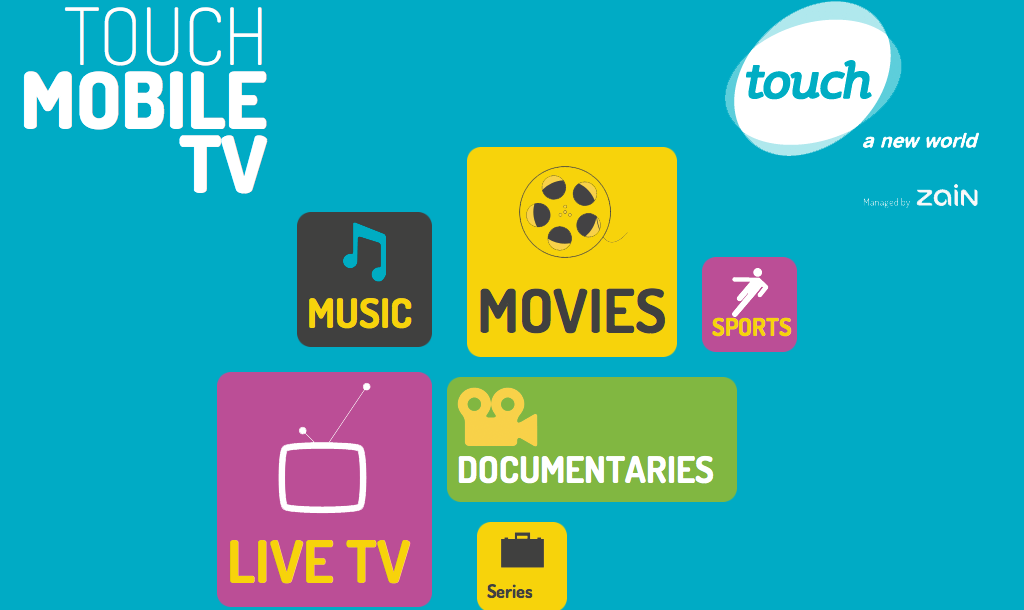
MTC announced a service that they will be unveiling in the first quarter of 2013 called Mobile TV. The service will allow users to watch a selection of movies, documentaries, series and sports reports on the go. They will also be able to stream live TV without going to a channel’s specific website.

Mobile TV, however, will not be using your existing quota. After all, what will 500MB do if you wanted to watch a movie on it? MTC will be selling Mobile TV as bundles which will allow you access to a specific number of channels. The prices were not decided upon.

I personally think this service is slightly more useful than “changing the tone to a song one” because it’ll be very hard to top that in the matters of uselessness and silliness. But overall, I think this is fairly useless. Perhaps some users who actually don’t own a TV set, rare as they may be, will find it useful. But for the absolute majority, I believe the cost-effectiveness of it, especially if you combine it with the much more useful mobile data, will deter them from actually becoming loyal to the service, although I see many trying it out for a month or two.

After all, why would I need TV on my mobile?

Either way, you can check out the demo of mobile TV here.

4G LTE:

As I had told you before, the frequency that Lebanon will be deploying for LTE is band 3 which means that most commercial phones equipped with LTE coming from outside the US will work on the network, though most LTE users at first will be iPhone 5 users because most LTE-equipped android phones haven’t been released in Lebanon yet, as far as I was told by an Android-enthusiast.

The area that Alfa’s LTE will be able to cover indoor spreads from about Geitawi to Downtown and down to some parts of Baabda during the initial launch phase. MTC did not unveil a coverage map. The coverage outdoors expands slightly but this is basically the area that will be covered.

The red areas are the indoor coverage and the gray areas next to them are the outdoor coverage

20 sites have been equipped in order to provide this coverage and Alfa will be sending out mobile sites to universities across the country to show students the service. They’ve also launched the pilot testing phase yesterday with commercial launch aimed at the second quarter of 2013.

I asked them about trying to be part of the pilot testing but they said the people have already been chosen, which I thought was disappointing because I’m sure I’m not on that list. I also asked them about potential prices for the 4G LTE bundles and they said decisions haven’t been made yet. However, I shared my concern that 500 MB quotas and 4G will be absolutely ridiculous. I basically stood there as the Alfa spokesperson showed me LTE speeds and counted to 5 in front of him as I pointed out to the data he had downloaded in those 5 seconds. And that was my entire monthly quota.

The average is for the last 30 seconds. This was taken at the beginning of the test. A few seconds later, the average became well over 90Mbps

The speeds that I was shown averaged around 90Mbps with Alfa and about 70Mbps with MTC. However, they both admitted that these are lab speeds that are as such because they’re the only ones using the network. When the pilot testing phase ends and 4G becomes available for the public, expect speeds to be much less than 90Mbps although far, far higher than their 3G counterpart. After all, do you need more than 30Mbps as speeds?

Upload speeds, though, were far – far less impressive with both MTC and Alfa averaging 1Mbps.

Nothing was mentioned about whether rolling out 4G will be as problematic as when 3G was released. Hopefully the infrastructure was improved drastically since then. Either way, 4G is rolling out with a much smaller area of coverage than 3G and I don’t expect that to change very fast because even in very advanced countries, 4G LTE is present only in major cities so far.

Other:

It was announced that the process with which a company can get an ISP license is now very easy. So expect a lot of new ISPs to pop up soon. Alfa said that about 195,000 subscribers use their U-chat plan. Alfa has over 1.8 million active subscribers. MTC did not unveil a number but last time I checked, they had more than 2 million, which brings mobile penetration in Lebanon close to 100%.

The Beirut Digital District is a nice venue and the event was highly organized. However a lot of the presenters, even though they hold high position jobs at their corresponding companies, had absolutely no idea how to give a presentation.

Ericsson unveiled a very cool and creepy device which got the attention of everyone there which turns your body into data storage. For example, you go to a hotel and you book a room. The concierge programs your lock to the palm of your hand. So in order to open the door, you only need to touch the doorknob. Futuristic, you bet.

Nothing was mentioned about upgrades to the ADSL network which I found to be odd seeing as fiber optics had been a discussion point for a while now.

A service that I believe should be added to the mobile sector is being able to change carriers while keeping your number. I don’t see that discussed anywhere.

Overall, while there’s obviously a lot of room for improvement – especially when you get a taste of how the telecom sector is in other more advanced countries – the work being done is impressive.

Who Won the AUB Elections?

Picture via @WMNader

Back when I was an AUB student, I used to get carried away with the politics of it all. Voting for this party or that will help change things on a bigger scale – I was convinced with that. And I always sought to win, at least during my first two years there. March 14th called themselves Students At Work and they’ve been that way since. March 8th change their name every year. The independents are not really independent and they’ve also become divided. You should also never count out the Jordanians and Palestinians and their sectarian voting.

During my third and last year of undergrad there, I realized that voting for this party over the other – at least in university elections – was ridiculous. My goal as a student was not to take political stances that absolutely no one would care about post the regular 24 hours news cycle. I should be voting for someone who would really try to help me as a student in my university woes. So that last year at AUB, I voted for a mixed list that included a candidate from Amal, a candidate from the LF, a candidate from the PSP and an independent candidate. I had even left an empty spot for lack of “qualified” candidates.

One thing that can be said about my AUB years is that you could always tell who won. As they separated students in front of West Hall with two huge screens and about one hundred security men, you only needed to count the chants, exclude the political ones, to know who won which seat and then follow the winning group to Main Gate and Bliss Street.

But it has stopped being this simple. Every year since, everyone seems to have won AUB. For instance, yesterday’s headlines read:

LF: A tie at AUB with a win in the “fortress” of the FPM.

FPM: A win at AUB. 

And I asked myself the question: who won AUB?

Both sides will extrapolate the AUB elections onto parliamentary elections they both hope they’ll win. The FPM will read into this as them being a majority nationally. The LF will read into this as them being a majority on the Christian field. Both assertions are absolutely unfounded and ridiculous – but they will be made anyway. The students of both sides have already begun celebrating with Facebook statuses and celebratory tweets. We won, we won. All is well. Yay.

With rising tuition fees and a growing disconnect between students and administration, I can say without a doubt that who won AUB yesterday was not the students. Sure, it was a manifestation of free opinion, of democracy, of whatever rhetorical uselessness that gets you to sleep at night. And those students are entitled to their opinion, of course. Let them vote whichever way they want.

The problem is all of these students voting because of their political opinion don’t know exactly exactly how low the attendance in student representative council (SRC) meetings will be once those students they elected start “working” and how little they’ll actually do towards getting them that coveted unlimited printing or whatever promise they gave. And I knew this first hand back in my days: students win and eventually forget they did, until it’s time to mention it on their CVs. Some, from both sides of the political spectrum, rarely skip a meeting. And they try to change things. But they are always faced with an administration that counts on those who absolutely couldn’t care less outside winning and flexing their popularity muscles around.

As AUB students cast their vote against the weapons of Hezbollah or for the weapons of Hezbollah in that university ballot, they were all forgetting one key thing: how will their parents keep paying their rising tuition fees, along with all those university rising costs that are correlated with them? How do they feel about a lack of transparency with their professors and with their administration? How do they feel about AUB remaining the way it is for years and years without change?

Then next year will roll around. And all of these students will still be nagging about the same old things: where’s our unlimited printing? And then they’ll vote the same way again because a vote in AUB is one Hezbollah weapon removed or a firm message for the resistance.

You want to know who won AUB? It’s the status quo that both political camps in the country can erroneously analyze into a vote of trust from the youth that will most definitely be voting for them next year. But hey, it’s not like the “independent” alternative is much better either, with their hypocrisy, their under the table dealings with these political groups they’re challenging and lack of drive to work as well.

I guess we can really say it’s hopeless. The point is: voting for a political party is not a wrong thing to do… if you’re doing so for university reasons, not because some cosmic entity out there is out to get you. It is that courage of voting for someone who differs from you politically, simply because they are better qualified, that everyone seems to lack – and it’s easiest to vote as such in university elections, where your vote really doesn’t matter.

When It Rains in Lebanon

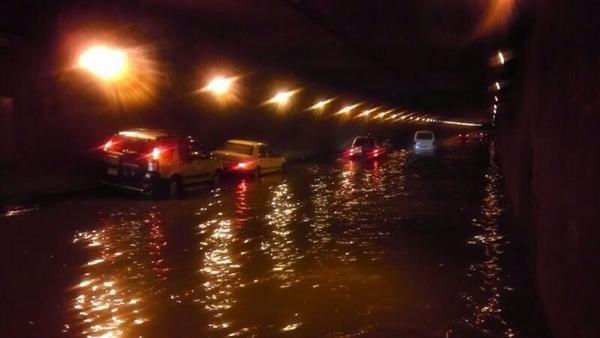
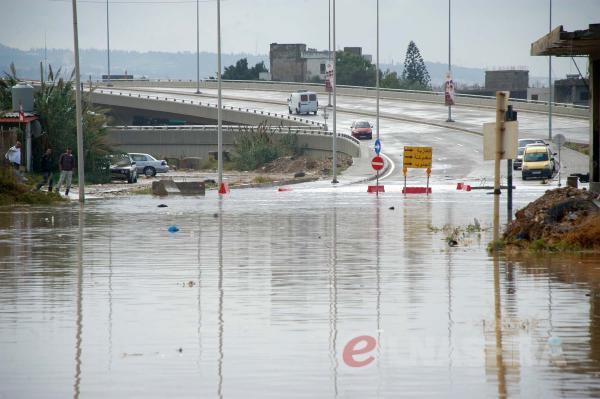
Lebanon gets hit by a modest-strength storm… we get damages equivalent to those of a US hurricane. We just have stellar infrastructure.

Where do we begin?

  1. Highways that are not even flat so water gathers on their sides, causing your car to buckle out of nowhere because we don’t even have highway lighting to see the puddles everywhere.
  2. Water that gets cut even during storms… because of shortages in water.
  3. Internet that turns drastically slow according to the following equation: internet = 1/rain. Add in a constant for recuperation in the days that follow and the formula becomes: internet = C/rain.
  4. Water drain that do anything but drain water. They might as well be a good place for future vegetative growth with all the compost they contain.
  5. Airports that turn to swamps. Airplanes that land here are so futuristic they can even float.
  6. Road walls collapse.
  7. Entire roads collapse.
  8. Buildings crumble because of the water seeping in.
  9. Traffic that pops out of nowhere the moment it rains.
  10. Potholes that get uncovered because their filling of stones and secondhand asphalt got swept away with the rain.

And this is barely  the tip of the iceberg. I wonder if the country were to ever be hit by a storm slightly stronger than your Lebanese average, what would happen? My predication is that scientists would start flocking in for a live reproduction of a Noah scenario. We are that unique.

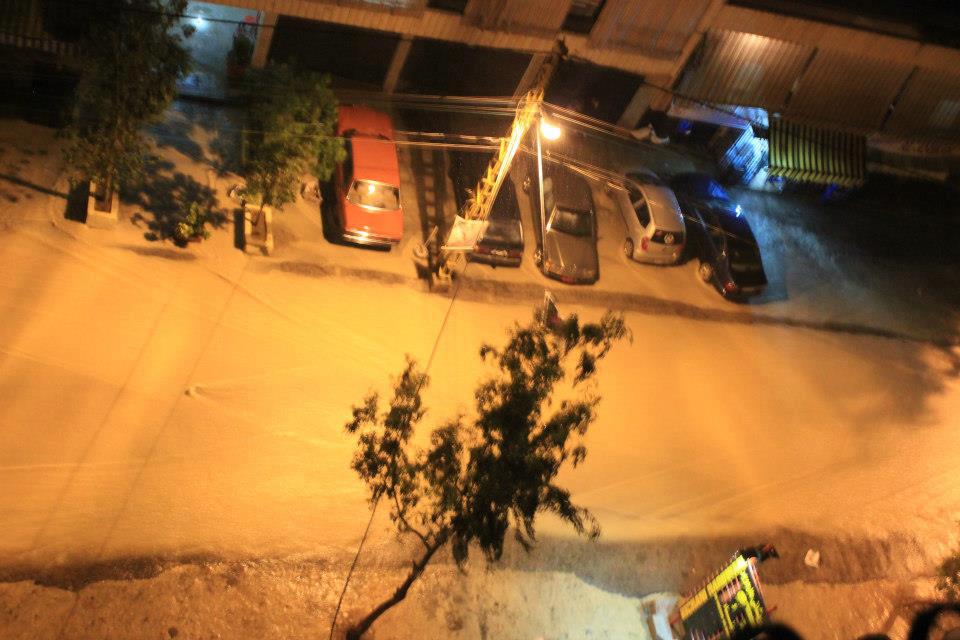
Here are a few pictures of the first major storm in this winter season. Absolutely breathtaking.

Pictures from this Facebook page.

Lebanese Saints Are Now On Facebook

I’m sure I’m not the only one who has noticed but the amount of prayers on Facebook has increased dramatically over the past few months. There isn’t a day that passes without my timeline getting flooded with “like for Jesus, keep scrolling for satan” pictures, or people sharing their prayers for everyone or others sharing YouTube videos of Islamic prayers.

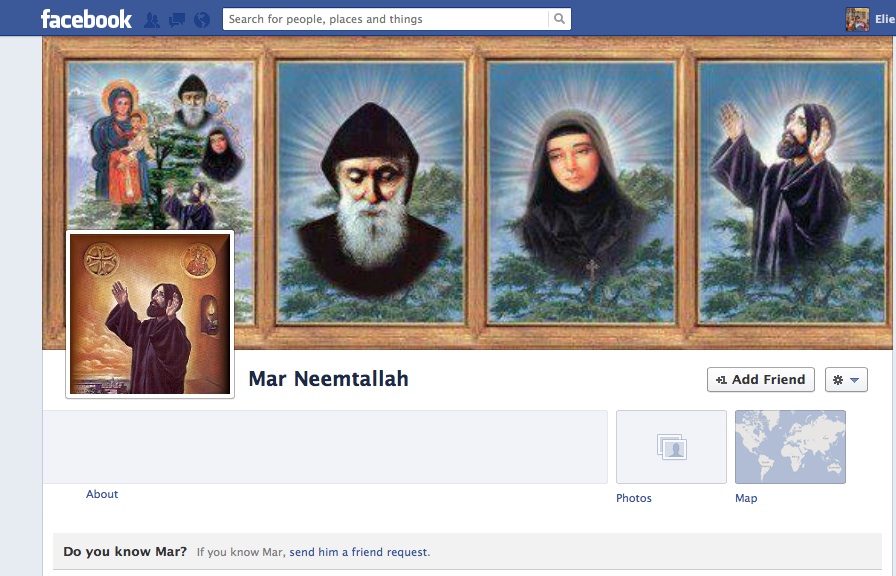
But someone has been listening up there so Lebanese Saints now have their own Facebook accounts to communicate with all the faithful seeking salvation through Facebook statuses and Facebook places check ins. The first one? Mar Ne3mtallah.


Convents are no longer the place to go to “communicate” with those saints. In the age of digital media, it seems even holy figures are jumping on the 21st century bandwagon. One does not simply stay behind the times. And because staying in convents is too mainstream.

Who’s going to be the second saint you’ll be able to befriend? My bet is on St. Rafca.

In all seriousness, start reporting these profiles. Some people have way too much time on their hands – and way too little brain matter up there.

The Rise of the Middle East’s Atheists

September 2012, Middle East:

A low-budget movie titled “The Innocence of Muslims” makes its way to the media of the region. The movie insults the prophet Mohammad and doesn’t pretend to do so innocently. The mayhem it caused became infamous, notably for the American embassy storming in Libya which made its way to the US presidential elections. Protests across the region turned bloody. Innocent people lost their lives because of cheap ten minute footage. And the image that some Muslims have been giving to Islam over the years was reinforced once again.

October 2012, Pakistan:

Malala Yousafzai, a fourteen year old girl, was shot in the head by Taliban individuals who feared her message. Malala’s message was not that of an uprising against the men who worked endlessly to make her life and the life of countless other girls like her a living hell. She was calling upon girls her age to seek an education, which most of us take for granted: the kind where we sit behind a desk and listen all day to teachers telling us things we believe we’ll never need. Her message did not sit well with the Taliban whose mission had been, in part, to eradicate education in the parts of the world where they are of influence. They had destroyed countless schools and forbade women from attending schools in their attempt to restore the days of 600AD.

October 2012, Facebook:

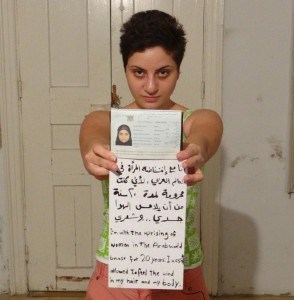
A Syrian woman named Dana Bakdounes posted a picture of herself on Facebook without the veil as part of a movement for the rights of women in the Middle East. (Check the picture here). The message Dana wrote, as part of her picture, said “I am with the uprising of women in the Arab world because for 20 years I was not allowed to feel the wind on my body… and on my hair.” The message rubbed some people the wrong way and a bunch of extremists took it upon them to silence Bakdounes, even on Facebook. So they mass reported her picture as offensive, prompting Facebook to remove it.

October 2012, Egypt:

In a post revolution Egypt where Islamists have been gaining power, two Copt boys, aged nine and ten, were arrested for defiling the Quran. Another Copt teacher was arrested after some students accused her of speaking badly of prophet Muhammad in class while another Copt is facing charges for material deemed offensive which he posted on his Facebook account. A veiled Muslim teacher also cut the hair of two girls in class who refused to wear the veil. She later explained that she had been “challenged.”

The Rise of Atheism:

The rise in religious extremism in the Middle East is touching all of its religions. Be it Christians who are worried about their fate and revert to their Bible in belief that it will somehow be their salvation. Or Jews whose reputation has become intermingled with zionism and borderline inseparable in the mind of many. However, I decided to only discuss Islam because the broader picture of the Middle East, in which there’s a tangible rise in Islamist Influence, is a canvas of Islam – as it is the region’s first and foremost leading religion, demographically.

The rise in extremism is attributed to many geopolitical reasons. It is also associated with a serious lack of understanding of religion from all involved, most notably the men of the robe who are doing more harm to their religions with their backward mentality than anyone else.

The Middle East has probably one of the world’s highest rates of religious people. And it’s simply because we were born this way. We are not allowed to choose what we want to be religiously. I was born into a Christian Maronite family. Therefore, I am a Christian Maronite. If fate had it differently and my parents were from another part of Lebanon, I may have been a follower of a different religion. And this applies to everyone. As we grow up, we are taught our religion and nothing else. Come Sunday morning, it was better for me to attend Mass. For others, they had better pray five times a day, fast during Ramadan and never eat pork or drink alcohol. During my early days at AUB, I was surprised to find that some Muslim people – obviously a minority – had absolutely no idea when Christmas was celebrated. On the other hand, I thought Achoura was a happy celebration. We rarely challenge our religious beliefs because we don’t feel the need to. Those beliefs enable us to blend in our societies and not get ostracized – at least in that regards. They enable us to connect to other people with whom we are able to identify not due to their mentality or thoughts but because of their religious beliefs. At a certain level, deep down, it’s always easier for a “Christian” to make “Christian” friends than to become friends with a “Muslim.” The reverse is also true.

Our narrow religious upbringing also limits us to the other religions present around us, especially in the region’s few relatively mixed countries. Egypt’s Muslims know very little about the Copts who were founders of their country. Lebanon’s Muslims know very little about its Christians. The opposite is also true. This lack of understanding, combined with an increased rooting in unchallenged belief, places the seed of conflict, which has been manifesting way too many times across the region.

However, religion is but one side of the coin. For with the rise of the Islamists on one side, I believe that the region’s atheist numbers are increasing dramatically, albeit most of them are probably closeted, and they are fueled by the exact same events that are getting people to become more religious, coupled with an increase of education across the board. What people turning increasingly religious see as a threat to their belief, others do not see it as such. What some increasingly religious people do to defend their beliefs, others see as a violation of freedom. What some increasingly religious people feel related to, others want to detach from it. The religious behavior that makes some religious people proud causes others to be the opposite. The picture that some extremists deem offensive, others see as a manifestation of free thought. The children seen as defiling Islam by some, others see as children being children. The girl infecting the minds of other girls with poison, which some (obviously very, very few) believe, others see as a complete violation of every single human sanctity.

One part decides to cling further to what they know because of such events. Others decide to look at alternative, which might fit better with how they see the world, away from a notion of faith that has become alien to them. After all, all they’re seeing of faith is repeated incidences of things they do not remotely agree with, despite that being as remote from what religions call for.

Religious people will call it a lack of understanding and narrow-mindedness for someone to turn atheist. They will never be convinced how someone who was born and raised on certain teachings can ditch them entirely and move towards thoughts that they find revolting. What they don’t get is that the same rhetoric they use applies in similar fashion to atheists who are moving away from teachings that they find revolting and forced upon them throughout their years.

Of course, this does not apply to all religious people as some practice their religion in silence, without letting everyone know when they’re praying and when they’re offended. But this silent majority is not the one that gives an impression. Out of a crowd of millions, the person who changes perceptions is that whose voice is heard the most. And in a time of religious insecurity, in a region of political insecurity, the voices heard the most are those of people that rub a whole lot of other people the wrong way.

Regardless of where you stand regarding the two sides of the religion-atheism coin, the image being painted is the following: religion is the bread of the poor. Atheism is the butter of the “educated.” However, the only one thing that I believe is of absolute necessity is that the Middle East needs more atheists.