R.I.P Ghassan Tueni, Lebanon’s Foremost Journalist

Ghassan Tueni passed away this morning at the age of 86, leaving behind him a legacy that has shaped Lebanon and Lebanese freedom through the country’s leading newspaper, Annahar.

Tueni’s life can be summarized by what late journalist Anthony Shahid wrote about him in this article:

He is Lebanon’s foremost journalist, a storied diplomat and a respected intellectual. Some also call him a modern-day Job, the biblical figure whose string of misfortunes never defied his faith. Tueni lost his wife and daughter to cancer, a son to a car accident, and his last child, the journalist and politician Gebran Tueni, to an assassin’s car bomb in December. Tueni speaks little of his pain, out of pride and dignity. But in a country defined less by citizenship and more by its fractious sects, his suffering and reputation have placed him tentatively above the fray. And in his twilight, he insists, he has another role to play as Lebanon is perched between the promise of long-delayed independence from foreign influence and a morass of competing loyalties.

He’s an AUB graduate and a holder of an MS degree from Harvard. He has countless publications, as well as an honorary doctorate from AUB. He served as Lebanon’s ambassador to the U.N, as well as an MP in Lebanese parliament the last of which was to replace his assassinated son.

He’s a Lebanese pioneer who helped build a beacon of freedom for Lebanon and the region. “Let my people live!” was the famous sentence he shouted in front of the U.N when he served there. With his passing, we have one less person screaming for the Lebanese to live in dignity.

Rest in peace Ghassan Tueni.

For those of you who can read Arabic, here’s the collection of what Annahar wrote this morning for Ghassan Tueni.

Emile Rahme Storms Out of Kalem El Nas Episode. Way To Go Marcel Ghanem!

Sometimes Marcel Ghanem just does good things, like tonight with him showing Baalbak MP Emile Rahme exactly what he needed. As a result, Emile Rahme decided to throw a tantrum and leave the show.

Of course, LBC wouldn’t let such an opportunity go to waste.

And here’s the YouTube video of it:

I believe the Lebanese thing to say in this case is “Allah ma3 dwelibak.” Unless they’re fried (which is probable).

This is what Marcel Ghanem had to say afterwards:

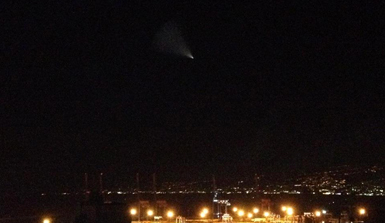
A Meteor Shower in Lebanon

It’s a bird? A plane? a UFO?

No. It’s super-…

Ah, nevermind.

Lebanon was hit by a meteor shower earlier tonight, which I missed similarly to how that last earthquake totally went past me as well. I guess when it comes to mother nature’s displays, I am not “lucky” enough to be included.

Of course, in typical Lebanese fashion, the jokes about the astronomical event are well underway. From Miriam Nour coming back home to Sergio Ramos’ ball finally reaching Lebanon, you name it.

I guess we wouldn’t be Lebanese if we couldn’t just enjoy something for what it is. Or it could be UFOs attacking – I’m pretty sure some people think so. Or some missiles sent it in by some foreign nation we don’t like. It could be that too!

And these are videos by MTV Lebanon. (Here)

Huge Land Sold In Sabbah, Jezzine to a Khaliji Princess

The saga of selling land to foreigners in Lebanon keeps escalating. After a 7000 sqm land was sold to a Saudi Prince near the Harissa Valley in Keserwan, and another land in Lassa, Jbeil was taken out of Maronite Church property to be given to the nearby Shia mosque, it’s the turn of a town in Jezzine called Sabbah to have one of its hills sold to a Khaliji woman.

The hill’s area is 40,000 sqm. It’s owned by the heirs of Habib Bassil, who owned hundreds of thousands of squared meters of land in Sabbah. His estate is run by Mona Bassil, a lawyer and one of the current members in Sabbah’s municipality. People are worried some sort of deal will also be struck regarding the remainder of his properties, which would have catastrophic consequences on their hometown.

The land itself was shown to the princess’s manager by a very renowned Maronite broker who took him on a trip around Jezzine in order to sell him some land. Of all the places that she showed him, the manager liked the hill in question because of its strategic location: it spreads from the St. Elias church near Sabbah’s center, to the edges of the Our Lady of Machmouche convent which is a very important religious place for the Maronites of the region, to the resting place of “Nabiyye Mikha” in the Northern parts of Sabbah.

The municipality is even accused of selling other properties to different people without double checking their identity, which the mayor didn’t deny although he downplayed the severity of it.

This is not the only land currently being offered in the area. Another land in a nearby town (Bteddine el Laqsh), of an area totaling 10,000 sqm, is being sold to Salafists from Saida, even though a Christian buyer is interested and has made an offer.
In another Jezzine town called Zaarour, a huge land owned by the El Helou family is in negotiations to be sold to Shia contractors who will turn the pine forest into a buildings compound. (source)

None of Jezzine’s MPs decided to intervene. Church facilities also didn’t care enough to help stop these transactions.
I guess all the people in power who are worried about Christian influence waning in Lebanon only know to preach but when it comes down to actually doing something, they are as useless as the brokers making sure the land is going to non-Lebanese or Lebanese who will change the identity of the land forever.

I reiterate – I do not raise this issue out of a sectarian agenda, but when I can’t own land in the khalij, why should they be allowed to own land in my country? And when there’s even a tendency among your fellow Lebanese to own as much land as possible for their own hidden agendas, being vigilant is of utmost importance.

It is here that I invite you to re-read (or read if you haven’t done so already) the points I raised when it came to the sale of the land in Dlebta, Keserwan.

Bab el Tebbaneh vs Jabal Mohsen: The Dichotomy Representing Lebanon?

Ask any Lebanese today and they try to distance themselves from Bab el Tebbaneh and Jabal Mohsen as much as they can.

That’s simply not us, they’d tell you. They’re just not us, we’d all rationalize.

But the simple truth is Bab el Tebbaneh and Jabal Mohsen are the perfect representation of the Lebanese id, Lebanon without limits, Lebanese without boundaries, Lebanon let loose.

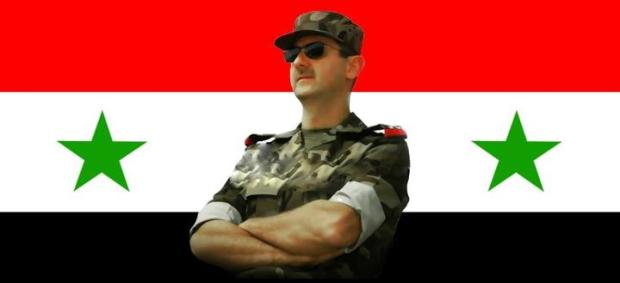
On one hand, you have Jabal Mohsen. The only thing Lebanese about Jabal Mohsen is its location. Even the people who are from there would rather be Syrians. Their leader had even asked for the return of the Syrian army to Lebanon not very long ago. In fact, this is their official Facebook’s cover picture, just to show exactly where their allegiance lies:
On the other hand, you have Bab el Tabbaneh: the poorest region in Lebanon, where people follow politicians not because they are convinced by them but because they are a source of food and living. It’s a place where many families live in what used to be prisons with no basic facilities and with each elections coming up, politicians come and throw a lot of promises around to get these poor people’s votes. And then they go into the realms of forgetfulness again.
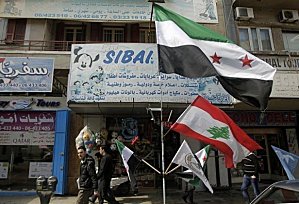
You’d never see such an array of flags in Jabal Mohsen

Both neighborhoods are heavily armed, as is the entirety of Lebanon, whether we like to admit it or not. Jabal Mohsen’s weapons are provided by Syria or its allies in Lebanon. Who’s providing the weapons in Bab el Tabbaneh? Your guess would be as good as mine. Or as good as Mustapha who wrote about it here (interesting read, by the way, so check it out).

Why are they fighting?

The struggles between Bab el Tabbaneh and Jabal Mohsen are very old. They are making news more than usual these days because they’ve become more recurrent than before, because they are being linked to the crisis Syria is going through next door and because of the different kinds of weapons used.

My friends from Tripoli have been telling me about how they’re spending their nights, cowered away in one corner of their house with their family – where the bullets wouldn’t reach them. The fights had never been this heavy. The weapons had never been this strong.

The fights between Bal el Tebbaneh and Jabal Mohsen have been recurrent since 1986 with the Bab el Tebbaneh massacre. The wounds run too deep for the healing.

You have the poor Sunnis on one side and the empowered Alawites on another. The fights are sectarian.

You have the staunch pro-Assad group on one side and the staunch anti-Assad people on another. The fights are political.

Both regions are marginalized, forgotten, and impoverished. The combination of their living conditions make them much easier to be manipulated. Both regions are puppets in the hands of those who are stronger than their people. The fights are a mere expression of other powers wanting to meddle in Lebanese affairs.

Everything aside, Bab el Tebbaneh and Jabal Mohsen are us. They are sectarian Lebanon. They are politically divided Lebanon. They are poor Lebanon. They are controlled Lebanon. They are armed Lebanon. The only difference with the rest of Lebanon? Their self-restraint regarding violence is much weaker.

It is here that I stop and give a biology analogy. A neuron, which the most important cell that makes your nervous system, responds based on an all-or-none law. That is, if the stimulus given to the neuron is above a certain threshold, the neuron will give a maximum response no matter how much you increase the stimulus.

Beirut is not much different from Jabal Mohsen or Bab el Tebbaneh. It just needs a higher threshold of stimulus because of its apparent “civility” in order to fire. And we’ve already crossed that threshold a few times.

In a way, Jabal Mohsen and Bab el Tebbaneh are a compas of some sorts to the Lebanese situation. Whenever they explode, know that there are worse things going on behind closed doors and that the crisis that our country (the Syrian affair, Sunni vs Shiite, etc…) has always found itself in is in one of its upward, rather than downward curve, of the alternative current that is Lebanese politics.