What Beirut’s Election Results Tell: Lebanon Can Hope For Change

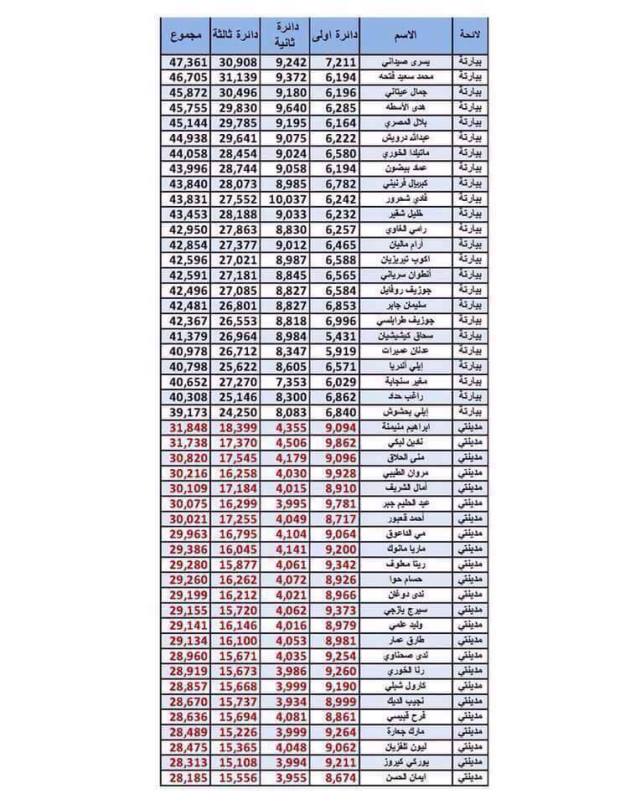
Beirut Madinati - bIERTE list 2016 2

This post was written with Ramez Dagher from Moulahazat

As promised earlier, this is the more detailed look at how Beirut voted, beyond the surprisingly great outing of the civil movement Beirut Madinati’s list, which even though it didn’t get actual seats, still has plenty to celebrate.

It is important to note that in the most optimistic of cases, the chances for any list other than the list of the political parties to win was next to zero. No this isn’t retrospective analysis. 

Despite the context of the trash crisis, rising corruption, overall voter discontentment, parliament extending its mandate twice, etc… the math of the Beirut electoral equation was never in favor of any non-political movement: the division of districts, the system, demographics, the sectarian propaganda – The Bierteh list had tried to attract voters – especially Christian ones – by proposing a 50-50 Christian/Muslim list, although Beirut Madinati had also kept the same quota.

So no, the cards were not the best that could be given for Beirut Madinati, or any other movement for that matter, simply because those cards were being played on a table that served only one side: the political establishment.

As a result of all of the above, the loudest of voters on Sunday was the low turnout.

20% Voted:

This is not a historically low number. In 2010, 18% of Beirutis voted. Beirutis simply do not vote in Municipal elections, and only do so at slightly higher numbers in parliamentary ones: 33% in 2009.

This is due to many factors. Voter learned helplessness is an important one, but so is the feel that there really isn’t a contest to begin with further increasing the sense of voter apathy. 

33% voted in 1998, the first election since the Civil War, and the lower turnout since should be enough to tell you how much people lost faith.

Many partisan voters were also not willing to vote for the “zayy ma hiye” list but did not want to break lines.

Achrafieh El Bidayi:

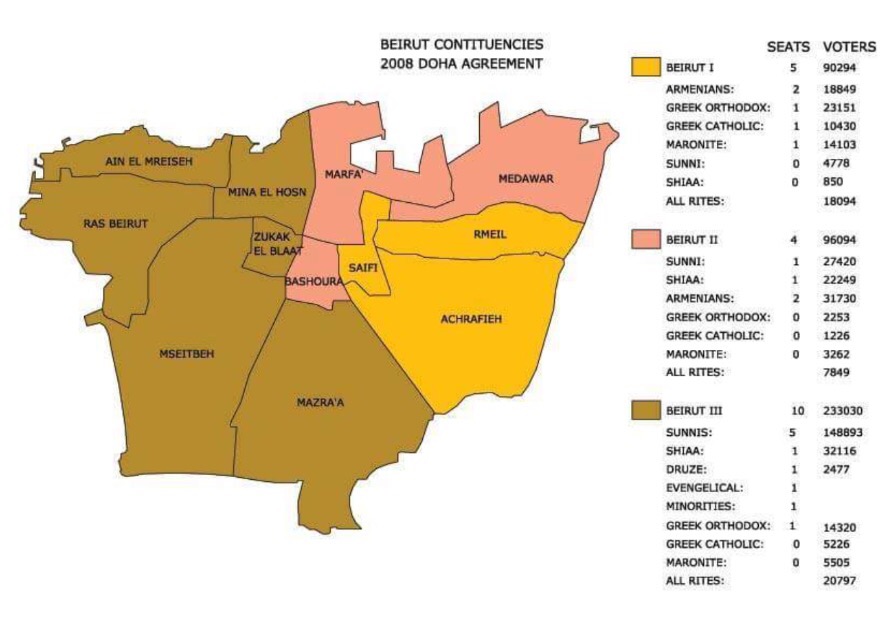
Beirut Madinati won the Beirut 1 district with around 60% of the vote, a blow to the rallying calls of Christian parties in the area for their supporters to vote for the Bierti’s list. The 60% figure is not only exclusive to the mostly-Christian Beirut 1, but is also applicable to the Christian vote in the rest of Beirut.

This doesn’t mean the weight of the LF and FPM combined is 40%. Many LF and FPM leaning voters voted for Beirut Madinati more against Hariri, but it sets the precedence that politically affiliated people can go beyond their affiliations and vote in a way that breaks what they were instructed to do.

Boycotts from the bases of the FPM, LF, and Kataeb were also there on election day, as a sign of disagreement with the recent choices of their parties: The FPM electorate isn’t a fan of Hariri; the LF base isn’t a fan of an alliance with the FPM, and the Kataeb aren’t fans of anything.

This lack of enthusiasm was probably one of the causes of the lower turnout in Christian polling stations.

The context of such a vote, however, is probably not sectarian as is circulating. Achrafieh is one of Beirut’s higher socioeconomic areas, with higher income and education rates. You’ll probably see a similar phenomenon in the higher socio-economic districts of Beirut III. Those residents are more likely to vote for issues such as reform, transportation and trash sorting. Those are also the voters that are the less afraid of change.

Many if not all of Lebanon’s parties count on clientelism to widen their electoral base. In higher socio-economic echelons, the reliance of the electorate on the mainstream parties is less.  Those voters don’t need their political parties in the neo-socialist way that most parties in Lebanon function. In Achrafieh, for example, the LF and FPM do not provide medical services, free education, job opportunities for Achrafieh voters as much as other parties in other districts, so throughout the years, the electorate managed to develop an independence from traditional Christian parties.

The Example Of Tariq El Jdide: Anyone Can Be Reached

Sectarian talk is terrible, but is a necessary evil until the political system is not one where people go and vote in segregation based on how they pray. If you crunch Beirut’s numbers, you will end up with a rough figure of around 30% of the Sunni vote not going to Hariri.

This is probably as important, if not more, than BM winning 60% of the vote in Beirut 1.

I don’t believe we can call this a dissent from the Future Movement yet, but it is a continuation of the gradual and progressive Sunni dislike of the way Saad Hariri is running things, even with his rise of popularity after his return.

The reason the Future Movement won is not because voters are “sheep.” It’s because the Future Movement, through various governmental policies, has forced the people of many Sunni areas to always remain in need for their intervention to get the basic necessities that should be a right for every Lebanese citizen, which many in other areas have access to without needing their political parties: do not cut the hand that feeds you.

The political framework of the elections is important. They come at a time when Sunnis in Lebanon feel increasingly threatened by being categorized as potential-Islamists, to the background of a party in power fighting for a regime they do not approve of in Syria.

The need to not break rank was never greater. They may not approve of Hariri, but this was not the time to show it, and yet 30% did. The situation in the country is not one where sects have the prerogative to show cracks in their facade, or have we forgotten how Christians have also forced a seemingly unbreakable veneer over the past few months as well?

All of this makes the 30% figure of Sunnis who did not vote for Hariri all the more impressive and courageous. It’s the kind of percentage that breaks taboos.

Moving Forward:

The election’s overall results are telling. In Beirut I, the LF representative Elie Yahchouchi and the FPM’s Traboulsi lead their allies in the FM by around 800 votes (of around 6500 the list got). In Beirut II, with its important Shia and Armenian electorate, almost all of the winning candidates from LB are in the 9000 votes region. One candidate however, Amal’s representative, stands out as having 10000 votes. In the third district, Yahchouchi and Traboulsi are 5000 votes behind the FM’s candidates.

The difference between the first and the last of list is around 8000 votes for LB, and 3000 votes for BM. In other words, most of those who voted BM did not make major changes to their lists (“tochtib”) and were convinced with almost all of BM’s candidates, while the base of every single party in power was modifying the names.

That is the biggest proof that the ruling coalition is unstable, and that in 2017, even a minor split between the parties in power can lower that 60% and give way to an independent breakthrough. Check the results here.

But now is time to look ahead.

Our voting process needs to be modernized. 36 hours to go through Beirut’s voting results is a disgrace. There are no excuses.

The rhetoric we need to adopt should never call those who do not vote the way we want sheep or other varieties of animals. It is demeaning, and not any different than the system we want to change. Such horrific name-calling only alienates voters from your platform. The core of democracy is one where many will not vote the way you find is best.

Our rhetoric should also be more inclusive, and less elitist. Our bubble in which we believe our paradigm of Lebanese politics is scripture is exclusive to the people that are reached by our message, but the bulk of voters exist outside of that bubble. We need to be aware that what we know and believe is true doesn’t translate to others and work on reforming our message to make it holistic.

This means that calls to divide Beirut into smaller districts just because Achrafieh voted one way and Tariq el Jdide voted another are horrifyingly xenophobic. Beirut is a city that is 18 km2 with 500,000 voters only. It is too small to be divided. We need policies to bring people together, not segregate them into separate cantons.

Accomplishing so starts by championing policies to better the conditions of all Beirutis, especially those that exist in impoverished areas. Beirut Madinati did not, for instance, campaign as much as it should have in Tariq el Jdide.

Political parties in the country keep people at bay by keeping them afraid and hungry. Keep them as such, and they remain at their mercy. The first step in breaking this political hegemony is to make them need their political parties less: advocate for better schools, better and more comprehensive healthcare, fight economic inflation, raise the minimum wage, adopt a better taxing scheme, etc…

Such measures, however, cannot be done by simply complaining on Facebook. Modernizing our elections isn’t only about getting electronic voting machines, but also about having an electoral law that is fitting of the year 2016. The only law that can work to represent all different sections of Lebanon’s society is a law based on proportional representation. If such a law were adopted, for example, Beirut Madinati would have obtained 9 seats out of the available 24 on Sunday.

Proportional representation, as proposed during a cabinet meeting in 2010 tackling the municipal electoral law, is one of many reforms, such as electing the mayor directly from the people, and a 30% women quota, that are napping in parliament. The establishment is making it harder, but that shouldn’t mean that pressure should stop.

We also need to realize that, despite disagreeing with them, political parties are not going away. If we are to leave a mark, we have to find a framework in which we organize into a party that can compete better in elections, in politics and do so in unity: one of our biggest failings in this election was having like-minded people run on two different lists.

Today, we should be cautiously optimistic at what the future holds. Change in Lebanon is not a sudden process. It’s a tedious affair that needs planning over many years. Start planning for 2017’s parliamentary elections today and 2022’s municipal elections yesterday. Do not despair, and most importantly, always challenge the status quo regardless of how comfortable you are in it.


40% Of Beirutis Voted For Beirut Madinati: Yes, Change Is Possible!

IMG_3944

After more than 36 hours, Beirut’s results have been revealed and Beirut Madinati, the little list that could, ended up getting 40% of the Beiruti vote, in an election where the super low voter turnout was probably the loudest voter.

The race turned out to be much closer than the Future Movement’s electoral machine said it was. On the same day of the elections, they called victory theirs with a difference of 25,000 to 30,000 votes. The actual result turned out to be half that.

In fact, the difference between the lowest vote getter on Hariri’s list and the highest on Beirut Madinati is only 7000 votes.

The results per Beiruti region are as follows:

13165931_10154823413818294_8449035637678219607_n

This translates to the following:

Beirut 1: BM 60%, LB 40%;

Beirut 2: LB 65%, BM 35%,

Beirut 3: LB 64%, BM 36%.


This shows that change is possible. If 6 months’ work ended up with such a massive result, it shows that people are willing to go beyond their political lines to choose that they find would be better for their future.

As I said yesterday, Beirut Madinati are victorious even if they didn’t actually win. I will write a more detailed post about the numbers later.

Why Voting for “Beirut Madinati” Is Of Vital Importance To Get A Better Lebanon

Beirut Madinati May 8th vote

The first lesson we are taught back in our school’s civics class was the following: you, as a citizen, have rights and duties. Voting is a combination of both – it is the only way for you to hold those in power accountable.

We, as Lebanese, haven’t had the chance to hold those in power accountable for more than half a decade now. Starting this Sunday, and for a month, is our chance to do so.

Beirut Madinati is running against the “Beirutis List,” an agglomeration of 24 candidates that represent every single party in power. Yes, every one of them. The Tashnag are there. The Hanshak are there. The FPM and LF, in their new found love in a hopeless place, are there. Berri and the Future Movement are also there.

The Future Movement, which had up until a month ago accused Hezbollah of being the party behind killing their founder and Saad’s father, is now in bed with those same people in Beirut, not that that would stop them from using Rafik Hariri’s memory in all kinds of vote sympathy mongering.

The FPM which was a few months ago calling the Future Movement “Lebanon’s ISIS” is now in bed with them as well. All for one single reason: to kill a movement for the people, by the people, asking for change.

The reason why it is of VITAL importance to give your vote for Beirut Madinati on Sunday is to say that the current situation as is will not be tolerated anymore. As the saying goes: voting for it “zayy ma hiye” will keep the situation “zay ma houwe.” Their electoral tactics are zayy ma hiye: intimidation, fear, hate and sectarianism. 

Voting for Beirut Madinati is not a vote for a simple municipal election. It is our chance as a country, through Beirutis, to vote against the establishment that has been screwing us for years. It is our chance to say enough is enough. It is our chance to challenge the entire political establishment that is united in trying to bring us down, again, and our chance to start reclaiming our country, starting with its capital.

If you’ve forgotten, let me tell remind you of the situation you’re living in:

– The city of Beirut currently has no water. It’s only May, and it’s still raining. I literally bought water yesterday to be able to shower. I see this becoming a worse pattern as summer rolls by.

– The city of Beirut is stinking of garbage. Its people are going to hospitals with all kinds of respiratory problems because of the smell. The pollution because of the garbage crisis will take years to resolve.

– Many of the youth of Beirut not only don’t live in Beirut anymore, but have left the country, as is the case with many Lebanese, for better opportunities. Hashtag My Dubai. Maybe we should just keep calling Dubai Madinati instead so el sheikh Saad ma yez3al?

– The city’s Centre, Nejmeh Square, is currently off access to its people and all Lebanese. Why? Because our parliament that is not even working is present there. Spoiler alert: foreigners are allowed to enter.

– You, as Beiruti and Lebanese, are always under the mercy of whichever politician you have the displeasure of encountering. If you’re on the road driving and you come by one of their convoys, they will run you over to move ahead. It is the way things are when entities feel they are always above reproach.

– You, as Beiruti and Lebanese, are worth nothing more than $100 on Election Day for your politicians.  They don’t care about planning for a better future for you and your children. They only care about you voting for them on Election Day.

– The situation is so comically sad that clubs in the country are being forced to close the day before each mohafaza votes, which happens to be on the day those places make the most money: on Saturday. The system doesn’t even know how to function without killing your livelihood.

– The political establishment has worked tirelessly to sell your land to the highest bidder, to ban you from going to the beach that is your public property, to wall off Raoucheh from its people to turn it into a construction site, to destroy your heritage.

– The political establishment has made your economy such a mess that your child is born with $15,000 in debt.

– The political establishment has made your reality in such a way that you and your children are limited by where you are born, the sect you are born into, who you know, and how much money you have.

– The political establishment has not been able to give you a president. It’s been two years. It has stolen your right to vote two times so far to keep itself in power. It has not managed to come up with a decent electoral law.

– The political establishment tried to KILL you in August when you protested against their trash. They were not even sorry.

– The political establishment funds its own wars, as was the case in Tripoli, and you’re the last of their concerns. It takes tax money out of you but gives you nothing in return but hell.

Do you want to keep the status quo as it is? Do you want to give the politicians that have been ruining your life a free pass for more years to come? Do you want them to keep running unchecked, aware that no matter how horrible they are, no matter how badly they treat you, no matter how little a bug they see you, no matter how many times you curse them over the years, they can count on you falling in line when it counts, on Election Day?

Say no to keeping the country braindead, and vote Beirut Madinati.

How Australia’s 60 Minutes Turned The Lives of Ali Elamine & Sally Faulkner’s Children Into A Circus

Currently playing in a Beiruti jail and between the Lebanese and Australian governments is a story that, to say the least, is probably going to end up as a big Hollywood production soon. We can only hope whichever studio takes it doesn’t give the leading role to Nicholas Cage, or Carlos Azar for that matter.

Almost twelve months ago, Ali Elamine, in pure Lebanese patriarchal macho fashion, tricked his ex-wife Sally Faulkner into allowing him to take their two children, Noah and Lahela, on a supposedly temporary trip to Lebanon. Clearly, the trip turned out to be anything but temporary as Ali refused to return the children to their mother who hasn’t been able to see them since.

Obviously, such a situation is abhorrent. Ali Elamine is, to put it bluntly, horrible. Not only is he the embodiment of the stereotypes that Lebanese Australians have to endure, but is also such a disgusting creature for doing what he has done. He has no excuses. He is revolting. No one with any ounce of humanity and reasoning can be on his side. He is a disgrace and another entity to the growing list of things to make us ashamed of sharing a nationality with them.

To do what he did, Ali Elamine is using demented Lebanese laws that rely on the religious background of the parents, in this case the Shia Muslim court, which gives the father the upper hand in a custody battle. Add to that the fact that he is essentially legally untouchable in Lebanon, and you have a pretty much sealed case.

As a cry for help, Sally Faulkner, the mother, has been trying to rally media behind her cause for the past six months. On the Lebanese side of the world, nobody cared. Such cases are common enough with asshole Lebanese fathers ever present for her case to register on the Lebanese let-me-see-if-I-should-care scale. In Australia, however, the producers of 60 Minutes saw in Sally Faulkner a story. And this is when they started to turn the lives of her children into a circus show.

Up until now, the custody battle between Sally and Ali was only as such, a battle between two parents. It was unfortunate that the laws in Lebanon are retarded and that Ali is a revolting existence, but that’s how things are. Perhaps with enough media pressure in Australia, Lebanese media would have picked up on the issue and sided – as they should – with the mother, leading to enough attention over here for a safe and sane resolution of the issue.

Except that didn’t happen, because what took place was the following:

The crew of 60 Minutes, which airs on Channel 9 in Australia, paid around $120,000 for an international child recovery agency, with a spotty track record and multiple botched attempts reportedly, and flew with them and the children’s mother to Lebanon in order to recover them.

The recovery attempt occurred as follows: while the children were with their grandmother at a bus stop in Beirut, the crew of that agency, masked and all, rushed out of a van, grabbed the children, pushed their paternal grandmother aside, and rode away with them, reuniting them briefly with their mother.

The whole Hollywood-esque sequence was caught on surveillance cameras, prompting Lebanese authorities to stop the van, arresting everyone inside: the crew of 60 Minutes (including Tara Brown), the mother and the crew of the recovery agency, and – obviously – bringing back the children to their father who clearly knew he had the upper hand on home territory.

Ali Elamine’s path now is clear: play up the fact that his children are Lebanese and are governed by Lebanese sectarian law, and portray their mother as unfit, attacking her reputation, which in Lebanon is akin to a death sentence. 

But the equally horrifying part in this whole story isn’t only Ali Elamine’s character, but rather how Australia’s 60 Minutes crew handled the entire affair.

For starters, what kind of reputable TV show pays over $120,000 for a children kidnapping agency, which is basically what that agency does, to kidnap children?

What kind of reputable TV show does what was mentioned previously not only to reunite the kids with their mother, but to get movie-esque kickass shots to boost their show’s ratings?

What kind of reputable TV show does so in the middle of Beirut, out of all places, without being aware of the laws governing the city, the relationship between the country where that city is located and their own home country?

What kind of reputable TV show is apparently seemingly unaware of what could possibly go wrong in basically kidnapping two children who are nationals of the country they’re kidnapping them from, taking them away from their father and trying to take them back to Australia? Do they not know that Lebanese children are NOT allowed to leave the country without the written and documented consent of their father?

What kind of reputable TV show puts the priority of a dramatic story over the well-being of the children involved, whose lives will be affected in more ways than anyone will ever imagine?

By doing what they did in Beirut, the producers of Australia’s 60 Minutes did more damage to Sally Faulkner’s case to have her children, to the lives of those children and to their reliability as a supposedly top notch investigative journalism show. In a perfect world, you can’t go back from such massive unprofessionalism, except they probably will. The only entities who will be permanently damaged are Noah and Lahela, whose chances of being with their mother have become next to zero, and whose lives have been turned into a real life circus, soon to be a Hollywood movie, or maybe even a book. In custody battles, one of the parents wins, but the children always lose. Now make that loss on an international, Hollywood-esque scale.


Attacking Alsharq Al-Awsat’s Offices Is More Insulting to Lebanon Than Their Caricature

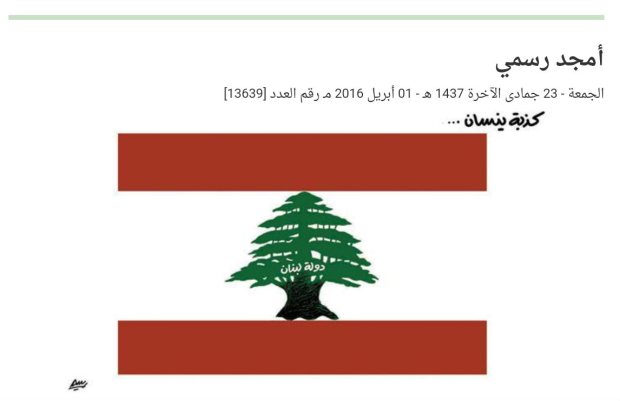
Earlier today, Saudi newspaper Alsharq Al-Awsat, which most of us had not heard of until this point, decided to contribute to April Fools with their joke, the pun being Lebanon.

Alsharq Al-awsat Newspaper April Fools Lebanon

The caricature translates to: April Fools… the State of Lebanon.

Of course, Lebanon was in an uproar, but none more so than self-proclaimed comedian and frequent let-me-run-for-parliament-as-a-joke Pierre Hachach who decided to pay the Lebanese offices of Alsharq Al-Awsat a visit and, obviously, vandalize them.

He was so proud of what he and his friends did that he posted the video on Facebook, in two parts:

Is it just me, or is it immensely ironic that Pierre Hachach and his friends saw that the best way to respond to someone saying the Lebanese state was a joke was by showing how barbaric the Lebanese people can be and how absent the Lebanese state actually is in preventing such a ruckus from taking place to begin with?

The caricature in question can be interpreted in many ways. I personally found it lame, and not even worth a second glance. It was first and foremost political, coming at a time when Lebanon and Saudi Arabia were at political odds, regardless of what Saad Hariri thinks of this. Any other consideration, be it about its artistic, comical, any other value or lack thereof, is besides the point. As such, the reply to such a caricature should be political and in the same manner that it was made: write about it, tweet about it, insult it, make another caricature replying to its content, or any other civilized manner that befits us as a people and this country whose name we’re so keen to uphold.

We live in a region where freedom of speech is not absolute, where press is almost always afraid to say what it thinks, where dictators own airwaves and where the masses are led to figurative slaughter houses like sheep without knowing so. What happened today is attacking any ounce of freedom of speech this region has left, even if that freedom of speech was expressed in a way that we as Lebanese find insulting.

Lebanon is a regional pioneer when it comes to freedom of speech. In many ways, it’s the most important piece of dignity we have left. I am writing this because laws in my country allow me. You are reading this on your computer in Beirut or Tripoli or wherever because internet in this country hasn’t banned you from doing so. You are able to say whatever you want because we do not live in a security state. Things are not perfect, but things are not Saudi Arabia either.

Pierre Hachach and his friends attacking the offices of Alsharq Al-Awsat is an attack to that last piece of dignity that we as Lebanese have, giving us an image of barbarics who can’t take differing opinions, who think fists are the proper response to speech, who think that chaos is more appropriate than order, and who think that our dignity is restored with violence, not with honor.

How different would that make Pierre Hachach and his friends from those who attacked the Danish Embassy a few years ago because of a Danish newspaper’s caricatures about the Prophet Mohammad? How ironic is it that those same people probably were all about #JeSuisCharlie when the Charlie Hebdo HQ in Paris was attacked in January 2015 by people who were as offended about the dignity of their religion as they are about their country’s?

The answer is not so much.

Pierre Hachach, you would have done better by posting another meaningless Facebook video in which you replied to the caricature than by going down to the newspaper’s offices. I would have probably disagreed with you, but I sure as well wouldn’t be appalled and horrified at how insulting that video’s reflection is of this country you’re supposedly defending.

To that caricature I say: وإذا أتَتْكَ مَذَمّتي من نَاقِصٍ فَهيَ الشّهادَةُ لي بأنّي كامِلُ.