Dear People of Facebook, Your “Be Like Bill” Stick Figure Memes Are Annoying, Not Funny

2015 was the year of Bitstrips.

2016 is the year of Facebook stickfigures.

Modern art is so minimalistic.

I wish we can have bitsrips back. At least those were visually appealing.

I have no idea who came up with this “Be like….” meme, but I’m getting super close to wishing they had never existed. I don’t know if it’s the case in other countries too, but the Lebanese populace of Facebook is not only milking the aforementioned meme, they’ve turned it into a monster haunting every single one of our timelines.

I’m now wishing I can see your selfies adorned with Nietzsche quotes again. At least those were actually funny.

So for those sharing those “Be Like You” memes, let me tell you the following:

  • No one cares you have a partner and don’t tell people about him or her.
  • No one cares that you can do a hundred push ups and don’t advertise it on social media.
  • No one cares that you’re single and happy about it.
  • No one cares that you’ve turned your life around and didn’t tell everyone.
  • The fact that you are making a meme out of it means you are propagating whatever fact you are proudly telling people you did not advertise.
  • No one wants to be like you (unless you have a billion dollars stashed somewhere).

So, stop the ridiculous memes. Stop sharing screenshots of them that pop up on our timelines even after we blocked the app making them. If you’re that bored, go read a book, go Instagram your meals, go watch some porn, or watch the only thing about Bill worth watching:

Uma Thurman Kill Bill

Lebanon’s Government Is Destroying A Phoenician Beach In Adloun To Build A Port

  
About 15 minutes south of Saida is a small coastal Lebanese town in the South called Adloun. Most of us hadn’t heard of it before, but it’s actually one of the longest inhabited areas in our country with evidence pointing to human activity there around 70,000BC; it’s a little town filled with prehistoric caves and Phoenician ruins.

And those are not even what make it special.

Being a coastal town, Adloun has one of the few remaining beaches in the area that have not been privatized yet, and is now being actively destroyed by Lebanon’s government.

According to this study, the governmental project will affect the following areas of the beach:

  • The location of the prehistoric caves,
  • The location of an ancient Phoenician port,
  • The location of ancient Phoenician ruins and ornaments.

And, because that is not enough, our government will also do a little of land reclamation, effectively killing off one of the last remaining habitats for sea turtles in Lebanon, as well as affecting the ecology of the entire area with its diverse plants.

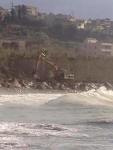
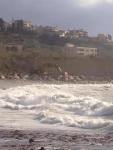
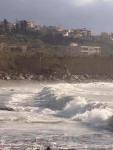
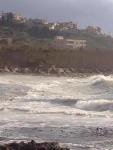
What is this governmental project that our government has been hell-bent for years to do, and are currently doing as you can see by the following pictures?

They are building a port that is bigger than that of Saida and Sour, in a town that houses far less people, none of whom are fishermen who operate boats in the first place.

So what will the purpose of that port be? It’s going to be turned into a “touristic” yacht docking site for those who can afford yachts in the first place and who want to come to the area for visits. The town’s mayor says that is not the case. What is true, however, is that the port is officially named after “Nabih Berri.” Maybe our speaker of parliament wants a place closer to home to dock his boat?

As it is with Lebanon, the project is also riddled with corruption. The bidding process for the project was canceled once because the initial prices were deemed unacceptable before finally hiring Khoury Contracting at a fee around 1.66 million dollars higher than the one they offered in the initial bidding. I guess the ministry in question felt generous?

On January 15th, 2016, Khoury Contracting sent its bulldozers to the beach and started work without prior notification. They’re currently establishing access to the beach by digging up a road for more bulldozers to come and finish what’s already started.

Who Cares About Sea Turtles And Phoenician Stuff Anyway?

Good job Lebanon’s government. Those sea turtles can always find another country to go and become unwanted pests in. Those plants? Who needs them. It’s not like ecology or the environment matter anyway. Phoenicia? Do we really want some Lebanese to further cling to that unwanted part of our history?

Keeping a free beach for the people of the area to visit? Who’d want that as well, bring in the money!

Let them destroy the beach. Let them destroy everything as they’ve done to the country for years now. They’ve actively destroyed countless similar sites before, why not this one too? It’s not like anything is relevant when you have the prospects of a port named after a politician!

Let them destroy the beach. It’s better for that beach and for that heritage not to see how abysmal the country our ancestors called home has become à la famous saying: عين لا ترى، قلب لا يوجع.

For a government that has shown repeatedly how apt it is at failing, it should come as no wonder that they’d not only do such a thing but also make sure that it passes by unnoticed. 

For a government and people that went up in a fit about the destruction of heritage at the hands of ISIS in Syria and Iraq, how is this any difference? Or does our own history not matter enough because it’s not called Palmyra?

There has been no back to back coverage for Adloun’s heritage. Is it not juicy enough for Lebanon’s media because it cannot be spun into attractive بالصور and بالفيديو headlines?

Among the many travesties taking place in the country today, this is a massacre of heritage and environment. The sad part is? It’s too late to do anything now.

Say bye to the turtles; say bye to that ancient site. They were present in a country that didn’t deserve them anyway. 


Geagea and Aoun’s New Love Fest: The Good, The Bad, The Ugly

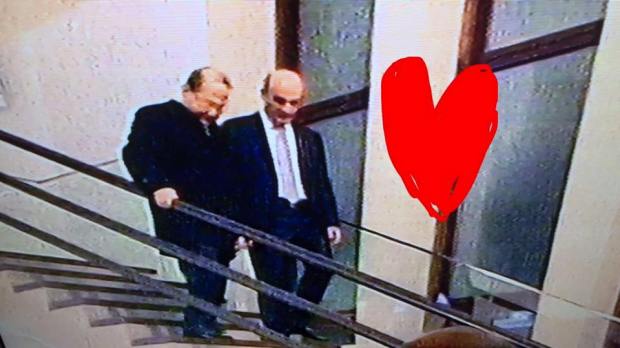
Samir Geagea and Michel Aoun

In a widely predicted move, LF leader Samir Geagea and FPM leader Michel Aoun came out with a political understanding yesterday that saw the former supporting the latter for Lebanon’s presidency, after about 33 failed attempts at electing a president and 30 years of the same practiced politics.

Lebanon’s Christian field was predominantly supportive. After all, the whole burying the hatchet fest that we saw on TV was done because Christianity, and Christians sure love seeing #TeamJesus in all its glory on Lebanese TV.

The Good:

We can now say that on January 18th, 2016, after around 30 years of feud, Samir Geagea and Michel Aoun finally saw eye to eye in something. A more zealous response would be: LET THEM KNOW NOW THAT CHRISTIANS WILL NEVER BE PUT ASIDE AGAIN, etc. But that’s not really the case.

It’s good to see a semblance of unity occur regardless of what that unity might mean. It’s good to see Geagea and Aoun talk things out.

But.

The Bad:

Many think that this move was visionary. The fact of the matter is it’s nothing other than reactionary to Saad Hariri nominating Sleiman Frangieh for president a few weeks ago. The only disturbance in the presidential race, protracted and dull as it was, was Saad Hariri’s deal back in November-December. That disturbance became the catalyst behind both the FPM and the LF’s deal today in order to “reclaim” their constitution-given Christian right.

How good can a move made in reaction and spite be, rather than it being foreseeing and contemplative, especially in the grand picture of Lebanese politics that not only requires foresight to navigate its murky waters? Why don’t you refer to Jumblat for that?

What this move does is not elevate the level of politics that Geagea and Aoun are practicing. It’s not a good thing that Lebanon’s Christian community is now practicing the same kind of tribal politics that the country’s other factions do. By “uniting,” Geagea and Aoun moved from their failed politics on a national level to failed politics on a sectarian level.

Yes, they were Christian leaders first and foremost, many of their policies had inter-sectarian tendencies. How will they move from here? Not in that way, clearly.

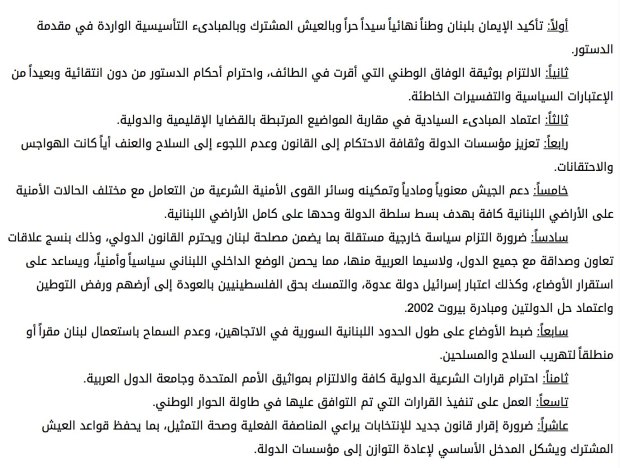
The move also comes to the backdrop of a 10 point agreement that the two forged over the past 6 months. It reads as follows:

Geagea Aoun Agreement

The agreement’s key points then are the following:

  • No use of weapons in case of conflict,
  • Supporting the Lebanese army in governing the entirety of Lebanon’s territories alone,
  • A Switzerland-esque foreign policy to get the country to avoid struggles,
  • Supporting UN resolutions,
  • A new electoral law.

Sure, those headlines are all wonderful, and looking at them with no critical thought warrants giving their alliance a second thought. But you can’t not be critical of Lebanese political talk, and the question therefore becomes: how will they do them?

The difference in ideology between Geagea and Aoun is not only related to their Civil War days: the two were supremely divergent even in times of “peace.” They have not agreed on an electoral law other than the Orthodox Law, and even that agreement was more about whose balls are bigger rather than it being done with political wisdom. They have not agreed on which kind of foreign policy they see best for the country. They have not agreed on which way is best to actually get the army to be the only rightful security force in the country, and how to implement all kinds of UN resolutions (hinting at ridding Hezbollah of its weapons).

Alliances need to have a minimum of common ideology. Establishing them just for the sake of common interests in the short run will prove, in the long run, to be detrimental, especially when it affects an entire community (in this case Lebanon’s Christians).

Is this how Christian rights are restored? By making Lebanon’s Christians more exclusive rather than inclusive? By making them more sequestered? By thirding the country instead of keeping it halved? By turning Christians from the entity that governed Lebanon’s dichotomy to another destabilizing agent in an unstable country?

Ignoring the differences that these two presented to Lebanon’s Christian community is the first step towards removing any semblance of democracy from that community. Difference is not to be feared in political contexts. Disregarding it is what’s scary.

The Ugly:

Geagea and Aoun made peace. But I have to wonder: what kind of peace?

They’re making the kind of peace that requires us to bury our heads in the sand, like the perpetual ostriches that our Lebanese existence has made us into; the kind of peace that does not deal with the past requiring such a peace to be made in the first place, effectively making it a recipe for impeding disaster.

The argument goes: other factions have done these peace making deals before, and as such Christians doing it should be celebrated. Making peace is good. But is it?

Is the peace made by Lebanon’s other war factions actual peace? The idea of making peace invokes stability. Is the country stable? Is making peace in spite of history not through it, as all those other factions have done, putting the country on the right path towards healing post our civil war?

I look around and see people from different sects still hating each other, still worried about the intentions of one another. I look around and see a political discourse that still gets those who have supposedly made up after our civil war to fear each other.

What kind of peace are they talking about then?

There are things that are a little too late, and this is one of them. Where was the common interest of Lebanon’s Christian community 30 years ago when these two were actively working on canceling each other out, when their wars tore apart Christian communities and left thousands of victims in their wake?

Yes, this is not the time to bring up war-time memories, but healing only starts with remembering.  Would there have been a need for such a “deal” to be made in 2016 had those two actually cared about the community they’re panicking about today back in the 1980s?

Peace cannot be made by those who only know war.

The Uglier:

I’m afraid to inform you my fellow Lebanese that this “alliance” does not, in any way, affect your life as a Lebanese in the ways that actually matter.

It will not bring you electricity.

It will not fix your garbage crisis.

It will not make your internet faster so you can stream Netflix.

It will not increase your minimum wage.

It will not make your passport worthwhile.

It will not stop the “SSSS” checks on your boarding passes and “random” checkups in airports.

It will not stop ISIS.

It will not extract the oil from our fields.

And, ironically, it does not even guarantee that a president be elected.

Our Lebanese reality cannot be changed when the same people who have been practicing their failed politics over us for 30 years start practicing their politics together.

The Funny:

To end this on a happier note, I can’t but share a few of the lighter tones with which some Lebanese handled the news, in the joke that this actually is:

The Stunning History Behind Ras Beirut’s Endangered “Red House”

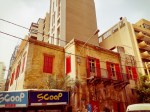
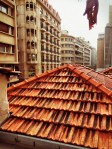
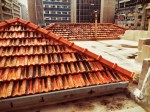
Nestled in the heart of Hamra, on Abdel Aziz street leading to Bliss Street, is a house most of us passed by without noticing until very recently. Its red window tiles always caught my eye in the days when I used to frequent that area, but their history was never evident. Isn’t that the story everywhere in Beirut though? You pass by these gloriously beautiful old houses, sigh at their dismal prospects in a city that cares less about its history and more about its bottom line and just continue about without giving a second thought at the times and stories those walls inhabit.

Let me take you on a journey across Hamra’s Red House.

One Of The Oldest Houses in Ras Beirut:

The Red House is comprised of two stories, the first of which was built in the late 1700s, along with a small kitchen above it to consitute the first part of the second story which was later continued in the 1800s by the Rebeiz family, which was back then one of the main Orthodox families of Ras Beirut and a prime owner of much of the land upon which Hamra today is built.

The story of the Rebeiz family dates back to as far as the house they lived in: they came to Hamra around 400 years ago and slowly made their way up the echelons of society, buying land from the well-renowned Druze Talhouk family. Together with the other prominent Bekhazi family, they became forces to be reckoned with in their area. Their names became synonymous with Ras Beirut, and vice versa.

The Red House has housed many generations of the Rebeiz family, but its most prominent were two women: Samira and Marie Abdo Rebeiz, both of whom were widows who lived in the house in the early 20th century, and it is them that made the house the beacon of Ras Beiruti elite life.

Pioneering Matriarchs Of Ras Beirut’s Political Ring:

Marie ABdo Rbeiz

Marie Abdo Rebeiz was unfortunate enough to find herself a widow with two sons: Michel and Georges, at a very young age. Her plight was also shared by her cousin Samira Rebeiz who lost her husband at the tender age of 25, and was left with four children to take care of.

Marie Abdo then invited her cousin, whose inherited property had been taken by the rest of the Rebeiz family for fear of her remarrying out of the family, to live with her in Hamra’s Red House, along with her four children, in the “newer” upper story part of the house.

The two women co-existed quite well and their children grew up around each other. Michel, Marie Abdo’s son, still lives in the bottom floor of the house to this very day. Georges later became a prominent cardiologist in the area and has 3 children who currently inherited the house after their father’s passing a few months ago.

Marie Abdo and Samira, however, were extremely powerful women. They were so powerful in fact that they  had a major role to play in the dynamics of Beirut’s political life around that time: it is the Red House that became a reference for many of Ras Beirut’s elite politicians, of differing sects, in order to truly have a shot at whatever position they coveted: Marie Abdo and Samira were important electoral keys to the women of the area, the extended Rebeiz family and its 3000+ votes at the time. They kept a garden next to the house, cooked for their neighborhood and hosted many gatherings for the women of the region.

Among the politicians whose careers were majorly influenced by this house are Habib Abi Chahla, one of country’s independence heroes, Bahije Takieddine, Saeb Salam – father of current PM Tamam Salam, Sami el Solh and Fawzi el Hoss, all of whom became MPs or PMs at a later point in their careers. Their descendants tell tales, even today, at how important that house was to their fathers.

Louis Armstrong Visited Too:

Louis Armstrong

During his visit to Lebanon in the 1960s, Louis Armstrong, one of they key figures in Jazz music, visited the Red House. He was brought to Lebanon by one of Samira Rebeiz’s sons, Georges Rebeiz, who founded Caviar House and Prunier. That son wanted to introduce Armstrong to the house that built him.

It Survived The Civil War:

The house also made it relatively unscathed through the Lebanese civil war. Its tenants refused to vacate the house for the many militias that demanded it, and through a stroke of luck was left militia-free.

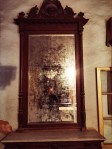
After the end of the civil war, its main tenant Samir Rebeiz, a well known conservationist and restorative architect with an impressive portfolio, who is currently vacating as per a court order, made sure to restore the part in which he lived to the best of his capacities. You can see from many of the pictures at the beginning of this post how relatively well-preserved the house is.

The current tenants even made it a yearly affair to repaint the windows with their characteristic red color, as I was told by Paola Rebeiz, a well-known Beiruti socialite and fashion consultant.

A Rebeiz Family Feud:

Over the past few days, the imminent threat to Hamra’s “Red House” got activists and Beirut’s heritage preservation groups to try and save the house. In their attempt to do so, a potential family feud between the Rebeiz family was unearthed: one between the descendants of Samira and Marie Abdo.

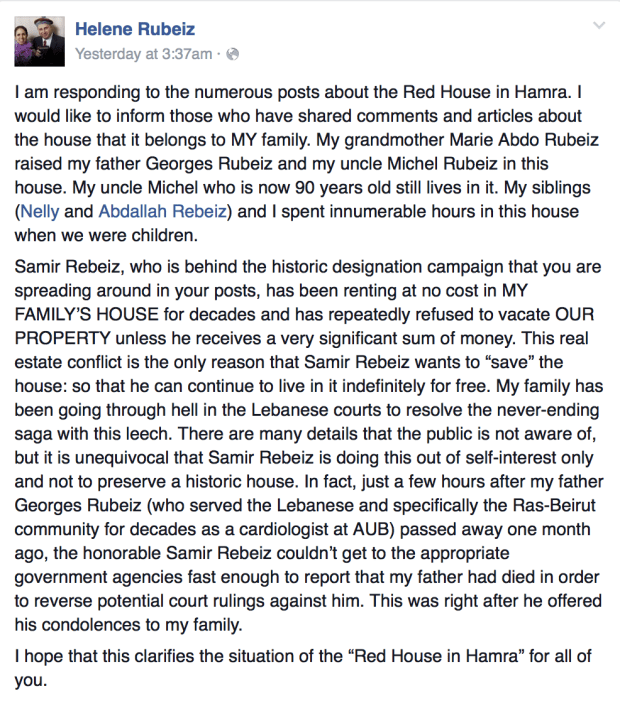
Helene Rebeiz, one of the three people who recently inherited the house after the passing of Marie Abdo’s son Georges, had the following statement:
Helene Rbeiz Red House Beirut Hamra

Samir Rebeiz, who has been living in the house for years, was doing so under Lebanon’s ancient and outdated renting laws, which effectively mean that tenants pay minimal amounts to their landlords and evicting them is near impossible.

When asked about this, Samir Rebeiz refused to make a statement and simply said: “I am leaving this house. I’ve done everything I can to maintain it, and my conscience is clear.”

When I visited, the house was being vacated. Everything Samir owned was being tucked away in boxes, leaving empty rooms and hallways.

The court order requiring Samir Rbeiz to vacate the premises mentioned that the owners wanted to demolish. It is unknown, however, which real estate mogul is interested in the property.

Heritage Trumps Money:

The fate of the house will be decided tomorrow in Lebanon’s Ministry of Culture which will determine whether the house fits the criteria to be considered a national heritage site, protecting it in theory from demolition.

In my opinion, the relevance of a family feud over this house’s fate is not important. We are not interfering in Rbeiz family matters when we give an opinion on the subjective worth of a property at the heart of their feud.

What is constant, regardless of all the other variables, is that this house is a jewel at the heart of Beirut that should be preserved regardless.

It is one of the last remnants of true Lebanese architecture of the area.

It is so preserved that Lebanon’s archeological committee warned against its demolition.

It is a representative of the history of its region and of its country.

It would be such a shame to let all of this go and replace it with yet another concrete block that can bring people millions, but rob them of their identity and heritage.

Beirut is a city that is being maimed every day by the construction robbing it of its flair, of its character, and turning it into yet another one of those plots of lands made up of concrete jungles. This house stands defiant to the progressive and purposeful de-Beirutification of Beirut. Let’s not ruin that too.


Lebanon Pioneers In The Middle East: Allows Trans People To Legally Change Gender

In the grand scheme of things, today was quite a bad day for Lebanese law. Letting a confessed terrorist go out on bail is not only a mark of shame for the entire country, but for any legal system that allows such a thing to happen. But this is not about Michel Samaha.
This is about a lesser publicized decision in Lebanese courts today that has set motion in the region’s most liberal countries to strengthen its role as such: changing one’s gender can be legally done in Lebanon because it pertains to personal liberties, as per a Lebanese court.
Published in The Legal Agenda earlier today, the details are as follows.

In 2014, a transman submitted an official request to Lebanese courts in order to legally change his gender from female to male. The court at the time refused. So this man took it to Lebanon’s Appeal Court (Este2naf) which took an unprecedented and saw that the change in question was not only allowed, but it fell within the rights of the man at hand, saying – and I quote: “A person’s right to receive treatment for ailments both physical and mental is fundamental.”

Lebanon’s Appeal Court decision comes after consulting with experts on the matter of sexual identity and sexual disorders, psychologists and psychiatrists, after which it reached the aforementioned conclusion noting that “the treatment the plaintiff went through, both hormonal and surgical, is his right as a human being and cannot be taken away.”

Of course, this does not make the decision final as Lebanon’s Supreme Court can still nullify it, as they did with the infamous Captagon decision several months ago. But this precedence in question is one of which I believe we as Lebanese should be proud.

Why? Because we are the only country in the region as of now where Trans rights have risen to such prominence, and have even reached legal victories.

Because even with our dysfunctional parliament that can’t legalize to protect the citizens it’s supposed to govern, our legal system has taken it on itself to try and do so in some aspects, and it’s doing so as the best countries in the world would do. 

There’s a long way to go still.

While this is indeed great, it remains an isolated court ruling that, in order to become law, has to be passed by parliament into one, and we all know how good our parliament is at passing laws, let alone controversial one. 

We have huge portions in our country whose rights are decimated. Our women are still fighting for their rights. Gay people are still fighting for their rights. Any minority that is not stereotypical Lebanese male is fighting for its right, but this is a victory to one of those minorities and as such it’s a victory for them all.
There’s a long way to go when it comes to changing stereotypes too. I can imagine the many rolling their eyes as they are reading these lines. The notion that individual rights are not a matter of collective opinion is paramount and in my opinion should be the law of the land everywhere and anywhere.

But today, despite all the negatives, this is a tiny beam of hope in a land that is going backward day by day. So maybe, just maybe, there’s hope for civility in the jungle after all.