How Lebanon Has Officially Hit Rock Bottom

Once upon a time, I used to be one of the people who gathered around and started to enumerate how proud they are to be Lebanese. Slowly but surely, I started to become disenchanted with the country; I started to see its flaws and how helpless and powerless I was to try and change anything. Soon enough, I saw no point in pride.

For a long time, I used to be called a pessimist for being such a person, a constantly negative reminder that people like me existed. After the past few days, Lebanon has not only hit an entirely new low for me, but many seem to have come to the realization, like I have a long time ago, that this country is hopeless and that pride has not set foot in this land.

Welcome to the club, and this is why you should join.


1) The Garbage Crisis:

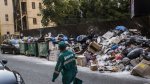
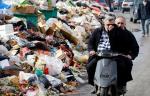
It’s been more than 2 weeks that the garbage in Beirut has been piling up with no end in sight. The pictures and videos are aplenty. I’ve already seen patients in the ER whose chief complaint was how the odor of the garbage is affecting their health. The cabinet has met a total of 4 times so far, all of which were utterly in vain to try to fix the crisis, but they couldn’t.

The garbage problem is not that the Lebanese individual produces a lot of trash or that we don’t recycle, and the numbers don’t lie. It’s that this is a sector that, for years now, has been the money machine for Lebanese politicians to fill their pockets without any one noticing.

The garbage crisis has shown us that our politicians can’t even begin to handle our trash… and here they are tasked with handling more pressing issues facing the country. It has also shown that those same politicians who have been benefitting from our garbage’s tax money for years couldn’t, even as the trash piled up, to rise beyond the danger to their pockets and treat their citizens as people for once.

The average cost of a ton of garbage in Lebanon is $120. Contrast this with less than $20 in Egypt. Why? Because the remaining $100 has other uses.

Instead of searching for a radical fix, they tried to put a bandaid on a profusely bleeding wound by simply dumping Beirut’s garbage elsewhere, confirming what we all knew: non-Beiruti-Lebanese are lesser citizens who should be forced to live next to Beirut’s trash. The country of temporary solutions for critical crisis shines again.

Our politicians turned the country into nothing more than a garbage dump. We’ve become the laughing stock of the world in doing so, only this time it wasn’t Mia Khalife or Miss Lebanon’s fault, it was our own: we got beyond incompetent people in office, and we are reaping what we’ve sown.

Welcome to the republic of garbage.

2) Jumblat Turned The Garbage Sectarian:


Some headlines would have been “The Onion” material even back during the Civil War when Christians and Muslims were killing each other. This time around, one of the leading Lebanese politicians not only made our garbage sectarian, but he divided it according to confessional lines.

In a recent statement, PSP leader Walid Jumblat figured it would be a good idea to propose he handles the garbage of the Muslims while Christian leaders handle the garbage of the Christians affected by the crisis.

The sad part is his statement did not turn heads. The situation is that dire. I’m surprised the proposal didn’t include specific color codes for garbage bags that also worked according to sects. I mean, isn’t that the next logical step?

The country isn’t only run on sectarian ground; our politicians have also turned our trash sectarian. The sadder part? Someone who talks of garbage in sectarian terms is governing us.

Welcome to the land of segregation.

3) The Minister of Social Affairs Arrests A Protester… After Ignoring His Abuse Complaints For Years:

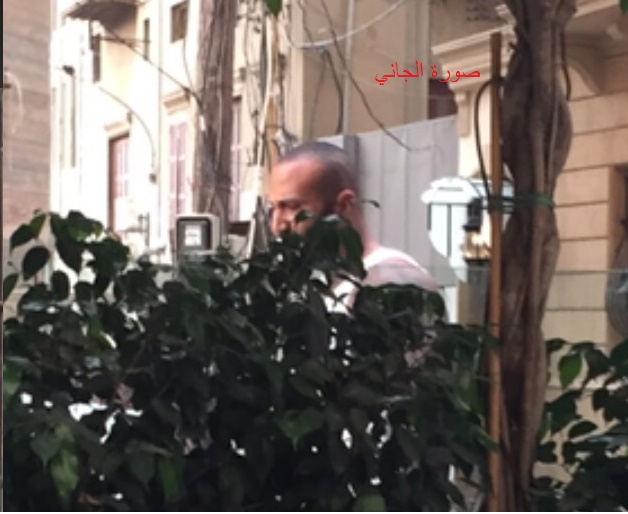
Tarek Mallah

Tarek el Mallah was an orphan who was abused for years at Lebanon’s Islamic orphanage. When he reached adulthood, Tarek filed for a lawsuit against the orphanage. Such serious abuse should not have happened if Lebanon had a decent Social Affairs ministry that actually cared for the well-being of the country children, or if that Social Affairs ministry fought for those children when they spoke up.

Following the lawsuit, the minister of Social Affairs Rachid Derbas tried to convince Tarek el Mallah to stop his pursuit for justice. Why? Because he was giving Sunnis a bad name, but Tarek wouldn’t have it.

So when Tarek was protesting in the “Tel3et Ri7etkon” movement, Rachid Derbas made sure he got arrested for “civil strife.”

Rachid Derbas abusing his title to try and tarnish the reputation of Lebanese citizens whose only fault was to speak up is not an unusual behavior for Lebanese politicians. It has been going on for years. The lesson from such a thing, one that we always need to remember is the following:

You, as a Lebanese citizen, don’t have rights. You are not allowed to fight for your rights, face politicians who think they own you because they happen to govern you, face the status quo and get away with it, because someone in power will always have power over you, even if they don’t. This is how things are.

Welcome to the land of injustice.

4) The Death of Georges El Rif & Rabih Kahil:
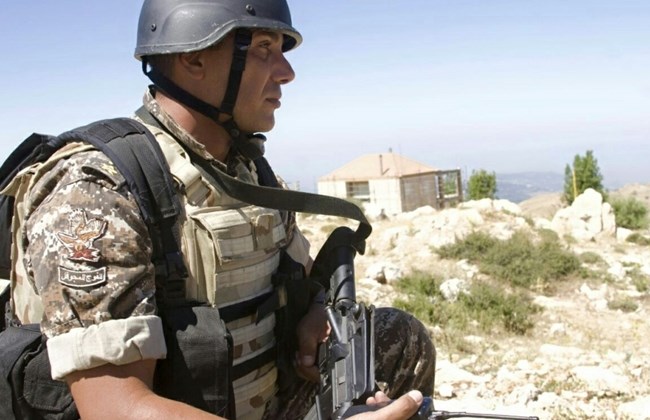
Rabih Kahil

A couple of weeks ago, Georges el Rif was stabbed in broad daylight, to the observation of many, in Gemmayzeh, by a Lebanese figure’s bodyguard… because that bodyguard cut him off in traffic (link). A few days ago, colonel Rabih Kahil, who fought last summer in Arsal, was killed because he was in an argument with someone over the phone and a passer-by was annoyed he was shouting, so he shot him three times.

No one is safe in this land of lawlessness. Everyone has a gun, or a knife, and a lot are willing to use their weapons, just because they can.

It’s sad to think that we live in a country where we all prone to have our names turned into a justice hashtag. But what can you do when you live here?

Welcome to the jungle.

5) No President and No Parliament:

POTLR

I’m sure you’ve forgotten by now, but amid the garbage, people getting shot and stabbed or arrested because ministers have a personal vendetta, the country has not had a president for exactly 432 days. That’s over one year and two months of the country’s head being vacant, ironically accurate given how the country actually is today.

Over the past 432 days, our parliament, which has been illegally working for over 775 days, failed to convene more than 25 times to vote for a president. I honestly lost count at 25.

Not only do those who represent us feel entitled to renew for themselves and rob us from our fundamental right to vote, but they also can’t manage to do their job, not that elections would have changed anything because we all know that our people would vote for the same lot all over again.

It says a lot when the country is this dysfunctional. It says even more when not having a president for over a year is… okay? Yet again, what can you expect from those who can’t handle garbage.

Welcome to the republic of non-republicanism.

6) ISIS Still Has Our Soldiers:

As we’ve all forgotten the president, or lack thereof, this is a friendly reminder that ISIS still has several of our soldiers detained somewhere we don’t know, and that the government has essentially given up on bringing them back.

ISIS killed our soldiers on several occasions, and we utterly failed every single time.

Welcome to the republic of disgrace.

7) The Status Quo Will Live On:

If you think the current state of the country has gotten people to open their eyes, you’re deeply mistaken. Apart from the minority taking it to the streets to call on our political class to resign, the vast majority still puts sect before country and before their basic human rights.

Lebanese Christians today are haunted by the need to fight for their “Christian” rights, foregoing the notion that their rights as people are synonymous with the rights of everyone else in the country and that fighting for rights should be across the board.

Lebanese Muslims today are too dependent on their two or three leaders to actually rise beyond being anything more than followers who do as they are told, who vote as they are instructed and who can’t complain for fear of breaking order.

In the land of apathy, of utter and sheer dependence, the vicious cycle will forever live on.

Conclusion:

If you’re still reading, good on you. Here’s a sticker.


Forget about the glories of Gebran, because I don’t care about his book.

Forget about Carlos Selim Helu being originally Lebanese, because I don’t care about his money.

Forget about this or that Lebanese doing something impressive abroad, because in the grand scheme of things, they are irrelevant to you.

Forget about hummus. Forget about tabbouleh. Forget about Beirut and our parties.

What matters is not that some Lebanese wrote a book that became a worldwide hit.

What matters is how this country of ours is treating us as people and how it sees our value as its citizens.

It’s easy to say that Lebanese politicians are ruining us, but they do not exist in void: they are of us, emanating from our values and from our votes.

It’s easy to say that the current state of the country is not “my” fault, but it sure is ours.

There’s nothing sadder than to feel so disenchanted by one’s country that your existence in it becomes nauseating, except this time the stench is real.


When Lebanon Drowns In Garbage… Again

Lebanon Garbage Problem

If there’s one quality that can apply to Lebanese society and our form of governance, it’s that we always reactive rather than proactive, which is to say we never face a crisis looming on the horizon by driving off the road leading to it; we just continue driving until we fall off the cliff… and then we start searching for ways to build a parachute in the free fall.

This applies to so many things in the country: from presidential elections, to parliamentary elections, to the current garbage status. I can’t even believe we are discussing garbage, but here we are.

At a time when Sweden ran out of garbage and is looking to import some to produce energy (link), Lebanon will soon start piling up its garbage on the streets of Beirut and its other cities, because we have no place to dispose of them.


As a reminder, this was how things were last year:

The problem back then had one aspect: the residents of the country’s main landfill, Naameh, cut off the roads leading to the dump to protest the toxic effect of having such a facility close to where they lived: the place was supposed to be a temporary landfill for 6 years and hold a maximum of two million tons of waste; it has been in use for more than 17 and currently has more than 15 million tons.

Negotiations with residents at the time culminated in them stopping their protests and allowing Sukleen’s trucks to deposit garbage for a limited period of time – one that has now expired – as the government searches for other ways to address Lebanon’s garbage problem, which the government clearly did not do.

The problem today, however, is two-fold: the agreement with the residents of Naameh has run its course, and as such the roads to the Naameh landfill are closed once again. However, this time around, there isn’t anyone to collect the garbage in the first place because, as of July 17th, the government’s agreement with Sukleen had also expired. Hurray for efficiency.

As of now, you will see Sukleen employees sweeping the sidewalks, and picking up your dog poop if you live in Achrafieh, but they won’t be picking up your garbage. Brace yourself for the stench.

In numbers, this is Lebanon’s garbage status:

  • We produce 1.57 million tons of solid waste a year, with a 1.65% annual growth rate.
  • Per capita, we produce 1.1 tons of solid waste, this follows the regional average, but is far below that of developed countries (obviously).
  • 53 % of Lebanon’s solid waste goes to landfills.
  • 30 % is disposed in dumps.
  • 17 % is recycled or composted.

I don’t know how a government can be this clueless as to let this issue run its course twice in its lifetime, but they have. Not only is the country drowning in corruption, wastas and “you rub my back so I rub yours” mentalities, but you can now add literal garbage to the list… again.

This will not be fixed until some political hail Mary takes over and a band-aid is placed, once again. As I said, we don’t live in a country of a futuristic vision, but of temporary fixes. In a few days, when the sidewalks have garbage bags and not people, the outcry will prove deafening to our officials not to do anything. They will scramble to negotiate a new agreement with Sukleen. Then they will convince the residents of Naameh that the toxic fumes of 15 million tons of waste are not that bad, and we will pretend things are okay, until this repeats in a year or two or five.

Here are a few headlines on how to maybe address the issue from its core:

1 – Recycling:

In the short months that I lived in Lille and NYC, every single item of solid trash that I produced had to be sorted into different piles of trash, depending on whether that got recycled or whether it got composted. Papers went into one pile, cans went into another and the rest went into a dispenser.

Recycling will not only decrease the load that Lebanon’s landfills have to handle daily, but it will also make the country more environmentally conscious. The problem with this is that it needs a huge paradigm shift in how Lebanese look at their garbage. Will they do the effort to sort? I honestly doubt.

2 – Incinerators:

We have electricity issues. We also have garbage issues. Why not try to fix the former with the latter? Garbage incinerators that produce energy can help Lebanon’s ailing electricity sector.

The problem with the incinerators is that, when not properly maintained, they will produce immense levels of pollution and the maximum level at which they can handle waste is about 160 tons a day; for reference, the Naameh landfill, the country’s biggest, handles about 2800 tons a day.

The limited capacity of such incinerators means that many are required to have a dent in Lebanon’s garbage problem. The problem with them being as polluting as they are is that finding a location for them is probably harder than finding locations for new dumps or landfills. Moreover, we all know the government won’t bother making sure the incinerator plants are up to environmental qualifications.

3 – New Landfills:

I mean, really, why not? If recycling is too hard, and incinerators are too costly/polluting, then why not invest in new landfills in some remote, poorly-inhabited regions provided that such landfills be maintained and properly handled, which is to say that those landfills should not become lands filled with garbage, but rather lands where garbage is handled in environmental and scientifically decent ways, for a minute period of time, in a plan that spans several years in order not to fall into the same problem… again.

4 – Export It:

Instead of drowning in garbage, why not sell it? Sweden wants some. Norway wants some. I’m sure we can find an Arab country who’s willing to take it at a bargain. Why not just get rid of it? It’s not like we know what to do with it here.

5 – Tax It:

At a growth rate of 1.65% yearly, the garbage we produce will soon become too much for what we can handle anyway, even if temporary measures are placed. Why not have a tax on how much garbage a household can produce before they have to pay for the handling of whatever they’re producing? Such taxes can be made in such a way to fund environmentally friendly projects in the country.

Conclusion:

The country needs drastic measures to address the garbage issue. At a time when Sweden is importing trash because they’ve run out of it, it’s horrifying to think that a country such as Lebanon not only doesn’t have a place for its own trash, but literally has no idea how to handle it.

How many times should we drown in garbage before we learn that temporary fixes are not okay?

How many times should we drown in garbage before we learn that if those in power can’t handle our waste, then how can we entrust them with more pressing issues?

Welcome to the republic of garbage, taking it literally since 2014.

#JusticeForGeorges: When Lebanon Is A Jungle, Not A Country

This is what I do when someone cuts me off on the road.

1) I honk at them as loud as I can,

2) I call them an asshole because that’s what they are,

3) I curse whoever taught them how to drive because, well, someone who knows how to drive should know right of passage,

4) I move on, turn up my radio and blast some song my friends agree I should probably not be listening to.

What happens, however, when a right of passage dispute happens with an asshole, who – like many Lebanese in this God-forsaken country, happens to be well-weaponized?

The answer is short: you die. This is exactly what happened to Georges El Rif, in the streets of Gemmayze.

His story is as follows:

Georges and his wife were driving on the airport road when they got into a right of passage dispute with Tarek Yatim. Tarek and the woman driving him, whose name is Lina Haidar, tried to cut off Georges who didn’t let them through. So they forcefully hit his car and kept going.

So Georges followed the man who hit his car to write down his license plate number. They called the ISF, gave them a description of the car and its license plate number. They were rebuffed by the ISF because no personnel were nearby.

They were eventually led to Gemmayzeh, where Tarek Yatim got out of his car, ran towards Georges and started stabbing him with the knife he had in his possession.

No amount of pleading from Georges’ wife, no amount of running away from Georges deterred Tarek Yatim from attacking the man, stabbing him repeatedly. Whenever the wife would try to help her husband, Tarek Yatim slapped her and pushed her away.

A few meters away from them was the house of Lebanon’s Minister of Energy Arthur Nazarian, who also stood on his balcony observing what was happening, not bothering to send his own bodyguards to help.

Georges was then taken to a nearby peripheral hospital where doctors could not resuscitate him. He had three episodes of cardiac arrest before he passed away, leaving behind him a wife and four kids.

Georges’ killer is a man of priors. He was involved in a shooting at the White House restaurant in Sodeco in February 2010, as well as drug trafficking and drug use. The question is: why wasn’t he in jail to begin with?

The answer is two folds.

He wasn’t in jail because this fucked up country is not a country, but a jungle where animals like Tarek Yatim run wild, unafraid of retribution because we don’t have a functional justice system and we don’t have a functional security apparatus to make sure such assholes are where they’re supposed to be: behind bars, away from people who just want to make a living, drive to work, go home to their kids and families, and just live.

Tarek Yatim wasn’t also in jail because he’s connected, because he’s a Lebanese politician’s, reportedly Antoun Sehnaoui, henchman: someone to do their dirty bidding while they sit behind podiums and preach “order” to anyone who listens, or govern us “legally” as they pass their illegal biddings without us knowing.

Tarek Yatim is the kind of “people” who are not afraid of retribution because they know they can get away with it. He’s the kind of animal who’s not afraid to kill someone in broad daylight because he knows how to get away with murder.

This is Tarek Yatim’s face. Memorize it. He may be apprehended now, but be sure he’ll be back on your streets as soon as his wasta allows:

Tarek Yatim - Georges el Rif #justiceforgeorges

The more heartbreaking side of Georges El Rif’s story is how the people around him stood there and watched. I’ve seen many videos of the incidence. They have different angles, but they all show the same thing: Georges el Rif being chased by his murderer, and people standing there idly watching. The only thing they needed, I suppose, was a batch of popcorn.

It’s hard for me to imagine that there was nothing the people standing there, watching Georges die, could have done. It’s hard for me to imagine that the cars circling that road, probably slowing for a few seconds to see what was happening, had no reflex to help a man thrown on the ground, getting stabbed to death, psychology’s bystander effect non-withstanding.

A minister stood there and did nothing. His bodyguards did nothing. A police station that’s a minute away did nothing. How is this acceptable? 

It is easy for me to imagine, however, those people that were there, rushing home to tell their family all about the very, very exciting thing they witnessed on the streets of Gemmayze that day. I have no idea how much further our apathy can rise.

Many in Lebanon keep weapons and knives in their cars. They roam our streets, threaten our security and our lives, aware that their threats will never be faced with any repercussions. A few months ago, Yves Nawfal was the victim of such people as well (link).

One day, someone you know or maybe you could fall victim to such people. I just hope our names don’t get turned into a hashtag just because our politicians are too comfortable keeping their henchmen out of order, our security apparatuses are too comfortable not making sure that anyone with finger can pull a trigger, and that the people of this country are apparently convinced that something happening to someone on the street can never happen to them.

Lebanon is not a country; Lebanon is a jungle. Deal with it accordingly.

Update: An IndieGogo campaign has been started to fund Georges’ family’s legal case. (link). 

“Brands For Less” Employees in Dekwane Beat Up African Woman & Get Away With It

This story will make your blood boil. 

NowLebanon broke the story of Nafi, a worker from Abidjan, who was visiting a “Brands for Less” store in Dekwane to buy gym clothes at a cheap price. 
While at the shop, she was accused of being a thief, naturally because she was black, not Lebanese and not white. She was searched. They didn’t find anything on her. She tried to leave, and they searched her again, because you know strip searching her the first time was not enough and who knows, she might have stolen something while being eyed by every racist asshole in the store. So Nafi accused the workers of racism towards her. That was when the manager pushed her to the ground and beat her up until she started bleeding.

It didn’t end there. One of the employees there, another racist asshole with no ounce of humanity, shouted at her “leave now or I will cut you in half,” followed by insults that included calling her a “black prostitute.”

Ironically, the employee who called Nafi a prostitue was a woman. Then the woman tried to hit Nafi who, with her sister, tried to defend herself. The other employees joined in on the beating. 

Nothing like a lynch mob to brighten up someone’s day.

When the manager suspected that someone might have called the police, he made sure to call them and tell them that she was *clearly* on drugs and drunk and that they tried to make a mess at his shop.

So he beat them up.

Read the full story by NowLebanon here.

To say this is despicable is an understatement.

Here are a few words for these Brands for Less employees, those who beat up Nafi and those who stood there idly doing nothing, watching her privacy get invaded by two searches after being accused of being a thief, then not interfering as she was beaten up twice:

They are abominations. They are the filth of the filth of this country. They are a waste of oxygen. They are a waste of space. They are a waste of the energy I’m using in order to write this about them.

They are undeserving, racist, despicable, disgusting, inhumane. Calling them animals elevates their status. They are not animals. They are parasites whose entire existence is contingent upon feasting on those that are weakened by this country that doesn’t respect anyone and makes sure no one is respected.

They are those Lebanese that prosper in the fact that this country has no rules, has no respect for human rights, that this country has police that will believe your lies over another person’s bloody face just because of the color of her skin, that this country lets you exist.

I call on whoever reads this to boycott that “Brands For Less” store in Dekwane. Those employees shouldn’t just be fired; they should be jailed.

I’m terribly sorry that Nafi has to work in this country, that she has to be subjected to such levels of racism that are not allowed in 2015, that she was violated and will not have her rights defended by anyone with power.

Why Michel Aoun Trying To Silence MTV Is Beyond Unacceptable

Welcome to the land of political diarrhea.

A few days ago, Michel Aoun – head of Lebanon’s FPM – called on his supporters to go protest for their Jesus-given Christian rights. Some of those supporters immediately sported orange ribbons across their rearview mirrors, plastered posters on their cars, stood out of windows and took it to the streets.

The following day, a minimal number of those protesters decided to do what they ridiculed the Future Movement for doing back in 2012, and storm the Grand Serail. They failed. Some of Aoun’s MPs were pictured beating on the Lebanese Army – army love is only yet another entity in Lebanon’s spectrum of political diarrhea – and the army was pictured beating on some of Aoun’s protesters. A hilarious press conference, ensued, the highlight of which is the following:

Flash forward a day later, and the politician in question has banned MTV from covering his press conferences and any other political activity related to him in Rabiyeh.

Naturally, MTV replied:

The translation of MTV’s video goes as follows:

And on July 11th, of the year 2015, of the 21st century, Michel Aoun banned MTV from entering the Rabieh paradise. The General of Change & Reform hasn’t changed a thing in his behavior: he’s a military man when he’s supposed to be a politician, and he’s a politician when he’s supposed to be a military man. More than 25 years of this Aounist pattern has gotten Michel Aoun to make politics militia-like, while he’s seeking without success – and thank God for that – to politicize the military. The General is showing us with his stubbornness where he shouldn’t, and in him changing faces where he shouldn’t and in his constant bias to favor what’s specific over what’s general, and in his constant hate for the media, that he is not fit to become president of the republic.

He is always ready, however, to attack the Republic. As a reminder, the General has always resorted to the tactic of “après moi, le déluge.” That is how he ruined the first Republic and brought the Taef agreement on Lebanon’s Christians, and this is how he is now working on ruining the second Republic.

Regardless of how he has benefited from the Taef Agreement until the very last possible benefit that said agreement gave him, building on its ruins the Republic of the son-in-law, the son of the Republic and its president, on the struggles of all of FPM’s activists and their sacrifices. And now that the Taef Agreement has dried up, General Aoun is divisive, federalist, Christian, Syrian, Iranian, petrolic, electric.

You want us to talk to you in your language, and here we are ashamed to do so. A little bit of shame, General. The MTV can survive without you, but you were not alive for over 15 years if MTV hadn’t carried your cause and that of your persecuted activists until its own head was cut. But how can your selective memory remember us when you disowned the best of your army’s officers and your party’s activists, excluding them without batting an eyelid.

How can someone who can’t tolerate a question from a journalist to manage an entire country? If only General Aoun you liked your own activists as much as MTV did, and still does.

It’s a sad, terrifying moment when a Lebanese politician – regardless of who he is – tries to silence any form of media because the questions they’re asking are making him uncomfortable.


Michel Aoun is not a lone example of a politician who tried to silence people and media because the challenge got too much to handle. Every single Lebanese political party has a track record of squashing liberties, whether it’s Hezbollah apprehending bloggers when they visit Dahyeh, or the Lebanese Forces suing people for libel whenever Geagea is placed in a sentence, and the examples are endless.

The danger in these examples is that not only are they increasing, they’re also becoming the norm. We get used to our politicians telling us to shut up and stand in a corner. Nay, some people actually applaud a politician when they shout at others.

The country cannot function when our voices are being squashed slowly but surely by those in power, just because they can, after they’ve successfully squashed our democratic right to vote not once, but twice. The country cannot also function when any entity’s freedom of speech is not absolute, but relative and contingent upon that entity’s leanings.

The sadder part is that there are people today that side with their politician of choice in such a power struggle with news corporations, those same people that were complaining not very long ago about having their own freedom of speech squandered, and their liberties trampled on like cockroaches.

Michel Aoun banning MTV from covering him is ridiculous. In this neo-media age, any press conference of his is broadcast for everyone to see, criticize and even – gasp – make fun of. The danger, however, is when those people in power, like Aoun and his friends, think that them being in power places them beyond reproach, beyond critique and beyond questioning.

It is my right as a Lebanese as a Lebanese citizen to ask questions. It is my right as a Lebanese citizen to get answers. It is my right as a Lebanese citizen to challenge those that call themselves my leaders without having my arms bent, twisted and broken. It is my right as a Lebanese person to live in democracy, and democracy cannot prosper in the shadows of a forced silence. It is my right as a Lebanese citizen to be critical, of not being forced to fall in line whenever push comes to shove, of not being co-erced to applaud just because.

No politician in the country has the right to ban any form of news outlet. No politician in the country has the right not to answer a question that bothers them only because that question bothers them. No politician in the country has the right to get away with being a new-age dictator, and get applauded for it by a bunch of “za22ife” that would cheer beyond critique.

I’m not an MTV fan, but Michel Aoun banning them from covering him is disgraceful, disgusting, horrifying. Yet again, this is not unlike Lebanese politicians who think they are God.

PS: This is the same man who is now sporting a crusader flag for Christian rights as his new political existential cause.