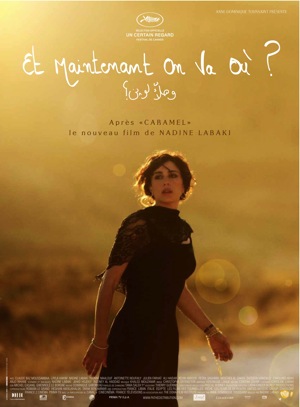
The shortlist for Best Foreign-Language movie at the Academy Awards has just been announced and Lebanon’s Where Do We Go Now is not on it.
Therefore, we are no longer in the race for an Oscar nomination.
The nine shortlisted movies, out of which five will be selected for nomination, are:
Belgium, “Bullhead,“
Canada, “Monsieur Lazhar,”
Denmark, “Superclásico,”
Germany, “Pina,”
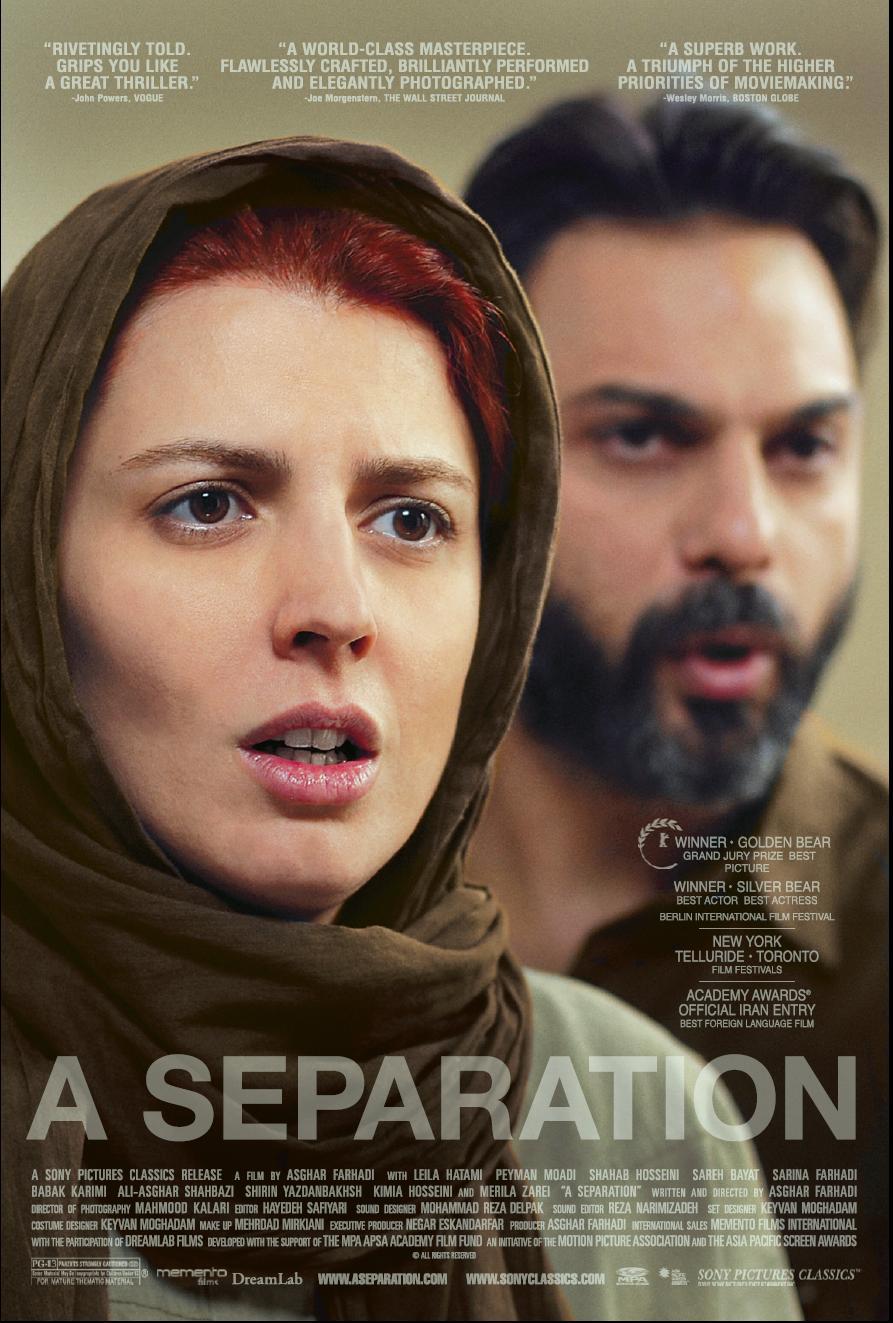
Iran, “A Separation,”
Israel, “Footnote,”
Morocco, “Omar Killed Me,”
Poland, “In Darkness,”
Taiwan, “Warriors of the Rainbow: Seediq Bale.”
That’s it, fellow Lebanese, I guess we were too foolishly optimistic about our chances. I guess having a movie from Iran, Israel and Lebanon in a shortlist was too much for the region. Till next time, I guess (which means till Nadine Labaki’s third movie). You’d think winning the same prize that the King’s Speech and Slumdog Millionaire won, at one of the world’s top festivals, would be enough to pull an Oscar nomination for a movie. But I guess politics is more important.
Iranian filmmaker Asghar Farhadi’s new movie, A Separation, opens with an Iranian couple in court. Simin (Leila Hatami) is asking for a divorce from her husband Nader (Peyman Moaadi) because he refuses to travel with her to a European country now that their visa paperwork is in order. The visa has 40 days left to expire and Simin wants to leave now. “Has this man beaten you or cheated on you?” the judge asks her. She replies negatively. He simply refuses to leave. Why can’t Nader leave? Because e can’t abandon his father who has Alzheimer’s. “Your father doesn’t even know you,” Simin tells Nader. “But I know him,” he replies. Simin and Nader also have a daughter, Termeh (Sarina Farhadi – the filmmaker’s daughter). Being eleven years old, Termeh can choose the parent she wants to stay with after the divorce and both want to bring her to their side.
As he goes back home, Nader is faced with the realization that he cannot tend to his father all day long due to his work obligations. So he hires Razieh, a very religious woman, to look after his dad while he’s at work. But taking care of Nader’s father will prove much more difficult than Razieh had anticipated especially with her strict religious rules. One day, Nader comes back home and finds the house empty and his father almost dying on the floor next to his bed. Razieh is nowhere to be found. Money is also missing from the drawer in his house – the exact equivalent of a day’s work for Razieh. When she comes back, he accuses her of theft and pushes her out of his house. She stumbles on the stairs. And soon, Nader finds himself in court being accused of causing the miscarriage of Razieh’s nineteen week old fetus.
Peyman Moaadi, as Nader, delivers a great performance as the morally torn father between his own family and his obligation to his own father. You can see him making the decision of choosing to take care of his dad every single day of his life with every action he does, every word he speaks. One scene in particular is so masterfully acted out by Moaadi that it will play on your heartstring. Soon after he pushes Razieh out of his house, Nader breaks down as he cleans his father in the bathroom – the father that doesn’t even know who his son is.
Leila Hatami’s role is much more limited than Moaadi. She gets much less screen-time and her character isn’t as like-able as his. She comes off as the woman who wants her husband to let go of his parents even though on one particular scene, Nader’s father holds her hand and calls her name as if telling her that no one can really take of him the way she did.
A Separation is not a movie strictly about a divorce. In fact, the divorce aspect of the movie – the separation of a couple – takes very little time to unravel compared to the other plot elements offered in the movie. The problem that arises with Nazieh’s miscarriage is most of what the movie is about – how Nader deals with it in a way to protect himself and his daughter and how Nazieh, the mother of a little girl, is trying to deal with it in her way to protect her little girl and her unemployed husband.
A Separation’s forte, however, is simply its brilliance realism. There’s not one scene in the movie that is impossible to have been acted out in real life. It also transcends stereotypes of an Islamic society and offers a cinematic experience that can be relatable to anyone who watches. It’s not simply the manifestation of male dominance in the court of law in an Islamic country. It’s the legal, political, dramatic and intriguing family dissolving that the movie is about.
A Separation is multi-layered. It’s not bland. It runs deep. It showcases its characters in a way that reveals their secrets, their vulnerabilities. It does not shy away from ripping bandages dry. It doesn’t flinch from showing the hurt. It also smartly maneuvered around obvious Iranian censorship and managed to become Iran’s official submission to the Oscars this year. It is, at the end of the day, a moral dilemma revolving around family. It takes on gender, class, social, family issues and spins them into a fabric that a sort of critical view of Iranian society. The actors and actresses in the movie stand out. The screenplay is very sharp and the directing exquisite.
And now to the part that would interest any Lebanese movie enthusiast. Is A Separation better than Where Do We Go Now? I’m sad to inform you, dear Iranians, that the answer is no. No, I’m not being biased. While watching A Separation, your emotions are roused. You feel compassion to the characters and the story is interesting enough to keep you grounded. But it doesn’t offer the emotional roller coaster that is presented by Nadine Labaki’s Where Do We Go Now. You don’t find yourself laughing and then crying. You don’t find a smile on your face while watching A Separation as tears trickle down your cheek. A Separation is more tense. But Where Do We Go Now is more universal, more heartfelt, more approachable and more genuine.
For those who are still shocked, yes… I have watched an Iranian movie. Yes, it was also spoken in Farsi.
The nominations for the Critics Choice Awards, seen by many as one of the Oscar indicators, were revealed today and our little movie that could, also known as Where Do We Go Now (read my review), has been nominated in the Foreign Movie category.
The Critics Choice Awards pride themselves on having a greater predictability of the Oscars turn out than most other Award shows, including the Golden Globes. So this is a great sign for Nadine Labaki’s movie that it might get an Oscar nomination. Getting a win, though, is a far different story.
However, the people who vote for the Foreign Movie category at the Oscars are the same type of people who attend the Toronto Film Festival where Where Do We Go Now was voted as best film. I wouldn’t get my hopes way up just yet but I would start getting slightly optimistic that Lebanese cinema, thanks to Nadine Labaki, is slowly but surely getting there.
Back to the Critics Choice Awards, the competitors of Where Do We Go Now are:
In Darkness (Poland) Le Havre (Finland) A Separation (Iran) The Skin I Live In (Spain)
I’d say out of all of these movies, A Separation is Where Do We Go Now‘s main competitor.
I am saddened by the no Deathly Hallows love though. Hopefully that will turn around when the Golden Globes nominations are announced on Thursday.
One thing is clear though, things are looking very good for Nadine Labaki.
Crash is a rare cinematic event. It is a highly undercut movie, in the sense that almost everyone thinks it did not deserve the awards it got. It’s also an underrated movie, in the sense that not many people truly appreciate its genius.
Set over a period of 36 hours in post 9/11 Los Angeles, Crash is literally a snapshot in the lives of a few people that inhabit the city. A racist white cop who disgusts his partner, an African-American TV director and his wife, a Persian store-owner inept with English, a white suburban wife, whose idea of a perfect life is one that doesn’t involve much of the different other, and her DA Husband, two car-jackers, two racially different investigators who happen to be lovers and a Mexican locksmith trying to sustain his wife and daughter.
Crash examines the cultural crash that takes place when all these characters come together. It intelligently examines the fear and bigotry that take place when we don’t understand what the other is dealing with. It shows how everyone is intolerant at points, how no one is immune to violence that, at some points, can change lives drastically.
This year’s award season to celebrate the high quality 2010 movies is over. The Academy has spoken and The King’s Speech is the big winner.
The ceremony opened up with a very funny bit of montage with this year’s hosts, James Franco and Anne Hathaway, doing acting bits in the Best Picture nominated movies. We were able to watch them be part of Inception, The Social Network, True Grit, The King’s Speech, etc… and it was quite awesome. Anne Hathaway had some awesome lines, notably when, during her “role” in The King’s Speech she says: “we come from the future with good news… we have smaller microphones” or when she freaks out Natalie Portman in Black Swan as the green duck.
And then they started their opening segment which was very dull apart from a couple Hathaway lines about how it’s been a great year for lesbians and how getting naked isn’t enough anymore to warrant a best actress nomination, taking a stab at herself for her mostly nude movie Love and Other Drugs.
Soon after that, Tom Hanks came on to present the first two awards of the night, Art Direction (Alice in Wonderland won) and Cinematography (Inception).
Then, Kirk Douglas came up to present Supporting Actress and I honestly thought it was torture. He kept pushing on the nominees’ buttons and it was pretty interesting to see them getting prepared for the results only to see him divert the subject elsewhere. Melissa Leo won this, as expected, although many had predicted an upset (myself included). Melissa Leo then a very horrible acceptance speech where she dropped the F-word, only to become the night’s go-to joke about acceptance speeches. Literally, everyone who won something referenced her in his acceptance speech.
However, soon enough, it began to look like The King’s Speech was not going to own the night as many had predicted. The race was as close as it can be. Soon enough, even Alice in Wonderland had two Oscars.
Supporting Actor went to Christian Bale, as was pretty much expected. So if anyone believes the combination of a Screen Actors Guild Award and Golden Globe doesn’t make you a lock for an Oscar win, this night proved you wrong. The “weakest” frontrunners in the acting categories came out unscathed and victorious.
In the meantime, Anne Hathaway continued a pretty overzealous and energetic hosting job by dressing up as man and taking a stab as Hugh Jackman (Or Huge Jackass as she named him) by singing and dancing about it. And just when you thought she dwarfed Franco beyond measure, he comes up on stage in pink drag. That was probably his most memorable moment. He just looked like he didn’t want to be there.
Continuing with the awards, Inception received both Sound-related awards, to raise its total to three, leading the night. The Social Network scored two quick wins for Best Original Score and Best Adapted Screenplay, as expected.
Then there was a bunch of awards for short films most of us hadn’t watched. Oprah then presented the award for Best Documentary. Inside Job won. I thought Oprah looked dead tired.
Documentary was soon followed by the nerve-wracking Film Editing. It has become known that the movie that wins Film Editing is the favorite to win Best Picture. And in a night where the combination of the awards handed out so far didn’t single out a clear frontrunner, this award looked like it might seal the deal. The Social Network won this and adding to its Adapted Screenplay and Original Score, it looked like we might have a Social Network sweep – again.
Russell Brand and Helen Mirren presented Best Foreign Language Film and Helen Mirren came across yet again as a superb class act by addressing the audience in fluent French. All hail to the queen!
For you animation lovers, this year’s animation phenomenon Toy Story 3 went home with the gold, winning two Oscars, one for Best Animated Feature and the second one for Best Original Song.
Speaking of Best Original Song, there were four performances, the highlight of which was A.R. Rahman and Florence Welch from Florence and the Machine singing “If I Rise”. It was a chills-inducing performance and the song deserved to win. Gwyneth Paltrow sang nominated song “Coming Home” from her latest movie “Country Strong” and I thought she did well. Randy Newman, the writer of Toy Story’s theme song “We Belong Together” mentioned how weird it was not to have a fifth song nominated. And I agree with this. “There’s A Place For Us” by Carrie Underwood for the movie Chronicles of Narnia deserved a nomination.
Later on, Inception reclaimed its title for top movie of the night by earning its fourth Oscar for Visual Effects, a much deserved win – although my heart also wanted Harry Potter to snag its first Academy Award. Which reminds me, The Wolfman won for best makeup. And I thought it was an abomination how this movie gets to flaunt an Academy Award and the whole Harry Potter series has none. Having said that, Deathly Hallows Part 2 better bring it at next year’s Oscars!
Speaking of Harry Potter, there was a funny segment as well about how “musicals” have been an important part of the business this part year. The segment comprised of dialogue parts from Harry Potter and the Deathly Hallows – Part 1, The Social Network and Twilight, among other movies, transformed into song. I thought it was pretty cool, actually.
And since it’s not the Oscars without a proper “In Memoriam” segment, Celine Dion sang a beautiful rendition of “Smile” to a montage of the pictures of industry people that have left us, commemorating their memory.
Continuing with James Franco still looking like he’d rather be anywhere but the Oscars, we get to the final and most important stretch of the night. The last four awards: Director, actor, actress and picture.
Director comes up. Drumroll, please… and what do you know, it’s our first major upset of the night. Presented by last year’s undeserving winner Kathryn Bigelow (yes, I think The Hurt Locker is such an overrated movie!) Tom Hooper for The King’s Speech overtakes David Fincher for The Social Network, who looked like a frontrunner for this category. Tom Hooper delivered a remarkable speech, telling the story of how if it weren’t for his mother, The King’s Speech wouldn’t have been made. I have to say, British people make the best acceptance speeches. This win, however, brings us back to square zero in our movie frontrunner race. Best Picture is back up for grabs.
The Best Actress category was announced by last year’s Best Actor winner, Jeff Bridges. And honestly, I much preferred last year’s nominees introduction. It just seemed so bland and rushed this year around, like they simply wanted to get it over with. These are five women who gave it their all to be where they were, at least give them the decency of properly introducing them. I still get goosebumps when remembering how Stanley Tucci introduced the great Meryl Streep and how Oprah introduced newcomer Gabourey Sidibe last year… No surprise here, however, Natalie Portman won this. She acted surprised and I thought it wasn’t that credible. Sure, you’re happy and all but come on, you’ve seen this one coming since December. It’s not like Jennifer Lawrence or Michelle Williams or even Annette Bening had a late moment surge in votes. She looked very pregnant and gave a pretty boring speech. I was thankful she did not mention her “sexual activities” with her fiance but she enumerated too many names than I care to remember. Last year’s speech by sweetheart Sandra Bullock beats this by a country mile!
Contrast it with this:
Then it was time for yet another expected category with Best Actor. We all knew Colin Firth was going to win this, but what made the category extra-special was Sandra Bullock’s introduction of the nominees. She walked the line between seriousness and humor so meticulously. She radiated with confidence. I think she should host next year’s Oscars. She is just all kinds of awesome! So yeah, Colin Firth won. He opened up his speech about how he might have hit “the apex of [his] career” and then his speech became another snooze-fest. You’d think after all the rehearsals in the movie he won for and the fact that he is British and it’s in their genes to deliver awesome acceptance speeches, he’d do a better job.
And then it was time for the moment of truth. Which movie would turn out a winner out of the two that are seriously left battling it out?
The King’s Speech came out triumphant, bringing its total to four Oscars, tying it with Inception for first place. The whole cast and producers came on stage, a speech I did not care about ensued.
Following The King’s Speech “expected” win, the P.S. 22 Chorus closed the night with their rendition of “Somewhere Over The Rainbow”, the winners joined them on stage. And we’re out people!
All in all, I felt last year’s Oscars had more prestige. I thought they didn’t give the movies nominated for Best Picture their due. Each movie had a segment introducing it last year. This time around, the movies were parodied and barely mentioned when their category came up. Maybe the Academy personnel should care about delivering a better ceremony show suitable for the Oscars than a show to attract young viewers?





 A Separate State of Mind | A Blog by Elie Fares