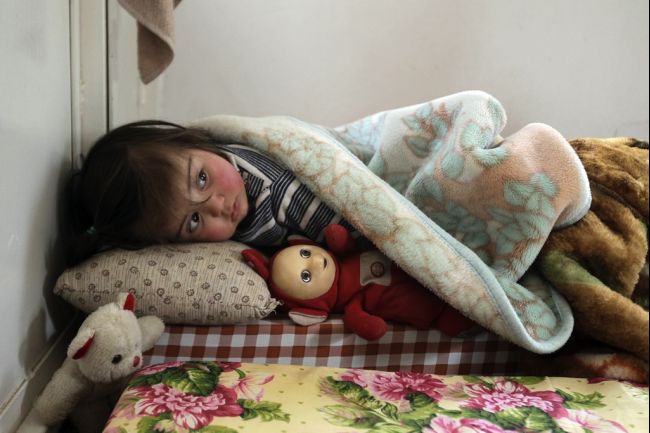
Lebanon, Now RefugeeStan: Enough With The Humanity Talk?

Joseph Eid/AFP/Getty Images

Joseph Eid/AFP/Getty Images

I was going from my hometown to Batroun a while back when I saw two hitchhikers asking for a ride. I’m not the type to worry about such things – transportation between my hometown and Batroun, if you don’t have a car, happens through that method. So I picked them up and off to Batroun we went.

They were both men. The one sitting in the back was very quiet. The one sitting in front was pretty chatty. We were talking in Lebanese. I would have never thought there was anything odd about his dialect until I asked him where he was from and he replied: Homs.

He was worried about his reply so I tried to defuse the tension by saying that I visited his city back when it actually existed and it’s a nice place. The Syrian man, however, felt it was adamant to tell me that they were both Christians who want nothing to do with the war in Syria and who think everyone is at fault.

As I dropped them both off and went about to finish my errands, I started thinking: how bad must it have been for that Syrian for him to decide that telling random people that he was Christian whilst giving them the most diplomatic version of any person’s stance over what’s going in Syria is what everyone wanted to hear? I figured he must have gone to hell and back with him being Syrian in Lebanon lately. And I felt terribly sorry for him back then.

I’ve spoken about the issue of Lebanon’s Syrian refugees before. They’ve become so many that they turned into a source of jokes, though those have also become extremely redundant as well.  However, the issue of those refugees has never really been tackled. Municipalities and some Lebanese ministers spew racist speech that only works to boost their popular basis. The government is as comatose as it has ever been. I guess they’re more worried about the potential ramifications of Ania Lisewska’s sexual escapades. Moreover, the entire rhetoric has been about how we simply couldn’t humanely stop those refugees from seeking help here while acknowledging that the problem was slipping out of control.

The question today is the following: is it the time to draw the humanitarian line on the issue of Lebanon’s refugees as our country quickly but surely turns into some form of refugeeland for the troubled people of the region?

Recent economic studies have revealed the following data about the Syrian refugee situation in the country:

  • Our GDP will decrease by 2.85% per year between 2012 and 2014,
  • Our debt will increase by $2.6 billion,
  • Unemployment will double,
  • By 2014, the number of Syrian refugees in the country would equal about 40% of the country’s pre-Syrian war population,
  • Lebanon’s cumulative loss because of the refugee crisis will be approximately $7.5 billion,
  • More than half of students enrolling at our public schools will be Syrian refugees,
  • More than 40% of primary healthcare visits are of Syrian refugees,
  • Another 170,000 Lebanese will be pushed into poverty because of the immediate ramifications of the refugee crisis. By definition, that is living under $4 per day.

Our refugee problems are not only Syrian. We keep forgetting about Palestinians because their problem is more universally acknowledged, but they have their share of woes that they are bringing on our communities:

  • The number of Palestinian refugees in the country has increased by 16% lately, according to UNRWA,
  • Lebanon already has over 400,000 Palestinian refugees residing in it,
  • Most of those refugees live in refugee camps,
  • Those camps are outside state control and have a self-security system going on,
  • Their self-security system has caused security trouble with Lebanese for a long time, the most recent of which is the altercation with Hezbollah.

Lebanon, the smallest of Syria’s neighbors, is taking the biggest load because:

  1. Many of us believe that the problems of those refugees are not as severe as the numbers say they are,
  2. Many Lebanese refuse to address the issue of the refugees due to political reasons or because they see no problem in those refugees being here,
  3. Some Lebanese parties had decided once upon a time that there was nothing happening in Syria and that those people are here for tourism, while parties on the other side of the spectrum stood by as they waited for ways to use those “tourists” politically,
  4. Our country is simply not capable, neither financially nor logistically nor influentially, of handling such a load – but is the solution simply letting the load pile up while we stand idly looking around?

Most Lebanese were more worried about the situation of the refugees with the most recent rainstorm to hit the country than of other Lebanese who are living in similar, if not worse, conditions. During a recent session with Medecins Sans Frontières, I asked: how does the living situation of people in Bab el Tebbaneh, Jabal Mohsen or Akkar compare to what you’ve seen of Syrian refugees? The spokesperson answered: it’s worse.

But their effect on our lives, even though many refuse to see it, is not only related to the way they live.

For the Lebanese who don’t need to seek out an apartment for rent, the housing market is the same it has always been. But renting fees have risen sharply over the past year or so. Even shabby apartments in my hometown, which many would say are not that well-equipped, are going for rates that might rival Beirut due to the extremely high demand imposed by the refugees. If one can’t pay, they get kicked out and the other refugee on the waiting list takes his place. Lebanese people, living off our country’s dismal salaries, have to abide with landlord demands that come out of the blue and blindside them into eviction. A friend of mine will soon leave her Achrafieh apartment because her landlord decided, just as the new school year was starting, to ask for a rent increase. Lebanese are anything but lousy traders.

Another friend of mine lost his job recently. He never figured he’d still be out of a job almost 5 months later  – he worked in architecture. How rare could those jobs be in the country? It turns out the job market has also drastically changed since he last tried his luck in it. His former job was taken by a well-qualified Syrian who’s getting paid half his salary. Can that Syrian complain? Of course not. Employers now prefer to hire Syrians over Lebanese because they’ll do a similar job for much, much less salaries. How are we supposed to compete with that? Is it plausible for a Lebanese with an engineering degree to accept a $900 per month salary in order to say they’re not unemployed?

You’d think that with this influx of people into the country, business would somehow either stay the same or improve. Well, guess again. Even though goods prices have not drastically increased lately, as they somehow find their way to do whenever something happens in Lebanon, the growingly terrible security situation in Lebanon is deterring people from doing what Lebanese do best: joie de vivre and all. A well known Lebanese restaurant has witnessed a 20% decrease of business per year, over the past two years with this number reaching 40% at some of its branches. Weekend walks around some of Lebanon’s bar streets reveal a drastically different scene from the one that was present a while back: how many times have you seen Gemmayzé near-empty on a Friday night? Many food chains around the country are closing due to the recent instability: Hard Rock, Krispy Kreme, etc…. And I’m sure common sense dictates that smaller businesses are taking it harder. At one point, I’d have said the refugees had nothing to do with this. But the aforementioned World Bank study seems to indicate that they are playing a major role in the stagnation this country has reached, harsh as that realization might be.

What To Do With All Those Refugees?

I’m not turning into a Gebran Bassil-esque character who bashes the refugees one day, calls to get them kicked out of the country, but would have no problem bringing in the people from Maaloula just because they’re Christian and can be milked politically over here. I don’t think what municipalities are doing is acceptable in the context with which it’s being carried out but they are legally free to do whatever they want. What I can do regarding those regulations is not vote for the people who enforced them come next election time, which in my hometown should be soon. But what we also cannot do – and Angelina Jolie would certainly not approve – is stand by while the country is over-run.

How are we supposed to deal with the refugees? Well, for starters regulations that ban any Lebanese employer from hiring them in select jobs where our country has a surplus of people who are willing to work but can’t find the opportunity to should be enforced. Instead of municipalities settling for curfews on the foreigners they don’t like, they should start up regulations that lead to the organization of the refugees in their jurisdiction instead of limiting their liberties. Instead of panicking about an increasing number of refugees in the country, we should enforce regulations on how many refugees we can accept through border regulation. Instead of letting the refugees roam around the country, sleeping under bridges and whatnot, we should set up refugee camps in the Bekaa that can agglomerate them somewhere where their basic necessities can be addressed.

The humanitarian thing to do is not to make it harder for our parents to get by, it’s not to leave ourselves without jobs and it’s not to get our businesses out of business. The humanitarian thing to do is not to call for humanity just because it pleases our conscience while the country burns and we sit by blindly, not seeing the effect of our humanitarian action-less actions. It’s difficult sure. They don’t want to be here, definitely. But it’s time we think about the country that we want to have for ourselves because, by the looks of it, nobody cares about us.

 

Racist Lebanese Municipalities or National Policy Against Syrians?

My uncle was shot and killed 14 years ago today, March 26th 1999.

His killer’s name was Tony Rouhana. He was from my hometown, Ebrine. He was Lebanese. He was an active wartime member of one of North Lebanon’s well-known parties. They call themselves “Marada.”

May 2008. My mom enters our house and finds a hooded-man there. She shouts and runs after him. He was going through her jewelry. He makes a quick escape through our window. A couple of weeks later, his identity is known. He is also from my hometown. A Lebanese. He was only reprimanded – never arrested. Why should they ruin his future?

March 2013. A member of our municipality has his motorcycle stolen by a gang from Tripoli. They chase the thief, are on the phone with our security forces at all times, but are unable to catch him. The theft happened in broad daylight at noon. You can check more details here.

March 2013. I’m sitting with my family as we bid farewell to my uncle who was going back to his home in the United States after a short stay. We hear the sound of a four-wheel drive rolling by. They say it’s our municipality policeman’s new car. Why was he driving around at 10:30 pm?
Because my hometown, Ebrine, is now enforcing a curfew on Syrians. I expressed outrage and was told I oppose things way too often, way too much.

No, my town is not, like other places, hiding behind the shroud of “foreigners” when they mean one thing and one thing alone. There are no fliers being posted around the place. There are no banners to welcome you with the news. It’s all under the radar, hoping it would go unnoticed: a subtle regulation that won’t affect my life because I am Lebanese, from Ebrine and there’s absolutely nothing bad that I can do.

I didn’t want to write about this issue until I made sure it wasn’t simply townspeople gossip. I went to the municipality and asked. They confirmed. Their explanation? We got an order from the ministry of interior affairs recently to organize the Syrians inside our town and to have them listed – as per orders of Lebanon’s intelligence. They didn’t say anything about a curfew but, believing I was worried about the Syrians in my town, they went on further: “you don’t have to worry. A curfew was enforced on Syrians. The policeman is also patrolling the streets from 8 pm till 12 am. The town will stay safe.”

How beautiful and reassuring is that? I should look into extra safety measures against Ethiopians, Egyptians – basically anyone whose skin color or clothing style is too inappropriately poor for my taste.

I also find it hard to believe that such an order would come from the ministry of interior and would go unnoticed everywhere, especially that Marwan Charbel, our current minister of interior affairs, said municipalities who enforce curfews are committing illegal acts (link).

So which is it? Is our government or entire Lebanese administration, now that we don’t have a government, relying on vigilante justice in Lebanese municipalities to regulate the Syrian influx in the country? Are all our municipalities and circumscriptions now limiting the movement of “foreigners” just because the situation in the country is worrying?

Last time I checked, it wasn’t Syrians who were fighting in Bab el Tebbane and Jabal Mohsen nor were the Syrians fighting in May 2008 when all hell broke loose in Beirut.

Should the Syrians in Lebanon be regulated? Sure. Is their influx worrying? I think so. But turning their forced stay here into that of people living in an emergency nation will help things how exactly?

Let’s call it a temporary fix – a plug in a collapsing dam.

Do we have a lot of Syrians in my hometown? Frankly, I don’t see any huge numbers that were not there in 2008, 1999, etc. We are not that affected. Those Syrians are renting apartments here, buying stuff from the shops that even our townspeople don’t go to anymore (going to buy groceries in Batroun is much cooler. They get to use a trolley and pay 10,000 in gas in the process). And yet, somehow, those new Syrians are now posing such a big security threat that our municipality decided to do something for the first time since it was formed in 2010.

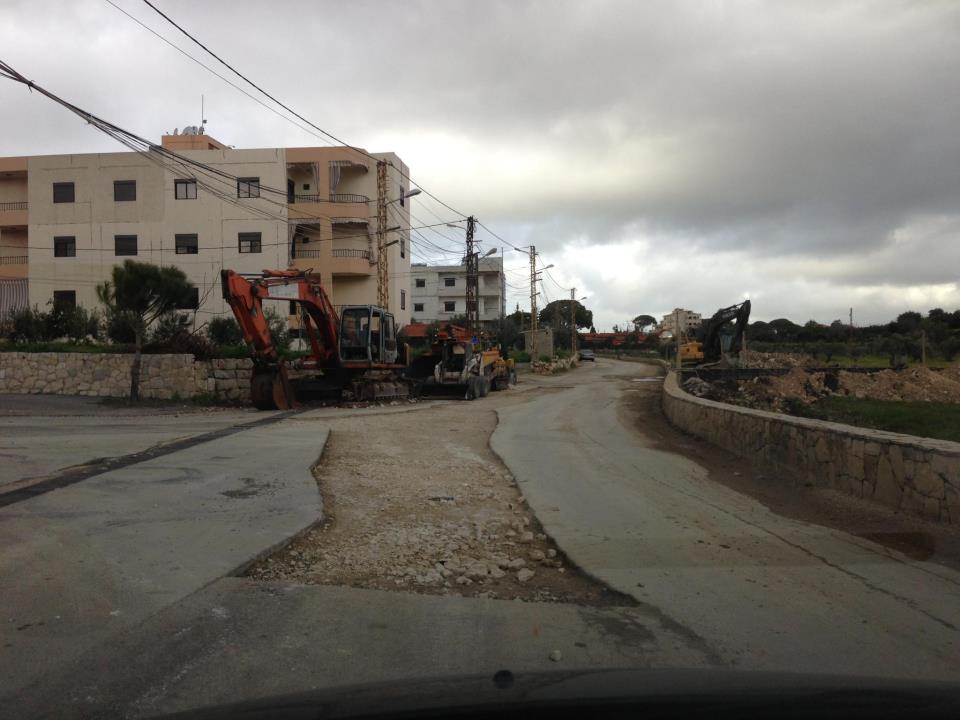
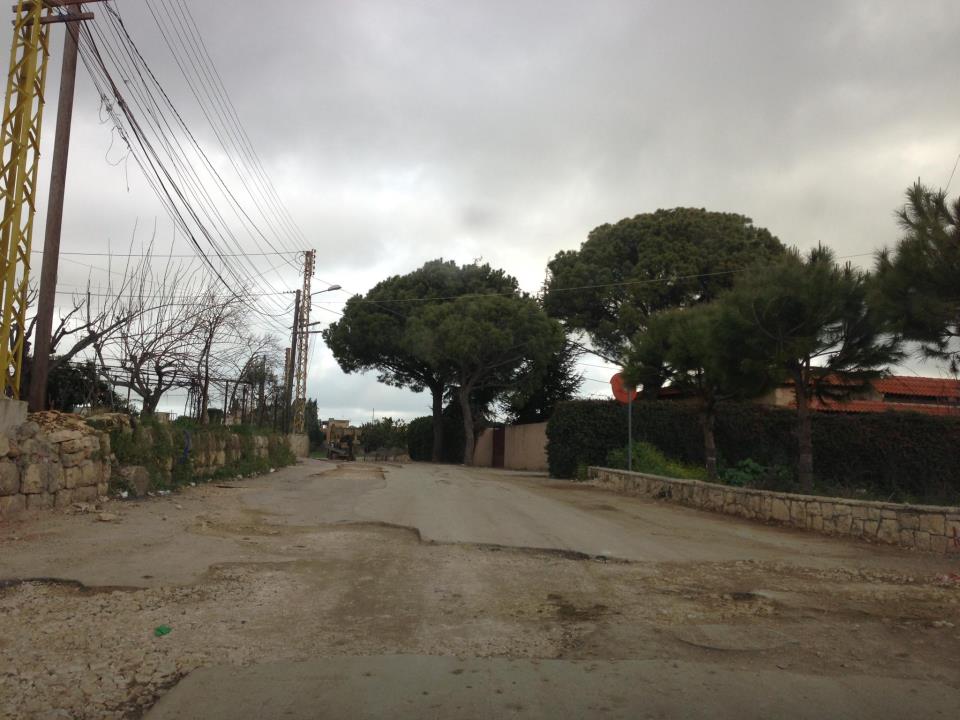
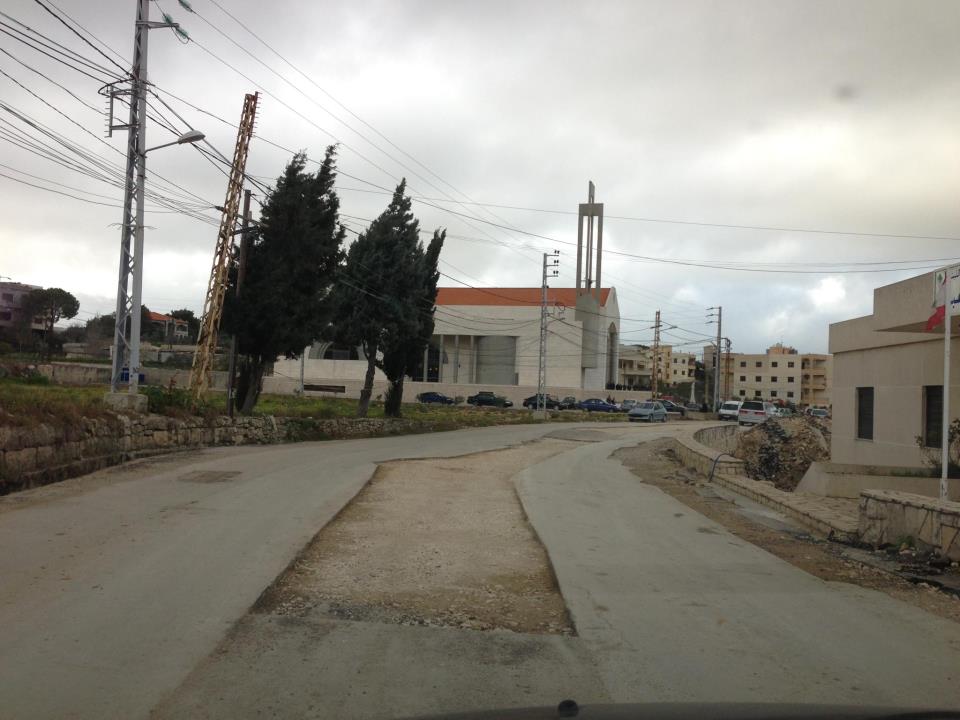
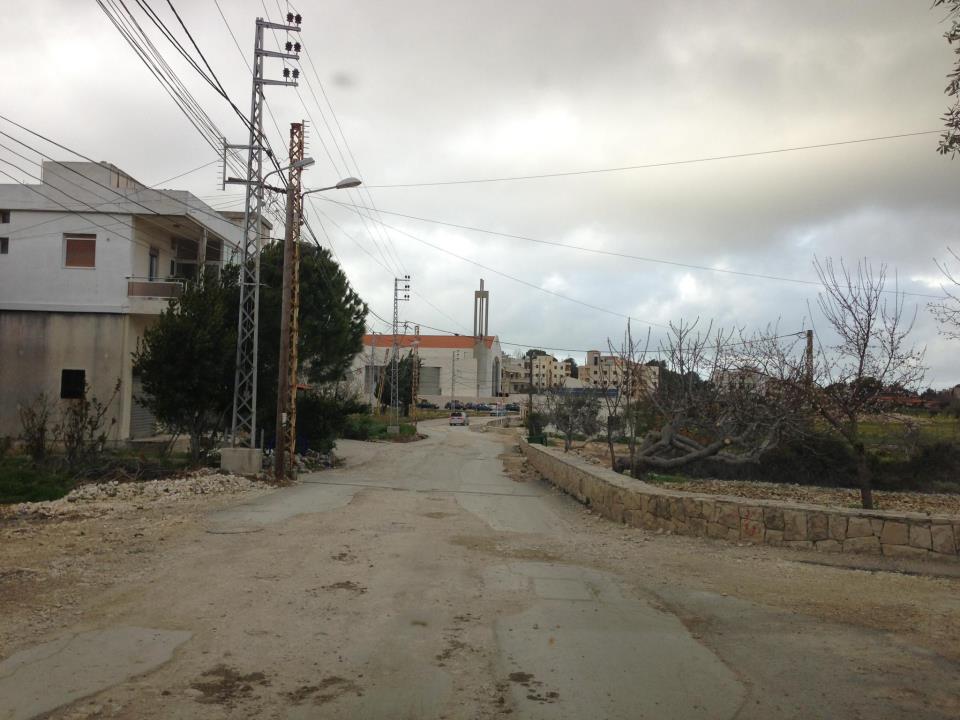
Our municipality, which left our roads go as the below pictures show, for over 2 months, which didn’t say anything and even sent a thank you letter for Gebran Bassil (who in all fairness was later outraged and called them out on it) is acting out, protecting us, making us feel safe, as part of a developed country. What’s worse is that this could possibly be some form of national policy.

Roads Ebrine Batroun Roads Ebrine Batroun - 3 Roads Ebrine Batroun - 4 Roads Ebrine Batroun -2

Racism With Middle East Airlines (MEA). Again.

I recently got a tip from a reader regarding another racism incidence with Lebanon’s airline carrier MEA that is not dissimilar to the one that became everyone’s talk a few months ago, culminating in firing the employees involved.

The story goes as follows:

The export manager of a Chinese company was visiting Dubai for a few days after which he was sent by his company to Lebanon to work on a certain deal with a local business. Once his work in Lebanon was up and he had to go back to China, he presented at the MEA counter at the airport but the employee refused to issue him a ticket.

She said he didn’t have a visa for Dubai, which he did. He was also going through Dubai simply as transit to China, which is allowed even if you don’t have a visa. So shouting at the Chinese man, the employee talked down to him, dismissing him. A quarrel ensued, which was only stopped up by another employee interfering and issuing the ticket in question.

I wonder: how difficult is it for MEA to vet its employees before actually hiring them when it comes to the most basic of qualities that people who handle international customers should have? Or how difficult is it to actually have MEA’s employees go through some trainings in dealing with customers in respectable ways to bring them to the 21st century where a passenger isn’t dismissed based on the color of his skin or how stretched his eyes are?

Racism isn’t exclusive to MEA. It spreads to a lot of people across Lebanon with municipalities illegally banning Syrians (and officials who don’t want to do anything about it) to severe discrimination against migrant workers even in the media that should be helping to lessen this among people (link). But the least we should expect is for one of the country’s major companies – especially one that represents Lebanon to the entire world – to be stringent with the image it wants to give to the world.

As for how I believe racism in Lebanon should stop, I quote something I wrote (link) when the first racism incidence with MEA happened:

Racism isn’t also a Lebanese problem. It is a worldwide problem that takes many forms. It transcends the hate towards others based on skin color. It is the intolerance towards another’s religion, the intolerance towards another’s nationality. And if a country doesn’t have a predominant problems with someone’s race, then they probably have a problem with differing religions. It is the problem of “difference.”

We dislike those with whom we can’t easily relate.

So what’s different between Lebanon and those supposedly racism-free countries? It’s quite simple: accountability. And that’s what works most with us Lebanese: a slap on the wrist when we do stuff wrong (fines for smoking, for not putting on the seatbelt, for speeding….)

People who get accused of racism in those countries have consequences to deal with. In our country, racism is met with indifference. A prominent TV anchor was blantly saying that an Ethiopian maid who committed suicide a few months ago was deranged (click here)- and he found no trouble at all in passing his ideology to his viewers. I’m sure he got high ratings for that episode as well.

If that anchor had met the same fate as the employee, people would have known that what he said was wrong. They would have known that talking badly against someone else just because you don’t like the skin they were born in is unacceptable. And they would have realized that it is no longer accepted to have it happen.

Their racism would then regress – it would get suppressed. And that is how other countries do it.

Racist Lebanese Municipalities & Marwan Charbel’s Inadequacy

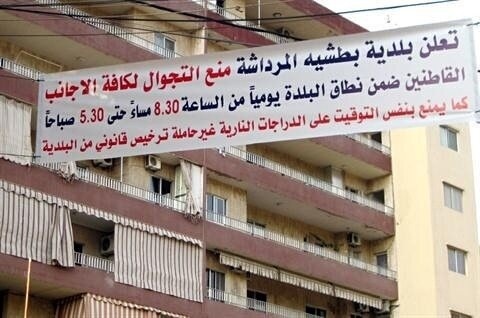
You’ve probably been inundated by picture of the town of Betchay in the Baabda district who issued an impromptu curfew on “foreigners.” It is reminiscent of something the municipality of Bhamdoun did back in August which was more precise and didn’t nearly get the same attention (link) – the issue of the Syrian refugees hadn’t been this thorny back then.

The picture below is of the banner in the town that has gotten the country talking:

20130225-141633.jpg

What you may not already know is that the issue hasn’t been exclusive to Lebanon’s online community with us discussing it over and over again and the issue not reaching any form of “higher” authority.
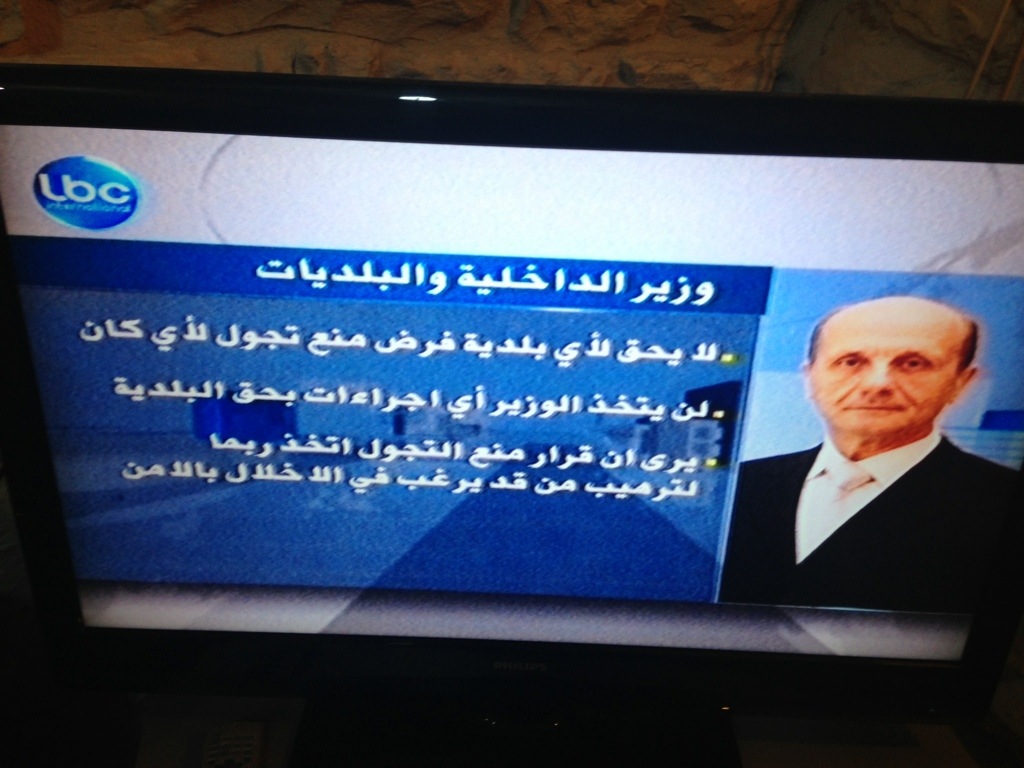
Lebanon’s ministry of interior Marwan Charbel knows about the municipality of Bechtay’s decision. He knows it’s illegal for them do so. But he won’t take any measures. If you don’t believe me, check out the following picture I took of the highlights of his interview with LBC:

20130225-141926.jpg
To “clarify” his decision not to pursue the illegal matter, he said it could be the municipality’s way of pressuring those who might want to mess with its security.
As if that is remotely acceptable.

The Municipality of Betchay is racist, yes. Their mayor went on TV to say the following: “We obviously mean Syrians with “foreigners” because French and Europeans won’t be driving Vespas after hours in our village.”
And despite such statements, our minister of interior still wants to let things slide. What can you expect from someone who believes a bomb exploding in Tripoli is “a bunch of people playing with it?”

The problem isn’t that the municipality has a backward mentality that should not be accepted. It’s with an administration that is so entrenched in apathy that they’d rather let such grave violations slide without doing anything about it.

I don’t care what the municipality of Betchay’s justification behind such a banner and decision is. If any entity in this country, especially one that is supposed to run the affairs of other people, broke laws in such a flagrant way, it should face the repercussions that such illegalities entail. It shouldn’t face an over-philosophical minister who doesn’t want to do anything about it.

Lebanon currently has over 300,000 Syrian refugees. They are spread across the land. All our towns have Syrians currently in our midst. The difference is our towns didn’t see it fit to break the law in order to prove a point that is mute to say the least. Not that it would matter anyway with Marwan Charbel in charge.

Let’s categorize this as a massive failure in humongous scales. Now who wants to play hide and seek with a few Khaybar missiles? No one will mind.

The White Guilt of American Elections

Subtle racism has found its way to the American political scene in the final days before Americans head to the ballots to vote on who should run their country for the next four years. The issues both candidates stand for are known. Conservative versus liberal, right wing vs left wing, grosso modo. However, with elections being less than 48 hours away, the talk isn’t centered around the core issues anymore.

The American elections are now all about demographics: who’s voting for who. Because demographic talk is important to see how the country might vote on November 6th.

Pro-Obama analysts underplay the shift in numbers from 2008 to 2012 as something that can be compensated for on election day. Pro-Romney analysts extrapolate the shift in numbers to claim a premature victory they desperately seek. But what is the demographic talk they speak of?

It is that of Catholic and Protestant voters. It is that of independent voters. It is that of women. And do you know what’s the common thing among all those demographics that are up for grabs still?

They’re all white. Or caucasian, whichever term is more politically correct.

In the dying minutes before Americans choose, the tactic is to bring out the colonial white guilt that hasn’t died down since America’s old days. Bringing out the guilt happens even in subtle comedy that, when not read into, is another funny gimmick to make people laugh. However, after a careful minute of reflection, a seemingly harmless skit holds a deeper meaning than it presumably intends to.

For struggling campaigns, the play on the emotional cords of voters is essential to rally them up come election time. The emotional cord for white American voters is the issue of racism. If you don’t vote for this candidate, then you are subtly racist. The fear from the label pushes some people to vote against their convictions in order not to fall into the stereotype.

And this is the inherent hypocrisy of the American system.

More than 90% of African American voters are voting for Obama come election day. Are they accused of racism? No. How many of those voters are more inclined to vote for Obama because of the color of his skin? How many are voting for him based on their convictions and political stance? Both questions are quite irrelevant because they don’t apply here. They apply to “others.”

On the other hand, caucasian Americans do not have the prerogative to vote for their convictions guilt-free. It’s because they weren’t the segment of American society that was marginalized for years and years. But does the fact that African Americans had a very tough phase in their history warrant the rhetoric that has sunk to the level it’s at today?

And we’re not even going into the baggage that voting for one candidate over the other carries: xenophobe, homophobe, female-phobe, anything-phobe.

The bottom line is: it’s not racism and you’re not a racist when you’re voting for someone not because of the color of his skin but because of what he stands for. It’s not racism and you’re not  a racist if you haven’t really thought about a candidate’s skin color until now. Come election day, everyone – regardless of their skin color – should vote to who they believe can get their country in the right direction. The “white result” of 2008 has shown that the majority of Americans don’t care about a candidate’s skin color. So for those who voted to one candidate in order to prove they weren’t racist in 2008, mission accomplished, no need to feel guilty if you cast an opposite ballot this time around. One thing to be said though is shame on media that would revert to such cheap tactics in order to get their preferred candidate a boost.