The Spanish Experience – Toledo

We, Lebanese, pride ourselves that we can speak three languages fluently. Well, you know you’re in Spain when your bus makes a pit stop and the first thing a salesperson there tells you is, in Spanish, that she doesn’t speak neither English, nor French, nor Arabic. Only Spanish.

And that was our welcome notice to Spain. Welcome to the land where you will barely manage to communicate.

Also, if you thought Lebanon’s summer was hot, wait till your every being is stricken with thirty-five degree heat, no humidity and no wind to cool it down. Then you’ll know what hot is. And I know that’s nothing compared to what some people in the Gulf get, but it’s still something. After all, the European weather misconception is: it’s always at least colder than Lebanon.

We stayed in the Southern part of Toledo, in a school in a new neighborhood. The realization that I had five days in Toledo where I had to sleep on the ground, take a shower in the parking lot with cold water using a bathing suit in front of twenty other French people took some time to sink in. Moreover, going into a school with three hundred other French guys and trying to fit in a tiny classroom or gym with them isn’t the most welcoming idea in the world. Therefore, five other Lebanese guys and I took our stuff and basically made outside our bedroom.

Toledo was the first out of two steps in our World Youth Day journey. It was a preparatory forum, one that I had my own experience at. You see, there was a fixed daily schedule of events that went on for our five day stay. So we, Spanish-less Lebanese,  since we didn’t understand 95% of what was going on, simply ditched most of what was going on and went globe-trotting around the city. Most of the Lebanese group stuck together. I, on the other hand, set out to meet people. I didn’t want to remain with a group I could meet whenever I wanted in Lebanon. I wanted to meet people whom I would only get the chance to meet in those few days I had in Toledo.

The second day I was there I bought an Orange phone line. No, do not look at me like that. I didn’t change political affiliations (if anything, Spain fortified them) but that line was so cheap! A 3.5 euro per week subscription to unlimited 3G internet as well as fifty free texts, with very cheap minutes. For my overpriced Lebanese line, it was heaven.

But I digress.

The beauty of Toledo is something that has evaded me while being in Toledo. You see, the constant worry of sleeping and showering and the heat was a constant shadow on my days. Also, the fact that I didn’t get along with a decent portion of the Lebanese group I was with left me searching for company elsewhere.

It was then that I met an awesome group of Egyptians, most of whom were of Lebanese origins. After all, it’s hard not to get excited when an Egyptian tells you they’re Maronite and that their mom is from the North and their dad is from Jezzine. What was the most awesome thing about these Egyptians, apart from the fact that they were a great company? They simply loved Lebanon. Even those of them who didn’t have any drop of Lebanese blood in them.

I still remember when a purely Egyptian Raef told me: “You, Lebanese people, don’t know how lucky you are to be living in Lebanon. You have the prettiest country, nature, cities, girls, cars, etc…”

I had told you before that my Europe trip increased my pride in my country. This is another one of those moments. Raef had visited Lebanon three weeks before his World Youth Day trip and even in Spain, Lebanon still mesmerized him. So to every self-hating Lebanese reading this, just suck it!

The events in Toledo were taking place in a huge tent that could hold up to 5000 people of different nationalities. People from Germany, Romania, Slovakia, Puerto Rico, France, Belgium, Egypt, Iraq and even other groups of Lebanese were there. Part of the events was a country festival where a group from a certain country would get a fifteen minute presentation to tell everyone why their country is special.

Our Lebanese presentation consisted of yours truly explaining the Lebanese flag, name, talking about Lebanese saints and our country in English to over 3000 people in attendance. And the best thing of all? It wasn’t even nerve-wracking! Imagine five minutes later getting the whole hall to dance the Lebanese traditional dance, the Dabke, with you and you get a feeling of how awesome the Lebanese presentation was.

It was so good, in fact, that a guy from Belgium asked to take a picture with me soon after. The following day, a French guy named Martin ditched his group to sit with the “lively Lebanese who are the heart of Toledo.”

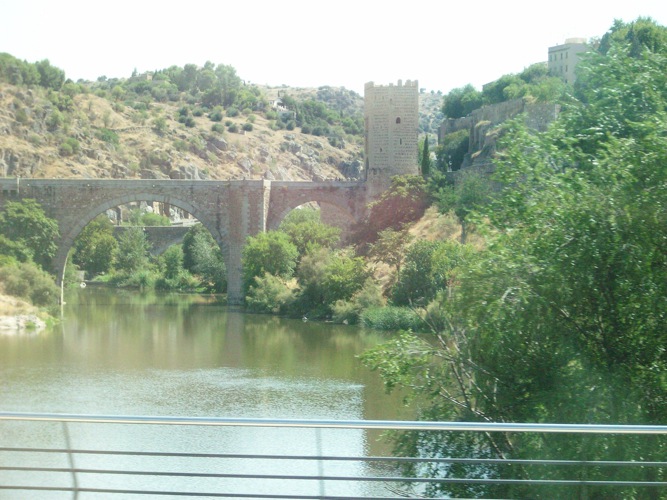
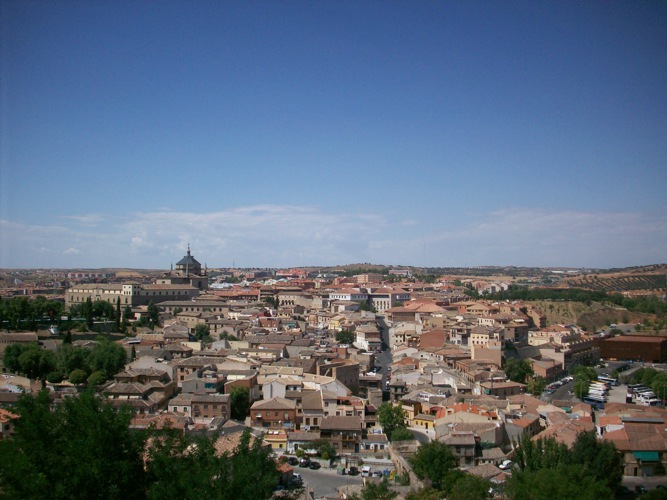
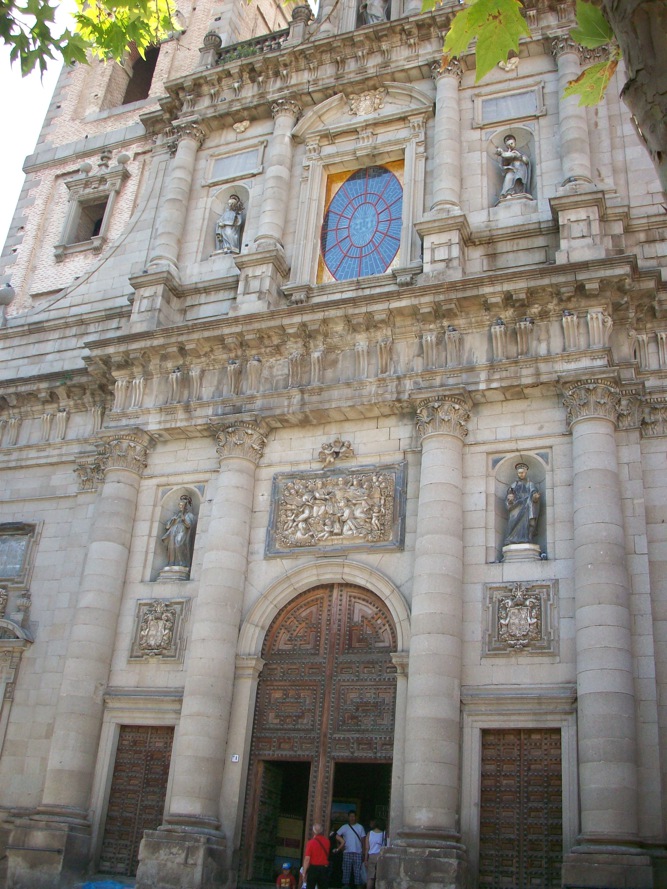
But it wasn’t all presentations and prayers. We also got to visit the ancient city of Toledo and see Cathedrals that are so breath-taking they’ve been turned into museums. I actually have a hard time imagining Mass taking place in them. It’s just so distracting to sit in them and focus on a priest praying.

I was also fortunate to meet two people in the school we stayed at in Toledo: Paul, a Russian boy who changed to Catholicism, and Sufian, a Moroccan who converted to Christianity. Sufian came over one night and said he needed to talk. Twenty minutes later, the other Lebanese around asked me to leave since they wanted to sleep. So Sufian and I went to a separate location where people wouldn’t be “bothered” by the discussion. Then Paul joined us. And what had started as my attempt to sleep early turned into me not wanting to sleep, at 3 am.

Remember how I said Spain fortified my political affiliation? Well, politics followed me all the way to Spain. While visiting the old part of Toledo, we stumbled on a Syrian group who was staying in the city as well. They were Syrian Christians from Aleppo, also in Spain to participate in World Youth Day.

One of the Syrian guys asked me where I was from in Lebanon and I answered. He then proceeded to ask me how the situation was in my country, to which I answered: “that question is more valid to Syria, don’t you think?”

He replied. “Oh there’s nothing going on. It’s all media exaggeration.”

I laughed and said: “Yeah, because the guy I saw get beheaded on YouTube is ‘media exaggeration’… anyway, let me tell you one thing: Bashar is going down!”

And then he started shouting and flashing his Bashar Assad pin at me. Moments later, I stumbled on another Syrian with yet another pin. Call me unlucky but it looks like I was in their corner of the Square. This time, however, I had two Lebanese of my group with me. So naturally, the “Syria topic” starts again and this time I blurt out the fact that most Lebanese Christians are actually against the regime in Syria because the regime has done grave things for us. Who replies? Yup, you guessed it… the two girls in my group, who happen to be of a differing political affiliation, shout at me saying: “don’t include me! I’m with the regime, long live Bashar Assad!”

I’m not the most self-restraining of people so I’d like to think some act of divine intervention took place to shut me up over there.

But if there was anything I learned from Toledo it’s that:

1) Spain is very hot!

2) Sane Egyptians, who are not all “YAY! EGYPT! REVOLUTION! OMG”, can be quite fun to be around.

3) French people are great!

4) Sometimes, the best remedy for a stranger in need would be a comforting conversation.

5) Syrian Christians, as well as some Aounists, are cringe-inducing. This realization will only get worse in Madrid.

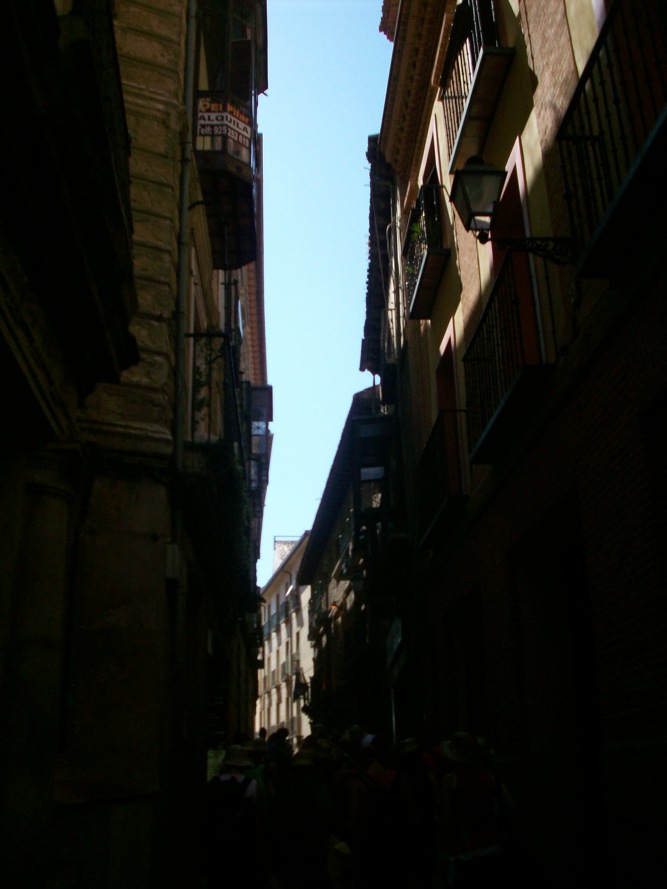
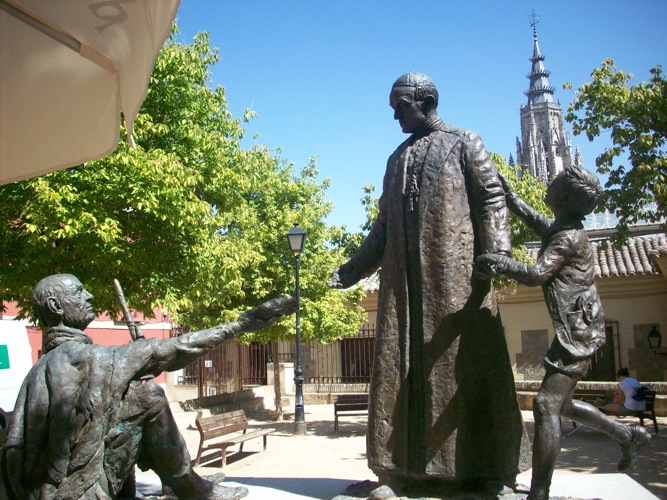
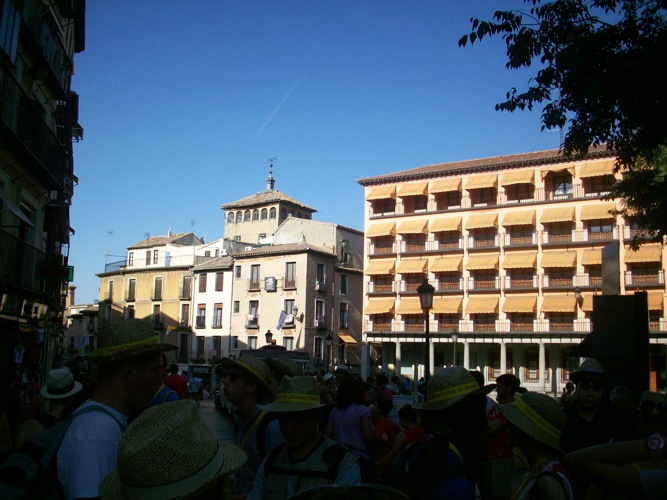
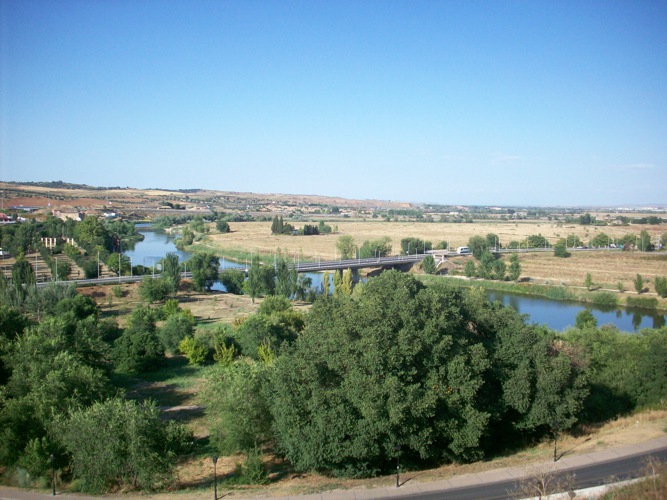
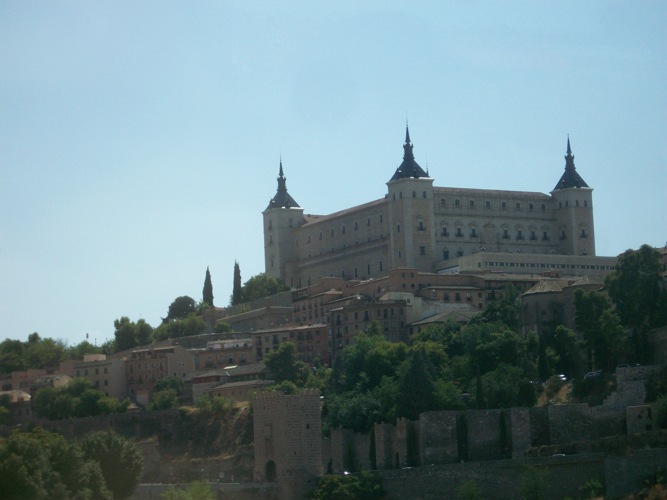
Here are some pictures from Toledo.
Lebanon’s New Government

Congrats fellow Lebanese who might read this, we now have a government.
Regardless of its unipolitical color and the 5 month labor it went through to get here, we can now say that we are no longer governmentless.

And since 5 months without government render you immune to the overall uselessness of the whole process, let’s all deem the government formation a big fat fail.

1) It is a one-sided government, meaning the political struggle between both sides in the country was irrelevant to its formation.

2) It took 5 months for people among the same “team” to agree on forming the cabinet. 5 months for them to agree on 30 names. It took less to form the government with both sides included after the 2009 parliamentary elections.

3) The former opposition calls upon itself reform and change. Change is there: I’ve never heard some of those names before. And congrats to those new ministers. They will have a constant monthly paycheck till the day they die. Also, congrats to those people that made the governmental selection yet again. I mean, could you imagine a government without Ghazi Aridi as the minister of public works? Hello no! Reform, indeed.

4) There are more pro-Syria ministers in the new Lebanese cabinet than there will be in the theoretical Syrian government to be formed by Bashar Assad in Syria.

5) A few hours after the announcement of this glorious formation, two ministers have already submitted their resignations. Were they not aware they were going to be assigned? Apparently not. What’s the word (or acronym) to say here? Yes, LOL! Quoting my friend Boulos, “civil war cabinets have lasted more than this!”

It’s getting bigger. The fail is getting bigger.

So yeah, let us be happy today that the orange, yellow, green and other irrelevant people found it in them to stop the cockfight and form a government. Useless as it is and contradictory as it may be to the will of the people, we now have one. Insert fireworks show.

Bashar Assad And The Syrian Regime

I still remember what it felt like to be thirteen. Going to school every day, nothing on my mind but getting good grades and catching up with the latest Pokemon episode. Life was as carefree as it could be. Thirteen also happens to be my favorite number, not because I was born on the thirteenth, but because many people find the number to be an omen. Do I believe in all those things though? Absolutely not, but thirteen is a number that makes me happy.

However, that rule does not apply today.
I’m always saddened when I hear about youngsters passing away. It’s always sad when you know someone approximately your age going through an ordeal such as cancer. You pray for them and hope that the doctors (or whichever mystical power you believe in, I shall call it God) and God help that person out. And you’re always filled with joy when you hear the cancer has gone into remission.
For a young thirteen year old by the name of Hamza Khatib, the number thirteen was the last candle he would blow out on his birthday cake. Why so? Because he fell victim to a brutal tyrant known as Bashar Assad, the head of the Syrian regime in its current form.

Hamza Khatib was used as target practice. The bullets were not used to kill Hamza but to torture him. Imagine anyone being shot repeatedly in the arms and legs just because someone felt like it – now imagine that “anyone” be a frightened thirteen year old whose only fault was expressing, in the only way that he knows, his opinion in a country where that luxury is not given.
Hamza Khatib was castrated and his hands, feet, and abdomen were severely beaten. Overall, men in power who don’t care about him being so young and innocent subjected this teenager, for a period of well over a month, to most signs of abuse and torture imaginable.

This is how Hamza was returned to his parents.

Alas, we should know better. Hafez Assad, Bashar’s father, once proclaimed: “Lebanon and Syria… one people in two countries.” We all know the phrase. It was written, after all, on every wall around the barracks the Syrian army and security apparatus occupied in Lebanon for over thirty years. So, since we are “one people in two countries,” it is our right, as Lebanese, to demand the regime in Syria to fall. We’re only going by the teachings of the “great” Hafez Assad, after all.
I don’t want to bring up being Lebanese in every talk about Syria, but we Lebanese were subjected to what Hamza Khatib has been through but to a far worse degree and for a much longer period of time. How many of our men and women are handicapped today because of things the Syrian regime did to them? How many media outlets were intimidated, censored, or closed (anyone remember what happened to MTV in 2002)?  How many of our fine men and women are still missing today and how many martyrs have we buried because “brotherly” Syria stated that Lebanese security was tied to Syrian security?

We, Lebanese have suffered from Syrian hypocrisy even when it comes to our land. Bashar Assad (and his father before him) made it their job to point out how our South was occupied by Israel, day and night. They made it their duty as well to arm Hezbollah and work on making it as strong as it is today, giving it an allure of grandeur that Hezbollah does not, honestly, possess. And yet, look at their land. They have an area that is about 17% the size of Lebanon occupied by the Israeli army for over forty years now and yet they don’t even dare talk about its liberation. Why is it that they are only feisty and defendant of this “glorious” thing called Arabism when it comes to our South and yet when it comes to their land, they’re ever so silent?

Israel occupied South Lebanon until 2000, yet a much worse form of tyranny occupied the rest of Lebanon. From handpicking the presidential candidates, to extending presidential mandates, to rigging elections, censoring media outlets, playing politicians off one and another (Hariri vs. Lahoud) and controlling the security apparatus, Syria dominated nearly every aspect of Lebanon as if it was its own personal fiefdom and all in the name of “brotherly” security. What is sad is that Syria still has its proxies in Lebanon today to fight its battles outside its borders. These proxies pay regular tributes to Damascus for protection of their own parliament seats and sect, all in the guise of “brotherly” relations and fighting Israel, all the while thanking Syria for its “presence in Lebanon”. They constantly threaten that instability in Syria would be no good for Lebanon. Even worse these proxies recently spat in the face of the Syrian protestors by supporting the Egyptian and Tunisian uprisings while declaring that Syria is merely facing a Western backed conspiracy and that Lebanese must stand by this power hungry tyrant. But how different can those people be from the regime and person they support? After all, Assad brutally killed every Lebanese that stood in his path for the thirty years of Syrian occupation, without caring – even remotely – about human life. That makes him a war criminal.

The Syrian people are going through some of the similar events we went through for thirty years such as tanks shelling their towns and villages, and innocent civilians disappearing because they were crying out for liberty. They are making the same calls we made in 2005, calls for independence and freedom, and no to rigged elections and brutal security services. The Syrian people need to revolt, for the innocent souls of the likes of Hamza Khatib and the hundreds of other martyrs that have fallen victim for this tyrant since the protests started on March 15th.

Assad put forth the strategy of a minorities coalition, whispering in the ears of Lebanese and Syrian Christians alike that such an alliance is needed to safe guard minority rights against Islamic fundamentalists. His actions, however, proved otherwise. Look at what happened in the 1990s, Maronites were robbed of their political perogatives, with their major parties banned and political leaders jailed and tortured.The Syrian people need to speak now because now is the time for action and they will not get a better chance.

“The Syrian regime is dealing like the old-fashion Soviet regime, imposing the reign of terror.  When we talk about fighting for democracy, fighting for freedom, it isn’t only words.  We know the smell of blood, we know the smell of dynamite, we know what “gun” means and what “threaten” means.  They can only kill you…. And we know that sometime we’ll be assassinated.”   -Gibran Tueni

So for children like Hamza, their families, and the future of the Syrian people, the time to get Bashar Assad, his tyranny, and his regime to fall is now… after all, I was once thirteen too.

The following is a YouTube video of the brutality Hamza Al Khatib has been through. It is very graphic. So only watch it if you can take in brutal imagery of human torture.

Thanks to Ali Seifeddine and Boulos for their input.

Star Academy 8: The Season Of Gossip

I am not watching Star Academy 8 and nor do I want to. I watch the occasional prime on a Friday night but that’s pretty much it. The show is now in its eighth season and has been dragged for far too long. Many of the winners have gone into irrelevance, let alone some of the contestants. The show has become a vehicle for those running it to make too much money out of people “voting” and TV ads that bring in millions.

However, it looks like this latest season of the show has one thing that didn’t happen as much in previous seasons: gossip.

It looks like everyone’s talking about everyone else behind their back. How do I know this? Well, last Friday, I was home with my mom when a woman visited us and started telling us about the Syrian contestant Sarah: great voice apparently and horribly impolite. How so? she literally talks about everyone. Apparently, she hates Lebanese contestants (no idea why), she talks about them behind their backs, whenever she sees an opportunity to spur something up, she goes for it. She loves to make people hate each other while she stays on the side. And no one is safe from her.

And apparently there’s another contestant, the Palestinian Layan, who started rumors about one of the Egyptian guys, Karim Kamel, to be gay. Karim has withdrawn from the show on Friday with rumors that his family is suing the show. Now I don’t care if he’s gay or not, he’s simply horrible and the only reason he survived on the show was his country bringing him back every single time he was nominated for eviction. But don’t you think it’s horrible to start rumors about someone being gay when millions are watching?

Moreover, the show has been seeing such flagrant voting manipulation that it’s absurd. Since when does a Lebanese candidate beat a Saudi in voting? And not just by a small margin but by a considerable few percentage points! The look on the Lebanese girl’s face when she saw the results was priceless even though she ended up losing a few minutes afterwards. How did she end up losing? the students who vote publicly for the student they would like to keep are seated in such a way that those who have not made up their minds would vote to bring forth a tie, ultimately damaging a candidate over the other. The Lebanese contestants were placed first, the girl was given a lead and then crashed out of the show.

So yeah, maybe Star Academy should simply call it quits after this season. I mean seriously, when a singing TV show reverts to gossip and rumors to increase ratings, you know something’s wrong, especially when they have great talents that they need to focus on, including the Syrian girl Sarah. Until then, the Egyptian guy Karim will have those rumors, true or not, chase him till God knows when and viewers who have nothing else to do will still be entertained by a show getting useless by the minute.

The Nakba

Gebran Khalil Gebran wrote in “The Prophet”:

Your children are not your children.
They are the sons and daughters of Life’s longing for itself.
They come through you but not from you,
And though they are with you yet they belong not to you.

Imagine this quote being applied to something more concrete than a human soul… imagine this quote being applied to your land.

Your land is not your land. It does not belong to you.

There is nothing harder than having no home – only a transient house, or even a tent, where you sleep the night, worrying what the following day brings.

Some people have been worrying about that issue precisely – where to sleep – for more than sixty years. I am not appealing to any political reason, only humanitarian common sense. There’s a people who has had their land swept away from beneath their feet on the premise that this land does not belong to them, whose homes got ripped to shreds because they were built on a land that was not “theirs” and who are in limbo just because they were the victims of wrong place, wrong time circumstances.

The Palestinian people, and I do not mean its political figures (because those are as rubbish as garbage goes), are a collection of human beings whose lives have been torn apart by years of them being in the middle of a conflict they chose not to be part of.

I shall not go into the history of how they lost their land. After all, the history is well known (Balfour promise, etc…). But the sad thing is how this people is portrayed today: a collection of terrorists voting terrorists to fight those who are good, aka, Israelis.

Sure, the Palestinians have had their share of mistakes. They sought out a country where a country was already built and they have constantly failed to get themselves represented in the best possible way. Arafat? Abbas? Seriously?

But there’s more to the conflict than what ABC, CBS and Fox share with their viewers. There are people who are the victims of massacres against them on daily basis, whose children are used as bullet pillows and whose souls are being hammered with missiles. I firmly believe the holocaust has happened. Whether the number of Jews who died is ten million or one million, it doesn’t mean they were not ruthlessly exterminated at one point. But you’d think going through that ordeal would deter you from wanting to inflict it on another people. Not true, obviously.

I do not advocate equaling the holocaust with what’s happening in Palestine today. But I feel the human life has become of so little value in some areas of the world, it’s sickening.

However, the Arab Nakba (which translates as catastrophe) does not stop with Palestine. Arab countries are infested with dictators who kill their people ruthlessly without caring and who limit freedom, in spite of protests demanding for their basic right to speak.

The Arab Spring, which is also the name analysts have called the Tunisian and Egyptian revolutions, is slowly turned into another Nakba. Why? Sectarian clashes in Egypt against the Coptic population, just for them wanting to remain Christian in their country. Copts face daily discrimination, having to ask state permission to build churches and must indicate their religious affiliation on their ID cards.  Their schools were nationalized by the government in the 1950’s and over the last several decades they have witnessed terrible massacres. This past weekend witnessed two churches being burned and several dead. And yet, people in the Arab world have turned a blind eye on them and their suffering mean while constantly bemoaning about discrimination against Arabs. Not to mention what has happened to Assyrians and Chaldeans in Iraq, half of whom have fled for their own safety. And no it was not American troops who drove them out.

Add to that rioting in Tunisia that is knowing no end. The Libyan revolution dying a painful and agonizing death amidst an international silence that knows no limit. A Syrian revolution attempt that is the victim of people simply not caring anymore and a Yemeni revolution that’s the victim of them being so geographically distant that they have become also distant from attention.

It doesn’t help as well that the population in the Gulf suddenly got preoccupied with watching Star Academy and counting their oil millions again.

Yes, the Arab Nakba doesn’t stop with Palestine, although they are the bigger victims in it. It’s the story of a whole region of the world that allows itself to be degraded with time by incompetent rulers, indulgent people and hypocrisy without limit. The next time you protest against Israel ask yourself. Do I believe in equality in my own home? Have I treated one of my own citizens differently based on ethnicity or sect? Are people in my own state suffering because they are religiously or ethnically different? Next time you march or protest ask yourself these questions.

And quoting Gebran Khalil Gebran again,

Pity the nation that raises not its voice
save when it walks in a funeral,
boasts not except among its ruins,
and will rebel not save when its neck is laid
between the sword and the block.
Pity the nation whose statesman is a fox,
whose philosopher is a juggler,
and whose art is the art of patching and mimicking.
[…]
Pity the nation divided into into fragments,
each fragment deeming itself a nation.
PS: Thanks to Paul Gadalla for his input in this post.