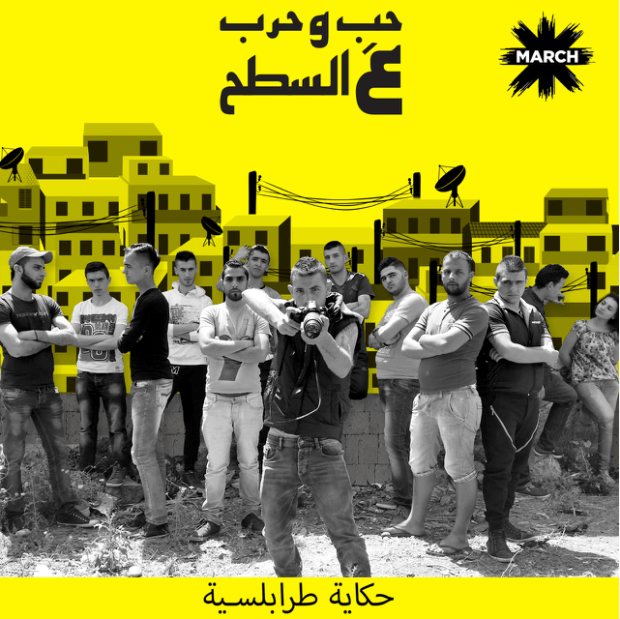
A Love Story From The War-Torn Rooftops of Tripoli To Lebanon

Love and War on the Rooftop - a Tripolitan tale

Welcome to Lebanon’s Tripoli, the city most of the country loves to hate.

A few months ago, whenever Tripoli was mentioned in casual conversation, it would be surrounded by a spew of sectarian hate speech. That conversation you heard or maybe even pa
rticipated in probably lacked depth, was never in context, always judgmental and served to further deepen the chasm between this Northern city and the rest of the country.

There’s nothing in this country that’s a more heart-breaking story or tragedy than the current state of Tripoli. Boasting the country’s biggest old souks, richest people, most important architectural feats and second largest population, it is also the country’s poorest, least developed, least cared for and least acknowledged place.

A lot can be said about that city, and I have over, and over, and over again. One thing for sure, however, is that the potential that Tripoli has is gigantic, if only we can tap into it. Lebanon’s NGO March, which you’d know from the popular Stop Cultural Terrorism in Lebanon page, have done just that. 

Over the past 4 months, director Lucien Abou Rjeili gathered together 16 young men and women from Tripoli’s Bab el Tebbeneh, Ebbeh and Jabal Mohsen neighborhoods and embarked on a conflict resolution project with them, in order to build bridges and see what can come out of it.

Those men and women were, prior to those 4 months, on opposite sides of Syria Street, witnesses to the bullets and rockets being fired by people they perhaps know, convinced that the person across that green line was their enemy until Kingdom come. Well, kingdom came.

Through acting exercises with the likes of Nadine Labaki, Georges Khabbaz, Rafic Ali Ahmad, those 16 men and women found themselves not looking at each other as enemies, but as friends. Instead of being wary of going to the sessions, they became excited. They’d want to go, see their friend from Jabal Mohsen or Bab el Tebbaneh, and maybe even hang out with them afterwards.

In the midst of that, those 16 men and women got threats. What they were doing did not sit well with higher up forces who know that their true power can only be fed by hate being present all the time between Jabal Mohsen and Bab el Tebbaneh: friendship, amicability and humanity should not be allowed.

Those young heroes stuck through it anyway. They knew what they were doing was more important than threats: they were setting an example, coming up with a beautiful story for their city and the country, a story that had to be told.

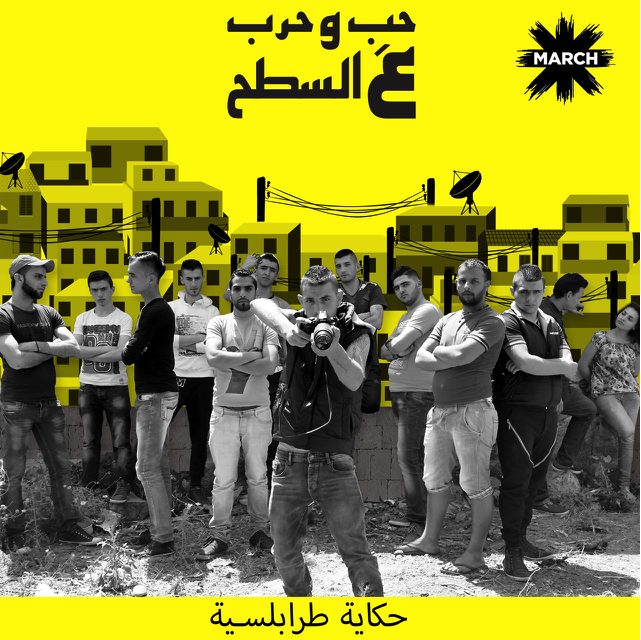
The result of those 4 months was a play called “Love and War on the Rooftop – A Tripolitan Tale,” featuring every single one of those 16 men and women in roles that tell the story, in satire, of their lives on the rooftops of their neighborhoods, as they try to be friends to the backdrop of bombs, snipers, death and inter-sectarian love.

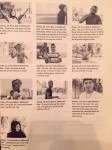
Meet the cast:
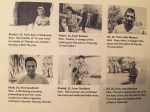
In the play’s one hour duration, those young men and women, through their humor, their Northern accent, their interaction and the sheer passion with which they performed showed a jam-packed room a side of Tripoli that those people had probably never seen before: a city whose youth just want to have fun, be friends with each other, love each other and give you something to laugh at in the process.

This Tripolitan cast is not a bunch of professional actors, but they might as well have been. They gave it their all on stage, so much so that when the crowds gave them a standing ovation, many of them were in tears. They couldn’t believe what they were seeing, that there were people applauding them.

As the play ended, the main actor Khodor, who plays the play within a play’s director, had a few words to say. He probably meant what he said as a joke, but they resonated with me because his words were the embodiment of my deepest convictions about his city, and what the country fails to grasp.

He said: “I think I speak for all of us when I say we never dreamt, in our whole life, of watching a play. And now we’re acting in one.”

Behind the apparent joke that people cheered for is the true problem facing Tripoli. The problem is not just Sunni versus Alawite, Syria-lover versus Syria-hater. It’s a clash that stems from the lack of prospects and opportunities that the youth of Tebbaneh and Jabal Mohsen call every day life.

“After practice,” Khodor continued, “I’d feel a hollowness inside as I ached to see my new friends again, people I’d never dreamt of being friends with. My favorite guy of the bunch Ali (the main protagonist in the play within a play) became my best friend. I’d call him up, ask him where he was. He’d say he’s in Jabal and I’d visit and we’d go wasted. The following day he’d call me and ask me where I was. He’d visit me in Tebbaneh, and we’d get wasted too.”

Can you believe it? Those people that many in the country readily dismiss as neo-terrorists or extremists are people just like everyone else? Could it be?

Following the play, people went down to congratulate those “actors” on a job well done. Some gave them a hug. Others gave them a tap on the back to tell them how great they were. Khodor, Ali, Fatima and their friends were in tears. They never thought, not in a million years, that they’d be where they were that night, and that they’d have strangers coming to them to tell them how great, beautiful, bright and shining they all were.

Yesterday, as Lebanon’s Beirutis cheered, I felt happy that maybe, just maybe, they could finally see the Tripoli I see: a wonderful city, with kind-hearted people whose only fault in life was being born in a place that is forcibly forgotten, and ignored. But still they live, and tell stories and laugh at their own misery.

I congratulate March on a job truly well-done.

Today, those 16 young men and women are heroes we should all be talking about. Unlike everyone else in Lebanon, they rose beyond their sects, beyond their neighborhoods, beyond everything they know and took a leap.

If there’s anything that can make anyone hopeful in Lebanon today, it’s “Love and War on the Rooftop.” It’s the story of how yesterday’s enemies are today’s best friends, of how actually knowing someone you’ve been forcibly taught to hate can alter your entire perception towards that person, of how all the burned bridges in this country can be repaired if only we were open enough to the possibility, of how up north, in that forgotten land beyond the Madfoun checkpoint, is a city with a heart that’s still beating, still fighting, and only asking you to keep an open mind to it.

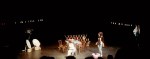
“Love and War on the Rooftop” will tour the country post Ramadan. The following are some pictures from the play:


 

0.3% of Lebanese Own 50% of Lebanon

Lebanon isn’t a country where population studies are omnipresent. However, given the data that the country has, Credit Suisse, in their yearly report on Global Wealth, has managed to paint a picture on how things in this country actually are.

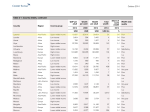
The report dates back to October 2014, and frankly I am surprised that these numbers did not cause a stir and were not discussed. The report, at 160 pages, can be found here. Perhaps no one noticed the info, so here they are:

At an estimated population of 4.37 million, Lebanon’s wealth is estimated at $91 billion. That actually constitutes 0% of global wealth. How anticlimactic.

When it comes to the Middle East, and despite the reputation we get of being oil-rich, things are similar: Saudi Arabia has an estimated wealth of $653 billion, which ends up as roughly 0.2% of global wealth. Qatar, and all our shoukrans, has $200 billion, which is 0.1% of global wealth. The UAE is at $461 billion, and 0.2%. Meanwhile, Israel has an estimated wealth of $843 billion, translating to 0.3% of global wealth.

All of these numbers look flimsy compared to the United States’ $83708 billion, constituting 31.6% of world wealth.

Keep in mind that – with the exception of Israel and the United States – Credit Suisse considers the data for Lebanon and other Middle Eastern countries to be poor in quality. However, I highly doubt that any estimations are overly erroneous in any way or that the margin of error they are admitting to will change the findings considerably.

But this isn’t the story. We all know the country has money. Recent leaks out of Switzerland placed the country at #11 in total customers at their banks and #12 in total deposits within the few months whose data was actually leaked. We’re 10452 km2. That’s a lot (link).

The story is in how that money is actually divided on the 4.3 million Lebanese living here.

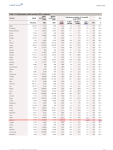
Out of all those $91 billion, 0.3% or approximately 8000 people of the estimated workforce according the study own about half (48% to be exact), which is approximately $44.6 billion. Meanwhile, 99.7% of Lebanese own slightly more than half at $46.4 billion.

To put those numbers in perspective, Credit Suisse employed a criteria called the Gini score. The score, according to Wikipedia, is essentially a “measure of statistical dispersion intended to represent the income distribution of a nation’s residents, and is the most commonly used measure of inequality.”

Lebanon’s Gini score is 85.6. a score of 85.6 places Lebanon 6th worldwide in terms of wealth inequality behind Ukraine, Denmark, Kazakhstan, Seychelles and Russia.

The story doesn’t end here. Even among those 0.3%, there are disparities. That 0.3% basically any Lebanese who has an estimated wealth above $1million. But who actually owns most of the country? The answer is two families: The Hariri and the Miqatis.

Forbes Lebanese Billionaires Miqati Hariri

According to the Forbes latest list of billionaires, there are 6 Lebanese on the list whose ranking ranges from 530 worldwide to 1478. Two of those 6 are the Miqati brothers. The other 4 are the Hariri brothers, including former PM Saad Hariri. Their cumulative wealth is estimated, according to Forbes, at $12.6 billion. This is 30% of the total wealth owned by those 0.3% of Lebanese – except it’s owned by just 6 men.

This isn’t to say that the Hariris and Miqatis do not deserve their wealth. The Miqatis started and ran a telecom empire. The Hariris started and ran a major contracting company in Saudi Arabia. Good for them.

The problem with these numbers is the other side that they portray. About two thirds of the Lebanese population (64.6%) have an estimated wealth of less than $10,000. Such numbers indicate massive poverty in the country, and yet I was unable to find substantial studies apart from one that was recently done by the UN about Tripoli.

In numbers, (link) the UN found that 57% of Tripoli’s families struggle to reach an acceptable standard of living, while 26% are considered extremely deprived. It wouldn’t be a stretch to assume that things are similar in other regions beyond Beirut.

To the background of this massive poverty is the 0.3% who owns 50% of the country’s wealth, and those 0.3% happen to include most (if not all) of our politicians. Aoun is in it. Geagea is in it. Our MPs and ministers are probably part of those 8000 people too. There are no estimates of the wealths of Lebanese politicians if their last name isn’t Hariri or Miqati, but one assumes they are not middle class folk who are going by paycheck to paycheck.

Of course, it only makes sense that money brings influence, and then influence brings power. A politician’s job in Lebanon isn’t only to legislate but to “provide” for the voters. This is how democracy works here.

The problem with those 0.3% (not all of them obviously) being those running the country is that the country’s policies over the years have not served to close the gap or make those 64.6% with little to no wealth slightly better off. The Gini coefficient clearly shows as much. The country’s policies have not aimed at improving education, providing economic opportunities (for instance, a 1 million m2 zone in Tripoli to bring in international technology has been on hold over sectarian causes for the past 6 years) or making living standards better. Those 0.3% do not get how things are for the 64.6%, the people they’re in contact with once every 4 years for that pre-electoral paycheck. And honestly, there’s no reason for them to get it. And yet our MPs and ministers wanted to increase their salaries?

Meanwhile, the Lebanese population who happens to be of the third that has wealth above $10,000 is pre-occupied with selfies, porn stars, bananas and Kardashian-like reality TV shows because those are what matters.

Lebanon To Have Its Very Own High-Tech “Silicon Valley” Soon?

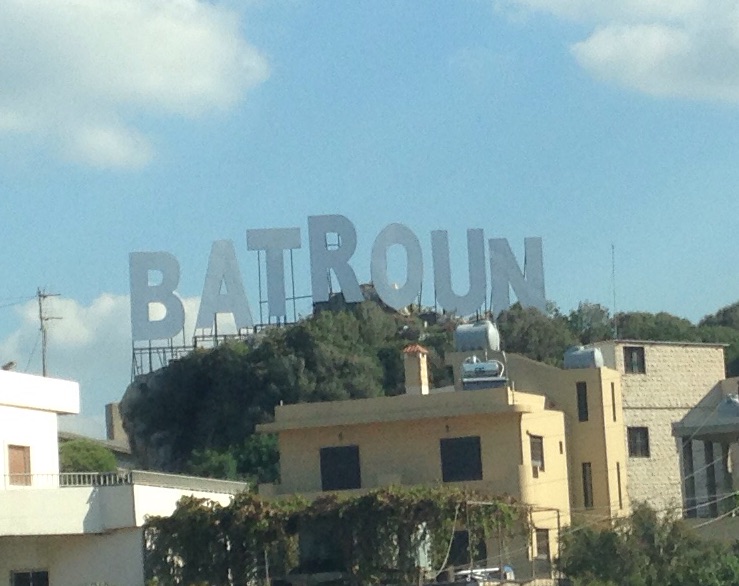
Batroun hollywood sign

Back in 2012, I wrote about an economical boom coming my home district Batroun’s way (link). It promised great things for the caza and North Lebanon. Now, more than 2 years later, that project is going through the bureaucratic motions of Lebanese governance on its (hopeful) way for fulfillment.

A parliamentary committee consisting of MPs Ibrahim Kanaan (Metn), Nadim el Jesr (Tripoli), Hekmat Dib (Baabda), Jean Ogassapian (Beirut), Neamtalah Abi Nasr (Keserwan), along with a representative of the Minister of Economy Alain Hakim, is studying the law required in order to make the zone a reality.

The zone will be spread over an area of 200,000 m², donated by the Maronite Church in Batroun. The project was championed mainly two years ago by the Maronite League (الرابطة المارونية).

The purpose of the Maronite League behind the project is to improve the economy of that region in order to prevent its people from moving to Beirut and its youth from emigrating. Certainly, even if unknowingly by the League, such a project’s benefits will not be exclusive to the people of Batroun or Maronites for that matter. Let’s hope they don’t mind.

The feasibility study of Batroun’s economic zone indicates that there’s a possibility to generate over 5000 jobs. The companies that will operate in said area won’t be those of heavy industries akin to the ones present in nearby Shekka or Selaata; they will be high-tech industries similar to the ones operating in California’s Silicon Valley, which is where many Lebanese youth today are heading as career choices.

In order to bring in such high-caliber investors, the law that is being studied by parliament will give investors and their companies many advantages:

  1. The zone will not be run by the Lebanese government, but by a separate appointed committee whose members are, in theory, not chosen based on sectarian distribution but on qualifications,
  2. They will have their products exempt from custom fees, which would make their prices competitive,
  3. They will have their mode of business not constricted by Lebanese bureaucracy, which means they won’t have to face months of legal paperwork to finish anything that’s remotely crucial for business,
  4. Permits will be issued by the committee in charge of the zone and would therefore be more easily obtained,
  5. Taxes will be reduced on companies to make their business more profitable.

As is always the case in Lebanon, there’s big fat “HOWEVER” lurking in the background. It is not all awesome news. Is it ever?

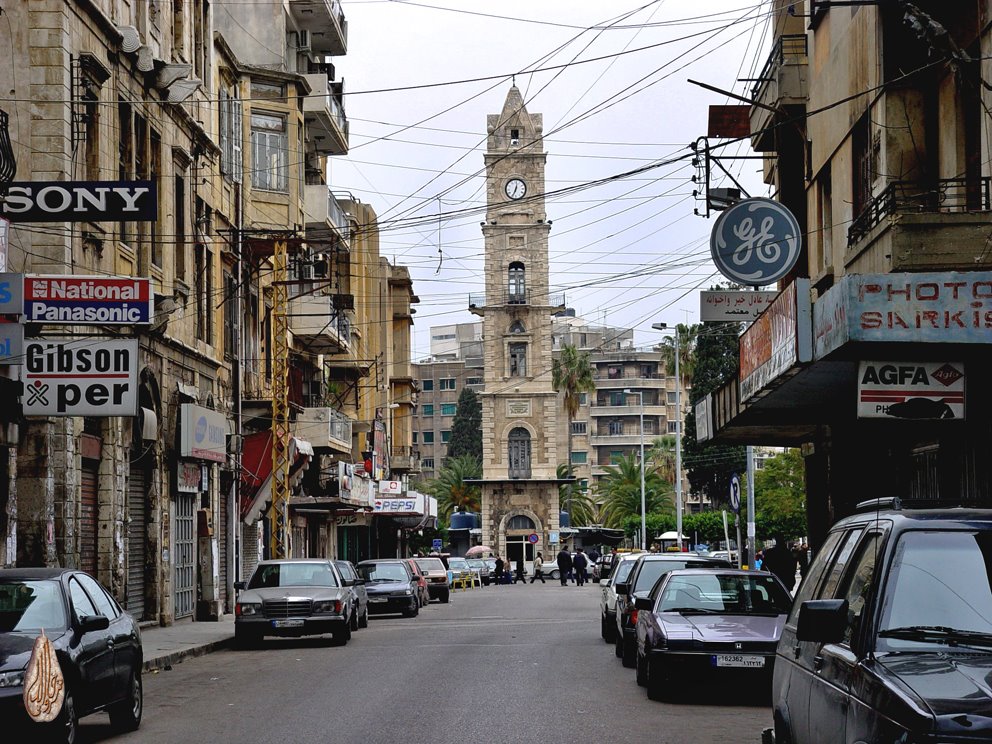
Tripoli's "Tall" Area

Tripoli’s “Tall” Area

Batroun’s Silicon Valley-like area isn’t Lebanon’s first to be suggested. Back in 2004, late PM Rafic Hariri came up with an idea for a similar zone in Tripoli, and in August 2008 Lebanese parliament actually passed the law required to set such a zone in action. This is a copy of the law (link) if you’re interested.

For the first time in years, Tripoli – and North Lebanon – were to have major development coming their way. Keep in mind that in 2008, Tripoli was not the war-torn city you all love to criticize today. It was, at the very least, much stabler than Beirut.

In numbers, Tripoli’s zone was more impressive than Batroun’s. Its area was to be spread on 1,000,000 m² of reclaimed land facing the city’s port, of which 350,000 m² has already been done.

At poverty rates ranging between 57 and 63%, Tripoli would have witnessed a tangible and drastic improvement in its economical state as well as the living standards of its people. The study of the area indicated the possibility of generating more than 6000 jobs.

Couple that with Batroun’s numbers and North Lebanon, the country’s poorest and most forgotten mouhafazats, gets more than 11,000 new jobs for its market.When has it ever had such development take place? Never.

Soon enough, the situation in Tripoli decompensated miserably into what things are today. The situation in the country as well wasn’t better. Tripoli was Lebanon’s battleground for the subsequent years. However, those two broad headlines weren’t the only reasons why Tripoli’s zone came to a standstill. Our government couldn’t appoint the committee that would oversee the project. As such, that massive economical development has been sitting on shelves for the past 7 years.

Why wasn’t our government able to appoint the required committee? Because they haven’t found the appropriately backed people of appropriate sectarian backgrounds. Even getting decent jobs to the poor and unemployed in this country is a matter of religious calculations.

Today, here’s what’s at stake. The country can remain as it is, with our youth leaving the country and ending up on best end-of-year lists (link) for doing things abroad that they could have done here. The status quo can remain. Excuses such as “Tripoli is too unstable” and “Batroun is too far” can be used to kill such projects in order to keep all the money flowing to Beirut and Mount Lebanon because only those matter. Tripoli can be kept poor, Batroun can be kept underdeveloped and North Lebanon can also easily be kept needy. The people can be kept jobless and uneducated. Let them stay hungry, let them stay foolish, let them forever remain prone to political manipulation.

Or, infrastructure-issues notwithstanding, we can realize that such projects are a solution, not a symptom, and that it’s high time to realize that Lebanon is 10452 km², not only confined to Beirut, and that sectarian balances are second-rate when it comes to being part of a 20 trillion dollars economy (this is the number in zeros for magnitude: 20,000,000,000,000). Let’s hope those in charge realize the latter, and don’t succumb to the former.


Abou Ali Issa: The Lebanese Hero Of The Tripoli Explosions

Two days ago, Tripoli got hit with death yet again as a terrorist attack took place in its Jabal Mohsen neighborhood.

The politics and intricacies of the attack are many, but there is one story of heroism springing out of the horror that took place on Saturday that no one is talking about. I figured I will, because this particular story about these kinds of people are the ones that make you see that faint silver lining in all the mayhem.

Many have wondered how come a café as crowded as the one attacked in Jabal Mohsen only amounted to less than 10 casualties. That’s because the suicide bombing attack didn’t go according to the two terrorists’ plans.

Among those was a brave, courageous, heroic man called Abou Ali Issa. He was a father of seven. When the first suicide bomber detonated himself, people started gathering at the site. Abou Ali Issa who wasn’t even at the café at the time rushed to the site to see what was happening. It was then that he saw the second suicide bomber approaching the premises to detonate himself and kill much more people than the first one did. The bomber shouted “Allahou Akbar.” Abou Ali Issa rushed at him and tackled him, preventing the bomber from reaching the café, killing the people inside. The bomber then detonated himself, killing them both.

He didn’t care about the sects of those in the cafe. He didn’t care if he was saving the lives of Sunnis, Shia, Alawites or Christians. Abou Ali Issa did not care about his own life as he was faced with a choice most of us would never face: save others or save yourself. He chose the former.

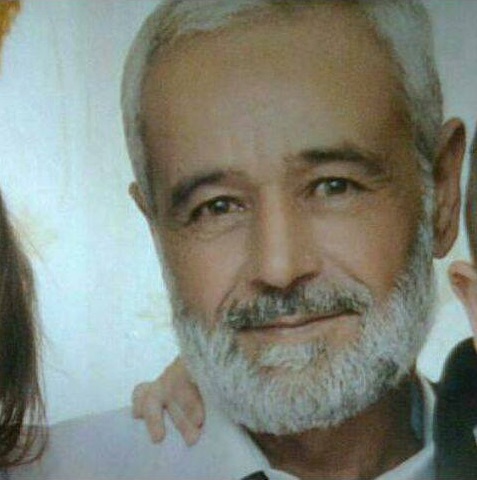
This is Ali Issa’s face. It deserves to become imprinted in our collective memory as a nation.

Abou Ali Issa

This man who saved hundreds of life will never become a viral sensation. His funeral was broadcast yesterday, along with that of the 7 other people that died with him, on a split-screen on Lebanese TVs, not even worthy of full screen treatment.

Picture via the Beirut Report

Picture via the Beirut Report

In a few days from now, no one will remember that there were two suicide bombers in Tripoli who targeted innocents, let alone the existence of a man who prevented those terrorists from doing so much more harm hadn’t he sacrificed his own life to save everyone else.

Today, there are hundreds of families in Tripoli and Jabal Mohsen who owe their wholeness to Abou Ali Issa. They owe him the presence of their fathers, mothers, brothers, and sisters. They owe him the sheer relief they felt when their loved ones came back home that day.

Abou Ali Issa’s family, his wife and seven children, did not get that same sense of relief and happiness. Their family will never be whole again, and justice for their father and husband will probably never come.

This is my attempt to make the memory of their father and husband that of a national hero, as it should be, as he is the kind of people who deserve to be paraded around as national symbols, as household names who should never be forgotten, because people like him are rare to come by and they should always be cherished and honored and respected.

May he rest in peace. There are fewer people deserving of such peace.

Update: The Daily Star has covered the story here and here.

Khaled Hoblos: The Sheikh Who Roused Up The Terrorists Against The Army In Tripoli

In case you’ve been living under a rock, which is most likely true but it’s okay – no one’s judging, Tripoli has been having its most vicious rounds of fights in the past several months, for the past day. Its inhabitants didn’t sleep the night. The rhetoric is no longer about periods of calm broken by gunshots heard, but the entire opposite.

Of course, those inhabitants are, as far as we care, used to sleepless nights away from windows and to the sound of bullets that they tell their children is thunder.

What prompted the Tripoli fights is not just those militant terrorists being bored after such a long period of hibernation. These aren’t people with a functioning head above their skulls for them to make plans or act according to their own free will. These people always need a mastermind to orchestrate what they do. For that purpose, yet another of these masterminds popped out of the blue in Tripoli yesterday. His name is Khaled Hoblos, a local sheikh at one the Haroun el Rashid mosque in Tripoli.

Has anyone wondered how such creatures keep popping up out of the blue in Tripoli and immediately making a name for themselves?

Yesterday, as part of his Friday sermon at his mosque, Khaled Hoblos made fiery statements to the goons attending his service about how the army is, in typical Sunni-targeted rhetoric, is enforcing a security plan only against the Sunnis in Tripoli and that the plan in question, as well as other army actions, were hitting Sunni pride in its core and that such things were not to be tolerated anymore.

Of course, news of such actions – be it due to Hoblos or some other low-life creature, have been going around for a month. News of upcoming breaks in the security plan over Tripoli are not new. It’s just that nobody, including governmental bodies involved, cared.

Soon enough, about 200 of those militants gathered in Bab el Tebbane and spread across the old city, starting the fights in question across portions that Tripoli hadn’t seen fights in before.

Khaled Hoblos, however, wouldn’t accept not having the last word. So he made another statement, which I received thanks to one of my friends in Tripoli:

What that Hoblos creature fails to understand is that the security plan in question is what was keeping the city he calls home at bay, at least when it worked, from the rising madness sweeping across the region, be it with ISIS or the deterioration in Lebanese politics or other forms of extremism that people don’t like to discuss.

That security plan, and the sacrifices of the army personnel to make it work, was what was getting the thousands upon thousands of people in Tripoli to feel safe at their own homes again. For once in this god-forsaken country, such a plan was working. It doesn’t matter that they can’t enforce such plans in other areas in the country; those areas in question are not filled with filth who have guns and who are covered by Lebanese MPs providing them with all kinds of weapons and material and who act on sporadic whims, igniting a whole city in the process.

Soon enough, news of a ceasefire between the militants and the army will surface, as is always the case. The army is never allowed to kill or arrest every single last one of these militants, starting with those masterminds who make sure the goons still act, still kill, still terrorize innocent people and do what they do.

Today, ignore Nicolas Fattouch and his soap opera-like situation. That has become a distraction, and Tripoli is coming back to remind us all that there are more dangerous people in this country who deserve our attention. There are MPs who are, from behind the scenes, orchestrating figurative slaps and knock-downs to hundreds of thousands of people.

And there are sheikhs like Khaled Hoblos who are igniting an entire city with sectarian hate. Mr. Hoblos will come out of this unscathed. He’s a Sunni sheikh after all, he’s protected by some form of Allah-induced immunity. It shouldn’t be like this. Arrest Khaled Hoblos now. Put him in the darkest pits of dungeon hell you can find. The time for drastic measures is yesterday.

He said it best:

Ismail Sakalaki Friday Sermons