Lebanon, Screw This

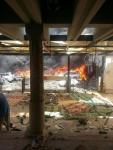
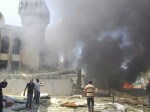
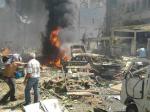
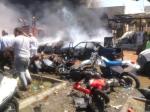
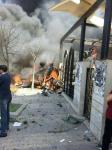
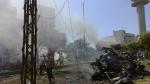
It’s been one week since our news broadcasts last cut out regular useless programming to let us know that a part of our country was burning to the ground following an explosion, that people were dying, that terrorism had struck yet again.

It’s been one week since innocent people lost their lives just for being at the wrong place at the wrong time. Last week, those people were shopping. This week, those same people were praying. How many more wrong places and wrong times are we supposed to accept as a justification to the absolute hell we are living through?

What is the current situation in Lebanon? I don’t really know. There’s no diagnostic criteria to follow to really ascertain how deep this goes. There’s simply a sense of “if no one I knew died then it’s sad but forgettable” that’s roaming around. Till when are we supposed to be happy that someone we know didn’t die just because he was at the wrong place at the wrong time?

Till when will our media worry first and foremost about the explosion being in the proximity of a politician’s house, one that he barely uses, then after making sure that politician was okay turn around to examine the possibility of other irrelevant casualties like you and me and then parade their burnt corpses for sheer shock value left and right – except those pictures don’t even shock us anymore?

What is this country in which you are forced to worry about doing the most mundane of things just because you might die doing them? What is this cause that needs to target people who are praying? What is this cause that needs to target people who were shopping?

Why are these causes and wars entering our country through open wide doors? Why is my country always getting screwed, always in a state of violence?

What is this need for people to start throwing blame on those who satisfy their rhetoric of choice just moments after an explosion, while the wounded are still bleeding and the victims have still to be found?

What is this life in which our mothers waste all their tears away, worrying for our sakes, while the only thing that we might have done is drive past a street that ended up becoming ground zero a few minutes later? Till when will our fathers regret not leaving and establishing our families in countries where they don’t have to worry about their sons and daughters meeting their demise on the blown up tarmac, resting on blown up concrete?

How further can our cities handle being ripped apart this way? How much more can the people of Tripoli take in a city that has not only been destroyed by gun violence but now has an affinity for explosions as well?

What is this life in which a strange car on your home street can cause you insomnia? What is this life when your own home doesn’t feel safe anymore?

How is this any different from the times they want us to believe are long gone, “tenzeker w ma ten3ad?” How further down the abyss will every single one of our politicians take us now that they have yet another opportunity to get their rhetoric to sink further, to let their anger seep to surface even more, to let people hate each other more than they already do?

All the words resonate emptily. All of our mothers’ tears fall down on useless surfaces. All of our worry won’t change a thing. All our anger won’t make a dent. All of the victims will soon be forgotten. All of the explosions are to be replaced by the next explosion which takes center stage. All of the people are to mourn in days that are becoming way too many. Nineteen have died in Tripoli today as a first estimate. Nineteen men and women and children died just because they felt like being closer to the entity they worship on a day of worshipping. If there’s really a God, He must have left this land a long, long time ago.

It’s just a bomb, again? Should we be “resilient” again? Lebanon, screw this.

Breaking News: I Almost Died

Well, not quite.

I was in Tripoli when Saad Hariri’s long-awaited Ramadan speech was taking place. I couldn’t care less about what he had to say so I just sat with my friends on a porch, enjoying an afternoon August breeze.

“He’s ten minutes in and we haven’t heard bullets yet,” Ismail said jokingly. And, as if on queue, the bullets started getting fired up the air.

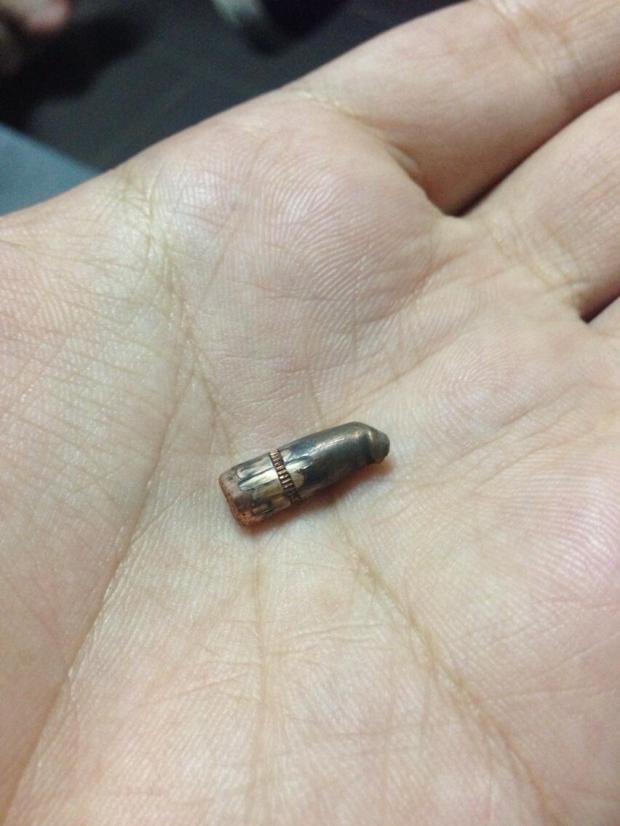
So as we discussed some inescapable politics through the distant shots, we heard something ricochet off the wall and land immediately next to us. We were four people. This surprisingly heavy bullet could have hit anyone:

Bullet tripoli lebanon

I’m not the kind to immediately freak out so we simply retreated inside as they cursed the morons shooting on the streets in celebration. The shooting soon ended as the speech died down.

Then I wondered: what if this actually hit one of us?

Any kind of injury because of this bullet would necessitate hospital attention.  What if we can’t afford the hospital? What if there’s no hospital around? What if the supposed injury was life-threatening? Why is my well-being contingent upon the odds of ricochets?

Till when should we be satisfied that this is simply a “what if” scenario?

The worst part of it is that we have all become so used to this, even those of us who don’t come from a city that has become far too acquainted with such incidents, that the logical thing to do was to simply change rooms and wait it out because we knew there was nothing else we could do and that no entity whose job was to prevent such things from happening would actually do its job.

However, I’m not full of negativity. I can see the silver lining in all of this: they were firing bullets not rockets.

Ramadan in Tripoli

A friend of mine was sitting in a restaurant in Tripoli, waiting for the Iftar. At the first day of Ramadan, Iftar is a big deal. It had been a very tough day of fasting in the scorching July heat. The restaurant he was sitting in was abuzz with talks about a little girl named Jana. Everyone wanted to make sure she was doing well, that she was eating, that she was well-seated, that she was well-taken care of.

My friend, who wasn’t from Tripoli and was visiting the city oh so cautiously, was intrigued. He started asking who Jana was. She was the homeless girl selling flowers to the people having Iftar on the first day of Ramadan. As he told me the story, not knowing whether it was true or not, I decided that I must try and live – to the best of my capacities – parts of Ramadan in Tripoli.

My best friend being from the city made this quite easy. Soon enough, his mother was asking when I’d come visit. I very gladly obliged. So on a Saturday of Ramadan, I was standing at the doorstep of one of the kindest and most hospitable people I know, breathless as I was racing against a sinking sun, worried I wouldn’t be there on time. We sat on a breezy balcony that overlook a desolate street.

Tripoli might as well have been a ghost town at that point. Everyone was busy eating. I was served some soup, followed by fattouch then some mloukhiye the likes of which I had never had before. I daresay the food passed by quite fast for what I had in mind but I didn’t mind. The mloukhiye was coupled with some rice and chicken and other Lebanese mezze items. Soon enough, we found ourselves drinking jallab and other kinds of juices while the smokers puffed on that cigarette that had been sitting in their pockets waiting for such a long time. The chit chats grew louder. The conversations veered toward the medical as my med student status was revealed. The women started asking me questions about C-sections and normal deliveries. Cake was served. I didn’t feel like an outsider at all. In fact, I might as well have been part of the family, all to the backdrop of the tarawih chants emanating from the many minarets surrounding us.

A few minutes later, I found myself at the footsteps of a shabby bakery that did what I was told was incredible nammoura. “How much is the kilo for?” I asked. “6000LL,” the old man replied. He then took a sealed box, weighed it, looked at me and smiled: “It’s 1.5 kilos, but it’s okay – 6000LL it is. Have you tried the coconut-based pastry?” I shook my head. So the next thing he did was take one that was freshly baked, handing it to me to taste. I tried to decline. He wouldn’t take no for an answer. I smiled as my teeth sank into it, taking pictures of the place in the process while one of the employees pointed out to things I should include in my frames.

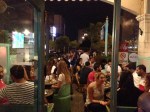
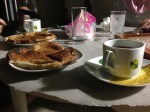
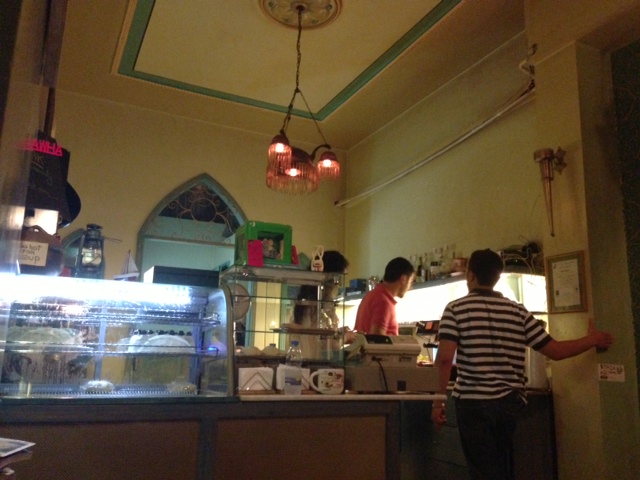
After buying enough sweets to last our household a month, we walked around the busier streets of the city towards my favorite cafe, Ahwak. The place was unusually empty. We ordered some oreo cheesecake and carrot cake while we forcibly listened in to the conversations taking place around us. Two guys were discussing politics fervently, which is quite normal for a city whose entire current strife is based in those politics. Two girls were discussing keeping their figure with Ramadan fasting. We spoke about how things could have been in the city, in the country. Nothing like demotivating conversations to take you through the night, which was ironic given that the cafe we were in was pillaged a few days earlier by Islamists who accused its owners of serving alcohol. Then we saw her, a little blond girl in a blue dress, holding flowers in her hand.

A couple of friends then decided they were craving some Hallab sweets. So we walked to where Hallab originated, the only place where I find you can get the authentic experience of those Arabian sweets. We don’t take any of those Jounieh wannabe franchise places and their ad wars. The place was busy as well, though nowhere near as busy as in years past. Those friends had some ice cream and mafrouke.

The clock was ticking the night away as we made our way to Azmi street. I was told about its shops opening way past midnight to allow the city’s residents to buy all their Eid’s new clothes and gifts. As we got closer, the music grew louder. I jokingly said this was obviously emanating from a convertible 1980s BMW. I wasn’t mistaken. After all, who else would blast some horrible Arabic music at near 2AM?
The shops were open but mostly empty. The streets were stuck between wanting to be lively and succumbing to the reality of a city that is coming to terms with how economically dead it’s being forced to become.
“I expected more,” I told my friend as we walked past the coffee sellers, clinking their cups to attract those passing, and impromptu stands selling cheese kaaks hoping the smell of their sandwiches would bring in some hungry people in for an early Sohoor.
“I expected the same,” he replied. “But I guess this is what happens when a city has had the year Tripoli had.”

We made our way up the street, wondering what to do next. It was around 2:30AM and nearing the Sohoor time for the city’s residents. “Do you wanna go to Bab el Ramel for a typical Sohoor setting?”
I shook my head. My circadian clock was nowhere near equipped for the rhythm Ramadan required. I was getting tired. So we returned to my friend’s house where we saw his mother sitting on the veranda, quietly looking over the city as she was waiting for dawn to break.

As she offered us tea to get time to pass, we told her about how Azmi street was much different than the year before, how Ahwak had much less people than when we went last, how it didn’t really feel like Eid was approaching, only eleven or twelve days away. So she told us about the city she once lived in, where she had a Christian friend who used to be closer than a sister to her. We spoke about how things changed from my mother being able to go to Bab el Tebbane alone a couple of years ago to how the city feels today. We spoke about the politicians of the city who couldn’t care less. We spoke about the Syrian civil war/revolution whose hold on the city seems won’t know an end. She told us about how she fears the Islamists ruining her city more than everyone else. She told us how she is considered a kuffar because she’s one of the many who don’t agree with what they do. She told us how she is ashamed of the reputation they have forced on her and her family and the people she holds dear. She told us how she is worried about the future of her children in the city she can barely recognize. We spoke about life in general, our families, our aspirations, our hopes for the future.

It was then that we heard a faint explosion sound. I looked around, intrigued. “Don’t worry, they said. It’s the madfa3 announcing dawn getting nearer.” A few minutes later, an ominous voice rang across the city to tell the people to stop drinking water. Soon after that, the minarets started chanting again.
“Here we go again,” she said before going up to her feet to go to bed. “Do visit again, okay?”

I nodded. It was the first time I attended all Ramadan-related proceedings. We talk about how we are a country of coexistence and whatnot, but how many of us have truly attended another person’s religion-related practices? Almost no one. “I would love to,” I replied as the first streaks of sunlight slithered over the concrete walls.

Tripoli’s Best Cafe: Ahwak Ben Tafesh Threatened By Extremists

Ahwak Ben Tafesh Tripoli - 1

I remember when I first went to Ahwak ben Tafesh in late 2012. I was reluctant to visit. I figured the place was definitely over-hyped. Why would I want to visit the go-to place of Tripoli’s liberal crowd?

How wrong was I?

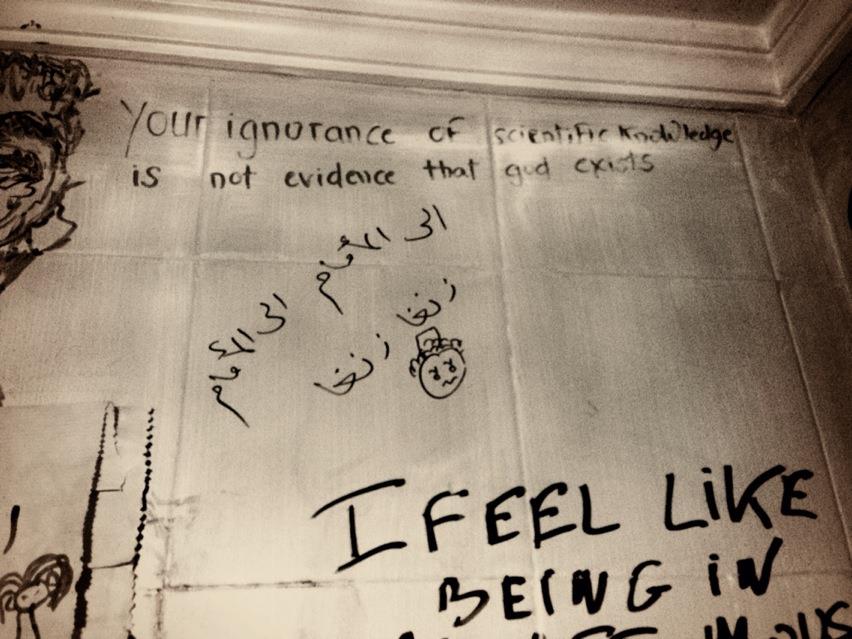
I remember being captivated by the restroom. It was filled with graffiti, the most surprising of which was a sentence scribbled at the top right corner saying: “your lack of scientific knowledge is not proof that god exists.” Someone later on scribbled out the word god. I guess blasphemy is somewhat haram even on bathroom tiles. But these exchanges are all kind of peaceful and refreshing.

Ahwak Ben Tafesh Tripoli Lebanon

I’m not a coffee person so I don’t visit Ahwak for the beverages which are, based on my modest experience, quite good. What they serve, however, and I find exquisite is their carrot cake. It’s homemade and all kinds of awesome. Simply put, it got my carrot cake-hating brother to become a fan. Now isn’t that saying something?

Soon enough, Ahwak became a regular stop in my increasing Tripoli visits. During my latest stop, I was greeted by the main worker there enthusiastically, asking me about my extended absence. I had become a customer. This visit in question was this past Saturday, post Iftar in Tripoli. The place was packed. Some were discussing religion, it was Ramadan after all. Others were discussing politics, which is of vital importance in Tripoli, a city torn apart by the military ramifications of these politics.

Across the street from Ahwak, religious people were exiting the Mosque after the Ramadan Tarawih were done. The women were wearing long flowing robes as they walked by the cafe goers, returning home. The men huddled together, possibly talking about fasting. It was a peaceful scene. It was a beautiful time.

Ahwak Ben Tafesh Tripoli - 2

But that didn’t last.

On Sunday July 14th, around 11:30PM, the cafe goers at Ahwak were surprised to see a bearded man who had been released from jail a few days ago storm the place with a few of his henchmen. They sacked the place searching for the presumed alcohol that Ahwak served, which is non-existent. They were disappointed not to find any. But they didn’t stop there. Before leaving, after having terrorized every single person in that cafe, they told the employee that the adan from the mosque off the street will ring higher and higher to drown out the infidels in this cafe across the street.

The thugs then rode their vehicles away. They had done their damage. They will never be caught or questioned.

We can voice our support however we want to the owners of the cafe at hand. But what good does it make when it’s their business that’s in danger, when some ignorant dimwits might – at any given moment – stop the place from existing because it doesn’t fit with their retarded view of how Tripoli ought to be?

What good does it make to say that this too has passed when this might repeat in a worse fashion, at another cafe or store, at Tripoli or any other city in this country? What good does it do to milk a silver lining out of this when the people causing such mayhems are protected by even bigger thugs who might be MPs, ministers, prime ministers or has-been politicians wanting to reclaim their glory days?

Till when should the overwhelming majority of the people of Tripoli, which finds these people to be disgusting and repulsive, suffer and have their reputation suffer just because someone decided that personal liberties contradict with his view of the world?

This isn’t about alcohol. This isn’t about Sharia. I’m sure most of the people in Tripoli will rise against Sharia implementation in their city or this country before any of us blog, tweet, Facebook or do anything about it. However, what protects cafe places like Akwak which, in them being different, give a better view of their city – a nicer view? What protects the people whose only weapon is a few coffee beans and some divine cake when they face men whose weapons are presumably protected by some divine entities? Till when should the people of Tripoli worry about going for a coffee or grabbing a burger or doing anything just because someone out there with means finds it unacceptable?

Ahwak, I am one of your infidels. And I’ll see you soon.

The Conclusion of Dahye’s Missiles: Tripoli Is Not a Lebanese City

2 missiles fell in Beirut today, targeting Hezbollah’s stronghold Dahyeh. Nobody knows why the missiles were fired.
They could be to serve as further proof for the need to extend parliament’s mandate. They could be to show that Hezbollah’s involvement in Syria is not inhumane but very needed.
They could have a multitude of reasons. But I don’t really care.

Minutes after Dahyeh was hit with the two missiles, the level of panic rose to enormous levels. Lebanese media was all over it with live coverage from the sites of the missile launch, conspiracy theories along the lines of المؤامرة على سوريا were being thrown around, to name a few.

Our minister of interior Marwan Charbel was the first Lebanese official to visit the site in question. More will soon follow because can you imagine them not visiting an area that was just targeted with two missiles?

Guess again.

Over the past week, the capital of North Lebanon was hit with thousands of missiles and mortars, 1200 of which fell in one single night.

How many official visits happened to the city? Zero.

How extensive was the media coverage for the battles? Let me quote a friend of mine who has been following the news very closely: “I was honestly convinced the electoral law was the most important thing taking place today.”

Did you know that snipers are still shooting aplenty across the city?

Even the politicians of Tripoli were quicker to condemn the missiles of Beirut than the missiles of their own city.

Ladies and gentlemen, we have reached the realization we’ve all been pondering over for a long time now. It may be within the confines of our beloved and much-spoke about 10452km2 but the Northern city of Tripoli might not be effectively part of this country at all. And we never had such temporally close examples to back that claim up.

We complain about some media’s hypocrisy in the way they talk of the region’s conflicts. And yet we do it, and we keep doing it. The missiles that hit Tripoli are not as important. The latest toll of 31 dead which fell in the recent battles is not important. The reasons why Tripoli is being victim for repeated battles are never spoken about. The citizens of the city who live in terror for days and nights are never really cared about. They are as irrelevant as the city they call home.

What is this Lebanon you speak to me about? Hold on while I push the snooze button on Dahye’s missiles and the 3 injured Syrians who are on their way to rehabilitation.