Racism With Middle East Airlines (MEA). Again.

I recently got a tip from a reader regarding another racism incidence with Lebanon’s airline carrier MEA that is not dissimilar to the one that became everyone’s talk a few months ago, culminating in firing the employees involved.

The story goes as follows:

The export manager of a Chinese company was visiting Dubai for a few days after which he was sent by his company to Lebanon to work on a certain deal with a local business. Once his work in Lebanon was up and he had to go back to China, he presented at the MEA counter at the airport but the employee refused to issue him a ticket.

She said he didn’t have a visa for Dubai, which he did. He was also going through Dubai simply as transit to China, which is allowed even if you don’t have a visa. So shouting at the Chinese man, the employee talked down to him, dismissing him. A quarrel ensued, which was only stopped up by another employee interfering and issuing the ticket in question.

I wonder: how difficult is it for MEA to vet its employees before actually hiring them when it comes to the most basic of qualities that people who handle international customers should have? Or how difficult is it to actually have MEA’s employees go through some trainings in dealing with customers in respectable ways to bring them to the 21st century where a passenger isn’t dismissed based on the color of his skin or how stretched his eyes are?

Racism isn’t exclusive to MEA. It spreads to a lot of people across Lebanon with municipalities illegally banning Syrians (and officials who don’t want to do anything about it) to severe discrimination against migrant workers even in the media that should be helping to lessen this among people (link). But the least we should expect is for one of the country’s major companies – especially one that represents Lebanon to the entire world – to be stringent with the image it wants to give to the world.

As for how I believe racism in Lebanon should stop, I quote something I wrote (link) when the first racism incidence with MEA happened:

Racism isn’t also a Lebanese problem. It is a worldwide problem that takes many forms. It transcends the hate towards others based on skin color. It is the intolerance towards another’s religion, the intolerance towards another’s nationality. And if a country doesn’t have a predominant problems with someone’s race, then they probably have a problem with differing religions. It is the problem of “difference.”

We dislike those with whom we can’t easily relate.

So what’s different between Lebanon and those supposedly racism-free countries? It’s quite simple: accountability. And that’s what works most with us Lebanese: a slap on the wrist when we do stuff wrong (fines for smoking, for not putting on the seatbelt, for speeding….)

People who get accused of racism in those countries have consequences to deal with. In our country, racism is met with indifference. A prominent TV anchor was blantly saying that an Ethiopian maid who committed suicide a few months ago was deranged (click here)- and he found no trouble at all in passing his ideology to his viewers. I’m sure he got high ratings for that episode as well.

If that anchor had met the same fate as the employee, people would have known that what he said was wrong. They would have known that talking badly against someone else just because you don’t like the skin they were born in is unacceptable. And they would have realized that it is no longer accepted to have it happen.

Their racism would then regress – it would get suppressed. And that is how other countries do it.

The Lebanese Women Who Hate Women

She goes to her friend’s house with a thick layer of makeup on her face. She fakes a smile and laughs through her pain. She pushes away the tears. No one knows and no one will ever know.

Her mother had given her that advice a long time ago. It doesn’t matter how you feel. It doesn’t matter what he does. You fix your hair, you bite your lip and get a grip and save a little face of the one that was torn to pieces. It’s just a beat up. This isn’t her mother’s broken jaw and bruised eye. But it might as well be.

——————————————————————–

“I’ll vote the way my brother wants.

I’ll vote the way my husband wants.

I’ll vote the way my son wants.

I’ll vote the way my grandson wants.”

But no one will know how you vote behind that separator.

“How will I live with myself if I don’t do what they want of me?”

Why would you vote the way anyone else wants?

“Because there are circumstances. I can’t.”

——————————————————————–

It had been only a few weeks since her father passed away. As she sat contemplating and saddened for the anchor she had lost, she feels a tap on her shoulder. She looks up, her brother looks down at her with a grim look. She understood. She walks over to the kitchen, the paperwork was ready to be signed.
“When you sign this paper, you will be relinquishing your half of the inheritance to your brother. Are you sure you want to do this?”
She looks up and nods. “Anything for him.”

She signs her name.

——————————————————————–

“I love him. But I can’t love him.”
“Why?”
“It will never work.”
“He can give you the best future you could possibly have.”
“You don’t understand.”
“I know I do.”
“No, no, no. We don’t pray the same way.”

The following day, she conformed.

——————————————————————–

She held a banner at her go-to feminist rally. Empower the women. Fight for the women. Do anything for those women. A few minutes after the rally was done and she got her regular fix, she went back home and logged on to her favorite social network. Someone had mentioned women in a joke. She looked at their picture. It’s a he. The joke became sexist. And she couldn’t allow it. Sexism, sexism, sexism everywhere.
Her fingers started frantically typing on the keyboard. It didn’t matter that he could be an even feistier supporter of gender equality.

——————————————————————–

They gather for their regular morning coffee. They cross their legs, pucker their lips. The blood starts pumping through their veins. This is all so exciting.
“Have you heard?”
“Uh-hum.”
“She slept with him! I can’t believe it. Always knew she was a slut.”
“It always showed, darling. Don’t you see the way she usually dresses? Skirts should not be that short.”
She unconsciously pulls at her own skirt in the process.
“And have you heard about that other one? Poor thing. She has you know what in you know where.”
“I know… So sad. And her poor husband! You think he’ll stay with her now that she can’t… You know…”
“I don’t know! Didn’t even think of that. You think they’ll divorce?”
“Nah. He’s not that cruel!”

——————————————————————–

The above stories are real life observances over the past few weeks.

Lebanon Has The Eighth Wonder of the World

Our country is unique. If you thought our attempt at breaking into the seven wonders of nature with Jeita Grotto was a bust, think again because Lebanon has established an eighth wonder. And get this – it’s both natural and the work of men.

How’s that? Well, you don’t need me to explain the birds and the bees for you (I hope) but we can all agree that it is a natural process. And what those birds and bees eventually lead to is the work of men and women obviously.

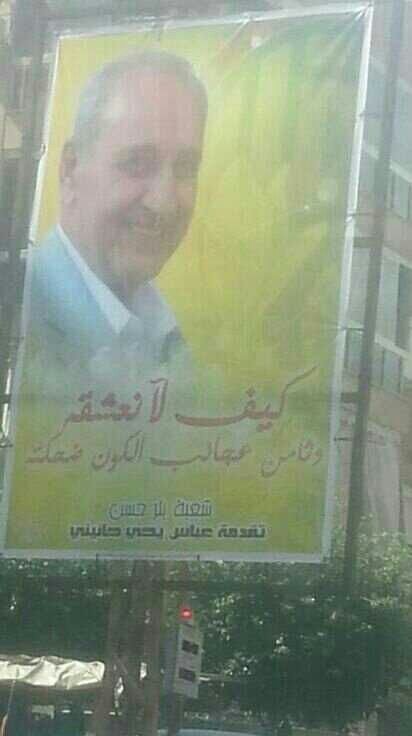
What’s Lebanon’s eighth wonder? The correct question is not what but who. Behold, ladies and gentlemen, Nabih Berri:

Nabih Berri Eighth Wonder of the World Lebanon“How do we not love him and the eighth wonder of the world is his laugh,” the poster’s caption said.

In all his twenty years as speaker of parliament, I have never seen Nabih Berri smile. But I’ll take their word for it.

The Pyramids of Egypt are beyond jealous. Just saying.

Thank you Mr. Sakalaki for the picture.

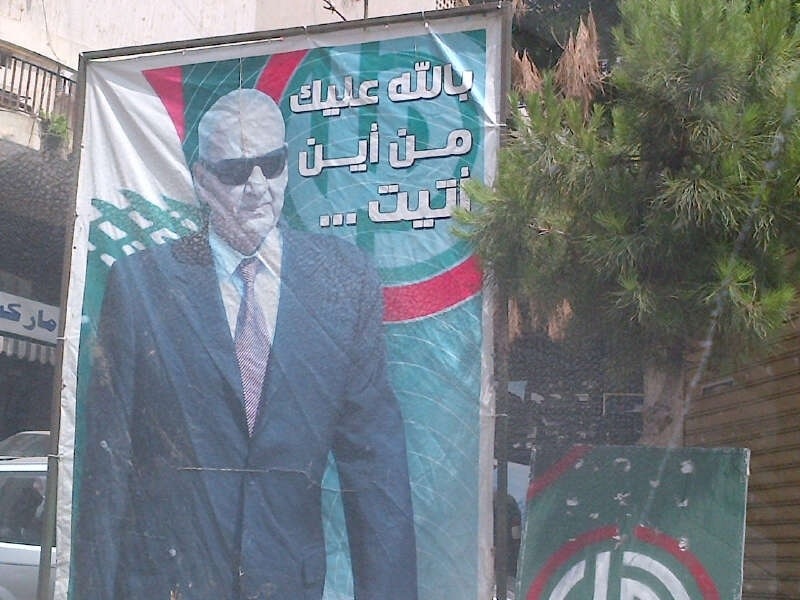
Update: Another picture courtesy of my friend Mr. Seif. Berri’s supporters are the gift that keeps giving – with feisty slogans to boot.

20130307-191150.jpg

Tripoli’s Gang of Thieves & Lebanon’s Police

A friend of mine parked his motorcycle yesterday in front of a house he was visiting in my hometown only to hear the engine ignite a few minutes later.

He ran outside and saw a stranger driving his bike away. He frantically tried to chase him but there was no car. He was fortunate enough to have a family member be in Batroun at the time of the theft. That person immediately called the police hotline 112 as he chased the motorcycle driver on the Lebanese highway.

The police informed him that he was not allowed to ram his car into the motorcycle and that he should let them know where he was driving at all times. So he told them when he passed the Mseilha Citadel. He told them when he passed Chekka. He told them when he passed Anfeh.

He kept his phone to his ear and spoke to the policemen on the other end thinking or maybe hoping that they’d do something. Slightly south of Tripoli, at the Punto Alto side street, the biker disappeared.

The drive from Batroun to Tripoli took about 20 minutes during which the police was more than informed about the chase taking place. And they still didn’t set up an impromptu checkpoint on the highway to stop the thief, which we would all agree is not highly unusual given their Beiruti practices at random hours of the A.M.

As a result of our super qualified policemen, the $7000 motorcycle is now in the hands of some gang in Tripoli who, I’m sorry to disappoint you, is not made up of Syrian nationals.

How do I know this? Well, the plot thickens.

During the past week, more than eighteen similar motorcycles were stolen in the coastal Batrouni town of Kfaraabida which many of you know for its beaches and Pierre & Friends. The police were, obviously, informed of the grand theft. After all, we were talking about eighteen motorcycles. But they obviously didn’t do anything about it.

However, not all of those motorcycles remained stolen. Some people whose bikes had been taken away got in contact with people in Tripoli who had contacts in those gangs. They set up an exchange: a decent sum of money for their motorcycle. So they kind of purchased back their bike.

The man whose bike was stolen went on the same route. He hasn’t gotten back his bike yet but he’ll know soon enough if there’s a chance to retrieve it or if it has already been shipped to Syria.

Of course, this isn’t new when it comes to our police. A few years ago, my physician uncle woke up in the middle of the night in our Achrafieh apartment to a ruckus in the street. He went to the balcony to see someone breaking into a store at the base of our building.

My uncle’s knee-jerk reaction was to call the cops. A few attempts later, a sleepy person replied and asked my uncle to call again if the thief came back. Because that obviously makes perfect sense. So as the thief filled up his car with whatever he could find in that store, there was nothing my uncle could do. What if the thief had a knife or a gun? It’s not our job to do what policemen should have been doing at that point.

I don’t expect anything from our policemen. Maybe a checkpoint that actually serves a tangible purpose. Or trying to intercept one of those money-for-bike exchanges so maybe, just maybe, we could feel safer. Until then, which should be until forever, hide your cars, hide your bikes, hide your precious belongings. It’s the wild wild west over here. But no matter what you do, don’t call the cops. It’s only 1) a waste of your time, 2) a waste of your precious minutes and 3) another thing to make you infuriated and angry.

The Perks of Being Lebanese

Back in December, I hosted a photographer who wanted to visit Lebanon in order to experience our on-the-edge diverse lifestyle. I showed him around as much as I could given the short time I had, taking myself to Tyre for the first time in my life. I had never been that far South before. I left him there in order for him to see life in that Southern city firsthand. A couple of days later, we met up in Beirut and somehow he started contrasting and comparing my country with his. He comes from one of the world’s biggest superpowers so it’s understandable that my country is lacking in comparison.

But I couldn’t take it. Snarkiness started to ooze out of every word I uttered like the sharp blade of a knife. Jabs here and there about how his country could never – ever – have the history that my country has started flowing. I even surprised myself when it comes to political declarations which would probably get any Lebanese who knows me turn his head in disbelief. Imagine me proclaiming support for Hezbollah and you’ll get the drift.

I felt it was necessary. It’s not about being politically correct. It’s this built in sensor inside my brain to defend Lebanon whenever I can to whoever I can. And it goes off at random times, despite the logical part of me telling me that I should probably stop. I can’t help it. My relationship with my country is that of some serious love-hate. And I can’t escape it.

Bref, I nag too much sometimes and I know it. I know some of you hate it – but living in Lebanon leaves you constantly angry, constantly furious, constantly edgy. We all deal with it with the best way we can and considering what we’re dealt with every day, I daresay we handle it really well. Most of the time at least.

To those who thought I’m being quite negative, you’re probably right. This one’s for you. Now smile and take it in because such articles will only come rarely. Let it sink in because you won’t hear me saying this very often – not that it matters since it’s now online for everyone to see – but here it goes: I probably wouldn’t trade growing up in Lebanon for anything else in the whole world.

It’s not about the copious amount of money I could have had. It’s not about super kickass passports I often wish I possessed. I think growing up here, witnessing the struggles of here, dealing with the hardships that here represents have gotten me to grow as a person in ways that any other place probably wouldn’t have provided.

In a way, growing up here has made me a person who is capable of standing on his feet wherever you throw him. It might sound cliche – positive vibes always go around clicheville – but it’s something that the past year has truly reinforced in me.

When I was in France, the French were shocked I could juggle three languages fluently without a hitch, something that was completely normal to me but seemed very odd to them. It is there that I came to appreciate exactly how thankful I am for the decent education I got here. The fact that I was able to keep up with more knowledgeable physicians at the hospital where I did my clerkship doesn’t only reflect on my mental capacities but on the way education in Lebanon shapes you up without you even knowing it. It is no wonder that with all the preparation we subtly get in school and later on in higher education institutes, we are able to excel when given room and opportunity.

That month I spent in France opened up my eyes to something else that I hadn’t really thought of: life in Lebanon does not go on in a protective bubble that separates you from everything else happening around you.
The aforementioned idea started to get formulated in my mind back in 2011 when I wrote a small article about 9/11 and some members of American family stopped talking to me as a result. I still don’t see anything wrong with my article. If anything, I stand by it more than before. But it’s the perception of the article which differentiates my American kin from yours truly. For them, I am being harsh and insensitive because I haven’t lived it and I am not American. To me, they are being very concentric and limited. But it’s no one’s fault really: my perception as a Lebanese of the world is and will always be of people whose fate isn’t in their hand, of a country which is always a part in a chessgame of bigger fish.
And while we nag about that as is our right, I think the premise of the life this sets is healthy: to know that there’s always another story taking place somewhere, to know that there is another side to us, to know that there is life form outside of the bubble that we love to live inside and to know that everything has a reference point to put things in perspective.

The photographer who came here back in December was more than interested in something that I not only took for granted but thought was beyond normal. My hometown coexists quite peacefully with a neighboring Shiite town. My best friends happen to be either Shiite or atheists or Sunni or Maronites. We differ politically, we argue more often than not. We come from severely different backgrounds in our own country. But we still find ourselves at one table having dinner as often as we argue about the backgrounds from which we come. The experience itself is one that we ignore because it’s never in the forefront of our thoughts. But to an outsider, the interactions we have and the friendships we strike are things that are beyond interesting. When that photographer pointed out how odd to him that dinner table setting was, I started to think about it more and I realized that I am what I am today because of those people that have come into my life from all those different backgrounds. And despite some eccentric bearded men from all sides wanting to tell us that our friendships are abnormal, our relationships still exist and they keep flourishing. The majority of us as Lebanese have friends who come from backgrounds that had, until quite recently in historical terms, been fighting against each other. Yet that’s never an issue. It’s not even something we think about. But imagine how bland our lives would be if the only people we knew shared our thoughts, our views and barely differed from us in the things that count.

And as I go back home every day from class or from those dinners with friends, another thing I take for granted is my family. The fact that the family unit is still very cohesive in this country is a treasure in itself. Child psychology tells you how important a tightly-knit family is for the development of a human being. But this isn’t about psychological theories. How often do we think about the warm meal awaiting us back home which our grandmother or mother more than willingly cooked for us, along with a warm hug because even though they had last seen us a few hours prior they miss us terribly?
And I don’t meant this in a sexist manner for those feminists gearing up for international women’s day. How often do we think about that awesome person we call grandpa who, as he grows up, becomes more kind hearted than a five year old boy? Or how about those siblings of ours that we love to hate but can’t imagine living without? Or those cousins we keep bickering with and the aunts and uncles who raised them? How about our fathers who, despite their strong facade, love us to the moon and back?
The family unit in Lebanon is not restricted to the parents and siblings. It transcends them to anyone who shares your family name. And we pretend that it aggravates us off when families gather in certain occasions. But the truth is that our family, including those extended members we don’t like to think about, act as a firm ground for us to stand in troubled times. And they do that without us asking for it.

Life in Lebanon sets you up to be a great individual when given the framework to allow such greatness to unfold. It makes you more aware of the world. It gives you a rich cultural experience to start from. It gives you a strong educational package to build a life upon and gives you a sense of belonging that makes you prone to find anchor wherever you’re thrown. It saddens me to say that I will probably leave this place someday because the future might be bleak. And I lose hope in it sometimes and I rekindle it at other times despite my better judgement. But it remains that being Lebanese is something that makes me proud. It is something that I believe has offered me the essential that makes human beings shine and make a life for themselves. That life probably won’t happen here. But that life will forever owe itself to here.

Cheers to all those Lebanese perks we keep taking for granted.