Israeli Christians Are Coming To Lebanon For Pilgrimage; Patriach Rai Wants Lebanese Christians To Be Allowed To Go To Holy Land

The most amazing story coming out of the Middle East this week is a report by Haaretz around two days ago about a massive undertaking by the Israeli Maronite and Christian populace to be able to come to Lebanon for pilgrimage, a country that is at war, and has no diplomatic relations with Israel.

The way these Israelis go at it is the following: they leave Israel and enter Jordan with their Israeli passports. In Jordan, they are issued Palestinian travel documents which they use to travel to Beirut. Those travel documents are then confiscated at our airport, and are only valid for a one week entry.

During that one week, the itinerary that the Israelis have includes: Mar Charbel in Annaya, Batroun’s convents, Harissa, Maghdouche, Baalbek, etc… as well as some Beirut mall, of course, which they are allowed to visit for a few hours only. They stay at facilities provided by the Maronite Church, are not permitted to leave their groups unattended, and the entire trip is planned from points A to Z in the utmost details in order to prevent any fallback from such measures in both countries.

In fact, they are not even allowed to talk to Lebanese people at the sites they are visiting for fear of someone recognizing where they’re from and tipping off authorities. They keep to themselves, spend a week here, and go back to their country reportedly very “appreciative” of the experience they got.

The Haaretz report (link) says that hundreds of Israeli Christians have been using that method to come to Lebanon for pilgrimage. I was intrigued as to why Israelis would want to come to Lebanon for Christian pilgrimage when they are literally living in the Holy Land. As it turns out, the majority of those coming into Lebanon are Maronites, who have bonds to the region being where the seat of Maronitisim and its main holy sites are.

The origin of such a pilgrimage trip reportedly goes back to 2014, which also happens to be the last time a high profile Maronite figure visited the Holy Land was when Patriach Bechara El Rai went there in 2014 when the Pope was also visiting. During that visit, the patriarch reportedly met with Mahmoud Abbas, head of the Palestinian authorities, in Ramallah and discussed with him issuing Palestinian travel documents to Israeli Arab Christians who wish to visit Lebanon for pilgrimage. As it turns out, Mahmoud Abbas obliged.

Since then, those trips have become increasingly less hidden, with authorities in Israel, Lebanon, Jordan and Palestine deciding to turn a blind eye to these people going about their religious escapades in a country they’d normally not be able to visit. For $1800, the people wishing to visit Lebanon register their names with a yet unidentified priest in Galilee who then transmits that list to the Palestinian authorities for travel documents issuance.

Given that many Israeli Muslims are allowed to go to Saudi Arabia using Jordanian passports for Hajj, I don’t believe that such trips into Lebanon purely for religious purposes should cause any uproar. Even Al-Akhbar, known for their anti-Israeli crusades against anything that is touched by the Zionist state (as long as it’s not something they’re dependent on of course), was not entirely critical of the visits, labeling them under the guise of religion, rather than politics.

As it is though in the Middle East, everything is political.

Soon after the Haaretz report surfaced, Patriarch Rai announced that he believes Lebanese Christians should also be permitted to be able to visit the Holy Land and Jerusalem as part of religious pilgrimage. Rai believes that such visits would not fall under the much-dreaded normalization, but rather under religious auspices.

To that effect, during his much talked about visit to Saudi Arabia later in the month, he will discuss the logistics of how KSA, a country also with no diplomatic relations to Israel (yet), facilitates its own pilgrimage process of Israeli Muslims. As per the Haaretz article, Raï said “when I visited the Holy Land, I met with my community and had no political activity. And I don’t see anything wrong with this.”

Except while Patriarch Raï sees nothing wrong with such a move, a Lebanese population that rose up in arms about a movie with an Israeli actress will sure run towards the guillotines and shout treason and normalization at anyone who agrees with such a prospect.

Currently, a Lebanese citizen who wishes to visit the Holy Land cannot do so unless they are in the possession of a second nationality which permits visits to Israel, and even then that person would technically be breaking Lebanese law, although I wonder: how much emphasis can we put on laws whose application is as arbitrary as the Lebanese raison d’etre, only put into action when there’s enough political backbone for them to be applied, only enforced on those who don’t have IMDB pages to their names or enough clout to escape the judicial system?

I find the premise of religious causes outweighing political ones to be appealing, but this is the Middle East and not La La Land (that movie deserved the Oscar fyi). In a region as volatile and as precipitous, and between two countries that are constantly in conflict, whether actual or an undercurrent, should religious pilgrimage be allowed?

I’d like to say that if the Israelis are doing it, then we should do it as well. But while those Israeli Arabs have technical means with which they can access Lebanon (Palestinian documents, as they also happen to be Palestinian), Lebanese Christians only have their passport as their means for visitation. Such visits are, therefore, not technically feasible in the first place.

Add to the technical aspect of things all the treason threats that those who undertake such visits would get. It wasn’t a long time ago that people accused me of treason and sympathy with Israel because my name indicated I was Christian, solely due to me not wanting Wonder Woman to be banned. Even Al-Akhbar which was okay with the visits from Israel’s Arabs (apparently it considers them to be forcibly naturalized), the mere mention of such reciprocity had them be up in flames.

Such visits from Lebanon cannot be done in hiding – as their Israeli counterpart is happening. The Lebanese state has to sign off on them to begin with, and such a thing will never happen.

Until then, let those Israeli Arabs enjoy the many convents and spectacular views that Lebanon has to offer. By the looks of it, such visits will not be lasting long now.

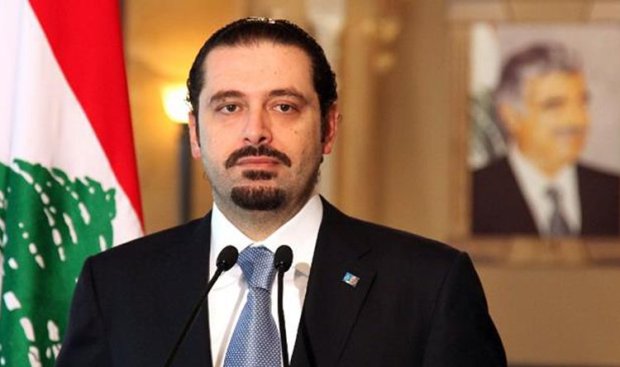
 

Hariri Resigns As Lebanese Prime Minister All The Way From Saudi Arabia, Because Patriotism

Nothing says patriotism and Lebanese sovereignty as much as your own prime minister announcing his resignation, and subsequently a nail in the coffin of Lebanese governance, all the way from a foreign country, on one of their megaphone TVs nonetheless.

Saad Hariri, who has been back as prime minister for nearly 11 months now, in a government that was billed as one of “national unity” suddenly remembered that – gasp – he is sharing his rule with Hezbollah, a party whom Hariri’s funders in Saudi Arabia do not approve of and whose entire existence is, as we’ve come to know, is mutually exclusive with Hariri’s raison d’etre.

Entre nous, I had totally forgotten up until this very moment that Hariri was prime minister and that Lebanon actually had a government. It’s not that difficult to forget such details when things have been pretty much the same, whether Hariri is there or not, and whether we have a government or not. Corruption is still omnipresent. Dysfunction still reigns supreme. And countries that are not Lebanese still dictate what goes on in our own home country. Their accomplishment? Burdening us with extra taxes and then leaving.

Case in point? Hariri resigned from Saudi Arabia, not even from our Serail, in protest of Iranian influence into Lebanon’s governance.

Hariri’s reasoning for his resignation – clearly dictated on him by his bosses abroad – are that the current situation in Lebanon is similar to the ambiance before the assassination of his father around 12 years ago, along with the threat that Hezbollah’s arms pose on an internal level after their escapades with the dictator in Damascus over the past few years.

Reasonable, perhaps, but it’s mostly a little too late, and exceedingly cowardly for a politician to leave the entire country in the dust as he rushes away to save his own ass, all other Lebanese be damned. Yet again, what can we expect from a ruling class whose priority was and will always be its own skin, and whose MO for ruling is to benefit as much as possible from being in power, with servicing us as Lebanese citizens being the last thing on their minds?

I wonder though, did Saad Hariri know he wanted to resign last week – or even two days ago – when he was all over the place announcing plans and grand schemes to increase Beirut’s airport capacity, boost Lebanon’s tourism, work on further bringing Gulf investors back, and the like? Or when he filmed his Hala Bel Khamis video with a bunch of youth? Or did he simply wake up on November 4th, hop on his private jet to Saudi Arabia, probably without paying that extra tax his government imposed on us, and decided that he did not want to be prime minister anymore?

Whether we are going to actually have elections in 2018 becomes up in the air as well. What Hariri resigning also does is entice Lebanon’s Sunnism, further fueling their sense of being at the short end of the Lebanese stick, threatened merely for existing. Sectarianism is in full blown play, months before we head to the polls – if we do in the first place.

With threats of war, conflict, instability, the Lebanese population deserves more than politicians who are willing to throw it under the bus on whimsical dictated moves. We deserve more than to wake up one day and realize we don’t have a government anymore, and that our security and well-being is even more up in the air just because a politician’s foreign bosses told him so.

The Mankousheh Culture: Lebanon’s Zaatar W Zeit Launches World Mankousheh Day


If there’s anything I miss about Lebanon, apart from my friends and family, it’s the food. Say what you want about the country – and after living in the U.S. for around half a year, I can definitely tell you I still have a lot to berate where I come from about – but the food is just something else. Not only is our diet healthy, but it’s also extremely tasty. I’ve come to appreciate that after my many months in America.

As far as I can remember, a hallmark of a Lebanese breakfast has been the mankousheh. My school had a small store in our common area that sold them whenever we had recess. My dad’s aunt was a baker and for as long as she lived, I remember her tiny black dresses with Zaatar stains on them from the mankoushes she used to bake and sell. Then, when we grew up and moved to cities, we moved to more “sophisticated” iterations, with whole wheat, and the like.

The fact remains, however, that Lebanon is a country of the mankoushe culture. And frankly, would you have it any other way?

On November 2nd, Zaatar w Zeit, whose rise to prominence among Lebanon’s diners was because of its take on the mankousheh (I mean, just look at their name), is announcing World Mankousheh Day to celebrate our heritage when it comes to this item that’s quite literally synonymous with every Lebanese growing up, to further potentiate the Lebanese identity of such a traditional meal.

In recent years, the mankousheh has gone through many changes, be it with ZWZ or other chains that produce it: different types of doughs, different toppings, etc… On World Mankoushe Day, however, the celebration is about going back to the basics of it all, the mankousheh that we all know, and that I believe was the first for all of us: zaatar, zeit and fresh out of the oven.

Cheers to our heritage, whether it’s men l forn or 3al saj or any other variety.

I commend ZWZ on such a great move. Here’s to further celebrations in Lebanese cuisine to further cement their identities in an ever changing world.

PS: If you’re in Lebanon, ZWZ is offering free mana’eesh all day today! 

Beirut: A Major Hollywood Movie With Jon Hamm & Rosamund Pike Will Be Released in 2018

Cringe moment incoming, or at least I hope it’s not.

Coming in April 2018 is a major Hollywood movie from director Brad Anderson who’s known for movies such as The Machinist, The Call, and Transsiberian is going to be releasing a new movie featuring Rosamund Pike and Jon Hamm titled “Beirut.”

Rosamund Pike’s breakthrough role was most recently in “Gone Girl” for which she received an Oscar nomination, whereas Jon Hamm is known for his role in Mad Men and most recently in the great “Baby Driver.”

Jon Hamm is Mason Skiles, a former U.S. diplomat who returns to service to save a former colleague, whereas Rosamund Pike’s role will be a CIA field agent working undercover at the American embassy who’s tasked with keeping Mason alive and ensuring the mission is a success, as per Wikipedia.

The movie is also written by Tony Gilroy who’s responsible for movies such as The Bourne Trilogy, Star Wars: Rogue One, Nightcrawler and a lot of episodes of House of Cards.

There’s not much information available about the movie as of now except that it’s about a former U.S. diplomat who returns to service in order to save a former colleague of theirs who happens to be in Beirut from the group responsible for the death of his family.

The project has been in the works since 2015, and was filmed during 2016 in Tangier, Morocco, which has me assuming their portrayal of Beirut is going to be less of how the city actually is and more like a Qandahar war-torn desert city, far from its current reality, especially if the movie is another perpetuation of the civil war reputation surrounding the city.

Ironically, the movie is set for release on April 13th – the memorial day of Lebanon’s Civil War. Coincidence is probably not the case here.

Regardless, I hope the movie ends up entertaining and thought provoking enough. Given the people behind it, I am hopeful it will be the case though it being released so early in the year next year means it’s not really geared towards awards consideration, as much as they want it to be a money grabber.

I bet this movie will also be a hit in Lebanon as people flock to theaters to watch their own capital memorialized in film. I just hope whatever product Hollywood ends up giving does it justice, albeit doubtful.

No trailers for the movie have been released yet.