Ahmad el Assir’s Money Sources

I recently read an article about the financial means of Sunni extremist cleric Ahmad el Assir. After all, those weapons (that he doesn’t have) and the growing support he is garnering are not coming out of nowhere, despite his support arguably remaining very minimal across Lebanon, even among Sunnis despite what many want you to believe.

The article in question talks about where Mr. Al Assir is getting his money and the list is the following:

  • Qatar with input reaching the hundreds of thousands of dollars, through Beirut’s international airport and under the coverage of a member in the Lebanese cabinet. I want to know who.
  • Fadel Shaker. I regret buying that sporadic album I gave my mom on Mother’s Day way back when Fadel Shaker filmed music videos about love and with women.
  • Rashed Shaaban, owner of “Amir Rashed” restaurant and the uncle of one of the Islamists apprehended as a suspect in the assassination of Francois el Hajj.
  • The infamous “Kaak Abou Arab” shops.
  • Shawarma Abu Bahij in Saida
  • There are other sources which you can check at the link but these are the ones that seem familiar to me.

    Ahmad el Assir’s phenomenon isn’t “unusual” given the current situation in Lebanon. It doesn’t mean that this phenomenon is acceptable and I, for one, won’t support it in any way, even indirectly.

    That’s not to say those that those Al Assir speaks out against are better. They’re more dangerous than what he will ever become and he’s an irrelevant entity in comparison. But isn’t that how they all begin?

    I can’t do anything about Qatar. They have so much money they’re about to start using it as toilet paper. But I can stop going to Kaak Abou Arab and do what I can, 1000LL at a time.

    Racism With Middle East Airlines (MEA). Again.

    I recently got a tip from a reader regarding another racism incidence with Lebanon’s airline carrier MEA that is not dissimilar to the one that became everyone’s talk a few months ago, culminating in firing the employees involved.

    The story goes as follows:

    The export manager of a Chinese company was visiting Dubai for a few days after which he was sent by his company to Lebanon to work on a certain deal with a local business. Once his work in Lebanon was up and he had to go back to China, he presented at the MEA counter at the airport but the employee refused to issue him a ticket.

    She said he didn’t have a visa for Dubai, which he did. He was also going through Dubai simply as transit to China, which is allowed even if you don’t have a visa. So shouting at the Chinese man, the employee talked down to him, dismissing him. A quarrel ensued, which was only stopped up by another employee interfering and issuing the ticket in question.

    I wonder: how difficult is it for MEA to vet its employees before actually hiring them when it comes to the most basic of qualities that people who handle international customers should have? Or how difficult is it to actually have MEA’s employees go through some trainings in dealing with customers in respectable ways to bring them to the 21st century where a passenger isn’t dismissed based on the color of his skin or how stretched his eyes are?

    Racism isn’t exclusive to MEA. It spreads to a lot of people across Lebanon with municipalities illegally banning Syrians (and officials who don’t want to do anything about it) to severe discrimination against migrant workers even in the media that should be helping to lessen this among people (link). But the least we should expect is for one of the country’s major companies – especially one that represents Lebanon to the entire world – to be stringent with the image it wants to give to the world.

    As for how I believe racism in Lebanon should stop, I quote something I wrote (link) when the first racism incidence with MEA happened:

    Racism isn’t also a Lebanese problem. It is a worldwide problem that takes many forms. It transcends the hate towards others based on skin color. It is the intolerance towards another’s religion, the intolerance towards another’s nationality. And if a country doesn’t have a predominant problems with someone’s race, then they probably have a problem with differing religions. It is the problem of “difference.”

    We dislike those with whom we can’t easily relate.

    So what’s different between Lebanon and those supposedly racism-free countries? It’s quite simple: accountability. And that’s what works most with us Lebanese: a slap on the wrist when we do stuff wrong (fines for smoking, for not putting on the seatbelt, for speeding….)

    People who get accused of racism in those countries have consequences to deal with. In our country, racism is met with indifference. A prominent TV anchor was blantly saying that an Ethiopian maid who committed suicide a few months ago was deranged (click here)- and he found no trouble at all in passing his ideology to his viewers. I’m sure he got high ratings for that episode as well.

    If that anchor had met the same fate as the employee, people would have known that what he said was wrong. They would have known that talking badly against someone else just because you don’t like the skin they were born in is unacceptable. And they would have realized that it is no longer accepted to have it happen.

    Their racism would then regress – it would get suppressed. And that is how other countries do it.

    The Lebanese Women Who Hate Women

    She goes to her friend’s house with a thick layer of makeup on her face. She fakes a smile and laughs through her pain. She pushes away the tears. No one knows and no one will ever know.

    Her mother had given her that advice a long time ago. It doesn’t matter how you feel. It doesn’t matter what he does. You fix your hair, you bite your lip and get a grip and save a little face of the one that was torn to pieces. It’s just a beat up. This isn’t her mother’s broken jaw and bruised eye. But it might as well be.

    ——————————————————————–

    “I’ll vote the way my brother wants.

    I’ll vote the way my husband wants.

    I’ll vote the way my son wants.

    I’ll vote the way my grandson wants.”

    But no one will know how you vote behind that separator.

    “How will I live with myself if I don’t do what they want of me?”

    Why would you vote the way anyone else wants?

    “Because there are circumstances. I can’t.”

    ——————————————————————–

    It had been only a few weeks since her father passed away. As she sat contemplating and saddened for the anchor she had lost, she feels a tap on her shoulder. She looks up, her brother looks down at her with a grim look. She understood. She walks over to the kitchen, the paperwork was ready to be signed.
    “When you sign this paper, you will be relinquishing your half of the inheritance to your brother. Are you sure you want to do this?”
    She looks up and nods. “Anything for him.”

    She signs her name.

    ——————————————————————–

    “I love him. But I can’t love him.”
    “Why?”
    “It will never work.”
    “He can give you the best future you could possibly have.”
    “You don’t understand.”
    “I know I do.”
    “No, no, no. We don’t pray the same way.”

    The following day, she conformed.

    ——————————————————————–

    She held a banner at her go-to feminist rally. Empower the women. Fight for the women. Do anything for those women. A few minutes after the rally was done and she got her regular fix, she went back home and logged on to her favorite social network. Someone had mentioned women in a joke. She looked at their picture. It’s a he. The joke became sexist. And she couldn’t allow it. Sexism, sexism, sexism everywhere.
    Her fingers started frantically typing on the keyboard. It didn’t matter that he could be an even feistier supporter of gender equality.

    ——————————————————————–

    They gather for their regular morning coffee. They cross their legs, pucker their lips. The blood starts pumping through their veins. This is all so exciting.
    “Have you heard?”
    “Uh-hum.”
    “She slept with him! I can’t believe it. Always knew she was a slut.”
    “It always showed, darling. Don’t you see the way she usually dresses? Skirts should not be that short.”
    She unconsciously pulls at her own skirt in the process.
    “And have you heard about that other one? Poor thing. She has you know what in you know where.”
    “I know… So sad. And her poor husband! You think he’ll stay with her now that she can’t… You know…”
    “I don’t know! Didn’t even think of that. You think they’ll divorce?”
    “Nah. He’s not that cruel!”

    ——————————————————————–

    The above stories are real life observances over the past few weeks.

    Lebanon Has The Eighth Wonder of the World

    Our country is unique. If you thought our attempt at breaking into the seven wonders of nature with Jeita Grotto was a bust, think again because Lebanon has established an eighth wonder. And get this – it’s both natural and the work of men.

    How’s that? Well, you don’t need me to explain the birds and the bees for you (I hope) but we can all agree that it is a natural process. And what those birds and bees eventually lead to is the work of men and women obviously.

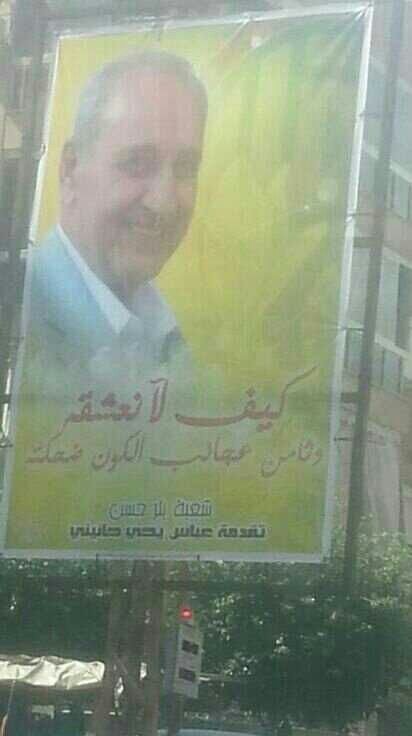
    What’s Lebanon’s eighth wonder? The correct question is not what but who. Behold, ladies and gentlemen, Nabih Berri:

    Nabih Berri Eighth Wonder of the World Lebanon“How do we not love him and the eighth wonder of the world is his laugh,” the poster’s caption said.

    In all his twenty years as speaker of parliament, I have never seen Nabih Berri smile. But I’ll take their word for it.

    The Pyramids of Egypt are beyond jealous. Just saying.

    Thank you Mr. Sakalaki for the picture.

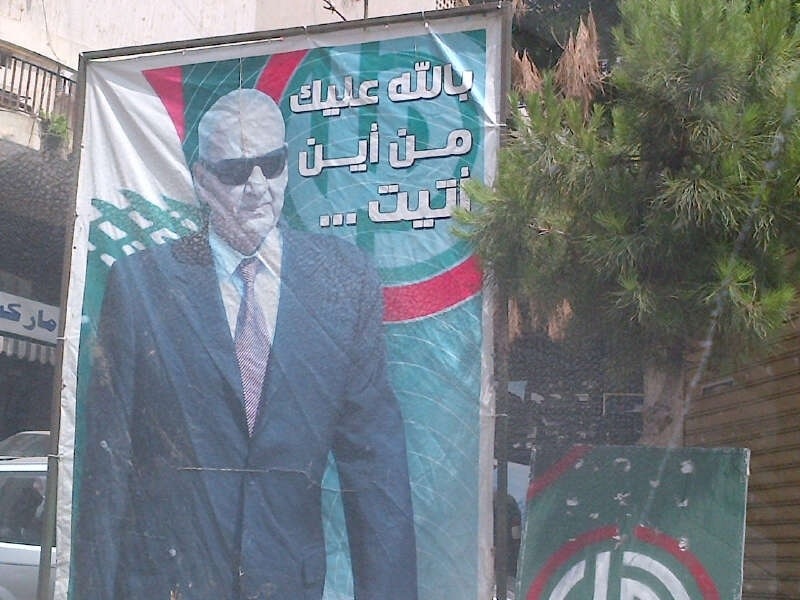
    Update: Another picture courtesy of my friend Mr. Seif. Berri’s supporters are the gift that keeps giving – with feisty slogans to boot.

    20130307-191150.jpg

    Tripoli’s Gang of Thieves & Lebanon’s Police

    A friend of mine parked his motorcycle yesterday in front of a house he was visiting in my hometown only to hear the engine ignite a few minutes later.

    He ran outside and saw a stranger driving his bike away. He frantically tried to chase him but there was no car. He was fortunate enough to have a family member be in Batroun at the time of the theft. That person immediately called the police hotline 112 as he chased the motorcycle driver on the Lebanese highway.

    The police informed him that he was not allowed to ram his car into the motorcycle and that he should let them know where he was driving at all times. So he told them when he passed the Mseilha Citadel. He told them when he passed Chekka. He told them when he passed Anfeh.

    He kept his phone to his ear and spoke to the policemen on the other end thinking or maybe hoping that they’d do something. Slightly south of Tripoli, at the Punto Alto side street, the biker disappeared.

    The drive from Batroun to Tripoli took about 20 minutes during which the police was more than informed about the chase taking place. And they still didn’t set up an impromptu checkpoint on the highway to stop the thief, which we would all agree is not highly unusual given their Beiruti practices at random hours of the A.M.

    As a result of our super qualified policemen, the $7000 motorcycle is now in the hands of some gang in Tripoli who, I’m sorry to disappoint you, is not made up of Syrian nationals.

    How do I know this? Well, the plot thickens.

    During the past week, more than eighteen similar motorcycles were stolen in the coastal Batrouni town of Kfaraabida which many of you know for its beaches and Pierre & Friends. The police were, obviously, informed of the grand theft. After all, we were talking about eighteen motorcycles. But they obviously didn’t do anything about it.

    However, not all of those motorcycles remained stolen. Some people whose bikes had been taken away got in contact with people in Tripoli who had contacts in those gangs. They set up an exchange: a decent sum of money for their motorcycle. So they kind of purchased back their bike.

    The man whose bike was stolen went on the same route. He hasn’t gotten back his bike yet but he’ll know soon enough if there’s a chance to retrieve it or if it has already been shipped to Syria.

    Of course, this isn’t new when it comes to our police. A few years ago, my physician uncle woke up in the middle of the night in our Achrafieh apartment to a ruckus in the street. He went to the balcony to see someone breaking into a store at the base of our building.

    My uncle’s knee-jerk reaction was to call the cops. A few attempts later, a sleepy person replied and asked my uncle to call again if the thief came back. Because that obviously makes perfect sense. So as the thief filled up his car with whatever he could find in that store, there was nothing my uncle could do. What if the thief had a knife or a gun? It’s not our job to do what policemen should have been doing at that point.

    I don’t expect anything from our policemen. Maybe a checkpoint that actually serves a tangible purpose. Or trying to intercept one of those money-for-bike exchanges so maybe, just maybe, we could feel safer. Until then, which should be until forever, hide your cars, hide your bikes, hide your precious belongings. It’s the wild wild west over here. But no matter what you do, don’t call the cops. It’s only 1) a waste of your time, 2) a waste of your precious minutes and 3) another thing to make you infuriated and angry.