The Perks of Being Lebanese

Back in December, I hosted a photographer who wanted to visit Lebanon in order to experience our on-the-edge diverse lifestyle. I showed him around as much as I could given the short time I had, taking myself to Tyre for the first time in my life. I had never been that far South before. I left him there in order for him to see life in that Southern city firsthand. A couple of days later, we met up in Beirut and somehow he started contrasting and comparing my country with his. He comes from one of the world’s biggest superpowers so it’s understandable that my country is lacking in comparison.

But I couldn’t take it. Snarkiness started to ooze out of every word I uttered like the sharp blade of a knife. Jabs here and there about how his country could never – ever – have the history that my country has started flowing. I even surprised myself when it comes to political declarations which would probably get any Lebanese who knows me turn his head in disbelief. Imagine me proclaiming support for Hezbollah and you’ll get the drift.

I felt it was necessary. It’s not about being politically correct. It’s this built in sensor inside my brain to defend Lebanon whenever I can to whoever I can. And it goes off at random times, despite the logical part of me telling me that I should probably stop. I can’t help it. My relationship with my country is that of some serious love-hate. And I can’t escape it.

Bref, I nag too much sometimes and I know it. I know some of you hate it – but living in Lebanon leaves you constantly angry, constantly furious, constantly edgy. We all deal with it with the best way we can and considering what we’re dealt with every day, I daresay we handle it really well. Most of the time at least.

To those who thought I’m being quite negative, you’re probably right. This one’s for you. Now smile and take it in because such articles will only come rarely. Let it sink in because you won’t hear me saying this very often – not that it matters since it’s now online for everyone to see – but here it goes: I probably wouldn’t trade growing up in Lebanon for anything else in the whole world.

It’s not about the copious amount of money I could have had. It’s not about super kickass passports I often wish I possessed. I think growing up here, witnessing the struggles of here, dealing with the hardships that here represents have gotten me to grow as a person in ways that any other place probably wouldn’t have provided.

In a way, growing up here has made me a person who is capable of standing on his feet wherever you throw him. It might sound cliche – positive vibes always go around clicheville – but it’s something that the past year has truly reinforced in me.

When I was in France, the French were shocked I could juggle three languages fluently without a hitch, something that was completely normal to me but seemed very odd to them. It is there that I came to appreciate exactly how thankful I am for the decent education I got here. The fact that I was able to keep up with more knowledgeable physicians at the hospital where I did my clerkship doesn’t only reflect on my mental capacities but on the way education in Lebanon shapes you up without you even knowing it. It is no wonder that with all the preparation we subtly get in school and later on in higher education institutes, we are able to excel when given room and opportunity.

That month I spent in France opened up my eyes to something else that I hadn’t really thought of: life in Lebanon does not go on in a protective bubble that separates you from everything else happening around you.
The aforementioned idea started to get formulated in my mind back in 2011 when I wrote a small article about 9/11 and some members of American family stopped talking to me as a result. I still don’t see anything wrong with my article. If anything, I stand by it more than before. But it’s the perception of the article which differentiates my American kin from yours truly. For them, I am being harsh and insensitive because I haven’t lived it and I am not American. To me, they are being very concentric and limited. But it’s no one’s fault really: my perception as a Lebanese of the world is and will always be of people whose fate isn’t in their hand, of a country which is always a part in a chessgame of bigger fish.
And while we nag about that as is our right, I think the premise of the life this sets is healthy: to know that there’s always another story taking place somewhere, to know that there is another side to us, to know that there is life form outside of the bubble that we love to live inside and to know that everything has a reference point to put things in perspective.

The photographer who came here back in December was more than interested in something that I not only took for granted but thought was beyond normal. My hometown coexists quite peacefully with a neighboring Shiite town. My best friends happen to be either Shiite or atheists or Sunni or Maronites. We differ politically, we argue more often than not. We come from severely different backgrounds in our own country. But we still find ourselves at one table having dinner as often as we argue about the backgrounds from which we come. The experience itself is one that we ignore because it’s never in the forefront of our thoughts. But to an outsider, the interactions we have and the friendships we strike are things that are beyond interesting. When that photographer pointed out how odd to him that dinner table setting was, I started to think about it more and I realized that I am what I am today because of those people that have come into my life from all those different backgrounds. And despite some eccentric bearded men from all sides wanting to tell us that our friendships are abnormal, our relationships still exist and they keep flourishing. The majority of us as Lebanese have friends who come from backgrounds that had, until quite recently in historical terms, been fighting against each other. Yet that’s never an issue. It’s not even something we think about. But imagine how bland our lives would be if the only people we knew shared our thoughts, our views and barely differed from us in the things that count.

And as I go back home every day from class or from those dinners with friends, another thing I take for granted is my family. The fact that the family unit is still very cohesive in this country is a treasure in itself. Child psychology tells you how important a tightly-knit family is for the development of a human being. But this isn’t about psychological theories. How often do we think about the warm meal awaiting us back home which our grandmother or mother more than willingly cooked for us, along with a warm hug because even though they had last seen us a few hours prior they miss us terribly?
And I don’t meant this in a sexist manner for those feminists gearing up for international women’s day. How often do we think about that awesome person we call grandpa who, as he grows up, becomes more kind hearted than a five year old boy? Or how about those siblings of ours that we love to hate but can’t imagine living without? Or those cousins we keep bickering with and the aunts and uncles who raised them? How about our fathers who, despite their strong facade, love us to the moon and back?
The family unit in Lebanon is not restricted to the parents and siblings. It transcends them to anyone who shares your family name. And we pretend that it aggravates us off when families gather in certain occasions. But the truth is that our family, including those extended members we don’t like to think about, act as a firm ground for us to stand in troubled times. And they do that without us asking for it.

Life in Lebanon sets you up to be a great individual when given the framework to allow such greatness to unfold. It makes you more aware of the world. It gives you a rich cultural experience to start from. It gives you a strong educational package to build a life upon and gives you a sense of belonging that makes you prone to find anchor wherever you’re thrown. It saddens me to say that I will probably leave this place someday because the future might be bleak. And I lose hope in it sometimes and I rekindle it at other times despite my better judgement. But it remains that being Lebanese is something that makes me proud. It is something that I believe has offered me the essential that makes human beings shine and make a life for themselves. That life probably won’t happen here. But that life will forever owe itself to here.

Cheers to all those Lebanese perks we keep taking for granted.

The Death of the Lebanese Dekkéné

Rue Aabrine Beirut Lebanon

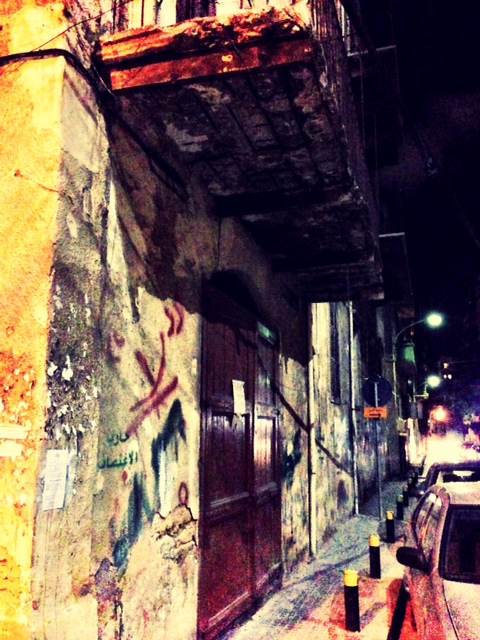
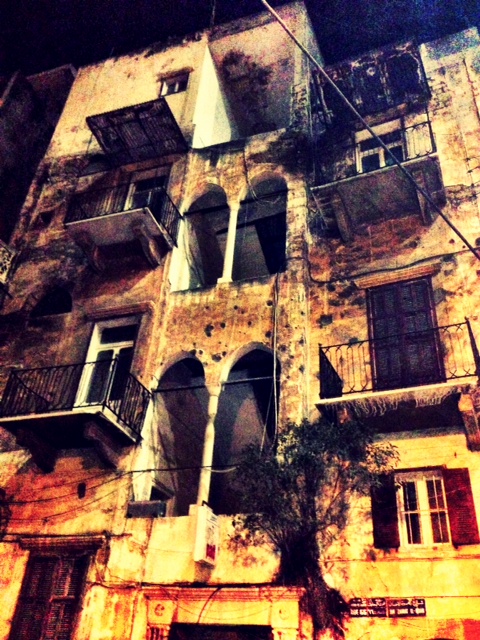
Aabrine Street was, until recently, one of the last remaining Achrafieh streets that still contained a flair of an old Lebanese life that you wouldn’t believe still existed in Beirut, especially Achrafieh: one where a family lived in the same building which had a dekkéné that they ran. Their house harbored them for decades – all through the civil war.

Their house’s entrance is very inconspicuous. The cats roaming around the place hid in the space of those traditional windows. The family took care of them. I went to their place a few times: high ceilings, old chandeliers and armchairs… what you’d expect to find in old Lebanese houses in the village was there. Except this was the heart of Beirut.

Their house was also the witness to the Civil War story I wrote on this blog in 2011. You can read it in its three parts here.

Their home is no longer theirs as some investors took over the entire stretch of buildings on their block, all of which are old buildings. But this isn’t Amin Maalouf’s house for it to cause a ruckus.

Beirut Aabrine Street Old Bldg Beirut Aabrine Street old building 2

As I walked by the house yesterday, I was saddened to see all the dark, empty windows. What used to be lit apartments and the voices that emanated from inside is now nothing but emptiness awaiting for it to become non-existent.

The family that lived in that apartment lived off a small dekkéné at the other side of the building which stretches down the street by being connected to lesser maintained parts. This dekkéné allowed their father to send many of his children to the United States where they got naturalized shortly after the civil war ended. He ran the small place for 50 years. He played cards with my grandpa and other Aabrine men as customers came in and out – Tarnib Koubba in case you’re wondering. Backgammon tables were there as well.

Dekkane Beirut Aabrine Street Lebanon

Today, the door of Sassine’s dekkéné holds a paper which he signed to announce that he had relocated. Another small office a few meters away, in that same building, announced the same thing. This dekkéné, which by the looks of it could fit anywhere but in Achrafieh, is gone for good. It still stands. But not for long.

The building that contained the dekkéné and all the nearby buildings connected to it will soon be demolished to allow another colorless high rise in their place. The history of the place will be gone for good. The place where my grandpa played cards with his friends, where small children would run to get their mother something she urgently needed for the tabkha she was cooking will be gone and with it another chapter in the life of a city that will soon not recognize itself anymore.

This isn’t about the worth of the dekkéné or its efficiency – it’s about what the dekkéné signifies: how easily we tear down what is old to bring in what is newer but never better.

This is the other side of the building in question, less maintained than the section where the family lived:

Aabrine Street Old Building

Beirut Rue Aabrine old bldg

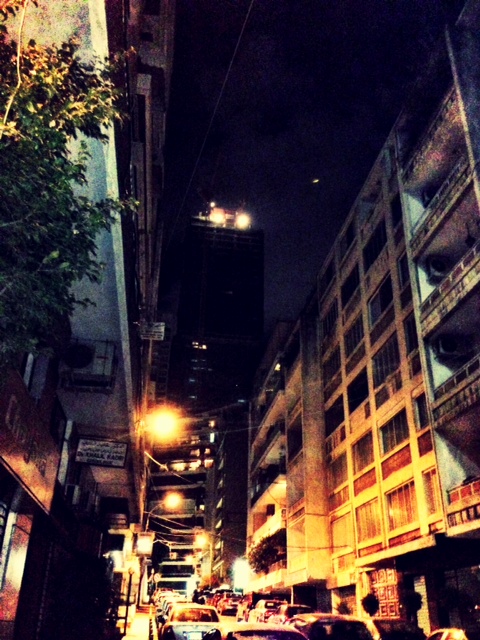
And this is what the dekkéné and its building will be replaced with. Beautiful.

beirut achrafieh high rise

Let’s Talk About Al Ebra2 El Mousta7il (الإبراء المستحيل)

“Have you read Al Ebra2 el Mousta7il?” One of my FPM relatives asked me a few days ago, a smile spreading across her face like a three year old on Christmas Eve.
“Nope. Have you?” I replied.
“Not yet. But man, I can’t believe how anyone would fathom being with Hariri after it!”
“Yeah, yeah, yeah. I’ll read it when part 2 is released.”

Part 2 is currently in the works as a reply to part 1.

FPMers are having a field day with a recently released book from their MPs, mainly Ibrahim Kenaan which revealed “for the first time ever” some secrets about the Hariri era in Lebanese politics. You can buy the book for $8 at any bookstore. It has more tables in it than a Certified Public Accountant would like to handle and its purpose is more than clear: serve as pre-electoral political propaganda, as is their right.

They have begun to use the term “ebra2ihom al mousta7il” to categorize the Future Movement on their Facebook pages and political websites.

My premise isn’t about the book’s content. It’s about the point behind the book. Who among us does not know that the Hariri era of politics was riddled with corruption? Well, if you don’t now you do. And if you don’t think it did, then your conviction borders on the delusional.

Let’s pretend for a moment that Hariri was the only person running the show from the 1990 to 2005, his government not having any other participant, and ask the following: don’t FPM ministers have their own “ebra2 l mousta7il” from 2005 onwards?

A Western company is suing Gebran Bassil for the way he handled one of the many bids that pass under his ministry. Isn’t that corruption?
The following link portrays severe transgressions of Minister Bassil and Layoun (minister of culture) in Batroun, which MTV is currently investigating, whereby the ministry of culture takes over old Lebanese houses for a very cheap amount of money, gets Gebran to renovate them and sell them for massive amounts. Or how about the diesel scandal that took place last year?

We can also talk about minister Layoun’s disgusting practices in the minister of culture, from allowing the demolishing of the Roman hippodrome to the Phoenician port to many of Beirut’s old houses, including Amin Maalouf’s. How about we look at Layoun’s wealth before and after him taking on the mantle of the ministry?

The aforementioned transgressions are based on a few minutes of research here and there that I, a blogger who doesn’t register on our politicians’ radar, was able to pull off.

FPMers will dismiss this previous link immediately based on its source, as will those who are against the FPM will dismiss their book because their source is very political.

Al Ebra2 Al Mousta7il is not a book for the Lebanese masses because you can’t offer one side of the corruption story in Lebanese politics and expect people who differ from you politically to take you seriously. I will not read Al Ebra2 Al Mousta7il because, despite keeping an open mind (most of the time) to different scenarios in the country, I know for a fact that the other side which the book doesn’t portray, obviously, committed transgressions that may or may not be as severe as the side the book does, in fact, portray. But that’s not the point.

The point is that every single political party in this country has, upon reaching power committed corrupt acts. The point is that blaming the entire country’s financial and economic problems, through a book such as Al Ebra2 Al Mousta7il on one single politician and his party, however corrupt that politician was, is illogical and non-sensical.

Al Ebra2 Al Mousta7il is a book that will get those who support the FPM to support the party even further without even reading the book. Let’s be honest, most FPMers won’t read it and will count on their politicians telling them what the book contains. Those who are against the FPM will dismiss it as nonsense. And come election time, no one will really remember it.

And the merry goes round.

Hariri was corrupt, sure. But Hariri was not the only one who’s corrupt. People with glass houses should not throw stones. Everyone has their own ebra2 al mousta7il.

The Phoenicians Discovered America?

Move over Mr. Columbus, our ancestors are in the house.

According to this article by CNN (link), our good old Phoenicians may have beat Christopher Columbus to discover good old (or new) America by about 2000 years.

Our Cedar trees have wood that is strong enough to build a boat that could withstand the 10,000 km journey. The Phoenicians, being cunning sailors, have the expertise required for the voyage – and a British man is set to prove this is, indeed, the case.

The theory has its detractors of course.

Either way, it seems like the alphabet may not be the only important thing the original inhabitants of Lebanon discovered and offered the world.

This should definitely prove to be some valuable information for all our Phoeniciaphilic Lebanese.

My Lebanese Bloggers Reinvent The World Entry: Bionic Humans

The following is my submission to the competition supervised by the ministry of telecommunications.

The moment you wake up to the world, all information you get is acquired through your senses. You first see your mother through your eyes. You first hear her voice through your ears. You first feel her touch through your skin, smell her hair through you nose and taste the food you are given through your taste buds.

These sensory experiences help shape your brain dramatically – they alter your cognition and your interaction with the world around you in ways that you can’t even quantify.

Now imagine you lost one of the organs responsible for your senses. Imagine you lost one of your eyes due to some freak accident. Imagine you were born with a genetic condition of deficient bone conduction in your ear or very few sensory cells in your nose to smell. Imagine for a second that your interaction with the world today is lacking one major aspect and you’ll see how hard it is. You only need to close one eye while walking with a few friends in order to see how your visual field is reduced.

I have had one uncle who lost his eye as a child to a heater-related accident. My uncle has passed away now, may he rest in peace, but the loss of his eye was a life changing experience that, regardless of the psychological aspect of the matter, affected his life negatively. My best friend suffers from the same thing: he lost his eye because he was a playful little boy with a heightened sense of curiosity. My cousin has deficiency in his hearing and is helped with hearing aids that don’t give him the proper sense of hearing that you and I have but a sense that allows him to make do and lead a normal life – or as normal a life as you could lead.

Lebanon is a country of war. We have all gone through very horrible life circumstances that have left many in Lebanon impaired. Some have had lasting damage to their spinal cord, leaving them crippled. Others have had their limbs completely amputated. The image is one that’s very hard to imagine.

The above premise leads me to the following:

My idea:

What if I could give my best friend an eye that allows him to see the world the way I see it, that allows him to see people who walk on the side of his non-functional eye? What if I could give my cousin a cochlea that not only gets him to hear but gives him a perfect sense of hearing? What if we can give all the war injured people prosthetic limbs that do not only serve minimal function but can emulate the function of the limb they lost?

Let’s take it a step further: what if we can extend the average life span, better life circumstances and improve the human condition?

As a medical student, I am faced daily with countless diseases, even those with a genetic basis, whose only “purpose” is to lead to this organ failing or that. My job is to cut this path of destruction at a point which leaves the organ in question salvageable enough for me to give the patient a better quality of life. But what if I’m too late? And what if I can’t find a transplant organ in time?

As things stand today, the only hope for my figurative patient is to die.

All of these terminally-ill patients, impaired, blind & amputated people may have hope if we broaden our approach to our own body by employing the technological advances we have reached these days and create organs that combine this nano-technology that’s being pioneered around the world with the medical expertise that is available plenty.

By creating a bionic eye, which combines medicine and technology which is helping shape medicine daily, someone who is blind might regain his sight. By integrating some minimal AI function on a prosthetic limb, an amputee might regain normal function in that limb. By manufacturing a heart, the countless people around the Earth who suffer from cardiac conditions could find a way to become better.

The list goes on. Imagine the possibilities if whichever organ comes to your mind is no longer a piece of fiction but a certainty that requires tinkering an approach and incorporating different disciplines together. The paths of the sciences are not as divided as people make them out to be. They are intertwined in more ways than they differ.

The lifespan of these bionic organs would also be superior to the span of normal organs. Their availability means that any case of dysfunction can be fixed by pinpointing the circuit that’s leading to the shortage.

What could we as Lebanese do? We have the minds and the medical expertise that could help shape this. And we have a lot of Lebanese youth whose pride and joy is technology – not just those who admire their smartphones but those who can actually build a smartphone or repair one in a matter of minutes. What those people need and currently lack is resources.

You might say that such a plan is perhaps too far-fetched or too ambitious given where we are today. And perhaps it is. But going beyond the limitation of this body that we have might prove to be a key-point in bettering our life in so many other ways. These bionic organs can help us understand what we don’t currently understand about current bodily functions, notably neural, which we are currently ignorant about. The purpose of these organs might even surpass their imminent use and lead to a different approach to life in which people begin to tackle the problems that everyone faces in a more meaningful way, be it from pollution, to energy.

My opinion is that this is the next frontier that medicine will be embarking on. If we, as Lebanese of the newer generation, embark on it, we might be able to catch up to the entire world in so many ways. Perhaps it’s worth a shot.

I believe bionic senses and organs is an idea that needs to be put out there – hopefully someone, somewhere finds it not insane enough to act out on it.

Reinvent the world by reinventing its inherent weakness. Fix people so they can fix the world.