Are We Really Resilient?

The Lebanese people are proud to be resilient in the face of adversity. Tripoli may be all up in flames but Hamra would still be partying the night away like nobody cared. Dahye might be mourning its bombing victims but concerts and movies would still be underway in the same city. Achrafieh’s buildings and people may be bruised but nearby Gemmayze would still be visited by its goers to drink their woes away.

Then life goes on. The following day, people make it their business to prove that they are above those bombs, the destruction and death. They make it their duty to show they don’t care about those cowards unleashing their hate and wrath here and there. Life goes on, yes. But it goes on exactly as it had the day before the bomb. Is that resiliency or ignorance?

A few days after the Dahye bomb, a couple made it to national headlines, not that it’s difficult to do so, by getting married where the bomb hit. Their ceremony quickly became a sensational topic of discussion: look at the life springing up amid the rubble, look at how gorgeous they look, behold how many ways the Arabic language can describe a wedding.

As I looked at the happily married couple standing defiantly in the midst of the location of a national tragedy, I couldn’t help but wonder: is that act of marriage, innocent as it may be, truly the best thing we could be doing at that point, only a few days after the death of 30 people by an act of terror?

That act of marriage – a mark of resiliency as we like to call it – is telling the politicians that are fast bringing our country to where it is today that what they’re doing is okay. That couple is telling Hezbollah that its current policies are acceptable no matter what happens. That couple is telling everyone they don’t really care why the bomb happened. They’re saying we don’t care if our national policies are weakening the country so much for Israel to be able to infiltrate Hezbollah’s stronghold. They’re saying we don’t care if the bomb is planted by some Syrian group responding to Hezbollah’s increasing involvement in the Syrian war. They’re saying we don’t care about all of that as long as we make it known that we are here and that life goes on and that we are here to stay.

Is it acceptable to give blind support even in the face of such adversity, to ask no questions and pretend nothing happened?

Today, regular folk trying to access their homes in Beirut’s Southern suburb are met with long waits due to the increased security measures to enter the area. I found this out through some acquaintances who figured ending their monologue about spending two hours in their car with “labbayka Nasrallah” would make it all better. They don’t care that they are wasting two hours of their day, every day, before going home simply because they believe it’s a mark of support for their politician of choice.

And it’s not just the people of Lebanon’s Southern suburb. Across the country, people are asking less and less questions and becoming more subdued by how things are, believing this is how it ought to be, finding solace in what they find familiar: whoever politician they had chosen to follow.

This is not the time to question, you’d hear people saying. But I have to wonder, if this is not the time then when is it?

When is the time for us to tell our politicians that them leading the country while taking all our lives for granted is not acceptable? When is the time to tell all our politicians that this sheer recklessness and utter disregard to the entire well being of the nation is not acceptable?

When it is the time to truly ask if that person we are apparently wired to follow is leading us off a cliff? When is the time for each and every one of us to say that no, my life and my time are not “fida” anyone?

I’d like to think the sense of resiliency when used politically involves some form of learning. A whole civil war (or two), several dozens bombings and assassinations later, what have we, as the Lebanese population, learned? I guess this isn’t the time to draw conclusions.

Caramel, The Attack, 12 Angry Lebanese on International Best Movies Lists


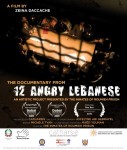
The Guardian has  published a list of the top 10 Arab movies and they featured Zeina Daccache’s Twelve Angry Lebanese on the list, with nine other Egyptian movies of which I haven’t heard.

The list’s author justified their choice for choosing the movie in it being deeply moving and full of humanity. I have to wonder why that movie hasn’t made a splash in Lebanon:

I was on the jury when this won the top documentary award at Dubai in 2009. The director is a young Lebanese drama-therapist who put on a production of 12 Angry Men inside Lebanon’s most notorious prison and filmed the long protracted process. The film was partly an attempt to reform the country’s criminal and penal laws and improve prison living conditions. It also enabled Daccache to extend her drama-therapy work to prisons across Lebanon, and she had started working in Syria shortly before the current conflict began. It is deeply moving and full of humanity, particularly in the way it describes the process of lifting men from a profound states of despair into a renewed desire to live and build a different future for themselves.

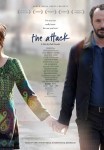
As a follow-up to that list, The Huffington Post wouldn’t take it. As such, they published their own list of 6 movies they believe The Guardian missed and included Ziad Doueiri’s The Attack and Nadine Labaki’s Caramel.

On the latter, the author wrote:

Labaki’s film was my in. I’m a relative newcomer to the magical world of cinema from MENA, having been brought up on a mixture of Woody Allen, the works of Fellini and Visconti, all sprinkled with a bit of Lina Wertmüller, and Caramel got me hooked from the first frame. It’s sensual, full of life and each time I watch it, it makes me proud to be a woman. It’s also the reason I yearned to travel to Beirut, and once I got there, I could see Labaki’s lushly constructed characters at every turn. I may be a romantic, but it’s a must watch for anyone who has yet to discover the beauty of Lebanese cinema. And its people. Labaki’s follow up, Where Do We Go Now? is also a greatly entertaining lesson in peace.

On The Attack:

Showcased at the Dubai Film Festival last December, Doueiri’s film is currently screening across the U.S.. The tragic story, of a Palestinian surgeon who discovers his marriage may not have been what it seemed, was what engulfed emotionally, at first. But then the absurd politics that enveloped the project really drove its profound meaning home for me. Lebanon banned the film because Doueiri had “snuck” into Israel to film his project, which of course was indispensable to the truthfulness of the story. A Gulf film organization distanced itself from The Attack though it had partly financed it in development. Of course, Doueiri is now having the last laugh, because his film has been winning prizes and hearts around the world, but The Attack remains a great example of why watching a film is almost always better than watching the news.

Lebanese filmmakers seem to be doing a rather fine job at having their works make a dent abroad.  It’s great to see Lebanese cinema getting such recognition abroad, especially with movies that are not what we’ve come to believe our filmmakers only know how to make.

It is sad that a movie such as The Attack will not be screened here for the most absurd reasons. I had the chance to watch the movie while on a trip to Paris and while I wasn’t as engrossed by it as the French with whom I shared the theatre or other Lebanese who found it highly engaging, I could appreciate the need for such a movie especially given the intense discussion it spurred with the Lebanese who watched the movie with me.

I believe that’s what cinema should do: spring up debate and discussion, especially in this country and specifically when it comes to topics that are still considered so taboo that discussing them can have “treason” plastered all over you. It seems those foreigners appreciate our movies more than we do.


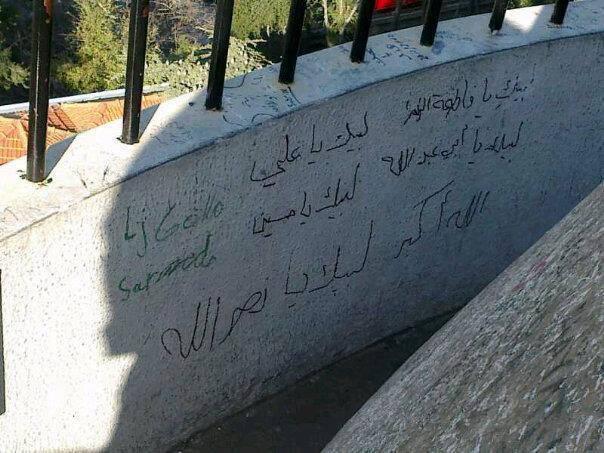
Spotted in Harissa: Labbayka Nasrallah

I guess it must be completely natural for religious people to go to Harissa. Even I feel like going there sometimes. There’s just something about the serenity of that place.

I also guess it must be completely natural for religious people to bring their political zeal with them to churches and mosques. Checking such stuff at home is way too mainstream lately.

It must be completely normal also to bring sharpies, permanent markers and express such political ideologies on the walls of religious establishments because a support for a politician cannot be sufficient except when it’s coupled with graffiti.

The following was spotted at Harissa:

Harissa Nasrallah

Picture via @JessyGeagea

And to think those prayers were the worst thing being written on the walls of Harissa.


It’s Just A Bomb

I was watching a movie today.

What a mundane and worthless sentence to start anything with. But I was watching a movie today.

It was a quiet afternoon. I had seen a dear friend whom I hadn’t seen in a while. We spoke about our lives. We didn’t talk about politics. I drank minted lemonade. She drank coffee. The time passed.

But yes, I was watching a movie today. And it was a theatre full of people who were watching the movie with me. And less than five minutes from where the movie was taking place, part of my country was getting blown up to pieces, people were getting blown up to bits.

And there I was, watching a movie.

The theatre doors closed behind us as we made our way out of the complex. Look, an explosion happened nearby, my friend told me. Make sure you make your way out calmly. I looked around and people had no other care in the world. Those who were shopping were still going about their chores meticulously. The people hoarding the escalators were still doing so extravagantly.

And there I was, pissed beyond fury, trying to see if my other friend was home and if anything had happened to her.

She is 23. In statistical terms, her life is well ahead of her. In real terms, she is terrified by a window slamming, fireworks going off or anything that reminds her of the bombs she has endured for years. I was relieved to know she hadn’t gone home today. I was glad she was okay. What a fucked up country, I told her. Yes, she replied. Is there anything more redundant to say?

I checked the news on my way to my car. Many were dead. Many more were injured. No officials were targeted. It was an attack simply against people like me who decided to spend their afternoon off, courtesy of the Virgin Mary’s ascension, to shop with their kids, with their mothers, with their families or friends, just like me.

The drive home was uneventful. People were still going around their afternoon business like it was nobody’s business. Life was sluggishly going on. It was bound to pick up its pace tomorrow. I was sure all would be forgotten by next week. This is our span. I guess that’s how it rolls.

As I neared residential areas of my country’s torn capital, I could hear the news blasting off balconies as people huddled next to their TV sets. Tripoli was joining the game as well because that city doesn’t like to be left out of the big celebrations. Politicians were salivating over their upcoming TV opportunities to express their condemnation while secretly insinuating that this party’s interference here and there led to this or that other party’s condemnation of some party’s actions has led to this, while people’s flesh still burns on the asphalt and cement. But don’t you be mistaken, sympathy supersedes policy.

The people were expressing sympathy. There was a tinge of unity as so happens in the face of true national tragedies. I figure it would only be a matter of time before someone parades this. Those who wanted to express sympathy figured stating their sect at the start of their sentence would give it some credibility. Others were more worried about the potential day off tomorrow. It was, after all, a day of national mourning. Aren’t those getting way too many and springing up way too often? But what would a day do to the mother who will mourn all her life?

It’s just a bomb. We tell it to ourselves like it’s nothing. A bomb. An explosion. Destruction, rubble, death. We’re getting way too used to it. We’re getting too comfortable with the way we live around it. We’re getting too subdued in the way we just take it, brush it off and long for the day when we forget. It’s just a bomb.

Ghadi, An Upcoming Lebanese Movie

A friend of mine just sent my way the trailer for an upcoming Lebanese movie called Ghadi, written by Lebanese comedian George Khabbaz:

I found the trailer to be interesting and it looks like this movie will be different from other Lebanese movies we’ve had to endure. Of course, many of us say this about every Lebanese movie so here’s hoping our eternal optimism doesn’t turn out foolish this time around.

However, this is already awesome for being shot in Batroun. I’m biased like that.

The movie, according to their Facebook page, is a social comedy about the struggles of a Lebanese family. George Khabbaz’s previous works in such a theme were very witty. The movie is directed by Amin Dora. It will be out in theaters on September 26th.