Instagramming A Suicide Bomber

#Instabomb.

I’ve been wondering if our media salivates like Pavlov’s dog when they get wind of yet another explosion takes place in this country. Their coverage sure always sounds like a kid who was given a new shiny toy on Christmas morning: relentless, excited, carefree, all over the place and – more importantly – chaotic.

I, for one, live in lala land. As a consequence, I’m becoming more or less ignorant as to what’s taking place around me politically. I’d like to think of it as a blessing in disguise. It feels good not to know sometimes. What’s constant throughout my enforced ignorance, however, is people always telling me about the horrors they’ve been seeing on television as if the explosions we all have to withstand were not enough: we are also being forced to get desensitized to the charred remains of human beings.

Social media has done wonders to Lebanese media. It has given them more ways to communicate, made them more approachable and has gotten them to become slowly but surely in competition with lesser known forms of media that could be faster at getting news out there. But when is taking social media while reporting news way too far?

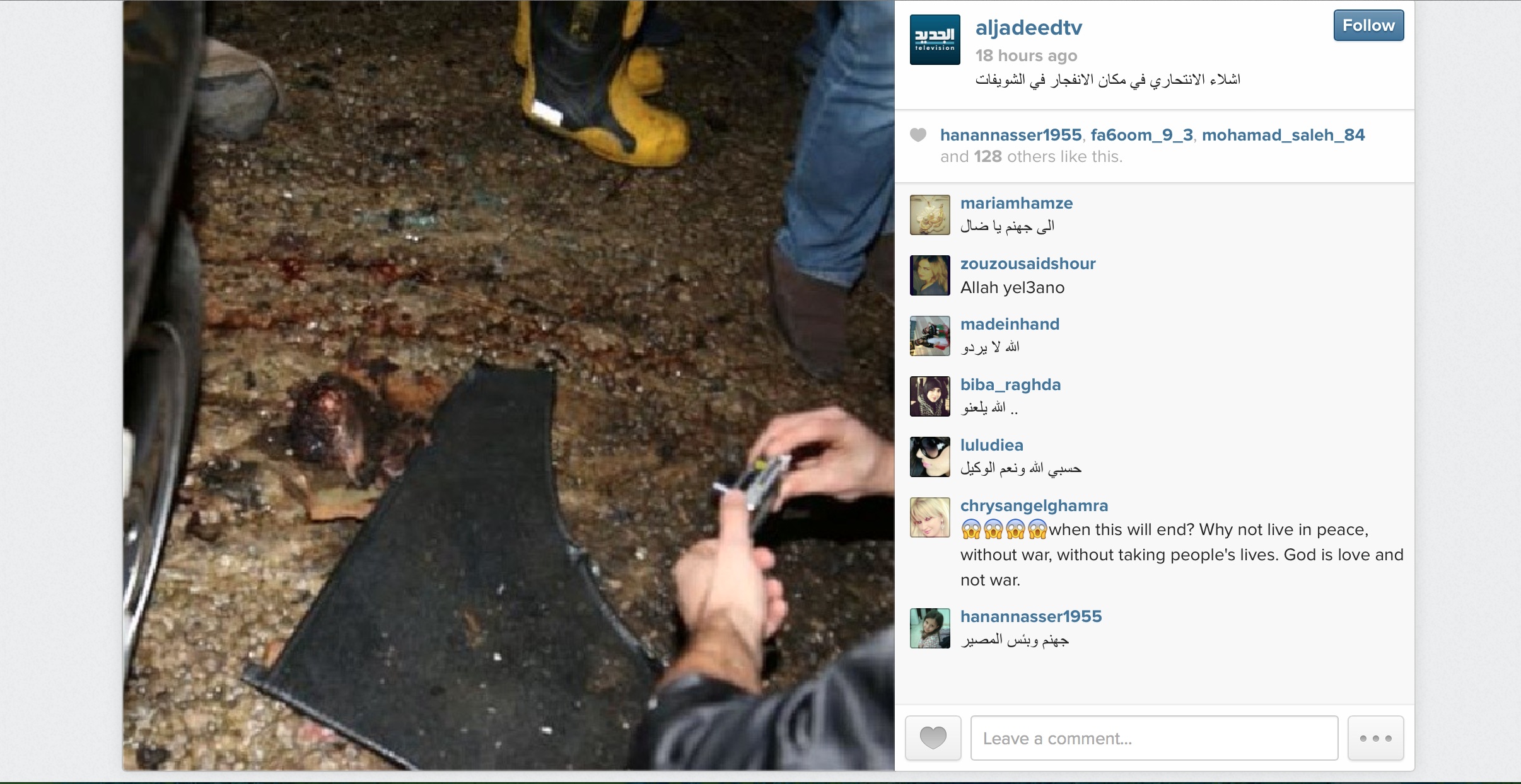
Say you want to Instagram a suicide bomber’s remains, what filter would you use?

Yes, that question may be completely absurd but a Lebanese TV station basically did just that a couple of days ago when they posted on their Instagram account the remains of the suicide bomber who detonated himself in Choueifat. I’m not an Instagram expert but is that filter “valencia?”

You can check out a screenshot of the image here.

I thought I’ve seen all that the media in this country could do. I was wrong. Explosions are horrible but diffusing such material is barbaric in its own right as well. What’s even sadder is that as a culture and country, we are becoming increasingly habituated to seeing such things that a well known TV station figured it was a good idea to snap an Instagram picture and broadcast it for people to “like” and comment in.

What is there to “like” about some terrorist’s unknown body part? What is there to comment on? What form of discussion are we trying to have by constantly exposing whoever has eyes to see to such things?

Like Pavlov’s dog, let them salivate over the next body part they want to Instagram. It’s only a matter of time now till the next “it” thing becomes a selfie with a suicide bomber’s body part. I think the “Hudson” filter would work excellently with that.

Rebuilding & Restocking Tripoli’s “Al Sa’eh” Library: The Full Story

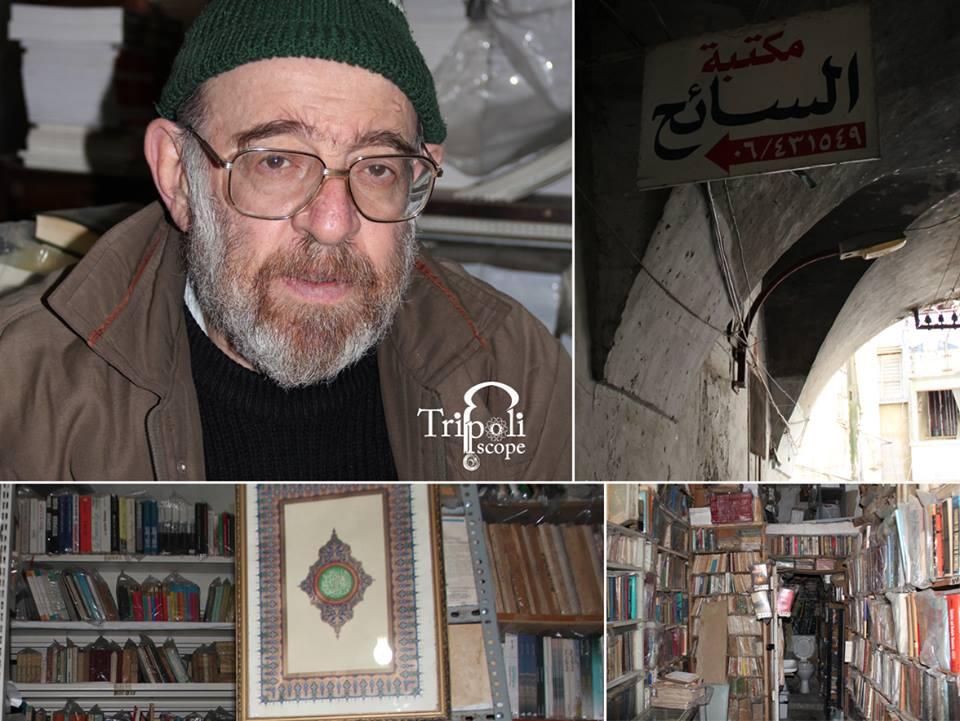
Al Sa'eh Library Tripoli

It takes a lot to get the whole country to gather behind a national tragedy lately. They tend to be more in the political eye of the beholder as we feel compassion with the people we can relate with more. It’s sad that we’ve become a nation where we can somehow, in some twisted logic, fathom the death of people as political collateral damage in a game that’s ripping our country apart.

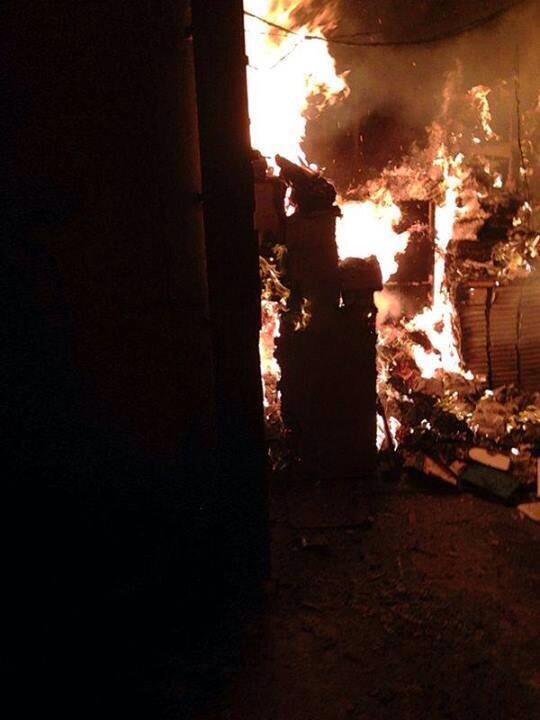
The books that resided in that forgotten library, nestled in Tripoli’s Al Nouri area, ran by Father Ibrahim Sarrouj, managed to shake the country and some aspects of the international community. Terrorism wasn’t just targeted at innocent people. It was also targeted at books whose only fault was to exist on shelves, gathering dust in an age where less and less people liked to read, burned by people who didn’t know how to do so.

The burning of “Al Sa’eh” library was heavily discussed. Some people ran with the theory of it being the work of Islamists. Others ran with the theory of it being the work of the contractors who wanted to evict Father Sarrouj and his books from the historic building in which they resided in order to dismantle it and ruin the city with another high rise. Information that I have gathered, however, from sources close to the priest and the group that is renovating the library indicated that certain mosques, known for their extremist sermons in Tripoli, preached against Father Sarrouj that Friday. Many of the perpetrators have also been identified and they fit with the former theory, not the latter. Although there’s probably nothing that money cannot bring together in Lebanon.

The initiative aimed to better “Al Sa’eh” started before the library’s burning on Friday, when Father Sarrouj started receiving threats, but it caught up like wildfire immediately afterwards. The activists who were working for the library’s sake wanted to organize a protest in support of Father Sarrouj when he started receiving the threats in question but Tripoli’s officials reassured them that the situation had settled.

They were mistaken.

At around 10 pm that night, those in charge received a phone call to notify them that the place they had been working diligently to protect was up in flames. It was a work of terrorism. The situation had not settled as they were promised and their knee jerk reaction was to get to work.

Their first plan was to set up a large protest for the library and Father Sarrouj. While working out the details of the protest, the organizers decided to become even more proactive and take it upon themselves to see what they can do with “Al Sa’eh.” So they started working in order to save the books that hadn’t been burnt yet, move them to a safe location where they’d be catalogued and preserved, while working to save what could be saved from the partially burned books.

They stayed there till 4AM that day working against the flames, working with local officials and sheikhs to secure the area in question for them to get safe access. The following morning, after forensics had taken the evidence they needed, work started.

In total, the library contained north of 85,000 books. Two thirds of those books were saved by the people of Tripoli. The remaining third contained many rare books, many of which had been first edition pieces. That third, unfortunately, was not as lucky.

The protest they organized was among the biggest in Tripoli. More than 500 people showed up. None of those people came in with political motives. Politician who had showed up were asked to leave. Those people continued cleaning after the protest, saving the books that were intact or partially burned. Those people were from different ages and sects. Some were veiled, others weren’t. Some were bearded, others were clean shaven. It was a mini representation of the community of Tripoli under the vaults of that ancient library, working to save a relic that had become synonymous with the city they held dear.

The organizers have met up with people from USEK and USJ regarding the books in question. Those experts are being enlisted to help the library save the books. The books that can be restored will be restored. The books that should be digitized will be digitized and the books that are available and could be ordered will be ordered. Moreover, the entire library’s location will be renovated, as well as clean and paint the small street at which the library could be found.

The funds for such an endeavor were via donations from sympathizers who wanted to save the library and its books. The organizers have also contacted well-known crowd-funding website Zoomal. Any help from politicians was refused and will be refused.

The plan for now is to move all the books to a safer location where they can be preserved and catalogued while the library gets renovated and its burns washed away. This is where we come in to help. If you can donate money or books, contact the people running the following Facebook event (link). Other concerned people are also running book drives to gather as much donations for the city as possible (link). Others are organizing their own book donation campaigns for the library’s sake.


BdXrOr0IAAAZgwn.jpg-large

Al Saeh Book Drive

So if you’ve got any books to donate or any means with which you can help, drop those people a line either on Facebook or with any other contact methods they have provided. We can all help rebuild and reshelf “Al Sa’eh.”

Update: Zoomal has set up a crowd funding to rebuild “Al Sa’eh.” (Link)

The following are images taken by Natheer Halawani (his blog) and other people of them saving the library and its books:

Cheers to those people living in a forcibly forgotten city, in a place where their dreams are forcibly killed and who can still find the will to fight for what they believe in and work to save their community. I salute you all, however simple and useless of me that might be.

Lebanon Loses 78000 Books To Terrorism: Tripoli’s “Al Sa’eh” Library Burned

BdFaC09IAAATz1l.jpg-large

2014 is off to a horrible start in Lebanon. The explosion that took place in Beirut yesterday, in the year’s first few days, has been paralleled by another act of terrorism in Lebanon’s northern capital, where extremist gunmen torched the city’s biggest library, Lebanon’s second, burning it to the ground.

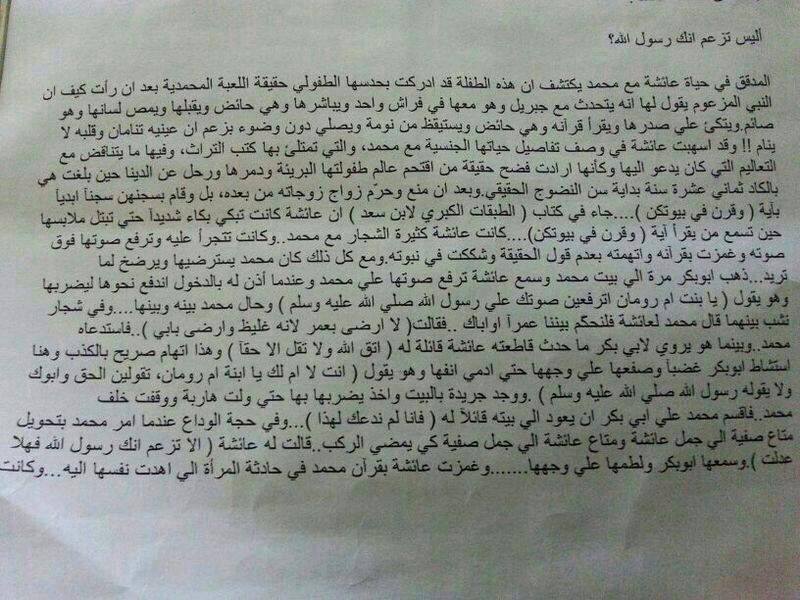
They accused the priest running the library, a man who has been fighting to keep that place alive against contractors who worked to dismantle the building in which it resided, of publishing an article that offends Islam. I guess offenses are in the eye of the beholder. In this case, the eyes are for illiterate people who can’t read and who don’t know the value of a book.

This is the supposed article in question:

Srour article

The country is burning, let’s not worry about a library. A lot of people might say that. But the library in question was a true national treasure, containing 78000 books, many of which exist in very few copies and many of which are, ironically, books about Islam. I’m also sure the library contained Qurans. Father Ibrahim Sarrouj, the library’s curator, has lived in Tripoli all his life and is known to being an encompassing person of the city’s diversity.

BdFY0ztCAAEYiXa.jpg-large

Tripoli cannot sit out the ongoing tragedies blowing through Lebanon lately. We just lost 78,000 books. We have lost many innocent lives as well over the past few days. And for the sake of what? Wars that we have nothing to do with, being fought over our territory, by people who have gone through a few cycles of brain washing in order to get them to believe that killing innocent people whose lives are well ahead of them or burning down a library will bring them favors with their own version of god and prophet.

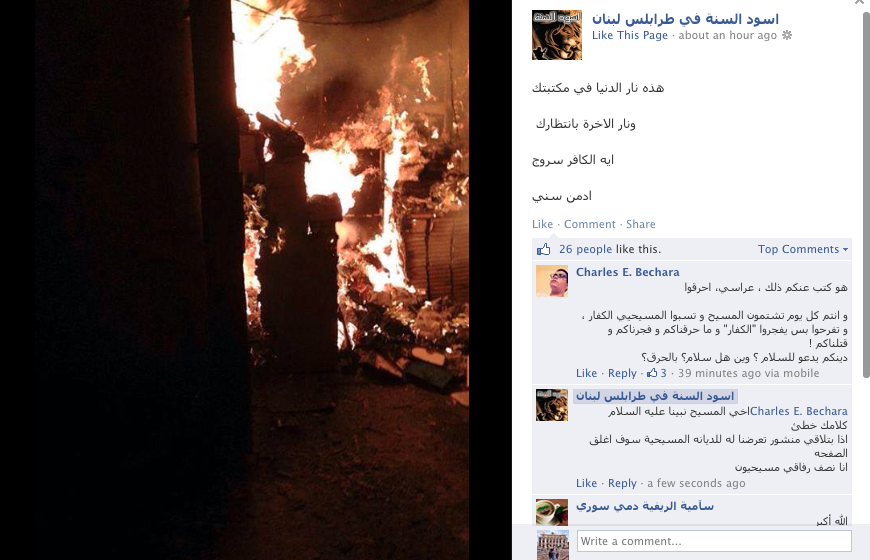
Screen Shot 2014-01-04 at 12.39.57 AM

Then you have those who believe that the actions of those gunmen reflect what the people of Tripoli believe in and who proclaim things as such to the ears that would listen. The fact of the matter is, however, is that the people of Tripoli are more afraid of those gunmen than we are. They are more afraid of the havoc they are bringing to their city than we are. They are more worried about the repercussions of their actions on the fabrics of their society than we give them credit for. They are wary of how their city has changed in such few days. They are terrified of the cultural demise that their home city is witnessing. They care about these books, the library and the priest who ran it. They are people who are worthy of having such a library to their name. They are the people whose city just lost its biggest library and who are gathering around its remnants crying their eyes out at how things turned out for the place they call home: a pile of rubble of a place that was once great.

I’m not Muslim but I’m more Muslim than the lunatics who torched that library and so are most of the people of Tripoli that many Lebanese love to dismiss so easily.

Tonight, I have been robbed of being able to visit such a place again and again by men who know no religion, no god and no alphabet. Tonight, the entire country was robbed of a wealth of knowledge that we had probably taken for granted. Who ever thought a library would be targeted in a terrorist attack?

Tonight, I’m livid and you should be. It’s not just about books. It’s about living in a place where two explosions taking place within a week, followed by such an act, are now considered normal. It’s about living in a place where you’re expected to move on from everything like it was nothing because that’s the only way forward. It’s about living in a place where you’re forced to forget about the lives lost, the books burned and the cities ruined just because it’s what we do.

Tonight, my thoughts go to Tripoli, the city that I miss and to its people that I hold dear. May they rebuild the library, restock its shelves with what they can and get rid of their streets of the infestation springing out and about. I try to be optimistic because that’s the only thing I can try to do. Tonight has been a sad night indeed.

A Tale of Two Cities: Lebanon Edition

I went to watch a movie in Beirut yesterday. It was done by 1AM so I simply went back home. As I walked up the sidewalk leading to my apartment, I could hear the parties bustling around me. Gemmayzé was gearing up to lose its cars. Cars were still circling the roads fervently in search for their next destination.

Even the movie that I watched was marred by the beats being dropped at a nearby nightclub. It was one of those old cinemas that didn’t bother invest in soundproof systems. Or was the club too loud? I guess nightlife in Beirut is alive and well. All was well.

As I walked back home, there was probably someone my age also making his way back to his place in the Northern city of Tripoli. Unlike me, however, he did not walk carelessly to his apartment, carefully examining his surroundings. That man was probably too wary of the bloodshed taking place in his city as he walked, of all the people that died, of his life that hung with the balance of every footstep he took on that cold bloody and empty Tarmac.

My day prior to the movie had been meaningless. I have a ton of exams to prepare to and anyone who has dabbled with medical school exams knows the material I’m supposed to cover by next week is basically uncoverable. But I persevered anyway. My friends asked me if I wanted to go out to their favorite burger joint. I declined. They went anyway, had ice cream afterwards. Nothing like some calories to burn off the stress.

And as I worried over my exams, there was a 16 year old boy not far from where I was trying to escape the school he attended, whose area had been overtaken by bullets and missiles. As he ran for cover, his every instinct pulling him for safety, the 16 year old boy existed no more. I don’t even know his name. He is but a number in a growing list. He is but one of many similar schoolchildren who escaped their schools by jumping over the fences, running through sniper-filled streets for their lives. Typical.

I do know, however, the name Paul Walker. As I woke up today to a house that feels cozier by the Christmas Tree I decorated a day prior, my social media timeline was lit with people who were upset that an American actor had died. I didn’t appreciate how they were more upset at a guy’s demise while trying to be fast and furious while the death of one of their own, that 16 year old whose name we don’t know, didn’t even resonate.

A few hundred meters away from me, Gemmayzé’s car free day, part of the Achrafieh2020 plan, was in full swing. The street was packed with people who had taken their children out on a sunny Sunday, benefiting from a neighborhood that had become synonymous with traffic, a day or so before it starts raining, finally.

The street was filled with children who had no other worry on their mind apart from the schoolwork they were returning to in a few hours. Those children were having fun, lots of it. They were safe. They were sheltered. They were protected. They were being brought up exactly as children should be.

And then I started thinking of the children I knew in Tripoli, how they were not being brought up exactly like children ought to be. I thought of two adorable twin girls and it broke my heart that at the tender age of three, they’ve been exposed to more gunfire and missile sounds than almost everyone else that I know. It saddened me that those two little precious girls couldn’t enjoy the same joys in life that the children roaming around Gemmayzé had, only because it was not safe for them to leave their house.

I also thought of all the children in that city who, with each passing day of violence, are forced to take sides, to become radicalized even if only in thought, and to possibly take arms later on.

These are two cities that are about 80 kilometers and a few decades apart. This is to the children of that city no one likes talking about. May they have better days someday. I wish they were sheltered, carefree and unaware sometimes. The sad part is that nobody really cares.

Zaatar W Zeit’s Act of Kindness

I was walking around Beirut the other day, in neighborhoods I hadn’t been to in a long time, only to find streets that have drastically changed. The most poignant moment of my walk was when I saw an old woman, sitting by the corner of the road crying. She had her mattress next to her. She had nowhere to go. The walk up to that woman was full of people like her. Things are getting tougher and there’s nothing to make them easier.

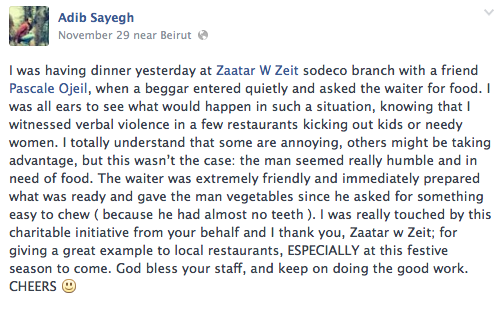
As a rule of thumb, it can be said that Lebanese restaurants are very disassociated with the general security of the country. As things get tougher, their prices get higher. I’ve rarely, if ever, heard of stories like the one below. But it is one of those rare instances that take you a few minutes to believe. 

Screen Shot 2013-12-01 at 1.46.06 PM

Of course, Zaatar w Zeit didn’t advertise this. It was simply an act of kindness on behalf of their branch in question. We all barraged Zaatar w Zeit for not serving alcohol at one of their branches this past year. It only felt fitting to highlight an act of kindness on their behalf towards those who are less fortunate in the midst of this non-festive holiday season.

Great job Zaatar w Zeit. Hopefully other restaurants follow suit in trying to make things easier for those who are overwhelmed by the harsh conditions of life in Lebanon.