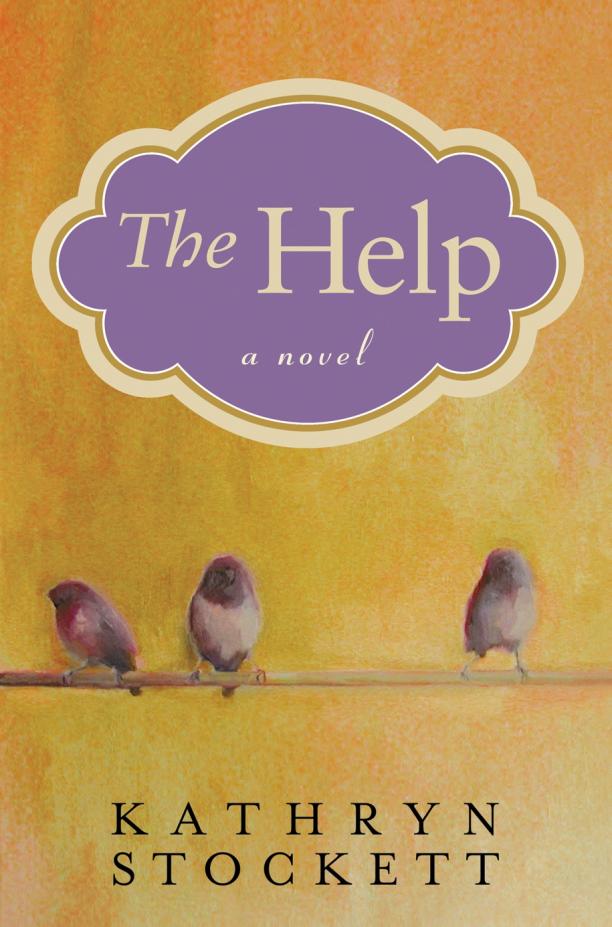
For the movie review, click here.
Born in Jackson, Mississippi and raised at the hands of a maid, Kathryn Stockett knows firsthand how it was to be a “superior” white person in the American South in the 1960s. The black maids tend to the white children, watch those children grow up and eventually become their bosses.
So it is with that sort of autobiographical flair that Stockett approaches her debut novel: The Help. No, the book is not an autobiography but it feels very real because it draws upon life-like elements and historical events to drive its plot. Eugena “Skeeter” Phelan is a fresh college graduate going home to Jackson in 1962 after a failed attempt at securing a job with important New York publishers. As she settles in the hierarchal routine of her hometown, Skeeter starts to realize that she doesn’t really belong in the bridge circles her friends have every week or their banquets. She’s also not as interested in the mundane elements of their lives that they love to share so much. So as Skeeter looks upon her friend’s maid, Aibileen, she asks her if she wished things were different. Aibileen cannot reply. But in a world where the white people of Jackson were trying to pass a regulation whereby colored individuals would have a different bathroom just because “they” carry different germs that do not go well with them while folks, Aibeleen has every reason to want change.
It is to the backdrop of racial segregation, fear, the KKK and white supremacists, mostly in the form of Skeeter’s friend, miss Hilly, that three women: Skeeter, Aibileen and a third maid, Minny, embark on an extraordinary quest that is really ordinary in all of its details: write a book about the stories of the maid of Jackson, a book that talks about the help including all of the bad, the ugly and the beautiful moments they have lived with their white employers.
The Help is told in three main parts, divided according to each character. The three parts intertwine as the story progresses but they are as distinct as they can be mostly due to the drastically different natures of the characters outlining and driving each part. Even the english language employed by Stockett is drastically different for each part: Aibileen’s part is mostly slang, Skeeter is proper English and Minnie finds a middle ground between them.
What is common to the three parts, however, is that all three characters driving them jump off the page due to their complex structure, warmth and exquisite character. Aibileen is the mother who cares about her employer’s little girl, Mae Mobley, as much as she cared about her son. Minnie is the angry, scrappy character who can’t stand silent to her employers berating her, who can’t stand by as Miss Hilly accuses her of being a thief. Skeeter is the woman wanting change in a time when people like her even existing is frowned upon, in a time where even the people she was trying to help are wary of her.
All of this is exposed in Stockett’s The Help in three-dimensional glory.
What leaves you as you finish The Help is a sense of happiness. It is a book about tormented lives seeking emancipation from the bonds of society. It is a book that gets you to laugh at points and sit in reflection at your own life at other points, especially as we, the Lebanese, have many of the incidences taking place in this book happening in own households with our “help”.
The Help, at the end of the day, is a book about empowerment. Be it the white woman empowering the black women to rise beyond their predicaments or Aibileen empowering Mae Mobley to be more than what her mother tells her: “Mae Mobley is kind. Mae Mobley is smart. Mae Mobley is important.”
The Help is kind. The Help is smart. The Help is important.








 A Separate State of Mind | A Blog by Elie Fares