Make sure you download this blog’s iOS app to stay up to date! (Link).
Earlier today, Crepaway released a new ad to celebrate them turning 33 years, along with their famous tagline: #ComeAsYouAre.
The ad is exactly what you’d expect from the phrase “Come As You Are,” except it’s taken to a whole other level with some Lebanese taboo-breaking as Crepaway features a same-sex couple for the first time ever in an ad made for a Lebanese company. It’s also just in time before Lebanese LGBT NGOs start a week-long campaign to fight homophobia in the country.
Some people might gullibly think that the two women in question are just best friends and brush it off, but it’s far from the case. The voice over says: “And here’s to never hiding your love-bites,” as two women cuddle by the sea, come sunset time.
I was completely taken off guard by them including such a moment. I never expected a high profile company like Crepaway to go there, but I’m glad they did because it raised the quality of their ad’s message so much more.
The ad itself is as “woke” as that moment which is bound to have some people talking in the next few days: it is inclusive, features all kinds of kinds of Lebanese people you’d encounter on a daily basis, and celebrates all those differences that make each one of us, us.
Crepaway, I salute you for the courage you’ve put forth into making and approving such an ad to be how you represent your message in 2017, as you turn 33.
Check out the ad here:
Make sure you download this blog’s iOS app to stay up to date! (Link).
Who in their right mind would consider B018 a plat de resistance on their last night on Earth? Who in their right mind would pass out at 3 am in Beirut on their last night on Earth.
Let me tell you how that laughable scenario should’ve gone.
Your last night on Earth is Saturday night. Which Saturday night? ANY Saturday night.
Dinner:
Before you go wild, you should always eat, and Mar Mikhael-Gemmayzeh is perfect for that, if it’s only for step 2 of your last night on Earth.
Whether you’d like to indulge in some Lebanese food at Em Nazih, Kahwet Leila or Enab, international food at Prune, À Coté or The Happy Prince, try Beirut’s best burger at The Smoking Bun or drool over Soul Food at Butcher’s BBQ Joint, that area, the Lower East Side of Beirut (yup, I’m using your metaphors, sue me!) is perfect if you’re feeling like having a bite before you plan next day’s hangover.
Whatever you’re planning on doing, never do it on an empty stomach. Now that your dinner plans are set, it’s time for pre-drinking.
Drinks:
Forget what any straight couple from the 09 (the area code, not the year) has told you. I’m sure they’re nice people, but they party like it’s Ayia Napa, circa 2010. And it’s 2017; the times they are a changin’.
I’m one of Beirut’s main party animals. Just ask anyone, and if I don’t go to Mothershucker, then neither should you. No one cool ever goes there on their last night on Earth. I’m sure it’s a nice place, but a gin/oyster bar before getting hammered? Really? That’s a recipe for disaster! No wonder you were passing out at 3am.
There are a lot of cool bars in Mar Mikhael, from Floyd The Dog to Vyvyan’s to Internazionale, and if you’re lucky enough, you might get invited to some cool private house party. Actually, all you have to do is be white & have an accent, and you’re there already. You’ll meet most of Beirut’s elite, and you’ll probably end up on some guestlist for step 3. You also might get to meet me, which could be the highlight of your night.
Party:
It’s 12:30 am, which means you should get going if you’re someone’s +1 if you don’t want to miss on any guestlist.
For the main course, you have 2 of Beirut’s party moguls: The Grand Factory and Überhaus. Both will make you forget your last name, with their taste in EDM and their love for extravagant lights & setups.
Whoever compared B018 to Berghain should be fired. You might get some of Berghain’s PG-13 action at Reunion, the elite’s room in The Grand Factory beside the perennial CU NXT SAT, or even inside Überhaus’ monster or under The Gärten’s dome (‘Haus’ summer location), but B018 is not what it used to be. You’ll be dancing there for hours to international DJs that would usually be playing in Berlin and Amsterdam.
After-Party:
It’s 4:30 am. It’s time for the after-party. How come no one ever told you about the after-party scene in Beirut? My personal favorite is usually Projekt, but Pre and Off & On deliver as well. You’d be dancing your ass off till 9 am and suffer from jet lag once you leave the premises. This step is almost as unmissable as the previous one.
After-after-party:
If you’re not a shmuck, which I doubt you’d be, since you’ve already made it through this phase, you have 3 options: go to Barbar or any food place that opens 24/7, tag along a bunch of party animals and finish at some house party with some techno, some booze & some Zaatar w Zeit takeout, or get lucky & go home with someone.
In all cases, why would anyone want to pass out on their last night on Earth, in a city that covers every aspect of nightlife? Next time you decide to write an article, just tag along someone who’s actually relevant in Beirut’s nightlife, perhaps then your article would be worth a read.
You can also follow Lary, the author of this post on Twitter: @larybs.
Over the weekend, a tragedy took place in Zahle that took the life of 24 year old Sara Sleiman whose only fault, like many before her, was being at the wrong place at the wrong time in a country that allows pests and disgusting abominations like her killer prosper unchecked.
Outside the local pub “Blue Bar,” a car accident took place that prompted Kassem El Masri to deal with the situation the only way his primordial brain knew how: fire a few rounds from his gun, one of which hit Sara and took her life soon after.
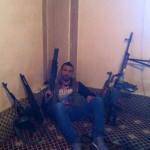
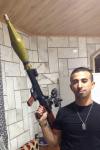
This is Sara’s killer. He’s the kind of brainless Lebanese men whose entire existence can be summarized with how they can express their manliness better, which is why you see him pose with guns and bazookas, because he can.
Kassem El Masri is also known as Tah El Masri (in Arabic: طه المصري). He’s a known drug dealer and criminal in the area. Despite his infamous status, authorities never bothered to apprehend him before, even though the aforementioned pictures were entities during which he boasted of the kind of arsenal he possessed.
Authorities have issued arrest warrants for the Kassem El Masri, but haven’t apprehended him yet. It’s not far-fetched to presume that such a man, who has been a criminal for such a long time without repercussions, to be protected by one of the many politicians that make sure our country remains a lawless land.
I hope that whoever is protecting Kassem El Masri today gives him up so he’d get what he truly deserves: justice for all his previous crimes and for what he did to Sara Sleiman, whose life was brought to a premature halt on what should have been a fun evening out for her and her friends.
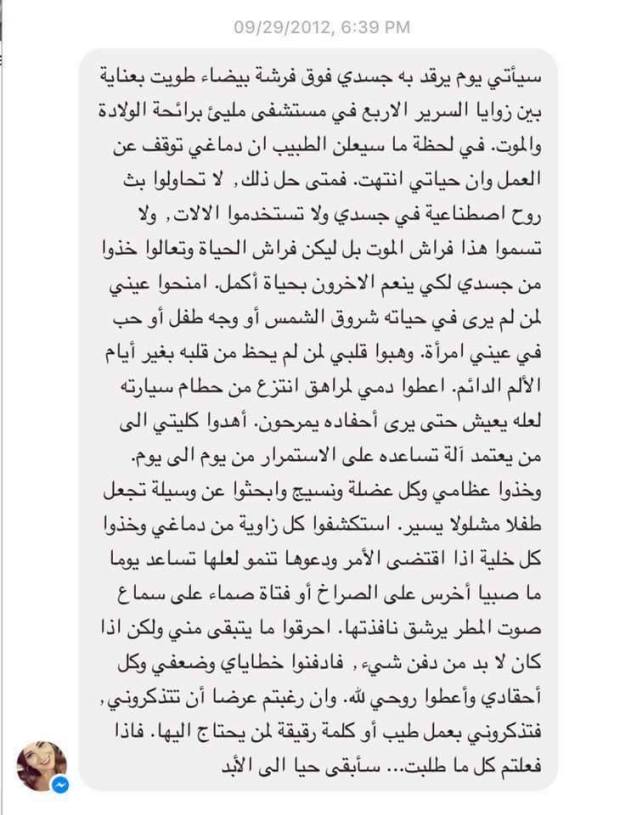
Today, though, one of Sara Sleiman’s wishes is coming true. A few years back, in a Facebook message to one of her friends, Sara expressed how, through the words of another, when she would pass away, she wanted to be as helpful as possible to those who were still alive by donating her organs:
The message translates to:
“There will come a day when my body is laying on a carefully made bed in a hospital whose smell is that of life and death. At some moment, the doctor will announce I’m brain dead and that my life has ended. When that happens, don’t try to pump artificial life into my veins and use machines on me. Let my death bed be one of life so that others may have it better.
Give my eyes to who’s never seen a sunrise or the face of a child or the love in a woman’s eyes.
Give my heart to those whose hearts have only received pain.
Give my blood to a teenager who was pulled out of his car wreck, so he’d see his grandchildren grow up one day.
Give my kidney to that who needs a machine to keep him going from one day to the next.
Take my bones and every muscle and tissue and find a way to help a paralyzed child walk.
Take every cell of my brain and let them help a mute boy to shout, a deaf girl to hear the sound of the rain against her windowsill.
Burn what’s left of me, and if there’s anything you need to bury, bury away my sins and weaknesses. Bury my hate and give my soul to God.
And if you ever needed to remember me, do so with kindness onto others.
If you do all of this, I live on forever.”
Sara’s family will be doing just that, so she can live in others for years to come. Her family will be donating her corneas, kidneys, liver and heart to help the people that Sara wanted to help. (Link).
In death, Sara Sleiman therefore becomes a source of life for others who wouldn’t have had this chance if it weren’t for the person that she is, and the generosity of her family and the will for life that she has, even in death.
Organ donation in Lebanon is still a topic that many would rather brush aside and not talk about. Our laws are very restrictive in this regard and religion plays a detrimental role in trying to propagate the practice further. Sara Sleiman, therefore, becomes a rebel – in death – in a country that saw her die before her time, as she gives life to others after her.
Sara Sleiman, may you rest in peace as your heart beats in the body of another forevermore.
You too can sign up to become an organ donor. Click on this link.
I’m sick of Western journalist coming into the country with their preconceptions in place and then going out of their way to find the right people for them to make sure they propagate those exact beliefs back onto their core audience.
I haven’t been discussing BBC Pop Up’s reports much, mostly because I’ve found them to be just another regurgitation of a lot of previous reporting on the issues they’re tackling. But then the crew of BBC Pop Up decided to visit the capital of North Lebanon, Tripoli, against all advice – or so they’d make you believe after all the Beirutis they know told them it was dangerous and unvisitable.
But our brave, courageous crew decided to risk their lives – hilarious – and visit Tripoli. They probably didn’t know that the most dangerous thing that could happen to them in the city is an overdose on sugar and an increased risk of diabetes at Hallab, but you wouldn’t have known that based on that 16 minute report.
Instead, what you got was an “in-depth” – which is also basically the same vomit that we’ve been exposed to as Lebanese from the extremists that still plague the neighborhoods of Bab el Tebbaneh and Jabal Mohsen. The cause of the fighting was never discussed – because labeling as sectarian and having it remain at that is enough. The gut-wrenching poverty in those neighborhoods wasn’t even tackled, even when a man from Jabal Mohsen said – and I quote: “When I don’t have any money and then someone gives me $3000-4000, and asks me to fight. This is how they attract people.”
You’d think that statement, coupled with a previous one about how Ali – the man in question – was being paid 50,000LL to throw a grenade during the fighting between Bab el Tebbaneh and Jabal Mohsen, which has been over for about 3 years now, would prompt them to change direction of their reporting and delve deeper into the root of the city’s fighting.
Spoiler alert: it did not.
Not even when Ali agreed with the Sunni protestors who were the centerpiece of the report, with a protest calling on the government to free the jailed Islamists, a recurrent but ultimately fringe topic in the Lebanese political spectrum but one which made it onto a 16 minute report about an entire city, labeling it Islamist anyway, did the nature of the report change.
Even when Ali mentioned that a lot of those jailed people had nothing to do with the fighting and those who did were being manipulated by leaders higher up the echelons who are still free today, the report still did not veer from the goal it had set for itself the moment that random Beiruti told the British crew that Tripoli was unsafe: we are here to show that this place is different from Beirut, and that it is dangerous and that people here are extremists.
Extremism? Nice. Going to the poor areas of a city and labeling it all based on them? Amazing.
Delving into the cause of that “extremism” and poverty? Meh, who has time for that.
The magnum opus comes when they interview one man who’s asked about Shariah Law, before he says that everyone in the city wants that, somehow making his statement a valid proposition in the eye of the reporter. His rhetoric was not challenged, neither on the spot nor in a voice over that shows that not to be in the case in the other side of Tripoli, the majority, that BBC Pop Up did not try to cover because it doesn’t fit into what they’re trying to advance in the documentary.
The twist though is that that wasn’t what the man said, according to eye-witnesses who were there at that moment. What he said was: as a Muslim, I agree with the Shariah but this can never be applied in Lebanon where we have such diversity. This didn’t fit with what BBC wanted to portray so they cut his words and edited them the way they wanted.
The only saving grace is the brief mention of March, and the tremendous work that the organization is doing in Tripoli, with it bringing together both sides of the conflict and trying to change their perspective on how it is to live together. March has brought young people from both sides into a play that has toured Lebanon. They’ve also built a coffee shop that’s run by the people of the area, and they’ve renovated and fixed up the fighting-ravaged markets of the area into “Bab El Dahab,” without the help of any local politician, some of whom tried to take credit for the initiative.
For BBC Pop Up, Tripoli is Syria Street and the two factions that live on either side of it. The city of over half a million people is represented, in their eyes, by the tens of thousands who live in stinking poverty in those two neighborhoods, effectively making it okay for them to title a piece that would be broadcast to the world: Tripoli: Extremist City?
The title is horrible. The report is shallow as hell. The reporting is horrifyingly silly. The generalizations are ridiculous. The overall result is garbage. You’d think that an organization with their resources would actually have the decency to delve deeper into the conflict, but no luck. Instead, what we got was the same kind of report that Lebanese media used to do back when the fighting was still ongoing: no substance, no style, barely scraping the surface. Except this time the report is international, and not on a narrow Lebanese level for the parents of those who live in Beirut to forbid their children from going up North because “it’s dangerous.”
The fact of the matter is Tripoli is not dangerous. Not even those parts that the BBC reporter visited are dangerous: they’re just people who’ve been dealt a very bad hand at life trying to make the best of what was given to them and who are trying to find a new normal after their war. But that’s too mundane to be reported on I guess.
The fact of the matter is that beyond the narrow Syria Street is a city that’s trying to reclaim its position on the Lebanese level: with festivals, events trying to bring in people from other parts of the country, attempts at revamping its image, among other things. Of course, that’s not cool enough to be reported on because who needs another city trying to paint itself cosmopolitan in Lebanon when you can have a new Qandahar instead?
Around 2 days after I wrote a very widely circulated post about the matter, which referenced a L’Orient Le Jour article on the issue, Lebanon’s Ministry of Culture decided to take notice of the 500 or so Roman Columns entrusted to its care, and it has begun transferring them to warehouses for safe keeping.
The actions of the Ministry of Culture were brought to my attention by SkyNews Arabia reporter Larissa Aoun who tweeted the above referenced picture from the site where the Roman Columns were thrown away when their warehouse was dismantled earlier this year.
Minister of Culture Ghattas Khoury, on the other hand, is not happy that the issue got this much attention, especially with MP and head of Kataeb Samy Gemayel discussed the issue in a Facebook live video, which you can view here:
In a statement from the site where the Ministry of Culture was doing its job, Minister Khoury issued the following statement:
وزير الثقافة #غطاس_خوري خلال جولته اليوم في الزيتونة بي لتفقد عملية نقل الاعمدة الاثرية الموجودة منذ العام ١٩٩٠ في محيط منطقة البيال pic.twitter.com/u0NS4YqPYo
The statement’s essence translates to: “we’re here to assert that the columns here are under the care of the Ministry of Culture. I had said on Twitter that we were monitoring the columns and would transfer them to Horsh Beirut soon.”
Of course, the definition of “soon” in Lebanese politics and governance would’ve been months if not longer, hadn’t the issue gained the traction that it did, forcing the Ministry to save face by acting on the issue as promptly as it did, and transferring the columns – especially those with inscriptions and other decorations – for safe keeping.
As I mentioned previously, the columns were supposed to be transported to different locations across Beirut to make Jbeil-esque entrances or streets in the city, but such plans were changed for reasons that have not been detailed.
The columns, according to Minister Ghattas Khoury, are now set to be transferred to Horsh Beirut, which is the last green space available in Beirut – if they keep it of course. What will happen to them in Horsh Beirut is probably uncertain as sections of it are going to be transformed to a hospital, because that’s exactly what Beirut needs: less green spaces, more buildings.
It’s a shame that our history and heritage needs viral blog posts for our system to governance to act on protecting it. It’s not just about these columns. It’s also about the many ancient houses around Beirut, the many sites uncovered at various construction plots around the city, among others. How many more times are we supposed to cry out for such landmarks and historical sites to be studied and preserved when it should be a reflex for concerned ministries to do so?
It doesn’t make sense that in a country with as much history, a lot of it is wiped to ease the way for businessmen, without Lebanese people even becoming aware of it in the first place, and to have that history’s last frontier be social media, not authorities who should be the main defender of the heritage of the country they’re serving.
Until the next archeological crisis, I hope these columns beautify Beirut. We all know it needs it.






 A Separate State of Mind | A Blog by Elie Fares