The Westboro Baptist Church – America’s Main Hate Group: A Dark Mark on Christianity

Westboro Baptist Church

You’d think that in 2012, a group that champions itself to be a church would also champion acceptance and forgiveness. That might be true to most denominations of Christianity today – except the Westboro Baptist Church.

Do you know why, according to WBC, the children in Connecticut got murdered by Adam Lanza? Do you know what’s their theory behind Victoria Soto protecting her entire first grade class as she lost her life execution-style?

It’s because of Carrie Underwood supporting same-sex marriage.

Yes, you read that right. Underwood who declared her support for marriage equality earlier in 2012 has brought the wrath of God upon this small town in Connecticut. “She pimped fag marriage. Blood of dead school kids on her hands!” WBC spokesperson tweeted to Underwood who at her concert of the night of the shooting held a moment of silence to commemorate the victims. You could’ve heard a pin drop in a crowd of 10,000 people. She also gave all proceedings of that night’s concert to charity.

It doesn’t stop there. The Westboro Baptist Church likes to crash funerals of American soldiers who died for their country, which is unacceptable regardless of where you stand on the political spectrum regarding the military practices of the United States. They are also preparing for protests at the funeral of the children who were shot in Sandy Hook Elementary. They’re set to ruin the last memory of these children by linking their untimely death to some crazy reason of their choice. If there was ever a time for guns, it would be that. If I were a parent at that funeral, I’d have my gun ready. Just in case.


Westboro Baptist Church - 2

American students forming a human barricade against the WBC at a soldier's funeral.

American students forming a human barricade against the WBC at a soldier’s funeral.

The Westboro Baptist Church which spreads its venomous message to whoever would listen are media whores. They jump on anything that receives national media attention in order to spread out their message. Their protests have also been deemed legal by the US Supreme Court.

With them gaining traction, some sane Americans decided they won’t have it anymore. A petition was started online to officially recognize this church as a hate group which would remove their tax-exempt status and hopefully slowly lead them to their extinction. The petition gained over 50,000 signatures in only a few hours. You can sign it here. As a person who will be doing his medical residency program in the United States in a couple of years, I wouldn’t want to come across these people in any way whatsoever. I have, therefore, signed it.

What the Westboro *so called Baptist* Church seems to entirely miss is the fact that everything they do contradicts the teachings of their supposed savior Jesus Christ whose message about love and acceptance, even if you don’t believe in religion, is one that people should follow in their every day lives. This “Church’s” actions are nothing short of hate and bigotry. What they do is so nauseatingly bad that they’ve become a massive dark mark on Christianity in the United States and the world.

There’s a way to be against same-sex marriage. There’s a way to be against abortion. There’s a way to be against the mainstream media. And that way isn’t Westboro’s way.

I know firsthand that being a Christian person doesn’t mean being like them. But if being Christian means I’d be associated with those people in any way whatsoever, I’m tempted I’ll have to reconsider. Oh men of weak faith. But I’d rather they leave my religion because they’re the ones tarnishing it with every word they speak, with every “God hates the soldiers” poster they hold at one of those soldiers’ funerals and with every moment they exist.

If the Westboro Baptist Church had been a group in the Middle East, rest assured the United States would have bombed the hell out of the country in which they resided. It’s high time the American government take a stance against those so obviously practicing mental and cultural terrorism on its land.

Talking about them might give them exposure – but I think we need to talk about them now in order to stop them once and for all. Jesus to Westboro Baptist Church: I do not approve of you. Sign the petition.

The Rise of the Middle East’s Atheists

September 2012, Middle East:

A low-budget movie titled “The Innocence of Muslims” makes its way to the media of the region. The movie insults the prophet Mohammad and doesn’t pretend to do so innocently. The mayhem it caused became infamous, notably for the American embassy storming in Libya which made its way to the US presidential elections. Protests across the region turned bloody. Innocent people lost their lives because of cheap ten minute footage. And the image that some Muslims have been giving to Islam over the years was reinforced once again.

October 2012, Pakistan:

Malala Yousafzai, a fourteen year old girl, was shot in the head by Taliban individuals who feared her message. Malala’s message was not that of an uprising against the men who worked endlessly to make her life and the life of countless other girls like her a living hell. She was calling upon girls her age to seek an education, which most of us take for granted: the kind where we sit behind a desk and listen all day to teachers telling us things we believe we’ll never need. Her message did not sit well with the Taliban whose mission had been, in part, to eradicate education in the parts of the world where they are of influence. They had destroyed countless schools and forbade women from attending schools in their attempt to restore the days of 600AD.

October 2012, Facebook:

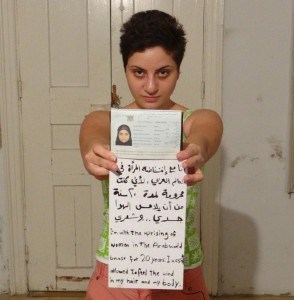
A Syrian woman named Dana Bakdounes posted a picture of herself on Facebook without the veil as part of a movement for the rights of women in the Middle East. (Check the picture here). The message Dana wrote, as part of her picture, said “I am with the uprising of women in the Arab world because for 20 years I was not allowed to feel the wind on my body… and on my hair.” The message rubbed some people the wrong way and a bunch of extremists took it upon them to silence Bakdounes, even on Facebook. So they mass reported her picture as offensive, prompting Facebook to remove it.

October 2012, Egypt:

In a post revolution Egypt where Islamists have been gaining power, two Copt boys, aged nine and ten, were arrested for defiling the Quran. Another Copt teacher was arrested after some students accused her of speaking badly of prophet Muhammad in class while another Copt is facing charges for material deemed offensive which he posted on his Facebook account. A veiled Muslim teacher also cut the hair of two girls in class who refused to wear the veil. She later explained that she had been “challenged.”

The Rise of Atheism:

The rise in religious extremism in the Middle East is touching all of its religions. Be it Christians who are worried about their fate and revert to their Bible in belief that it will somehow be their salvation. Or Jews whose reputation has become intermingled with zionism and borderline inseparable in the mind of many. However, I decided to only discuss Islam because the broader picture of the Middle East, in which there’s a tangible rise in Islamist Influence, is a canvas of Islam – as it is the region’s first and foremost leading religion, demographically.

The rise in extremism is attributed to many geopolitical reasons. It is also associated with a serious lack of understanding of religion from all involved, most notably the men of the robe who are doing more harm to their religions with their backward mentality than anyone else.

The Middle East has probably one of the world’s highest rates of religious people. And it’s simply because we were born this way. We are not allowed to choose what we want to be religiously. I was born into a Christian Maronite family. Therefore, I am a Christian Maronite. If fate had it differently and my parents were from another part of Lebanon, I may have been a follower of a different religion. And this applies to everyone. As we grow up, we are taught our religion and nothing else. Come Sunday morning, it was better for me to attend Mass. For others, they had better pray five times a day, fast during Ramadan and never eat pork or drink alcohol. During my early days at AUB, I was surprised to find that some Muslim people – obviously a minority – had absolutely no idea when Christmas was celebrated. On the other hand, I thought Achoura was a happy celebration. We rarely challenge our religious beliefs because we don’t feel the need to. Those beliefs enable us to blend in our societies and not get ostracized – at least in that regards. They enable us to connect to other people with whom we are able to identify not due to their mentality or thoughts but because of their religious beliefs. At a certain level, deep down, it’s always easier for a “Christian” to make “Christian” friends than to become friends with a “Muslim.” The reverse is also true.

Our narrow religious upbringing also limits us to the other religions present around us, especially in the region’s few relatively mixed countries. Egypt’s Muslims know very little about the Copts who were founders of their country. Lebanon’s Muslims know very little about its Christians. The opposite is also true. This lack of understanding, combined with an increased rooting in unchallenged belief, places the seed of conflict, which has been manifesting way too many times across the region.

However, religion is but one side of the coin. For with the rise of the Islamists on one side, I believe that the region’s atheist numbers are increasing dramatically, albeit most of them are probably closeted, and they are fueled by the exact same events that are getting people to become more religious, coupled with an increase of education across the board. What people turning increasingly religious see as a threat to their belief, others do not see it as such. What some increasingly religious people do to defend their beliefs, others see as a violation of freedom. What some increasingly religious people feel related to, others want to detach from it. The religious behavior that makes some religious people proud causes others to be the opposite. The picture that some extremists deem offensive, others see as a manifestation of free thought. The children seen as defiling Islam by some, others see as children being children. The girl infecting the minds of other girls with poison, which some (obviously very, very few) believe, others see as a complete violation of every single human sanctity.

One part decides to cling further to what they know because of such events. Others decide to look at alternative, which might fit better with how they see the world, away from a notion of faith that has become alien to them. After all, all they’re seeing of faith is repeated incidences of things they do not remotely agree with, despite that being as remote from what religions call for.

Religious people will call it a lack of understanding and narrow-mindedness for someone to turn atheist. They will never be convinced how someone who was born and raised on certain teachings can ditch them entirely and move towards thoughts that they find revolting. What they don’t get is that the same rhetoric they use applies in similar fashion to atheists who are moving away from teachings that they find revolting and forced upon them throughout their years.

Of course, this does not apply to all religious people as some practice their religion in silence, without letting everyone know when they’re praying and when they’re offended. But this silent majority is not the one that gives an impression. Out of a crowd of millions, the person who changes perceptions is that whose voice is heard the most. And in a time of religious insecurity, in a region of political insecurity, the voices heard the most are those of people that rub a whole lot of other people the wrong way.

Regardless of where you stand regarding the two sides of the religion-atheism coin, the image being painted is the following: religion is the bread of the poor. Atheism is the butter of the “educated.” However, the only one thing that I believe is of absolute necessity is that the Middle East needs more atheists.

Muslim Prayers At USJ

Everyone should be able to express their conviction in the right place at the right time. This is a conviction of mine. The right place and the right time may vary depending on where you stand regarding an issue but sometimes things are very clear cut and a stance needs to be taken.

A few months ago, the Antonine university had a tough situation with Muslims students who were adamant about praying at their university, which happened to be a Maronite Monastery, so they took the convent’s courtyard to do so. This sparked a debate in the country: should these students be allowed to pray or not at universities with obvious religious affiliations?

The point of view that I expressed back then and which I still stand by is the following: If a Muslim student (or a Christian student for that matter) believes it’s of utmost importance for him/her to pray, then that should go into their university selection criteria. If that student deems prayer not important enough and believes that getting the best education that can be provided, regardless of the university’s religious affiliation, is the way you to go, then that student doesn’t have the right to complain later on.

Université St. Joseph (USJ) had a similar incidence yesterday where more than twenty Muslim students decided to gather around and take a room without permission in order to pray. The incident was reported to the dean who rounded up the students only to have the situation swell by attracting more students to the place where the prayers were taking place. Some took the job of acting as guard to let the prayers continue.

The situation escalated to the maximum point without a confrontation happening and the incident has sparked some Christians at USJ to express outrage at what was happening. They believe that including a prayer room in the faculty of medicine was good enough – forcing every single faculty to adopt such policies is a step too far. The faculty in question was ESIB. For the Muslims who want to pray at USJ, it is their “right” to pray five times and they believe the university should provide them with a prayer room to do so.

It seems that such endless debates are our bread as Lebanese. But here’s what it breaks down into quite simply.

  1. USJ is a university that is obviously Christian. It is run by the Jesuites. It doesn’t hide its Christian affiliation and as such, those applying to study in it are well aware of that.
  2. Given that the nature of USJ is a general fact, weren’t those Muslim fully aware that attending USJ will bring them the best education possible and not spiritual fulfillment?
  3. When a prayer turns into proving a “principle” and rubbing it into other people’s faces, the question asks itself: what’s the point of praying in the first place?
  4. When a prayer becomes a point of conflict, the question also asks itself: are those students really seeking religious salvation or are they simply seeking trouble? I believe it’s obviously the latter.
  5. What forces universities with obvious religious affiliations to provide praying facilities for all its students? Is it something that they’re obliged to do? Absolutely not. If a university had been secular, the problem wouldn’t present itself. The American University of Beirut converted its chapel into an assembly hall and has denied requests for prayers rooms. AUB is secular. USJ is not.
  6. Universities abroad, which provide prayer rooms for students, are not religious in nature. And if the prayer rooms are provided, they are not for one religion and not the other – they are for all religions. Religious ones, on the other hand, are not forced to do so: Case in point: the Catholic Medicine faculty in Lille, France, does not provide prayer rooms for its Muslim students.
  7. Would a Lebanese Muslim university open a chapel for Christians to pray in it? The answer is obviously not. The argument that Christians don’t need to pray doesn’t hold. What if they want to?

Lebanese students in general, both Christian and Muslim, need to know that universities are not churches. They are not mosques. They are not synagogues. Universities are places where they pay in order to learn and build a future for themselves and their families. The fact that all of my Muslim friends at medical school, some of whom are extremely religious (they are Salafists and awesome), have no problem going through our long days without praying is testament enough that those “Muslims” wanting to “pray” at USJ are only seeking to create trouble and tension at a university that’s known of accepting people from all parts of Lebanese society, regardless of religion. But there are lines you cannot cross.

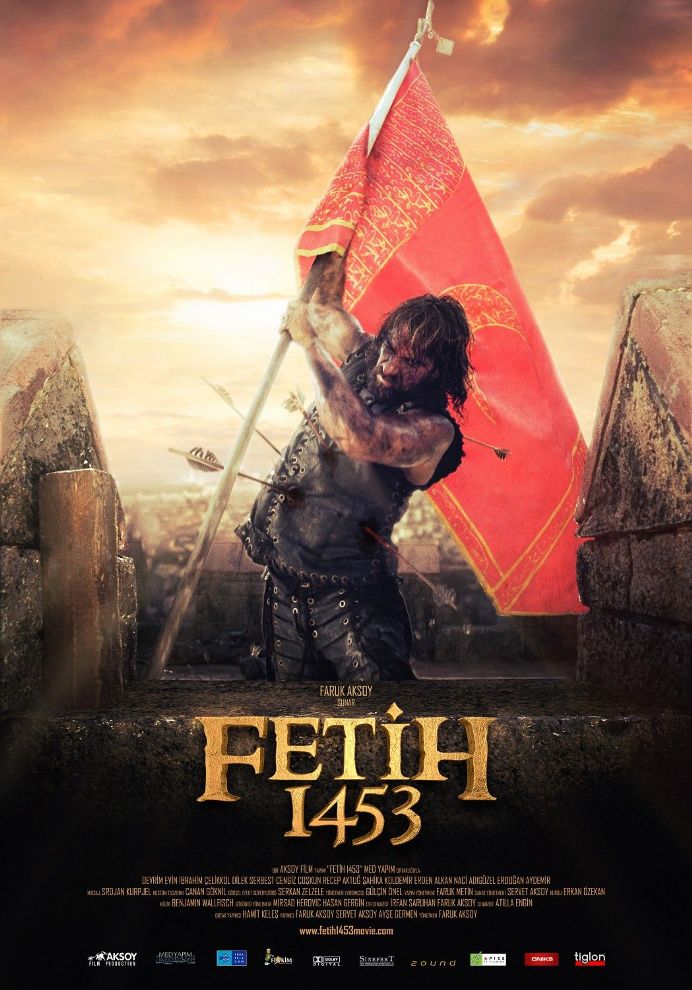
The Lebanese Issue With Fetih 1453

Fetih 1453 is a Turkish movie that was briefly released in Lebanese cinemas last week before meeting outrage from Greek Orthodox Christians due to its “historically incorrect” and defamatory content.

The movie has since, of course, been banned.

I won’t go endlessly about the uselessness of bans and how I’m officially against banning anything, etc, bla bla bla. You don’t want to waste your time reading it and I’m frankly tired of sounding like a broken record with this happening frequently lately.

Having said that, I do have an issue with Fetih 1453. Let’s call it the Lebanese Turkish obsession.

I don’t like Lebanese people watching Syrian-dubbed Turkish endless dramas. It was “funny” to see the Nour craze (this still makes me cringe). But when it started moving towards twenty five series per second on every single channel on TV, it became frankly nauseating.

And yet those series still find an audience. So I figured housewives and school children must be bored. The former don’t get access or can’t read Fifty Shades of Grey and the latter haven’t discovered porn yet. And it’s fine – it’s just something free and silly for them to watch.

However, I have to ask: Why did a Turkish movie get a wide release and such intensive publicity in Lebanon to begin with?

It’s not because the movie is a foreign movie. The world has about 200 countries, many of which produce cinema. I don’t see Latvian movies getting wide releases here.

It’s not because Turkey is a nearby country. I’m pretty sure Greece has movie offerings as well and we don’t get those.

It’s not because the cinema in Turkey is such an attraction. If anything, why not bring Bollywood movies? For the record, please don’t.

We don’t know the Turkish language. Most of us (I’d say all but who knows) don’t want to learn the language. Many other cinematic offerings by other more cinematically “significant” countries never see the light of day at our cinemas. And yet someone decided that this Turkish movie was such a cinematic jewel that we couldn’t live without it.

A Separation,” a movie that by all accounts is near a masterpiece, didn’t even get a wide release here. Let alone all the billboards announcing it. And that movie is Iranian, so another neighbor whose number we don’t understand and who’s politically involved with us.

Do Lebanese movies get the same treatment in Turkey? Our movies don’t even get the same reception in Egypt that Egyptian movies get over here.

Moreover, didn’t anyone stop for a second and think what would the Lebanese Armenians think about a Turkish movie being released in Lebanon? Why don’t we bring Armenian movies to Lebanon instead? At least there are people here who’d go watch them without needing the subtitles.

It would have been much better for Fetih 1453 to be incorporated in one of the many movie festivals we get over here. Lebanese movie distributors should either be fair in bringing movies here or just keep the regular formula that honestly seems to work: bring the American and French. Leave out the rest. Sprinkle some Lebanese Nadine Labaki occasional seasoning on top. And that’s it.

A Comment on Carrie Underwood Endorsing Gay Marriage & the Backlash

The following is a guest post by an American reader who wishes to remain anonymous.

Country superstar Carrie Underwood has gone 180 degrees against the Country current by endorsing gay marriage. In an interview with The Independent UK, she had the following to say on the matter:

“As a married person myself, I don’t know what it’s like to be told I can’t marry somebody I love, and want to marry,” she said. “I can’t imagine how that must feel. I definitely think we should all have the right to love, and love publicly, the people that we want to love.”

“Our church is gay friendly. Above all, God wanted us to love others. It’s not about setting rules, or [saying] ‘everyone has to be like me’. No. We’re all different. That’s what makes us special. We have to love each other and get on with each other. It’s not up to me to judge anybody.”

I am not pro-gay marriage. Not for religious reasons but for reasons I will talk about later on.

The responses her endorsment has been getting are mixed between those who approve based on liberal ideologies and those who disapprove based on a twisted understanding of the bible.

The infamous verse that is quoted nowadays is Leviticus 18:22: “Thou shalt not lie with mankind, as with womankind: it is abomination.” Bible-nazis are taking this sentence and flaunting it around. If you don’t follow it, then you are not a proper Christian.

Well, I’ve got a few words for them. And what better words than from the Bible itself.

Exodus 21:7:  “If a man sells his daughter as a servant, she is not to go free as menservants do.” Would those Bible-loving men and women sell their daughters as servants? I don’t think so. That’s one thing of the Bible they wouldn’t abide with.

Leviticus 25:44: “Your male and female slaves are to come from the nations around you; from them you may buy slaves.” According to another Leviticus passage, I’m allowed to have slaves provided they are from neighboring countries. Does that mean illegal Mexican immigrants are our slaves now? The Bible says so. It must be. No?

Leviticus 11:10: “And all that have not fins and scales in the seas, and in the rivers, of all that move in the waters, and of any living thing which is in the waters, they shall be an abomination unto you.” The Bible forbids me from eating things coming out of the Sea. But I’m a seafood lover. Do you eat seafood? If you do, then you must stop. Immediately. The Bible demands it.

Leviticus 19:27: “Do not cut the hair at the sides of your head or clip off the edges of your beard.” This states that men are not allowed to cut their hair nor shave. Do you cut your hair?

Leviticus 19:19: “Ye shall keep my statutes. Thou shalt not let thy cattle gender with a diverse kind: thou shalt not sow thy field with mingled seed: neither shall a garment mingled of linen and woollen come upon thee.” To the awesome Americans of the Bible-belt, many of you have farms, right? Do you have different types of animals in your farms? Do you grow different crops? Because if you do, then you are committing blasphemy, in which case Leviticus would also demand that the entirety of your town comes forward to stone you.

The thing about Leviticus, my fellow Christians, is that it is part of the old testament and it is what Jesus Christ came to Earth to change. The thing about Leviticus, my fellow Christians, is that the only part of it that you know is the part pertaining to homosexuality.

When it comes to my Christianity, it’s about the message Jesus wanted to bring forward: a message of love.

Jesus Christ forgave those that were killing Him before he died on the Cross. Leviticus would call upon those people to be stoned and burned. Jesus Christ called on those without a sin to cast the first stone. Jesus knew that none of us is without sin. Jesus knew that when it comes to life, compassion is the most important emotion to get us by. Compassion makes everything else seem so small.

So next time you want to quote the Bible to prove a point, make sure you quote the part that makes you a Christian today: the New Testament, whose pages are all about the redemptive power of love.

When it comes to me, I’m not pro-gay marriage but that doesn’t mean I’m against those who are homosexual. How’s that? As I look around, I see families crumbling around me. The concept of a family sticking together like my grandparents did, for more than fifty years, is becoming more and more nonexistent. My parents got divorced when I was ten. My cousins’ parents divorced when she was twelve.

Out of my high school friends, at least half of them came from houses where they were raised by a single parent – and not because “death did them part.”

With crumbling family values and surging divorce rates, I don’t approve of adding another portion of society to the whole mess of marriage because, like it or not, homosexuals feel the way we do and they change their mind. And because the notion of marital love fades away after the initial infatuation and many are left wondering: Is this really what I signed up for?

Moreover, you don’t want the kids gay couples will adopt to be more disoriented than those of heterosexuals couples as well in case of a divorce.

And as a cherry on top, I think there are way more important issues that are worth the discussion today than this. Just a quick question to illustrate this point: how would any married couple, regardless of what that couple is, have an optimal marriage in the horrid economy we live in?

When it comes to Carrie Underwood’s comment, I am neutral. I like what she said because it doesn’t seem forced. She’s not telling people what to believe like many other celebrities do. She’s stating her belief. On the other hand, in a time when much more serious things are happening around the world than accepting gay marriage or not, I think other stances precede this in importance. And for an artist who had publicized her refusal to comment on anything of a political nature, regardless of how she spins it, I wonder what changed her mind.

There will be backlash. It has already started. It won’t be pretty. But kudos for Carrie for saying what she believes in, despite it coming out of the blue.

To conclude, here’s a quote for you all:

“I like your Christ, I do not like your Christians. Your Christians are so unlike your Christ.” – Mahatma Ghandi.

You have your Christianity and I have mine.