No, Lebanon Has Not Legalized Captagon To Get The Saudi Prince Off The Hook… Yet

For the past two days, Lebanon’s internet has been abuzz with news that a Lebanese court has set a precedence to consider Captagon’s trade as a crime within the spectrum of pharmacy laws and not within drug laws. The implications of such a precedence were assumed to set the way to exonerate the Saudi Prince Abdul Mohsen Ben Saoud, currently held in (five stars) custody in Lebanon, and send him on his merry way to his execution-loving human-rights-hating homeland.

Why We’re All Talking About Captagon:

For those of us who have not been that into the drug trade in the aftermath of the Syrian war, Captagon is the trade name of an amphetamine called Phenethylline, a highly potent stimulant first synthesized in 1961. The drug has no approved medicinal uses but has shown some efficacy in some psychiatric illnesses.

This is not why we’re discussing Captagon.

Since the start of the Syrian war, Captagon has been at the forefront of the growing drug trade circulating through Syria. It’s reportedly the most used drug by the militants in that country, and is being manufactured in Syria for export to the countries of the region.

It is in that way that Abdul Mohsen Ben Saoud was caught in Beirut’s airport on October 28th, 2015, as he tried to smuggle enormous quantities of the substance out of the country.

Lebanon To Try And Exonerate The Saudi Prince?

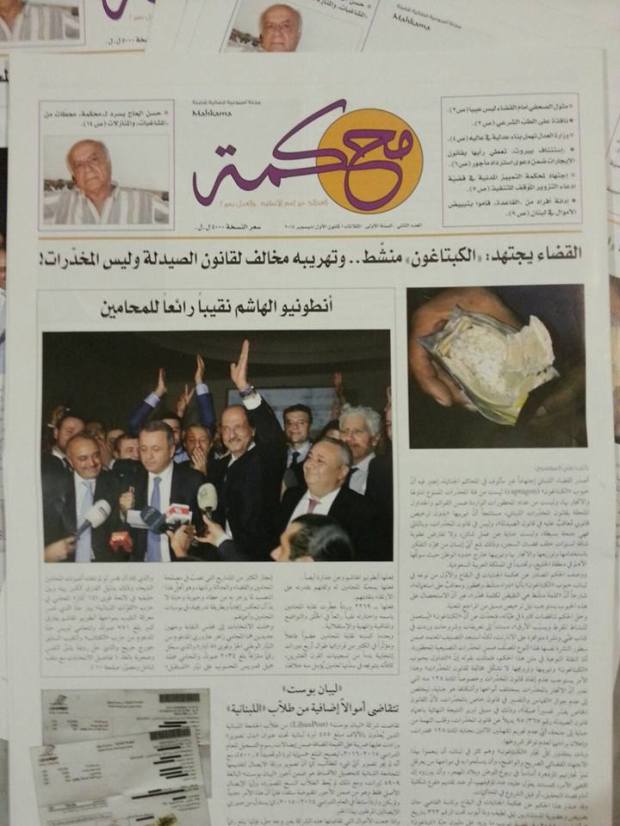
So naturally, it’s been assumed that it will only be a matter of time before Lebanon finds a way to send that Saudi Prince on his way home. Yesterday, Lebanese blogger Gino Raidy shared a snapshot of a newspaper clip of an article detailing how a Lebanese judge set a legal precedence by considering the trade of captagon not to be a crime under the subtext of drug trade laws but under medicinal pharmacy laws. This meant that the sentence associated with such a crime would be much softer and, to extrapolate, would help the Saudi Prince’s case.

Lebanon’s internet was ablaze with the news, and, if true, such a legal precedence would’ve been another mark of shame for this great Republic to live in.

But a few things did not feel right about this newspaper article.

Why Wasn’t It Reported Anywhere Else?

Regardless of the fact that I had never heard of the newspaper that published that article, my initial reflex was to google the title to see whose else had reported it. As of a few hours ago, Google returned two results both of which were talking about precisely that article, both of which had popped in the last 12 hours, since Gino’s post went viral, and both of which were also of non-reputable sources.

Let’s also assume that this news were true, don’t you think that the Saudi-Arabia-hating camp of Lebanese politics would have jumped on it by now and shoved it in everyone’s face to show how corrupt our judicial system is, and by extension minister Rifi?

Let’s also assume that this news were true, don’t you think that there would be ANY other Lebanese news outlet that would have reported it? It’s a ghost town out there.

This could be part of a cosmic cover up to bury the news, which is why neither Google nor Lebanon’s news outlets know about it. But since when are we conspiracy theorists?

Or this could be something that is essentially irrelevant to the cause of the Saudi Prince.

What Really Happened:
992841_10205015694088497_4276483254586981385_n

The excerpt that was shared online, as it turns out, was not recent. It was of a decision set forth by judge Jean Bsaibes months prior to catching the Saudi Prince, essentially meaning that even if a Lebanese court had set that precedence before, it couldn’t have possibly done it thinking that a Saudi Prince would one day be caught in our airport trafficking 2 tons of this drug.

The decision in question took place at a Beqaa court, whose jurisdiction does not cover the court handling the Saudi Prince in Baabda.

Moreover, the judge’s decision was later overruled by Lebanon’s supreme court (Tamyiz court) effectively keeping Captagon where it is: a drug, ruled by drug trade laws.

The Saudi Prince Isn’t Leaving Anytime Soon… Yet:

There’s nothing I’d love more than to crucify the Lebanese establishment, when it comes to any facet pertaining to our daily lives, especially if it tries to get a Saudi Prince off the hook for trading drugs worth millions of dollars and hundreds of lives.

But today is not the day for us to do so.

Our legal system, as of now, is still firmly holding the prince in custody with no resolution for his situation in sight. Moreover, I suppose the question to ask at this point is the following: is maneuvering the legal system the best way to get the Saudi Prince back to his country?

If anything, the resolution of the Saudi  prince situation will not occur through a legal precedence but will be part of a political deal in which he is an important bargaining chip.


Blocking Downtown Beirut From The People Is Unacceptable; This Is The True #AbouRakhousa

Lebanon wall Downtown Annahar Le Grey #YouStink

The Lebanese Government has no idea what it’s doing. If you thought it had an inkling before, be certain now that it’s essentially an establishment that only functions on reflexes; their latest reflex is blocking Downtown Beirut at its main entrance near Le Grey in order to prevent entry to protests to those streets to which not only should they be allowed access, but to which they have a fundamental right.

A couple of weeks ago, our government build a big concrete wall near Riyad el Solh square to block protests from having a 1% access – even less – to the Grand Serail. The Beirut Wall lasted 24 hours at the time before it was brought down. Every single minister declared that the wall in question was not their doing. Yeah, right. One thing became clear, however, that wall – as irrelevant a barricade as it was – signaled the massive divide between governance and people.

Any political system that wants to self-sustain should not be afraid of its people. It should be from the people, to the people. Our government is squarely against us. They beat us, they humiliate us, they rob us of our fundamental rights and still have the audacity to play victim.

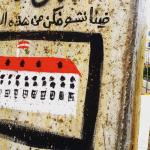
That concrete wall was then replaced by massive barbed wires, which are now adorned will all kinds of slogans berating those hiding themselves behind such barricades, cowering away from the people demanding they be held accountable. But even that slide.

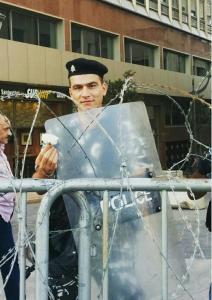
On Sunday, the #YouStink movement held a march with several thousand people all the way to Downtown Beirut, at the gates of Nejmeh Square. The march was to demand access to parliament, to demand fair elections to try and replace the current governing body we have (or so I think). The protestors were met with riot police adamant about not letting them pass. The entrance to Nejmeh Square was barricaded, of course, and it still is until this day.

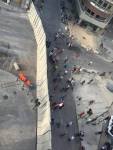
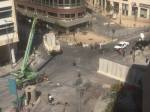
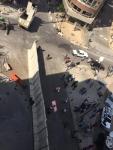
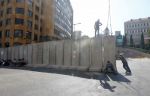
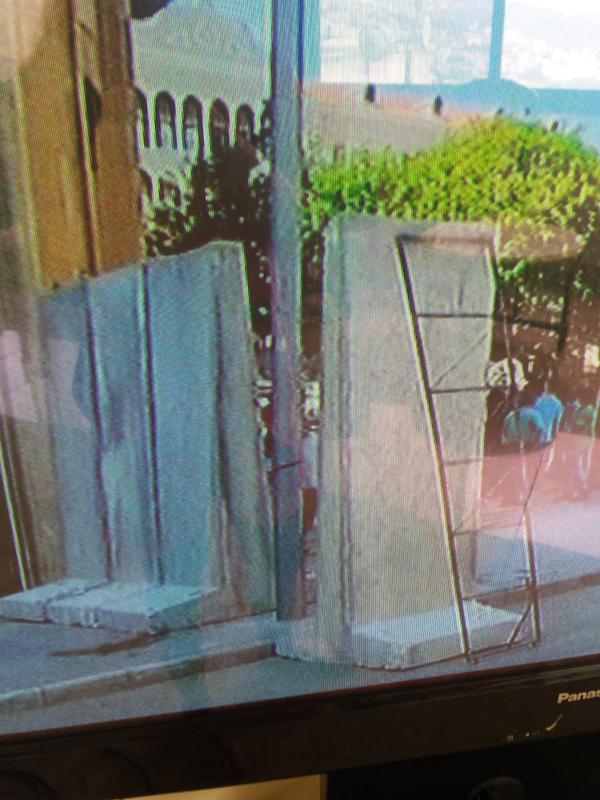
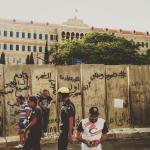
Our government, however, decided to take this a step further yesterday night and block the entirety of Downtown Beirut from all kinds of people, protestors or not, by erecting concrete blocks at its main entrance, near Annahar – Michelle Tueini should be happy – and Le Grey – Nicolas Chammas would be happy too.

Check out the pictures via Abir Ghattas:

A few days ago, Nicolas Chammas – the head of Beirut’s commerce syndicate – was “worried” that the protests taking place in Downtown Beirut now at the hand of protestors he called were “communists,” because clearly only leftists and communists would have an issue with the current establishment, were turning his beloved Downtown area into a cheap market which he dubbed “Abou Rakhoussa.”

Little does Mr. Chammas know, however, that in its current form Downtown Beirut is not only “abou rakhoussa,” it’s cheaper than cheap. As the Lebanese popular saying goes: “bteswa franc b iyyem l ghala” and no amount of Hermes, Chanel, Aïshti shops and fancy hotels or restaurants can change that.
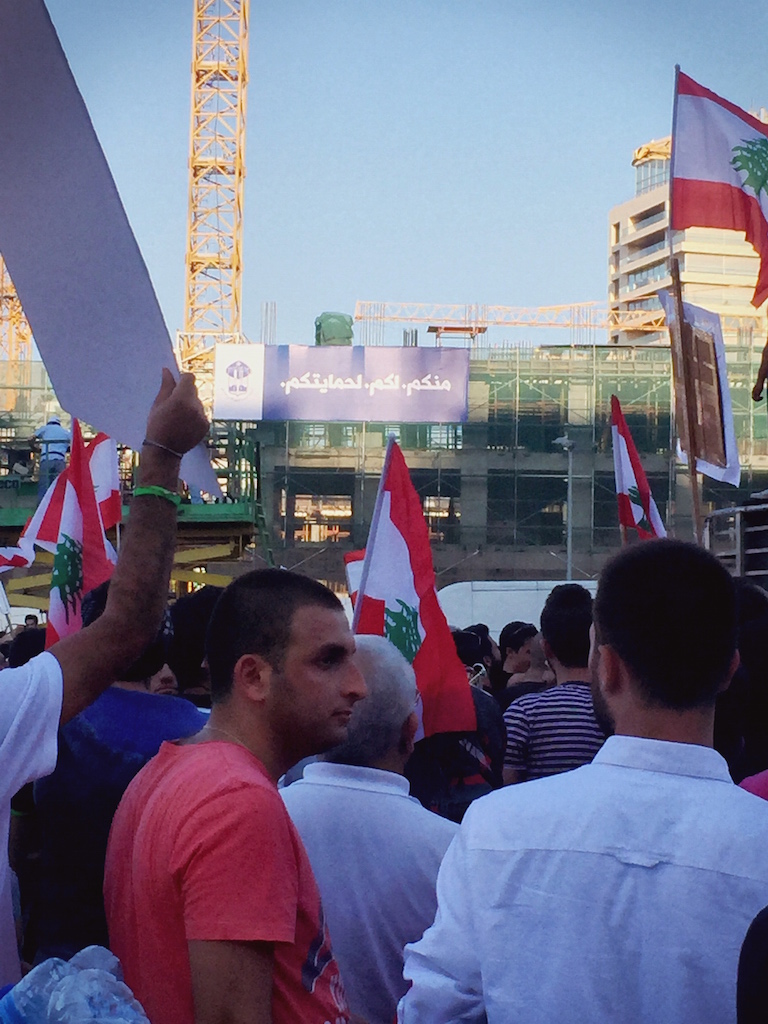
They wonder why Downtown Beirut is not popular with the Lebanese populace.

Maybe it has something to do with the fact that the average Lebanese income is nowhere near the one needed for minimum purchase power there? Or that the area was built by raping the property of common Lebanese folk who were not able to challenge the system back then to give them their right?

Maybe it has something to do with the fact that there’s a security zone every other meter there, or that there’s someone in it that feels threatened every single waking moment of their life so they feel the necessity to draw endless perimeters around their holy being to stay safe from people who just want to have a good time?

Maybe it has something to do with the fact that the entire area is not meant for us but for tourists who are not even coming here anymore because they have much nicer places to go to elsewhere?

Maybe it has something to do with the fact that cheapness is not a measure of how cheap the area is, but how lifeless, dead, horrifying, without charm and character an area actually is?

Downtown Beirut fits those to the letter.

That new barricade they built at its main entrance to keep us out is a disgrace. They want Downtown Beirut to remain their area, the place where they feel exclusive, the place where they can sit and chastise the average Lebanese about not being “western” enough to care about fancy facades and empty cores, the place where they can make sure the average Lebanese they fear always feels excluded, not-belonging, ostracized and shut out.

Nejmeh square is not a property of our politicians. The Grand Serail area is not a property of our politicians. None of the streets in Downtown are their property, but they sure act like it all the time. Beirut is not their city alone; it’s also ours. They’ve robbed it and claimed it enough.

I’d like to see them running tourist-attracting ads now. Come to Beirut, see our state of the art walls and empty streets. We promise you’ll love it; no Lebanese are allowed here. There’s nothing more disgraceful and despicable than a government that thinks it’s more important than its own people.  You see that barricade they’re building to keep us – the people – out of their exclusive area? It’s not keeping us out, it’s locking them in.

This is the real Abou Rakhousa: an area worth billions, but is being rendered uninhabitable, foreign with total shutting out of anything and everything Lebanese. The area’s worth is not its buildings and empty streets, but the people. Without us, your billion dollar projects are worth nothing.

This is apartheid, Lebanon-style. Someone pass the lexotanil pills to Nicolas Chammas, please.


When Beirut Was At Its Most Beautiful In Years

Protest YouStink Beirut August 29 2015 - 1

Beirut is its most beautiful when it’s alive. Over the past few years, it hasn’t been that way. No, parties at Skybar (RIP) don’t count.

Beirut is not beautiful when it’s a strange land to its people. It’s not beautiful when its center is always empty, when its heart is devoid of its people, when it’s forcibly maimed beyond recognition. No, Beirut is not beautiful when it doesn’t have us, when it’s full of flags that are not of the country which it represents.

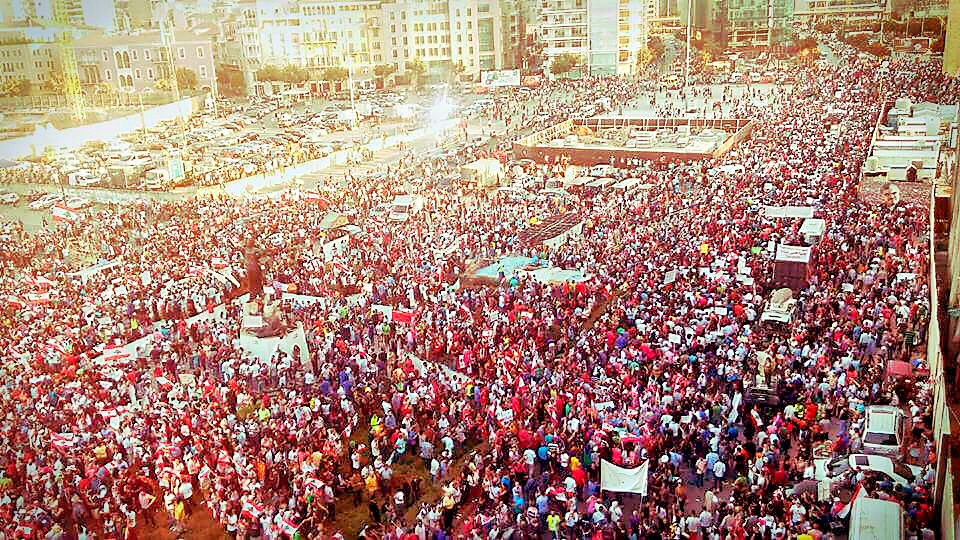
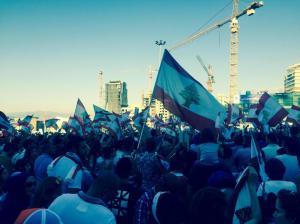
On August 29th, 2015, Beirut not only had us, but it had enough of us to make it the most beautiful it’s been in years. Yesterday evening, Beirut was gorgeous. It was our own city finding its voice again, finding its calling again, finding its own identity again.

Beirut is nothing without its streets that should be filled with people. Yesterday, we filled its heart. Beirut is nothing without a beating center. Yesterday, Martyrs’ Square was beating in tachycardia. Beirut is nothing without us. Yesterday, we were Beirut.

Over 100,000 people gathered yesterday in Martyrs’ Square to say enough is enough. They chanted against the system. They chanted for their rights. They chanted with every ounce of voice they had in them for the causes they believed in.

This is how beautiful Beirut was:


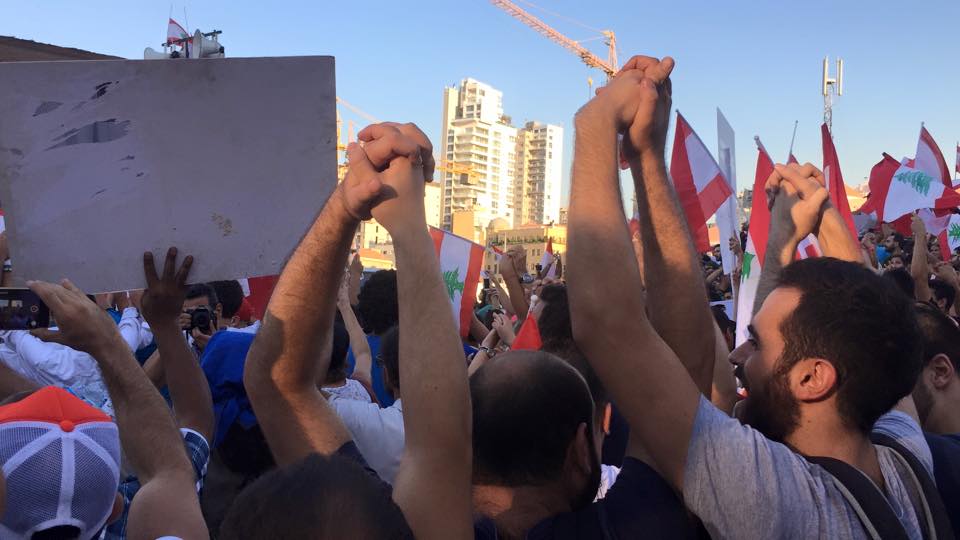
And people had their hands intertwined to signal unity:

Protest YouStink Beirut August 29 2015 - 25

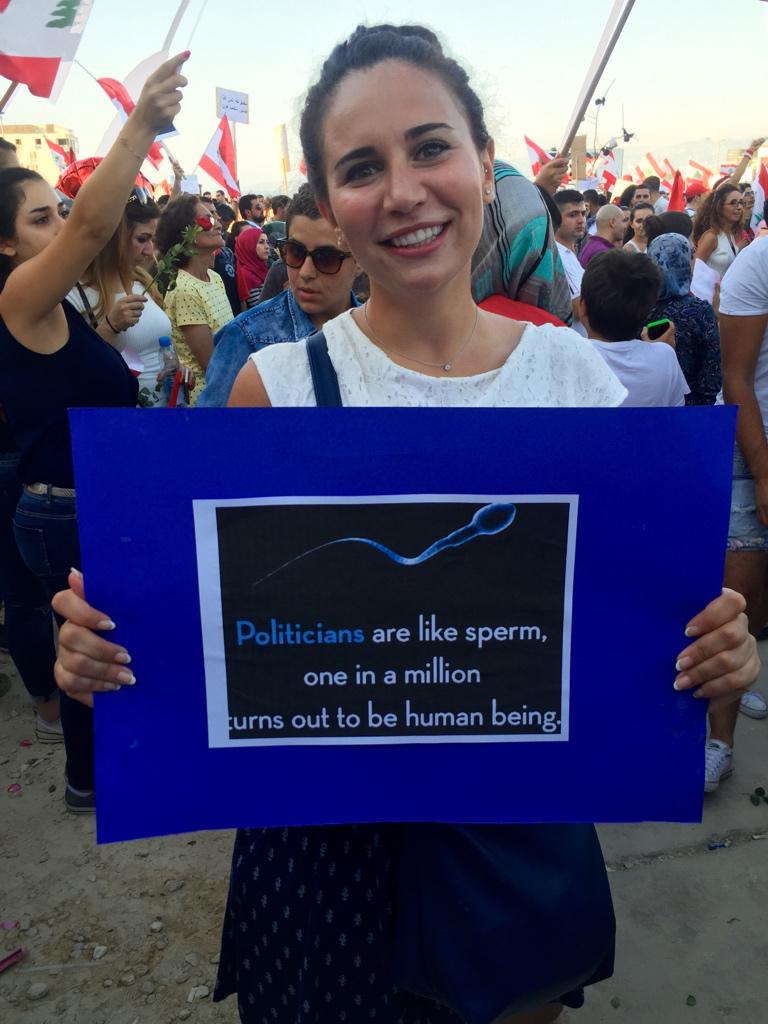
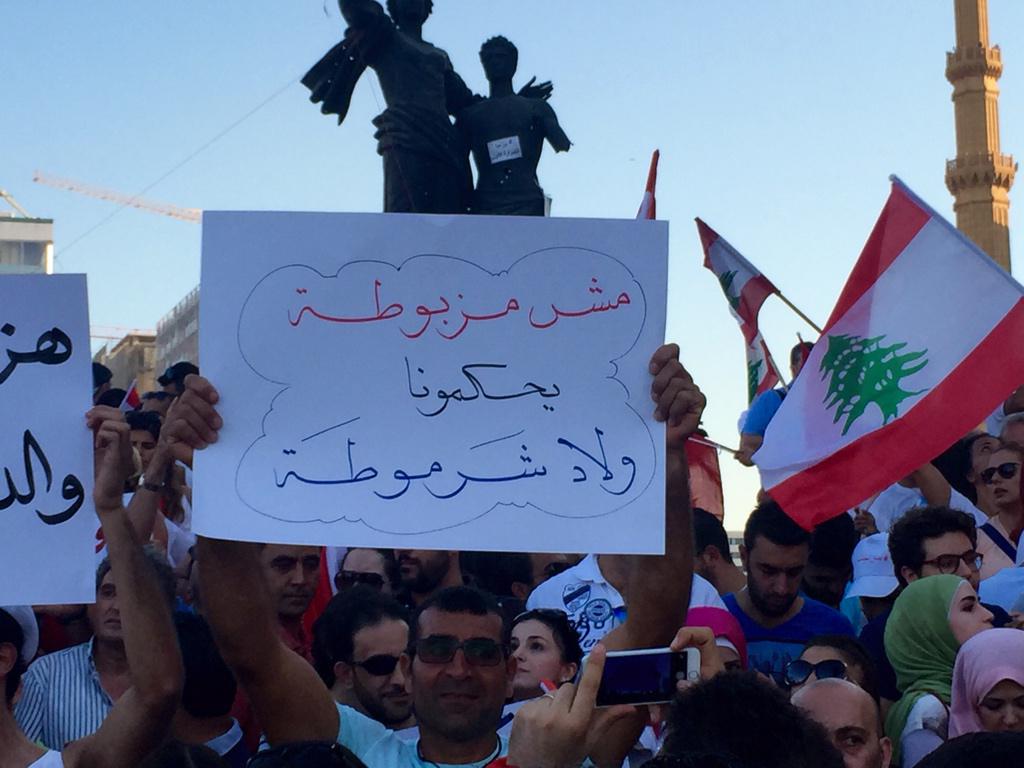
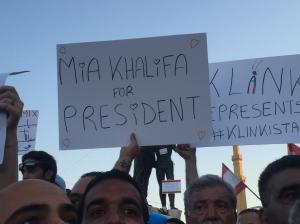
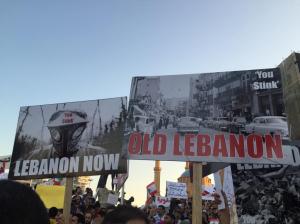
The people also brought posters.

Some, like my friend Racha’s poster, were hilarious:

Protest YouStink Beirut August 29 2015 - 10

She’s going to kill me for this going viral.

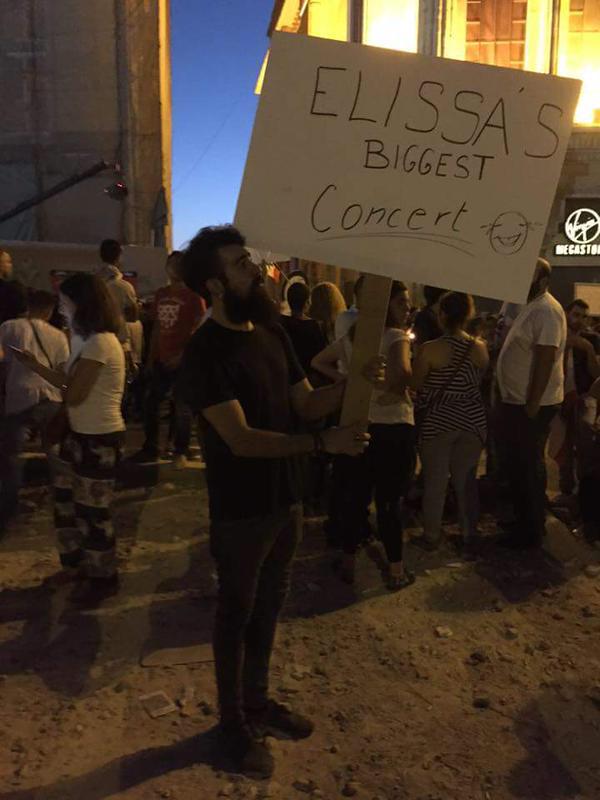
Youssef Nassar, inspired by Elissa’s now famous Twitter gaffe, brought out the big guns:

Protest YouStink Beirut August 29 2015 - 21

#Best #Concert #Ever! #With #My #Besties.

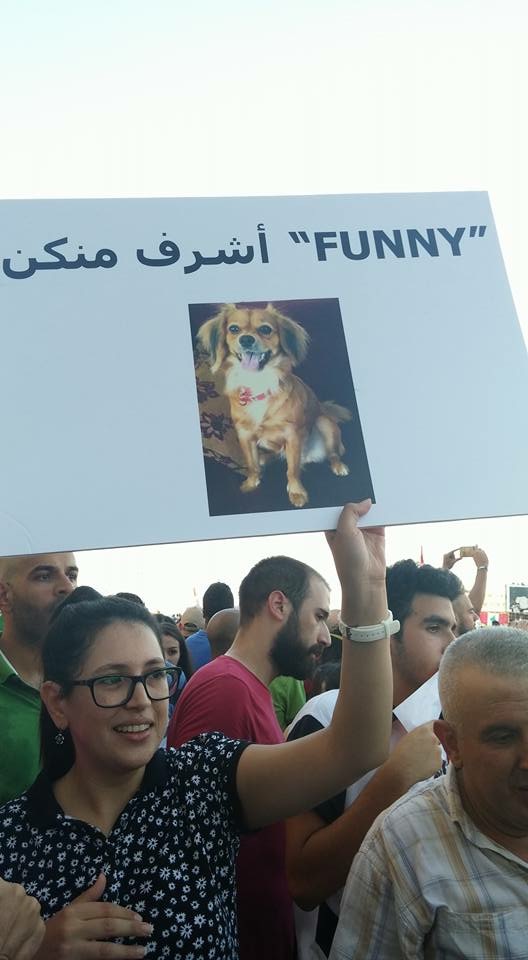
My friend Izzie, meanwhile, compared our ruling class to her dog, “Funny.” Obviously, they wouldn’t amount to how adorable her puppy is:

Protest YouStink Beirut August 29 2015 - 14

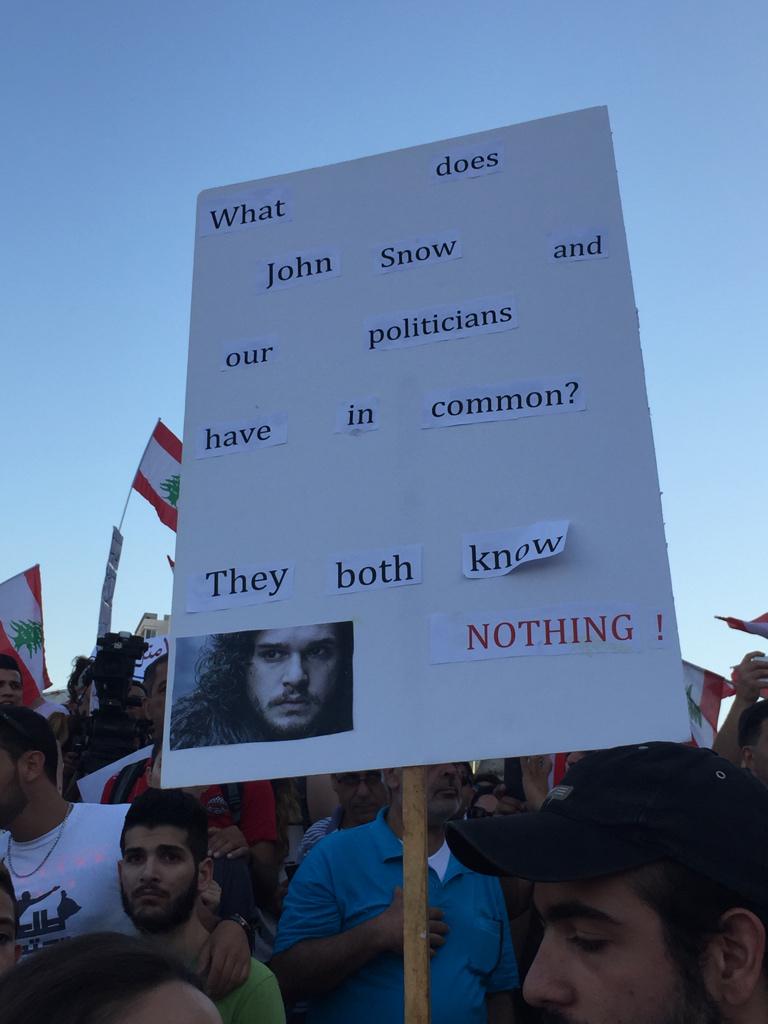
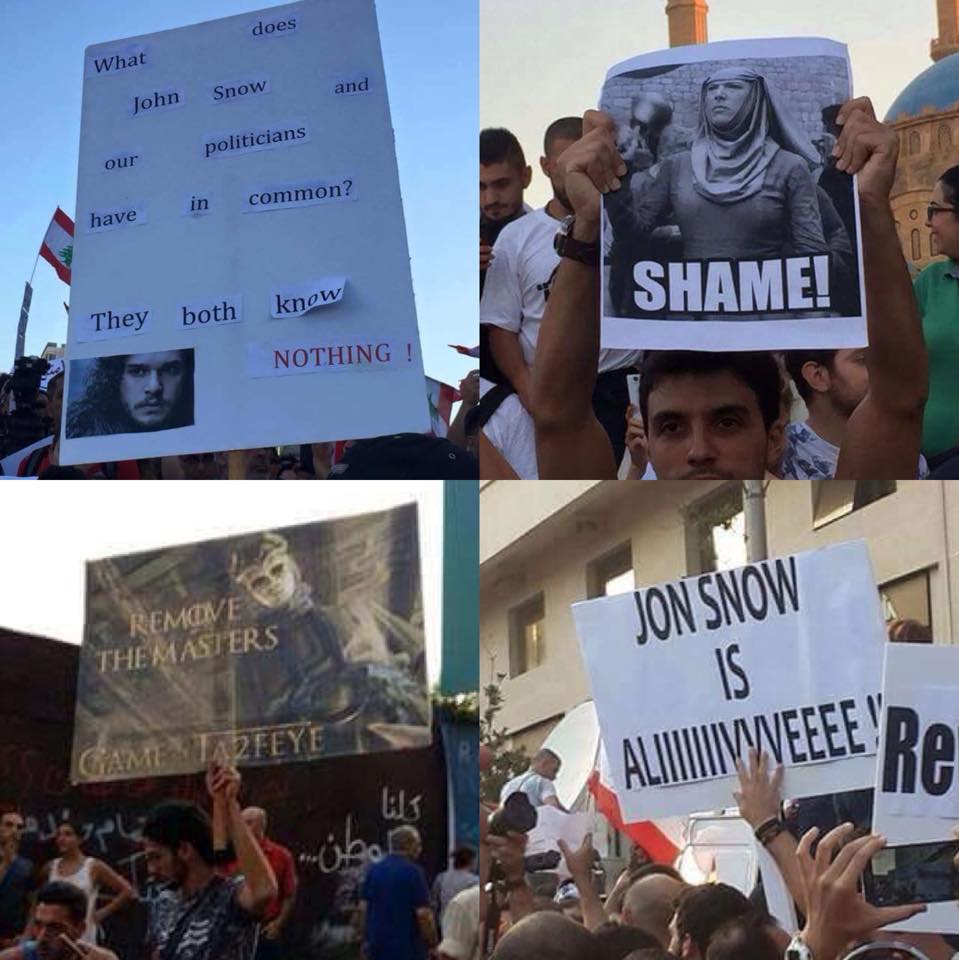
Pop culture also made an appearance in the form of “Game of Thrones.” What do our politicians have in common with Jon Snow? You guessed it:

Protest YouStink Beirut August 29 2015 - 7

That wasn’t the only Game of Thrones-inspired poster around:

Protest YouStink Beirut August 29 2015 - 24

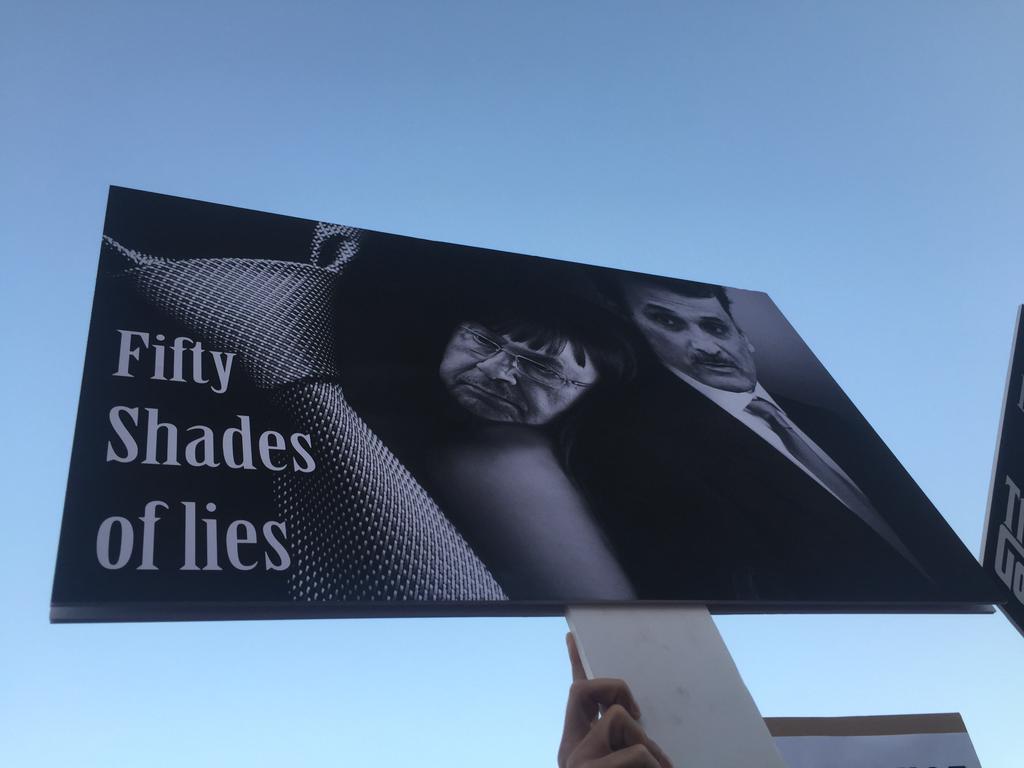
Pop culture made another appearance in the form of a “Fifty Shades” pun:

Protest YouStink Beirut August 29 2015 - 4

The whole “I kneel in front of you oh General” line that Bassil delivered recently now has an entirely different meaning.

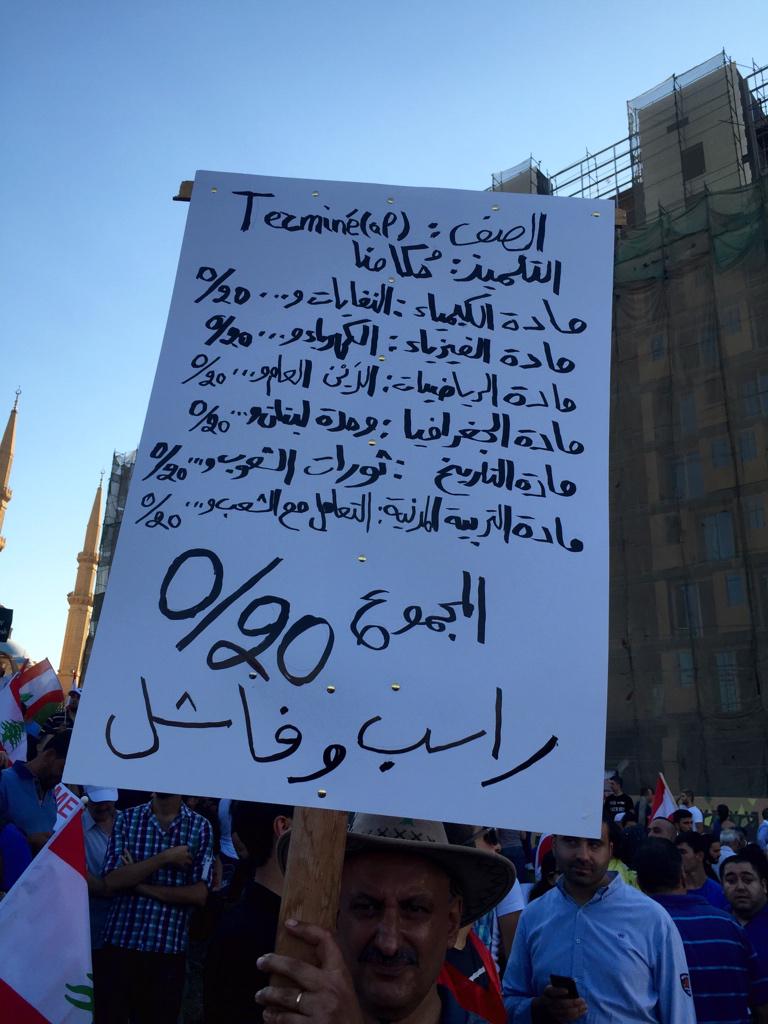
And since we’re a very competitive country, our politicians had their report card released. Needless to say, it’s not very flattering:

Protest YouStink Beirut August 29 2015 - 8

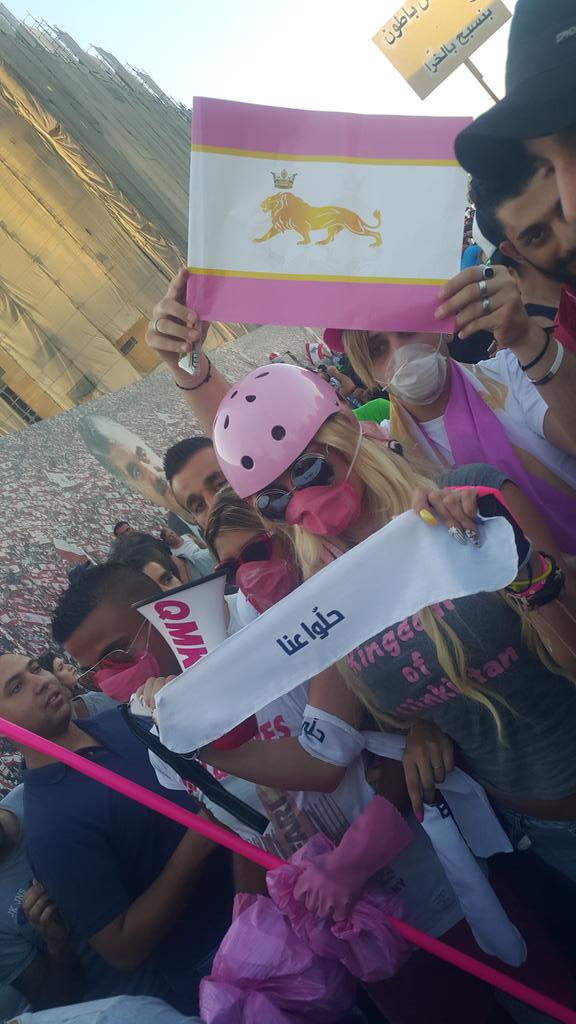
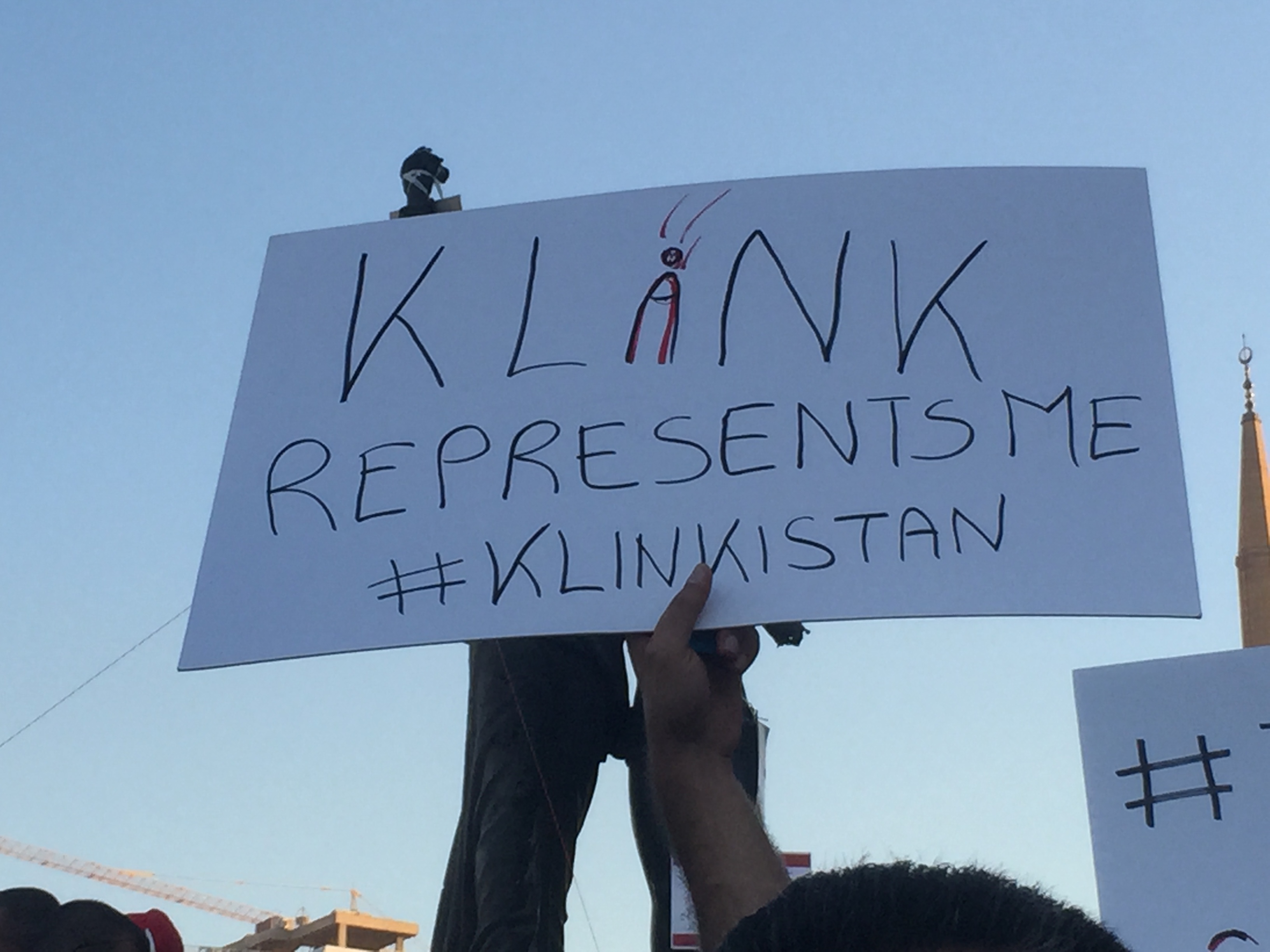
Because this protest was a BIG deal, Myriam Klink made an appearance:

By Ralph Aoun.

By Ralph Aoun.

But Klink will probably NOT approve of the content of this poster, zico zico and all:

Protest YouStink Beirut August 29 2015 - 16

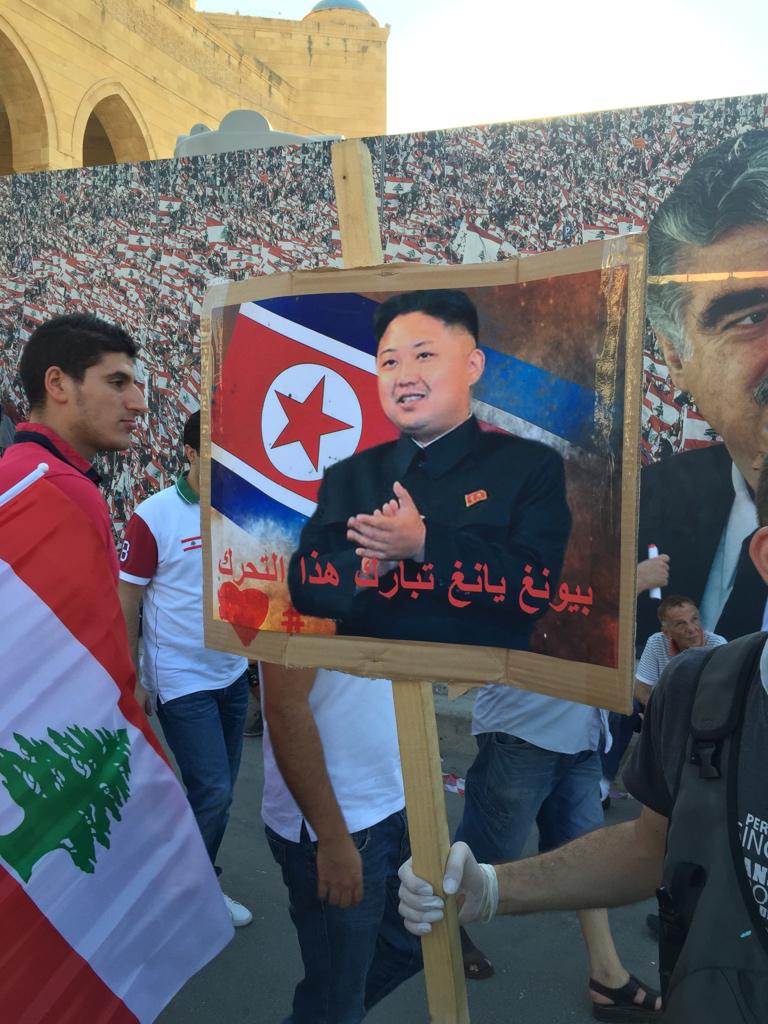
And because no protest in this country happens without foreign approval, this protest was under the auspices of North Korea. Thank you Pyong Yang!

Protest YouStink Beirut August 29 2015 - 9

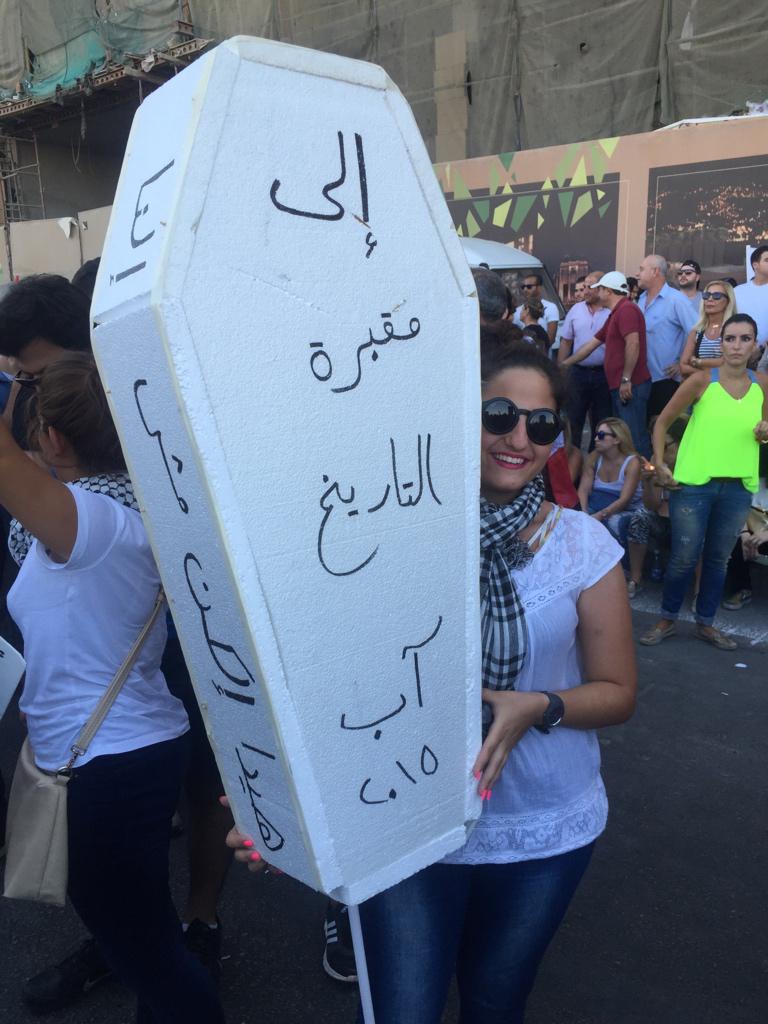
Some people brought figurative coffins with them to bury the system that has been killing us for years:

Protest YouStink Beirut August 29 2015 - 12

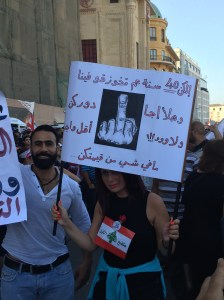
Some made jokes about our security forces:

Protest YouStink Beirut August 29 2015 - 20

Some were not as polite:

Protest YouStink Beirut August 29 2015 - 6

But at least they have good calligraphy.

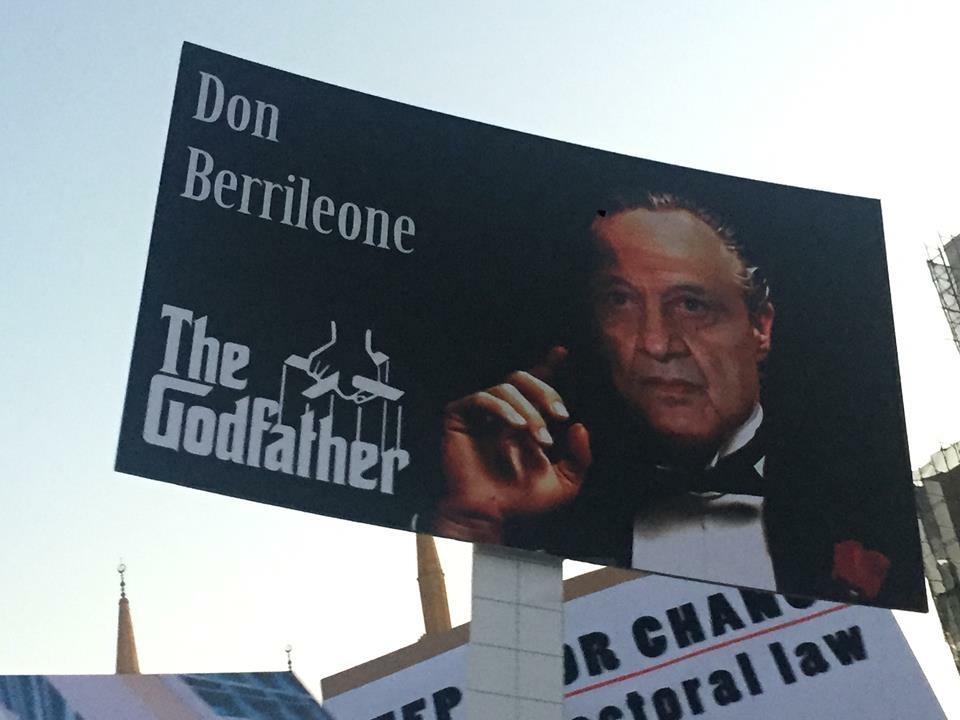
This time around, Berri got a few jabs:

Protest YouStink Beirut August 29 2015 - 13

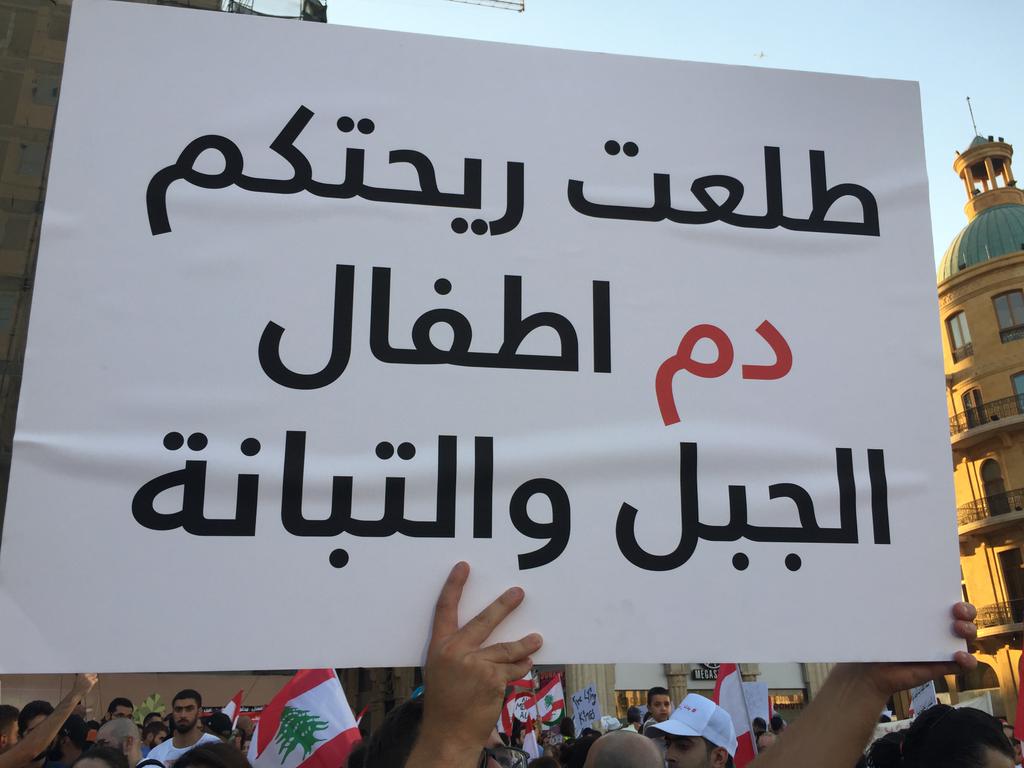
Others, and this is the poster that resonated with me the most, wanted to remind everyone of how much we’ve lost being submissive to this system for the past several years, and how many innocent lives paid the price. May all the children of Tripoli rest in peace:

Protest YouStink Beirut August 29 2015 - 5


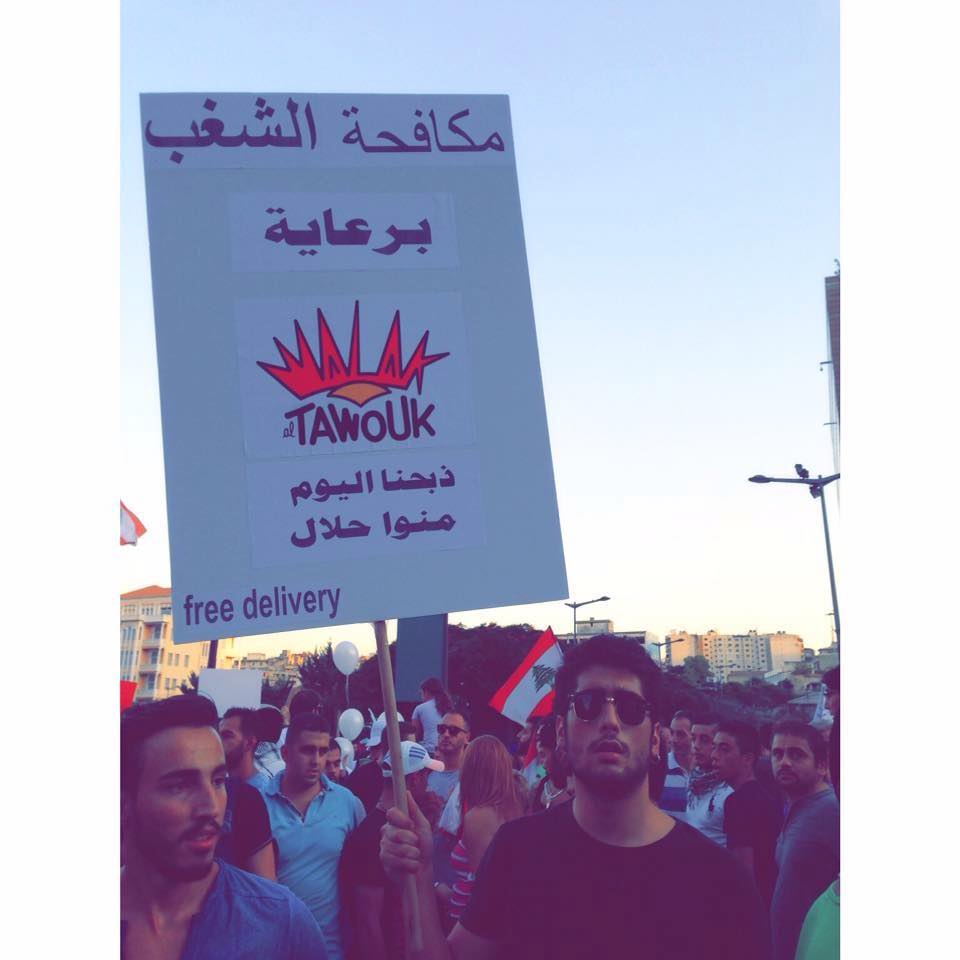
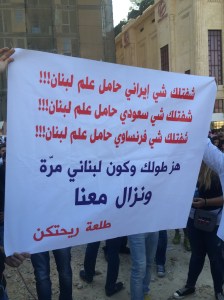
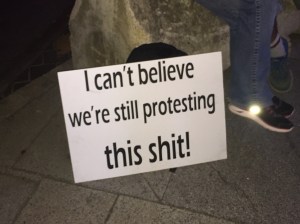
And here are a few more:

All of this happened to the backdrop of the most ironic poster of them all:

Protest YouStink Beirut August 29 2015 - 9

Beirut is its most beautiful when its people are this free, when they are this creative and when they finally find their voice that has been forcibly silenced for years, at times when we thought such a thing wouldn’t happen.

Yesterday’s protest was the BIGGEST manifestation of secular, non-partisan but very politically driven individuals in the history of the country. If August 29th leads to results in the coming few days, this protest will go down in history as another form of Beirut Spring, in the heart of a country that has long shown democracy to the region.

This post is not about what should have happened, what should happen next and what is expected of this movement. This is about how beautiful and glorious our sight was, and how beautiful we made Beirut in the process.

Cheers to everyone who made Beirut great again. Cheers to those who sang, and chanted and shouted. Cheers to hopefully saying one day: “I was there.” Cheers to us.

North Lebanon Will NOT Be Turned Into Beirut’s Garbage Dump

In a stroke of pure “magic,” our politicians have “solved” the country’s garbage crisis. In the beginning there was Sukleen and the Nehmeh dump. Now, we have Sukleen again – yes, seriously – and the Nehmeh dump, in Beirut’s proximity, has been moved to a place that’s more than a hundred kilometers away from Beirut.

In a stroke of utter “genius,” the Lebanese government has decided that the Northern caza of Akkar will now be where the people of Beirut and its suburbs dump their garbage. In case you had your doubts before, be certain now: Lebanon does not have its areas equal. There’s Beirut and Mount Lebanon, a beacon of hope and love to the masses and the tourists and where all the money flows, and there are the peripheries, notably North Lebanon, where the only thing fitting is to give its people those other regions’ trash.

Sukleen will also be handling garbage again at the price of about $160/ton, that’s more than what they used to get paid before, and about 4 times the normal amount that any decent country in the world pays to handle garbage.

Akkar – The Real Tragedy:

Here’s how the situation is in Akkar today:

  • There are villages that got electricity for the FIRST time in 2013 (link).
  • There are villages that do NOT have road access yet. I remind you this is 2015.
  • The caza does NOT have any decent hospital in it. Its people have to make the trip to Tripoli to begin getting decent medical coverage, and a lot of them have to make the trip even further south to Beirut in order not to die.
  • The caza does NOT have any decent schools and universities. Its people have to make the trip to Tripoli as well or move to Beirut for better opportunities.
  • Akkar is the country’s poorest area on record, only paralleled in poverty by Tripoli’s Tebbaneh and Jabal Mohsen areas. The numbers are astronomical: 40% of the population is considered poor and more than 18% live below the extreme poverty line.
  • The “best” way for the people of Akkar to make a living is for its men to risk their lives volunteering in the army; hence, calling Akkar “the basin of the army.”

Why don’t you hear about any of this? Well, I’ve tried to highlight how horrendous the condition in my region (the North) is on many occasions, but when it’s that *far* for the people of Beirut, as is anything north of the Madfoun checkpoint, nobody cares.

Another aspect of why you don’t hear about this is because no one, even Akkar’s politicians, care. The only time they do give a rat’s ass is come election time, in order to give the starving population a loaf of bread, a few sandwiches and a couple hundred bucks to sustain them through the coming four years (or seven).

Well, now we have another reason to give Akkar a second glance, so let’s spin this positively: Lebanon’s politicians have FINALLY remembered Akkar other than at the time of elections. Hurray!

How so? Well, our government and politicians want to turn areas of Akkar into the garbage dump for Beirut and its Greater Area’s garbage. Obviously, because they say no other region in the country can work, but it’s because the people there are so poor they can’t fight the decision of the government to kill them before their own eyes.

The details of the Akkar deal are as follows:

Ahmad el Hariri met several weeks ago with Tarek El Marhebi, the son of former MP Talal el Marhebi, who agreed to give him a land of around 1.4 million squared meters, to which was added another property culminating in about 2 million squared meters of area, in order to create a garbage dump to solve Beirut’s garbage problem, in an area is called Srar.

The Ministry of Environmental Affairs then studied the land and came to the conclusion that the type of soil used was NOT compatible with that required to do a dump, risking the toxins of the garbage infiltrating down to the underground water, which supplies the many villages of the caza since the government has NOT supplied the area with water as it is.

The Future Movement figures involved the aforementioned deal “denied” such claims a few weeks back. Today, with the news of such a dump being closer to reality than anyone expended, the claims they denied are not only true, they’re becoming a reality.

How is the government trying to buy the silence of the people in Akkar in order to effectively kill them with the waste of a region that is more than a hundred kilometers away? 100 million USD will be used to fund select developmental projects in the caza over the course of the next three years, money that is Akkar’s right and for which it does NOT have to reciprocate with receiving Beirut’s garbage. And to make things worse, the area will probably never going to see that development anyway.

This is governance 001 for the Lebanese system that doesn’t seem to care for an area unless it’s called Beirut and Friends:

  1. No, it’s not acceptable to silence the people of that area with money that you haven’t used for years to give them their rightful development, money that is rightfully theirs,
  2. No, it’s not acceptable to risk the health and lives of hundreds of thousands of people because you’re worried about the image that having your capital drown in garbage gives to the world,
  3. No, it’s not acceptable to risk the greenest region in the country’s environment because you’re too bloody corrupt to come up with a solution that limits your monetary return,
  4. No, it’s not acceptable and will not be accepted that Akkar ends up as Beirut’s garbage dump.

Akkar Isn’t The Only Northern Entity To Get Screwed:

If you thought Akkar was alone in getting screwed, you thought wrong. The entire North is under threat of being turned into Beirut’s waste disposal zone. Batroun’s areas of Hamat and Rasenhash have received a few shipments of garbage trucks from Beirut already. For reference, the area has your very lovable picturesque Nourieh convent.

Kefraya, in the Koura caza, also received a few garbage shipments, as did the city of Amioun before its people blocked roads and protested.

Tripoli is also having a true environmental disaster as it keeps getting shipments of Jounieh’s garbage, which are polluting its sea, soil and air. In the meantime, Jounieh’s mayor is bragging his city is the first to clear its garbage mess. How despicable.

North Pride:

I’m a son of the North. Batroun is my home. Koura is my home. Tripoli is my home. Akkar is my home. This is my land, and I will not have my land ruined, tarnished, maimed and irrevocably damaged just because I exist in a system that thinks I’m worthless for not having “Mount Lebanon” or “Beirut” stamped across my ID.

I’m a son of the North. My region is the country’s most forgotten, most ignored, most ridiculed and most stereotyped. My region is the country’s least developed and least considered (except when it’s for garbage it seems).

I’m a son of the North, and I will not have my home be filled with the garbage of those who not only couldn’t care less about it, but who will very likely not give a rat’s ass about where their garbage is heading the moment they don’t see it on their streets anymore.

I’m a son of the North and I say this: “Kell wa7ad yemsa7 kha*a b ido.” 

Beirut’s Newest Tourist Attraction: A Wall of Shame To “Protect” Our Politicians

Picture via @SalmanOnline.

Picture via @SalmanOnline.

When you think Lebanon’s politicians couldn’t sink lower, they utterly and irrevocably surprise you.

Two days ago, when we peacefully protested to defend our right to have a country where their corruption doesn’t reign supreme, our politicians surprised us by orchestrating a military response that not only echoed that of Arab countries where suppression is a way of life, but paralleled it to the letter.

We were beaten. We were hosed. We were shot at. We were tear gassed.

Yesterday, our politicians sank to a newer low when they orchestrated another type of response to the YouStink protests as they sent their goons to infiltrate the ranks of peaceful protesters and make sure they wreck havoc.

The protestors had nothing on them; the insurgents had lasers, molotov cocktails and various other weapons. The protestors were chanting for their rights; the insurgents were chanting for their sect. The protest turned from shouting “revolution” to shouting their sect name in no time.

I don’t have proof of which politician ordered the infiltration, but his name is known. He’s been fastened to the same leather chair, stronger than super glue, since 1992.

Today, our politicians are so afraid of what could be from the Beirut Uprising that they’ve gone the extra-mile to make sure the psychological and military barrier that separated them from the people is re-inforced by yet another kind.

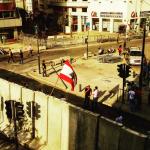
Today, in Downtown Beirut, across Riyad el Solh square, a concrete wall has been erected to separate our governmental seat from the people.

They had absolutely no idea what they were doing that they built it around a utility pole:

Lebanon Government Wall Downtown Beirut

Picture via @Mich_h.

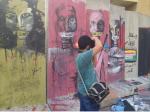
As soon as it was built however, the youth of the country used the wall as a space to get our government to see what it’s worth every single time its members pass by the area to infuse the country with more corruption.

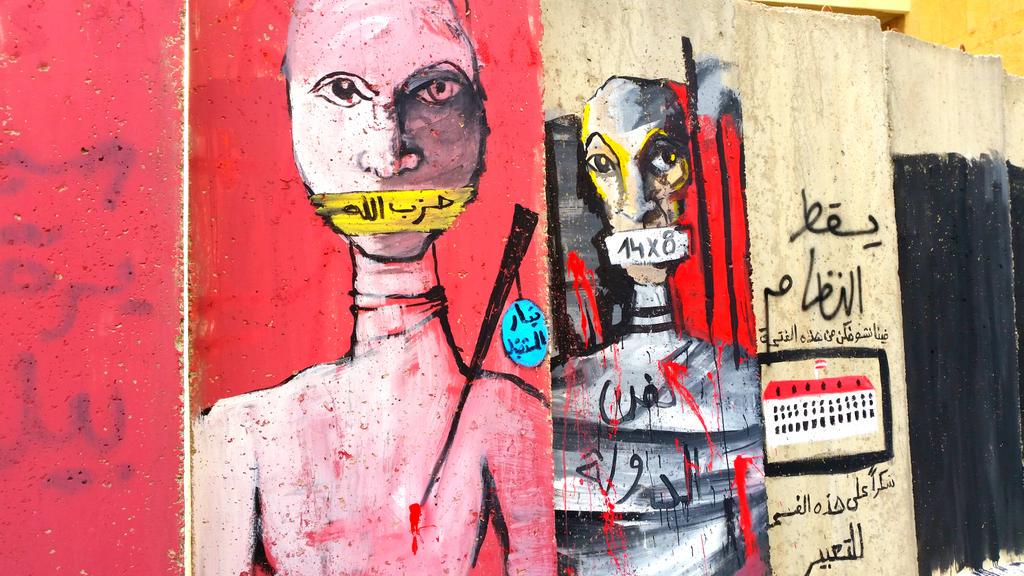
To bring the message of the wall home, each tile is now decorated by a figure representing every political party in the country:

This wall is a sad entity but it’s been turned to something beautiful.

Lebanon has now joined the very exclusive list of countries in the world where people are separated from each other by physical barriers existing solely for political reason, only this time the only entity separating itself from the people is the country’s political establishment.

The Lebanese system keeps digging itself in a hole. The more a system is disconnected from the people that make it, the more it’s afraid from those same people. This is why that same system fired at us on Saturday. This is why that same system tried to tarnish the protests yesterday. This is why that same system is barricading itself behind a wall today.

The Serail is not for a PM or a minister, it’s for the people. Nejmeh Square does not belong to the Speaker of Parliament or his MPs, but to the people. They can build as many walls as they want, but that doesn’t make our claims of wanting to live in dignity any less just, and their need to stay in power any less barbaric.

The Lebanese government is protecting itself from us by a wall. What they fail to realize is that their main problem isn’t the physicality of a protest. Their stench rises above the wall. Their failures rise above the wall. Their corruption is sinking an entire country, including their new wall.

Today, Downtown Beirut has a new attraction to add to the list of things that make it an obscene place to visit, a place that is not only non-Lebanese, but irrevocably hostile as well. Thank you Lebanon’s government for making sure I feel, with each passing day, more of a stranger in my own home.

If only they know, though, that any wall that goes up must eventually go down, not necessarily by force. There are some words that have the effect of wrecking balls.

Update: the wall is being brought down. This will go down in history as the shortest living separation wall ever.