What’s Worse Than Lebanon’s Lawmakers Stealing Our Right To Vote

June 20th, 2017. Save the date, for it will be the time Lebanon’s current parliament extends its mandate for the third time in a row. Some people like the taste of power. Those who like power in Lebanon can’t get enough of it.

Apart from the ramifications of the extension, many of which you will probably be hearing about until elections happen in who-knows-when, here are a few observations about myself amidst this political fuckery:

  • I’m a soon-to-be 25 year old who, according to our laws and regulations, is basically equipped with full legal responsibilities and whatnot, but I’ve never – ever – voted for anything, and by the looks of it will never do.

Contrast this with my American cousins whose ages range from 20 to 26 and who have voted at least twice so far in the past 2 years alone, the last of which was yesterday. Those Americans… they fight ISIS here, Al Qaeda in Afghanistan, and they still manage to hold elections every other two years. Teach our politicians, why don’t you?

  • By extending its mandate till 2017, Lebanon’s lawmakers have made sure that I, along with a substantial portion of Lebanon’s youth, will never – ever – get to have a say in who becomes a parliament member.

I will immigrate and be out of the country by 2016. Ironically, I will most likely be attending (but sadly not participating) in the American presidential elections that year, but at least I’ll be able to say that the past 6 years, in which I should have witnessed, in theory, a presidential election, two parliamentary elections and municipality elections, haven’t been election-less, although I have witnessed the Syrian presidential elections on my territory; I guess the situation wasn’t bad enough for that not to happen.

Most of the people I know are against parliament’s mandate extension, and so am I. But somehow, after thinking about this for about the fifteen minutes that it deserves amidst this country’s sewage-like level of politics, I realized that the bigger travesty of this parliament’s extension is that our MPs, or all 95 of them who attended, were so full of themselves that they didn’t see anything wrong with extending their mandate for an extra two years and seven months.

The biggest and sadder travesty that occurred today is also the fact that those same parliament members who have failed to ensure quorum since that first round of presidential elections way back when, have found quorum for the sole purpose of ensuring they can fail to gather quorum for the next two years and seven months, while getting fully paid for their lack of services.

The saddest aspect of today is that there are still Lebanese out there who can’t think for themselves and who think that their politicians of choice were correct in voting the way they voted today or in not attending today’s session, as if those voting for the extension did so unpredictably and those who didn’t attend, while being in the government and making sure none of the regulations needed to make sure parliamentary elections take place are passed, have also effectively supported the extension from the get-go and were searching for the best way to go around mass Lebanese (Christians mainly) scrutiny.
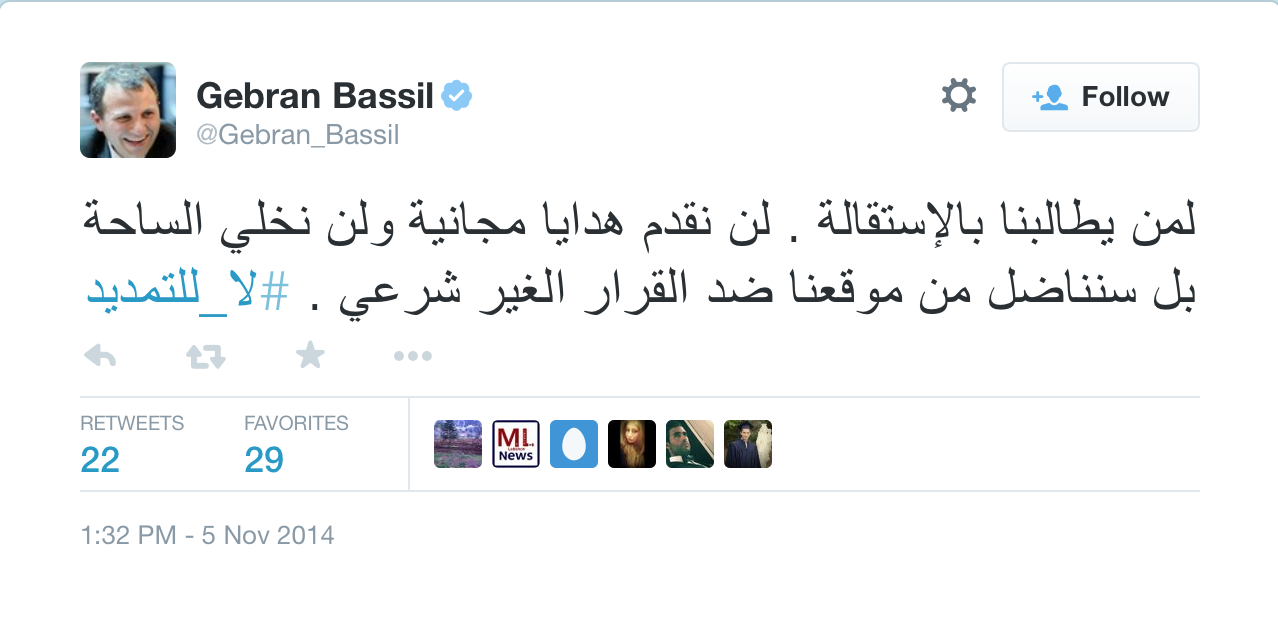
Ironically fitting for Mr. Bassil and his party's MPs to "want to fight the power from inside," don't you think?

Ironically fitting for Mr. Bassil and his party’s MPs to “want to fight the power from inside,” don’t you think?

Today has also revealed exactly how silly, stupid, ridiculous and retarded this whole debacle is with the realization that there are Lebanese people who will actually be voting for parliament members in Kuwait on November 7th (this Friday) and in Sydney, Australia on November 9th (this Sunday) because, as of now, we are all still voters who are supposed to vote for parliament soon, pending the publication of today’s decision in the Official Gazette. What will the votes of those Lebanese amount to? The answer is exactly the same as all our votes: toilet paper for our MP’s behinds.
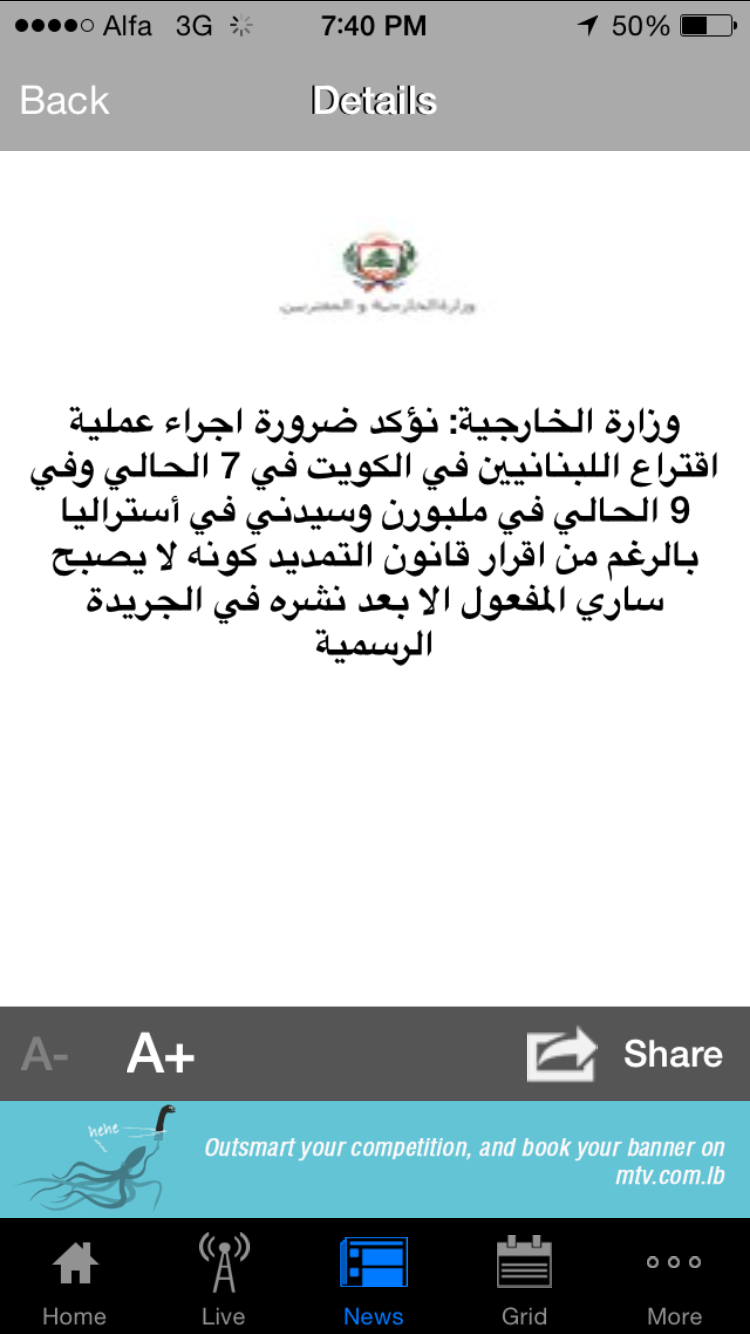
IMG_8187

But I digress. There are, believe it or not, worse things taking place today thanks to those very lawmakers that should be noted, especially today:

1 – Presidential Elections:

Get this: 97 MPs gathered in parliament today, making up more than 2/3 majority required to vote on major bills, in order to extend their mandate. Those MPs voted 95-2 on the bill in question. However, for the past 6 months, those same MPs have not only failed to gather quorum for presidential electives, many of them have actively campaigned against ensuring such a quorum. By ensuring no president is elected, those MPs have made a nice bundled argument for themselves on the necessity of another mandate extension is required to avoid that dreaded void. If you think about it, it’s a nice little Lebanese catch 22. It’s not that they’re too smart; it’s that they’ve become so accustomed at fooling everyone that they make it seem like what they do is for the best of the Lebanese population they’re busy screwing over day in, day out.

It’s okay, though, who needs a president anyway.

2 – Elections Law

When those 128MPs got to power in 2009, they all agreed that a new electoral law was a necessity to be done in those 4 years during which they would serve their country and citizens. The reality was a vacation for the first two years, a wake up call on year 3, a few months of hectic sprints in year 4, jumping from one absurd law to another more absurd law (you do remember the Orthodox proposal, of course, however long ago that seems right now) until they realized that the whole issue was too tiring and decided to postpone for themselves the first time, saying that they will use those extended 18 months to work on a new law.

How many hours have those MPs spent in those 18 months working on a new electoral law? Approximately 0.

In fact, not only is the lack of an electoral law after more than five and a half years a tragedy, but any electoral law that will arise from this parliament in question will be tailor-made to please everyone and, effectively, keep the status quo as is. Do you really think they’d agree to what’s fair if fairness meant they’d be kicked out of Nejmeh Square?

3 – What If Elections Happened On November 16th?

Let’s assume, however, that our parliament decided that the democratic process was, contrary to actuality, important. Let’s assume that they swallowed their overgrown prides and decided to campaign for our votes in about 11 days and try out for the Guinness World Record for shortest election delay ever. Now that’s something we can teach those Americans. Let me give you an example of the broad array of candidates that I could have voted for in Batroun:
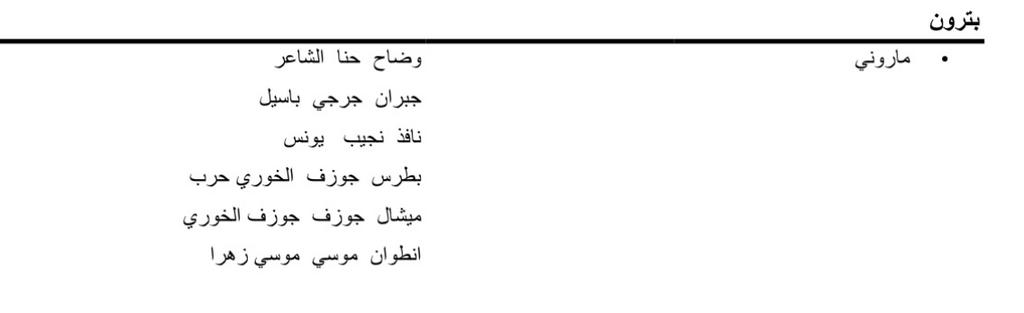
2014

2014


The names sound familiar? That’s because you know them all. Gebran Bassil (name #2) is THE Gebran Bassil. Boutros Harb (name #4) is my current MP and the minister of telecom. Antoine Zahra (last name) is the LF-go-to-spokesperson for fiery speeches and my other MP.

Now contrast the above list with that of those who were running for elections before parliament underwent its first extension in June 2013:
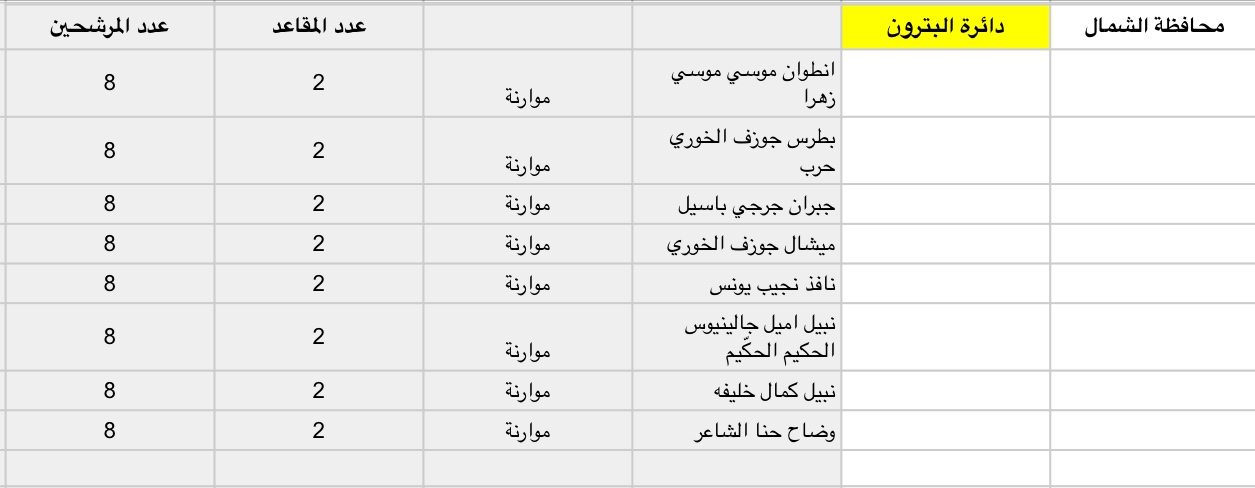
2013

2013

I would advise a game of “spot the difference,” but it’d be essentially futile as there are basically none. If elections were to happen on November 16th, our tax money would be spent to make sure that those same MPs, across all Lebanese districts, get not a two year and seven months mandate that is illegal, but a four year mandate that is legal. It’s not just because they made sure we vote based on a law that preferred them, but because we are left without a choice and because the bulk of those who vote, as in the people that exist outside of Twitter and Facebook (they exist!), do not vote the same way we do. And, because who the hell are we kidding, many of us as well would vote for the same people again, just because of familiarity.

4 – They’re Working Overtime

So what has our parliament done in the 18 months of its first extension? They worked of course. Overtime. They worked to ensure that a president is not elected (read point #1). They worked to make sure that the workers’ benefits and whatnot are not voted on, that a quorum is never reached. They worked overtime to make sure that Lebanese students who presented their official exams this year never get results and end up with certificates of passing, the tales of which our parents had told us back when they were going through school during the times of the Civil War.

They worked overtime to make sure a proper bill protecting women from domestic abuse isn’t passed. What we got instead was a maimed piece of legislation, aimed to please this religious leader or that, but still managing to keep our women under the thumbs of their husbands or partners.

They worked overtime not to work on an electoral law, not to legislate a stance from the Syrian war, not to basically do anything except get paid for doing no work in overtime.

5 – The Divide Is Christian/Muslim, not M14/M8

Perhaps the most dangerous aspect of the past several months on the Lebanese scene is the fact that the game has changed from being a March 14 versus a March 8 game, to becoming full blown Christian blocs versus Muslim blocs over the essential issues in the country, at a time when the Christian-Muslim divide, in Lebanon and elsewhere, is at an all time high.

As Ramez Dagher, on his blog Moulahazat, put it:

What is scary here isn’t that Lebanese politicians lie and steal and deceive and postpone elections. That, we already know. What is truly scary here is that 25 years after Taef, we are starting to witness an obvious rapprochement between the Christian parties while a rivalry between the Muslim blocs and the major Christian ones is becoming more apparent by the day. Every time there’s an important law debated in parliament – Such as the electoral law or the extension law – the rift is yet again Christian/Muslim instead of M8/M14: 10 years after the creation of these alliances , it seems that they were more based on an electoral than ideological ground.

If there was one beautiful thing about the March 8 and 14 alliances, it was that they were religiously diverse. And now – with ISIS on our gates and with vacancy and dysfunction everywhere in the political establishment – is literally the worst time to lose that.

Conclusion:

Too long, didn’t read – the summary to you is as follows: Living in Lebanon is living in shit, but at least we have the biggest platter of hummus, fattouch, lemonade cup, biggest burger, longest falafel sandwich and we’ve officially wed George Clooney to one of our daughters. You’re welcome for the realization.

The Jamerek That Cried Wolf

The last time Lebanese security personnel openly beat up civilians with absolutely no regards to the potential repercussions to their actions was when the Syrian security apparatus was ruling our country. Back then, I had to cross checkpoints set up by that army in order to go to school. We were not allowed to voice opposition… or else. We were bombarded with images of the young men and women who tried to defy that apparatus: how they were beaten up then taken in those army vehicles to some jail cell in who knows where.

Things have been miserable in Lebanon, yes. But amid all of the tensions and the violence and the country not knowing where it’s heading, I didn’t think I’d see people getting beaten up by armed forces whose job is to supposedly maintain order.

NewTV’s journalistic crew was researching the corruption that infests Lebanese Customs at our one and only airport. We all know such corruption exists. I know of stories about the hints they drop regarding the money you should pay in order to get certain equipments into the country. Of course, no tangible proof exists and even if such proof were to be found, what would change?

NewTV’s crew didn’t think the country that championed freedom of speech and of the press would do such a thing to them. So they took their megaphones and braced those Beiruti roads and called for the head of customs to grant them an interview. They got beaten up and arrested. People were outraged. Customs officials were scrambling to come up with excuses: they were bad-mouthing our chairperson, they said in a statement they hoped would explain where they were coming from, as if that’s an acceptable excuse. Can you imagine, for instance, what would have happened if American military personnel beat up a civilian for bad-mouthing Obama?

NewTV’s crew was released late last night. They had bruises over their face. They looked victorious and proud of what they had accomplished, as they should be. They had – even if only for a minute – gotten the country to look at our customs that have been using laws that, similarly to the entirety of Lebanon’s laws, have not been updated in a long, long time and which enable them to blatantly do whatever they please without any consequences.

I have to wonder though, what would happen to the people like you and I who don’t have the platform of a TV station to support and protect in case of such transgressions to their basic rights? Make no mistake, this isn’t a case of freedom of speech. This is a violation to those journalists’ human rights. And it happened in broad daylight. And there will be no repercussions for it, because that’s how Lebanon rolls.

But the story doesn’t end there because our jamerek figured it would be such a great idea to go on a strike to protest what had befallen them a day earlier. Their rights had been violated, I’m sure they thought, which include the right to guzzle endless amounts of money here and there to build their villas and buy their fancy cars and rise above the system that is geared towards decimating the finances of those like you and I, all while such “rights” are overlooked due to the countless of reasons that make up Lebanon’s political landscape what it is today.

I give it one more day until this becomes old news and we are forced to reckon with other more “important” things. Lebanon is always exciting that way. 

The Lebanese Government Doesn’t Want You To Get iPhones

iPhone 5C and 5S

It wasn’t enough for Lebanon’s iPhone users had to deal with the device not being officially released by Apple in the country yet with exorbitant prices and no customer service for their device. Starting in June, regulations have made getting their device into the country harder than ever.

The iPhone 5S and iPhone 5C were released recently around the world to massive customer reception. Their prices in Lebanon, however, are about $1100 for the 16GB version of the iPhone 5S and $720 for the 16GB version of the 5C. To compare, the 16GB version of the iPhone 5S in the United States is $649 whilst the same version of the 5C retails at $549.

Many Lebanese, like yours truly, refuse to succumb to these black market prices and a government which couldn’t give a rat’s ass as long as it’s making enough money for the people running it to remain afloat but still convince everyone that their beloved regulations are in our best interest. Therefore, we buy our devices from abroad and wait for someone to bring them into the country.

Prior to June 2013, that process was as simple as it gets. The phone would come in, we’d unbox it, put it our simcards and we’d be up in running in no time. Today, getting the phone into a state of functionality means getting it registered by a procedure that is retarded but still somehow makes sense for those in governance. Why so? Because they want to take back the millions lost through phone smugglings. How so? By screwing every Lebanese over in the process both bureaucratically and financially.

According to Twitter user Wissam Chidiak, @Fletchergull, the iPhones 5S and 5C don’t get the same treatment that other phones in the market do. Their price tag wasn’t enough, so our government is making it even harder to get an iPhone in Lebanon.

Say you got an iPhone 5S from the United States and wanted to bring it into Lebanon, your passport must not have any other phone registered to it in the past 6 months in order to get the phone working on Lebanese networks. The iPhone 5S or 5C, in order to be registered, take up all 3 phone spots that you are allowed on your passport for a 6 months duration. You won’t be allowed to bring in any other phone to the country if you’ve traveled within that timezone.

Furthermore, the passport being used to get the phone up and running on Lebanese networks must not have entered the country prior to September 24th. The iPhone 5S and 5C were launched on September 20th. Technically, a Lebanese could have had them in the country by the 21st. He wouldn’t have been able to get them registered, however, because that’s what our telecom ministry wants.

Mr. Chidiac has contacted both alfa and Touch, Lebanon’s only telecom operators, who confirmed on separate occasions that the aforementioned regulations are, indeed, true. They were adamant, however, that those regulations are not operator-based and are entirely enforced by the telecom ministry. Chidiac has also tried to contact minister Sehnaoui on Twitter via direct messages, which the minister couldn’t not have read, public mentions of those direct messages which anyone could read. The minister has failed to reply.

You could say that these regulations are in place given that the devices are new and all. But even that argument runs moot with our government because other newer devices do not suffer from the same treatment. Samsung’s Note 3, which was released on September 25th – 5 days after the new iPhones, can be registered with passports that have entered the country prior to the phone’s release. It also takes up only one phone slot out of the three you are allowed. Perhaps our telecom ministry wants to gradually but surely enforce one brand upon the Lebanese population simply due to availability and ease of access?

Our telecom ministry is proud of the advancements that have taken place recently, as is their right, despite some of those achievements having a big “however” plastered all across them – the 4G network comes to mind. At the rate we’re going however, I’m longing for the day when I was able to simply pop in a sim, get it to work then remove it and have my phone “liberated” as is, when my  freedom as a customer to buy whatever I wanted from wherever I wanted, within Lebanese law, was still cherished and not subject to demented, silly and retarded regulations that only serve to inflate the pockets of those benefiting from them. Those regulations, Mr. Sehnaoui, not the 4G network, will be your legacy when you’re a minister of telecom no more.

Following Up on Beirut’s Soon-To-Be Destroyed Roman Hippodrome and The Best Way To Save It

Lebanon isn’t a place where much changes in a year. Seriously, if you look at where we were last year around this time and where we are today, you’ll see a lot of similarities. The only exception, perhaps, to our Lebanese reality is real estate, especially when it comes to all the contracting taking place in Downtown Beirut.

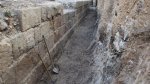
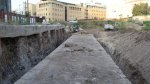
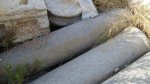
More than year ago, I wrote about the Roman Hippodrome that was soon to be destroyed in Beirut (link), in Wadi Bou Jmil next to the Jewish Synagogue. A lot has happened in a year. So courtesy of a piece (link) by Habib Battah, an LAU professor, published by the BBC, an update on Beirut’s Roman Hippodrome is in order:

  • The developer who wants to use the land is Marwan Kheireddine. Sounds familiar? He is a minister in Lebanon’s current government. Way to go for transparency.
  • The project that will see the destruction of the hippodrome is a gated community where only “elite” Lebanese will enter. In other words: you and I are off limits. Unless you can afford paying millions for a Downtown Beirut apartment.
  • According to Kheireddine, the site is not worth preserving. How does he know this? He hired an archeologist who said so. Yes, because such matters are most transparently handled by the people you buy into your service.
  • Kheireddine is offering 4000 squared meters of the land to turn into a museum of sorts that people could access. Because a Roman Hippodrome was meant to be contained within the parking lot of a building, right?
  • Plots around the site in question are said to contain other parts of the stadium and need to be properly excavated as well.
  • There is an immense shortage of archeologists in the country. The job of those archeologists is to make sure such transgressions never happen. But the government doesn’t seem to care about such an issue.
  • Beirut is not the only place where Lebanese archeological heritage is being destroyed left and right carelessly. In fact, what’s happening outside of Beirut in lesser known areas might be worse.
  • Concerned activists are trying their best to halt the development. But there will come a time when they won’t be able to do much anymore.

I remember back in 2005-2006 when a local cafe in Batroun was being built. The initial digging site revealed a Phoenician burial site, sarcophagi and all. People flocked to see what the site was all about. The following day, nothing survived to tell the tale. Today, instead of that entire burial site lies a cafe known for its shisha and its July 2012 drug scandal.

The Best Way To Save The Hippodrome:

Earlier in 2013, hell broke loose twice over ancient ruins in Beirut. The first time was because some henchmen at District S assaulted the same person who wrote the aforementioned BBC article over him taking pictures of the ruins they were busy dismantling to open up Beirut into the new Dubai-esque age (link). The second time was due to Lebanon’s possibly oldest Church getting discovered at another site where a Jean Nouvel hotel was to be built (link).

The discrepancy between the fate of sites one and two is striking. The former is still operation. The latter has been halted. Churches can do miracles? Believe, people.

Arguments about how priceless a monument is, how irreplaceable it is, how silly it is to replace it with a building, how rare it is to find such a thing in Lebanon, how economically profitable it would be to keep it and turn it into an attraction are all useless simply because most people don’t connect to them on a primal level, enough to get them rallied up.

The only way, apparently, to get to a result, force government to get involved and save such sites in Lebanon is to infuse a dose of religion in the stones. The more religious those stones, the more people get rallied up, the less our government can stand quiet as bulldozers raze through the field. Unfortunately for the hippodrome, there doesn’t seem to be an ancient church in its ruins as of now. Let’s hope that changes soon.

The following pictures are all courtesy of the BBC:

How Corruption in Lebanon Remains

My hometown, Ebrine, and the Batroun region overall, have been “plagued” over the past few months with an ambitious developmental project to establish a sewage and water pipe network. The former pipes are supposed to connect houses to treatment facilities, the first of their kind in the country. The latter pipes are supposed to increase and make water distribution more efficient across the region.

To that effect, relevant governmental bodies hired contractors. To say the contractor chosen for the project has been doing a crappy job would be the understatement of the year. Take a look at these pictures (link) to know what we’re going through.

Coupled with the lack of competence is a serious lack of efficiency and waste of resources. They finish a section of a road, wait a couple of months to actually lay down some asphalt, make us enjoy the patches for a week or two and then dig it again because they remembered they need to lay down some other pipes. And repeat asphalt-less process.

The question that I asked repeatedly was the following: how did our government accept to hire someone as incompetent as that contractor  to do a project as ambitious as the one at hand?

But the contractor in question is but one example of what happens around this country to perpetuate the entrenched corruption in governance. How they do that is fairly simple.

Take a look at this very interesting report by Executive Magazine (link) about Lebanon’s debt, now around $60 billion. The most interesting part to me in that report, which confirmed what I had previously heard about these contracting jobs, is the following:

Most public debt is held by Lebanese individuals and institutions. While approximately 20 percent is held by foreign governments and multilateral institutions, nearly 80 percent is held by bond and note holders.

The contractor handling the project in my region is one of those people. Our government owes him so much money that they cannot not give him the projects he asks for and pay him money to “execute” them. The execution plan – at least in my hometown and region – went in the following way:

  1. Make sure you get the project from the government.
  2. Get paid a huge amount some of which the government may not be able to pay and increase the debt loop.
  3. Find a cheaper contractor who’s willing to do the job for a fraction of the money. In our case, a little investigation revealed the project wasn’t done by the contractor mentioned previously but by a Syrian contractor who got hired to do the job.
  4. Give that subcontractor a ridiculously low amount of money.
  5. Sit back and relax and try to watch as politicians try to save face.

Those Lebanese individuals to whom the state is indebted with approximately $45 billion keep our governments hostage to their power: if they want certain projects, they get them. If they want certain policies passed, the policies will pass. If they want anything to happen, it will happen. And the merry goes round in other regions, in different ways and forms.

So next time you feel like investing copious amounts of money in this country, invest them in making the government owe you money.