The Rise of the Middle East’s Atheists

September 2012, Middle East:

A low-budget movie titled “The Innocence of Muslims” makes its way to the media of the region. The movie insults the prophet Mohammad and doesn’t pretend to do so innocently. The mayhem it caused became infamous, notably for the American embassy storming in Libya which made its way to the US presidential elections. Protests across the region turned bloody. Innocent people lost their lives because of cheap ten minute footage. And the image that some Muslims have been giving to Islam over the years was reinforced once again.

October 2012, Pakistan:

Malala Yousafzai, a fourteen year old girl, was shot in the head by Taliban individuals who feared her message. Malala’s message was not that of an uprising against the men who worked endlessly to make her life and the life of countless other girls like her a living hell. She was calling upon girls her age to seek an education, which most of us take for granted: the kind where we sit behind a desk and listen all day to teachers telling us things we believe we’ll never need. Her message did not sit well with the Taliban whose mission had been, in part, to eradicate education in the parts of the world where they are of influence. They had destroyed countless schools and forbade women from attending schools in their attempt to restore the days of 600AD.

October 2012, Facebook:

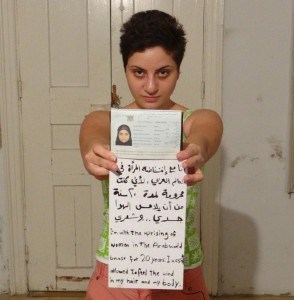
A Syrian woman named Dana Bakdounes posted a picture of herself on Facebook without the veil as part of a movement for the rights of women in the Middle East. (Check the picture here). The message Dana wrote, as part of her picture, said “I am with the uprising of women in the Arab world because for 20 years I was not allowed to feel the wind on my body… and on my hair.” The message rubbed some people the wrong way and a bunch of extremists took it upon them to silence Bakdounes, even on Facebook. So they mass reported her picture as offensive, prompting Facebook to remove it.

October 2012, Egypt:

In a post revolution Egypt where Islamists have been gaining power, two Copt boys, aged nine and ten, were arrested for defiling the Quran. Another Copt teacher was arrested after some students accused her of speaking badly of prophet Muhammad in class while another Copt is facing charges for material deemed offensive which he posted on his Facebook account. A veiled Muslim teacher also cut the hair of two girls in class who refused to wear the veil. She later explained that she had been “challenged.”

The Rise of Atheism:

The rise in religious extremism in the Middle East is touching all of its religions. Be it Christians who are worried about their fate and revert to their Bible in belief that it will somehow be their salvation. Or Jews whose reputation has become intermingled with zionism and borderline inseparable in the mind of many. However, I decided to only discuss Islam because the broader picture of the Middle East, in which there’s a tangible rise in Islamist Influence, is a canvas of Islam – as it is the region’s first and foremost leading religion, demographically.

The rise in extremism is attributed to many geopolitical reasons. It is also associated with a serious lack of understanding of religion from all involved, most notably the men of the robe who are doing more harm to their religions with their backward mentality than anyone else.

The Middle East has probably one of the world’s highest rates of religious people. And it’s simply because we were born this way. We are not allowed to choose what we want to be religiously. I was born into a Christian Maronite family. Therefore, I am a Christian Maronite. If fate had it differently and my parents were from another part of Lebanon, I may have been a follower of a different religion. And this applies to everyone. As we grow up, we are taught our religion and nothing else. Come Sunday morning, it was better for me to attend Mass. For others, they had better pray five times a day, fast during Ramadan and never eat pork or drink alcohol. During my early days at AUB, I was surprised to find that some Muslim people – obviously a minority – had absolutely no idea when Christmas was celebrated. On the other hand, I thought Achoura was a happy celebration. We rarely challenge our religious beliefs because we don’t feel the need to. Those beliefs enable us to blend in our societies and not get ostracized – at least in that regards. They enable us to connect to other people with whom we are able to identify not due to their mentality or thoughts but because of their religious beliefs. At a certain level, deep down, it’s always easier for a “Christian” to make “Christian” friends than to become friends with a “Muslim.” The reverse is also true.

Our narrow religious upbringing also limits us to the other religions present around us, especially in the region’s few relatively mixed countries. Egypt’s Muslims know very little about the Copts who were founders of their country. Lebanon’s Muslims know very little about its Christians. The opposite is also true. This lack of understanding, combined with an increased rooting in unchallenged belief, places the seed of conflict, which has been manifesting way too many times across the region.

However, religion is but one side of the coin. For with the rise of the Islamists on one side, I believe that the region’s atheist numbers are increasing dramatically, albeit most of them are probably closeted, and they are fueled by the exact same events that are getting people to become more religious, coupled with an increase of education across the board. What people turning increasingly religious see as a threat to their belief, others do not see it as such. What some increasingly religious people do to defend their beliefs, others see as a violation of freedom. What some increasingly religious people feel related to, others want to detach from it. The religious behavior that makes some religious people proud causes others to be the opposite. The picture that some extremists deem offensive, others see as a manifestation of free thought. The children seen as defiling Islam by some, others see as children being children. The girl infecting the minds of other girls with poison, which some (obviously very, very few) believe, others see as a complete violation of every single human sanctity.

One part decides to cling further to what they know because of such events. Others decide to look at alternative, which might fit better with how they see the world, away from a notion of faith that has become alien to them. After all, all they’re seeing of faith is repeated incidences of things they do not remotely agree with, despite that being as remote from what religions call for.

Religious people will call it a lack of understanding and narrow-mindedness for someone to turn atheist. They will never be convinced how someone who was born and raised on certain teachings can ditch them entirely and move towards thoughts that they find revolting. What they don’t get is that the same rhetoric they use applies in similar fashion to atheists who are moving away from teachings that they find revolting and forced upon them throughout their years.

Of course, this does not apply to all religious people as some practice their religion in silence, without letting everyone know when they’re praying and when they’re offended. But this silent majority is not the one that gives an impression. Out of a crowd of millions, the person who changes perceptions is that whose voice is heard the most. And in a time of religious insecurity, in a region of political insecurity, the voices heard the most are those of people that rub a whole lot of other people the wrong way.

Regardless of where you stand regarding the two sides of the religion-atheism coin, the image being painted is the following: religion is the bread of the poor. Atheism is the butter of the “educated.” However, the only one thing that I believe is of absolute necessity is that the Middle East needs more atheists.

Mac OS X 10.8 Mountain Lion – Overview and Observations

Apple is set to release its next update to the Mac operating system OS X tomorrow. However, I’ve been working with Mountain Lion for the past two weeks and here’s an overview of 10.8 as well as some observations.

The update is quite welcome. My Mac’s performance improved drastically over Lion which had caused my mid 09 Macbook Pro to experience some serious lagging. The most welcome update that I found myself is enjoying is actually Safari. I no longer need any other browser to get by and I haven’t bothered downloading any other the browsers I used to use on OS X Lion. And I’m especially fond of them integrating the google search function into the address bar (better late than never).

Another interesting feature in Safari, which is also present across the Mountain Lion, is some serious iCloud integration. Notice the cloud icon next to the address bar? Clicking on that will show you any tabs you left open on your iPhone or iPad so you can pick up your reading or work on your Mac.

Moreover, you can immediately add any page you want to your reading list and it will actually take some time to save the page for offline viewing. The page will then sync to your reading list on your iPhone or iPad as well.

The install process was quite smooth. I opted for a clean install so I simply turned a flash drive into a bootable drive and used it to erase my hard drive and install Mac OS X anew.

When the update is released via the Mac App Store tomorrow, you can simply opt to update without deleting any of your data. Having Time Machine backups is preferable though, although odds are nothing serious will happen. It’s a very streamlined process which only requires clicking a few buttons and waiting about 30 minutes and you’re set.

With the introduction of Notification Center and Notification Banners, you can opt out of having the dock showing all the time. Whenever you receive an email, a twitter notification or an iMessage, you will get a banner on the top right similar to the one below. It’s very neat.


Swiping left or simply clicking on the dashed button next to the search icon on the top right will show the notification center which aggregates all your notifications and they stay there until you clear them.

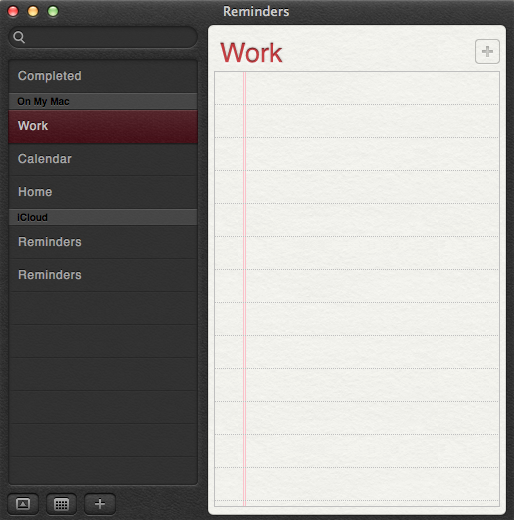
Of the new additions to OS X Mountain Lion, there’s Notes and Reminders, both of which also sync to your iDevices so your notes and reminders can be synchronized everywhere.

They have also added Game Center, which I think is useless.


One of the other cool features that were added, under the hood, is power nap whereby your mac goes to sleep but it stays up to date with your emails and notifications. They have also added dictation which you can activate by clicking the “fn” button twice. Yes, you will finally use that button.


iCloud integration:

As I mentioned previously, Apple is pushing you to use iCloud with everything they can in OS X Mountain Lion (and iOS 6 for your iDevices). In fact, the default saving option for your documents, modified pictures, etc… is, yes you guessed it, to iCloud.

I think the whole feature is seamless and streamlined. Anything you do on your mac gets synced to the cloud which sends it to your iPhone or iPad. It’s that simple and intuitive. It’s also nice to find something you had been typing out on the mac already on the iPad.

Twitter integration:

Facebook integration is coming later. But Twitter integration is already here. And the sharing button is everywhere. Mountain Lion even asks you if you want to allow other applications to use your twitter account the first time you set it up or even authorize an application to use your account online.

Sharing to twitter is also very simple and very similar to iOS 5.


Sharing:

In fact, it doesn’t stop at Twitter. Apple wants you to share things with Mountain Lion, be it to friends via airdrop or sharing your videos to Facebook or via email.

In fact Airdrop is now integrated, for example, into Quicktime itself to immediately share that file to your friends who are on the same network.

The show is The Walking Dead by the way.

And that’s a quick roundup of some of the main features that I, as a basic user, worked with on OS X Mountain Lion. Should you upgrade? I say definitely. It’s more than worth it and for a little more than $20, it’s very affordable.

An interesting tidbit though, the new wallpapers for OS X Mountain Lion don’t even have a picture of a Mountain Lion.


The Lebanese Army Intelligence Summoning People For Investigation… Based on Facebook Profiles!

Fellow Lebanese, if you don’t have super protective privacy settings on your Facebook profiles, it’s high time to do so. In a country where many people can rationalize the army killing people at checkpoints (I had a “conversation” with one an hour ago), where people burn tires for leisure, where guns are taken to pubs, the next big national threat is none of those. It’s your Facebook profile.

86 people from the Jezzine area were summoned by the intelligence of the Lebanese Army to the Zougheib Barracks in Saida for investigation, Annahar reports. Those people don’t have warrants against them. They haven’t done anything wrong – unless having a Facebook account is a crime.

The summoned individuals have to be present at the barracks around 8 am. The investigation with them lasts till 2 pm. Most of them are people who hold jobs and have classes. One of them was even a university professor.

Instead of investigating things that are worth investigating, such as the murder of Charbel Rahme who had no warrants against him and actually wanted to join the ISF, the army intelligence is busy stalking Facebook profiles and asking people to come in for a full-day affair to ask you about your statuses, friends, profile pictures and whatnot.

The age of no retribution for any organization within the Lebanese state needs to come to an end. Accountability is key – especially when it comes to an organization which is supposedly concerned with protecting Lebanese citizens. If we put everything that’s done by the army on a pedestal away from questioning, we will quickly turn into a military state. If that’s acceptable for you, it sure isn’t for me.

Why would they summon 86 people – with the list still having more names to go – based on their Facebook profiles? We will never know. And you will still find people who rationalize this when there’s no room for reason. Is it the time to start deactivating Facebook accounts? It sure beats going to jail for posting a not very army-pleasing Facebook status

The Facebook Camera App: My Impressions

Seeing as I have a US iTunes account, which I dearly cherish, I got to download the Facebook Camera app, currently exclusive for iPhone, before its availability on other stores. So I tested it for a whole day on my iPhone 4S and these are my initial impressions.

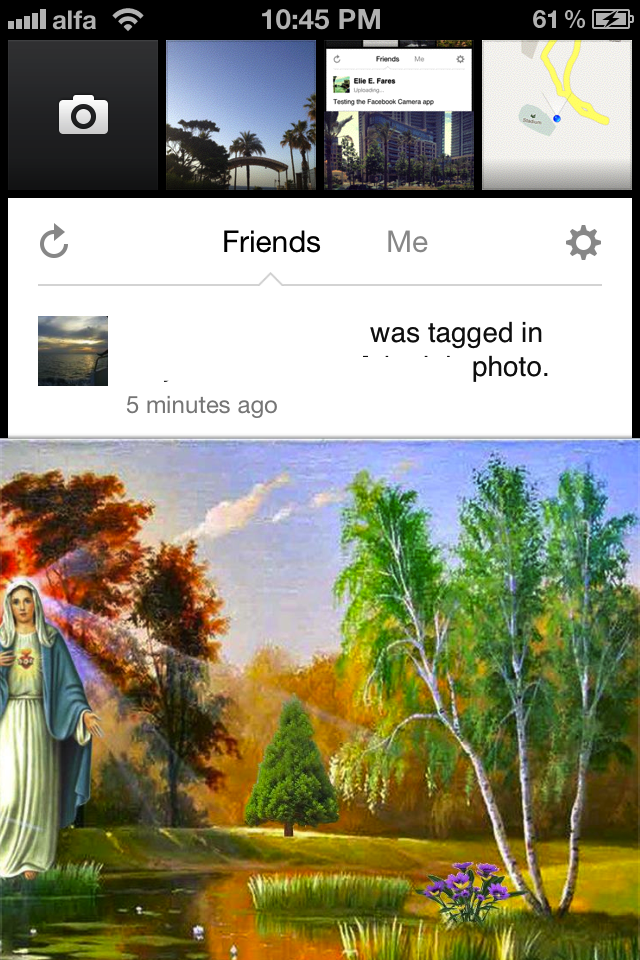
It’s pretty fast. Once you launch the app, it takes you immediately to a news feed version for Facebook’s photos. You can see pictures that your friends uploaded and comment on them. This is where the pictures you take will go as well. You can swipe among the pictures your friends were tagged in. Loading the pictures is much faster than the regular Facebook app, which I think is horrible at handling pictures.

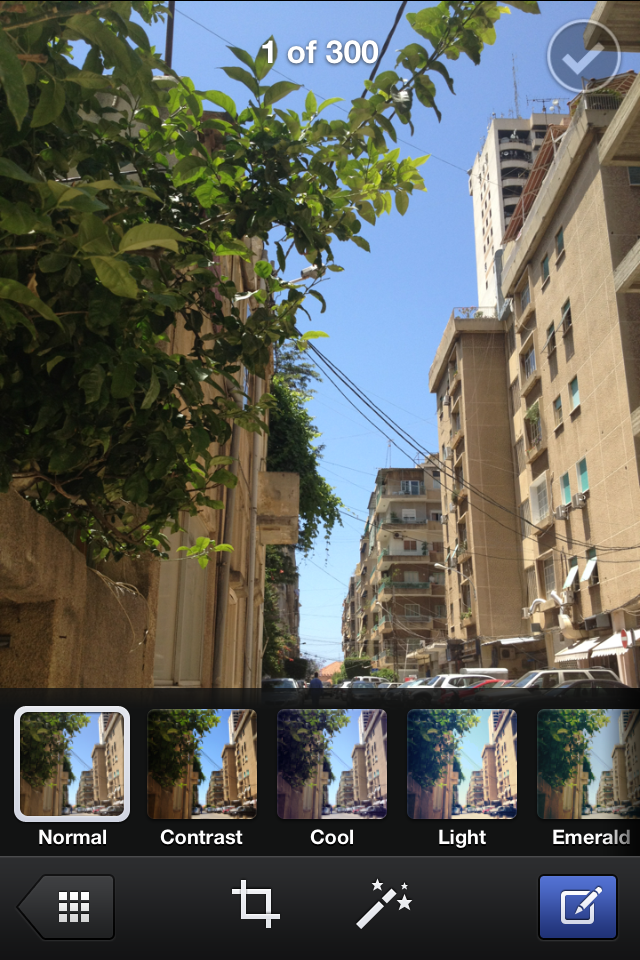
Facebook Camera is streamlined enough to post pictures on your Facebook timeline without much effort. Once you take the picture, you’ll get many filters to choose from before sharing your work. Those filters are a total of 14 (apart from normal). You access them by tapping on a brush button similar to that in Apple’s iPhoto app. They are similar to the filters you get in instagram but are named differently, obviously. You can upload pictures in batches, faster than with the regular Facebook app, and in higher resolution.

Once you’ve chosen the filter of choice, you click on the button to post. Now you’re back to familiar territory, similar to the Facebook app for iOS. However, you can actually save a post draft here in case you decided you wanted to save sharing the picture for later. That’s something I hope they add for the regular Facebook app.

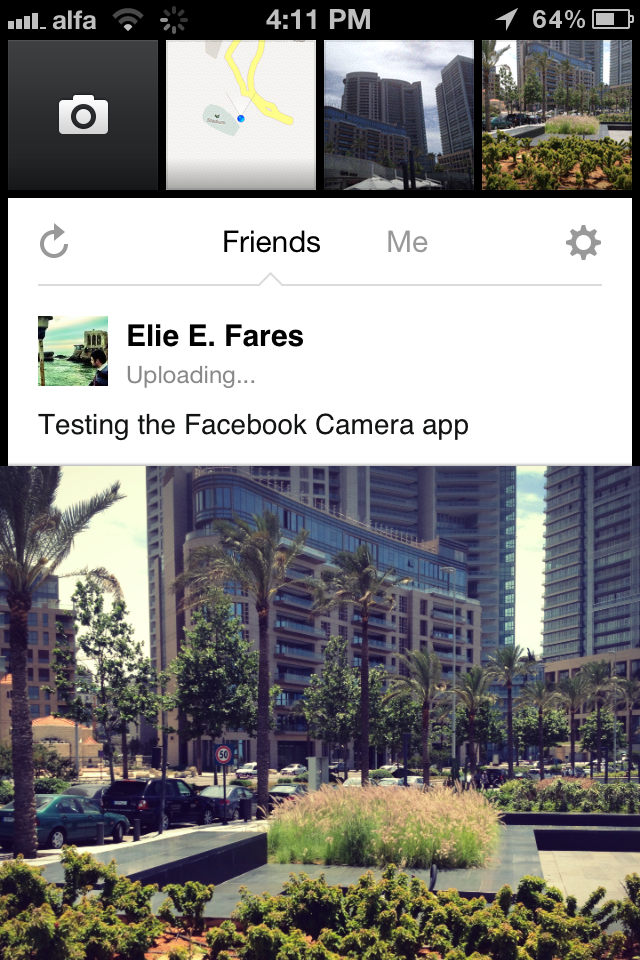
Once you share the picture and it uploads, it’ll appear on your timeline as posted from “Facebook Camera.”

Overall, I think it’s an interesting app. I really like the icon, actually. But it’s not quite a home-run. Will it overtake instagram? I doubt that’s Facebook’s intention but they’re not betting right if they think it will. While it has its advantages, such as saving the original picture in your camera roll immediately after taking it, it has its drawbacks as well. For instance, it doesn’t save the modified picture in your camera roll, unlike Instagram.

Instagram has become so ingrained with users that uprooting it will take much more than an app which shares exclusively on Facebook and using it means flooding un-wanting users with pictures of things you find interesting but they have no interest in.

At the end of the day, where Facebook Camera falls short is in it not being a photo-exclusive platform. It comes with the baggage that is “Facebook.” Bonafide photography applications, such as Instagram and Camera+, cater to those who have a hobby for photography. They created an environment where those users can stretch their wings with exotic shots that they wouldn’t necessarily want to share with their Facebook friends.

Facebook Camera caters to the Facebook crowds whose pictures are less interesting than the Instagram crowd. But they are much, much more numerous. For once, however, Facebook has created a mobile app that is actually good. Hopefully that’s a sign of what’s to come for the regular Facebook app.

Brace yourselves, everyone, the Facebook Camera posters are coming.

Facebook, “Social” Media & Stupid People….

Imagine this real-life scenario.

You come back home and check Facebook. It’s late at night so the timeline is slow. Someone has shared a picture from an album they titled “:D:D.” The title they gave their post is: R.I.P, I will miss you. You look at the picture and at the album’s name. It’s a while before the idea connects in your head.

You look at the picture and you know the person in the picture. It’s someone from your family. Yes, you just found out they died from Facebook not a few hours later via a phone call like your parents intended to tell you.

Now imagine this other real-life scenario.

You get news that your grandma is sick so you book an airplane ticket to Lebanon to see her. The moment you land, you check your phone. The messaging service of choice, in this case BBM, is full of people who have changed their statuses to the typical “R.I.P” stuff.

The former scenario happened to me a few hours ago. The second one happened to a friend. I had heard of similar incidents happening to other people as well.

It seems that even when it comes to death, people are quickly losing their head. Why in the name of everything that is holy would anyone want to make a Facebook “scoop” out of the death of a loved one? Shouldn’t they be grieving instead?

Shouldn’t people have that common-sense fuse that perhaps not everyone has been told about the death in question and they should refrain from updating their Facebook status thirty minutes after the person passes away, while their body is still warm?

I have the answer as to why people like that do what they do: stupidity, lack of class, lack of consideration…

Will they care? Absolutely not. All they care about is getting those coveted Facebook likes and comments. The post in question in the scenario that happened with me now has 23 likes and 19 comments. Mission accomplished? I think so.