Now Lebanon Censored… By Saad Hariri

Beirut Spring has just reported that a Now Lebanon article criticizing Saad Hariri and praising Najib Mikati has been pulled offline by the website. You can check out a screenshot of the article here.

If you’re interested in reading it, here’s a transcript (via Qifa Nabki):

The Baby and the Bathwater

If we are to believe a report in al-Joumhouria newspaper on Monday, French President François Hollande and Saudi Arabian King Abdullah, in a meeting also attended by former Lebanese PM and Future Movement leader Saad Hariri, will not back current Lebanese Prime Minister Najib Miqati if a new government is formed.

Do the Lebanese not have a say in any of this? We should worry at the carefree way in which Lebanon’s future is always being decided by outside actors, no matter who they are. The region is already polarized between the Sunni and Shiite communities in a dangerous standoff between Saudi Arabia and Iran. Such horse-trading will only serve to entrench further the sense that foreign powers control Lebanon’s destiny and that each side of the political divide is justified in having its regional backer.

Another worrying aspect was the presence of Hariri, a man who must surely concede that his role in Lebanese political life must now be confined to the margins of Sunni politics. He is living in LaLa Land if he still feels that the Lebanese public would welcome him back with open arms and see him as their salvation. In fact, it would be scandalous if he stood for parliament in the next general elections, let alone offer himself as a candidate for the premiership. (Ditto Nayla Tueni and the rest of the absentee MPs who, by their negligence, have done their best to snuff out the flame that was March 14 and insult the intelligence of the voters who sent them to Najmeh Square).

For it is not enough to simply oppose March 8’s fiendish agenda and make all the right noises about democracy, independence, sovereignty and the sanctity of the state. March 14 members must also take seriously their roles as public servants. The recent deterioration of infrastructure and the apparent collapse of law and order during August have woken up the public to the fact that if they want a functioning, safe, peaceful and prosperous country, and if they want laws enacted, it will not happen if the people they elect to achieve these ends are nowhere to be seen.

Which brings us back to the issue of Miqati and his suitability for the premiership. When he accepted to lead the Hezbollah-dominated government in the spring of 2011, many saw him as an opportunist who would trade what was left of Lebanon’s integrity for a place in the history books.

In reality and with hindsight, he has not done a terrible job. He has advanced the Special Tribunal for Lebanon (despite the Syrian dream of killing the process altogether) and spoken out against Syrian violations of Lebanese territorial integrity.Given the fact that he has had to work with a cabinet of which Hezbollah and its obstructionist allies in the FPM are a part, he has made a decent fist of holding things together.

Hollande and the rest of the international community are right to condemn the current government, which has set new standards in uselessness, but we should avoid throwing the baby out with the bathwater. With the exception of former Prime Minister Fouad Siniora, Miqati is arguably the best candidate we have to lead this country in troubled times.In the meantime, the Lebanese must fight to wrestle their destiny from the hands of those who see Lebanon as a strategic asset instead of a sovereign nation, and all our MPs, without exception, should show up for work.

Saad Hariri, it seems, cannot take criticism. Especially when it’s coupled with praise to his political adversary, which is beyond disgraceful. It seems that Saad Hariri is so worried about his political tenure, all the way from his Parisian lala land (be careful of the cold dear MP, I heard it’s quite chilly this time of year) that he pulled his strings all the way to Lebanon in order to pull the article off a website in which he has influence.

The fact that Saad Hariri cannot take criticism is beyond worrying. It’s also very childish. It’s akin to one of those impertinent children who run to their mothers whenever those “bad kids” on the playground don’t let them play. And this type of behavior is certainly not acceptable from the proclaimed political leader of one of Lebanon’s main parties.

The sad thing though is that this doesn’t only apply to Saad Hariri. Each and every Lebanese politician is off limits by some platform or the other – and what remains, at the end of the day, is an electorate who’s limited by the narrow political opinion it gets from websites that are censored by the politicians it thinks are the best of the best.

And they all run to their mothers crying. They seem to be missing one key element though: good luck silencing the internet.

Update:

The article is back up (here) with the following disclaimer:

Disclaimer: NOW Lebanon has intentionally removed this article from the site. It was not removed because of censorship, but rather because of the lack of proper arguments. We would like to repeat, again, that NOW is not owned, in whole or in part, by Prime Minister Saad Hariri, nor any other political party or figure.

Yeah, right. Such “justifications” are an insult to Now Lebanon’s reader’s intelligence.

4G LTE in Lebanon: The Technical Aspect

Plus961 has written about Lebanon starting initial testing for LTE in about two weeks. The article that Rami quoted, which was published in Annahar (click here), sets a timeframe for initial pilot testing starting November 16th while commercial rollout will start in select areas across the country on April 23rd.

The area that will first be covered is Beirut city, from Geitawi onwards. LTE theoretical speeds according to Alfa testing have reached 100Mbps. Actual speeds will be quite less, however, around 40-50 Mbps in best case scenarios. The average speeds that my American friends on Verizon get are approximately 30Mbps.

A source in Alfa has told me that the frequency bands Lebanon will be rolling out will be band 3 (1800 MHz), initially, with other frequencies added later on, which makes the Lebanese LTE network compatible with most international 4G handsets, apart from the ones that are made proper for AT&T, Canada’s Bell, Rogers and Telus and a few Mexican carriers who have opted to use the frequencies that are employed by the aforementioned carriers: band 4 (AWS) and 17 (700b MHz). I assume it’ll be the same for MTC.

This means that prospective iPhone 5 buyers need to buy their phones from European countries or Australia. The American Verizon iPhone works as well.

The plans, however, haven’t been set yet although I don’t expect them to be up to par with the potential demand. LTE is very fast internet and any plan that doesn’t go into several GBs in quota is doomed to be quite useless. Theoretically, you can burn through the 500MB plan (the most popular one among 3G subscriptions) in less than a minute.

On the other hand, and even though LTE is needed to move the country forward in the ever growing digital age, should we be moving towards it when there are a lot of areas in the country without proper basic coverage, let alone 3G? For instance, my hometown in the Batroun caza barely gets any reception. 3G is unheard of over there.

Moreover, moving towards LTE will also get our ADSL speeds to considerably lag behind with the optimal state households get being 1Mbps.

But either way, since many believe I criticize too much, I’ll leave at that and hope LTE rolling out in Lebanon turns out better than the way 3G was unveiled.

Two Days in the Life of a Lebanese in Beirut

It starts early in the morning. You wake up and the heat is already beyond an acceptable value. You look at your phone. Nothing on that lockscreen.

You had forgotten. The country has been disconnected from the internet for two days now. You get out of bed forcibly. The day must start. You flick on the light switch. Nothing.

So they’re cutting it 6 am – 9 am today? Neat. At least you’ll have power when you get home, right? You go towards the kitchen to prepare some coffee. You hold the teapot under the water valve. Nothing comes out. No coffee for you? But no. You are more than prepared. Hello Tannourine bottles!

A day at work or class later, you go back home. There’s electricity. But the internet and water are still nowhere to be found. The former is unusual while the latter is typical for any Beiruti summer.

As you get out of your clothes for something more relaxing, you look at the time. 3:30 pm. And the light goes out. You wonder if the switch (disjoncteur) had been overpowered by something you might have turned on by mistake. You run down the stairs of your old Beiruti building which doesn’t have an elevator and you find out that no, it’s not the switch.

You run back up the stairs and reach the landing of your apartment, sweating like a pig. Perhaps going back home hastily was a bad idea.

30 minutes later, your only source of cooling in that house, the A/C, springs to life. You praise any deity you could think of and type away at your computer, finishing up some leftover work stuff because you don’t have internet to check Facebook, Twitter or even your email. Before you know it, the screen on your laptop dims. You look at the laptop’s electricity plug and you find its light off. You glance at your watch. It’s 4:00 PM.

Thank you for 30 minutes of electricity? But it’s not done yet. 30 minutes later, you hear your fridge hum again only to hear it die down 30 minutes later. Christmas lights-esque electricity from 3 to 6 pm? You bet.

So you sit there, looking at the wall in front of you. You have no electricity, no internet and no water. It’s too hot outside for you to wander somewhere – anywhere – and for the first time in your existence in Lebanon, despite everything, you feel like you are living in a third world country.

But as it is with you being the deservedly proud Lebanese that you are, you shrug it off. Tomorrow is another day. And then your phone buzzes. You look at it and behold, there’s an iMessage there! Yes, tomorrow is another day indeed.

Is All of Lebanon’s Internet Resting on the IMEWE Cable?

Two whole-country blackouts in one week. Both lasted for a few hours during which the entirety of Lebanon was disconnected from the grid, adding to its disconnections in electricity and water – because we are not allowed to have a 24/7 sector that runs smoothly in the country.

It could be that we decided to feel compassion to the people of Virginia in the US, bracing themselves through massive storms. We can’t let them be the only people on the globe who are suffering through internet disconnections?

Let’s hope the Americans can be appreciative.

But sarcasm aside, how come all of Lebanon’s internet rests on the state of one cable: IMEWE, the one we got connected to not long ago?

Don’t we have other cables, such as Cadmus, that also connect Lebanon to the grid? Where are those cables when something happens to IMEWE?

Don’t we have a backup plan in case anything happens to IMEWE? Can’t we revert to the old bandwidth that was enough to sustain connectivity although not speed (dismal as the current one may be) in case something happens to this cable?

And regarding IMEWE, how come a cable that cost millions upon millions of dollars is having this many problems? Two blackouts this week alone with the total number of blackouts increasing the further you go back in your observation. And why are the problems only centered in Lebanon? Alexandria, for instance, another location that gets bandwidth from the cable is not suffering from the blackouts we are having.

They want to let you think Lebanese internet has gotten better. But what good is an extra Mbps in speed when you can’t even use it for hours and hours? What good is the internet that comes from a cable that’s looking to be more fragile than an osteoporotic woman’s bones?

With this many recurrent problems with the IMEWE cable, perhaps the ministry of telecommunications should look into the main problem leading to the blackouts and not patch it up in a few hours so it happens again a few days later.

In all my years as an internet user, all of which have been in Lebanon, there has never been as many internet blackouts as we’ve had since our internet got “better.”


4G In Lebanon? Apparently Yes.

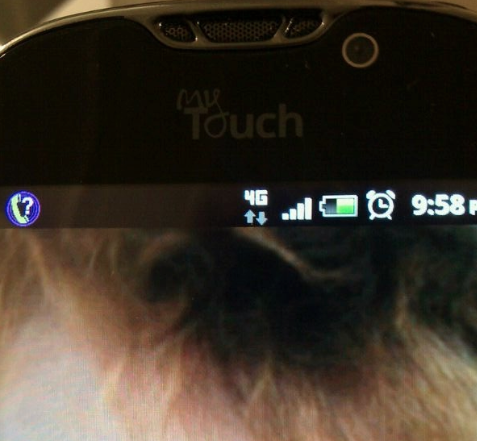
A very good friend recently told me that her sister was getting a 4G signal on her phone in Batroun. While I still don’t have 3G on Alfa, it looks like MTC are moving on to the next generation already. I would assume Batroun is not their top priority and other regions have this as well.

I find it interesting that it hasn’t been advertised anywhere yet. I remember reading that LTE and 4G would be available in Lebanon starting summer 2012. We all thought they were kidding back then. While I still don’t think it will happen by then, it looks like 4G in Lebanon is closer than we think.

I guess we should’ve gotten those 4G LTE iPads.