4G LTE in Lebanon: The Technical Aspect

Plus961 has written about Lebanon starting initial testing for LTE in about two weeks. The article that Rami quoted, which was published in Annahar (click here), sets a timeframe for initial pilot testing starting November 16th while commercial rollout will start in select areas across the country on April 23rd.

The area that will first be covered is Beirut city, from Geitawi onwards. LTE theoretical speeds according to Alfa testing have reached 100Mbps. Actual speeds will be quite less, however, around 40-50 Mbps in best case scenarios. The average speeds that my American friends on Verizon get are approximately 30Mbps.

A source in Alfa has told me that the frequency bands Lebanon will be rolling out will be band 3 (1800 MHz), initially, with other frequencies added later on, which makes the Lebanese LTE network compatible with most international 4G handsets, apart from the ones that are made proper for AT&T, Canada’s Bell, Rogers and Telus and a few Mexican carriers who have opted to use the frequencies that are employed by the aforementioned carriers: band 4 (AWS) and 17 (700b MHz). I assume it’ll be the same for MTC.

This means that prospective iPhone 5 buyers need to buy their phones from European countries or Australia. The American Verizon iPhone works as well.

The plans, however, haven’t been set yet although I don’t expect them to be up to par with the potential demand. LTE is very fast internet and any plan that doesn’t go into several GBs in quota is doomed to be quite useless. Theoretically, you can burn through the 500MB plan (the most popular one among 3G subscriptions) in less than a minute.

On the other hand, and even though LTE is needed to move the country forward in the ever growing digital age, should we be moving towards it when there are a lot of areas in the country without proper basic coverage, let alone 3G? For instance, my hometown in the Batroun caza barely gets any reception. 3G is unheard of over there.

Moreover, moving towards LTE will also get our ADSL speeds to considerably lag behind with the optimal state households get being 1Mbps.

But either way, since many believe I criticize too much, I’ll leave at that and hope LTE rolling out in Lebanon turns out better than the way 3G was unveiled.


Movenpick Lebanon… For Sale

The avalanche keeps on rolling. The new casualty in the Lebanese economic scene is Movenpick Hotel as its owner, Saudi businessman Walid Ben Talal, has put it up for sale. (Source)

Movenpick joins Buddha Bar and Fuddruckers as the latest in a series of high profile businesses that declare it quit.
This snowballing effect cannot but be taken back to how things are today. It’s not due to the assassination which took place a couple of weeks ago. It is not due to recent events.
This is a culmination of all the policies that this current government has pioneered – and it seems they haven’t taken the hint yet.

If a businessman as wealthy as Walid Ben Talal can’t handle the Lebanese situation anymore, then what can you say about those who don’t have his billions?
Meanwhile, our minister of tourism believes things are alright. It seems the Nile has taken route across the Lebanese capital.

Muslim Prayers At USJ

Everyone should be able to express their conviction in the right place at the right time. This is a conviction of mine. The right place and the right time may vary depending on where you stand regarding an issue but sometimes things are very clear cut and a stance needs to be taken.

A few months ago, the Antonine university had a tough situation with Muslims students who were adamant about praying at their university, which happened to be a Maronite Monastery, so they took the convent’s courtyard to do so. This sparked a debate in the country: should these students be allowed to pray or not at universities with obvious religious affiliations?

The point of view that I expressed back then and which I still stand by is the following: If a Muslim student (or a Christian student for that matter) believes it’s of utmost importance for him/her to pray, then that should go into their university selection criteria. If that student deems prayer not important enough and believes that getting the best education that can be provided, regardless of the university’s religious affiliation, is the way you to go, then that student doesn’t have the right to complain later on.

Université St. Joseph (USJ) had a similar incidence yesterday where more than twenty Muslim students decided to gather around and take a room without permission in order to pray. The incident was reported to the dean who rounded up the students only to have the situation swell by attracting more students to the place where the prayers were taking place. Some took the job of acting as guard to let the prayers continue.

The situation escalated to the maximum point without a confrontation happening and the incident has sparked some Christians at USJ to express outrage at what was happening. They believe that including a prayer room in the faculty of medicine was good enough – forcing every single faculty to adopt such policies is a step too far. The faculty in question was ESIB. For the Muslims who want to pray at USJ, it is their “right” to pray five times and they believe the university should provide them with a prayer room to do so.

It seems that such endless debates are our bread as Lebanese. But here’s what it breaks down into quite simply.

  1. USJ is a university that is obviously Christian. It is run by the Jesuites. It doesn’t hide its Christian affiliation and as such, those applying to study in it are well aware of that.
  2. Given that the nature of USJ is a general fact, weren’t those Muslim fully aware that attending USJ will bring them the best education possible and not spiritual fulfillment?
  3. When a prayer turns into proving a “principle” and rubbing it into other people’s faces, the question asks itself: what’s the point of praying in the first place?
  4. When a prayer becomes a point of conflict, the question also asks itself: are those students really seeking religious salvation or are they simply seeking trouble? I believe it’s obviously the latter.
  5. What forces universities with obvious religious affiliations to provide praying facilities for all its students? Is it something that they’re obliged to do? Absolutely not. If a university had been secular, the problem wouldn’t present itself. The American University of Beirut converted its chapel into an assembly hall and has denied requests for prayers rooms. AUB is secular. USJ is not.
  6. Universities abroad, which provide prayer rooms for students, are not religious in nature. And if the prayer rooms are provided, they are not for one religion and not the other – they are for all religions. Religious ones, on the other hand, are not forced to do so: Case in point: the Catholic Medicine faculty in Lille, France, does not provide prayer rooms for its Muslim students.
  7. Would a Lebanese Muslim university open a chapel for Christians to pray in it? The answer is obviously not. The argument that Christians don’t need to pray doesn’t hold. What if they want to?

Lebanese students in general, both Christian and Muslim, need to know that universities are not churches. They are not mosques. They are not synagogues. Universities are places where they pay in order to learn and build a future for themselves and their families. The fact that all of my Muslim friends at medical school, some of whom are extremely religious (they are Salafists and awesome), have no problem going through our long days without praying is testament enough that those “Muslims” wanting to “pray” at USJ are only seeking to create trouble and tension at a university that’s known of accepting people from all parts of Lebanese society, regardless of religion. But there are lines you cannot cross.

Fuddruckers Lebanon Closes Down?


The country’s current economic situation hasn’t been kind. Buddha Bar will soon close down and rumors were swirling around about the possibility of Metropolitan shutting down too. These were later discredited. However, it seems the current situation of the country is going to add another victim to its growing list and it’s the American diner chain Fuddruckers, which opened last year.

A friend who happens to like the place had decided to visit the diner yesterday and was surprised to find it completely closed, with a ribbon in front of its main door and no parking service in sight. And you’d think seeing as November 1st is a day off for most schools in the country, the place would open in order to attract students who probably decided to go out with their friends.

I wouldn’t be too surprised if the place ended up really shutting down. Based on personal observation, business wasn’t exactly booming back when the situation in the country was better than its current state. I personally visited it once with Australian friends and wasn’t too taken by their burgers which I found to be very plain. However, we were the only people there and only three other customers came in during our one hour stay.

The question to be asked is the following: If a chain like Fuddruckers has truly shut down in Lebanon, what would that say of the much smaller businesses spread all around the country? How struggling are they currently?

And if Buddha Bar and Fuddruckers couldn’t weather down the current storm, you cannot but wonder: how thick is the bubble for the collective Lebanese population that seems to be absolutely oblivious to how horrible the economy currently is?

At the rate this is going, it won’t be long before we get another chain closing down.

Lebanon’s Freedom of Speech & Iran’s Lack Thereof

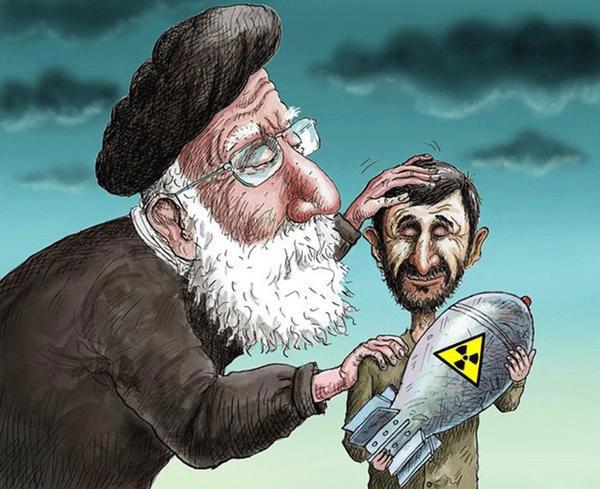
This picture has rubbed the Iranian embassy in Lebanon the wrong way. Apparently, it’s an insult to all Muslims because it’s portraying Ali Khamenei, the Supreme leader of Iran, in a negative way. They also believe that the caricature is in violation of Lebanese law.

It seems the Iranian lack of freedom of speech has seeped into their embassies as well because they fail to understand that just because Khamenei is “holy” to them and possibly a limited number of Lebanese, the rest of the world and of Lebanon absolutely couldn’t care less.

What the Iranian embassy seems to also fail to grasp is that religious figures are not off limits for caricature in Lebanon. How many times has the Maronite Patriach been portrayed as such? How many times has the Sunni Mufti been portrayed in caricatures? How many times has Hassan Nasrallah been drawn in newspapers?

The answer is way too many times for me to even want to research it.

Lebanese newspapers do not approach prophets in their drawings because of journalistic principles. Is Khamenei a prophet? Is he Holier than the prophet Mohammad to have the Iranian embassy panic over him being drawn in a caricature?

The bottom line is: Iran, you have your country and you think things are great over there just the way they are. But keep your insecure paws off of one of the few things keeping me clinging to mine. You are in Lebanon as a diplomatic presence and you’re respected to that extent but it is not in your job description to become a censorship bureau.

God knows we already have too many red lines we can’t cross. We don’t need your red lines added to ours as well.